Oban, (Bragg Bay) Stewart Island
Monday 24 February 2020
After a day and a half at Bluff, we were ready to get moving again. Not that we didn’t enjoy the simple charm and hospitality of this wee town, tied up as we were, just a short stroll across the road from all the local amenities. It’s just that we wanted to start exploring Stewart Island and it seemed that the weather forecast was creating a brief window of opportunity for us to squeeze through.
Plus, there was the issue that if the wind direction changed too much, instead of being blown off the wharf, we’d be blown onto the wharf, making for more vigilance in protecting the boat from the large wooden piles as the tide came in and out. There was also the issue of eventually extricating ourselves from this cul-de-sac, always made more difficult when being blown “onto” instead of “away from”, a solid structure.
First things first … being Monday, John wandered up to the local fisherman’s Co-op shop and came back with an array of serious fishing equipment, including rod, reel, jigs, lures and advice. Originally having a scientific background, John was starting to do his research. Contrary to the Chimere “theory of fish”, apparently fish don’t catch themselves. It requires knowledge and a combination of many things, including – time of day, types of rig, state of the tide, phase of the moon, depth of water, elevation of the sun … you get the idea.
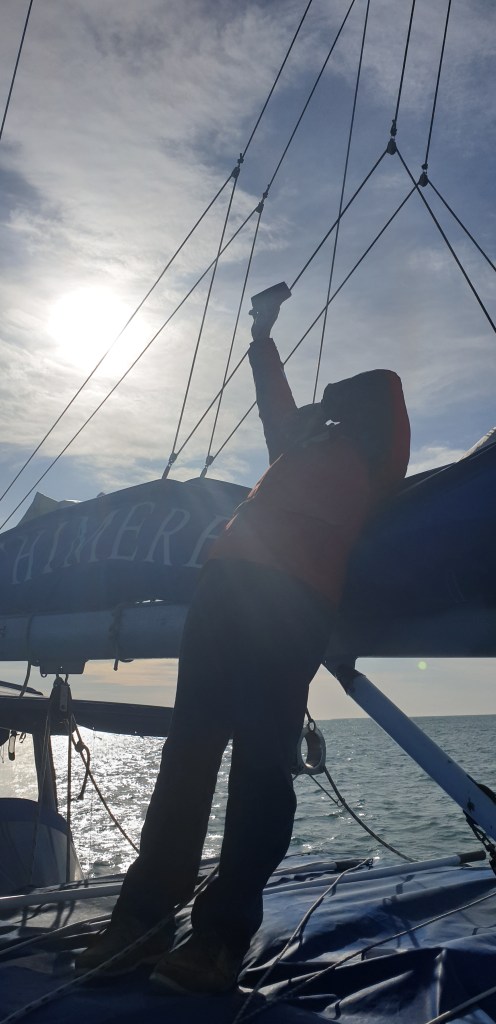
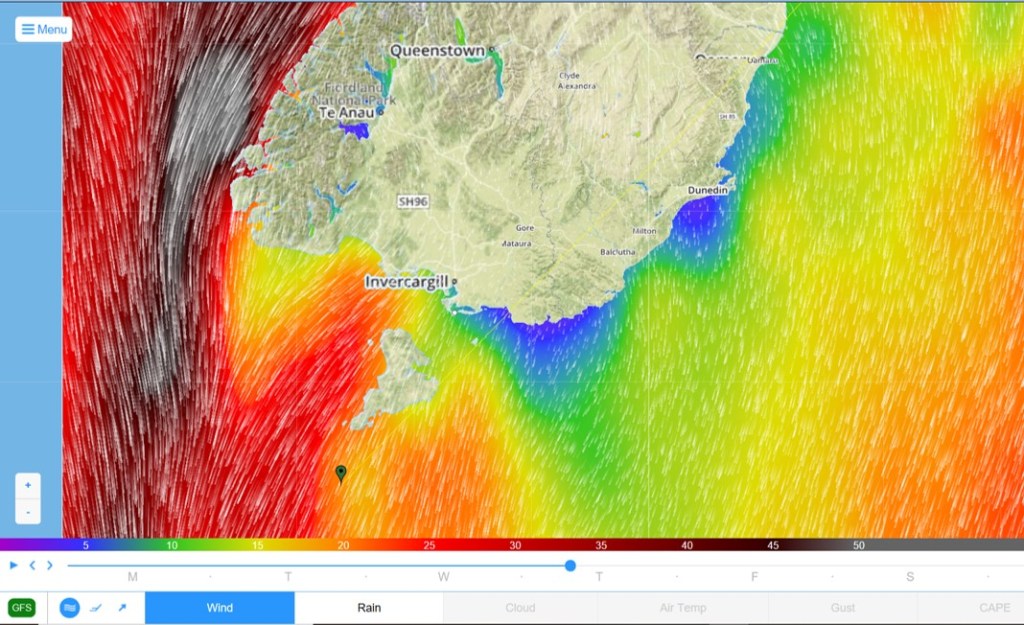
John had been dreaming about catching a ship load of blue cod, or at least one, and was determined to tip the balance of probability in our favour, even though the local cruising guide for this area described them as “… attacking your hooks with suicidal intent…”
Back to leaving Bluff … the wind had started dying off and so over breakfast, our tentative plan was to be away around 1:30 in the afternoon. I was keen to pick a time when the inter-island ferry was NOT going to be parked right behind us, but as we weighed up all the pros and cons of different departure times, Carsten suggested … “what if this morning we leave, 9:00am, it would be better for the tide, and we would have more time on arrival”
Leave in one hour’s time? Yep, it sounded like a good plan. Let’s make it so!
In the end, there wasn’t a lot to do in getting ready to head off. Then around 8:45am the ferry turned up, did its usual circle and parked about 25 metres behind us. Rats!! Now that’ll make things a bit awkward!!.
Up till then, my exit strategy was to slowly back out from the wharf on a slight angle, sufficient distance to then circle forward where there was greater sea-room and to lessen the chance of hitting the wharf piles with the dinghy, which hung on davits from the stern. Now, with far less room on the stern, a new strategy was needed.
For a brief time, we attempted the “back-out-on-an-angle” manoeuvre, naturally a sharper angle on account of our new obstacle astern of us. But it was soon apparent that with the change of wind, the closeness of the ferry and the “throw of Chimere’s prop” – which does NOT naturally throw the stern of the boat to starboard as required, but the other way – we would have to go out forwards, or stay stuck bro; at least for the time being.
The problem with the exit-forward strategy was that we were in a dead-end berth, with maybe 30-40 metres ahead of us and not much more to our starboard side to complete a 180-degree turn. Then there was the dinghy protruding 2 metres from the stern, which we naturally didn’t want to damage.
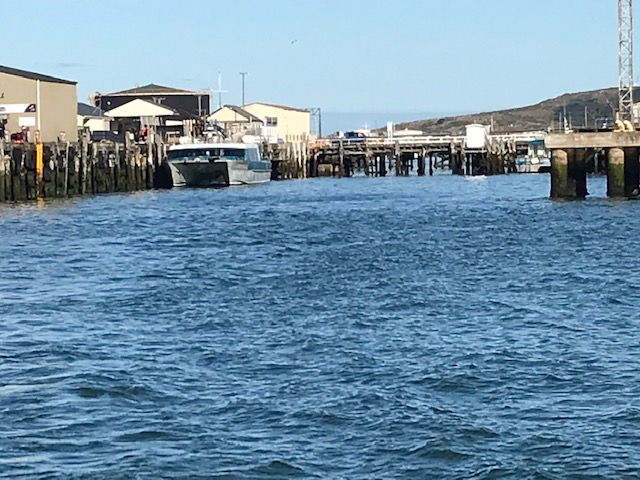
After a brief exchange of instructions, from helm to bow and back again, the new strategy was quickly hatched, with John and Carsten pushing the bow away from the wharf as far as they could by means of boat hooks, acting as a kind of manual bow-thruster. Inching forward into the space between our wharf and the wharf to our right, all the while ensuring the stern was sufficiently far enough away from the piles to clear the dinghy, we executed a perfect “spin on the spot manoeuvre”, (much to the disappointment, I’m sure, of those gathered up on the wharf, and the ferry crew too no doubt, all wondering how this piece of drama was going to play out) making me wonder why I hadn’t thought of this approach at the start. I suppose I just didn’t think there was enough sea-room ahead of us to do anything.
The impressive thing about a spin-on-the-spot turn, is that it uses the natural turn of the prop to “throw” the stern – in our case – to port. Once you’ve done this, you follow it up with a forward thrush, which then spins the bow to starboard, accentuating further the stern’s initial push to port. Of course, one of the most disconcerting things with all of this, is that you’ve got to use pretty high engine revs – in both reverse and forward gears – not something you usually feel inclined to do in such a confined space.
“All clear on the stern”, called John … “All clear on the bow”, called Carsten …
HARD REVERSE … steering wheel to starboard … HARD FORWARD … and after completing this two or three times more we were good to go … heading out of the berth – no damage – and on our way to Stewart Island.
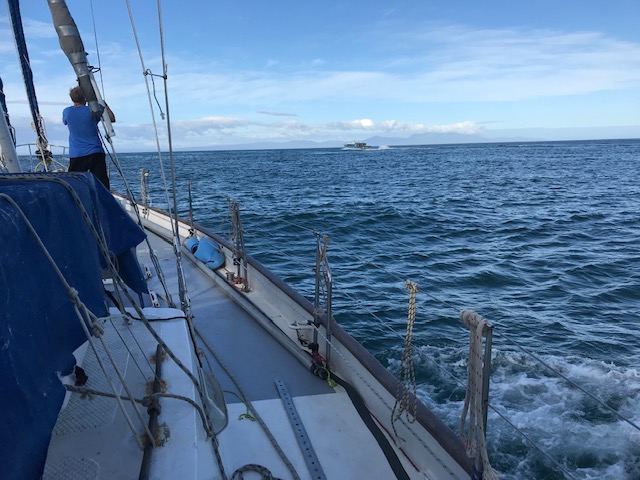
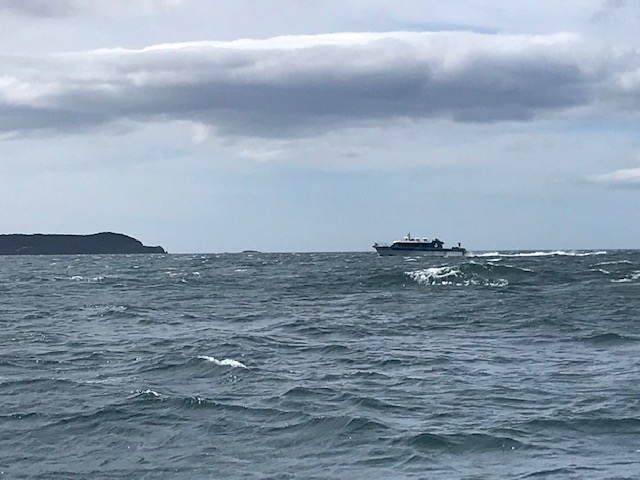
The 24-mile dash south across Foveaux Strait was a fast affair, taking just 3½ hours, with speeds of 8, 9 and even 10 knots at times. The wind was growing in strength as we progressed, so that by the time we reached Oban – the only settlement on the island – it was blowing over 25 knots and gusting above 30 knots, with the bay just a sea of white caps.
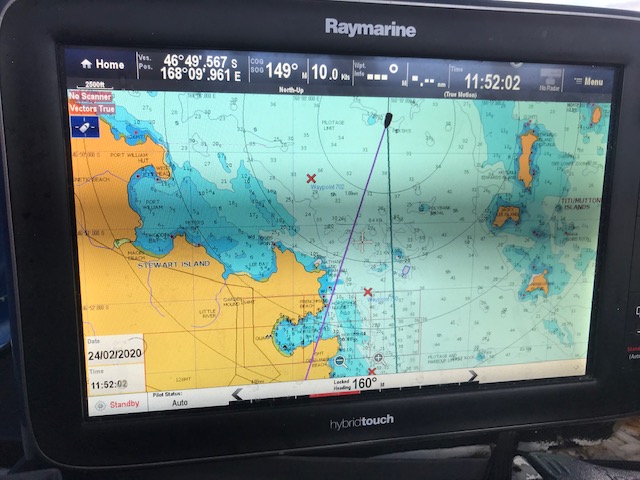
We chose an anchorage on the edge of Halfmoon Bay, called Braggs Bay, to sit out the gale, which lasted several hours; naturally reporting our movements to Mary on Bluff Fisherman’s Radio, VHF Channel 61.
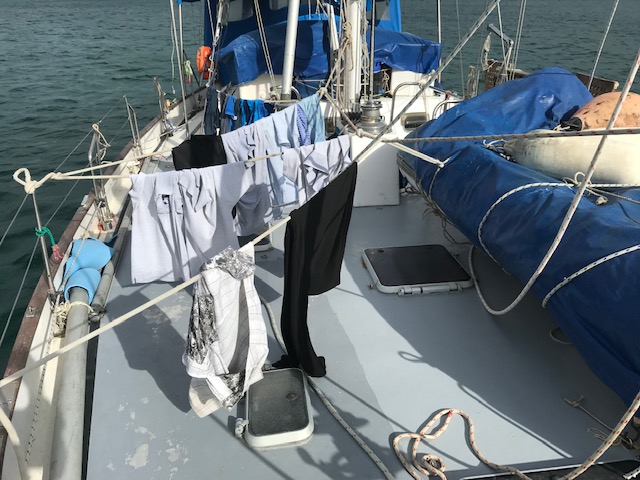
With time to kill, and only one pair of clean jocks left in the cupboard, I’d run out of excuses to do some clothes washing. This I did, being especially careful to ensure nothing blew over board. The weather was “good for drying”, just that no pegs could hold the clothes on the line, making it necessary to thread a line through the arm and leg holes of each item before stretching it back and forwards across the foredeck
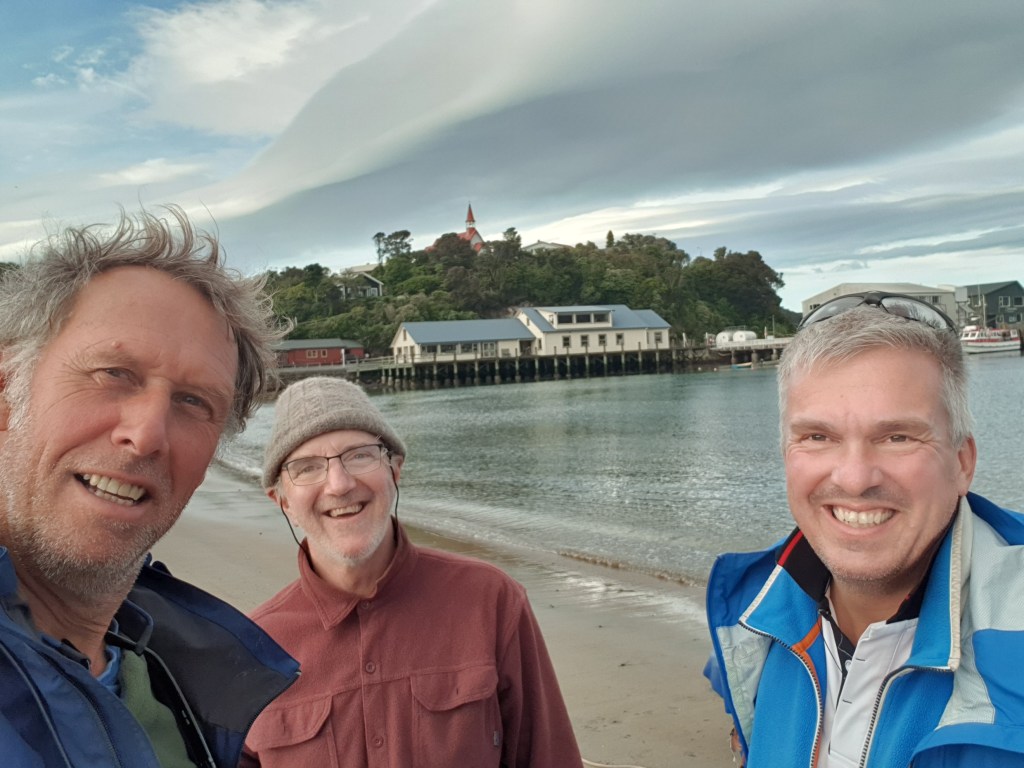
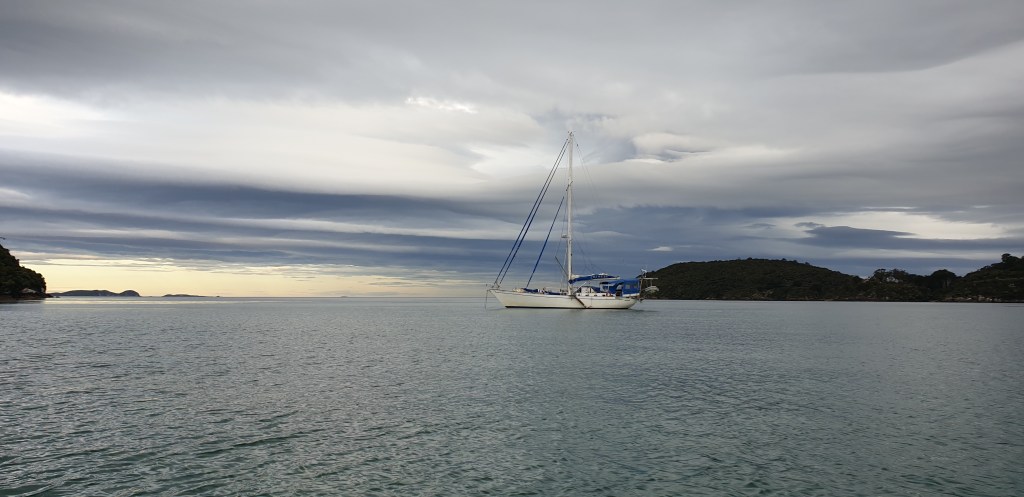
Then, in late afternoon all went still. Like someone had turned off the “wind tap”, leaving behind a surreal stillness and a cloud-sculptured sky in a hundred shades of grey.
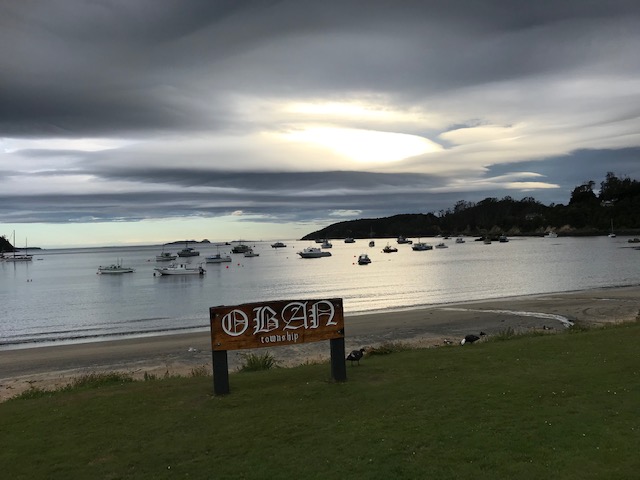
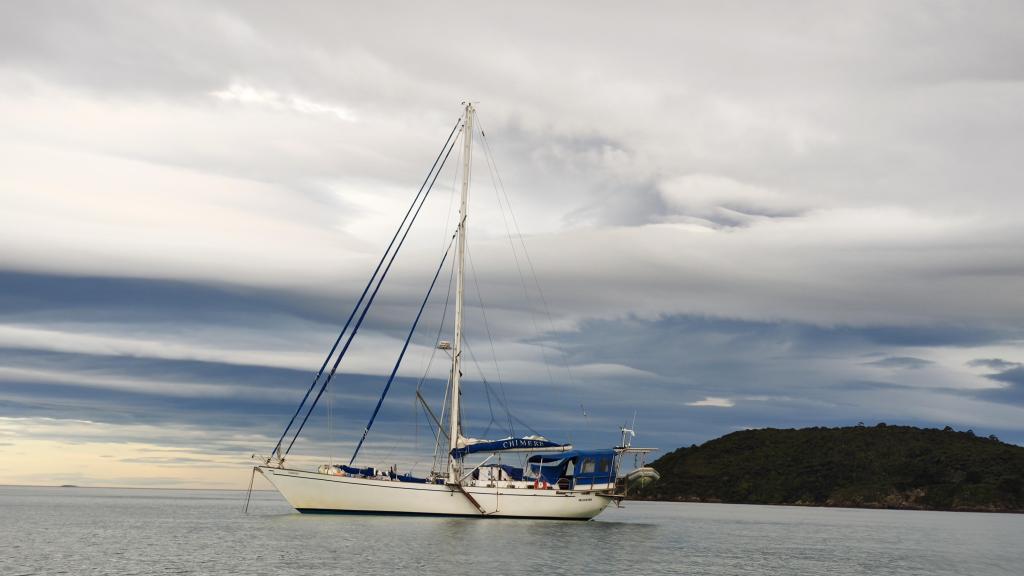
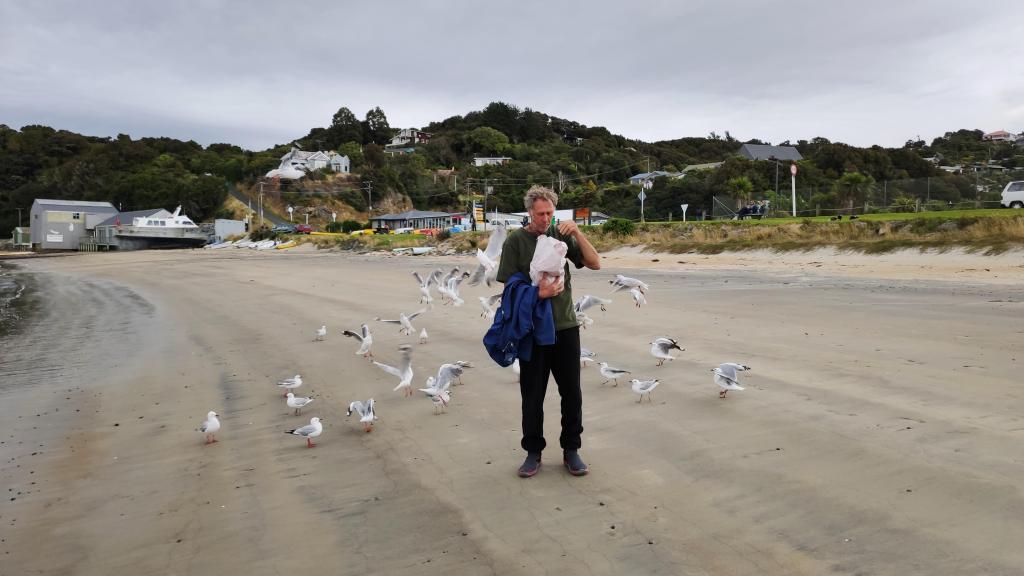
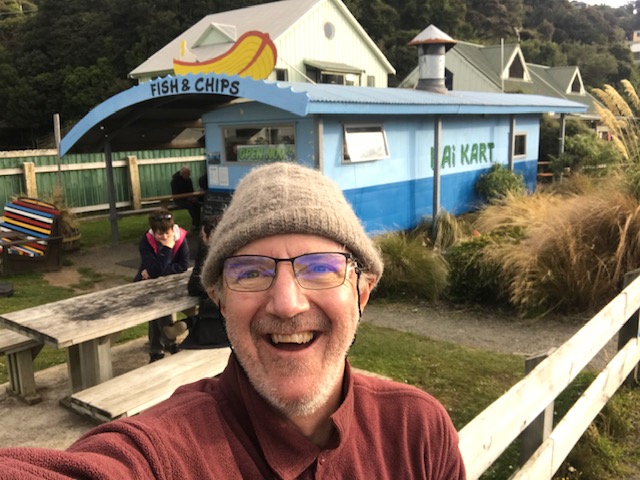
This gave us an opportunity to launch the big dinghy over the side and nick ashore for a look-around and photo-op. Pretty soon we were checking out the local pub, full of tourists and locals, before getting stuck into some distinctly local fish and chips – blue cod of course, building John’s resolve even further to catch his own.
We tried to eat the fish and chips ashore, but quickly realised we’d forgotten to prepare for the impact of sand flies – retreating quickly to the boat at anchor across the harbour
The stillness remained throughout the night, leading to a very sound sleep for all
Smooth seas, fair breeze and South to Stewart
Rob Latimer
 NZ2020