Cascade Basin, Long Sound, Fiordland
Thursday 5 March 2020
Despite the constant, but diminishing, swell that entered Otago’s Retreat, our anchorage, close to the entrance, worked out to be a remarkably still place to drop the pick.
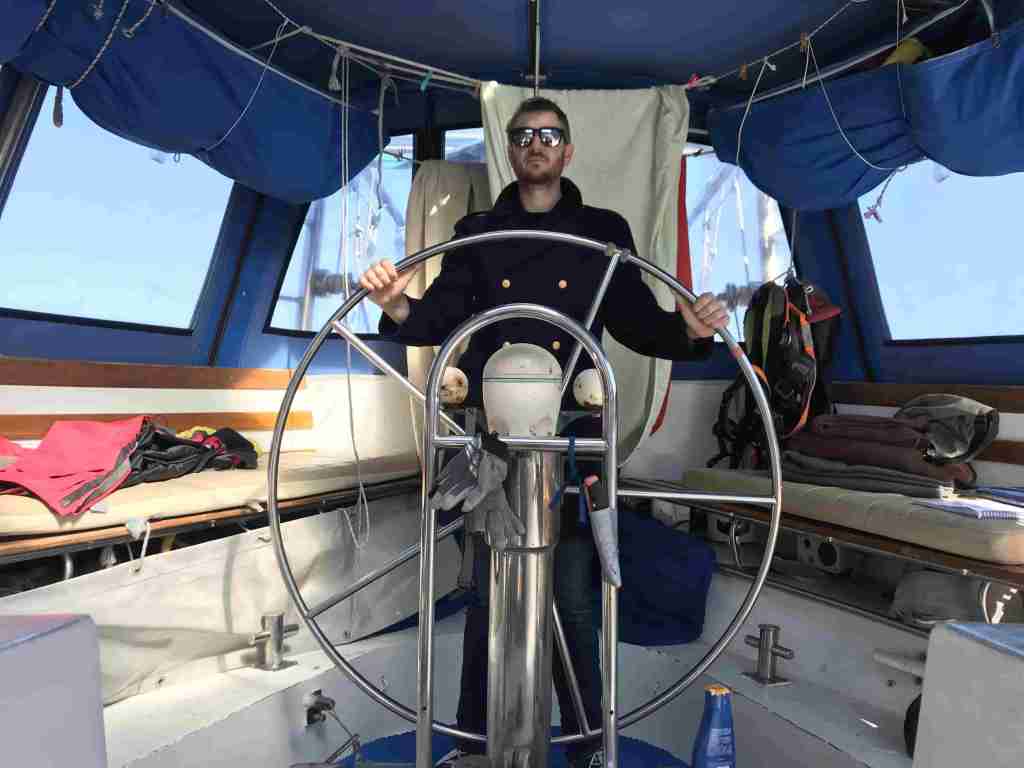
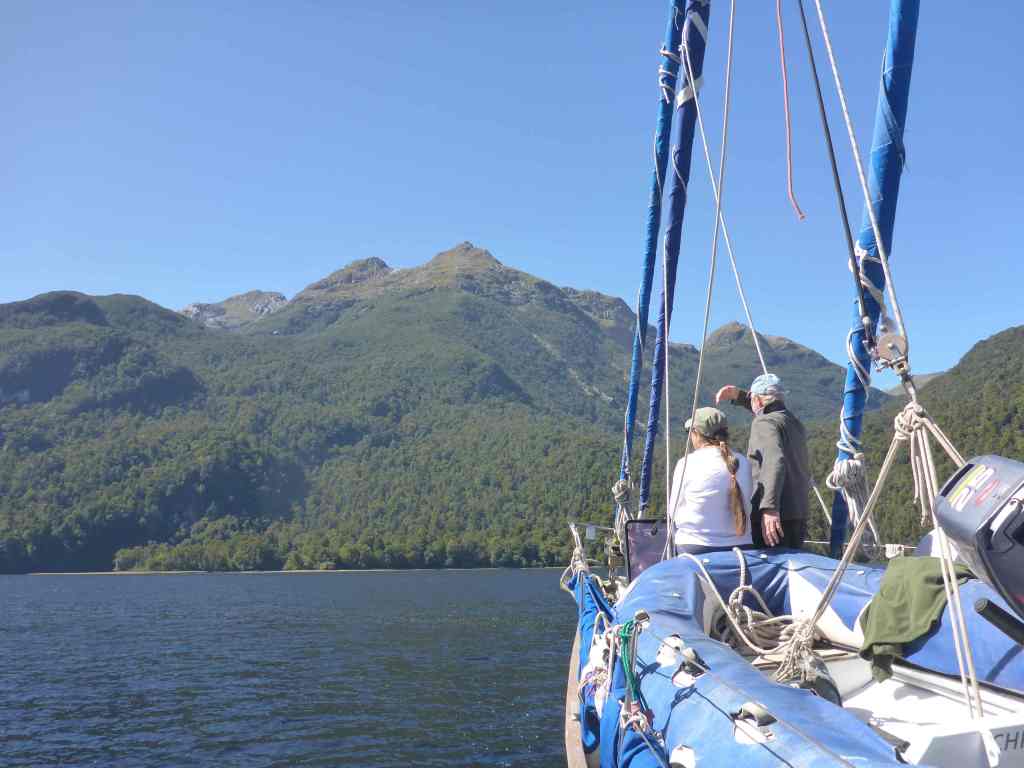
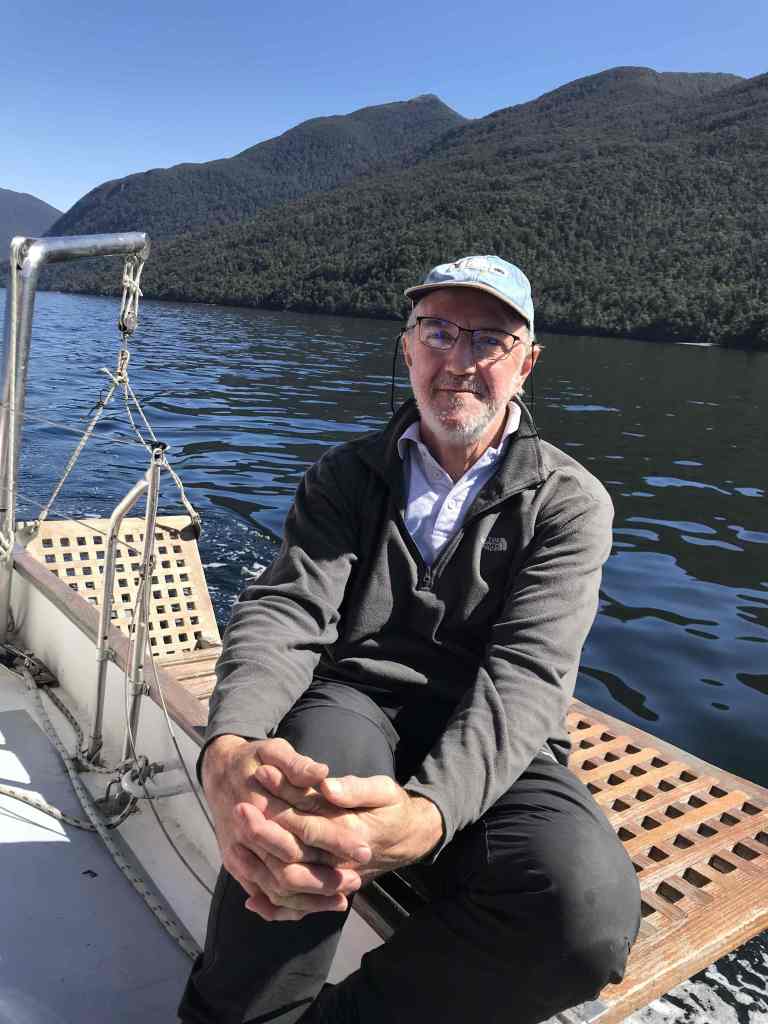
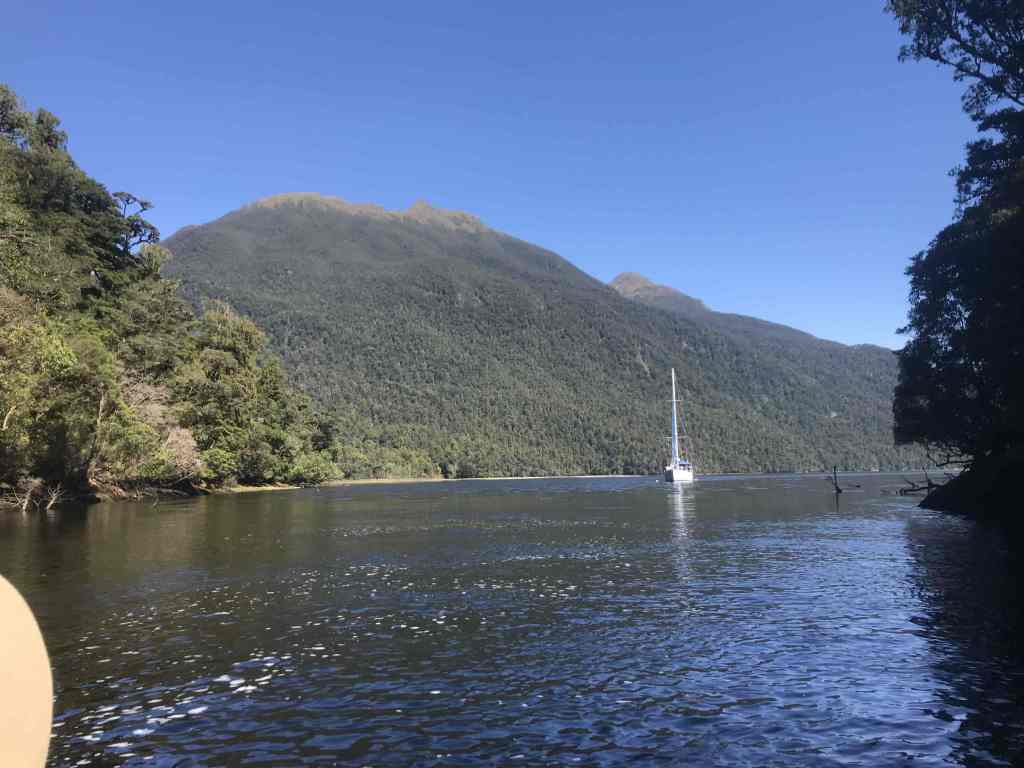
As expected, it was a lazy start all-round and it wasn’t until at least 10:00am that we motored away up the Sound, in the direction of the big hills, which by now, were already bathed in sunshine; the radiant blue sky above totally being without clouds
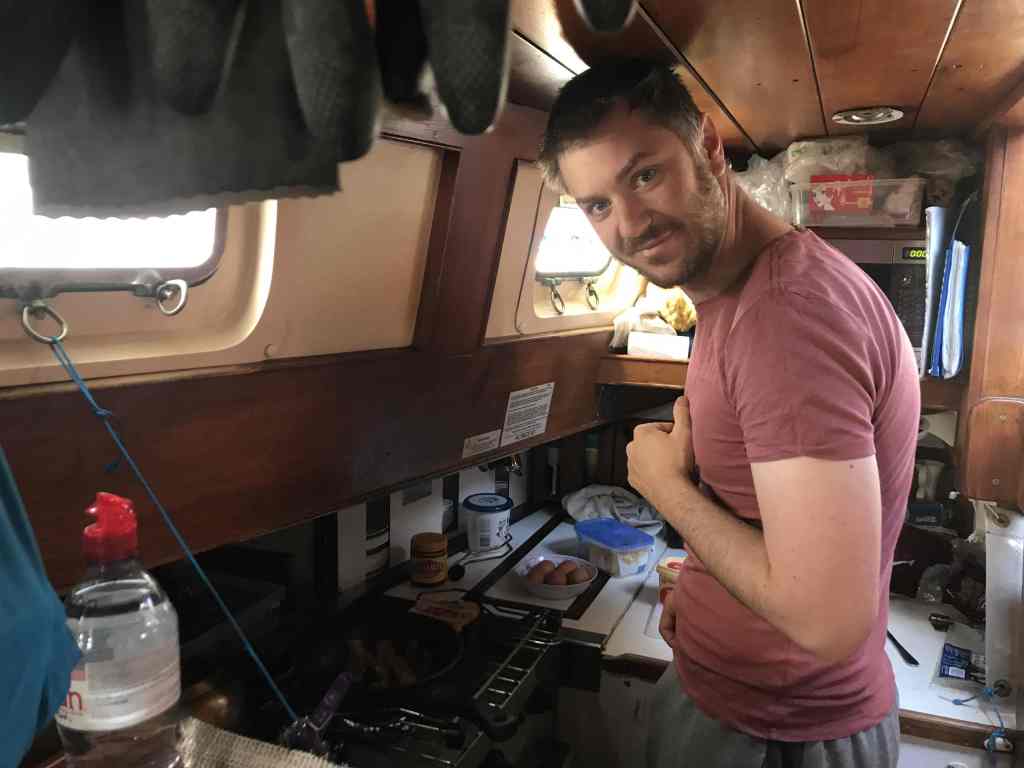
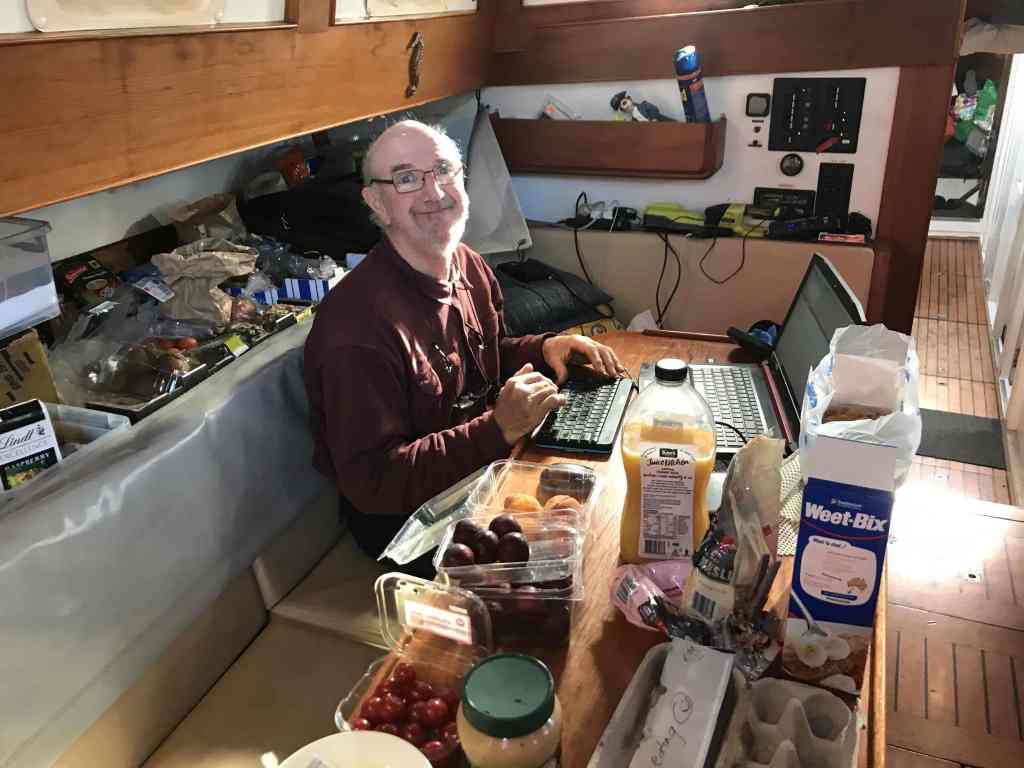
“Where are we going?”, inquired Linda, as breakfast lingered on as we motored along … eggs, bacon, toast, cereal, milk, fruit juice, plus the ubiquitous tea and coffee … it kind of all eventually merged into lunch
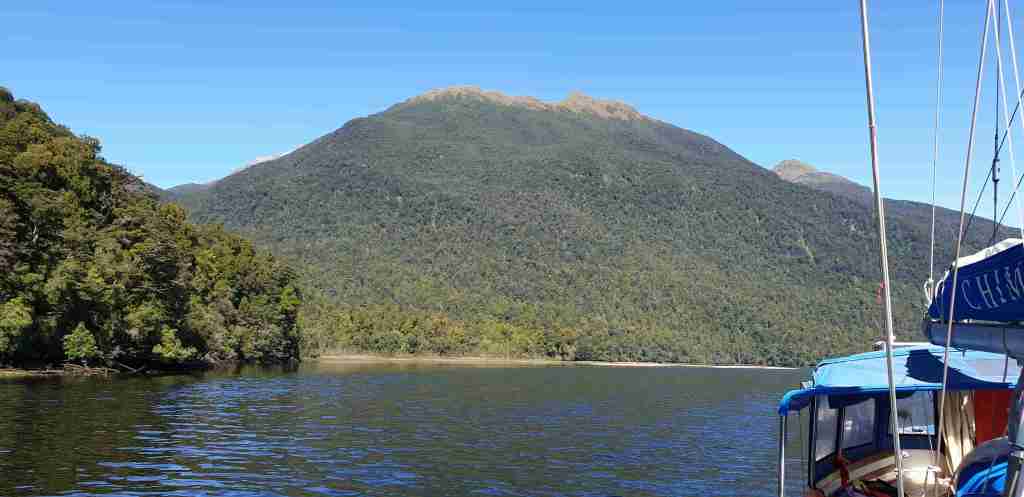
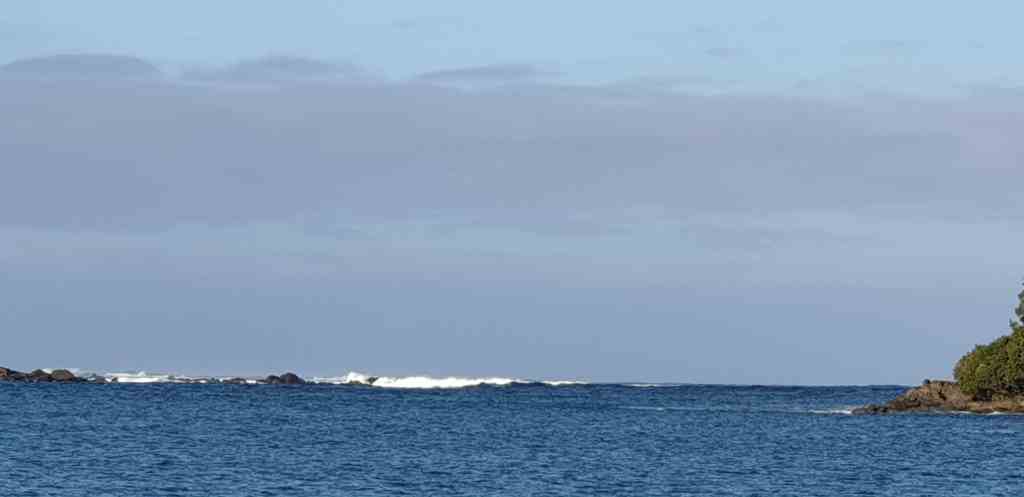
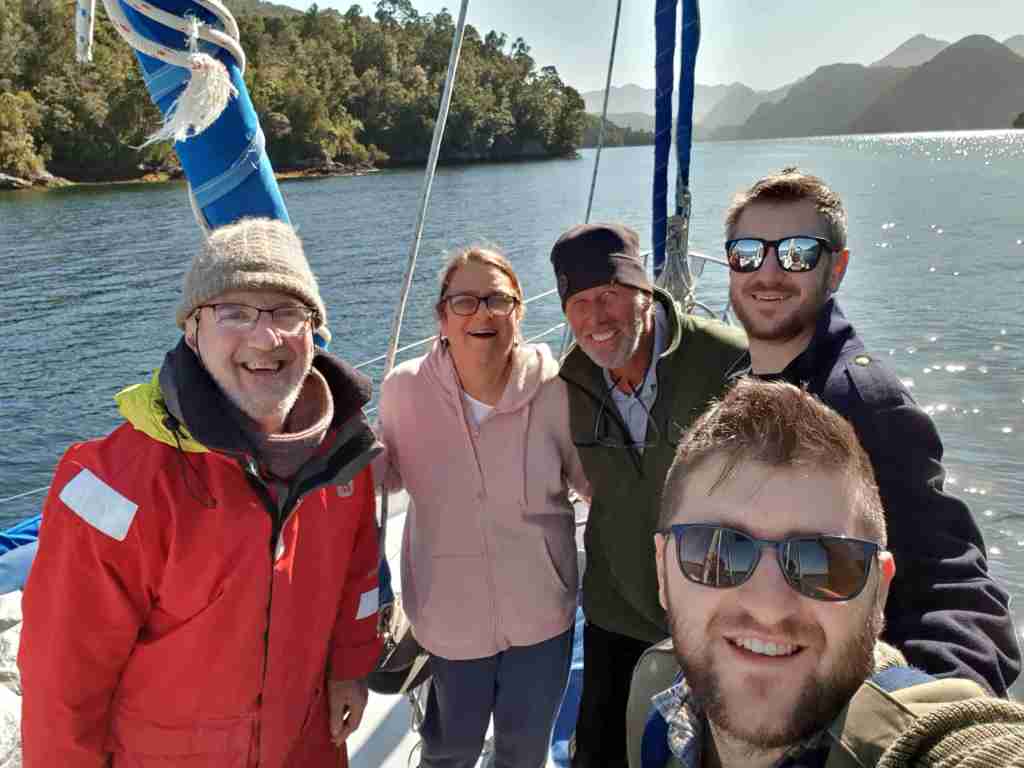
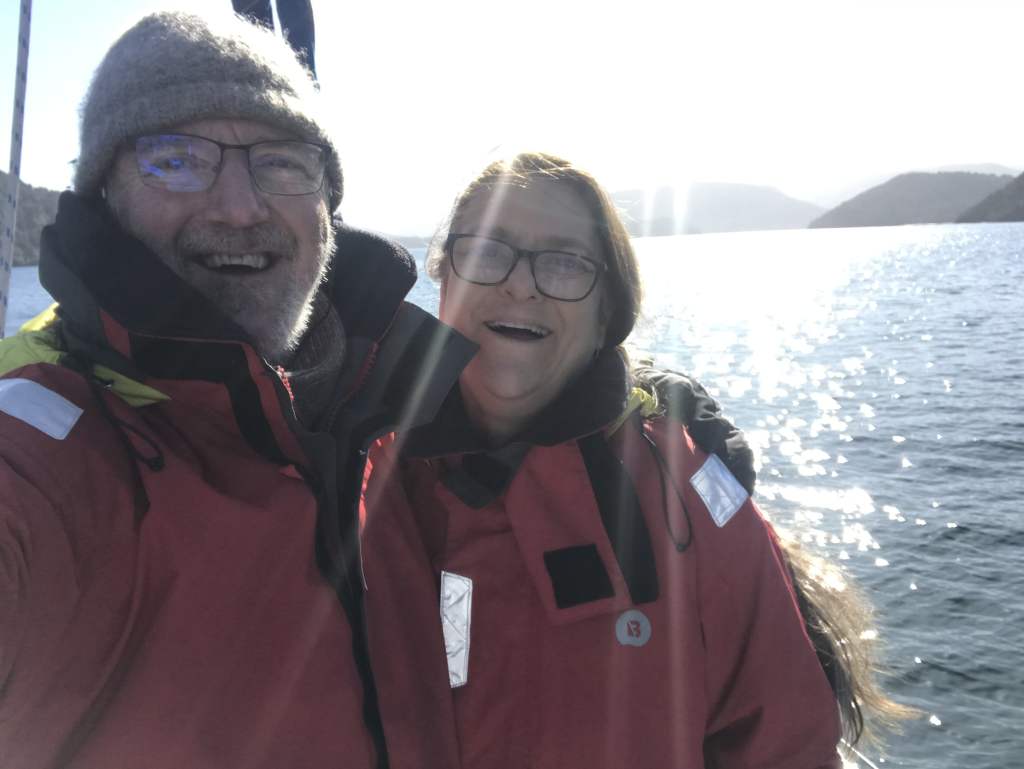
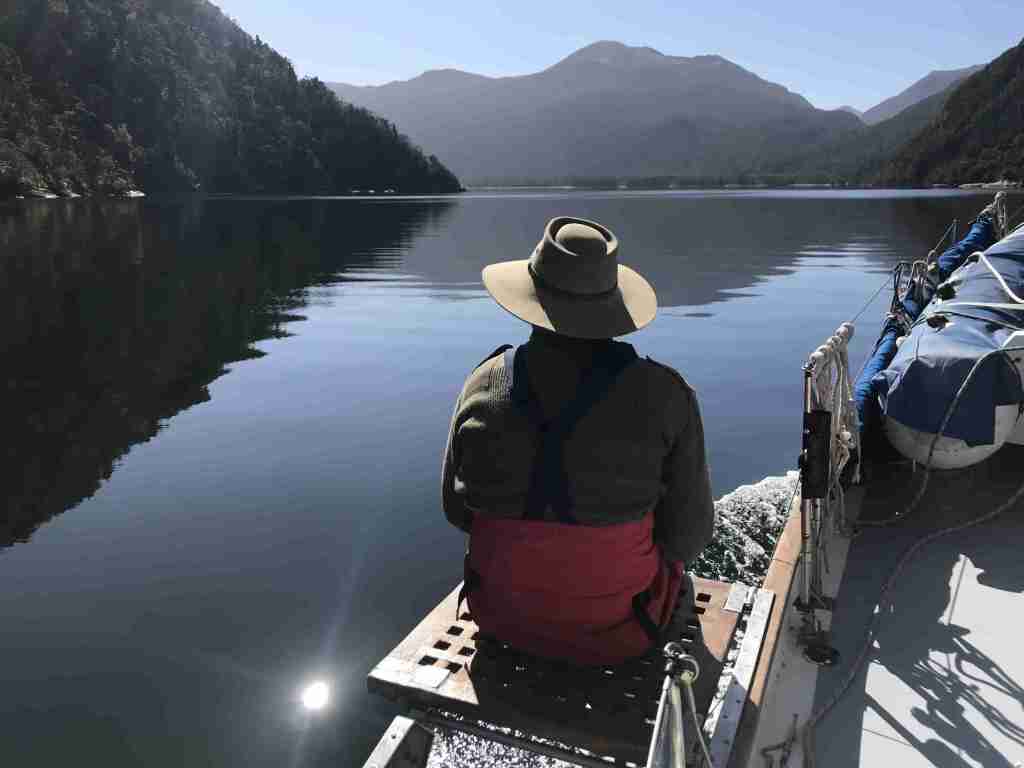
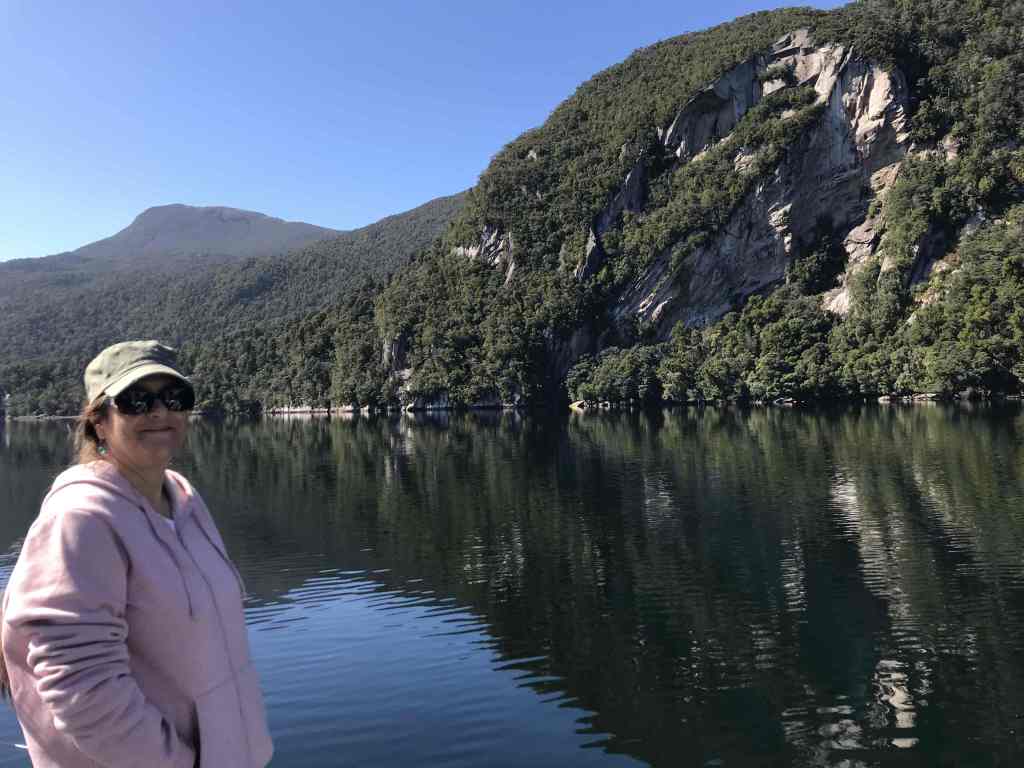
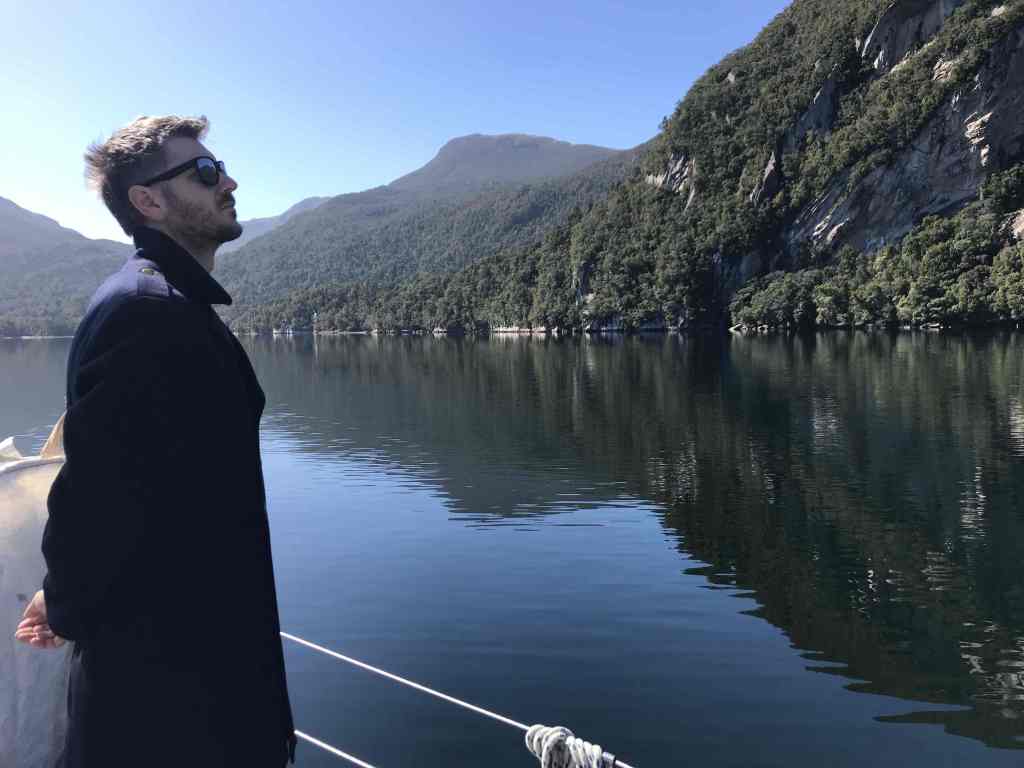
Up on deck, the stillness of the sunny day, combined with the majesty of the surrounding hills and mountains was something that had us just gobsmacked.
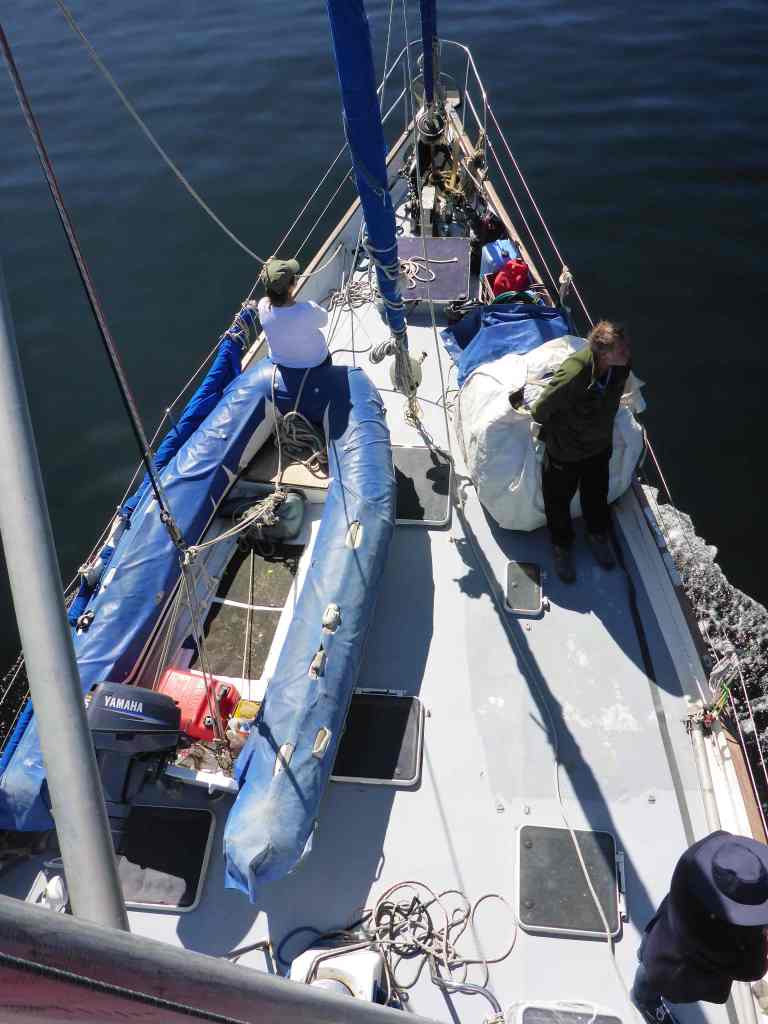
The engine at low revs, we were able to do around 6 knots, creating in itself a chill-breeze that early on, had us rugging up.
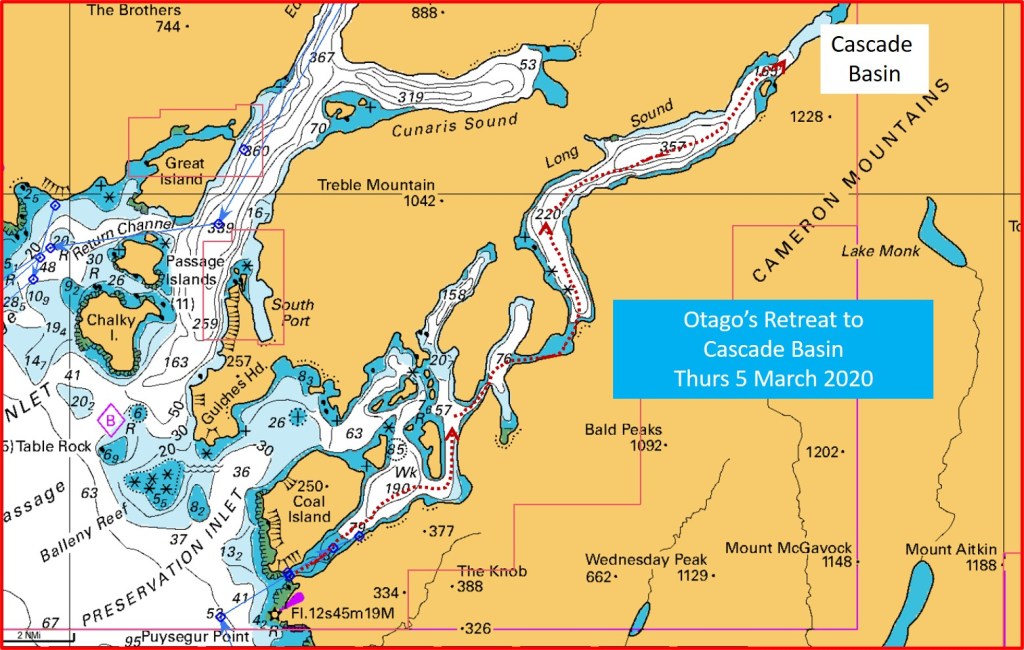
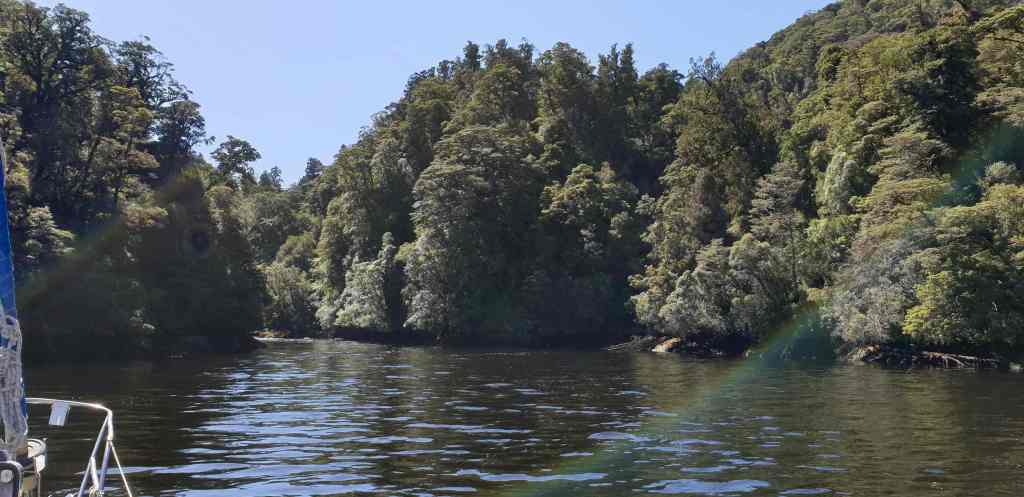
As we made our way further into Long Sound and the forest-covered sides became steeper and closer together, the warmth of the sun had us peeling layers, and eventually speculating as to whether we’d go for a swim in the promised waterfall in the “Cascade Basin”.
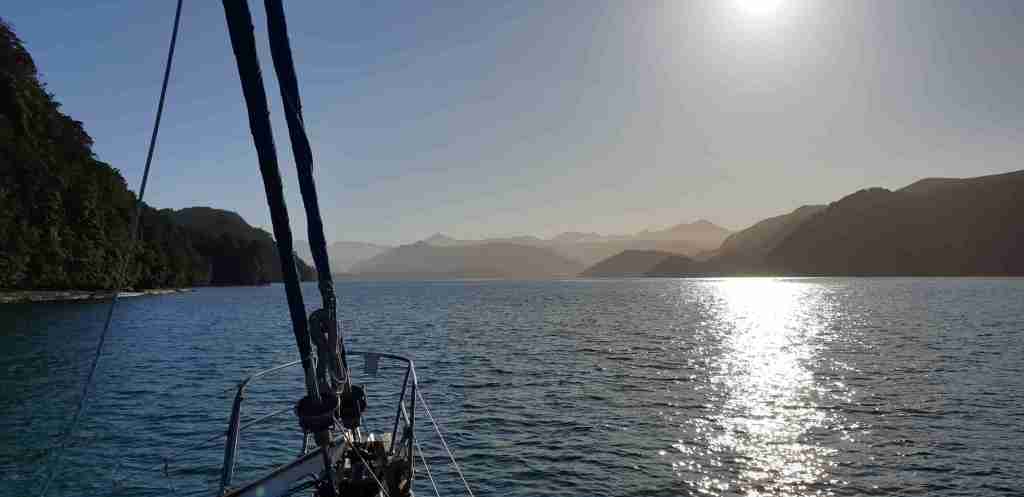
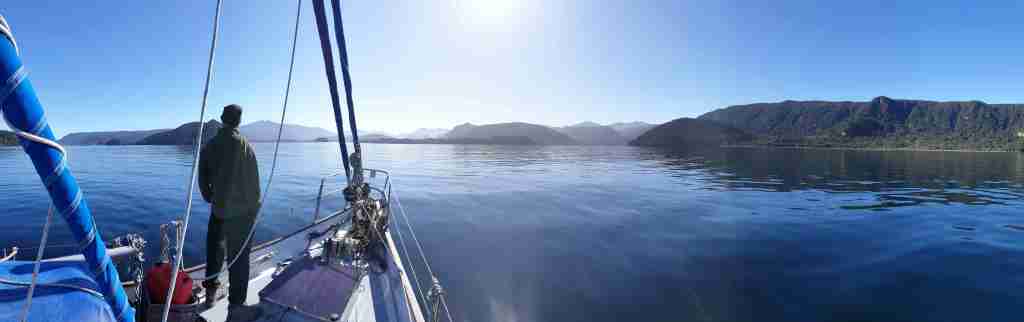
In the end we understood how “Long Sound” might have got its name, with our trek from one anchorage to the next, being around 20 miles. That’s 20 miles of jaw-dropping, beautiful scenery, bathed in warm sunshine, under a blue sky, with absolutely no wind.
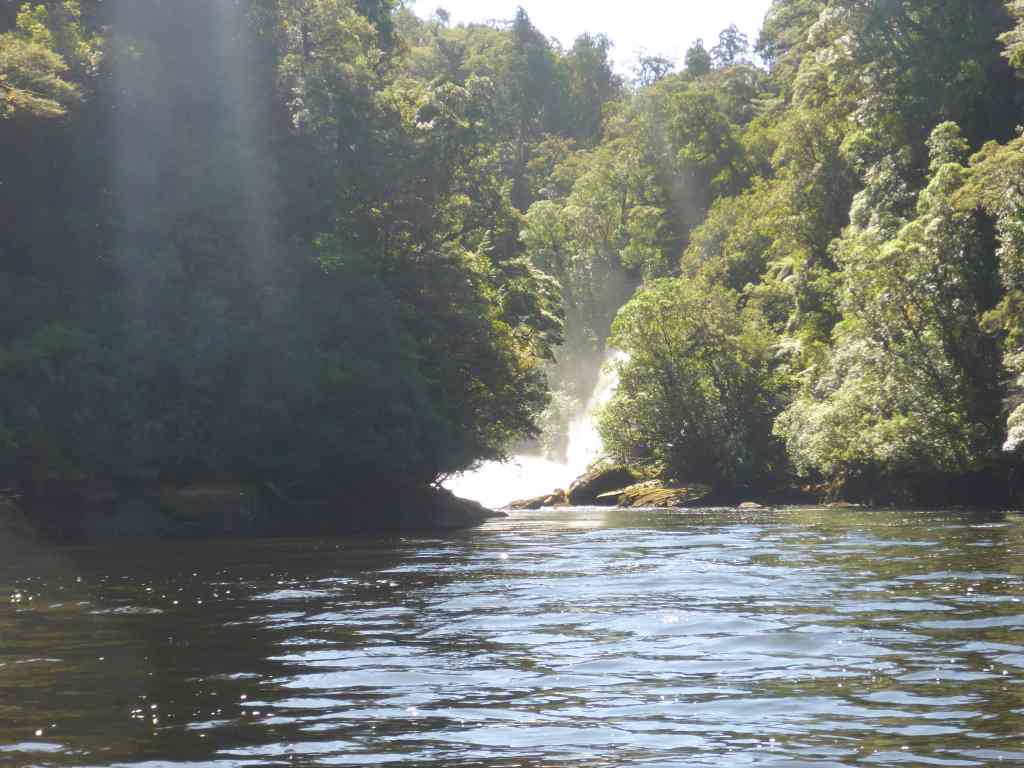
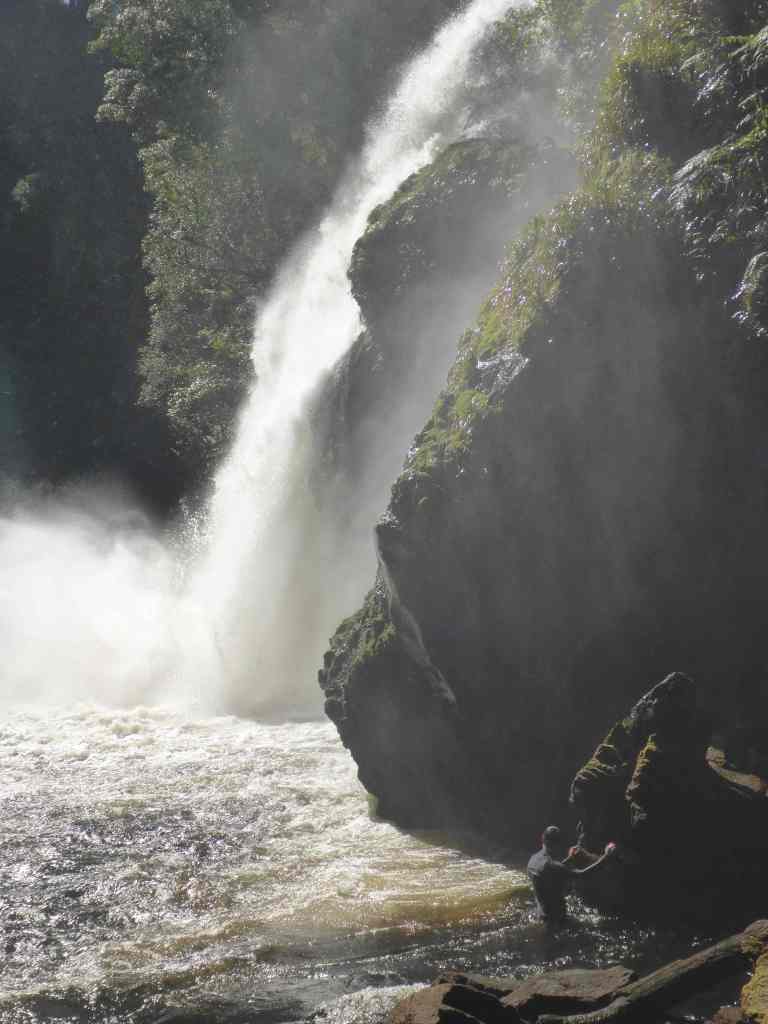
True to label, there was indeed a 30-metre-high waterfall, which made a “terrible din” … to quote the unromantic Cruising Guide, which we could see off the bow in “The Basin” anchorage.
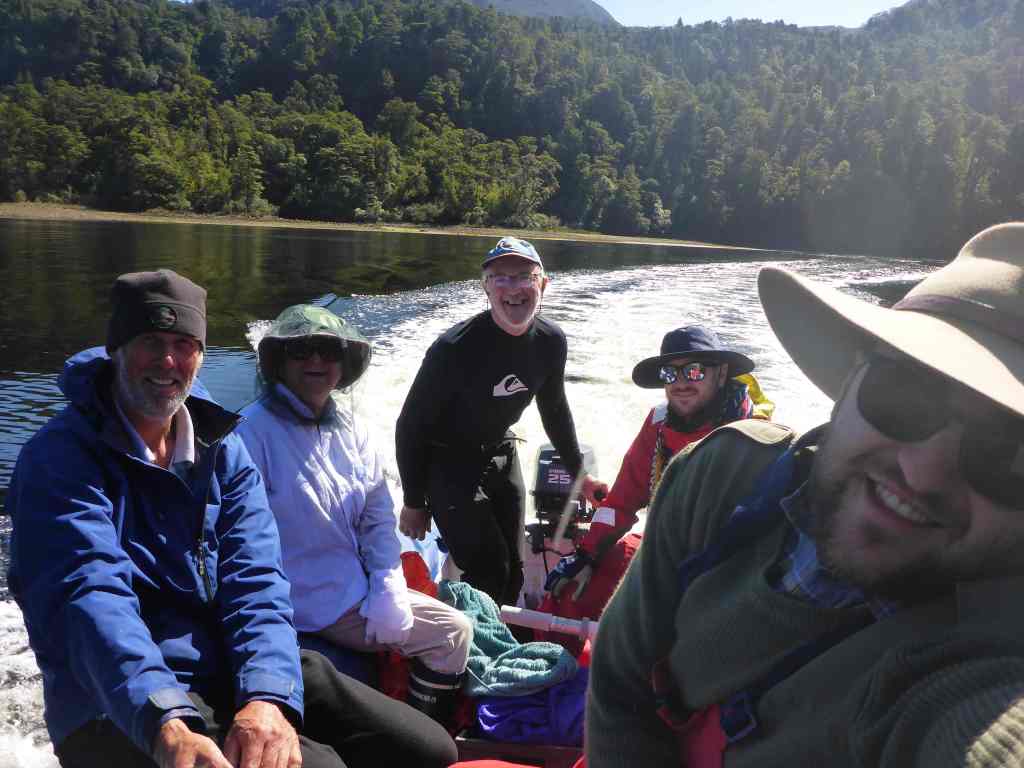
Soon enough, we had the big dinghy launched and were scrambling up the moss-covered, slippery boulders onshore. Near the thunderous deluge, that in fact, drains from the high-up Lake Widgeon beneath 1200 metre “hills”, including Needle Peak and the Cameron Mountains.
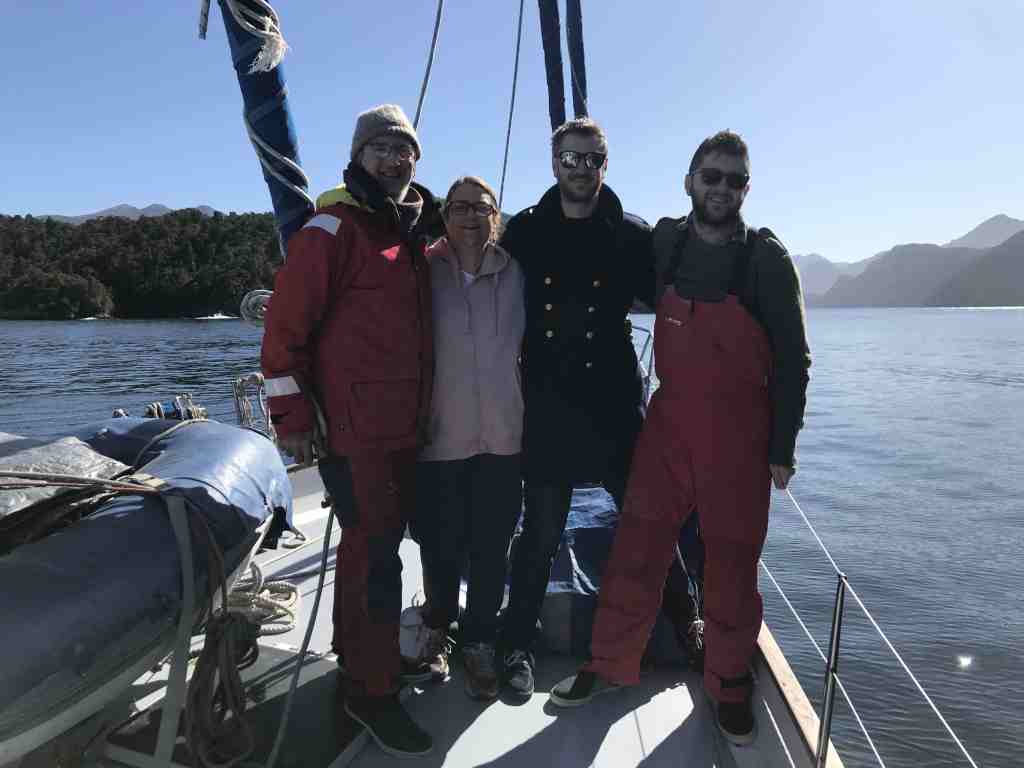
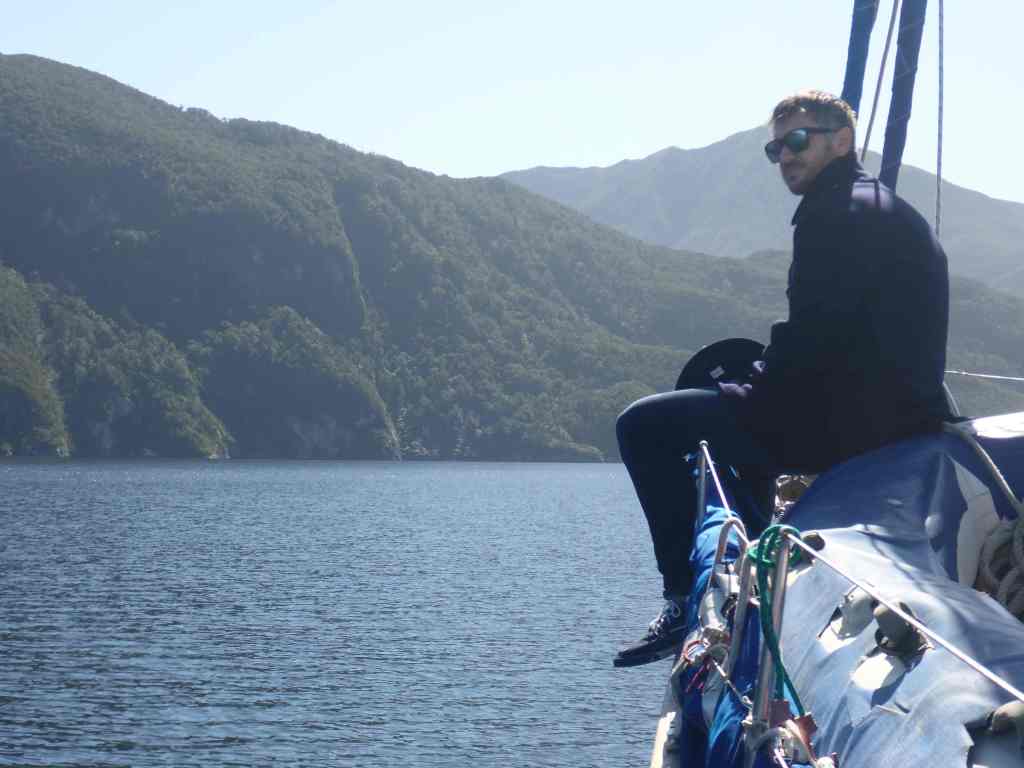
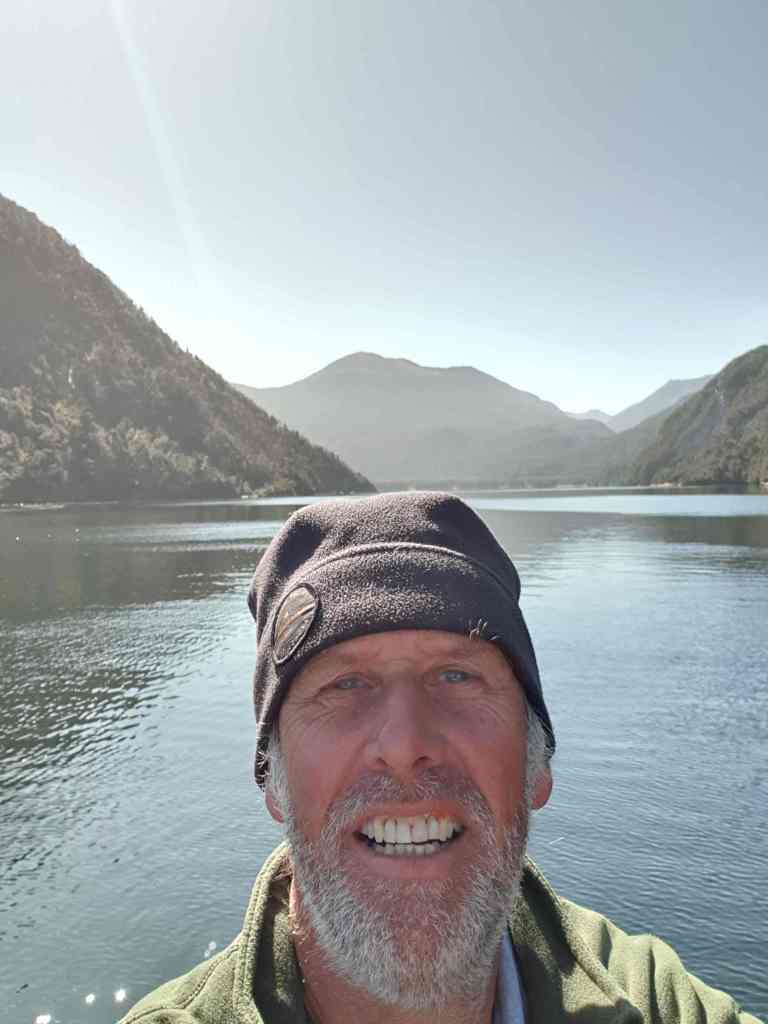
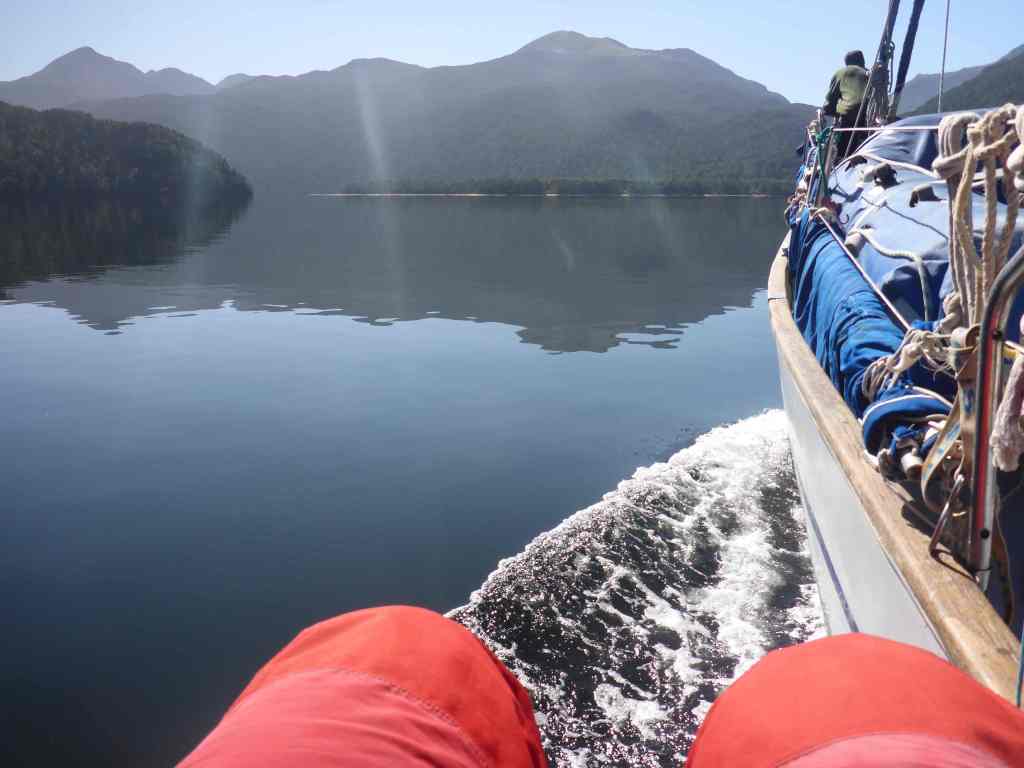
We had come prepared for a swim. Yes, you read correctly … a swim … and the closer we got to the side of the waterfall, and experienced the mass of spray and mist it generated, it hardly seemed necessary to complete the exercise by actually getting into the water.
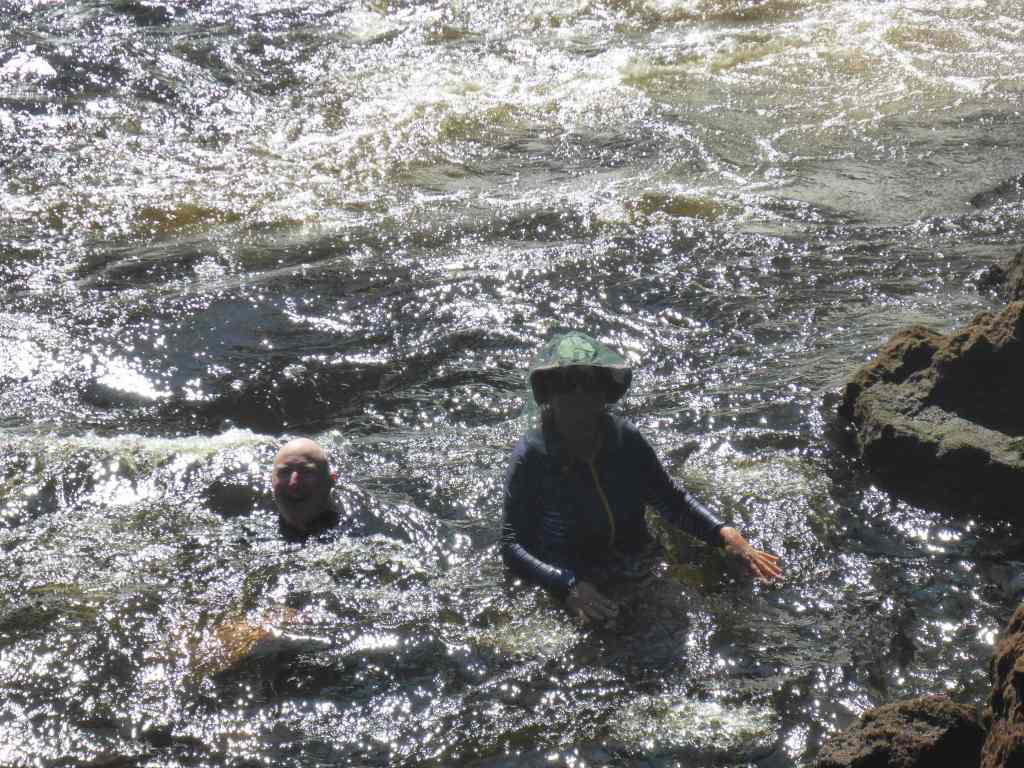
As for the water … the volume coming down the cataract maybe 50 metres in front of us, created such a swift-flowing river, that it actually spoke to us … and the words were … “BE CAREFUL”. So after slipping into the shallows, over the edge-boulters and up to our necks, Matt and I remaining close to the edges, where we could grip strategic rocks above us and the flow of the water was less; still too powerful to swim against, but not so powerful that it simply carted us away and out into the Basin below, nursing a few bruises and scraps to be sure.
As John pointed out, there was also the chance of down-currents, close to the point of impact, that might take us under, and keep us there! Also something to be avoided, if at all possible.
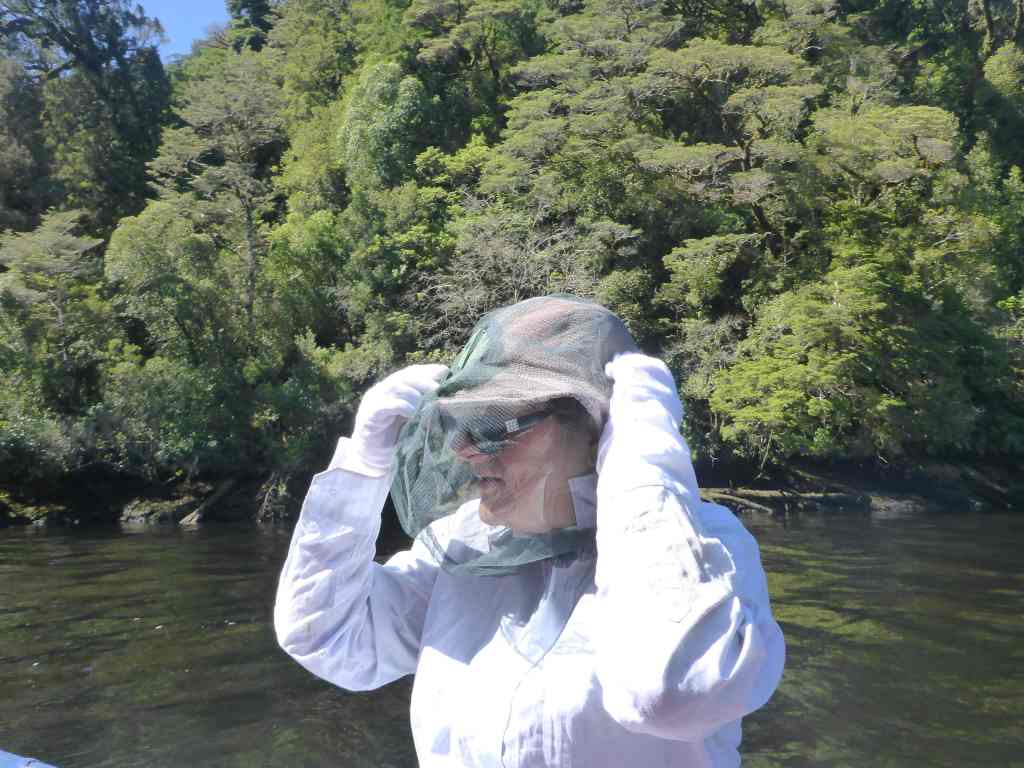
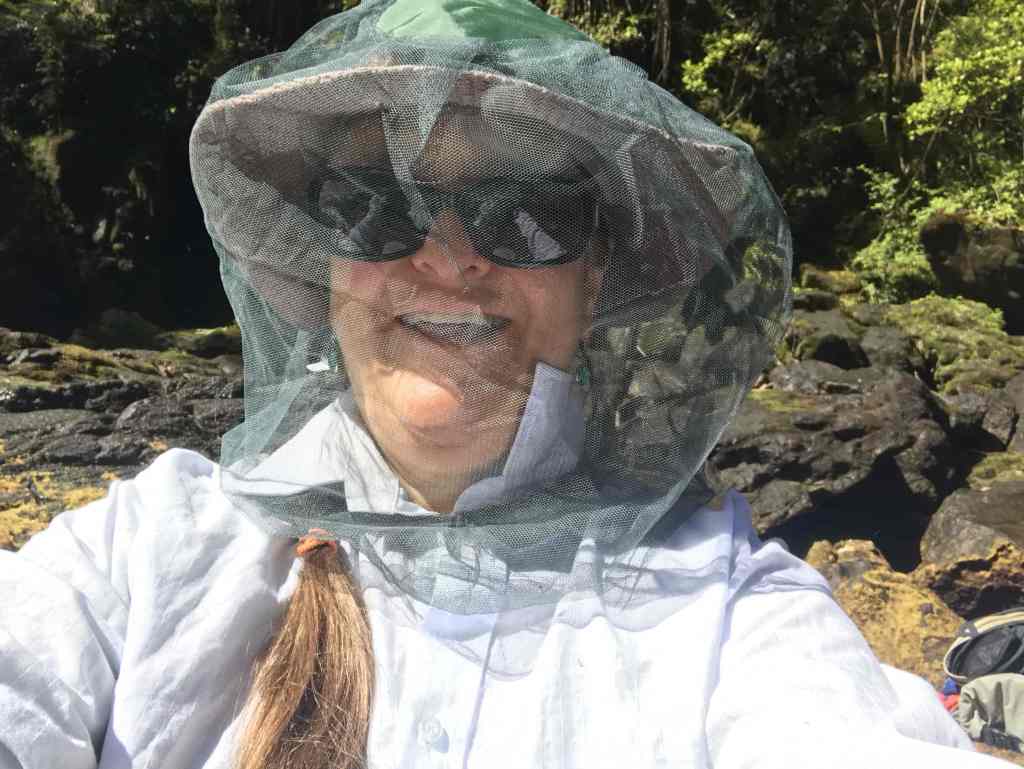
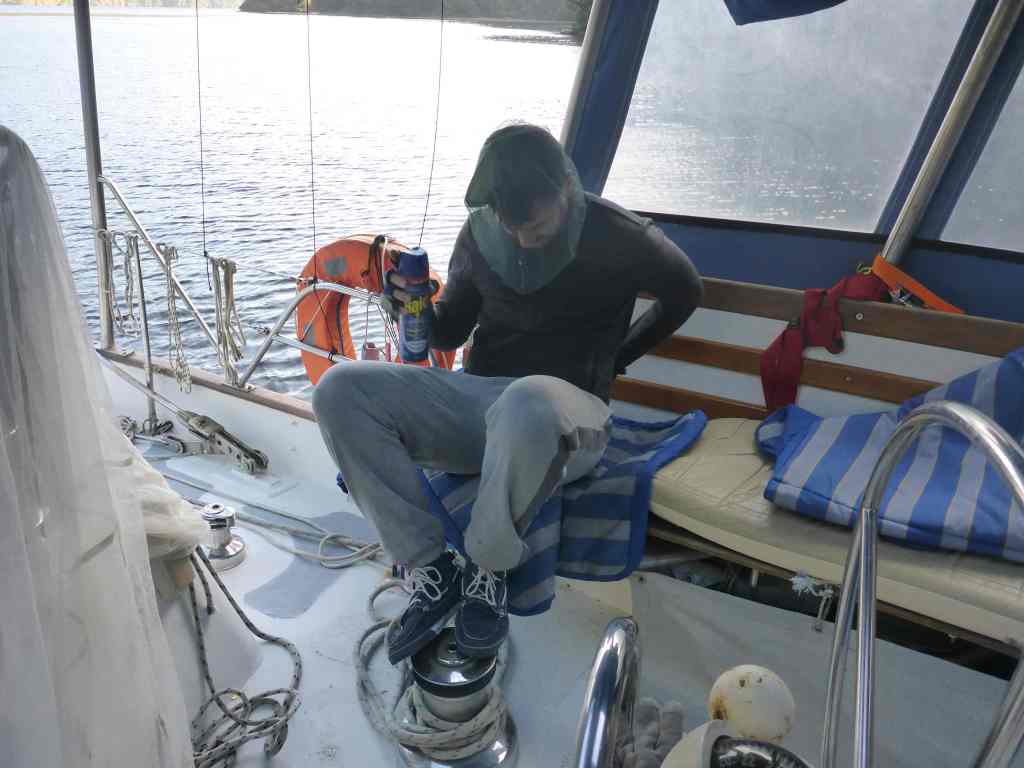
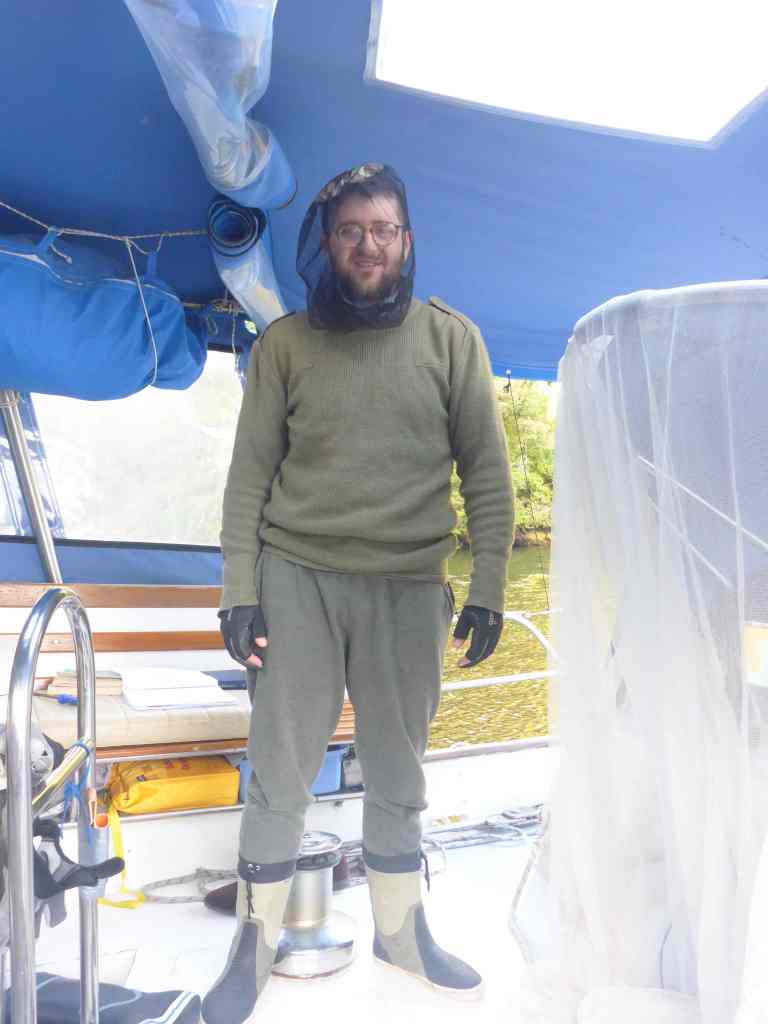
I’ve mentioned sand flies already, but what we experienced on Stewart Island was nothing like we encountered today. Most prepared amongst us must surely have been Linda, looking all the part like a bee-keeper – gloves, hat, netting … you name it. The risky part of course, was disrobing sufficiently to enter the water, which Linda also did, comforted in the knowledge that sand flies do not swim. But they come awfully close, even swarming around your head when the necessity of air brings you up to the surface.
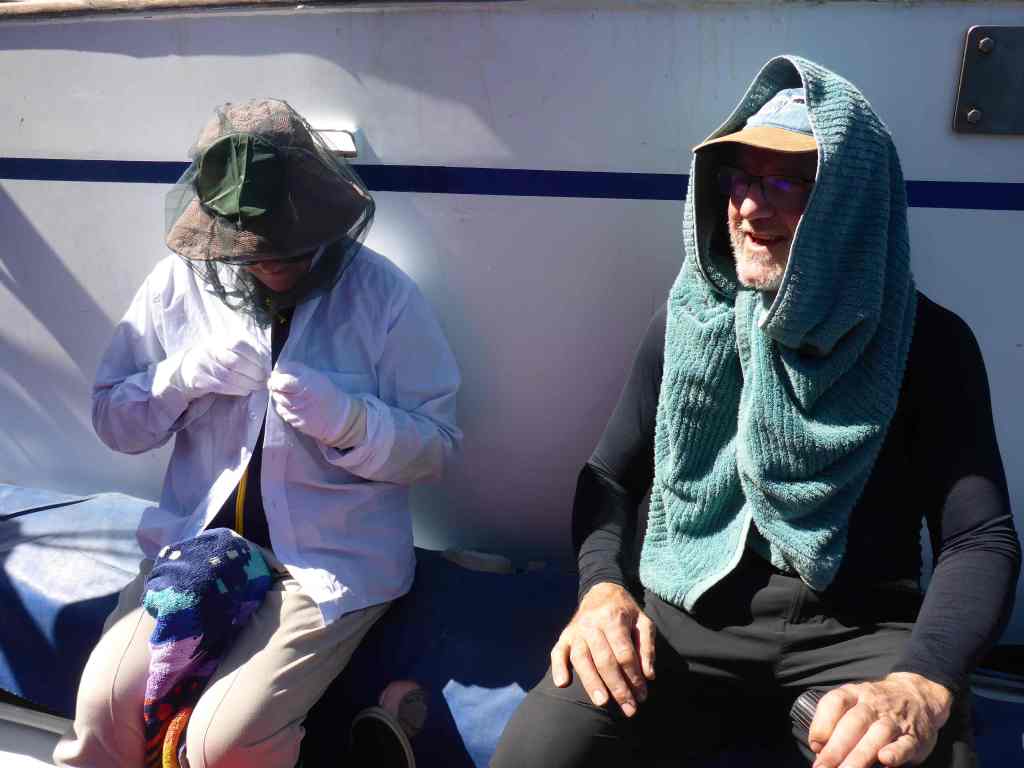
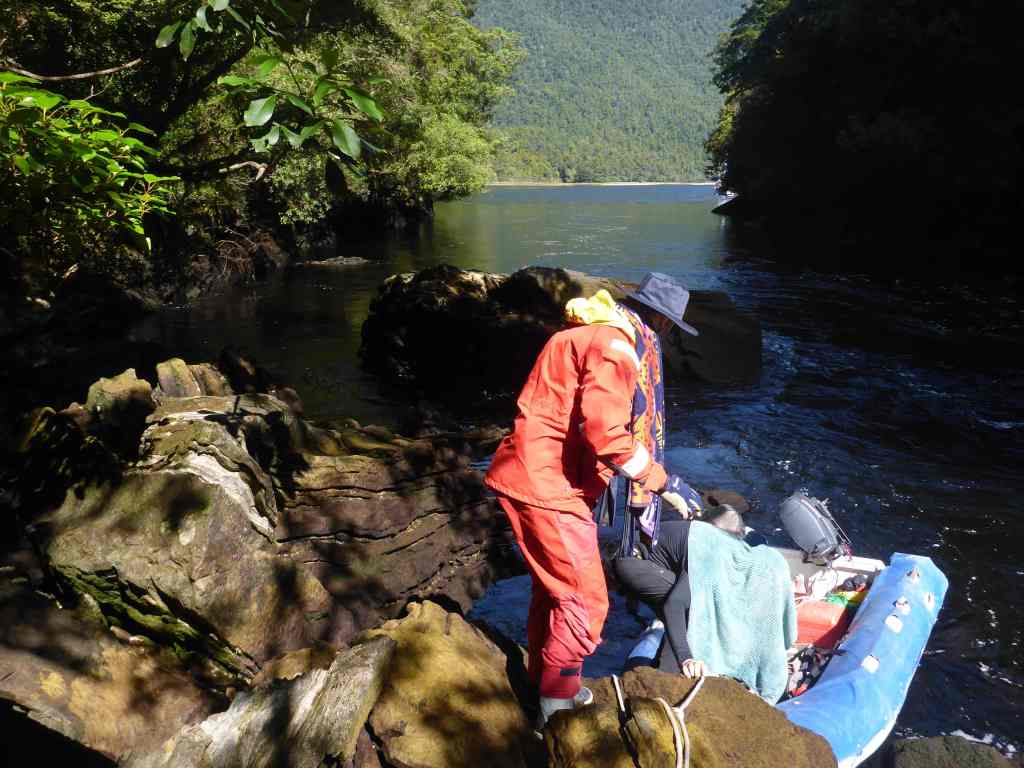
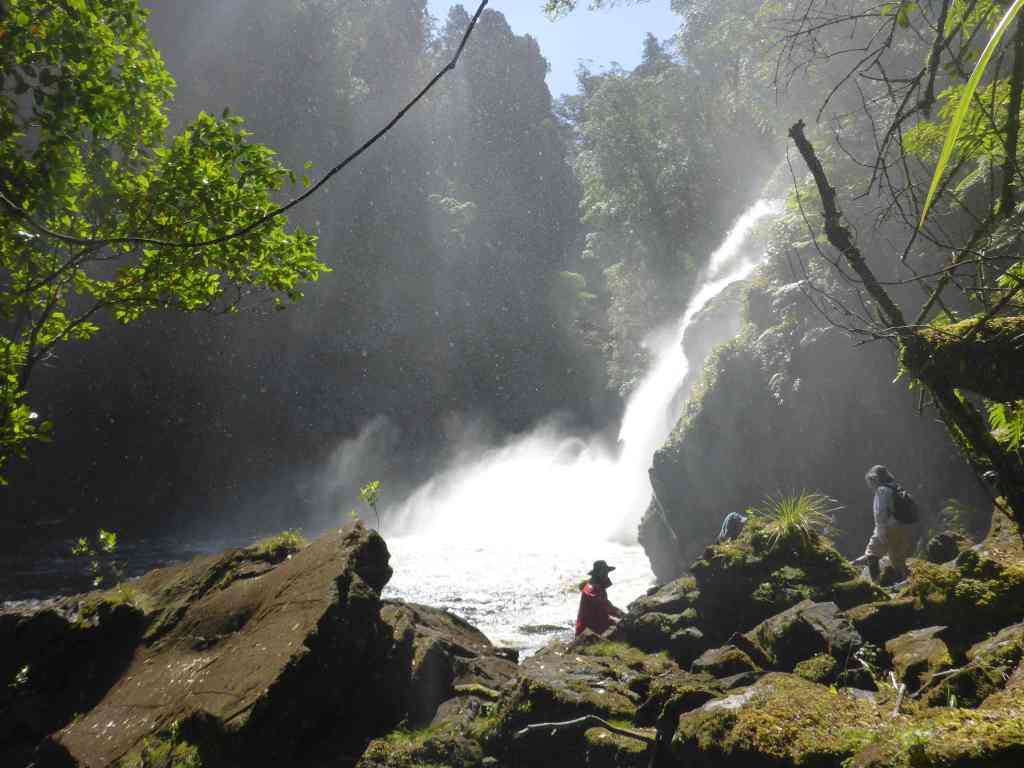
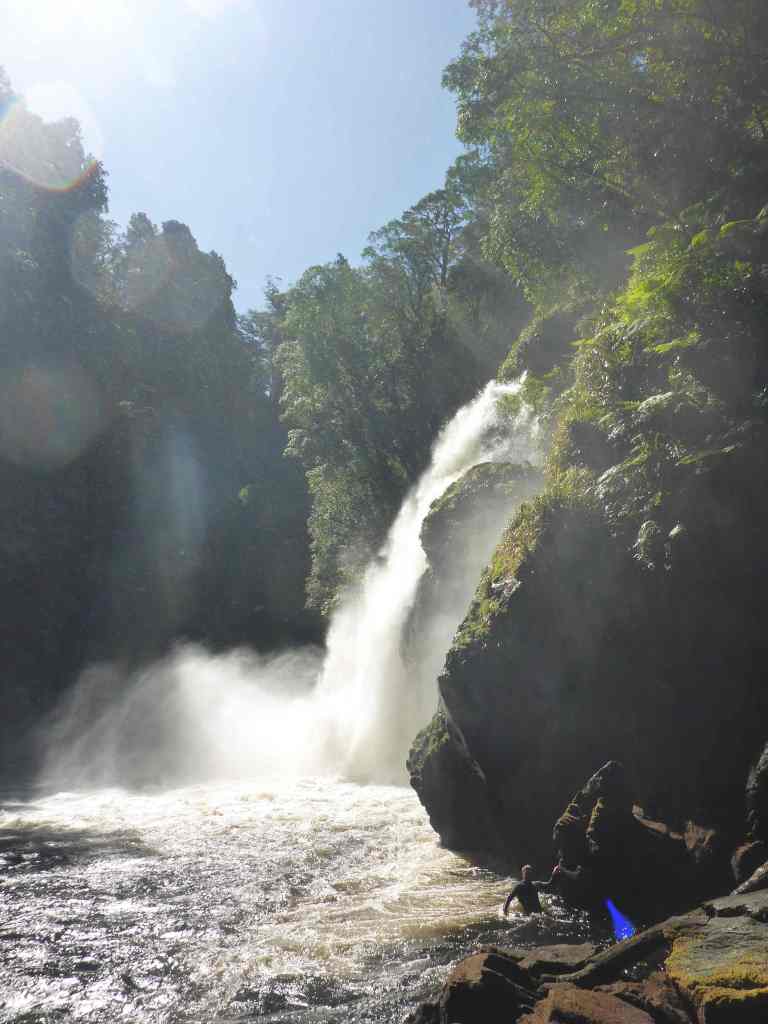
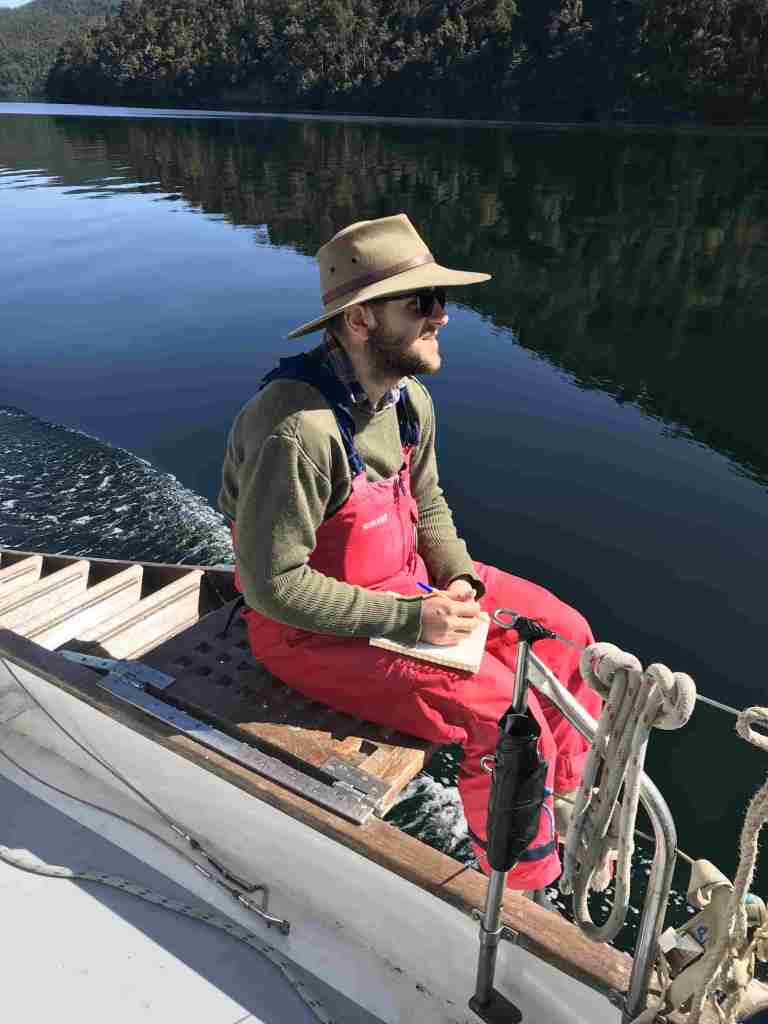
John made good use of his waterfall-visit by reaching for a cake of soap and lathering up a storm, before dunking under, with James taking up position on a large boulder above proceedings, dressed in full wet weather gear against the bugs, where he worked in his sketch pad and note book to record the scene.
It was a stunning and refreshing experience, with the warmth of the sun soon restoring our pink and blue flesh back to life.
While swimming, I made the off-hand comment to John … “Are there any river-monsters we should be aware of in New Zealand streams?” Linda for one, didn’t like the idea of, “that idea” in her head as she entered the rock pool. But afterwards, all of us agreed that we’d felt something rub against our legs in the fast flowing stream, which was rather disconcerting.
By now it was around 4 o’clock and after making sure the netting was securely covering all hatches aboard against the increasing numbers of sand flies, we were faced with a dilemma. Whether we should have a late lunch and a late dinner, or alternatively, a snack instead of lunch, followed by an early dinner.
In the end we settled for the latter.
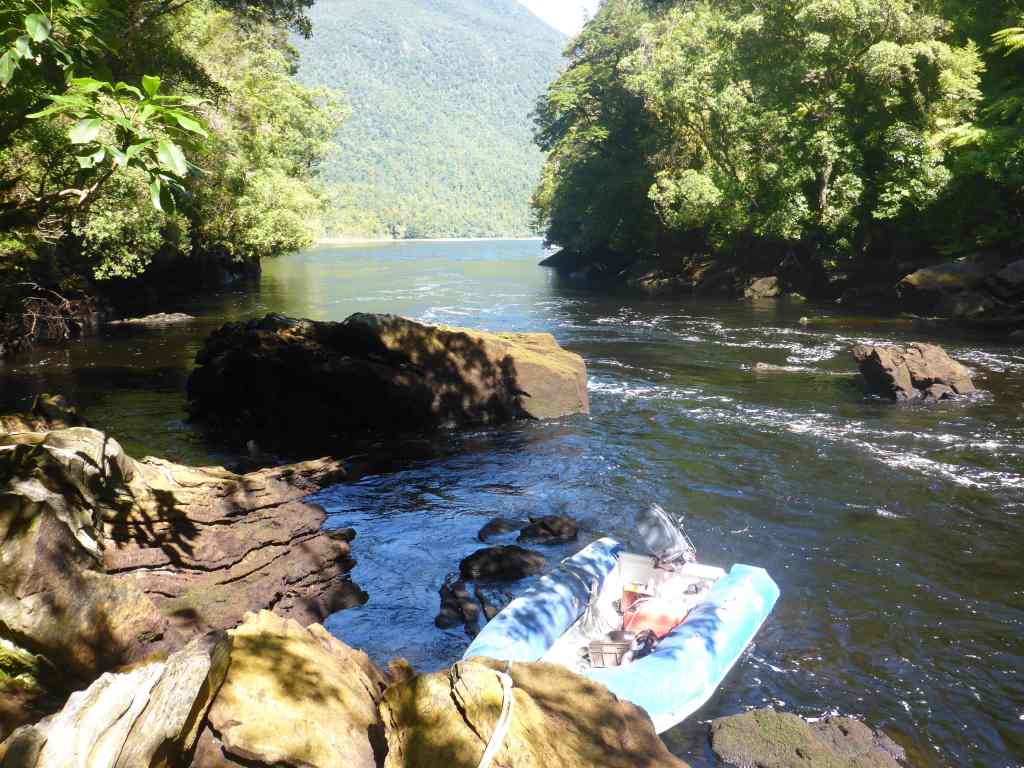
Shortly after, while I was having a snooze in the saloon, the sound of the anchor alarm could be heard. Or was it a fire in the galley – both alarms sounding very similar – no, it was definitely the anchor. The problem being that a light afternoon breeze from down the Sound, had spun us around. So, whilst the anchor remained in 10 metres of water, Chimere was now in about 2-3 metres of water; facing out of the Sound, instead of in.
No problem. Just start the motor, retrieve the anchor and “park” somewhere else. Except in this case, there WAS a problem. As a precaution against the anchor possibly getting snagged on submerged logs, I’d attached a float to a long line, which was attached to the front of the anchor. And before we’d realised it, the rope had gone under the boat and caught in the propeller.
Now, this is definitely the sort of experience that falls into the category of … “… of things that happen on the voyage, stay on the voyage”. But, in the interests of full disclosure and honesty, I’m saying it now … “we got a rope around the propeller”. It could be worse of course … it could have been fishing line … but whilst we were far from being in any danger, it was something that needed to be fixed sooner rather than later.
After turning off the motor, John was soon in the dinghy reaching down over the side, with a boat hook and face mask, doing what he could in the tannin-brown water, to clear the white nylon line that had also attached itself to the rudder.
After 10 minutes of this, it seemed clear that we had to go down with a knife and do whatever needed to be done to untangle the rope, if it was at all possible.
So that’s how I got my second swim for the day. Although, it definitely lacked the “recreational element” of the first swim, as I struggled to fill my lungs with enough air to dive down as far as the propeller. The water was as chilly and brown as before, and after fifteen minutes and maybe five or six brief duck-dives with a sharp knife, I could finally declare, “got it!” as I handed the remains of the rope up to John in the dinghy.
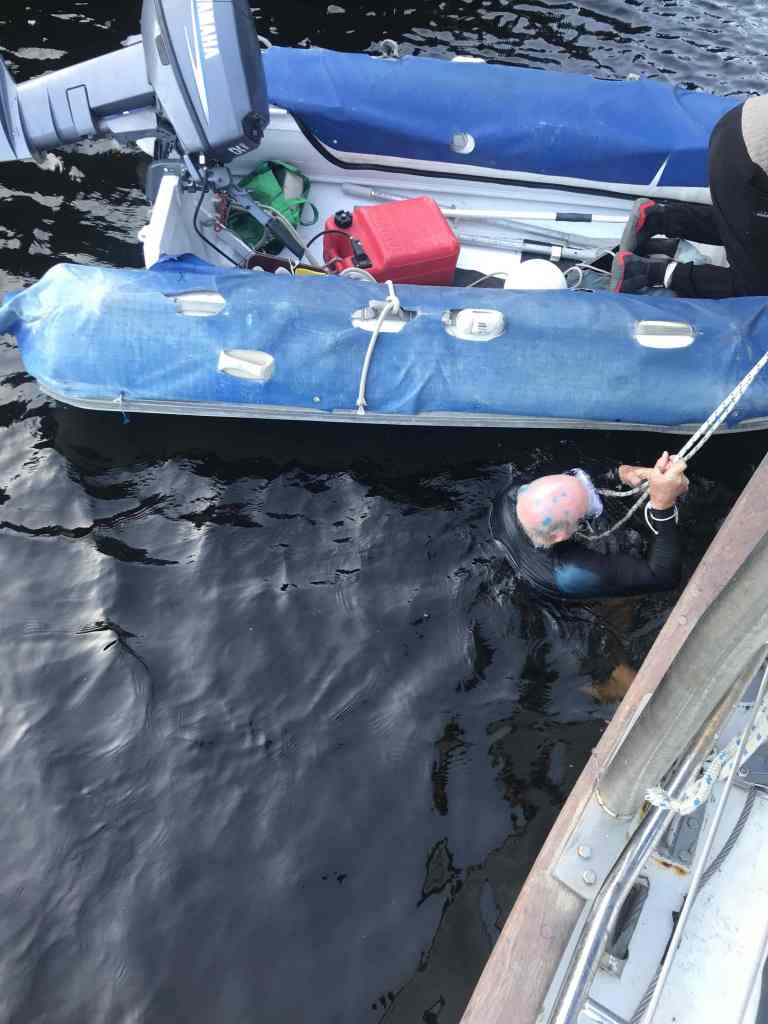
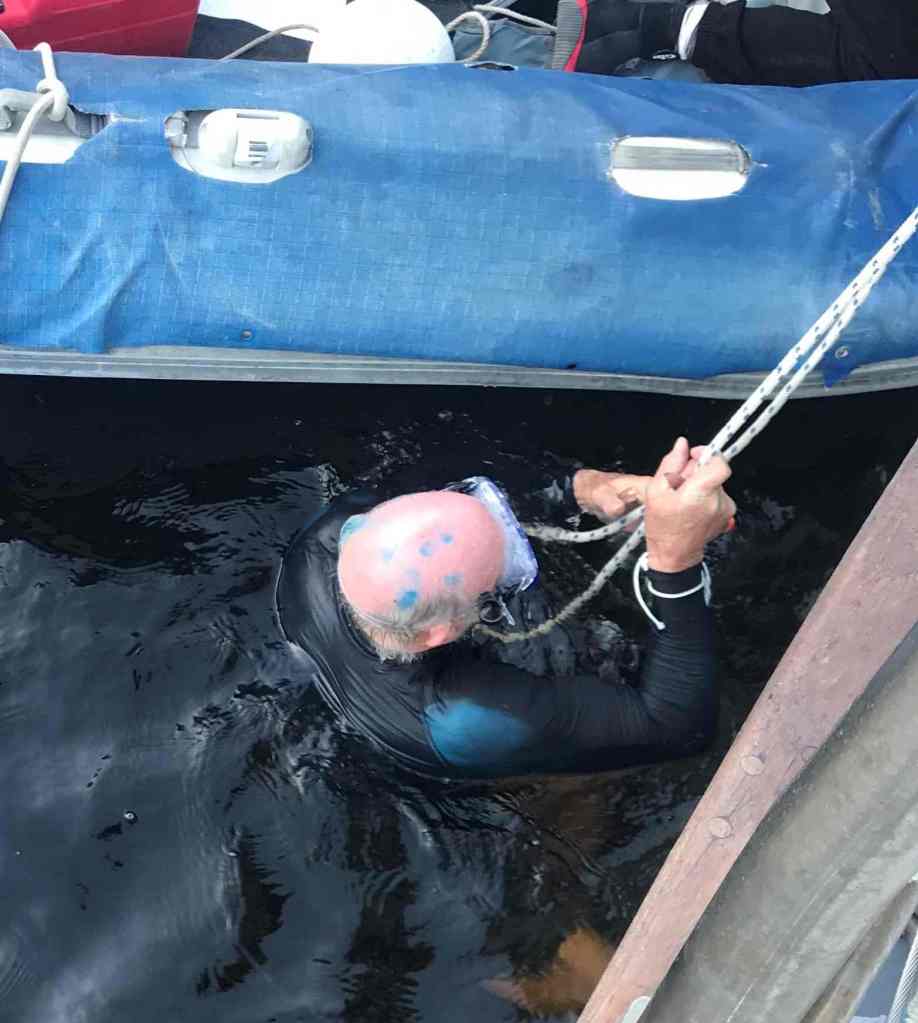
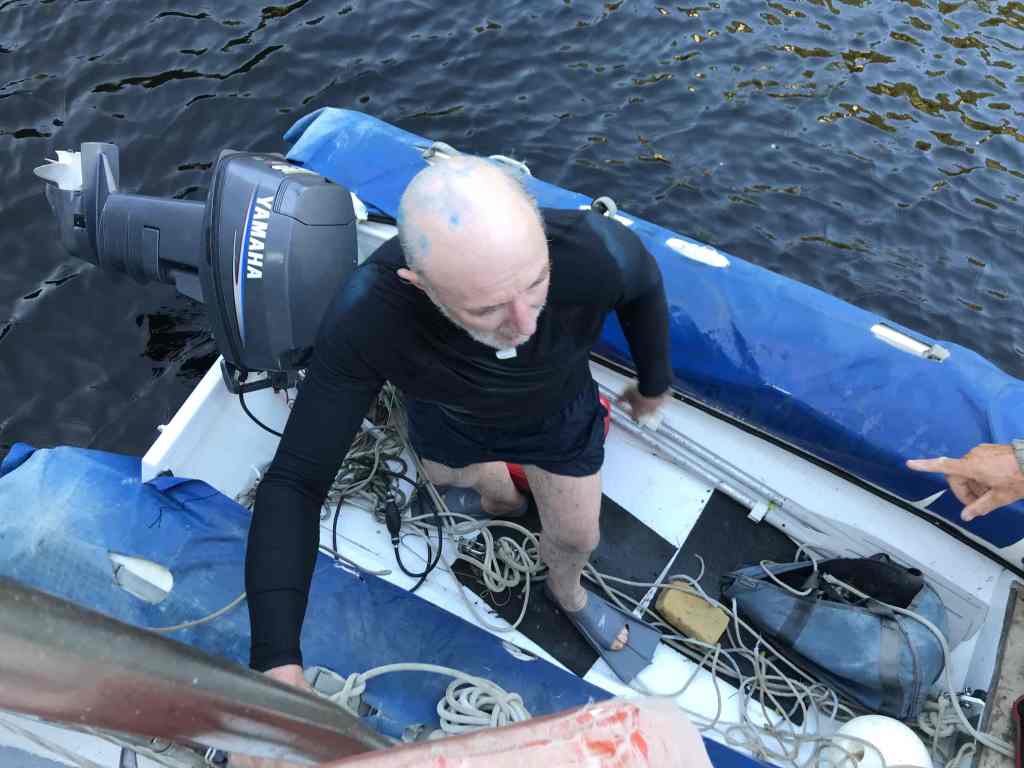
Won’t let that happen again!!
Once aboard, it was a case of warming up in dry clothes, before re-anchoring a bit further out in the Basin, where the last of the day’s sunshine still shone, and where we all agreed, the sand flies would have greater difficulty reaching us.
Dinner was another wonderful fish ensemble, with everyone retreating to bed early. Tomorrow we plan to be away by 9:00am, with the waters of Chalky Sound, a short distance to our north, beckoning.
Smooth seas, fair breeze and Sounds of majestic grandeur
Rob Latimer
PS I’m still looking for extra crew to assist with the 8-day voyage, from Milford Sound to Wellington, starting on 14 March. If you or a friend want to join us, please sing out ASAP. Email me on the satphone at … msm1@clientsatmail.com.au and latimerfamily4@gmail.com but remember, no file attachments)
 NZ2020