Lake Cove, Chalky Sound, Fiordland
Friday 6 March 2020
CAPTAIN COOK, Second Voyage, 25 Match 1773: After sailing 117 days without sight of land, covering thousands of miles across the Southern Ocean, as far south as 60 degrees south, Captain James Cook made landfall at Chalky Inlet, which he mistook for Dusky Sound (just a few miles further north). A region he had charted three years earlier.
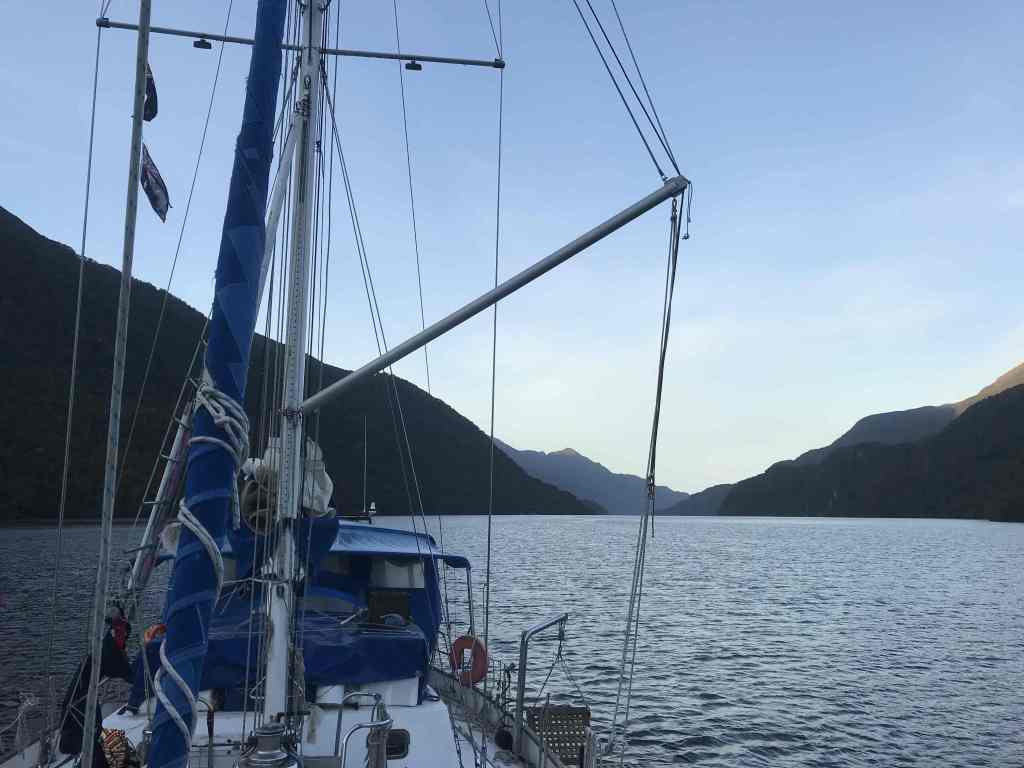
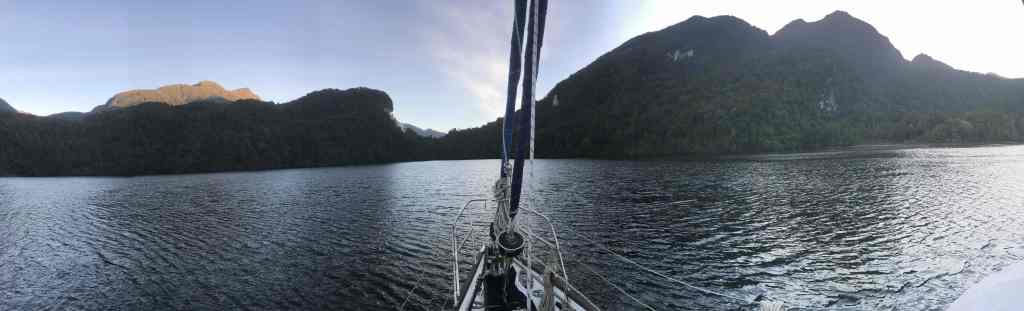
Cook writes: “… we were at an entrance to a bay, which I had mistaken for Dusky Bay, being deceived by some islands that lay in the mouth of it. Fearing to run, in thick weather, into a place to which we were all strangers, and seeing some breakers and broken ground a-head, I tacked in twenty-five fathoms of water and stood out to sea.
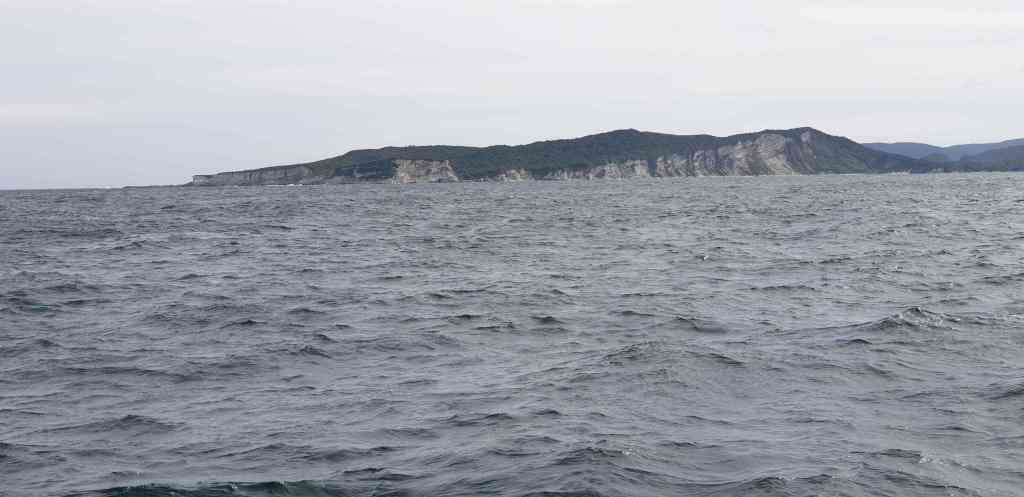
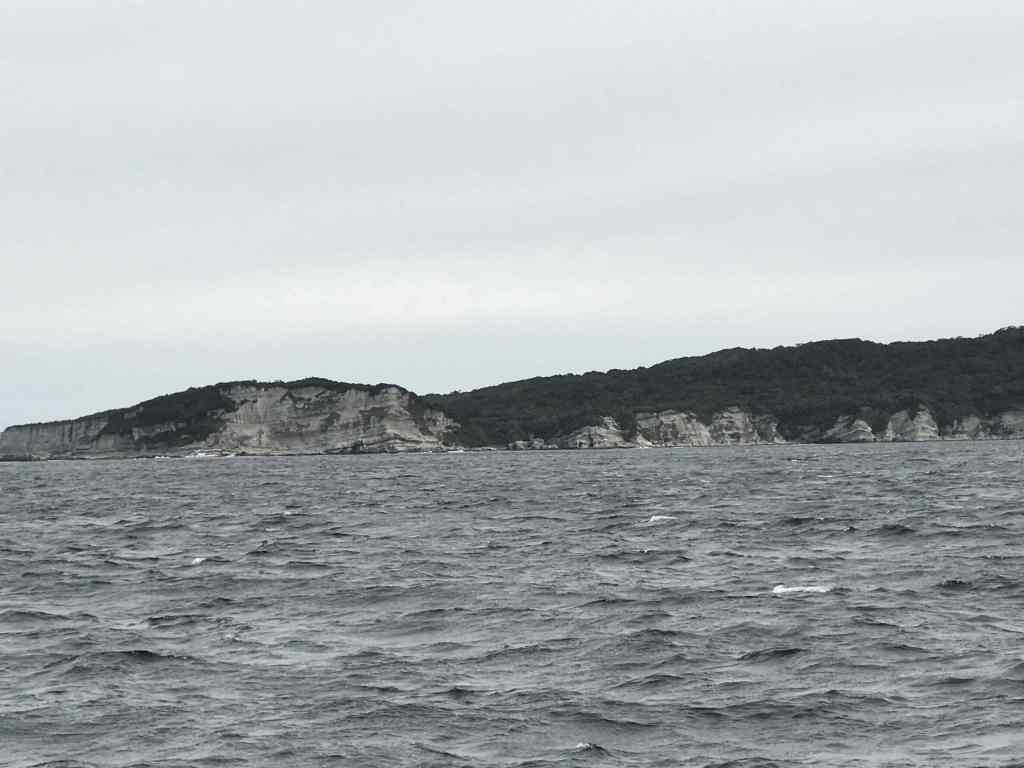
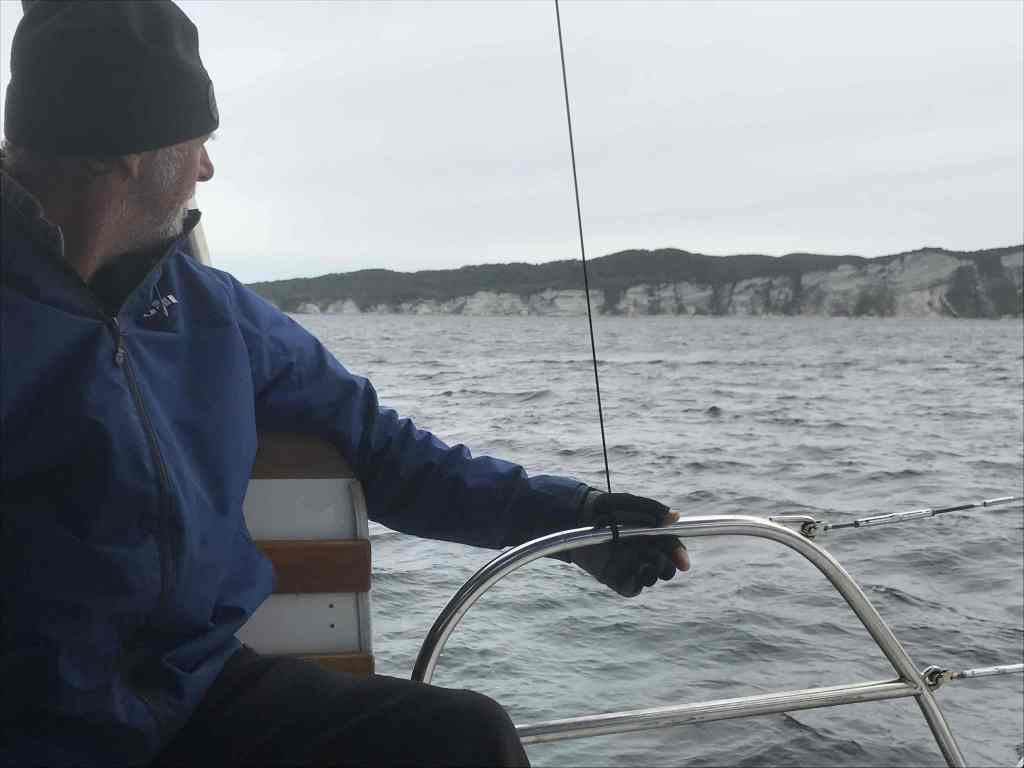
“… this bay may be known by a white cliff on one side of the isles which lie at the entrance to the bay. This part of the coast I did not see but at great distance, in my former voyage; and we now saw it under so many disadvantageous circumstances, that the less I say about it the fewer mistakes I shall make. We stood out to sea [again] …
“Here we had a great swell rolling in from the SW … having a very high and irregular sea. At five o’clock next morning the gale abated and we bore up for land, and entered Dusky Bay about noon.”
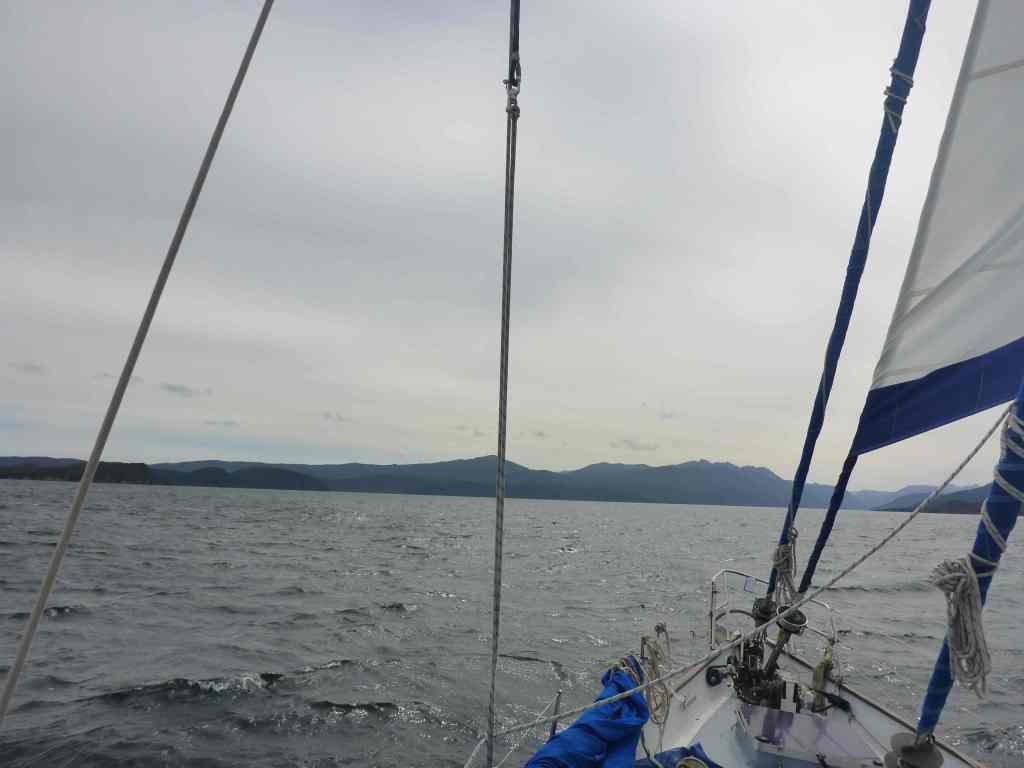
Reading Captain Cook’s journal, while sailing in the same waters he explored and charted nearly 250 years ago, brings an even greater level of respect and admiration for the man and his crew.
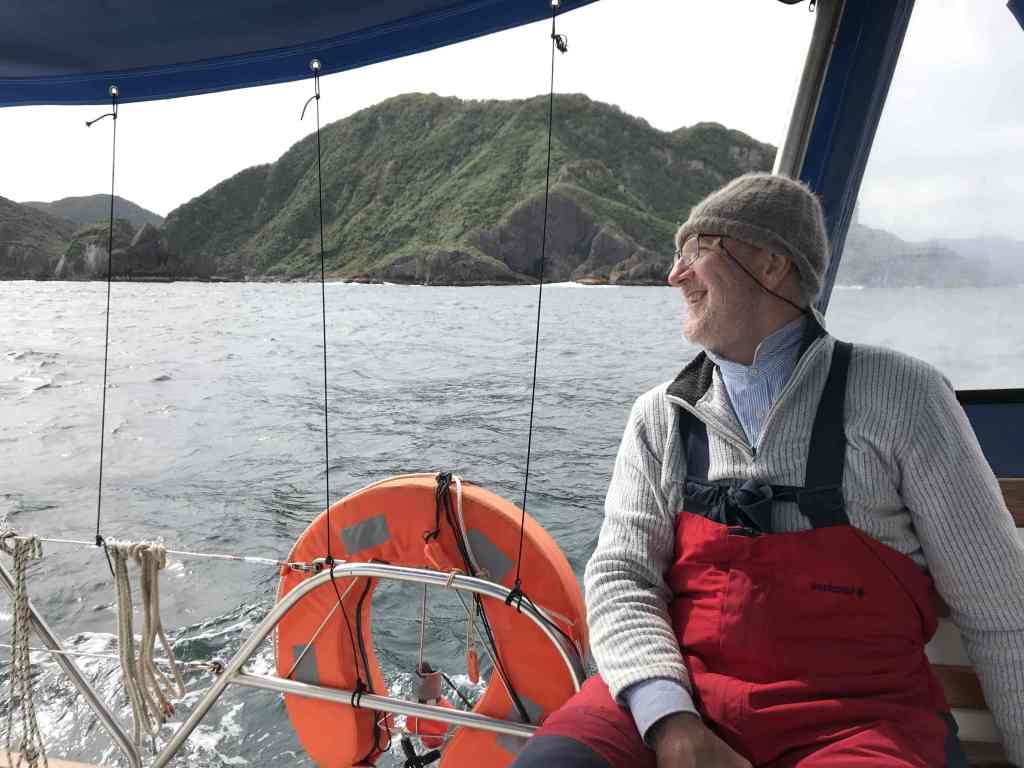
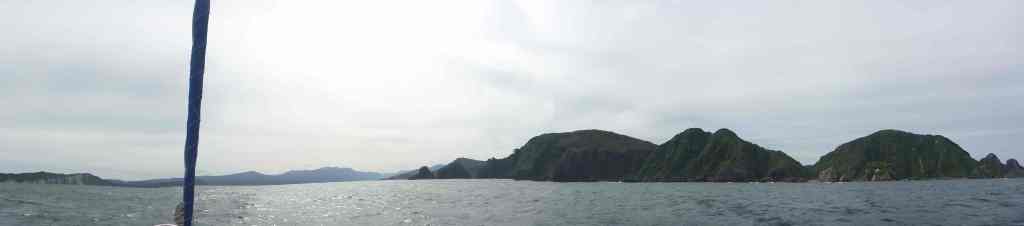
Today, we sailed past those barren white cliffs, that gave the inlet its name – Chalky. Two days ago, we experienced the … “very high and irregular sea” described and endured by Cook and his men. And in a couple of days we plan to enter Dusky Sound, to anchor in Pickersgill Harbour, stand on Astronomers Point and sail around the coast of Resolution Island.
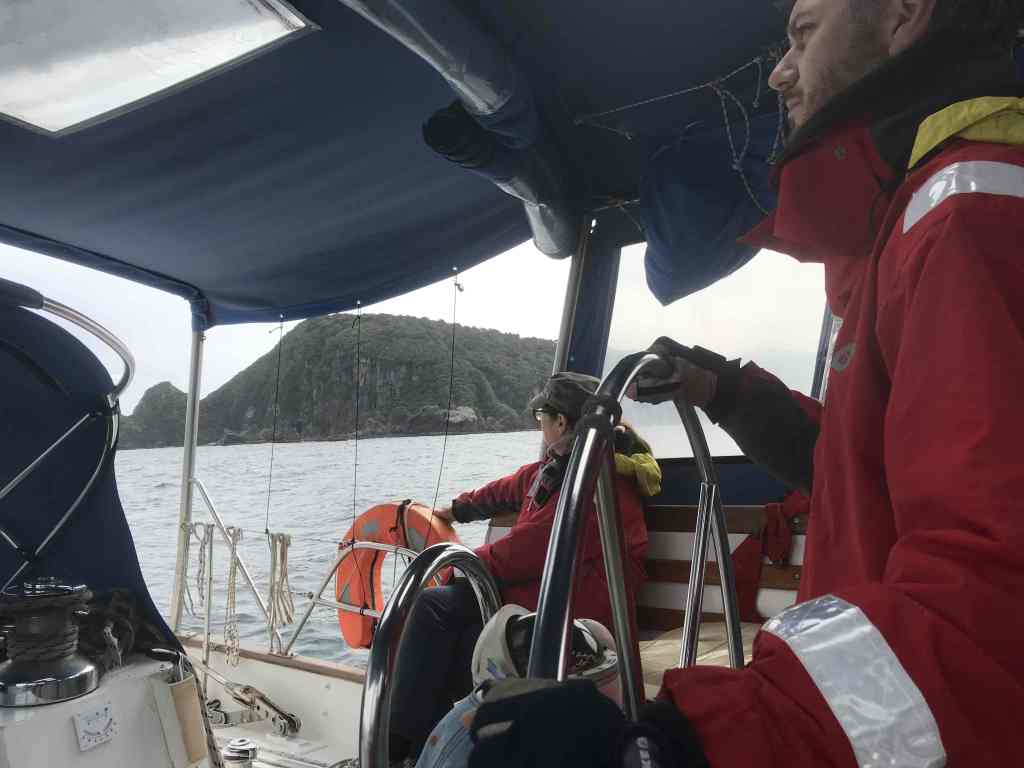
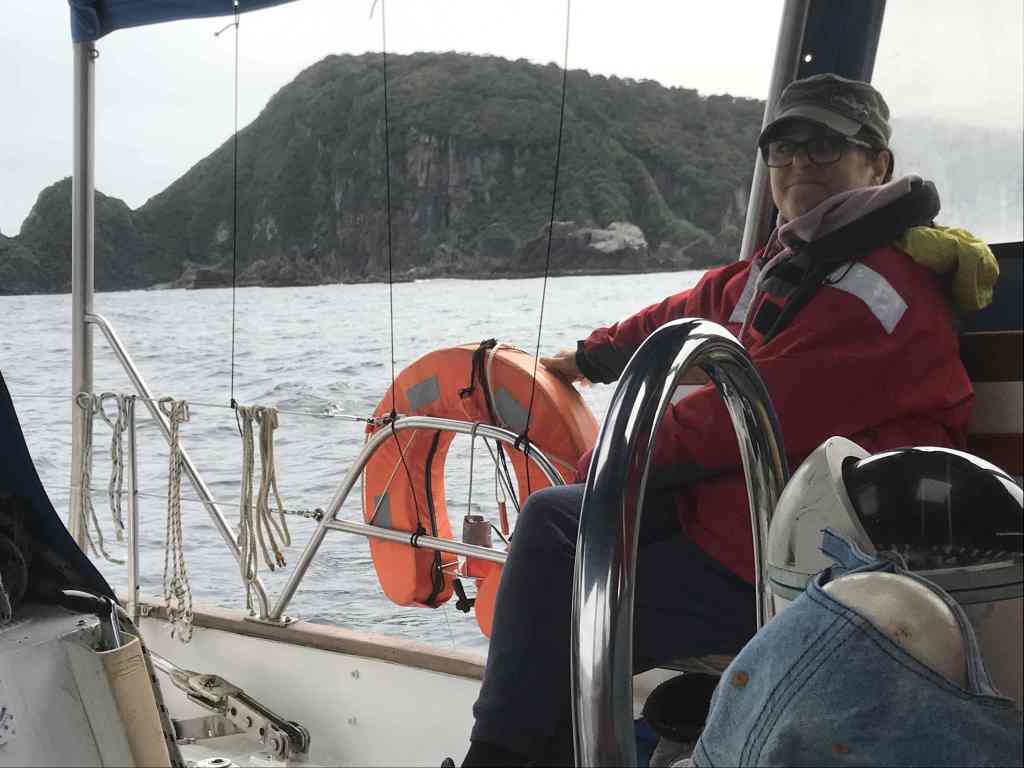
The more you consider the achievements and abilities of Cook, along with the far-reaching implications of his discoveries – for each one of us, even today in 2020 – the more you can accept and understand the descriptions of the man as recorded in his many biographies. In particular that by Christopher Lloyd when he writes, “Cook’s character was summed up in the names of his ships Resolution, Endeavour, Adventure and Discovery”.
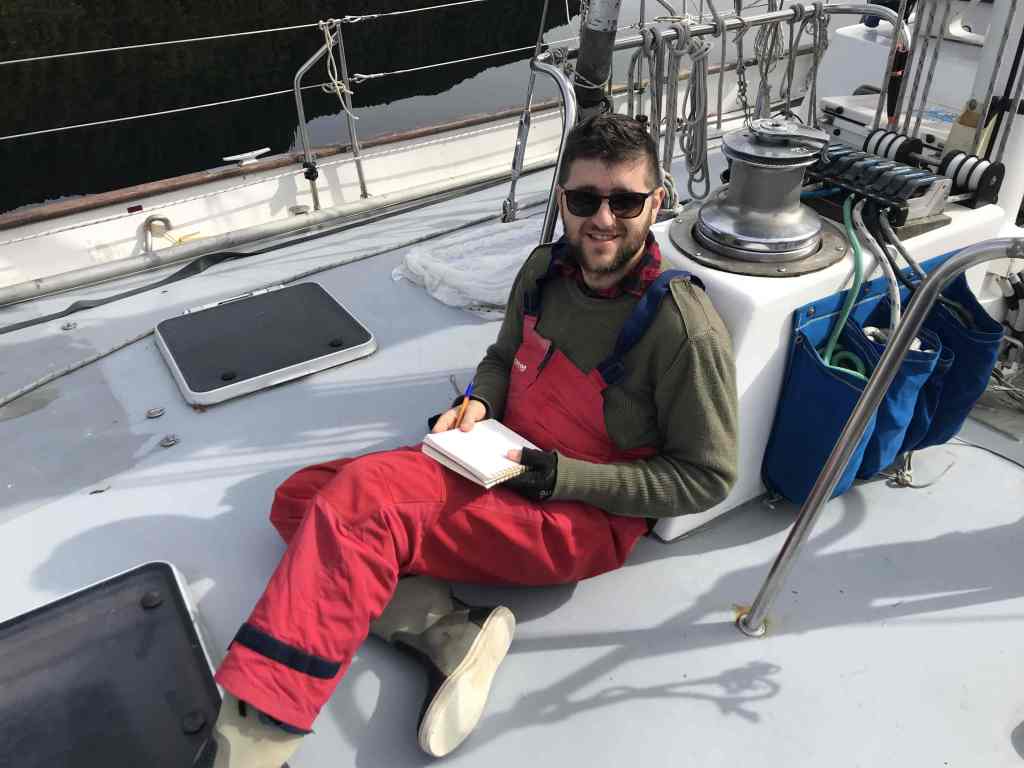
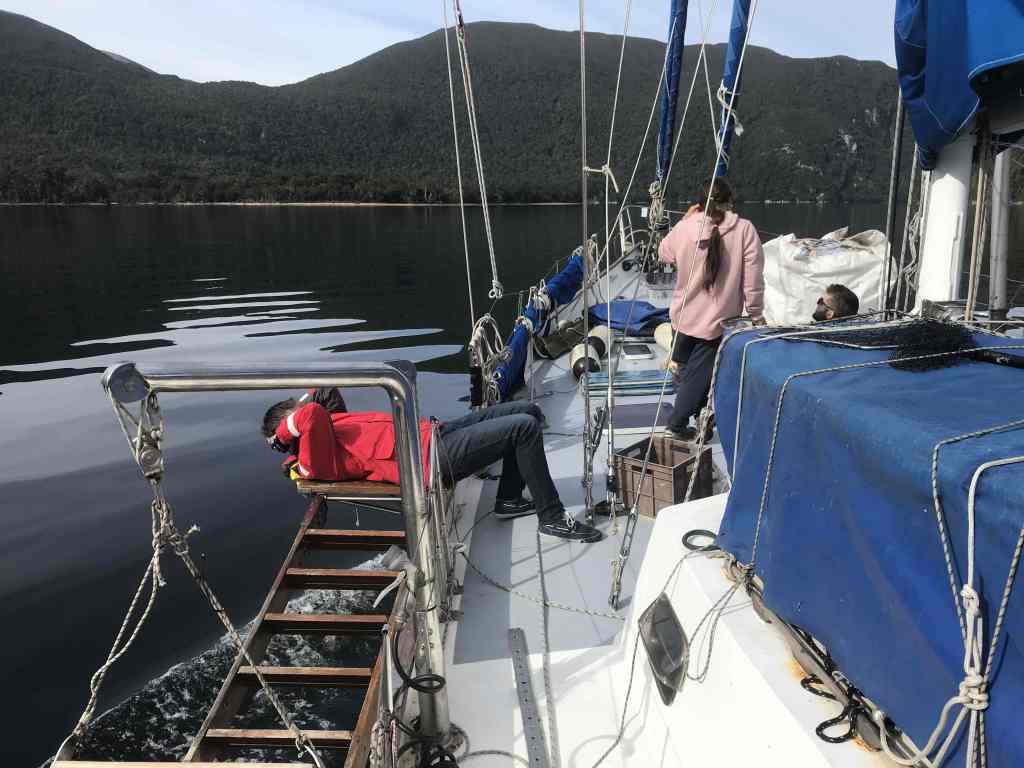
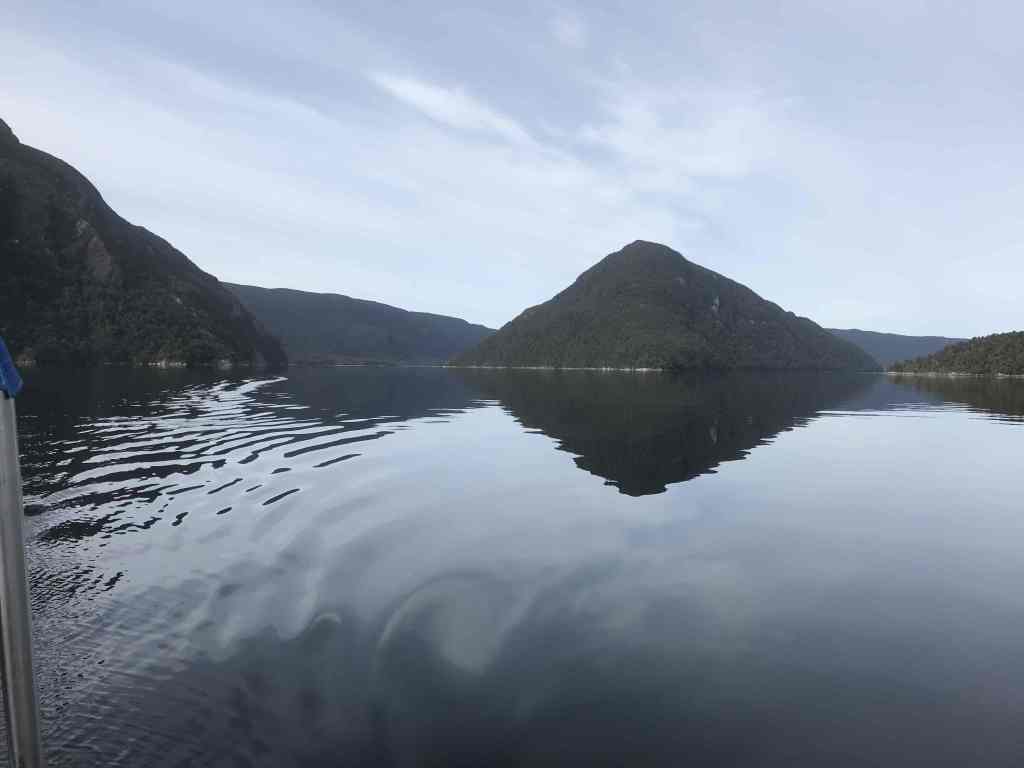
Meanwhile, back on the SV Chimere, ours was an extremely still night at Cascade Basin; once we’d re-anchored in deeper water, roughly 250 metres further away from the waterfall. Morning brought a clear sky, with the sun kissing the western slopes of the higher peaks around us.
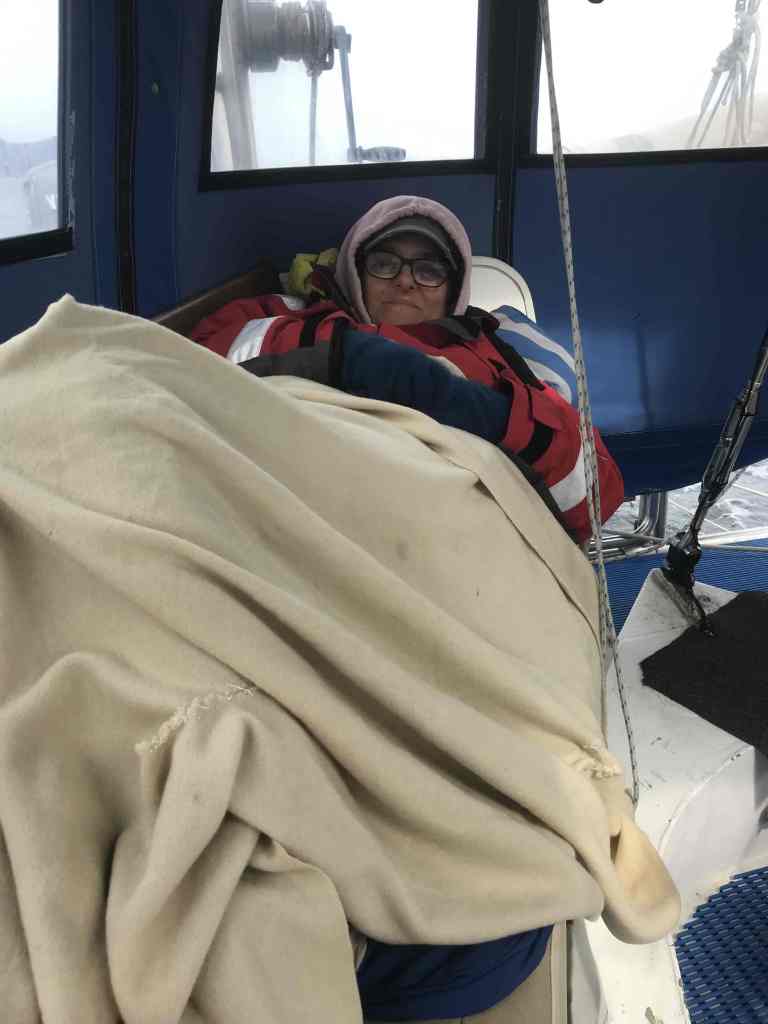
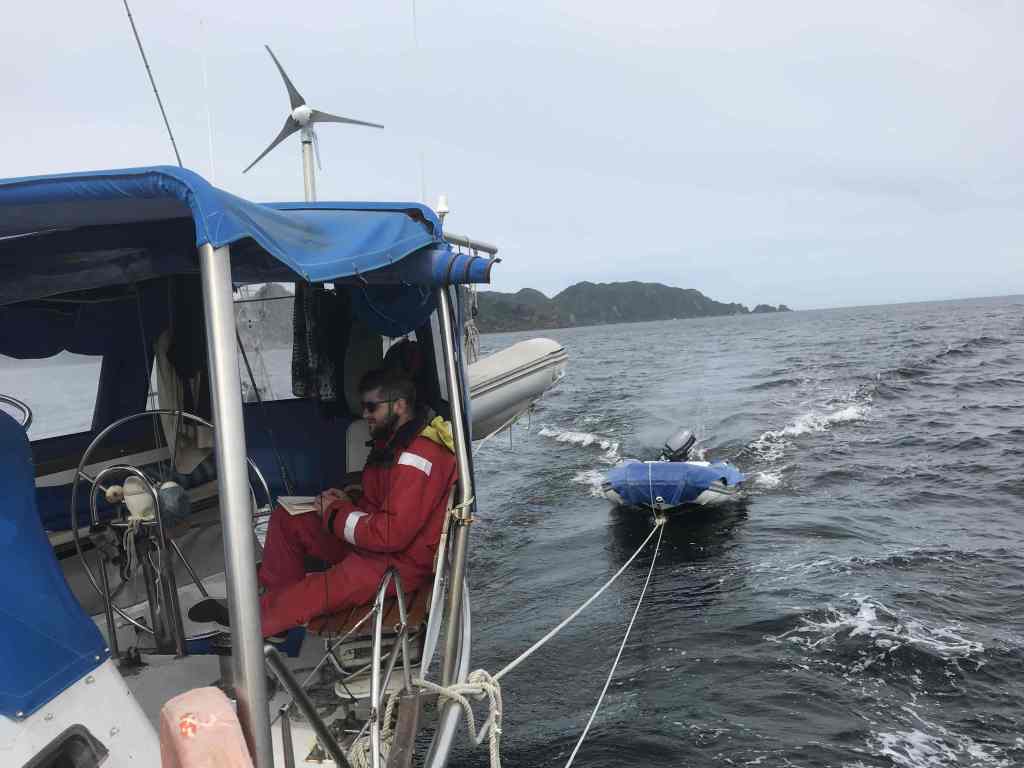
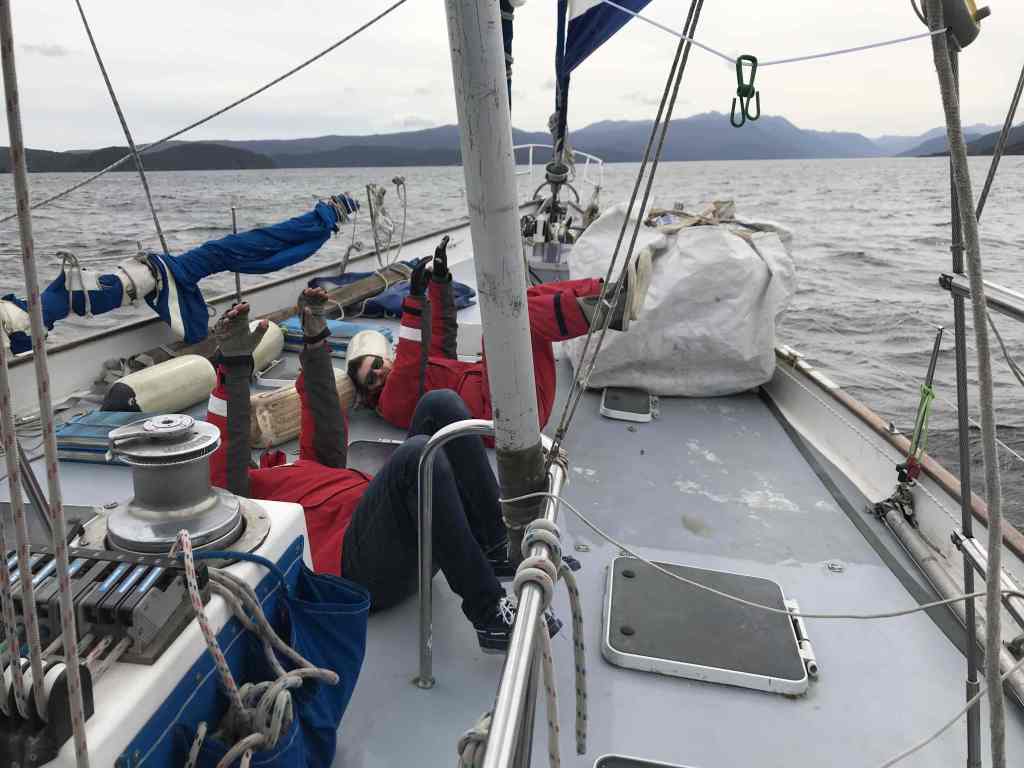
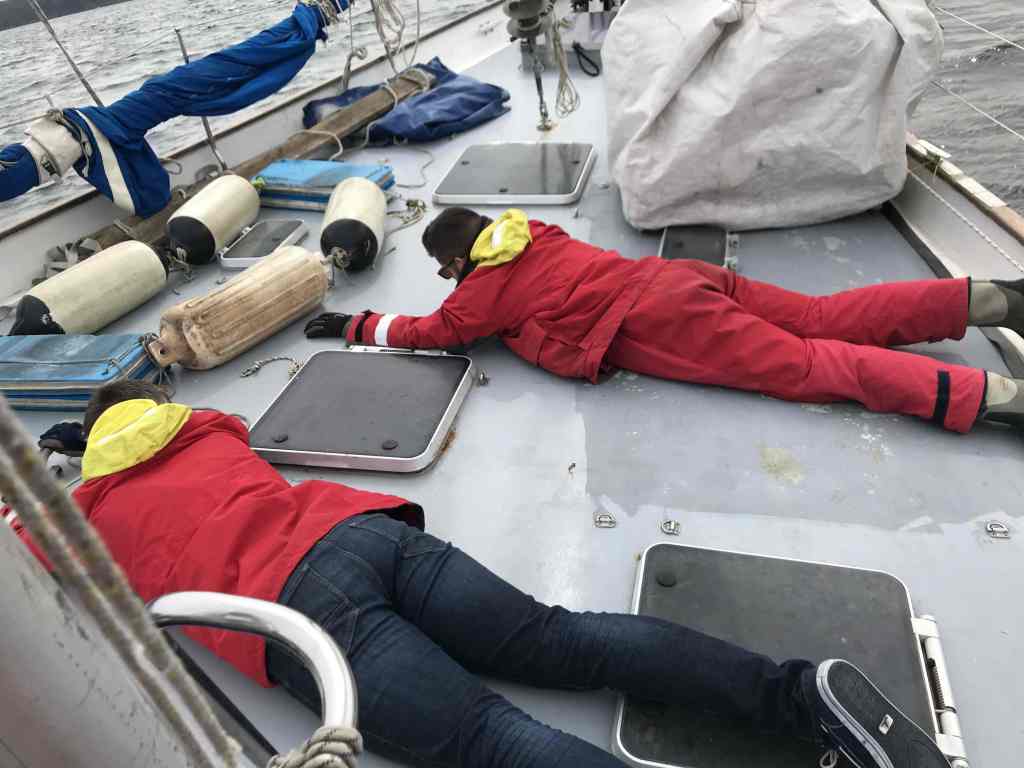
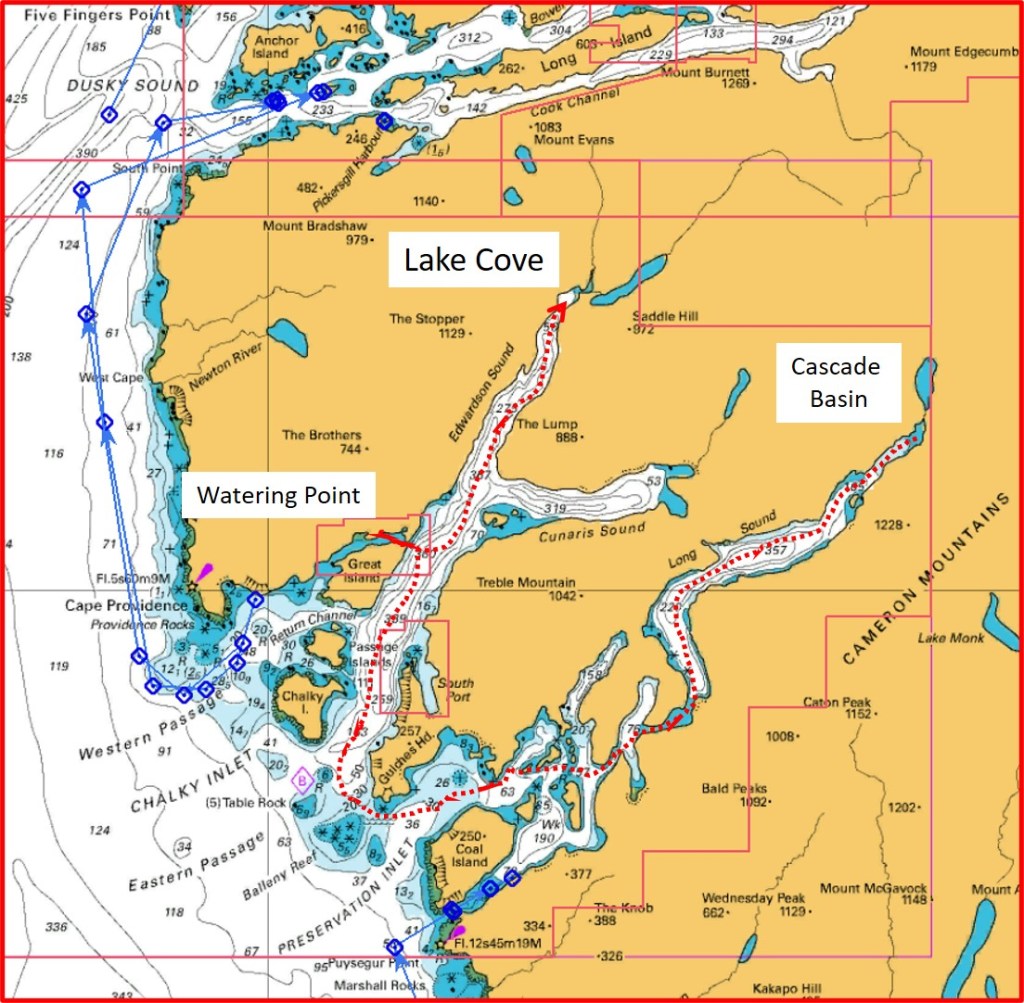
By 9:00am, we were away as planned, retracing our “bread crumbs” from the day before, down Long Sound and briefly into the Tasman Sea, before veering to starboard and up the Eastern Arm of Chalky Inlet.
On our way, we decided to pay a visit to Useless Bay, where we intended to tie up to the trees to fill our water tanks from a hose that brings the fresh stuff down from a small lake up on the hill. We’re not sure how Useless Bay got its name, but it can’t have had anything to do with the [very useful] convenient water supply.
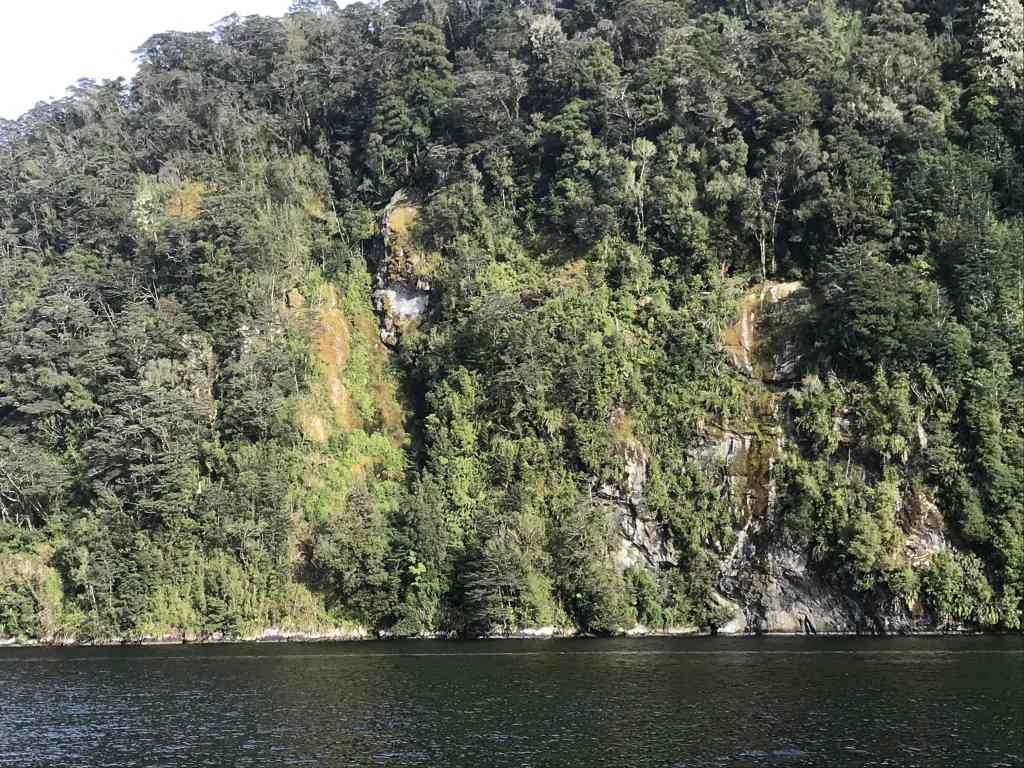
On approach to the … water pipe in the trees, below a steep tree-covered cliff, we observed that a large motor boat was already tied up at the cliff. Once we were withing talking distance, the skipper (John) explained that they were a charter vessel out of Dunedin, with passengers flying in and out by helicopter at designated spots; including Cascade Basin and Chalky Inlet.
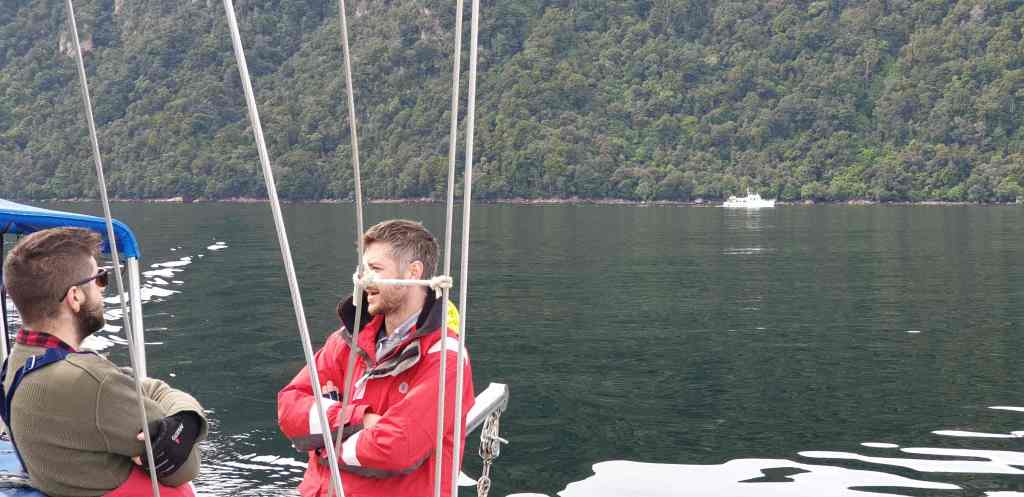
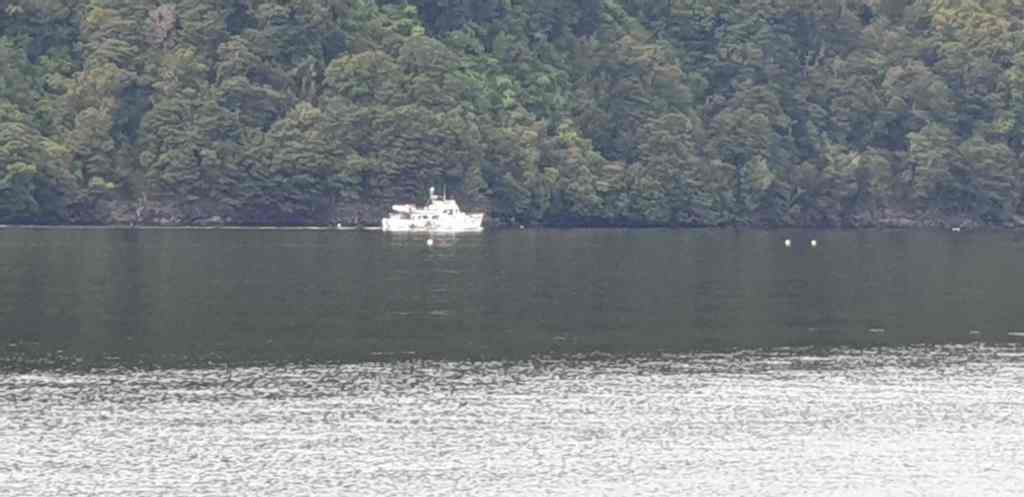
How long would they be tied up getting water? … “about 30 minutes”, came the reply … “the flow is pretty slow”, he continued, as we discussed pleasantries about where we’d come from and where we were headed.
“There’s another watering point, if you are going to Chalky Sound, and it’s got a stronger flow”, the skipper, explained … and after reaching for our Cruising Guide I was able to locate it, off Great Island, in North Port, which is accessed through Ship Entrance … Got It!
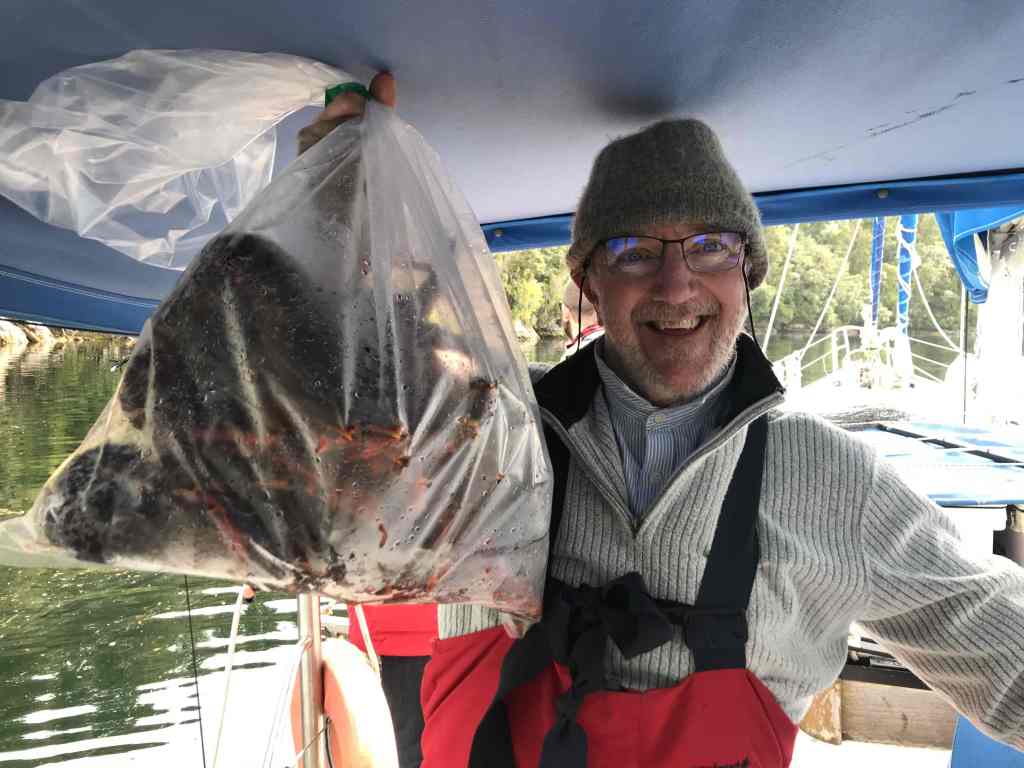
We were about to head away, and as a parting comment, the skipper yelled “Do you want some crayfish?” …
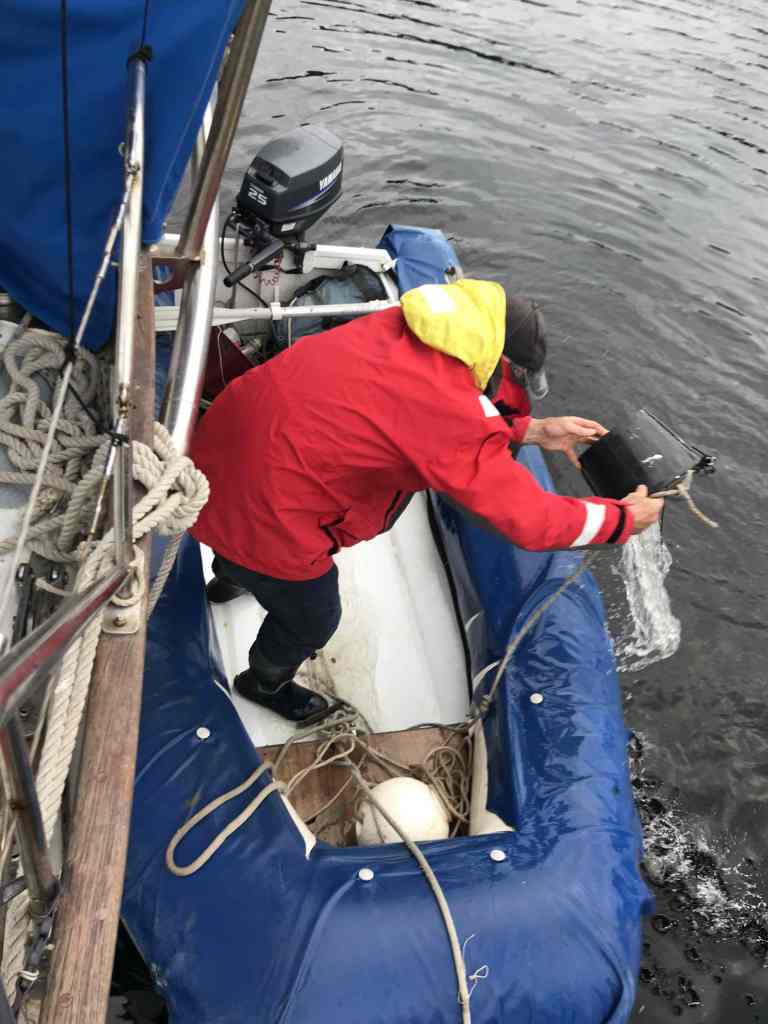
“That would be great”, I called, already half-way to our dinghy, in order to breach the short distance between us. Afterwards, Linda thought I was so keen I looked like I was about to swim across to their boat.
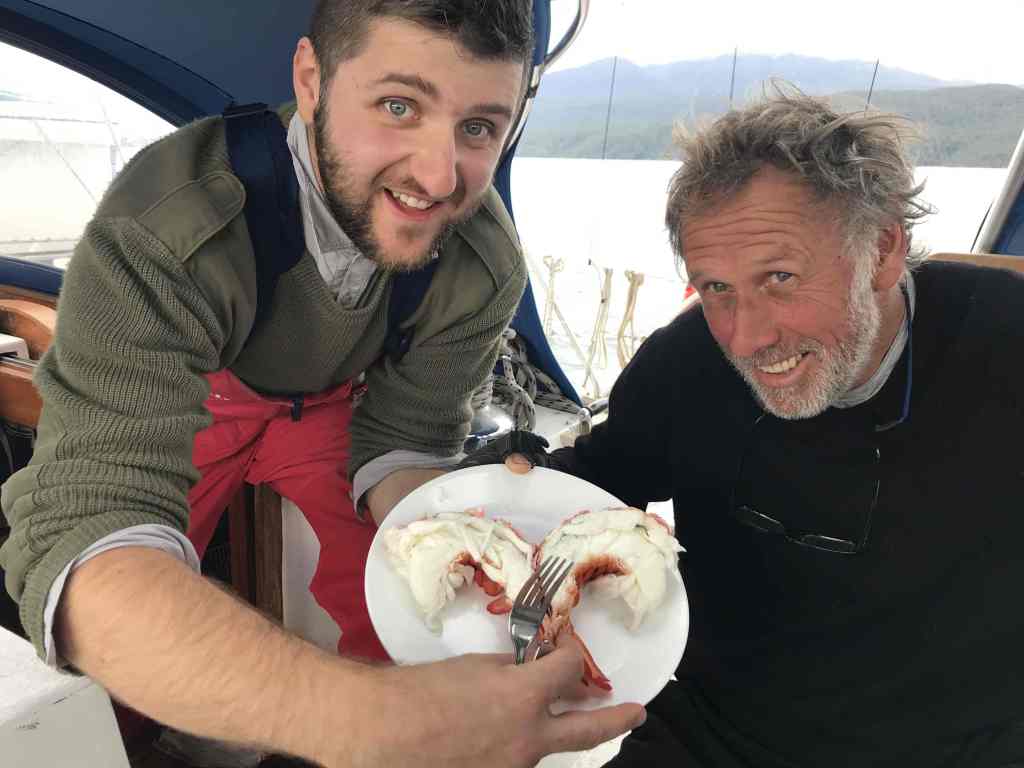
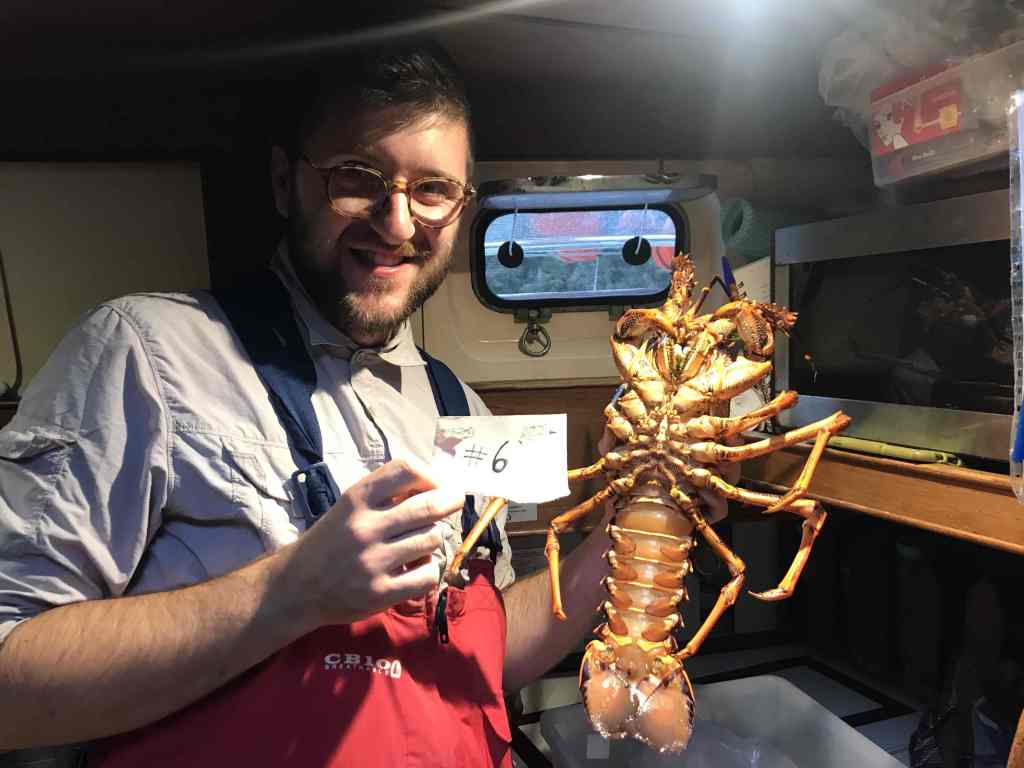
So it was that we “caught” six large crayfish!!
Our 15-20 mile, motor-sail around to Chalky Sound, was uneventful, being over flat seas and with moderate offshore winds.
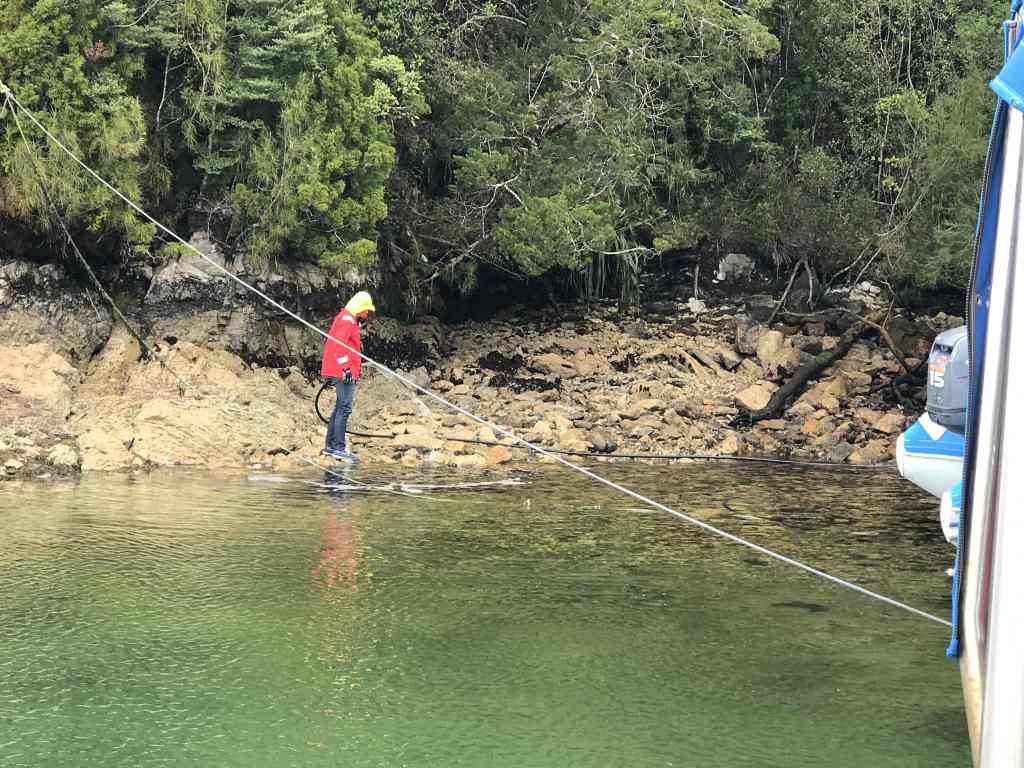
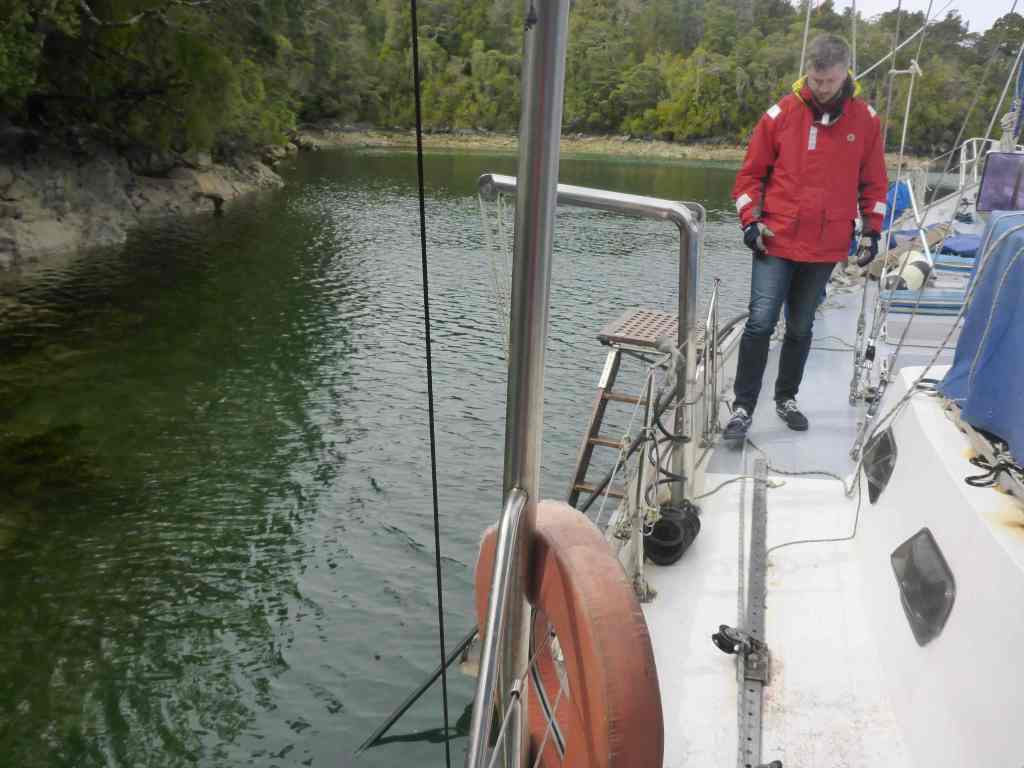
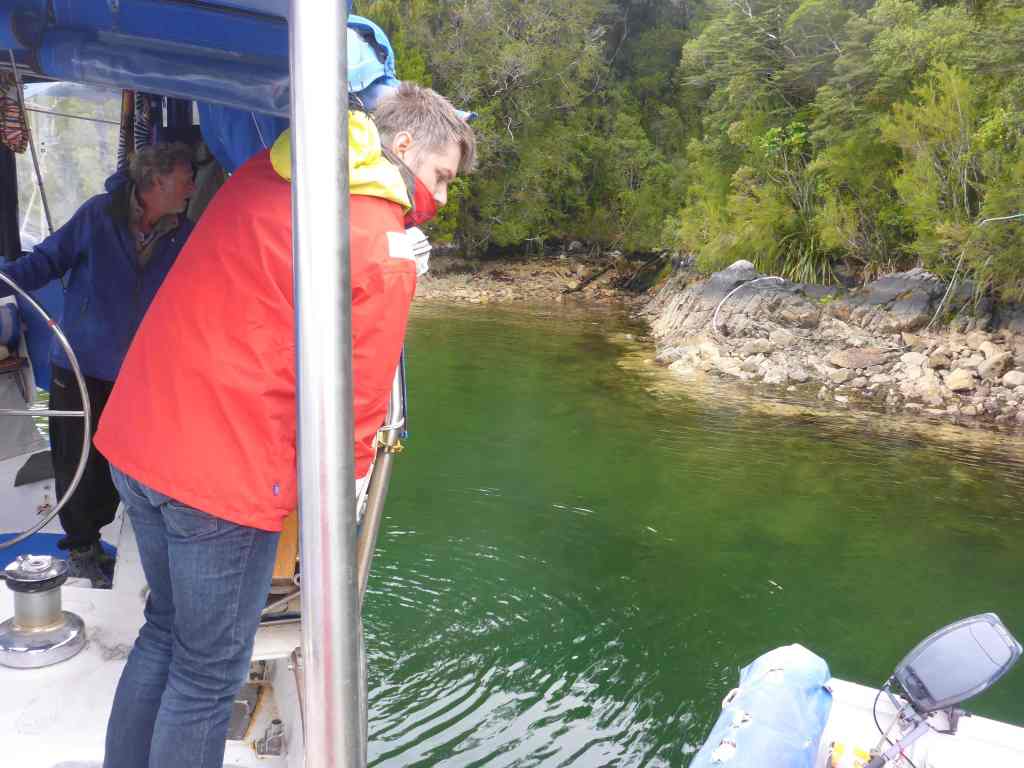
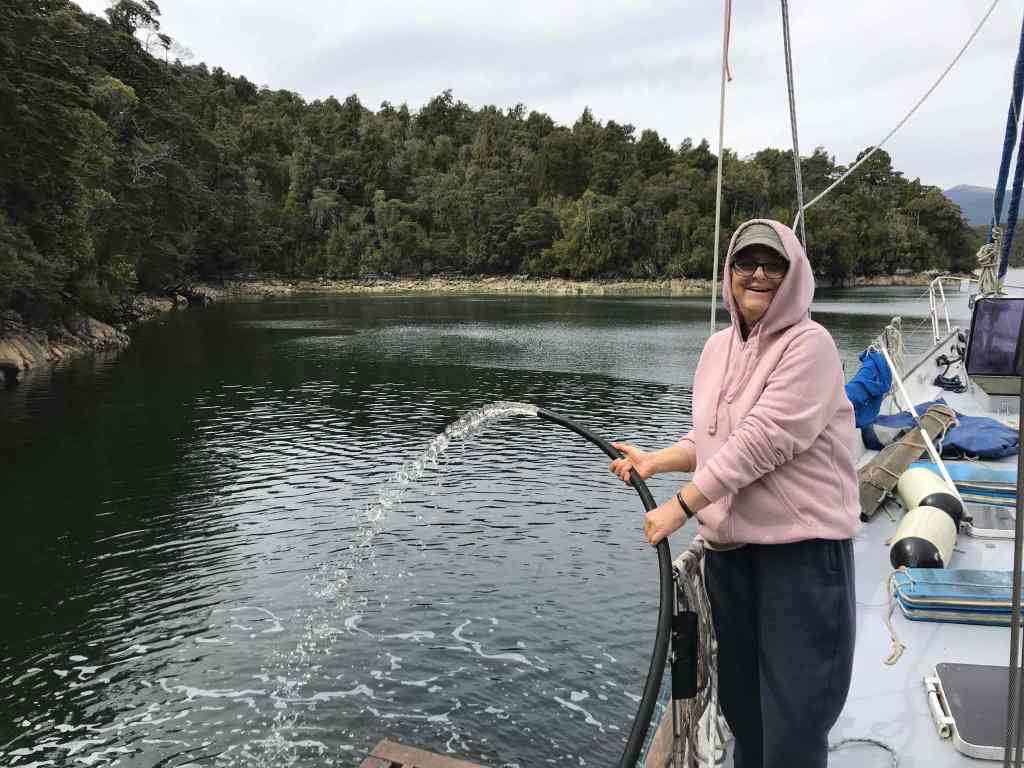
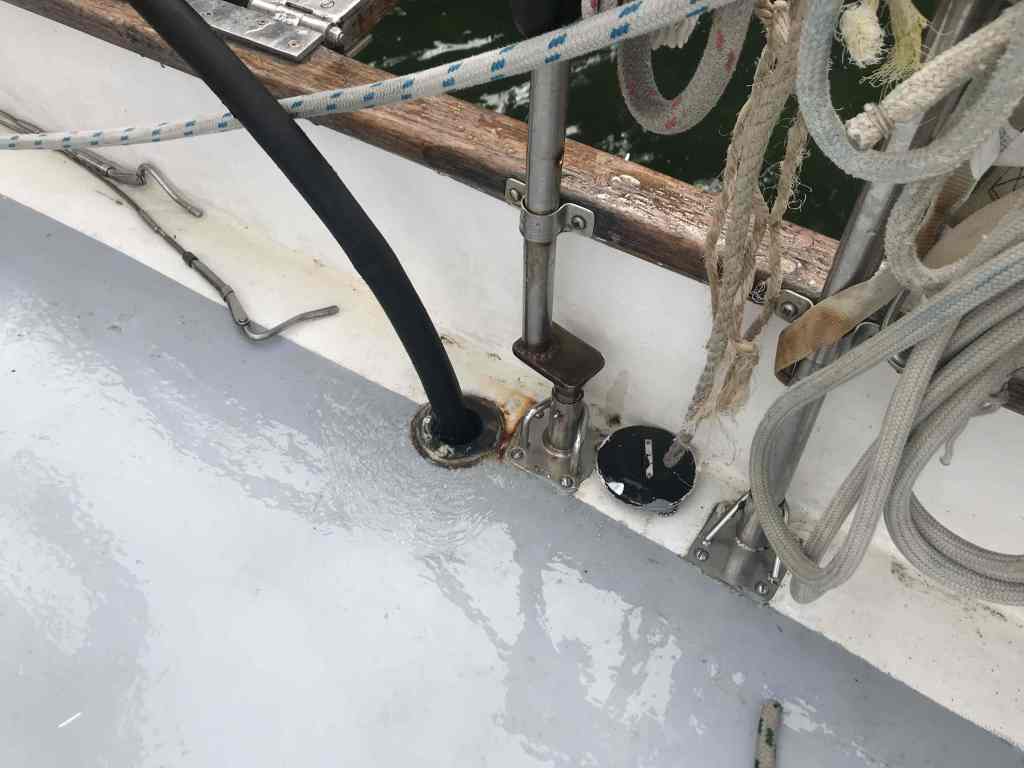
Having passed through Ship Entrance, we made our way across North Port to the site of the big hose that brought water down from above. It certainly had a strong flow, but our biggest task was to bring Chimere in close enough for the pipe to reach. Something we did by dropping anchor a short distance from shore, then running a stern line to shore. It was then a simple case of winching ourselves towards the rocky shore, and the pipe, letting out chain on the bow while drawing in rope at the stern.
Pretty soon we were secured, with the waterpipe directed into our tanks, as clouds of hungry sand flies did all they could to spoil our day.
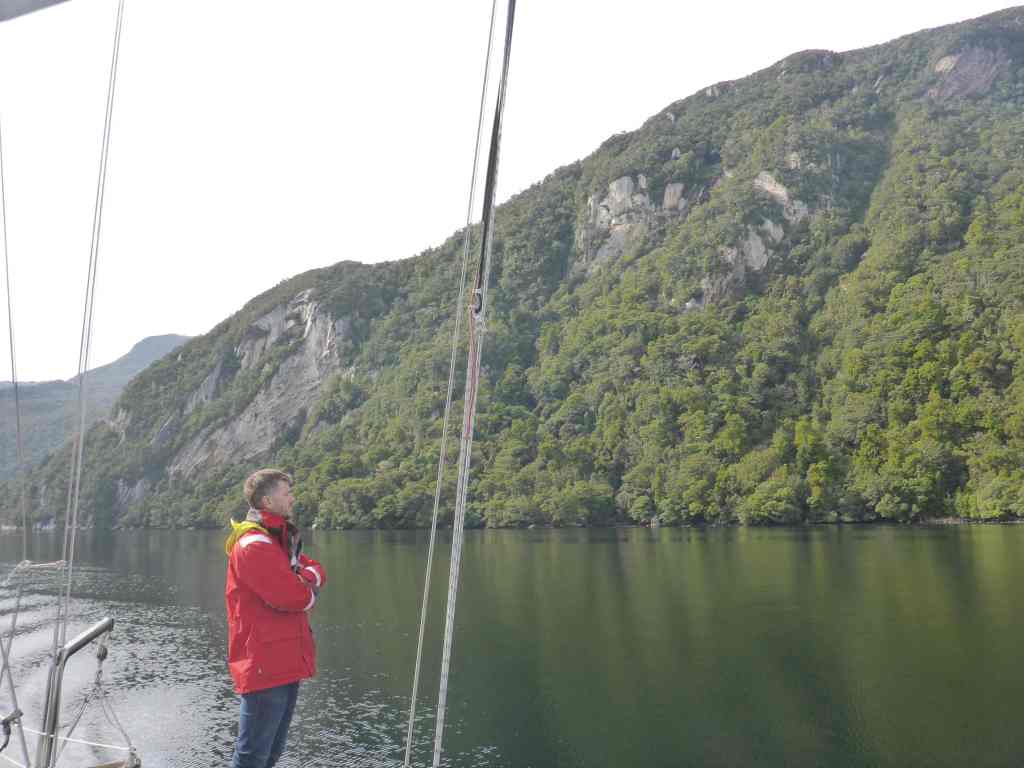
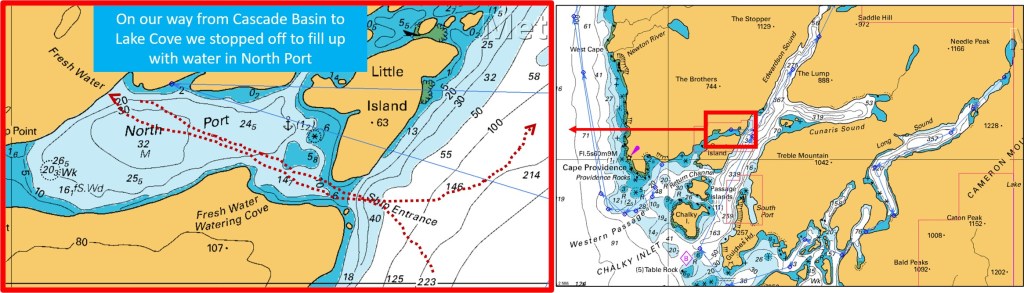
By now it was close to 3pm and definitely time for lunch, after which we headed up the Edwardson Sound to Lake Cove, where we now sit in an anchorage as still and calm as last night’s in Cascade Basin.
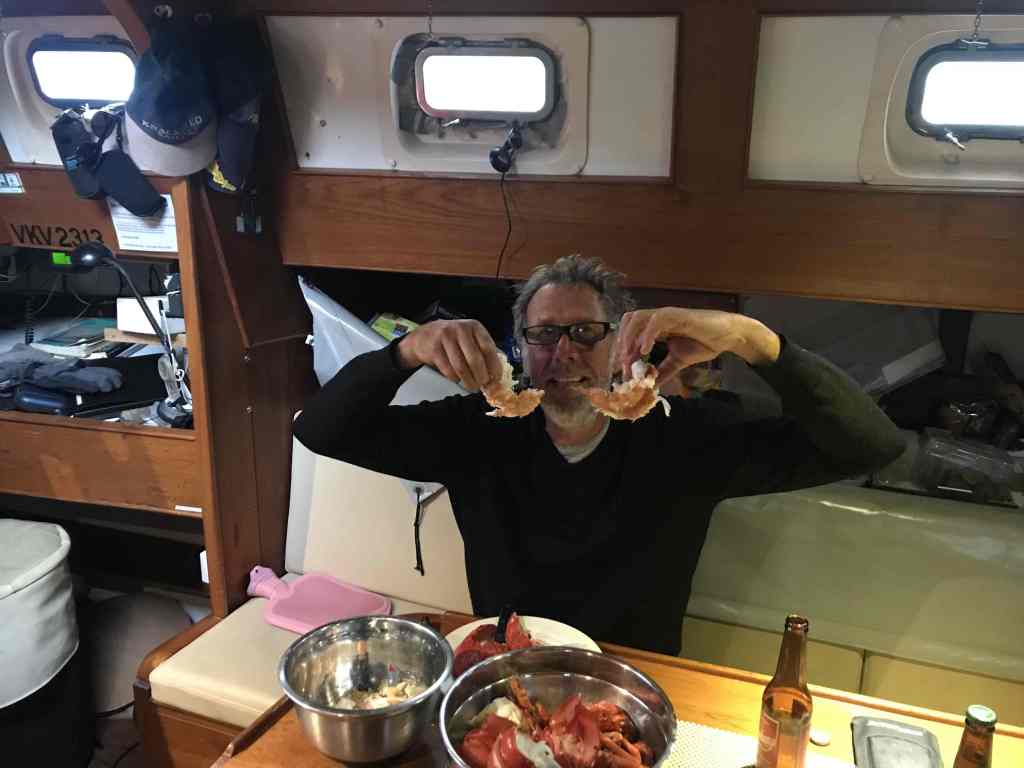
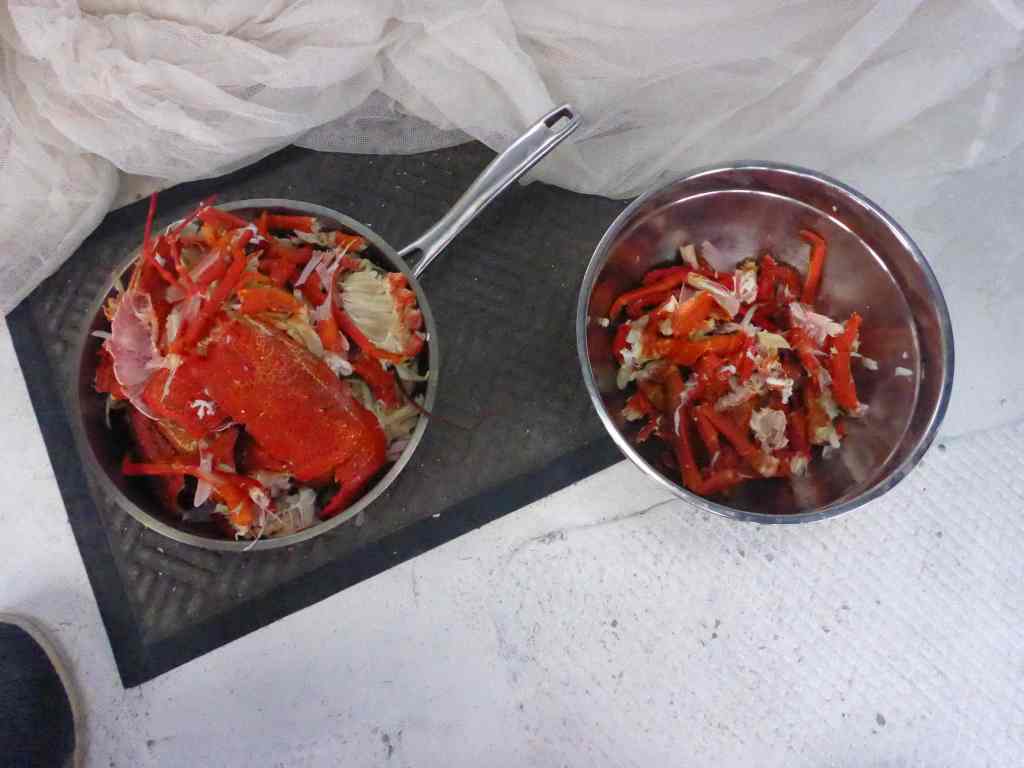
In order to maximise the value from the crayfish we’d acquired, James took a blow for the team by spending what must have been 4 hours or more in the galley, cooking, cracking and cleaning the critters; one at a time. We have a large cooking pot, but clearly not big enough to accommodate more than one cray at a time.
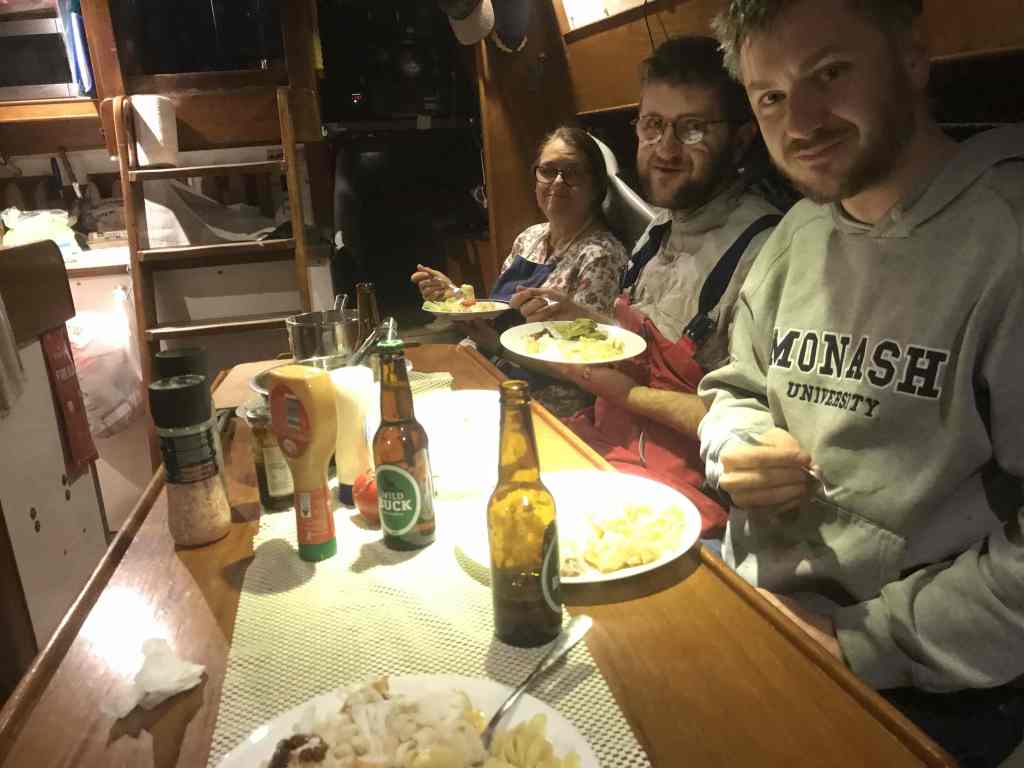
In the end, it was clear that we have enough crayfish for two, maybe three meals – starting tonight. And gee they tasted nice … and expensive.
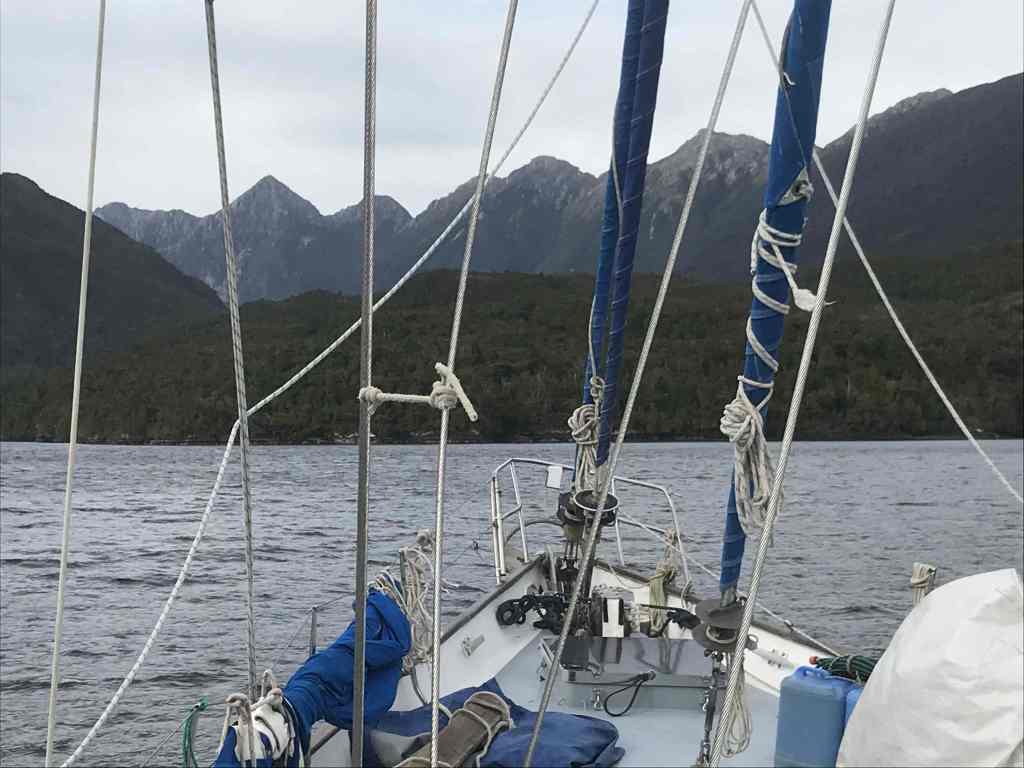
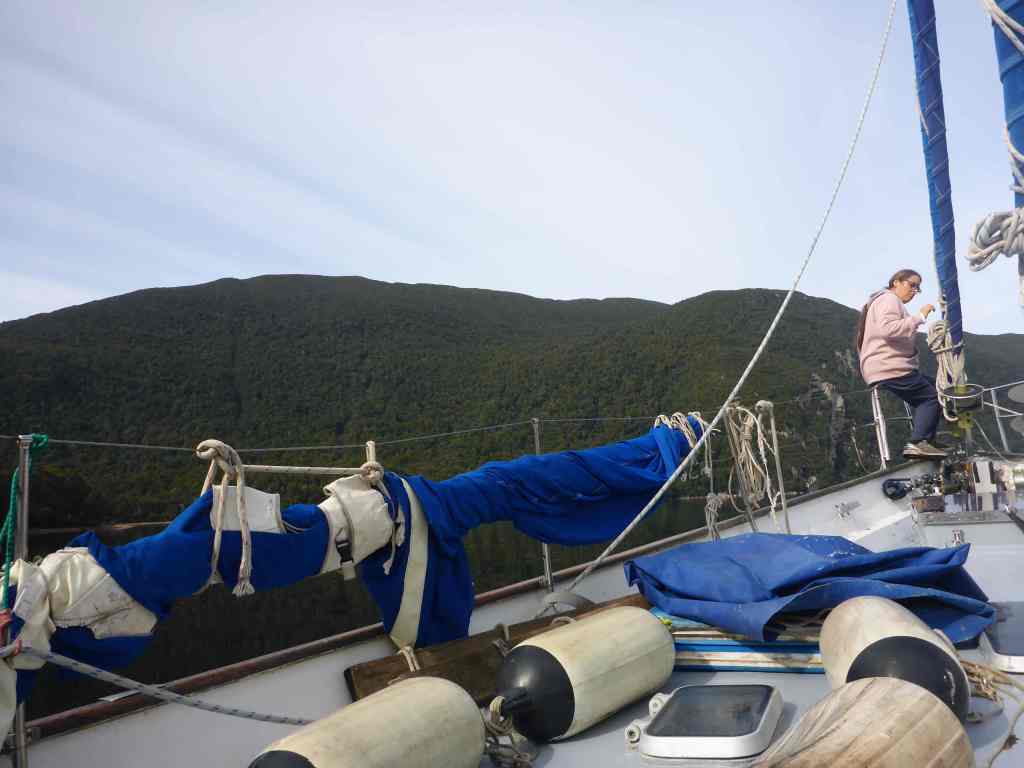
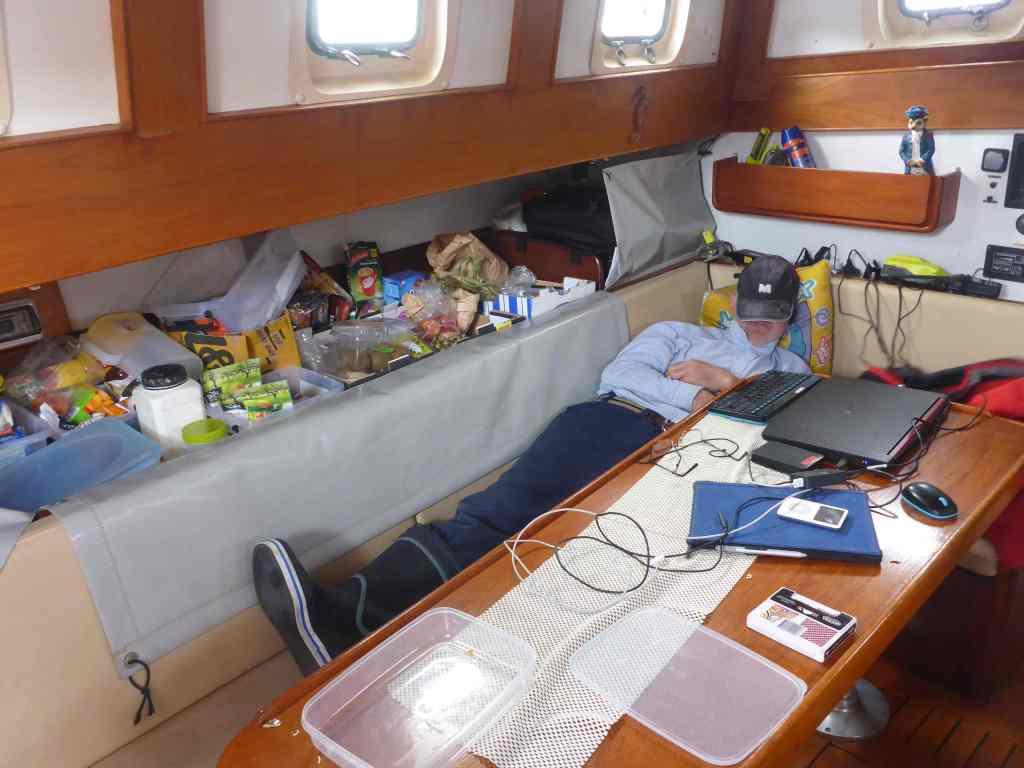
Our anchorage here in Lake Cove was chosen as a shelter from another approaching 40 knot gale – this time from the North East, but also from the description in the cruising guide …”Lake Cove: This is an all-weather anchorage, which is not only very safe, spacious and sheltered but beautiful as well. In the southern corner are the Cora Lynn Falls which are fed by Lake Cadman. A rough track leads up to the lake – about 20 minute return.”
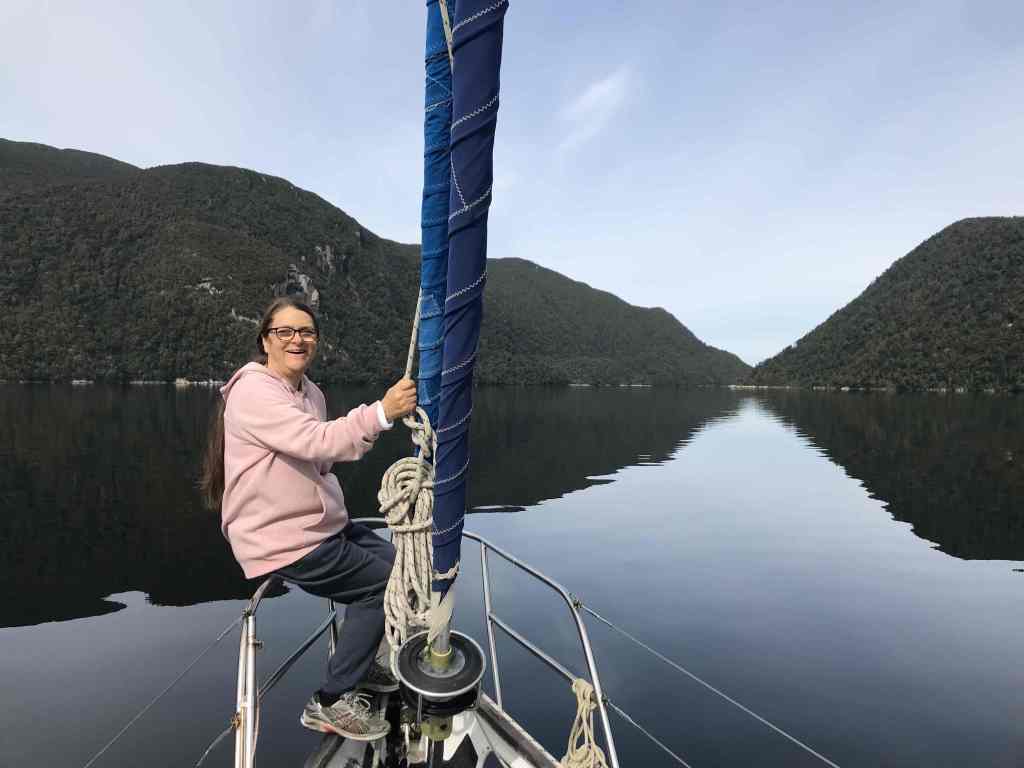
As something of an unusual event, we plan to remain tonight and tomorrow night in this same small cove, which really is surrounded on ALL sides by hills and mountains; the entrance being obscured after you take a near-90-degree turn to the left on entering.
Smooth seas, fair breeze and Cook’s Legacy for Us All
Rob Latimer
PS I’m still looking for extra crew to assist with the 8-day voyage, from Milford Sound to Wellington, starting on 14 March. If you or a friend want to join us, please sing out ASAP. Email me on the satphone at … msm1@clientsatmail.com.au and latimerfamily4@gmail.com but remember, no file attachments)
 NZ2020