Mana Marina (near Wellington)
Monday 30 March 2020
I’ve always been a “morning person”. Usually falling asleep by 9:30 in the evening … keen to go to bed, then firing on all cylinders again by 5:30 or 6:00am the next morning. I don’t generally have trouble sleeping … I’m told I got it from my dad … and Linda often says I’ve got two speeds, ON and OFF. Not sure what she means there…
Linda’s quite the opposite. “How can you stay up this late?”, I’d often ask, as she starts watching a late-night movie, or opening text books to do complex maths problems – just for fun.
Here on the boat, it seems things have gone a bit topsy turvy. I wouldn’t say I’ve adopted “teenage hours”, but if I’ve ever been critical of someone sleeping-in after 10:00am, I beg your forgiveness.
I suppose, the current “situation”, has altered the value of time. We’re kind-of in a new dimension – particularly here in New Zealand, where everyone is being asked to stay in their homes. For most this means no work, no travel, no school, no clubs, no group associations … and an abundance of free time.
Of course, some are able to “spend” their time working from home, but if … “time is money” … then there’s been a “devaluation”, or maybe, more correctly, a “re-valuation”. And we are now in the process of re-allocating that time to different tasks and projects as best we can.
On the plus side, I’m now looking at all those things that, up until now I’d have considered, “non-productive activities” – like tidying up a cabin, looking back through old photos and audio recordings, watching a DVD, chatting with family and friends on line, writing, sharing gossip with passers-by – and not feeling guilty about doing them.
It’s a whole new word and it’s good … at least for now. But of course, I don’t have a couple of kids to entertain in a small apartment, or a large mortgage to service with the fear of no future income, or a business to run and employees to pay … I could go on… but you get the idea.
Just to mix things up a bit, the fishing boat, tied up in front of me, went out to sea on the high tide early this morning. (Early, must have been 3:30, or 4:00am) I thought he’d be out for a couple of days, but mid-afternoon he returned, after just 12 hours or so; presumably with lots of fish.
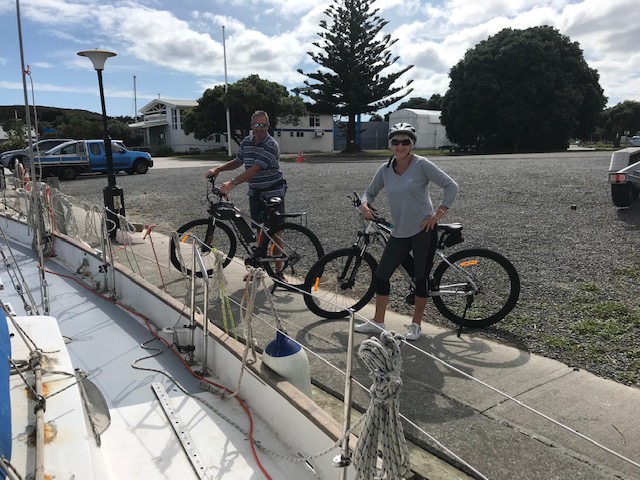
We had prior notice of his return, because while I was chatting with Keith and Christine – who had stopped by on their cycling … “home-escape-exercise”… a small truck turned up with a fish logo on the side. “They’d be here to pick up his catch”, Keith observed out loud. And sure enough, within half an hour, the unloading began.
I haven’t been watching, or listening to the news – at least not very much – but following the implementation of the Alert Level 4, affectionately known as the “lock down”, apparently there’s been a few people in the community NOT playing by the rules. Can you imagine that?!
But it seems for many, fully understanding “the exact rules” … is in itself, a challenge.
For example, in reading some of the commentary, “exercise is permitted, but the messaging around what is allowed and what is not, has been puzzling and extremely open to individual interpretation. Can we drive to the beach for a walk? And once there can we swim, paddleboard? Can we bike? And if we can, what’s stopping us driving to the other side of town to tracks, forests, parks?”
Reminds me of the classic … “going on holidays in the car with the kids”. Apart from the ubiquitous … “are we there yet”, from the back seat, you might also have had the … “she’s looking out my window”, or, “he’s touching me” … comments, resulting in the … “rules being laid down” … from the front seat of course.
OK kids … “NO looking out each other’s windows” and “NO touching each other”.
Pretty soon, the boundaries are being pushed, tweaked and tested, and the cries of protest and indignation from the back seat are modified slightly … “I’m NOT looking out YOUR window … I’m looking NEAR your window” … “ I DIDN’T touch you … my hand was only NEAR you…”
So, apparently personal walks and other active travel like cycling or scootering is fine … [but it’s necessary] to stick to simple outdoor exercise and avoid areas where you can get injured or lost. And you can only use travel if you’re accessing essential services, (not the pub or Bunnings!) if you’re an essential worker, or if you’re driving to a local area for a walk or to exercise.
Sadly, there was an announcement of New Zealand’s first death from the virus. Plus there was the introduction of a website for dobbing in suspected … “non-compliant individuals and business” and another one for reporting examples of “price gouging”.
Apparently the “dob in” web site was so popular, the system crashed yesterday. Authorities were appealing to people NOT to ring 111, the equivalent of the emergency number 000 in Australia to report “suspects”, but to instead use the “Online Form” … sounds a bit “un-Australian”, or the New Zealand equivalent, but then not everyone is a “team player” sadly. So go for it … https://forms.police.govt.nz/forms/covid-19-l4-breach

One of the chaps walking past this morning seemed keen to have a chat, making himself comfortable leaning back on a boat trailer near the path. “I’m going **** stir crazy” he said. “I did a heap of jobs on my boat, ready to **** go out for a few days, and now I can’t go out and I don’t have any jobs to do. I said to the other guy down there on his boat who wants to head over to the Marlborough Sounds to sit it out … I said, mate… **** don’t do it. There’s people on the hill up there sitting in houses watch’n all the time. They’ll **** dob you in mate. Me?, I’m looking for jobs to do on board and watching DVDs, although mate, I gotta say, I’m gett’n **** sick of **** David Attenborough
**** insert common expletive here
So I’m glad the authorities clarified that you are allowed to cycle for exercise … “in your local area” … because I wouldn’t like to feel obliged to report Keith and Christine. The only question remains, since they rode from the nearby suburb of Papakowai is the marina in Mana STILL in their local area, given they had to ride through Paremata to get here. I’m sure they’ll clarify tomorrow?!
As I alluded to earlier, I’ve been making good use of my time, partly by digging back through my computer’s hard drive. Looking at old photos and files, plus listening to 2008 audio recordings I took of dad’s historical recollections, particularly of things that relate to New Zealand; given I’m here. (notice I didn’t say “stuck” here)
You see, Dad was a fourth-generation kiwi, (born and raised in Wellington, just over the hill from here) with his great grandfather George, came from England back in the 1850s. George even worked for a time in a shipping business on Port Chalmers in Dunedin, taking water and supplies out to ships at anchor in the harbour, particularly during the Otago gold rush of the 1860s – so the interest in the sea continues through the generations.
Whilst I was born in Melbourne, with mum and dad raising me and my three siblings there, we all grew up with stories of New Zealand – family, adventures, places and dates. It was part of our family lore and identity, although I never got to experience it first-hand until mum and dad took us, as a family, “back” to New Zealand in 1972 and then again in 1977. It also fueled my decision to study horticultural commerce here after completing my HSC in 1978.
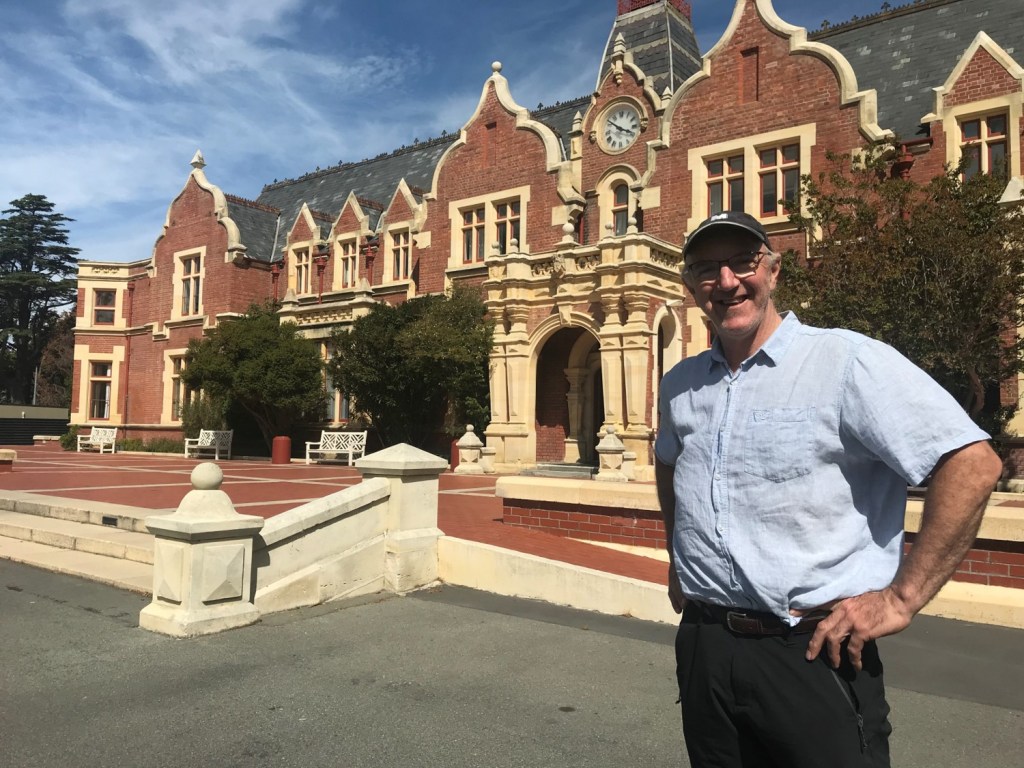
Anyway, one of these stories related to Milford Sound and how, when Dad was an 19-year-old lad, about to finish his apprenticeship as a fitter and turner, he travelled with his brother Ted and two mates, south to Queenstown and up Lake Wakatipu to Kinloch, aboard the steamer Earnslaw. From there they walked the Routeburn track and after clambering through the unfinished Homer Tunnel – the year being 1947 – made their way down to Milford Sound, to start the Milford Track, only to be told, “Sorry lads, the track is closed … you’ll have to walk out the same way you walked in”
In my youth, I never really appreciated the significance of this “summer holiday excursion”. Even after Dad brought us all over as a family to walk the Milford Track together in 1977 – no doubt something of a nostalgic journey for him, 40 years after he’d walked it earlier under very different circumstance – it still didn’t register, just how much of a … “problem-solving” … “overcoming-adversity” … adventure and formative experience this was for Dad.
It all began to fall into place, finally, when we sailed into Milford Sound and we actually anchored in Deepwater Basin and took the dinghy up to Sandfly Point … was it really just a few weeks ago. Up until that point Dad’s story had just been something of a skeleton, now it seemed to grow flesh and substance. I could picture it, value it, and in some ways identify with it. Certainly, I could more clearly see my inherited desire to try something new from time to time and explore over the next horizon.
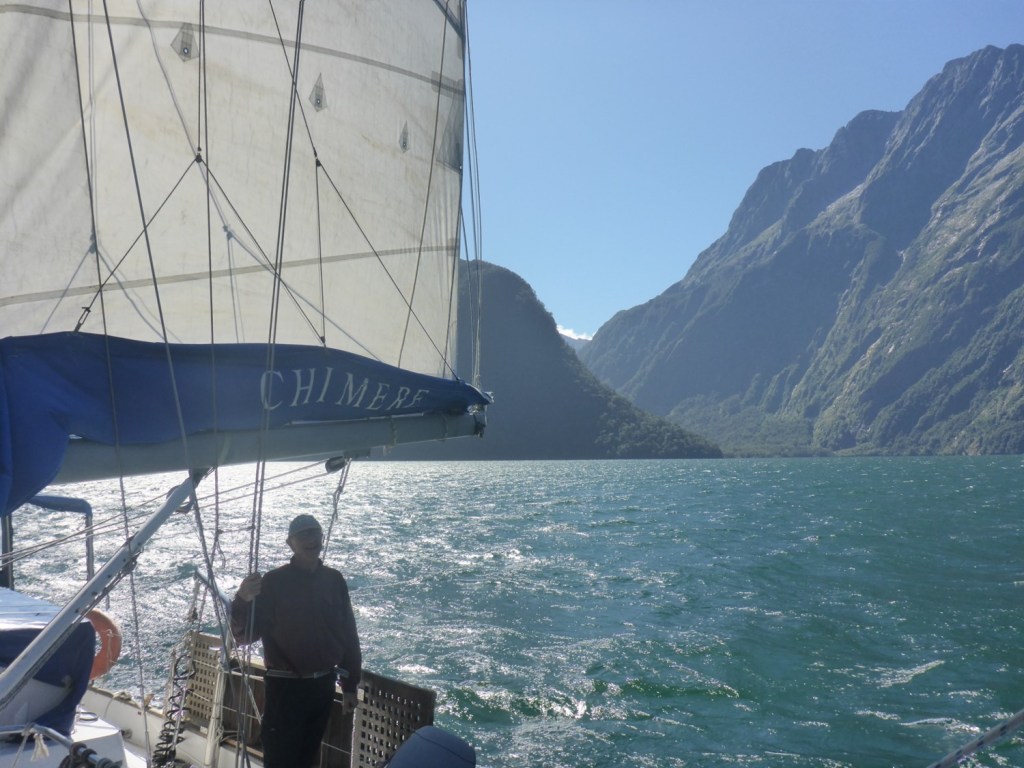
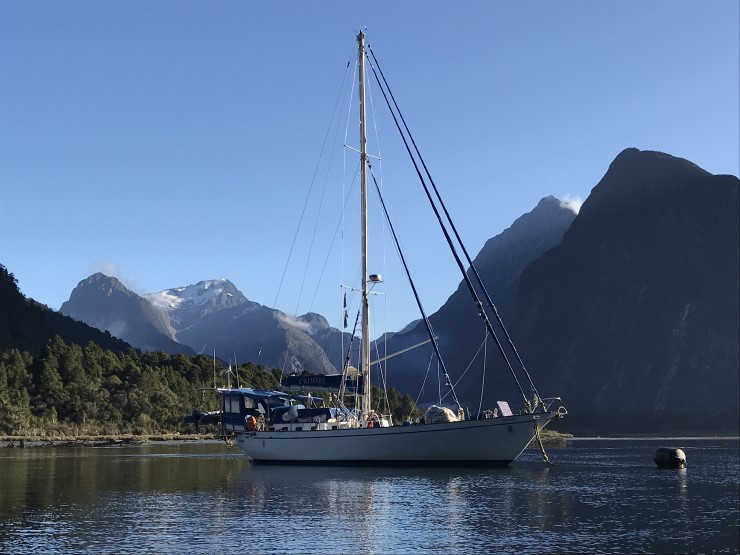
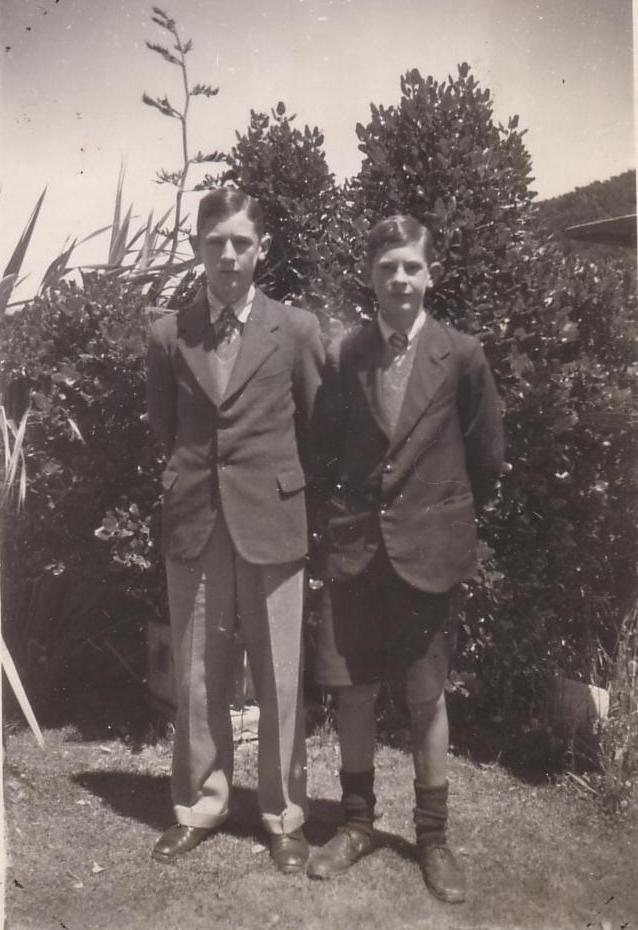
At the encouragement of others, I’ve transcribed something of Dad’s historical recollections, specifically the Milford Sound adventure. I’ve also included the few photos – at least the few that I have on my computer here, plus a couple of maps to help with understanding exactly where we are talking about. If you’re interested, you can read on below.
In closing, I’ve gotta say, today was just like the return of summer. Maybe it was the contrast with the howling gales and rain of the past two days, but it really was a glorious day.
Smooth seas, fair breeze and it’s like summer again
Rob Latimer
Summer of ‘47
Bill Latimer’s Milford Track Adventure: involving ferry, bus and steamer transport from Wellington to Kinloch/Glenorchy at the head of Lake Wakatipu. Then a walk of the Routeburn Track, followed by a trek through the unfinished Homer Tunnel, down to Milford Sound. Only to discover the track had been closed since the war. Undeterred, Bill, along with brother Ted and friends Len Sutton and Ian Connor hatched a plan, with two other fellow adventurers, to walk the track anyway. Returning home via boat on Lake TeAnau, then bus and ferry back to Wellington. Their summer holidays complete, they went back to work for a rest, having covered over 120km of rough trails.
[Transcript of a 2008 audio file, by Robert Latimer, of Bill Latimer’s historical recollections. Done in 2008, just a few months prior to Bill’s death)
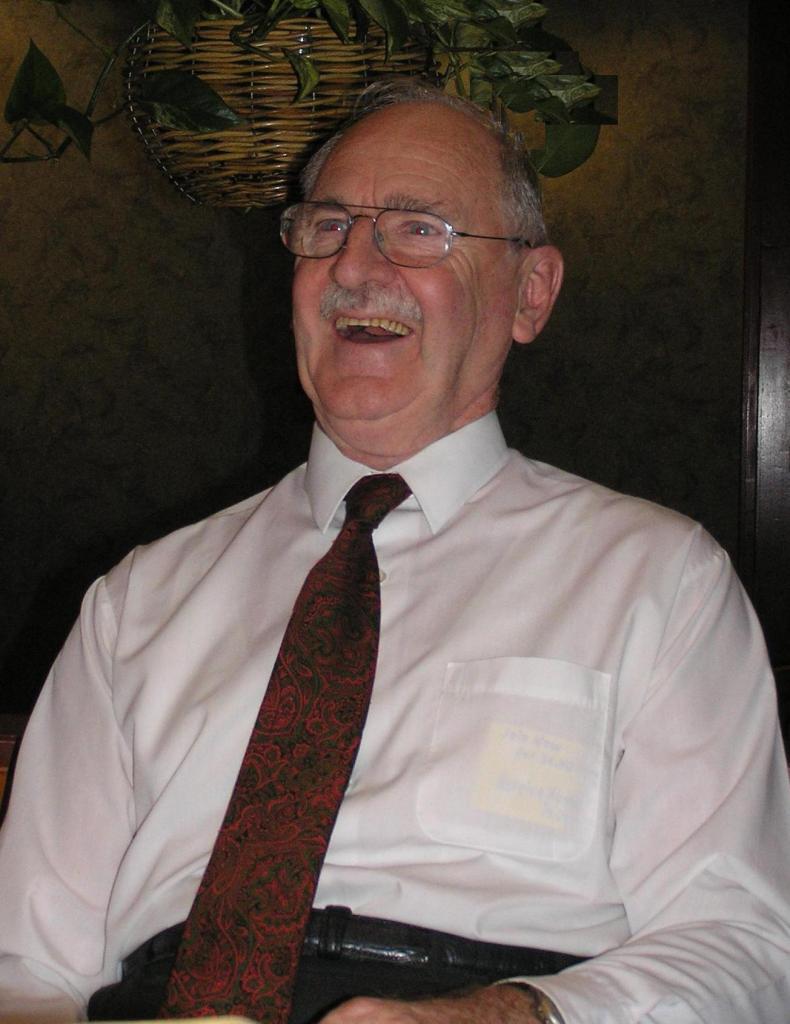
[Robert: And you travelled to the South Island as a lad …]
Oh Yes, oh yeh. That was 1947, that was a year to remember.
We went to the South Island on the ferry, the Rangatira, it ran to Christchurch. And we went over with intent to walk the Milford Track. Because a friend of ours, Reg Gilbert, his family knew a family who ran a cattle station in the Hollyford Valley.
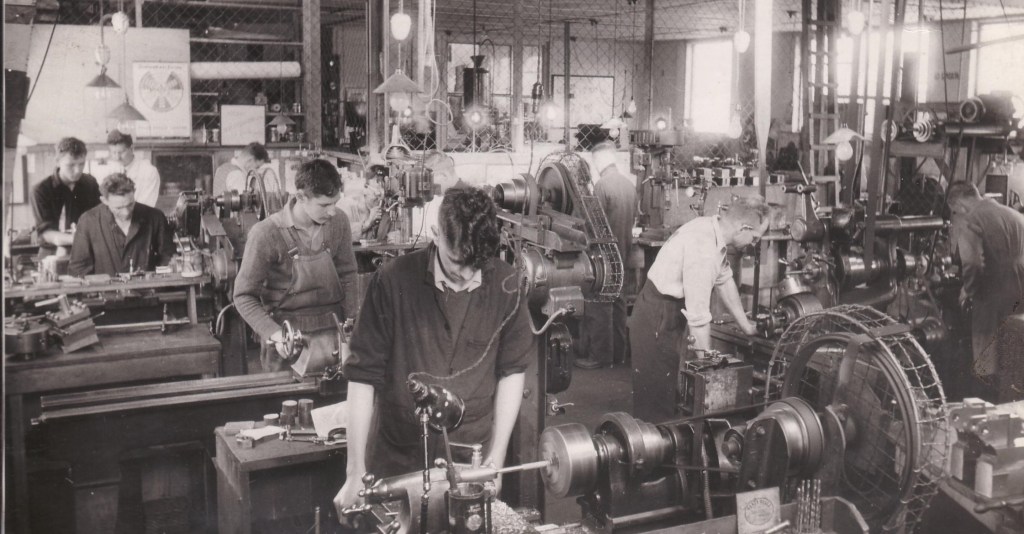
So anyway, I got interested in that. There was me, and my brother, [Ted], Len Sutton, and who else, Ian Conner. So the four of us. And then we went by bus, through Cromwell, Central Otago, to Queenstown, then on the old Earsnlaw steamer, up Lake Wakatipu, to Kinloch, and we got off there.
When we go off, there’d been a terrific rain storm, and all the roads had been cut, closed. We had been intending to walk over the Routeburn track, up the Routeburn Valley
So, we spent a couple of days sleeping at the house of the road foreman, helping him repair the roads. He had an old truck and us boys gave him a hand, and they fed us. There were a lot of wash-aways and everything. There’s a suspension bridge over the Routeburn river and we had to cross that to get onto the track proper. Because the Routeburn river runs into the head of Lake Wakatipu.
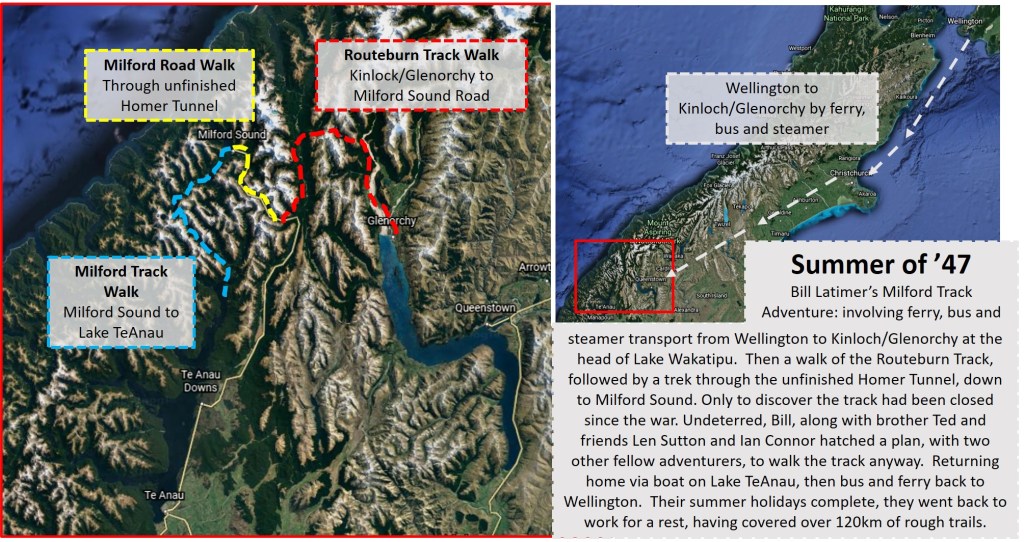
So that was a bad start really. Anyway, it wasn’t too bad. We had shelter in the foreman’s house. After a while, the weather cleared up and thereafter that it was pretty good really.
We walked the Routburn track into the Hollyford Valley past Lake Howden, Lake Mackenzie it was all pretty rough country. There weren’t too many people walking then, because nothing had really been done in the six years of the war and they were only just starting to fixing the tracks up.
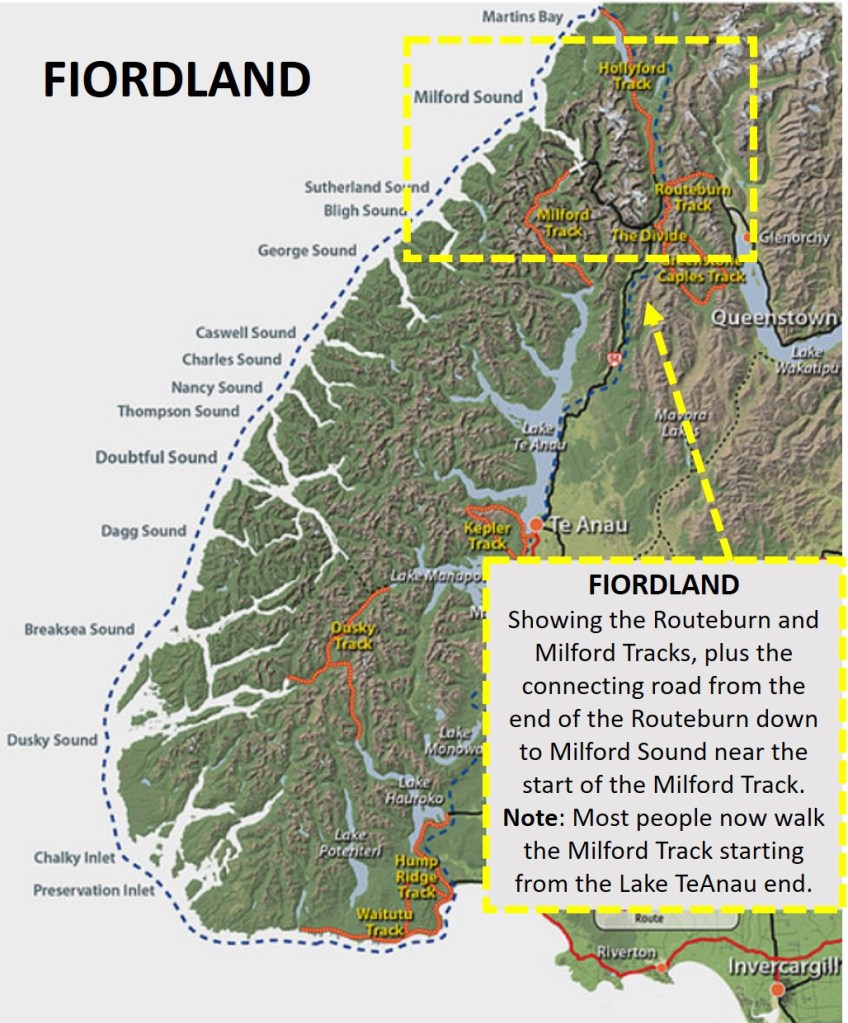
When we got to Hollyford, Hollyford Valley – we got to the Homer Tunnel and the whole village had been left there and you could just pick any hut you wanted to stay in, and we did.
The hole through to Milford Sound was just a bored, rough – rough-rock hole. In fact, inside there was machinery just abandoned at the start of the war. They’d started that job in the 1930’s and it hadn’t been completed except the hole had been bored through. And it was a very rough walk through it.
So we walked through there, down to Milford Sound which is probably 5-6 miles. We got to the Milford Hostel and we bargained on buying bread there. Well the manager said immediately, “you are not allowed on the Milford Track … the Milford Track is not open. You cannot. You have to go back the way you came in. The only way in here is by sea. There are no provisions. You cannot buy anything”.
He was very “anti-us” walking the track. He said the track is being repaired and the only people who go out there are workers, working on the track.
Well, by this time we’d met two blokes, one had been in the army and the other, his friend, said, “what are we going to do?” … he’d kind-of joined up with us.
The older guy then said, “I haven’t been away 6 years in the army to be told by that bloke that we can’t walk the Milford Track.” So, he was a natural leader. And we come up with a plan. We squatted on the beach.
We couldn’t build a raft. ‘Cos you see, you had to cross from Milford to Lake Ada. You couldn’t build a raft. All the timber was wet and it would sink, so we came up with the idea that we would take a day-trip. A day fishing trip, on a boat which ran … there were a few tourists in the hotel, but they could only come by sea though … so we got on this fishing boat, for a day trip fishing and when we got to other the other side to, Sand Fly Point … it’s called, nice name, well named cos the sandflies are awful there, they’re terrible … we got off, had lunch and just went into the bush and never came back.
We took some fish with us as extra rations because we didn’t have any rations. We had hardly enough to last. It takes three days … at least three days to walk the track when it’s in good nick, so we got off into the bush and the first hut we came to … Lake Ada, it’s called Sutherland Hut I think and we said, we need to be very careful here, because word’s going to get back to the manager at Milford that we are illegally on the track.
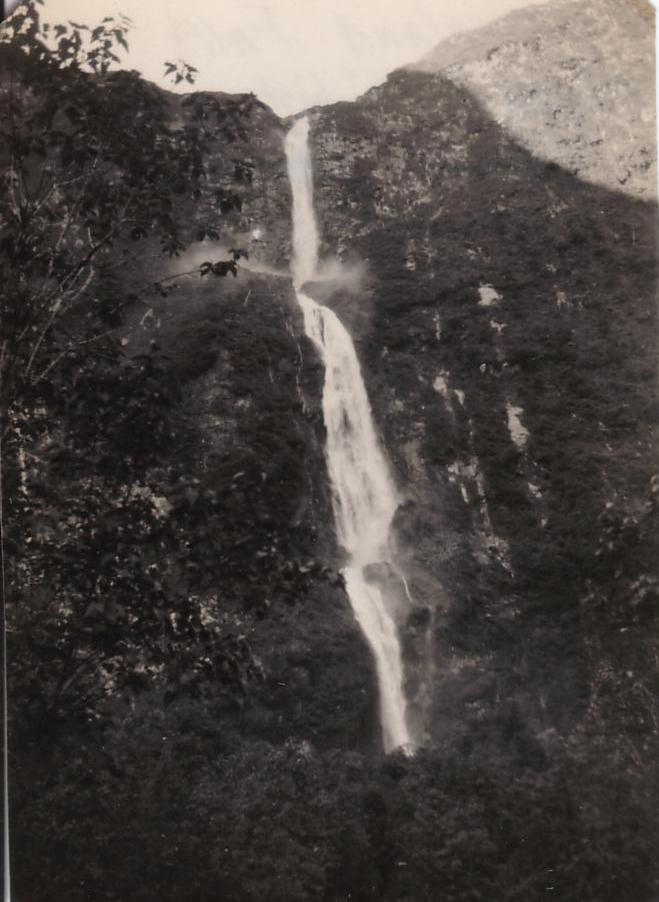
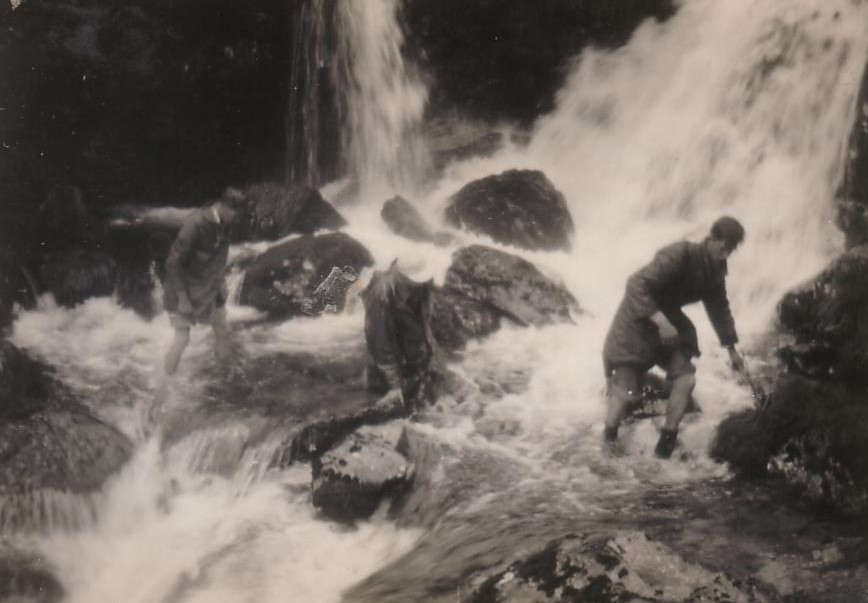
So, we walked early in the morning and laid up during the day and walked again late afternoon, when we knew the workers wouldn’t be working
So, we did that and we walked up as far as Pompolona Hut. That was right. Some of the huts are very hard to get by, because they’re in a ravine and they’ve got dogs. So with shoes round our neck and bare feet we sneaked past. But the dogs started barking and you’ve just got to keep going, right. And someone might just think it was a possum or something in the bush
Then we got to the Jervois Glacier and you’ve got Mackinnons Pass to get over, our leader, I just can’t remember his name right now … well he said, “I’ll go ahead and reconnoiter, you guys stay here. We can’t go past the hut, someone’s going to see us. But I’ll go up and get the lay of the land, there’s someone up there for sure”. So he left us in the bush, hidden well off the track in case any track workers, or officials came by.
He came back after two or three hours and said, “it’s OK, there’s a Maori bloke up there, his track is absolutely perfect three or four hundred yards either side of his hut, and then it deteriorates into bush again” – but there’s not much bush there anyway, really.
Anyway, he then said, “… that bloke hates the manager at Milford. He said he’s had a phone message on a land line, a single wire through the bush. He said I’ve gotta keep a lookout for these blokes and I’ve gotta detain them somehow when I find them and then call him to let him know.”
He said … “Well he can go and … you-know-what” … in rather colourful language. He said … “he’s a good bloke. He’s got plenty of tucker, lots of cans of food for mountain people who are lost and he’ll feed us as well.”
So we all came out of the bush. There were six of us all landed in his hut. He made a great big stew in a kerosene tin, and we hopped into that
Up till then, we were living on a few haricot beans, we couldn’t catch any fish, and we had a small amount of rice. We were really on starvation rations. We stayed there overnight with the track maintenance man, and then walked down into Clinton Canyon towards Lake Howith. The Maori track worker gave us some food to carry on our journey and we kept walking till we got to Lake Te Anau.
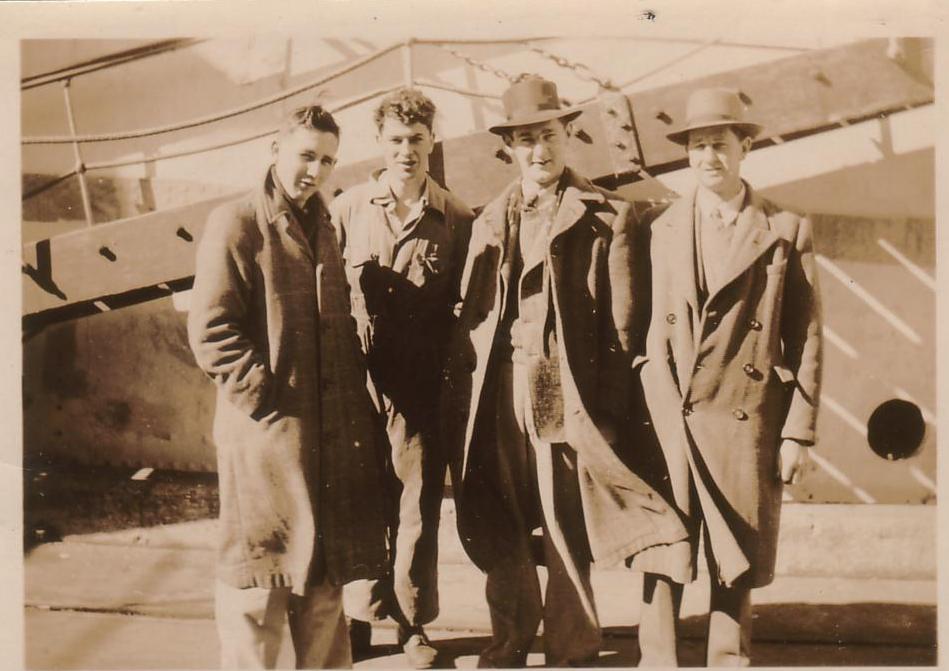
Now the next problem was how to get to Te Anau, because we didn’t know when the next boat was coming. We camped down by the lake and lit a big fire so the smoke would keep the mosquitos and sandflies away and after a couple of days a boat came up. It had tourists onboard just for a day trip and so we got onto the boat, and we had enough money and asked for a fare down to Te Anau.
It greatly surprised the boat master to see these blokes just out of the blue. Where had they come from … but he didn’t worry too much, as long as he got his fare, which we had. Then from TeAnau we got the bus back to Christchurch, then the ferry to Wellington. We went back to work for a rest. It had been a very physically demanding thing – December 1947 and January 1948
 NZ2020