At sea, 40 miles NE of Cape Palliser
Wednesday 26 May 2021
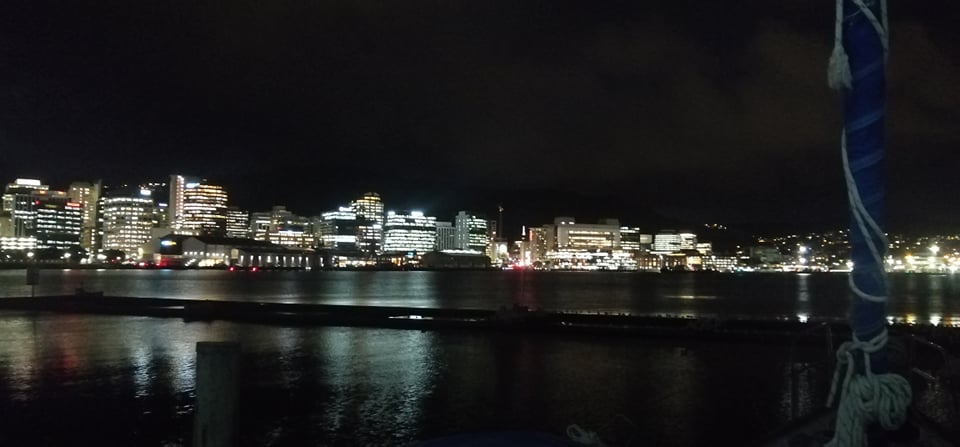
Our last night at the marina was still and calm. The rain and wind had gone somewhere else, for a time, and we were left with a starry sky and reflections in the still water around us.
After completing most of the important tasks for the day, around 10:00pm I gave Linda, back home in Melbourne, a call to discuss in more detail our plans for the next few days, that we will all be safe – while also saying “I wuv yooo”
In the end, I must have got a reasonable amount of sleep, but there were several times through the night that I woke with last minute …“things not to forget” … rattling around in my head … leave the marina key behind, unplug the 240v power lead, retrieve all our lines, update our EPIRB Trip Log (emergency beacon) on the AMSA website, last minute weather forecast …
Everyone was up in the morning around six, to a dark, still and chilly morning. Some keen rowers were out in the half-dawn, but our focus was on retrieving all our mooring lines – there had been quite a few holding Chimere safe over the past 12 months – and replacing them with three small ropes that could both hold us in place, for the next little while, and be easily retrieved as we made our exit.
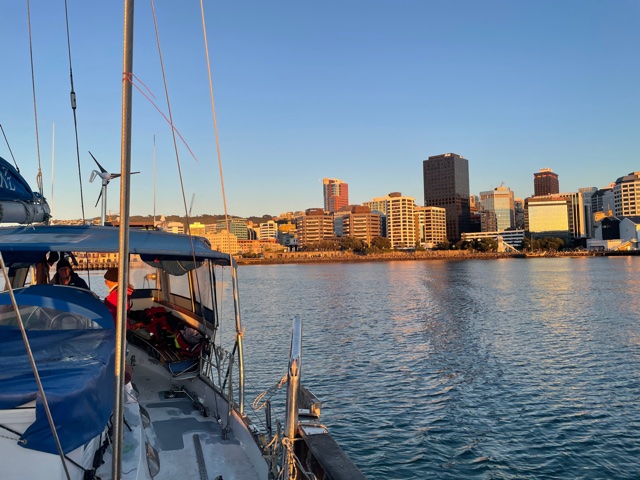
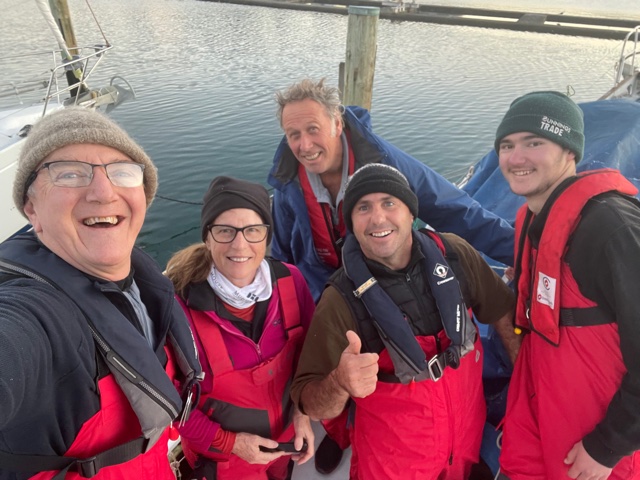
It was just after 7:30am that we slipped the lines and manoeuvred out, took a sharp left turn, before the final exit out of the marina and into the flat waters of the harbour.
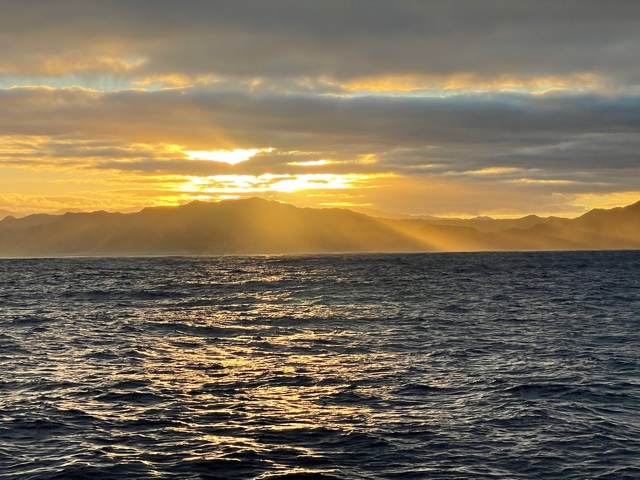
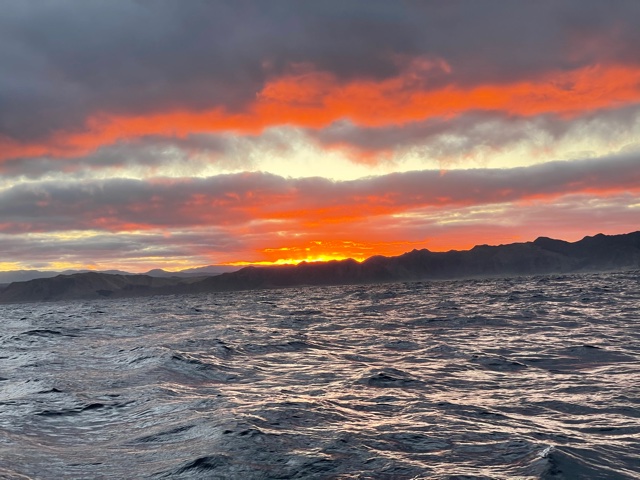
Golden sun broke through the morning cloud and mist, giving us a good opportunity to hover about, soaking up the vibe, taking photos – and for me, reflecting on the past 13 months or so of “unexpected developments”, but now, the thrill of kick-starting the adventure once more.
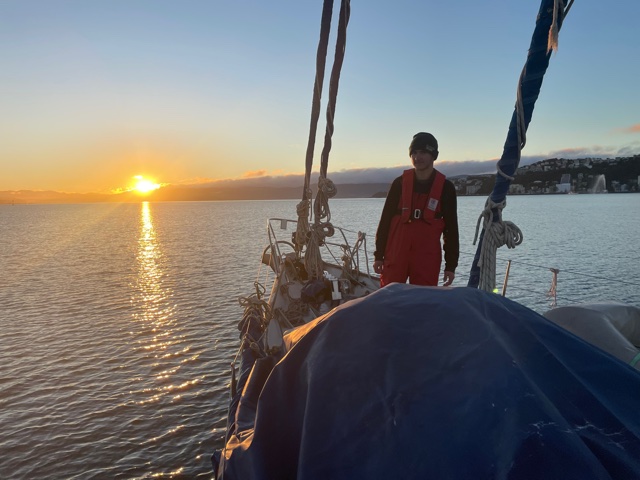
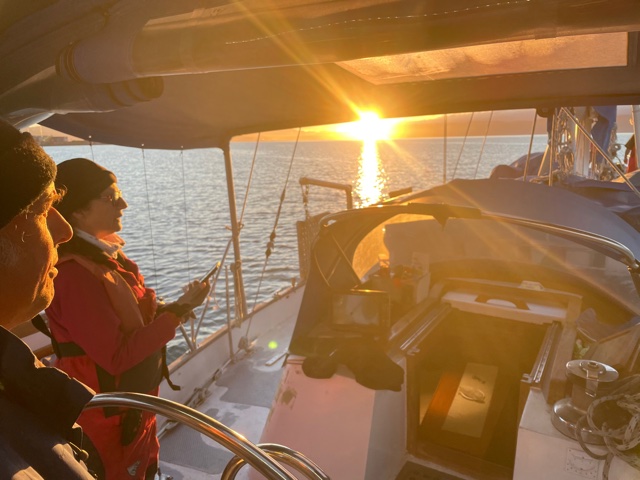
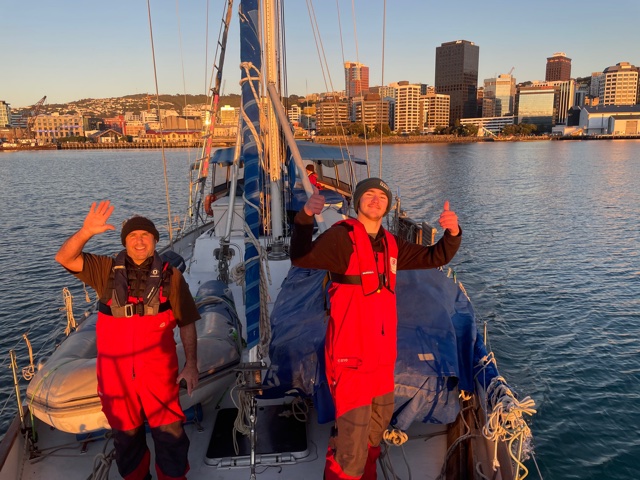
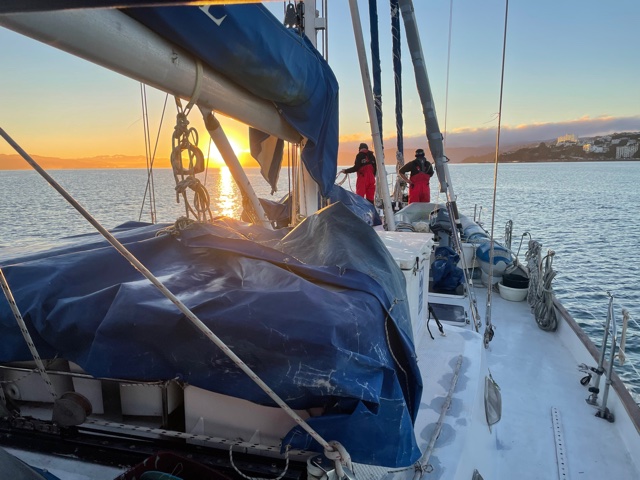
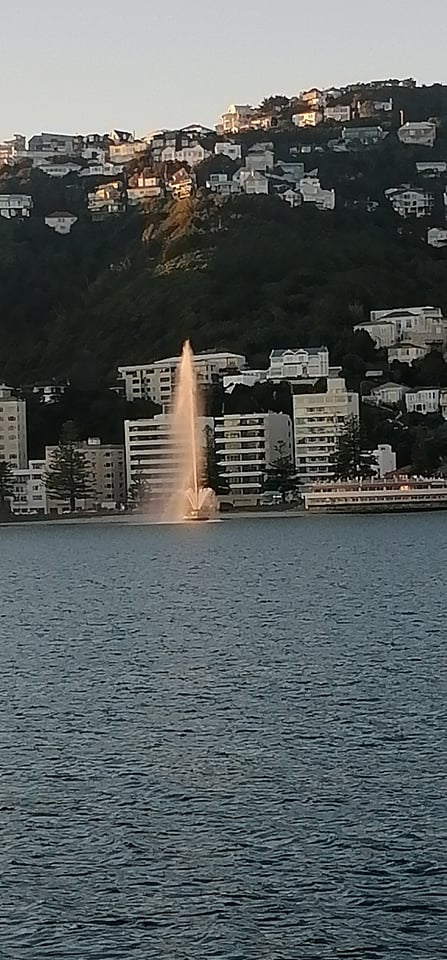
Next it was out through the Heads, keeping Steeple Rock and Barrett Reef to our starboard and staying clear of an inter-island ferry and a large, ugly car-carrying-ship
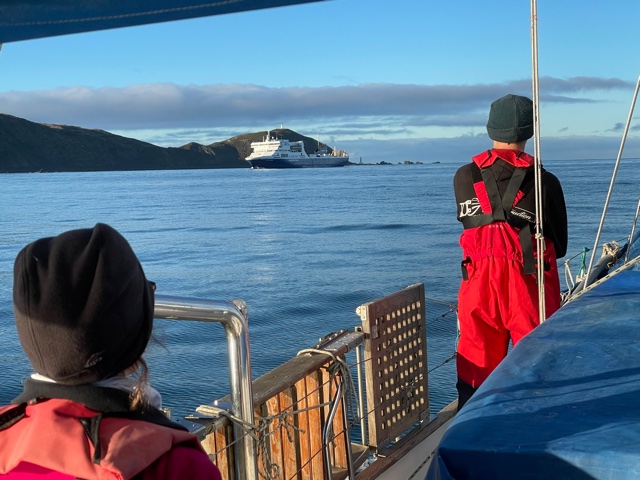
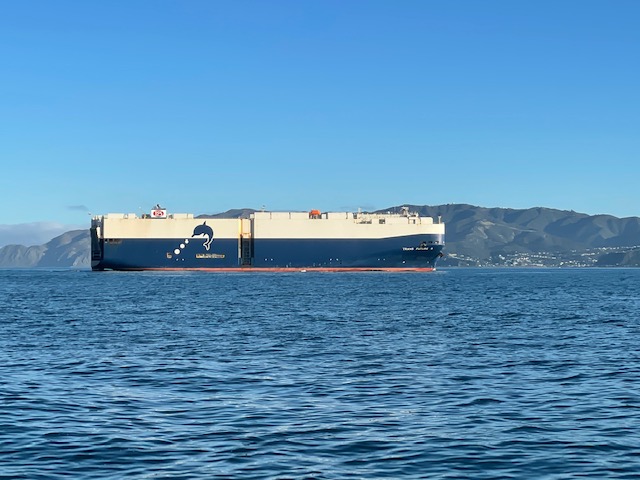
The main and jib were hoisted for the first time in over a year, making good use of the light breeze that gathered as we took a left turn out of the harbour and up the coast. To ensure that enterprising seagulls and other birds didn’t make a home in the sails I had actually sewn up the sail bag along the boom back in April last year.
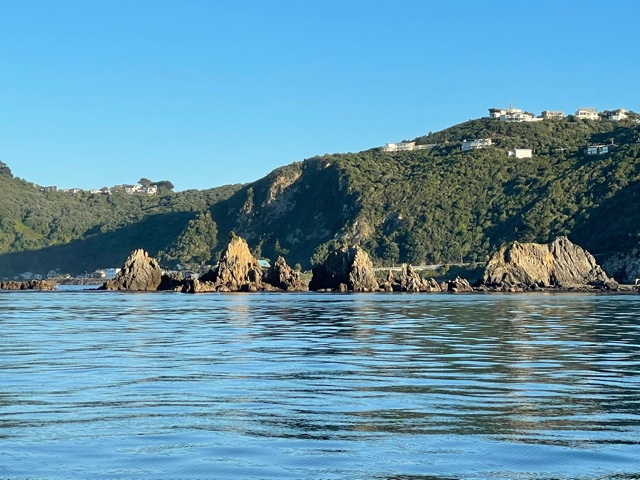
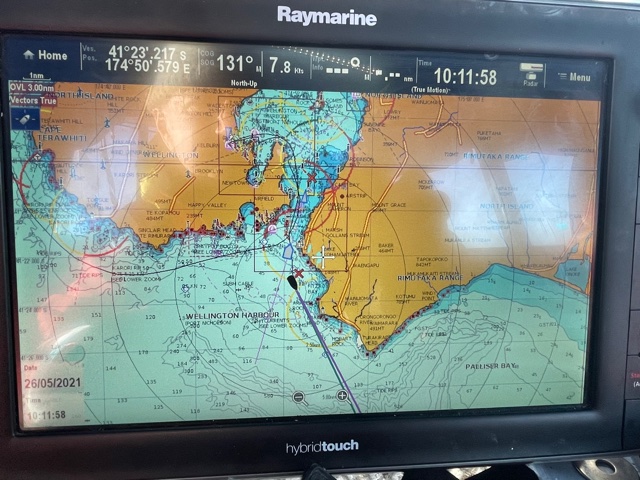
Soon after laying our course east towards Cape Palliser, Alvin called out … “whales, off the starboard side”, and sure enough, there passing close by was a pod of Orcas – mum, dad and the kids, calmly making their way in the direction of the shore; no interest in us from the world above.
As predicted, the wind was light and the seas still up, but looking on the bright side, they weren’t breaking, which enabled us to ride them up and down, as they passed beneath. One of the difficulties, was that there were two sets of swells, one from the northeast and one from the south, plus a local “sea”, making for confused conditions that would only get worse.
By noon we had worked out our shifts – 3 hours ON and 3 hours OFF, with John and his grandson Harper taking one shift and Kate and Alvin taking the other.
Astute readers will notice that I escaped being conscripted onto a formal “watch”. The theory being that I would “drift” between each shift, on account of knowing the most about the boat and her “ways”, helping with sail changes and adjustments, plus any other issues that might arise along the way. Which included making toast, dinners, cups of tea and handing around snacks; particularly at changes of watch – a bit like a maritime version of Carson from Downton Abbey
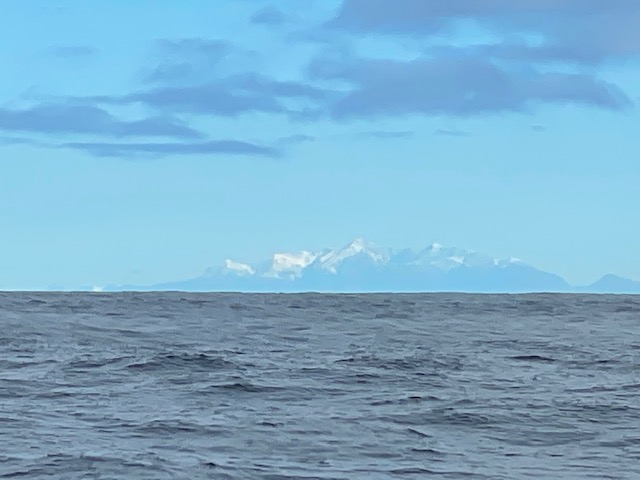
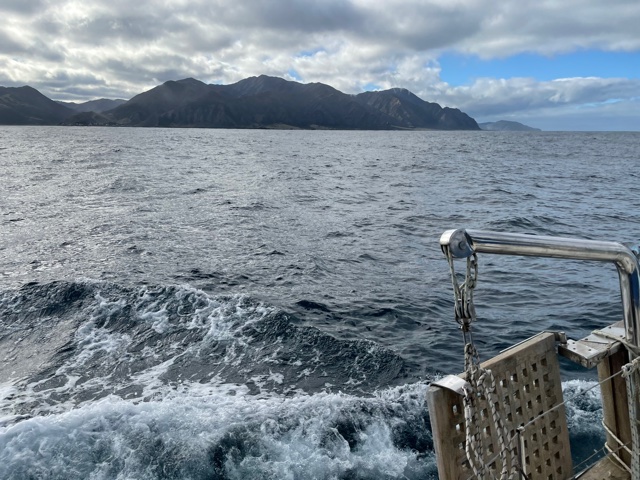
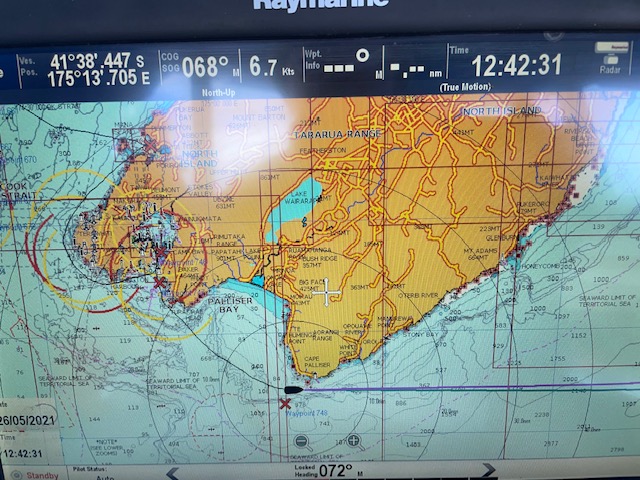
Later in the afternoon the wind died off completely, causing us to drop the sails, but still we made around 6-7kts under engine alone, riding the swells up and down; and at that speed probably picking up a knot or two of current.
At the change of watch, late in the evening, John explained to me as I emerged from my bunk that …“the wind was down to about 10 knots, and on the nose, with our speed at around 5-6, so I pulled the sails down”.
It was a good call. Rather than set the sails to catch the breeze, he had decided to keep plugging on in the right direction. The alternative being to tack back and forth, either side of the breeze, going faster no doubt, but covering more ground. As they say, “a straight line between two points is often the quickest”
It didn’t take long for the routines of life at sea to develop. The key considerations being to … preserve and maintain personal energy (by sleeping and eating) watching where the ship is going … looking out for “issues” (on the boat and out at sea) and making sure we are going as fast as practicable given the changing conditions.
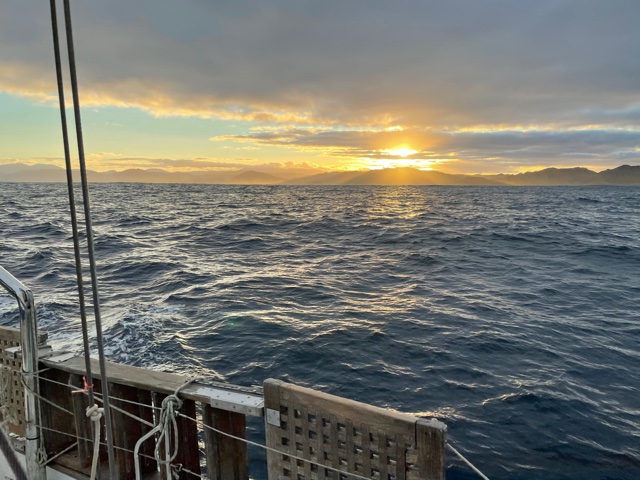
The evening meal was a wonderful beef stew concoction, pre-made and frozen by Kate, which went down well … and mostly stayed down … but some things are best left unsaid …, but rest assured Kate, it was no reflection on your culinary abilities, more a statement on the sea conditions and the usual “first day at sea” syndrome.
Around 10:30pm, or there abouts, we were making good time over a silver sea, the full moon blazing down from high in the sky. The sea-state was still as lumpy as ever, so rather than risk being thrown off the cockpit seat, I laid a mattress on the deck nearby and made myself comfortable under a few blankets. Looking up I noticed someone had taken a “bite” out of the white disc, and as time ticked by, more and more of the moon disappeared.
Earlier in the day, I recalled there was going to be a lunar eclipse, a “red moon”, tonight … so this was it, right before my eyes. Finally, the moon was all but gone, just a dirty red shadow remained – if you looked hard. No more the silver sea, the reflections off the deck and the look of daylight … it was “black as – bro” … the stars were thick and bright in the sky above, and there was even phosphorescence in the passing waves and our trailing wake.
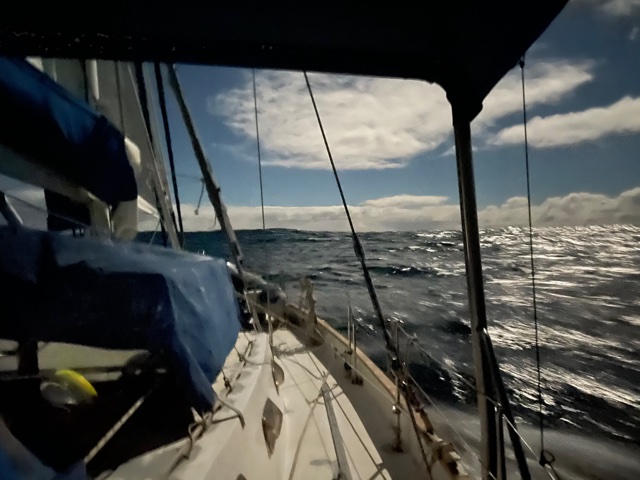
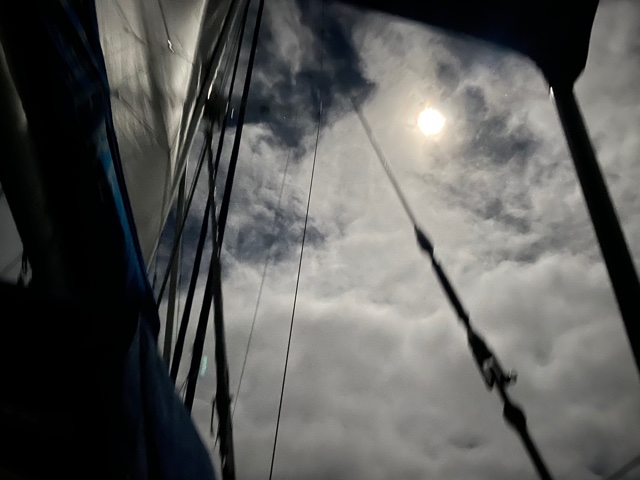
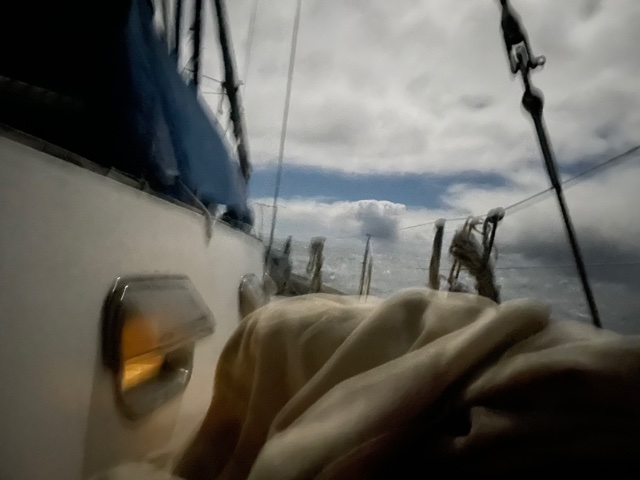
Another hour and we were back the same, as if nothing had happened – a full moon, on a confused sea, the sound of our wonderful Perkins engine pushing us onwards, up and over the waves.
Smooth seas, fair breeze and out on the BIG BLUE again
Rob Latimer
 NZ2020