Marina Gisborne
Friday 28 May 2021
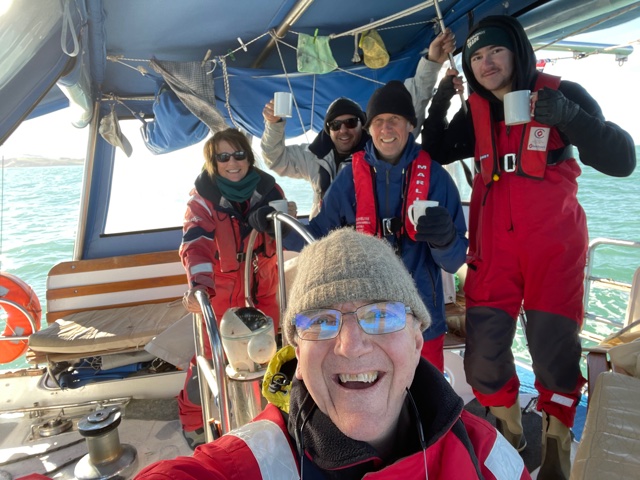
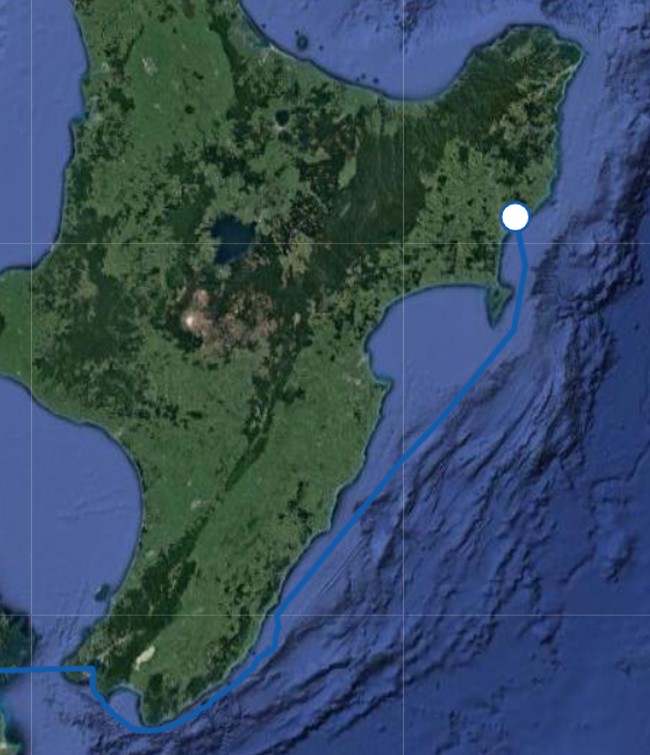
The sun came up off our starboard bow, marking our second day out of Wellington. Our speed was slow, but steady with a daily run of around 126 miles.
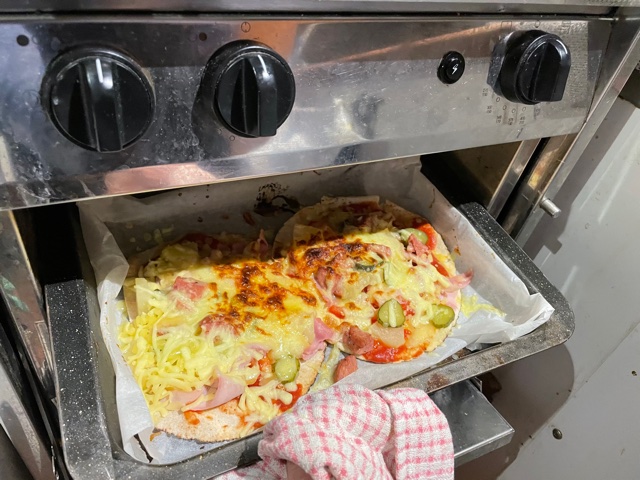
Life in the galley resumed somewhat, with my attempt at a Pizza creation on a Pita Bread base, going down very well … and universally staying down … which was a great thing.
The near-full moon’s return bathed us once more in lunar light as the now calming seas, slipped by.
Off to our portside the outline of Mahia Peninsular could be made out as we inched our way up the coast. Mahia Peninsula being the site of New Zealand’s Rocket Lab Launch Complex 1.
Yep, you heard me correctly … New Zealand’s Rocket Lab Launch Complex 1. Not sure if there’s a Launch Complex 2,3 or 4 … or if the use of number 8 wire features in the rocket design in any way … but you’ve got to plan ahead I always say … aye. If you’d like to learn more about New Zealand’s very impressive space program, click HERE
But to cut-and-paste a wee bit … “Rocket Lab Launch Complex 1 (also known as Mahia Launch Complex or Spaceport) is a commercial spaceport located close to Ahuriri Point at the southern tip of Mahia Peninsula, on the east coast of New Zealand’s North Island. It is owned and operated by private spaceflight company Rocket Lab and supports launches of the company’s Electron rocket for CubeSat nanosatellites. The facility officially opened on 26 September 2016 (UTC). With the launch of Electron on 25 May 2017, it became the first private spaceport to host an orbital launch attempt, and the first site in New Zealand to host an orbital launch attempt.[4] With the Electron launch of 21 January 2018, it became the first private spaceport to host a successful orbital launch.”
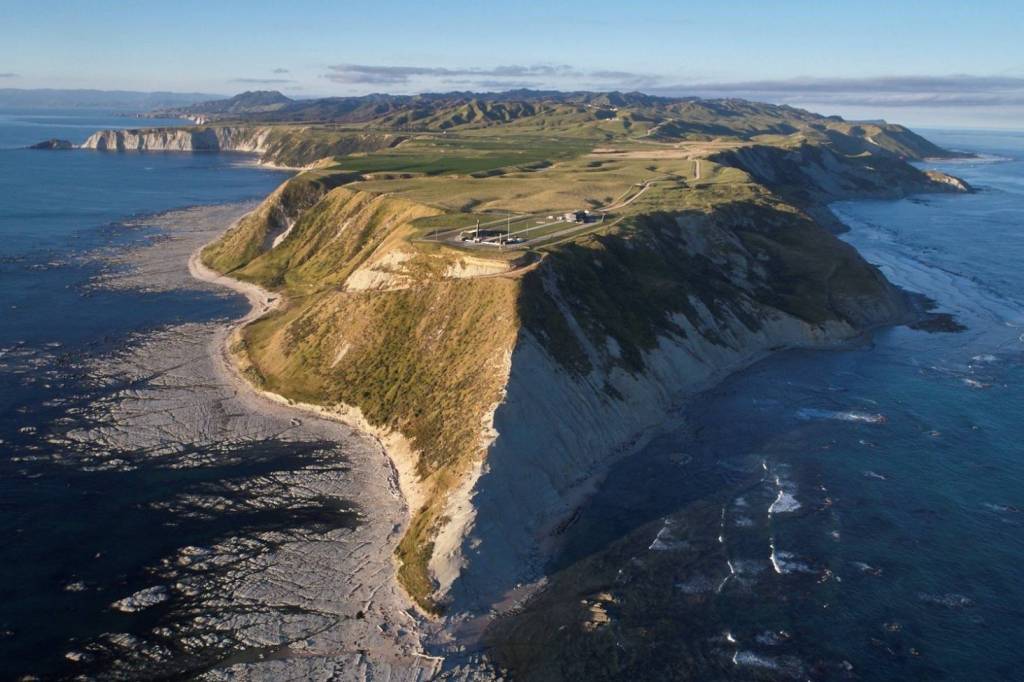
And if you want to watch live coverage of a Rocket Lab launch (well, live on March 22, 2021) click HERE
Live coverage of the countdown and launch of a Rocket Lab Electron rocket from Launch Complex 1 on Mahia Peninsula in New Zealand carrying six small satellites for customers in Australia and the United States, along with a test platform for a NASA small satellite mission to the moon launching later this year.
So, there was much speculation aboard Chimere as to whether we would witness a rocket launch as we sailed by in the night, but it was not to be … disappointed lads!
Facing a very down-to-earth problem, but still going with an outer space theme, on board Chimere, our small IridiumGO satellite communication unit broke its charger input connection fitting. The result of years of salt air and use no doubt. The unit still works, but it just can’t be re-charged, until I can find someone to solder the tiny metal socket back in place. In the end there was just enough power left in the unit to transmit our location off Mahia Peninsular, and then again on arrival here at Gisborne.
The land became progressively more distinct as we set a course for the entrance to Gisborne Harbour – all the while watching out for cray pots in the shallower waters, as the morning light allowed
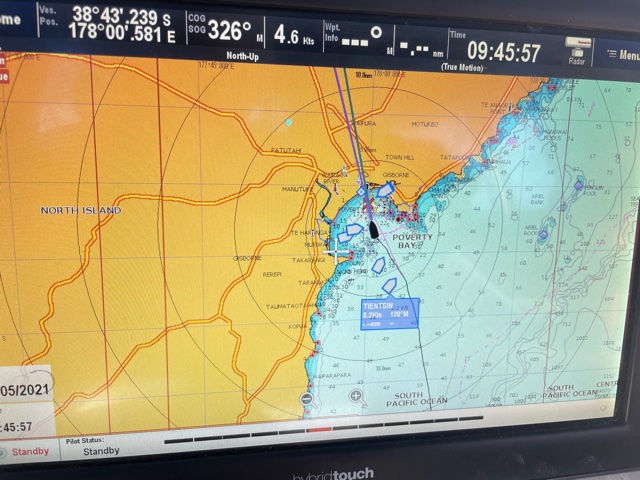
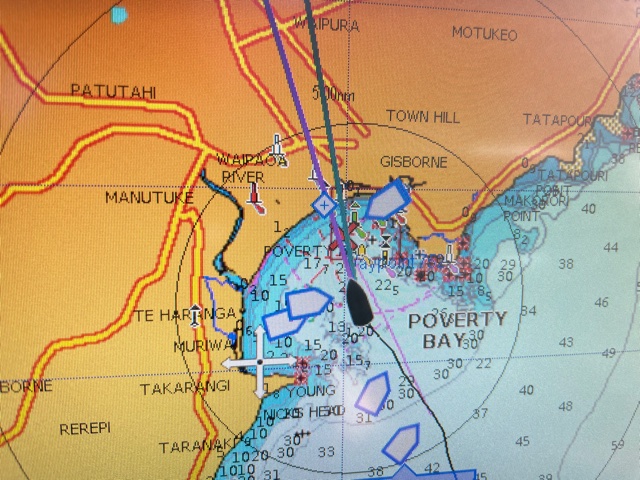
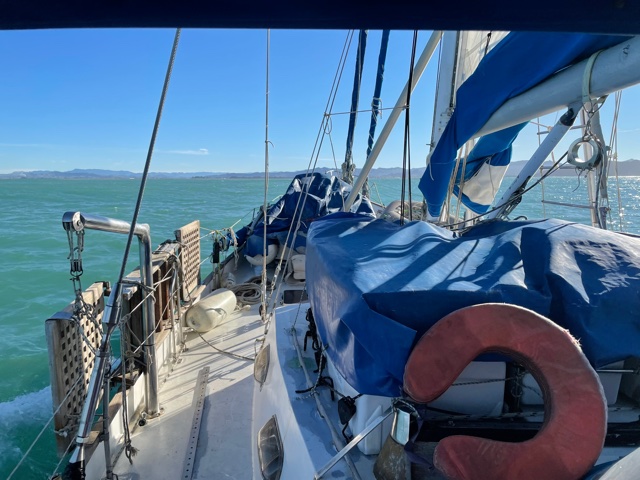
Keeping Young Nicks Head off to Port and entering Poverty Bay had me once again reaching for Captain Cooks journal entries, with the following being of note:
“Saturday 7th October 1769, Gentle breezes and settled weather. At 2pm saw land from the masthead bearing W by N, which we stood directly for, and could but just see it of the Deck at sunset” – named Young Nick’s Head after Nicholas Young, surgeon’s boy who first sighted it
“Wednesday 11th October 1769, At 6am we weighed and stood out of the Bay, which I have named Poverty Bay, because it afforded us no one thing we wanted”
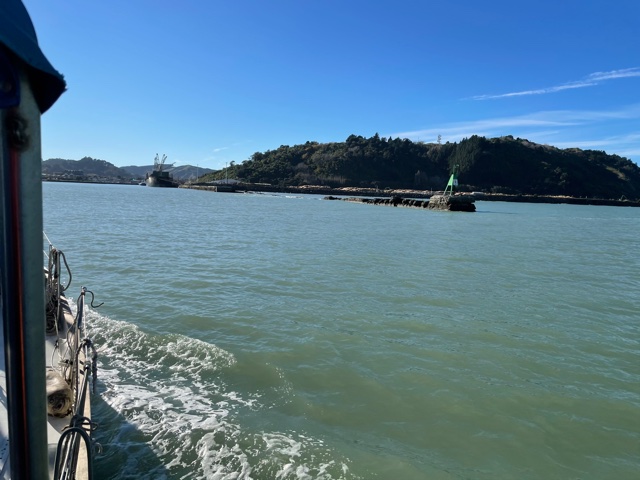
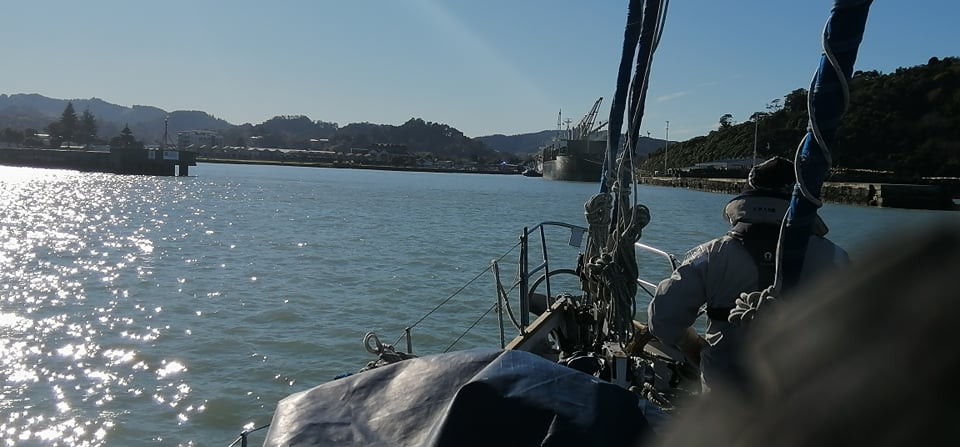
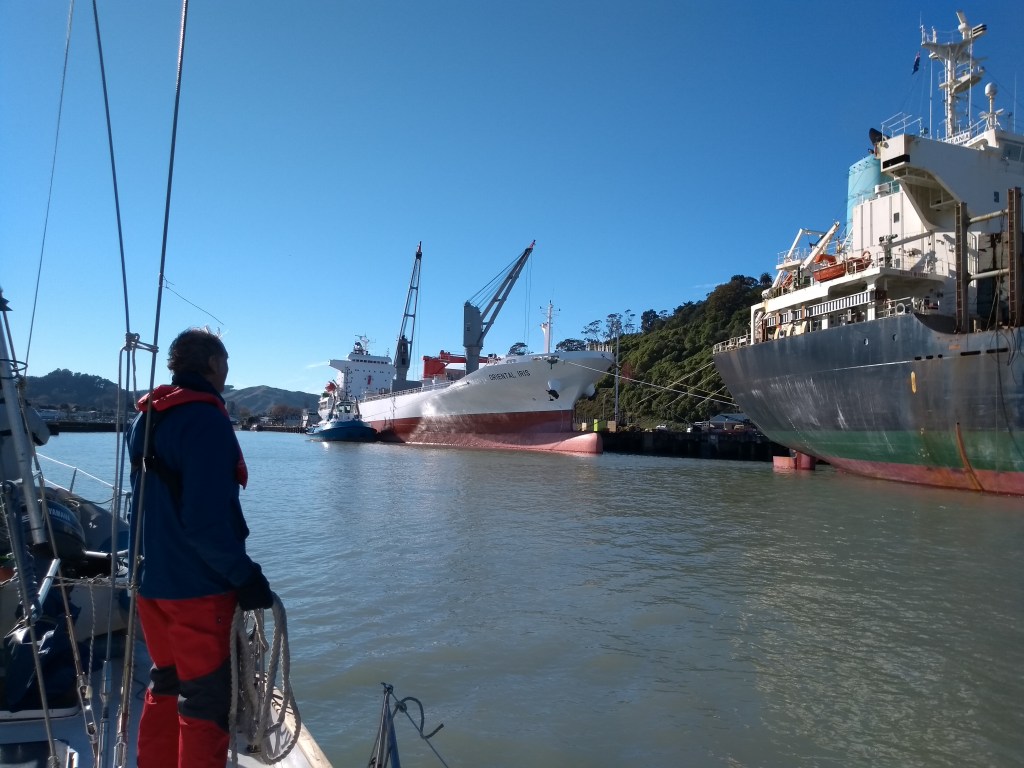
In contrast to Cook’s time, we found “Poverty Bay” and the town of Gisborne, to be the source of many good things with friendly natives to boot.
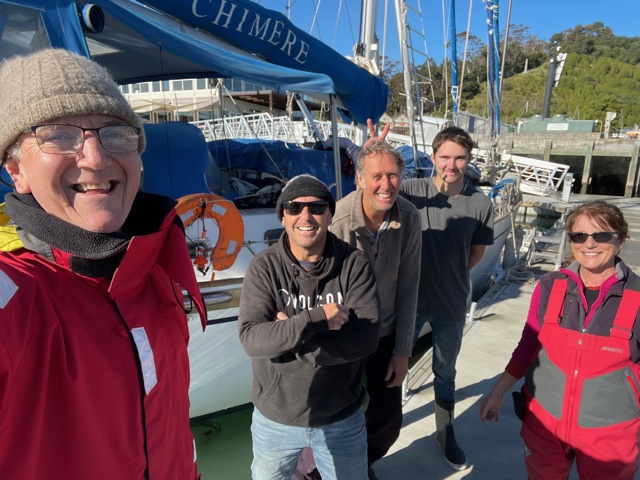
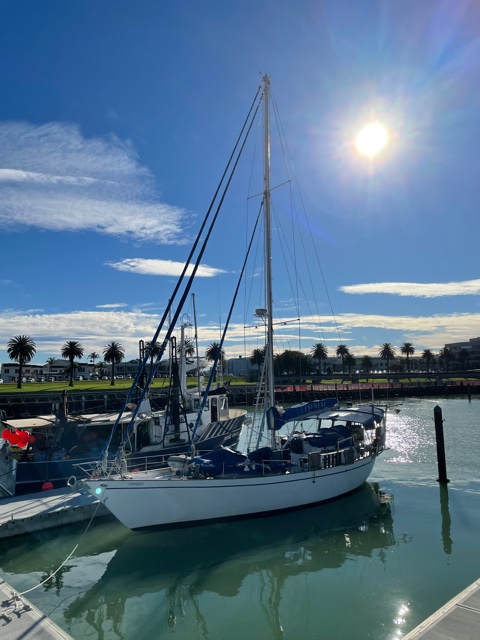
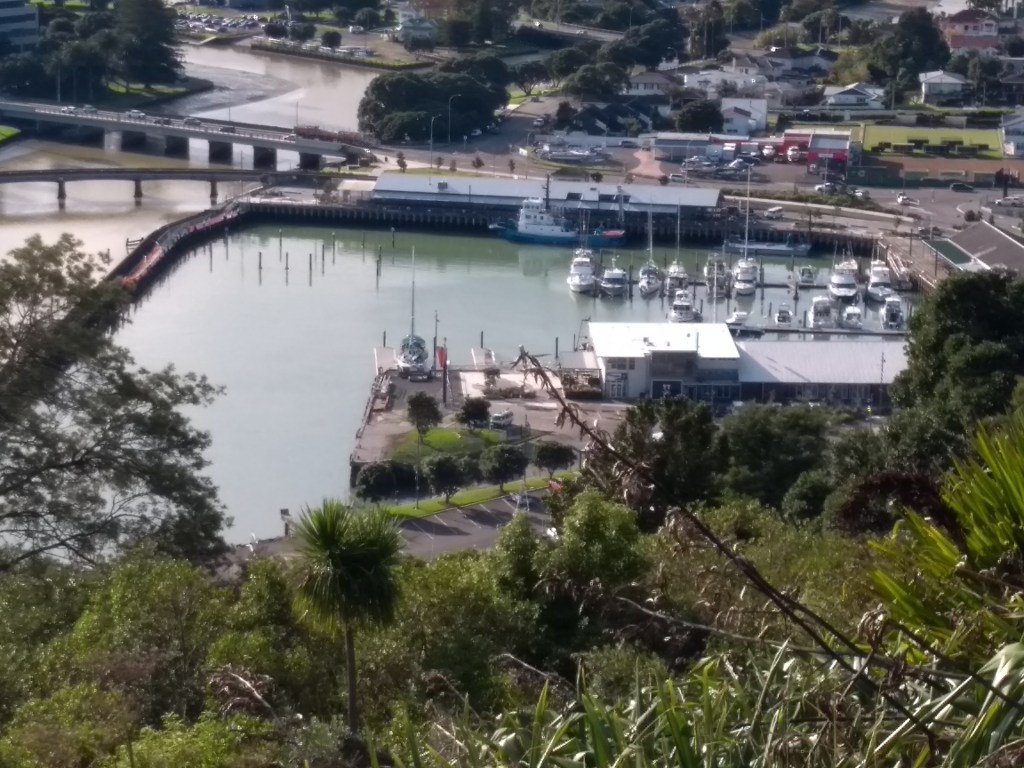
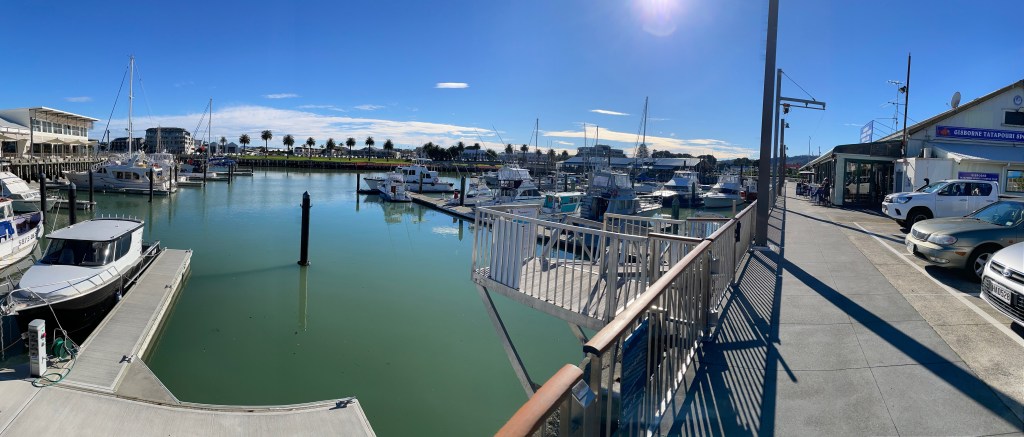
By 10:30am we had tied up in Berth C38 – a total of 286 miles out of Wellington – with helpful manager Daniel there on the wharf to welcome us in person
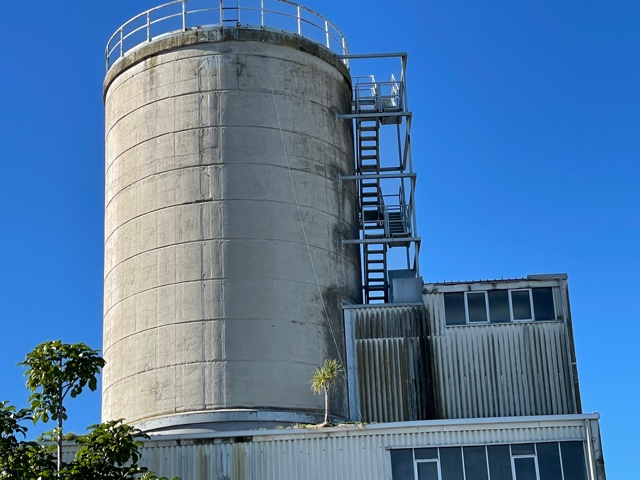
On the way into harbour we had passed several bulk carriers at anchor, rolling mercilessly, exposed as they were to the beam-on swells of 3-4 metres. The ships are hear to pick up logs which rest in mountainous piles back from the river wharf, with a procession of trucks delivering more all the time.
Fun facts for the year ended June 2018
- Total exports of forestry products from New Zealand for the year were $6.4 billion.
- Of total forestry exports, 48% went to China.
- The value of sawn timber exports reached $891 million.
Once tied up, for us, there was nothing for it but to simply soak in the serenity of this sun-bathed local scene. In walking around on land, at times there was a lingering sense of motion, this way and that, as we scoped the town. Kate and I walking the full length of the town, at least as far as the clock tower, before returning on the other side. John, Alvin and Harper either fell asleep, or took the opportunity to check out the local facilities.
The sunny stillness continued for the rest of the day, with two hours of welcomed sleep, (for me) plus a couple of cups of coffee, enabling me to catch up on some Ship’s Log writing and posting. Thank you to my son Matt for putting up the “Stay Tuned” message the other day. Whilst communications were generally pretty good up the coast, the fact was, sitting in a washing machine of a saloon, eyes fixed on a computer screen, in the end became a bridge too far.
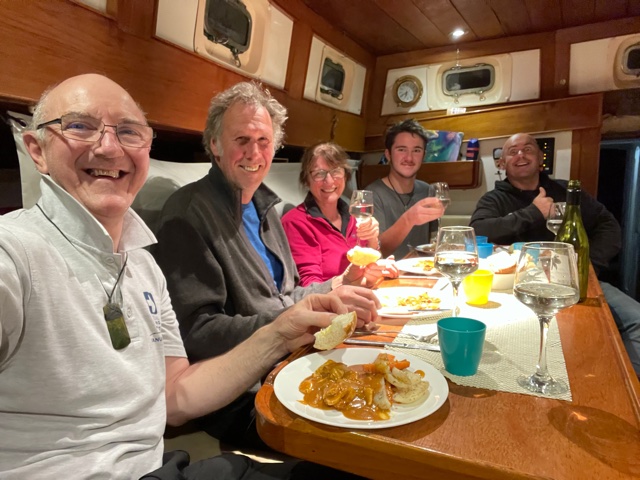
Sad news amongst the crew, is that Harper has to leave us tomorrow. The lure and responsibility of work drawing him back to Wellington. No doubt we’ll have a good-bye shot tomorrow of Harper starting to hitch a ride south, tonight at dinner, we drank a toast in true Gunroom tradition, to … “Harper’s health, his valued contribution to the efficient operation of the ship and his continued success in life” Many thanks Harper, it was good to have you on board.
Smooth seas, fair breeze and shore leave at Gisborne
Rob Latimer
 NZ2020