Gisborne Inner Harbour Marina
Saturday 29 May 2021
It was a lazy start to the day, with an extensive breakfast that made good use of the eggs, bacon and bread in the ship’s stores.
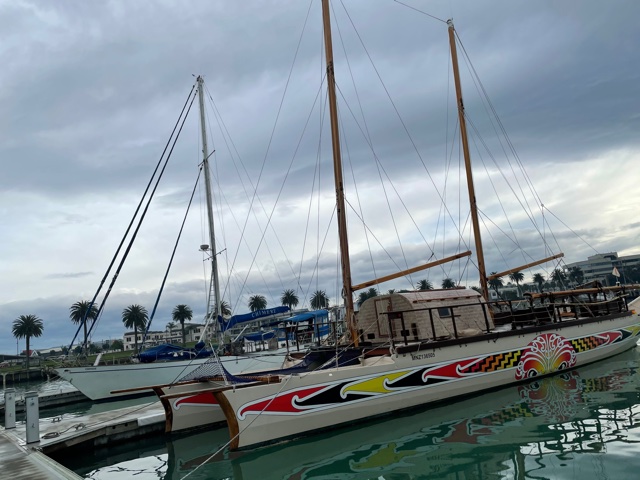
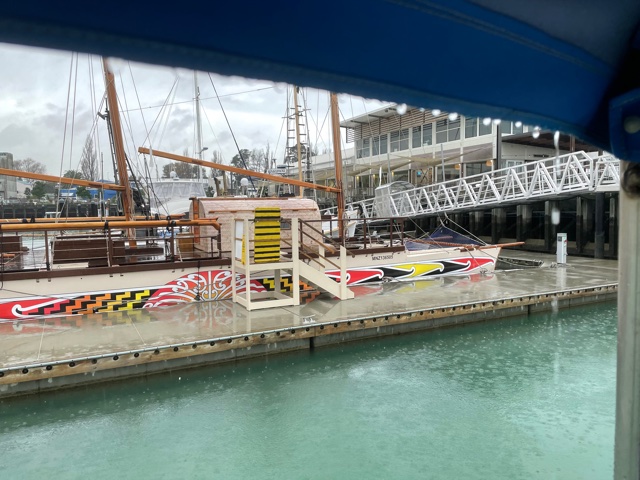
In contrast to the day before, the sky started out grey and overcast, a portent of what was to come. But in looking out on the portside what did we see by a Waka.
A what?
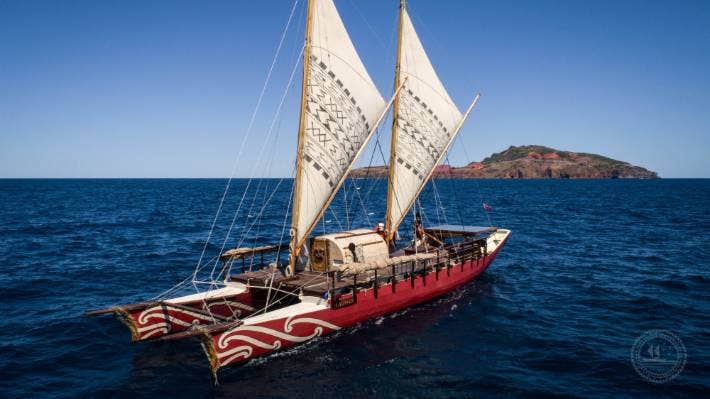
You might be thinking of that small bird the weka … but no, this is a Waka, or Polynesian twin-hulled canoe, of which there are several spread around the country. This one is called the Tairawhiti and is based here in Gisborne. It had apparently sailed in overnight, having come down from Tauranga
This particular Waka is described below and HERE
“Our Waka Hourua ‘Tairāwhiti’ is named after the Tairāwhiti Gisborne/East Coast area – the coast where the sun shines. ‘Tairāwhiti’ follows great voyaging traditions, providing an opportunity for cultural and sailing experiences where storytellers share our authentic Polynesian waka with the public. It’s also used as an alternative educational platform as a floating classroom for the benefit of school pupils in the region. So haere mai, welcome aboard the Waka Hourua for a journey that spans millennia, from canoes carved by the ancestors using stone age tools and the great trees provided by Tane Mahuta (God of the Forest) – sailed by man to discover and settle the Islands of the Pacific Ocean, to the fibreglass hulled vessel we berth today”
To find out more about Wakas more generally, check out the link HERE
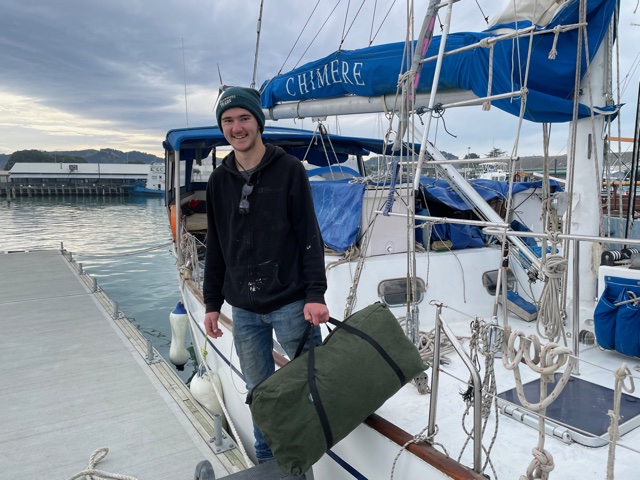
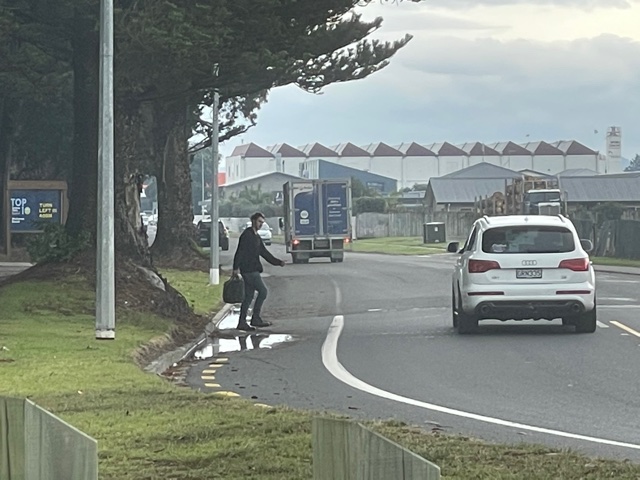
After breakfast it was time to farewell Harper, with John, Alvin and I wandering with him to the edge of town – and the open road – which also gave us a chance to check out the beach and local monuments, commemorating the arrival of Captain Cook in 1769 and the initial sighting of land by crew member Nicholas Young
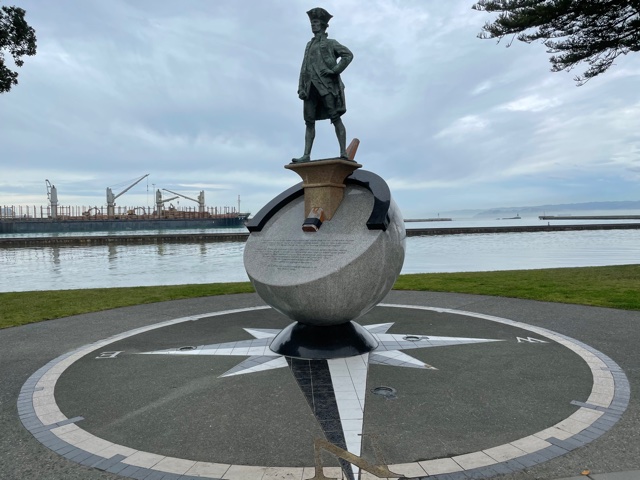
On the front of the base:
A fine seaman, an outstanding captain and an honest man Captain Cook was one of the last of the great
explorer navigators and the first scientific expedition leaders. After his three global voyages
of 1768-71, 1772-75 and 1776-79 the map of the world was substantially complete.
Here on the 9th and 10th of October, 1769, Cook walked with men from HM Bark Endeavour seeking
fresh food and water. Nearby on the river rock Toka-a-Taiau, Maori chief and English greeted
one another. When traditional challenges were misunderstood Maori were killed,
the ship sailed without provisions and thus Poverty Bay received its name.
From here, the Endeavour circumnavigated New Zealand
and Cook plotted the first map of this country.
This meeting of the two peoples, marked the beginning of the
New Zealand nation.
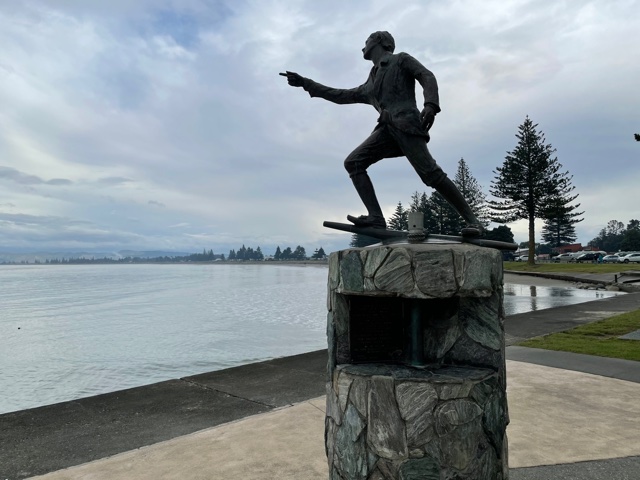
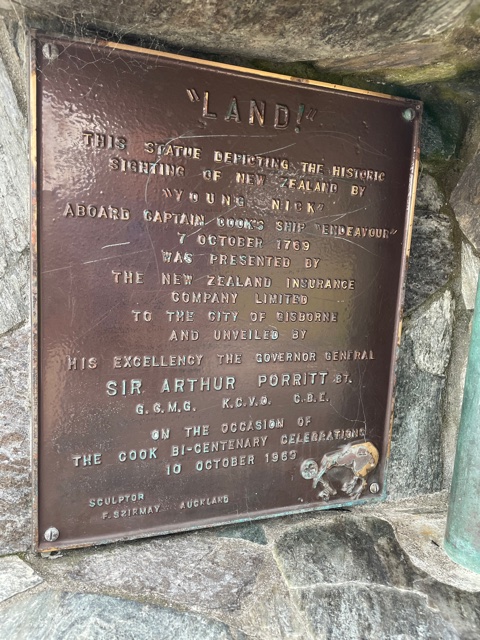
Meanwhile, Kate wandered up town, stumbling across the local museum and a farmers’ market.
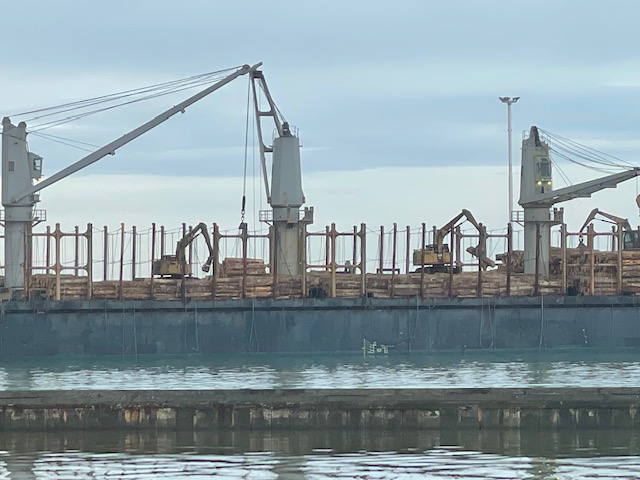
After waving Harper off, John, Alvin and I watched logs being loaded aboard the ship across the river, with the aid of large excavators and the ship’s cranes, and then noticed smoke and the smell of fire from behind a nearby fence.
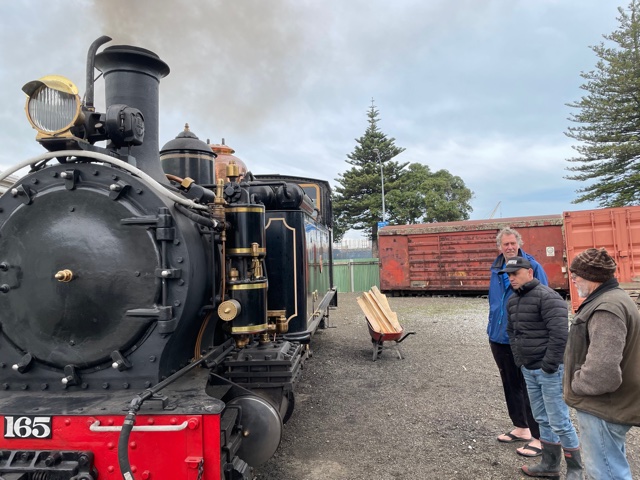
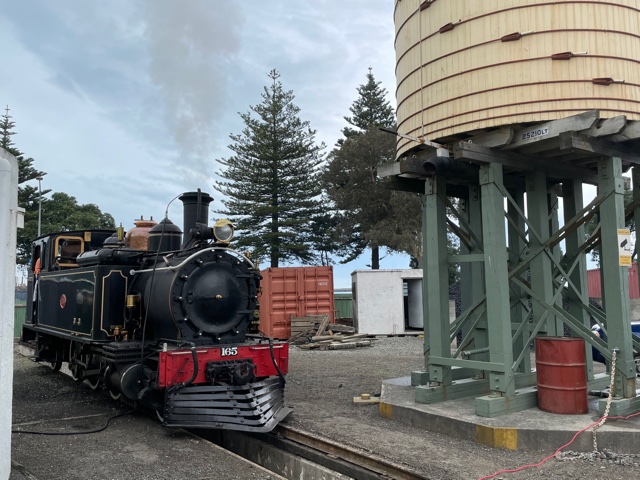
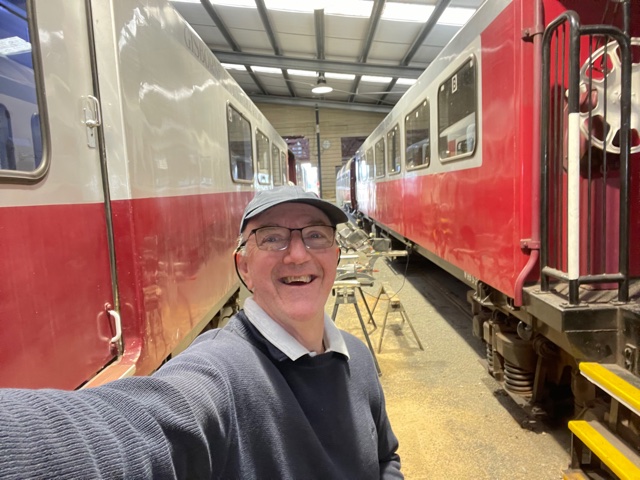
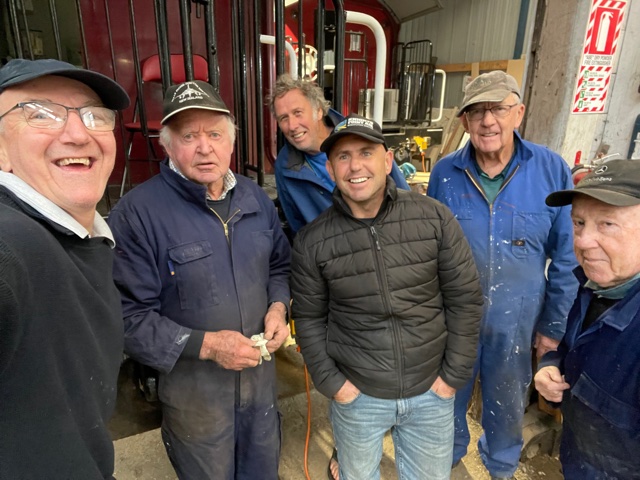
We’d already seen railway tracks through the edge of town and even on a special bridge across the river, but all seemed to be a testament to a bygone age; slowly fading with the years.
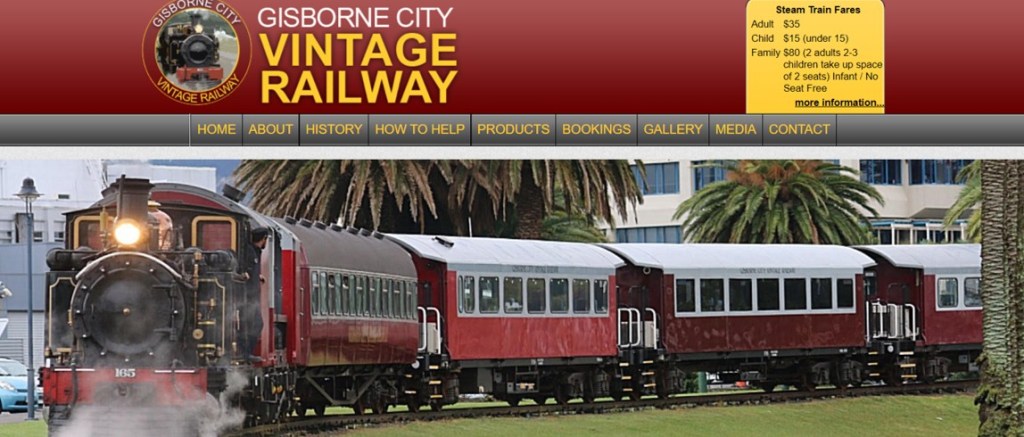
Not so! Little did we know that there was a very real steam rail association, alive and well, right here in town. And as we were soon to discover, they were warming up the fire box of their famous Dunedin built (in 1897) Wa165 class engine in preparation for tomorrows “Chardonnay Express”. Apparently, all the tickets have been sold, but if you’d like to know more check it out HERE
Having shown lots of interest and enthusiasm, the local club members were very keen to show us every aspect of the set-up, including rolling stock, machine shop and the large diesel electric engine they had bought as a back-up, in case the steam engine ever proves unfaithful. We learnt that the train tracks actually run across the runway at the Gisborne airport, making it probably the only place in the world where a plane gives way to a train.
To learn more about the association click HERE
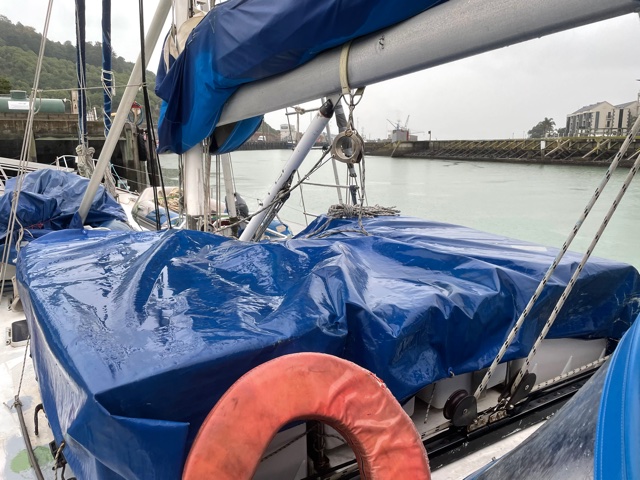
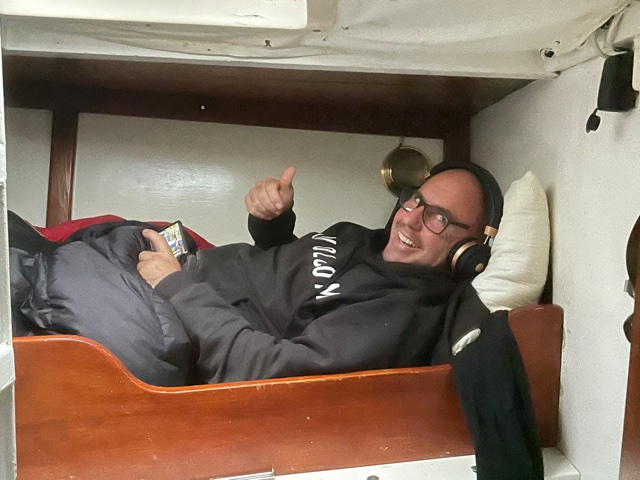
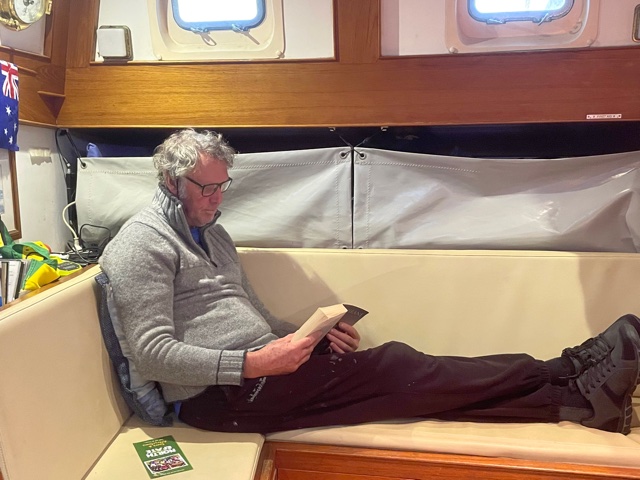
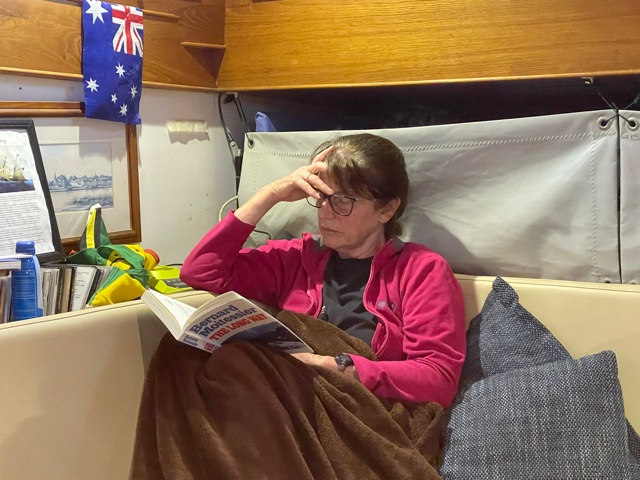
The afternoon brought the predicted rain, which seemed to set in, with occasional breaks here and there for good measure. The pitter patter sound on Chimere’s roof was a constant companion as we each either sat in a corner reading a book, or caught up on sleep in our bunks.
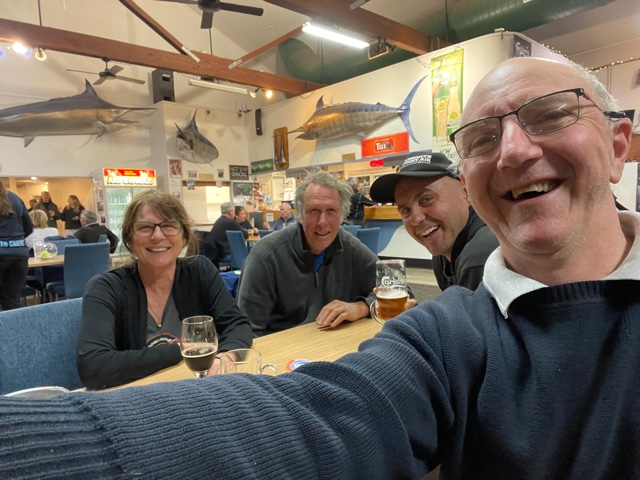
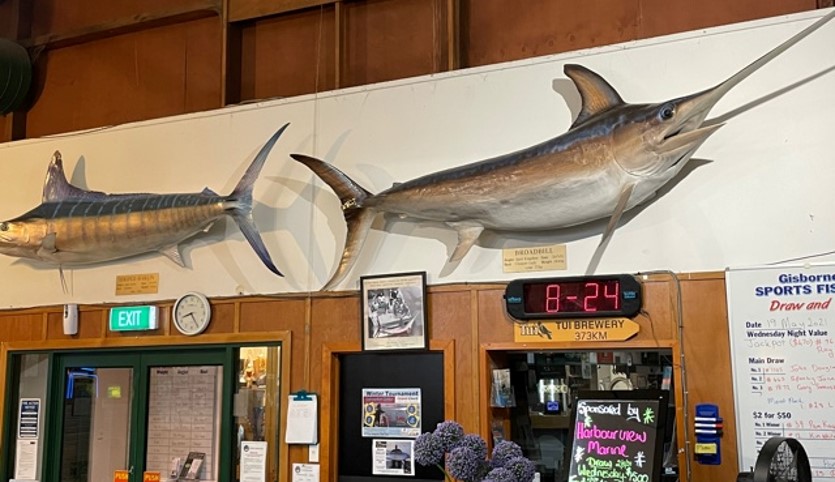
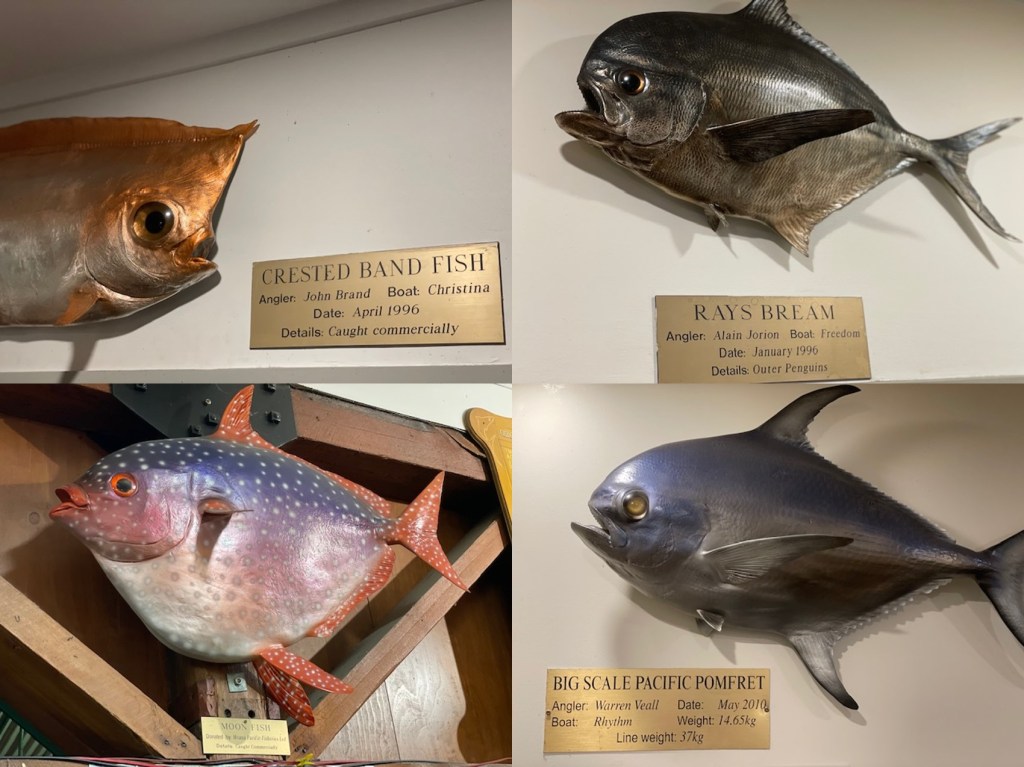
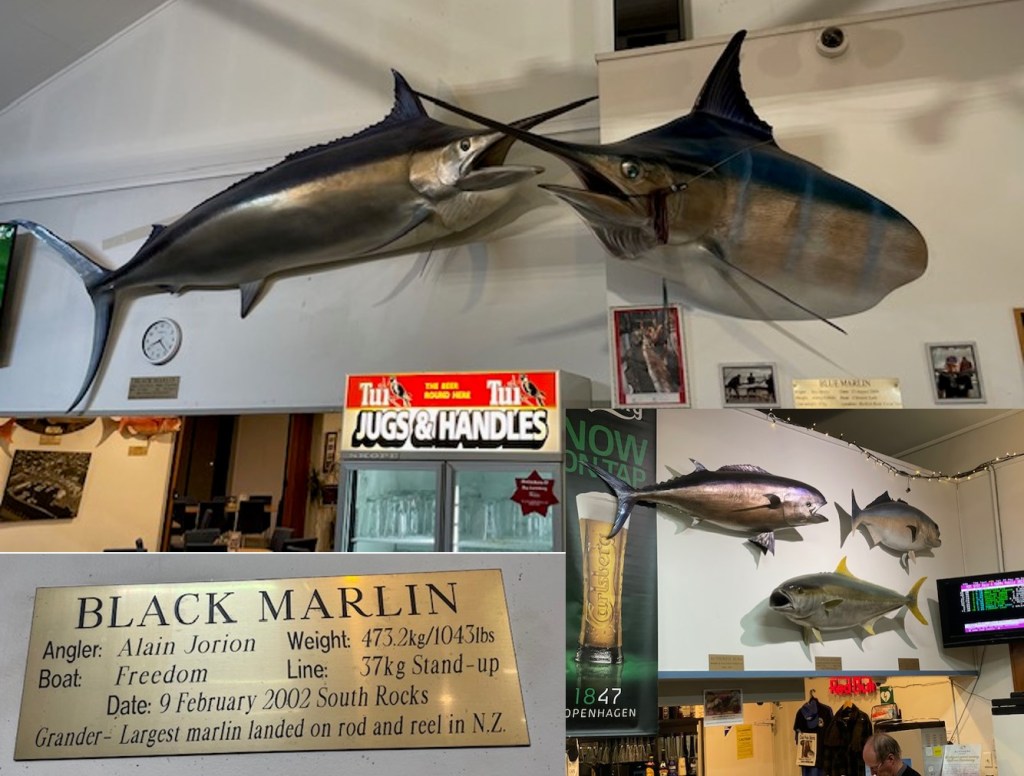
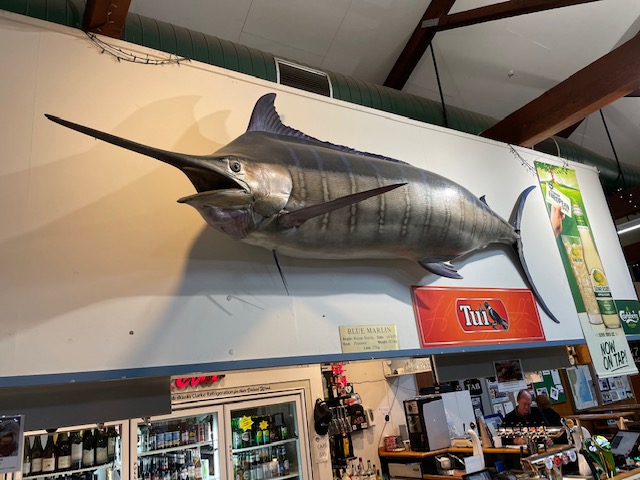
To support local industry and employment, while giving us a break from time in the galley, we all dined at the local (about 100 metre walk) Game Fishing Club, where we’d been made temporary members, at a cost of just $15 (for the vessel), for the duration of our stay. As you can see from the photos, there was no mistaking that this was indeed a game fishing club. Given the many choices on the menu, there was naturally nothing else I could order, given our surroundings, but fush and chups.
Smooth seas, fair breeze and Harper hits the highway
Rob Latimer
 NZ2020