It was a particularly lazy start to the day, knowing we’d be here all day and for a second night, with no particular place to go, but maybe ashore in the dinghy briefly to explore the local waterfall and lake.
This we did around 11:15am, motoring the short distance around the corner and up the river to a spot where we could tie-up, in order to then find the “rough track to the lake, about a 20-minute return” – to quote the Cruising Guide.
Lake Cove was deep. Deeper than we’d normally choose to anchor, and with steep sides to the sea-floor the shallower areas would not enable the anchor to take hold. In the end we dropped the pick in 20 metres and simply let out a lot of chain … she held beautifully The clouds speak of wind and rain … we weren’t disappointed. Anchoring in regions like this always carries the risk of snagging a log … fortunately NOT a problem we encountered
The “rough track” was certainly true to label, but for the first 10 minutes we invented an even rougher track of our own making, clearly missing the start of the “official” track a short distance up the hill from where we’d tied up the dinghy.
Two nights at the top of Edwardson Sound gave us a good chance to re-charge the human batteries From our anchorage it was short dinghy ride to the head of the lake, and from there it was a bush walk up and up, to the waterfall A handsome sight and sheltered from the impending gale
After a while, or quite a while really, we met up with the proper designated track and eventually got to the spot where Lake Cadman emptied over a vertical drop of maybe 25 metres into a large cliff-encircled, fern-lined basin, before dropping further into the smaller waterfall we’d tied the dinghy next to on arrival.
Selfie king James even gets Chimere in focus … all six of us!
In anticipation of another sand fly attack, we’d all worn “appropriate clothing”… which we were sure would not enable the critters to penetrate and bite. One thing we hadn’t fully accounted for, however, was that fact that the northerly wind was actually warm. With all the walking and bush-bashing up hill to the lake making things even hotter … and sweatier. If the waterfall drop-ff wasn’t so close to the edge of the lake, with nothing between us and oblivion below, we might have been tempted in for a swim … the sand flies actually not being all that bad.
Linda equipped and ready for the sand fly onslaught … After a bout of bush-bashing, we finally located the official path to the waterfall Once we found the path, progress was somewhat easier What it lacked in height, it made up for in volume and power. Not a place to lose your footing Great place for moss and ferns … this water never runs out
Back on board and after baking two loaves for a late lunch. You guessed it … crayfish sandwiches, accompanied by salad, cheese, toppings and lashings of butter … of, and a beer. This was truly a high-class spread, with John heard to say … “I think I’ll have cucumber with my crayfish…”
The forest occupied every inch of ground, right down to the water and beyond Preparing to head back to Chimere after our bush and waterfall experienceHeading back “home” for a good lie down Always nice to see your home in the same spot you left her… Cleaning the mud and soil off our shoes and clothing was a bit of an exerciseNo dirty shoes allowed aboard …One tough mother!!
I then asked James, “how much do crayfish cost?” … To which he seemed well qualified to answer. Apparently he’d checked out the possibility of buying some crayfish prior to Christmas and recalled it was somewhere in the order of $250 retail”, per crayfish, or kilo, I don’t recall. John mentioned that fishermen were receiving $100 per crayfish, off the boat, so the long and the short of it was that we had been given close to $1,000 worth of crayfish!
Having been apart of 3 meals already, and with three of the six crayfish still in the fridge, we were brainstorming all the ways to prepare the tasty white flesh in the days ahead; not yet at the point of saying, “… crayfish again?!?”
Lunch … a crayfish banquet John’s crayfish sandwich
In keeping with the weather forecast, it began blowing pretty hard, reaching up to 25 knots from the north east at times, but a far cry from the 40 knots plus, racing down the west coast just 15-20 miles away.
We were in an ideal position, but like many places around here, the water is deep. Not in the 100-200 metre-deep-range that is common out in the Sounds, but more like 20 metres. Which is unusual for most anchorages, where there’s a choice that is.
In this case, there appeared to be a choice … in about 6-8 metres of water, which we initially tried on arrival yesterday. The problem was, even after setting out a lot of chain, the anchor simply wouldn’t hold. Preferring to “roll down the bank”, into the 20-metre-deep water, over a distance of just 20-30 metres, and in the process NOT digging in. On our third attempt we basically gave up, paying out around 80 metres of chain in the 20-metre-deep water; where we dug in firmly. Knowing there would be a big blow, and to increase the holding power even further, we attacked a large weight to the chain, lowering it down the links almost to the sea floor.
Port and starboard crayfish John and James became the masters of the crayfish cooking and preparation
Whilst it’s always a greater hassle retrieving more chain, not to mention the anchor weight, when it comes time to leave … in the meantime, a securely dug in anchor means greater peace-of-mind.
The grey clouds looked threatening all day, and whilst we were expecting rain anytime, it wasn’t until after dinner (no, not crayfish, but green Thai chicken) that it finally started. It’s certainly not cold, and with the sound of the rain on the roof, there’s a real snugness to bed-time tonight.
So, whilst it was a day of rest, we did end up washing clothes, making bread, charging the batteries, heating water for (hot) showers and catching up on some sleep.
With a predicted break in the weather, (close to the coast), tomorrow, we plan to be away early in order to test conditions for a quick hop up the coast to Dusky Sound. If conditions are just too unpleasant, we’ll come back into Chalky Inlet, to rest some more and wait for a bigger weather-window.
The red night light in the toilet gives it a strange horror-movie feel.
If all goes to plan, however, we should be dropping anchor in Pickersgill Harbour, Dusky Sound sometime after lunch tomorrow. (Why not to a web-search of the location, and add the words “captain cook”. It’s an amazing place, with an amazing history)
Smooth seas, fair breeze and A Day of Rest
Rob Latimer
PS I’m still looking for extra crew to assist with the 8-day voyage, from Milford Sound to Wellington, starting on 14 March. If you or a friend want to join us, please sing out ASAP. Email me on the satphone at … msm1@clientsatmail.com.au and latimerfamily4@gmail.com but remember, no file attachments)
CAPTAIN COOK, Second Voyage, 25 Match 1773: After sailing 117 days without sight of land, covering thousands of miles across the Southern Ocean, as far south as 60 degrees south, Captain James Cook made landfall at Chalky Inlet, which he mistook for Dusky Sound (just a few miles further north). A region he had charted three years earlier.
Starting early, we covered around 40 miles … retracing our path out of Long Sound and out through Preservation and Chalky Inlet . then north up Edwardson Sound to Lake Cove, with a brief stop-off behind Great Island to fill up with water.Heading back down Long Sound as the morning sun began touching the higher peaks.Surrounded by hills and mountains as we travel through the FiordsLinda enjoying the momentBush, trees and foliage from every crevice right down to the water’s edge Very calm We had it pretty much all to ourselves
Cook writes: “… we were at an entrance to a bay, which I had mistaken for Dusky Bay, being deceived by some islands that lay in the mouth of it. Fearing to run, in thick weather, into a place to which we were all strangers, and seeing some breakers and broken ground a-head, I tacked in twenty-five fathoms of water and stood out to sea.
“… this bay may be known by a white cliff on one side of the isles which lie at the entrance to the bay. This part of the coast I did not see but at great distance, in my former voyage; and we now saw it under so many disadvantageous circumstances, that the less I say about it the fewer mistakes I shall make. We stood out to sea [again] …
“Here we had a great swell rolling in from the SW … having a very high and irregular sea. At five o’clock next morning the gale abated and we bore up for land, and entered Dusky Bay about noon.”
Captain Cook named this “Chalky Inlet” 250 years ago …… the chalky cliffs are the same now as they were 250 years ago when Captain Cook sailed by.Out of Preservation Inlet and back into Chalky Inlet saw us out in the open sea only briefly
Reading Captain Cook’s journal, while sailing in the same waters he explored and charted nearly 250 years ago, brings an even greater level of respect and admiration for the man and his crew. Today, we sailed past those barren white cliffs, that gave the inlet its name – Chalky. Two days ago, we experienced the … “very high and irregular sea” described and endured by Cook and his men. And in a couple of days we plan to enter Dusky Sound, to anchor in Pickersgill Harbour, stand on Astronomers Point and sail around the coast of Resolution Island.
Matt guides us around into Chalky Inlet It was a comfy ride but a little chilly in the windJohn takes in the scene as we pass the white cliffs of Chalky Inlet. No doubt the cliffs reminded Captain Cook of his home waters near Dover, England
The more you consider the achievements and abilities of Cook, along with the far-reaching implications of his discoveries – for each one of us, even today in 2020 – the more you can accept and understand the descriptions of the man as recorded in his many biographies. In particular that by Christopher Lloyd when he writes, “Cook’s character was summed up in the names of his ships Resolution, Endeavour, Adventure and Discovery”.
James starting to feel a little better as he soaks up the sun
Meanwhile, back on the SV Chimere, ours was an extremely still night at Cascade Basin; once we’d re-anchored in deeper water, roughly 250 metres further away from the waterfall. Morning brought a clear sky, with the sun kissing the western slopes of the higher peaks around us.
As cozy as it gets
Towing the big dinghy in calm weather and flat seas saved us having to lift it onto the foredeck when we arrived at out next anchorage. It also left the foredeck free for lounging Matt and James go through an exercise routine More exercising
By 9:00am, we were away as planned, retracing our “bread crumbs” from the day before, down Long Sound and briefly into the Tasman Sea, before veering to starboard and up the Eastern Arm of Chalky Inlet.
On our way, we decided to pay a visit to Useless Bay, where we intended to tie up to the trees to fill our water tanks from a hose that brings the fresh stuff down from a small lake up on the hill. We’re not sure how Useless Bay got its name, but it can’t have had anything to do with the [very useful] convenient water supply.
On approach to the … water pipe in the trees, below a steep tree-covered cliff, we observed that a large motor boat was already tied up at the cliff. Once we were withing talking distance, the skipper (John) explained that they were a charter vessel out of Dunedin, with passengers flying in and out by helicopter at designated spots; including Cascade Basin and Chalky Inlet.
Quiet times to reflect This is the charter boat that gave us a bag of rock lobster!“Would you like some crayfish?” the man on the boat called out … “That would be great!! … I’m coming over”
How long would they be tied up getting water? … “about 30 minutes”, came the reply … “the flow is pretty slow”, he continued, as we discussed pleasantries about where we’d come from and where we were headed. “There’s another watering point, if you are going to Chalky Sound, and it’s got a stronger flow”, the skipper, explained … and after reaching for our Cruising Guide I was able to locate it, off Great Island, in North Port, which is accessed through Ship Entrance … Got It! We were about to head away, and as a parting comment, the skipper yelled “Do you want some crayfish?” …
“That would be great”, I called, already half-way to our dinghy, in order to breach the short distance between us. Afterwards, Linda thought I was so keen I looked like I was about to swim across to their boat. So it was that we “caught” six large crayfish!! Our 15-20 mile, motor-sail around to Chalky Sound, was uneventful, being over flat seas and with moderate offshore winds.
Having passed through Ship Entrance, we made our way across North Port to the site of the big hose that brought water down from above. It certainly had a strong flow, but our biggest task was to bring Chimere in close enough for the pipe to reach. Something we did by dropping anchor a short distance from shore, then running a stern line to shore. It was then a simple case of winching ourselves towards the rocky shore, and the pipe, letting out chain on the bow while drawing in rope at the stern. Pretty soon we were secured, with the waterpipe directed into our tanks, as clouds of hungry sand flies did all they could to spoil our day.
The vegetation was just everywhereIt was a narrow passage through the well named “Ship Entrance” into North Port where we backed up to the trees and filled the tanks with waterJust had to get close enough for the hose to reach Anchor set in at the bow, and the stern tied to a tree, enabled us to pull ourselves close enough for the hose to reachThe closer we got, the shallower it became … a time for care and patience … we didn’t want to damage the rudder!The water comes from a small lake further up the mountain With the water-maker out of action, it was important for us to top the tanks up when the opportunity arose.
By now it was close to 3pm and definitely time for lunch, after which we headed up the Edwardson Sound to Lake Cove, where we now sit in an anchorage as still and calm as last night’s in Cascade Basin.
In order to maximise the value from the crayfish we’d acquired, James took a blow for the team by spending what must have been 4 hours or more in the galley, cooking, cracking and cleaning the critters; one at a time. We have a large cooking pot, but clearly not big enough to accommodate more than one cray at a time.
In the end, it was clear that we have enough crayfish for two, maybe three meals – starting tonight. And gee they tasted nice … and expensive.
There were times when everything was running smoothly and the only thing left to do was relax and enjoy the fact that a dream had become a reality. Note the top button is done up as a defense against the sand flies.Surrounding peaks of Lake Cove … at close to 20 metres deep, it required a lot of chain to be laid out with the anchorAfter making our way out of Preservation Inlet it was a short hop around into Chalky Inlet Water always seemed to find its way into the dinghy, until I put some grease on the screw-in bung at the back Linda on dolphin watch up the front … Sleep came easily for Rob … any available opportunity … So began our crayfish indulgence Very tasty We were given a bag of 6 crayfish and they couldn’t have gone to a more appreciative home The measure of a good anchorage … will the bottles remain upright without being held, and will an inverted mayonnaise container stay put. Lake Cove passed the test Still plenty of good meat there … just had to work for it
Our anchorage here in Lake Cove was chosen as a shelter from another approaching 40 knot gale – this time from the North East, but also from the description in the cruising guide …”Lake Cove: This is an all-weather anchorage, which is not only very safe, spacious and sheltered but beautiful as well. In the southern corner are the Cora Lynn Falls which are fed by Lake Cadman. A rough track leads up to the lake – about 20 minute return.”
As something of an unusual event, we plan to remain tonight and tomorrow night in this same small cove, which really is surrounded on ALL sides by hills and mountains; the entrance being obscured after you take a near-90-degree turn to the left on entering.
Smooth seas, fair breeze and Cook’s Legacy for Us All
Rob Latimer
PS I’m still looking for extra crew to assist with the 8-day voyage, from Milford Sound to Wellington, starting on 14 March. If you or a friend want to join us, please sing out ASAP. Email me on the satphone at … msm1@clientsatmail.com.au and latimerfamily4@gmail.com but remember, no file attachments)
Despite the constant, but diminishing, swell that entered Otago’s Retreat, our anchorage, close to the entrance, worked out to be a remarkably still place to drop the pick.
As expected, it was a lazy start all-round and it wasn’t until at least 10:00am that we motored away up the Sound, in the direction of the big hills, which by now, were already bathed in sunshine; the radiant blue sky above totally being without clouds “Where are we going?”, inquired Linda, as breakfast lingered on as we motored along … eggs, bacon, toast, cereal, milk, fruit juice, plus the ubiquitous tea and coffee … it kind of all eventually merged into lunch
First morning in the “Sounds” … Otago’s Retreat anchorage … such an amazing relief after the full day’s sail yesterdayWhilst things had calmed down considerably, when we woke the next day the sea at the entrance to Otago’s Retreat was still a ribbon of white water with an accompanying steady roar All together on the bow for a morning snap, as the first day of Fiord exploring beckoned. Matt gets stuck into breakfast as we motor along the still waters of the Sound Rob grabs a minute or two to catch up on blog-writing amidst the breakfast things … have to do something about this prickles
Up on deck, the stillness of the sunny day, combined with the majesty of the surrounding hills and mountains was something that had us just gobsmacked.
The engine at low revs, we were able to do around 6 knots, creating in itself a chill-breeze that early on, had us rugging up.
It was a very peaceful 20 mile drive up the Sound
As we made our way further into Long Sound and the forest-covered sides became steeper and closer together, the warmth of the sun had us peeling layers, and eventually speculating as to whether we’d go for a swim in the promised waterfall in the “Cascade Basin”.
Our first taste of Fiordland motoring – not bad!It was calm, sunny, pristine and sublime … maybe even more serenity than Lake Eildon at Bonnie Doon
In the end we understood how “Long Sound” might have got its name, with our trek from one anchorage to the next, being around 20 miles. That’s 20 miles of jaw-dropping, beautiful scenery, bathed in warm sunshine, under a blue sky, with absolutely no wind.
Captain Rob and his other First Mate … Linda James soaks up the vibe …
… no shortage of natural inspiration Matt keeps us on course
True to label, there was indeed a 30-metre-high waterfall, which made a “terrible din” … to quote the unromantic Cruising Guide, which we could see off the bow in “The Basin” anchorage.
Soon enough, we had the big dinghy launched and were scrambling up the moss-covered, slippery boulders onshore. Near the thunderous deluge, that in fact, drains from the high-up Lake Widgeon beneath 1200 metre “hills”, including Needle Peak and the Cameron Mountains.
The gang together – Rob, Linda, Matt and James
Watching the world go by … or maybe it’s us that’s going by the world …John in the wild Still, sunny, warm days are not that common in Fiordland … but this day really was one out of the boxThe further up the Sound we travelled the narrower it became … but still, the water was around 200-300 metres deepThe drive up the Sound gave us plenty of time to prepare the big dinghy for launching on arrival at Cascade Basin
We had come prepared for a swim. Yes, you read correctly … a swim … and the closer we got to the side of the waterfall, and experienced the mass of spray and mist it generated, it hardly seemed necessary to complete the exercise by actually getting into the water.
Soaking up the Sound serenity 1Soaking up the Sound serenity 2Soaking up the Sound serenity 3
As for the water … the volume coming down the cataract maybe 50 metres in front of us, created such a swift-flowing river, that it actually spoke to us … and the words were … “BE CAREFUL”. So after slipping into the shallows, over the edge-boulters and up to our necks, Matt and I remaining close to the edges, where we could grip strategic rocks above us and the flow of the water was less; still too powerful to swim against, but not so powerful that it simply carted us away and out into the Basin below, nursing a few bruises and scraps to be sure. As John pointed out, there was also the chance of down-currents, close to the point of impact, that might take us under, and keep us there! Also something to be avoided, if at all possible.
I’ve mentioned sand flies already, but what we experienced on Stewart Island was nothing like we encountered today. Most prepared amongst us must surely have been Linda, looking all the part like a bee-keeper – gloves, hat, netting … you name it. The risky part of course, was disrobing sufficiently to enter the water, which Linda also did, comforted in the knowledge that sand flies do not swim. But they come awfully close, even swarming around your head when the necessity of air brings you up to the surface.
The end of Long Sound and our anchorage for the night, Cascade Basin Fiordland Fashion … the Outback-Sand-Fly- Defense motif …Linda had it sorted … Total sand fly body protection … Linda came well prepared Chimere was anchored just a few 100 metres from the waterfallThe waterfall soon came into sight … and the roar spoke of a serious torrent James, the master of the selfie, gets us all in the frame Landing among the rocks at the base of the waterfall After getting ashore from the dinghy it was then a short walk over moss-covered rocks to the fast-flowing pool at the base of the thundering waterfall It was invigorating to enter the cold water, but also to be so close to the power of this thundering force of nature
John made good use of his waterfall-visit by reaching for a cake of soap and lathering up a storm, before dunking under, with James taking up position on a large boulder above proceedings, dressed in full wet weather gear against the bugs, where he worked in his sketch pad and note book to record the scene.
It was a stunning and refreshing experience, with the warmth of the sun soon restoring our pink and blue flesh back to life.
While swimming, I made the off-hand comment to John … “Are there any river-monsters we should be aware of in New Zealand streams?” Linda for one, didn’t like the idea of, “that idea” in her head as she entered the rock pool. But afterwards, all of us agreed that we’d felt something rub against our legs in the fast flowing stream, which was rather disconcerting.
Not really a place to “frollick” … more like … hang on, with the water from the swirling pool at the base of the waterfall descending further down a series of rock-strewn rapids – one slip or bad move and there was no way you could swim back against itMatt hanging on against the swift current of the pool …
By now it was around 4 o’clock and after making sure the netting was securely covering all hatches aboard against the increasing numbers of sand flies, we were faced with a dilemma. Whether we should have a late lunch and a late dinner, or alternatively, a snack instead of lunch, followed by an early dinner.
In the end we settled for the latter.
There was a sheltered dinghy parking spot vacant at the base of the falls.
Shortly after, while I was having a snooze in the saloon, the sound of the anchor alarm could be heard. Or was it a fire in the galley – both alarms sounding very similar – no, it was definitely the anchor. The problem being that a light afternoon breeze from down the Sound, had spun us around. So, whilst the anchor remained in 10 metres of water, Chimere was now in about 2-3 metres of water; facing out of the Sound, instead of in.
No problem. Just start the motor, retrieve the anchor and “park” somewhere else. Except in this case, there WAS a problem. As a precaution against the anchor possibly getting snagged on submerged logs, I’d attached a float to a long line, which was attached to the front of the anchor. And before we’d realised it, the rope had gone under the boat and caught in the propeller.
Sand fly defensive and offensive strategies – the pesky little black bugs were no match for the can of spray … but there were just so many of them. No sooner had you sprayed one lot, than the next wave seemed to emerge from nowhere.Bug-ready James
Now, this is definitely the sort of experience that falls into the category of … “… of things that happen on the voyage, stay on the voyage”. But, in the interests of full disclosure and honesty, I’m saying it now … “we got a rope around the propeller”. It could be worse of course … it could have been fishing line … but whilst we were far from being in any danger, it was something that needed to be fixed sooner rather than later.
After turning off the motor, John was soon in the dinghy reaching down over the side, with a boat hook and face mask, doing what he could in the tannin-brown water, to clear the white nylon line that had also attached itself to the rudder. After 10 minutes of this, it seemed clear that we had to go down with a knife and do whatever needed to be done to untangle the rope, if it was at all possible.
So that’s how I got my second swim for the day. Although, it definitely lacked the “recreational element” of the first swim, as I struggled to fill my lungs with enough air to dive down as far as the propeller. The water was as chilly and brown as before, and after fifteen minutes and maybe five or six brief duck-dives with a sharp knife, I could finally declare, “got it!” as I handed the remains of the rope up to John in the dinghy.
A swim, late in the day was not on my agenda until a line got wrapped around the propeller – note the white foam float and rope in the dinghyLooking like he’s been infected by the blue-bonic plague , Rob cuts the last of the rope away from the prop after several “duck-dives” in the chilly waterThe anchor-float is supposed to make things safer … but when the line gets around the prop. it’s anything but! Won’t let that happen again. Time to come aboard and warm up
Won’t let that happen again!!
Once aboard, it was a case of warming up in dry clothes, before re-anchoring a bit further out in the Basin, where the last of the day’s sunshine still shone, and where we all agreed, the sand flies would have greater difficulty reaching us.
Dinner was another wonderful fish ensemble, with everyone retreating to bed early. Tomorrow we plan to be away by 9:00am, with the waters of Chalky Sound, a short distance to our north, beckoning.
Smooth seas, fair breeze and Sounds of majestic grandeur
Rob Latimer
PS I’m still looking for extra crew to assist with the 8-day voyage, from Milford Sound to Wellington, starting on 14 March. If you or a friend want to join us, please sing out ASAP. Email me on the satphone at … msm1@clientsatmail.com.au and latimerfamily4@gmail.com but remember, no file attachments)
It was always going to be a close-run thing. Sailing from Port William on Stewart Island to Preservation Inlet in Fiordland – a distance of roughly 80 miles – in daylight hours.
The worst of the 40-50 knot gale had passed overnight. We’d had a still and secure night at anchor, with only the wind in the rigging and the sound of passing showers on the deck, to remind us that we were anchored in a rather remote corner of the world.
Leaving Port William, Stewart Island in the early morning light.Matt watches the sunrise over Oban in the distance, as we make our way out of Port William
By 7am the wind was down to only 20-30 knots out at the western entrance to Foveaux Strait, but predicted to diminish throughout the day. And if everything went to plan, we wouldn’t have to tack. The southwest wind was sufficiently off-the-bow to enable us to hold a direct course – to Windsor Point (next to Puysegur Point) at the SW corner of the South Island.
The north coast of Stewart Island was calm with occasional strong gusts of wind giving us a taste of what was to comeStill enough for a leisurely breakfast in the cockpit
Out of necessity, we needed to get away early, and in retrospect we should have got away in the dark, at around 5 or 6 o’clock, but in fact , it was closer to 7:30am that we headed out of the bay, with the morning-light already giving us a day-time view of our surroundings.
Along the north coast of Stewart Island, things were flat calm – as they say in the classics, TOO clam – with the light steady winds off the beam punctuated by regular “bullets” that came down from Mount Anglem (the 1000 metre hill – or mountain in Australia – on the north-side of the island), hitting us on the port bow and causing us to ease the sheets for a time, to ensure we weren’t over-powered.
We started the day with minimal sail hoisted … a double reefed mainsail, the small staysail, and a very small jib … in anticipation of the conditions to come. Particularly once we’d cleared the northern tip of Stewart Island and we were exposed to the full force of the southwest conditions.
We’d already notified Mary at Bluff Fisherman’s Radio last night of our location and intentions, but after her early morning weather report, I called up as we made our way out of the bay … “Bluff Fisherman’s Radio, this is Chimere, do you copy?”, the reply was fast in coming … “Chimere, good morning, Bluff Fisherman’s Radio, roger roger, good to hear from you, over”.
I replied, “Bluff Fisherman’s Radio, Chimere, we are leaving Port William now, headed for Preservation Inlet, 5 POB (people on board), hope to reach there by 7 or 8 this evening: over”. “Roger that, Chimere, 5 POB, headed for Preservation Inlet. Still a bit windy out there as you would have head in the report, I’ll ask around some of the fishermen out there on conditions and feed it back to you as you go along if I can, good as gold: over”, came Mary in her helpful, cheery way.
Rugged up and ready for the day ahead – Linda and MattJames strikes a pose – the seas might have been a bit rough, but the sunshine was a welcome companion all day
“Many thanks Mary. Be good to get some current observations. We’ll keep you informed along the way and when we arrive. Chimere out”.
For now, the task before us was to get from point A to point B, as quick, and as painlessly, as possible.
Always hard to capture rolling swells, but there was a high degree of confusion in the sea, making for at times a very uncomfortable ride.There were always albatrosses circling to keep us entertained and entranced
It’s rare that all factors are going your way when sailing. Much like farmers, there’s always something that could have been better – more rain, less rain, rain at the wrong time, greater warmth … etc. Back to sailing, and the key factors seem to be – wind strength, wind direction, tides, currents and sea conditions. (Rain? … you just put up with that) Each factor having greater or lesser bearing on the final result, but rarely do you score a 5 out of 5 … maybe a 3 out of 5 … or a 4 out of 5, but a “5 out of 5 day” is one to remember.
The stronger the wind, the more they seem to like it!
Well, today was definitely NOT a perfect score. Wind, tides and currents were OK … although that said, the forecasted “wind dying off in the late afternoon”, was a little TOO accurate for my liking … it was the sea conditions that turned out to be somewhere between average and horrible.
The remnant southwest swells of 4-6 metres, (but some much larger) from the earlier storm, were not a problem. We just, kind of, ride up and over them. It was the 1-2 metre counter north east swell, plus the regular “chop” thrown in for good measure, that led to a painfully confused sea that tested even the most seasoned stomachs, not to mention patience.
Perversely, when the wind was filling the sails with an energetic 20-30 knots of wind, things weren’t so bad. The big problem arose when the wind died down to 10-15 knots. Despite having all sail hoisted and the constant companion of the motor ticking away in the background, our 6-7 knots of forward motion was always accompanied by gyrations in every directions – left, right, up, down … you name it.
The south coast of the South Island – Fiordland – finally drew near – a welcome sign after having crossed the treacherous waters of Foveaux Strait The confused sea, with swells from both the south west and the north west, plus a choppy sea on top, made progress tedious, particularly late in the day when the wind died away
On the plus side … the sun was shining, the sea was as blue as blue … and the albatrosses were even greater in number and soared even closer to the boat … like the aerial equivalent of dolphins, appearing to just have fun, cruising and banking on the breeze; often just appearing to tip their wings and bellies on the crest of the waves as they passed across our stern and bow.
Around 7:30pm I announced to Linda … my cockpit companion for the day – not to mention extremely well rugged up and strapped in travelling buddy … “we’ve been sailing 12 hours now” …
Showing resilience and determination, Linda was my cockpit companion all dayThe sun was getting low to the horizon as we inched our way up the coastMost of the day we were fully enclosed in the cockpit against the cold wind and the wayward waves
Linda had also been a very good “debris spotter”, as we’d made our way up and down, over the waves. Whilst our steel hull could withstand a direct hit from most solid objects … the recent torrential rains that had devastated Fiordland, had washed tons of logs and miscellaneous rubbish out to sea. Some of which Linda spotted, including a wooden park bench … just floating, its solid legs occasionally bobbing above the waves.
Fortunately, we were fast closing-in on our intended destination. But the lack of daylight on arrival, was looming as our biggest concern, the absence of any serious wind and the slopping, uncomfortable seas, being things we had grown to tolerate.
The wind was off the bow just enough to enable us to maintain a good speed all day, despite the horrible sea conditions – the constant flow of passing albatrosses made it look very easy.John getting some fresh air on the foredeck
The sun seemed to be speeding up as it inched ever-closer to the horizon on our left side. Our course now curving us up the coast, with the narrow entrance to Otago’s Retreat in view on the far side of Puysegur Point.
“Is that where we are going in?”, inquired Linda. A mix of concern and panic in her voice, as she suddenly observed the breaking white rollers hitting the rocks to our right … and left!
“It’s behind the breaking sea. It opens up to an entrance … close to Coal Island in front of us. We keep close to Coal Island, where it’s deeper”, I tried to explain, as reassuringly as possible, repeating what I’d read in the cruising guide and what I could see on the chart plotter.
On the one hand, getting close to breaking seas on treacherous rocks is something to avoid, but it’s a necessary step in finding the path through to the smoothness on the other side.Sails down, the sun below the horizon and the narrow entrance to Otago’s Retreat lies before us – a most welcome sight after a full day’s sail from Port William, Stewart Island
The sails were now down, and it was time to make the final approach. Sure enough, the large southwest rollers that were breaking like a big day at Bells Beach, maybe a quarter of a mile to our right, were progressively diminishing in strength as we approach Coal Island. The breaking sea ahead of us, on the sheer rocky coast of the island, to which we were aiming for a time, until we curved gently to the right as the 180-metre-wide entrance drew in sight. The flat, calm of the long narrow entrance appearing as a distinct line, now visible in the distance – our intended destination and anchorage for the night.
Holding our course through the centre of the opening, after maybe half a mile, we were now officially inside Fiordland. The sea was … “still-as bro” … with the last of the setting sun visible on the high peaks of the mountain range – one of dozens of mountain ranges in these parts – in the distance ahead of us.
“The anchorage is to our left, in about 3-4 metres, with a float hanging in a tree” called James, reading from the Fiordland Cruising Guide
Pretty soon we were at anchor. The still-calmness of the surroundings – the multi-green forest to the water’s edge and the blue-purple coloured mountains far off – in stark contrast to much of the previous 13-14 hours of motion.
Inside Otago’s Retreat and the blissfully still waters of the SoundA day of testing, with still seas and a calm, protected anchorage, all the reward we craved
The solid roar of the breaking seas at the entrance was a constant companion, as we started the process of tidying up, preparing dinner and getting ready for bed.
At the end of the day it was a great relief to make it to – and then through – the narrow entrance of Otago’s Retreat. A distance of around 85 miles in 14 hours; an average speed of 6 knots
The weather for the next couple of days would be calm, but for now, we were just happy to soak in the “vibe” and re-charge our batteries with a good night’s sleep.
Smooth seas, fair breeze and A Big Day!
Rob Latimer
* Linda thinks “Big” does not sufficiently describe the day and would prefer to replace it with the words “Marathon”, or “Swell”. Also, James emerged from his cabin at 5:00pm, due to him having a very bad cold, and so his “day” extended over only 3-4 hours, tops!
PS I’m still looking for extra crew to assist with the 8-day voyage, from Milford Sound to Wellington, starting on 14 March. If you or a friend want to join us, please sing out ASAP. Email me on the satphone at … msm1@clientsatmail.com.au and latimerfamily4@gmail.com but remember, no file attachments)
As planned, we got away from Lord’s River early, catching the light, off shore wind, before the forecasted all-out gale arrived around lunchtime
Linda, ready to up-anchor from Lords River as we head north to Port William, as we set out sights on catching a “weather window” to Fiordland tomorrowAnchor Buddy Linda … helping out as we prepare to weigh the anchor
Our speed was good, and it was a comfortable ride, with a slight tilt to the starboard side. Our arrival at Port William around 12 noon, after maybe 5-hours of sailing, could not have been timed better. The final approach into the sheltered bay was slowed somewhat, as gusts climbed from 20 to 25, then 30 knots. This was in the confines of the bay. Out off the point, the white caps dominated, with thin lines of blue water showing between the spray – the rest was pretty much white.
It was good run up the east coast of Stewart Island, but the weather was set to change Matt enjoying the comfy ride with the wind over the stern quarterMatt striking an epic pose as the sky speaks of the weather to come – which we were trying to avoid by getting away from Lords River at first light
After finding a good, sheltered anchorage, we had lunch and there was even time for a brief snooze, before John and I went fishing. This we did by first launching the small dinghy off the stern, hindered by the steady 25-30 knot wind and the rising chop that seemed to see us coming.
Linda, snug and warm in the cockpit Rob and Matt attend to the sails on the foredeck
Once across the bay, and while preparing all the fishing bits and pieces … our baiting of the first hooks was interrupted by James on the radio … “Chimere to fishing party, Chimere to fishing party … looks like we are dragging back on the anchor, we’ve started the engine and the depth is down to 2.7 metres: Over”
Nothing like a message like that to re-focus the attention. Away from fishing and onto other, more important things … like “saving the ship”. Looking from our side of the bay, it certainly looked like we’d drifted back, as the steady wind and piercing gusts kept doing its thing “Roger that James, we’re coming back immediately”, I replied, already pulling the rope to start the otboard.
Once back on board, Matt continued slowly motoring forward. The depth progressively climbing. On the bow, James and I started the process of carefully winding in the chain using the electric winch, making sure the chain was properly “flaked” into the well, in order to avoid jamming.
The anchor came close to the surface, and apart from an abundance of weed – which is always bad for securing a good “hold – the anchor had also caught a large piece of bent aluminium off the seafloor. Possibly part of something long discarded or lost overboard – but from our perspective, certainly something that would prevent us staying put in a blow.
As the wind increased it became necessary to reef the jib
The anchor above the waves and clear of “obstacles”, our hand signals to the helm gave instructions to motor forward … to the far side of the bay. It was here that we had been fishing. And as it turned, it was also a much better place to drop the anchor, on sand, in around 9 metres of water.
Always wanting to learn from such things, in retrospect, our original choice of anchorage wasn’t such a bad option. In fact, it was here that a large fishing boat dropped her pick later in the afternoon. I think we were just a bit unlucky with this one. One thing it did show, however, was that “Team Chimere” could overcome a challenge and pull together when needed.
John and Rob have a productive fishing excursion After the initial anchor-dragging-episode, Port William turned out to offer wonderful shelter, as the wind howled off the point.
Soon after settling in to our new side of the bay, John and I went back to fishing from the small dinghy, while onboard, it was a time to relax, play cards and prepare dinner – of fish.
Our (second) catch, after an hour or so, was a total of five fish, including four blue cod, which John gutted and filleted with his usual flair.
Rob seeking inspiration in writing the blog … or s’log Matt does his best to avoid hitting his head on the ceiling James on dinner duty Back sharing the same bedroom … Matt and James
Along with fish, dinner also included baked vegetables … followed by an apricot pudding from the oven PLUS ice-cream (that’s my kind of sailing)
With the full tide now covering the nearby rocks, and a brief gap in the passing rain squalls, John and I headed back on the water after dinner, to fish from the dinghy.
We might have stayed out a bit too long, because we returned rather wet and cold and although it was not quite dark, everyone on board seemed to think it was already time to go to bed … which, except for Linda, they had done.
As for the fishing, we caught two more (larger) blue cod, plus a 2-3 foot shark. There was also another large orange octopus, which I wasn’t going to mention, but it kind-of transitioned from a “mistaken catch”, which we threw back after extracting the 8-once sinker it had swallowed, along with two hooks (all taken out expertly by John without doing any damage) … to a regular fiasco. Involving John calling out in an ever increasing-pitched voice … “get away, get back in the water … go, go …” as he flicked and pocked it as best he could.
Dinner sorted for several days !Things were starting to look up for John and Rob in the fishing department
From my side of the dinghy, it was clear that this animal had its heart, along with most of its tentacles and more and more of its body … inside the dinghy. John, standing by this time, had different ideas, as he kept poking and poking, while backing away as best he could, all the while trying to avoid it’s many sucker-filled arms.
By now I had the motor started and as the speed increased, we assumed the animal would finally get the hint and swim away, but not so. In the end, we were nearly back to Chimere and almost up and plaining, before it finally decided to go home; an octopus with serious thrill issues! As for tomorrow? It was set to be a long day, as we’d finally made the decision to set sail for Fiordland as the weather was starting to tilt in our favour.
Smooth seas, fair breeze and race to beat the gale
Rob Latimer
PS I’m still looking for extra crew to assist with the 8-day voyage, from Milford Sound to Wellington, starting on 14 March. If you or a friend want to join us, please sing out ASAP. Email me on the satphone at … msm1@clientsatmail.com.au and latimerfamily4@gmail.com but remember, no file attachments)
APOLOGIES FOR THE TEMPORARY BREAK IN COMMUNICATION Owing to the fact that we are now out of internet and phone range and are relying on SatPhone emails and the kindest of friend, Mike Clarke, to post messages on our behalf (Currently no photos unfortunately – these will be added in a couple of weeks when we are back in “civilisation”).
Lords River (The Nook), Stewart Island
Monday 2 March 2020
The day started with an early morning run around the headland back into Halfmoon Bay and the town of Oban, to buy petrol and also fill the spare gas bottle, from our overnight anchorage in Thule Bay.
Thule Bay is enclosed by the islands of Faith, Hope and Charity – a peaceful place to drop anchorMorning sun and stillness in Thule Bay, Stewart island
Once all shore-bound tasks were completed, it was out and away, down the coast to explore; towing the dinghy behind.
Morning time !! Linda retrieving the insect mesh off the hatch.John takes the helm as we make our way back around to Oban … into the morning sun Only the one option for petrol in Oban A clever, but rather naughty Kaka parrot looking for a free meal!
Rather than re-explore Port Adventure, (which John and I had visited a few days earlier) we initially had ideas of working our way down to the bottom of the island. To Port Pegasus, where we could ride out the next bout of strong wind – due tomorrow – and at the same time, position ourselves for a direct run to Preservation Island and Fiordland on Wednesday, when conditions turned our way.
Tonight’s anchorage would be a sheltered bay in Lord’s River, just south of Port Adventure. But first, we ventured a further 10 miles to a small indentation in the coastline called Kopeka Island at the mouth of Kopeka River. As the local Cruising guide explained, accompanied by a hand drawn illustration …
Always “house” work to be done. … even at sea.Despite the fine weather, there was often a chill in the breeze Kopeka Island and the entrance to the anchorage is somewhere in there…
“Kopeka Island: Foster Goodfellow anchored as shown and explored by dinghy. The scenery is reported as dramatic, including yellow-eyed penguins by the falls and an interesting cave. Depth of entrance unknown” So, with such irresistible instructions, how could we pass up the opportunity to make Kopeka Island our intended lunch-spot. Although on arrival, we started to have second thoughts, as the narrowest of narrow entrances appeared obscured between a rocky headland on one side and a rocky island on the other; truly a case of being between a rock and a hard place.
Getting closer … James at the bow looking for stray rocks and obstacles
At the helm, John held his nerve. The chart-plotter revealing the deep water as best it could, as we used good ol’ fashioned “eyes on the bow” to spot any possible (unidentified) solid objects, as we inched ever closer to the entrance and the small pool of still water ahead. “Now that looks a bit tight Robert”, observed John, who had been increasing in “small-space confidence” spinning Chimere on the spot, by practising at any opportunity he could.
On final approach, of course there was the need to be ever-watchful of the depth sounder, as it revealed the safety, or otherwise, of the water below … 26 metres, 18 metres, 12 … 10, finally coming to rest at a pretty constant 8 metres, as we selected a spot to drop anchor. There weren’t a lot of options, the space being so small, so we picked a spot right in front of a low but impressive waterfall, in the form of an over-grown set of rapids really.
Safely ashore after making our way through the narrow entrance (to the left) and dropping the anchor behind Kopeka Island It didn’t take long for the sand flies to make their presence felt
No sign of any yellow-eyed penguins. But maybe we were being a bit hasty, as we motored the short distance to a tricky, make-shift, rocky landing spot. Not that it was anything official… just a set of rocks, slightly lower than the rest, which still required Matt in the bow to clamber up a moss-covered rock to secure a line, while I maintained forward motion with the outboard.
All carefully onshore we soaked in the uniqueness of the location. Essentially a small pond or basin, virtually surrounded by rocks and headlands, in which now sat Chimere, in stark contrast to the natural, pristine surroundings.
Not many visitors to this far away place Lots of lush bush, evidence of the high rainfallNot many surfaces without a touch of green
Did I mention sand flies? Well, up until now they’d been a minor annoyance. Only now, they cranked up a notch, having us literally itching to get back aboard; where their numbers were fewer and we were better equipped to avoid their bites.
All together at anchor and ashore behind Kopeka Island It didn’t take long for changes in the wind and tide to make our brief anchorage even briefer …
Around this time, the wind and tide conspired to spin the boat on her anchor, and whilst we still had sufficient swinging room, it was sign to up-anchor move on. Lunch would have to wait.
We were soon entering Lord’s River and after investigating an extremely small hidey-hole, appropriately labelled “The Nook” in the Cruising Guide, we chickened out when the depth got to 2 metres, preferring instead to remain out in open water, where the depth was a respectable 5-6 metres and there was plenty of swinging room, again to account for changing tides and wind.
The cray boats are easy to see, it’s the floats and ropes attached to their pots that are generally more difficult to spot Making our way north, back to Lords River for the night
It is here that we would spend the night and on dusk we met some hunters, who had raved up the river in their motor boat half an hour earlier, to retrieve their mates, we discovered, who’d been dropped off earlier. They came over for a brief chat on their return, by which time it was very dark.
They were interested to learn where we’d come from and where we were going. And at the same time, we were interested to hear of their activities. We learnt that they had shot 7 white tail dear … the latest, being lashed to the front of their boat, which we saw under torch light. Apparently shot by one of them with a bow and arrow, after stalking it through the forest. No doubt the avoidance of rifles and bullets helps to tip the “balance of combat” back in favour of the deer.
James catching a few ZZZZeds … after coming aboard at Bluff – direct from Australia – feeling a bit “fluey”
Earlier, we heard a strange screeching sound from shore and speculated what it might have been … a deer or an owl maybe. It had the sound-vibe of a Tasmanian Devil, or maybe even a Werewolf … but whilst the terrain looked like remote Port Davey or Macquarie Harbour, we definitely weren’t in Tasmania now.
We asked the hunters and they confirmed straight away … “it’s kiwis … they sometimes come into out tent” …
I’d read in the cruising guide about being able to see kiwis, well, now we’d at least heard them.
We downloaded the all-important weather report and it revealed that it will be howling at around 40-50 knots on the west coast of Stewart Island, tomorrow, with conditions on this eastern side, starting out “mild” and off-shore, then picking up from about lunchtime. It all pointed to getting away early.
A still anchorage – Lords River, Stewart Island, and “tacos” for dinner!
Not south to Port Pegasus, but instead north – to a place on the north coast of the island – just past Oban and Halfmoon Bay, to Port William. Whilst the “angle” from here to Fiordland wasn’t as favourable as from down south, on the positive side, it WAS about 10 miles closer, and in addition, we didn’t have to first beat our way around the southern tip of Stewart Island before laying our course.
With the prospect of an early start, it was off to bed
Smooth seas, fair breeze and now that looks tight
Rob Latimer
PS I’m still looking for extra crew to assist with the 8-day voyage, from Milford Sound to Wellington, starting on 14 March. If you or a friend want to join us, please sing out ASAP. Email me on the satphone at … msm1@clientsatmail.com.au and latimerfamily4@gmail.com but remember, no file attachments)
Whilst our goal and “sailing itinerary” for the next 14 days was to …
“… proceed forthwith to the Fiordland-region, located at the further-est corner of New Zealand’s South Island and once there to explore its waterways and environs…”
… the Chimere-cruise travel brochure always made reference to this thing called “weather permitting”
Now, with all five of us aboard, and with discussions focusing on, “where will we actually go” – after leaving Bluff on the outgoing tide this morning – the latest weather forecast revealed that unless we liked 40-50 knot winds on the nose, and 4-6 metre seas, we should alter plans.
The good news was that after the current storm had blown through, in about 3 days, there looked like a period of more favourable wind on the way, we could grab. Wind that was going our way. The seas would still be high, at least initially, but if the winds were good, we could usually manage bigger waves.
So for now, our best option was to head south, to Stewart Island. Where the peculiarities of the region’s weather patterns meant that it experienced “breezes”, while over to the west, where the Southern Alps – being just so high – directed and accelerated wind, more in the category of “gales”; as the weather-map image shows.
The wind races down the west coast, not able to climb up and over the very high Southern Alps – not so goo if you want to sail around the corner and up the coast
After their big day of travel, it was a slow and sleepy start to the day, as the first Stewart Island ferry for the day came and went off our stern; returning and delivering passengers and their, at times, considerable piles of luggage and belongings.
It was around 11:00am that we got away from Bluff, the tide helping to push us along at 9 knots over flat seas and past the many channel markers. The warm sun, clear blue sky and light NW wind, was the perfect introduction life aboard for our new adventurers. Because although they had all built up considerable sailing experience over the years, no one but a true masochist, wants to spend their first few days afloat being thrown around by the elements.
James tidying the lines after sailing good-bye to the Bluff wharf Heading out into the channel under sunny skiesThe tide runs like a river – always better to go with it, than against it.
As we made our way across Foveaux Strait, past the many boats taking advantage of today’s opening of the “Bluff Oyster Season”, a special thrill – as if beckoning us to come – was to be able to see, for the first time, the high peaks of the Southern Alps and it’s glistening snow-covered southern slopes, way off to the north west; the
Bluff falls astern at a rate of 9 knots as we exit on the tideMatthew demonstrating to his boss back home that he is staying safe while “sailing” … something they obviously equate with a high risk ventureMatt, Rob, Linda and James … the full set … onboard, together and soak’n up the vibe!
Dropping anchor at Oban in Halfmoon Bay, we launched the big dinghy off the foredeck and made our way ashore – to explore and walk aimlessly around the foreshore. This was also a chance for us to buy some extra reserves of petrol for the outboard motor, but the sign clearly said “Closed on Sundays” … so we’ll be back tomorrow at 8:00am.
It was sunny. It was actually very warm. And after a quick vote, we agreed to up-anchor and relocate a short distance around the corner, and the other side of the hill at the back of Oban, to Thule Bay, otherwise known as Faith, Hope & Charity islands, bay. We would return in the morning for the petrol.
Ashore at Oban, and ready to do some exploring … I’d never seen one of these before … it measures hours of sunshine by burning strip of paper with the focused beam of light through the glass ball as the sun moves across the sky. Each day you just replace the paper and measure the burn marks from the day before – ingenious.
On our way, we passed a large flock of albatross, maybe 20 or more, just sitting on the calm waters of Paterson Inlet; like they we gathered for a meeting or something.
Some of the many albatross just sitting together on the waters of Paterson Inlet
The excitement of our first day at sea was still very much alive and well onboard Chimere, as we dropped anchor in this beautiful little spot; the bush on the small surrounding islands, full of bird-song, as the seagulls called overhead.
Chimere has several “pantries” … the really stored away stuff, the mostly accessible stuff and then the fresh stuff…Going ashore at Oban
Domestic noises could be heard from the galley, which resulted in Linda – supported by James it must be said – producing a wonderful dinner, backed up by a steady stream of pancakes, which we covered with anything unhealthy we could find.
Linda in the galley – pancake time!A peaceful, reflective moment … the natural light giving both Matt and James an ethereal look…Tired puppy … more the lateness of the hour than anything a sip of Kraken could inflict
It was a magic end to a magic first day.
Smooth seas, fair breeze and Weather or Not
Rob Latimer
PS I’m still looking for extra crew to assist with the 8-day voyage, from Milford Sound to Wellington, starting on 14 March. If you or a friend want to join us, please sing out ASAP. Email me on the satphone at … msm1@clientsatmail.com.au and latimerfamily4@gmail.com but remember, no file attachments)
After a blowy night, with on-and-off showers, we awoke to a cold-wet landscape, but with the sun fighting to penetrate the morning clouds.
The sun was working hard to break through the morning clouds“Lifting clouds” … at least that was our hope
This would be Carsten’s final breakfast. Not in a “real-final” sense; we were still; great friends. It’s just that Carsten’s twelve fortuitous days aboard had come to an end. He would be leaving on the morning bus … at 9:15am … no doubt the potential subject of a song or ballad one day …
Carsten’s last breakfast … aboard Chimere that is …Our 12-day “bro-mance” had come to an end High tide and it’s a bit easier to step ashoreCarsten … nearly away …The final good-bye …
After much waving and group-hugs all round, we saw Carsten off, leaving John and me rattling around aboard Chimere, ready for our second-breakfast, and wondering which task to undertake first. The winch still needed to be dismantled, there were broken cockpit-cover-tiedown clips to fit, two window covers to attach, plus the essential “shop-up”. With Linda, Matt and James arriving this evening, for our 2-week jaunt around to Fiordland, there was a need to re-stock the pantry in preparation.
A rather sad looking sight … John returns the local supermarket trolley … after three trips we were fully re-stocked and ready to head out again.
Linda had sent through an extensive shopping-list as a “guide” and initially I thought I’d need to find my way to Invercargill, 30 minutes away, to find a supermarket with sufficient stock and range. But not so. The local Bluff 4-Square store, just across the road, was well and truly up to the task. Three trolly-loads later, plus some creative re-packing of the fridge and freezer, we were ready to open a restaurant.
No one could tell us when they’s seen the last train in town … but the signs looked brand new !?
Part way through the shopping, I was thinking that we somehow needed to catch up with radio-Mary for the much-promised coffee. Then, who should be parked at the wharf getting out of her car, but Mary, well dressed and as always sporting her mobile VHF radio.
“Hello Mary, I was going to give you a call” I said.
“I’ve just come down to see how you’re going”, she replied
“Have you got time to have a coffee? I’ll get John, he’s doing some jobs on board”
“I’ll hand these bags down to you first”, came the reply.
So it was that John and I took Mary for a coffee – at a locally owned establishment across the road, chatting away for an hour on all topics under the sun – but in particular how she came to be in Bluff and the region generally.
Coffee and muffins with radio-Mary, the local mother hen of all the seafaring chickens
Throughout the afternoon, John and I completed most jobs onboard and I even wandered off to pick some wild-grown flowers to make the saloon look a little more classy.
A curious local sight … Part of my seagull collection
Texts and message arrived throughout the day from Linda, Matt and James, as the progressed towards the final taxi ride from the Invercargill Airport to Bluff … JAMES: 4:00am, Just catching bus from Canberra to Sydney. LINDA & MATT: 11:00am, On plane in Melbourne, 4:39pm: JAMES, LINDA & MATT: All together at ChCh airport, waiting for flight to Invercargill.
Then around 7:15pm a taxi pulled up at the wharf with the valuable cargo, excited and bouncy with beans. Half an hour earlier I’d mentioned to John, I wonder when they’ll arrive and just then realised that I have a “Wife Tracker” function on my iPhone, otherwise known as “Find My Friends”. I fired it up and sure enough, at that very moment the App showed Linda (or at least her phone) travelling on the Bluff road, pass in a big factory, just 15 minutes away. Just amazing.
Family Fun Times begin … bags in the background, the taxi gone and it’s all aboard!
After loading all the bags aboard, and catching up on news, we sauntered across the road only to find that the “Tavern” had only recently closed … it was 8:00pm on a Saturday evening after all … but after a few hand signals, appealing to the kitchen staff and discussions, it was agreed that serving dinner to 5 new customers was a worthwhile exercise.
It was great to catch up on everyone’s news from home, and exciting to plan and discuss our possible sailing adventures for the next 14 days – all revolving around the critical weather forecast.
As it turned out, the latest weather forecast was somewhat “average” for heading straight to Fiordland and rounding the SW corner of the South Island. And the last thing we wanted was an “on-the-nose-bash” sail to windward, with our new family-crew.
So, at time of writing, our latest sailing plan is to get away from the Bluff wharf as soon as everyone’s awake tomorrow, catch the morning’s outgoing tide, with a return to Stewart Island looking very likely. Not only will this provide an opportunity to explore more of that amazing place, but do it where the predicted winds are lighter and more favourable. Then, in three days’ time, when the weather moves to the south west, we will make a b-line for Puysegur Point and Preservation Inlet and the Fiordland region.
Back on board, after our celebratory “arrival dinner”, the excitement of the first night aboard kicked in, with James also pulling out his duty free bottle of … “The Kraken Black Spiced Rum”, complete with references to “Bizarre R Fierce Sea Creatures” … a most suitable “night cap”, capable to clearing out the sinuses, along with many other things besides.
Matt and James share a room once more Princess Linda takes up residence in the Honeymoon SuiteJohn finds a home in the forward cabin The red nightlight in the shower/toilet area has the potential to create the wrong idea
Whether it was exhaustion from travel, the gentle rocking of the boat, the effects of the night-cap, or a bit of each, everyone was soon asleep, full of anticipation as to what lay ahead.
Asleep with the ever watchful meercat Igor …Very snug and ready for dream landMatt above and apparently that’s James under the sheet
Smooth seas, fair breeze and Family Fun Times Begin
Rob Latimer
PS I’m still looking for extra crew to assist with the 8-day voyage, from Milford Sound to Wellington, starting on 14 March. If you or a friend want to join us, please sing out ASAP. Email me on the satphone at … msm1@clientsatmail.com.au and latimerfamily4@gmail.com but remember, no file attachments)
The wind rapidly died off through the night, making for extremely still conditions; the main reason for us all sleeping in – we agreed.
Outside it was very sunny, showing early signs of the warm day ahead. Gazing out of the window through foggy glass and blurry eyes, I suddenly did a double-take at the sight of an enormous cruise ship beyond the point. We’d heard of them dropping anchor in these parts and here we had one, a short distance away. Certainly, they’d picked a good day for it – much better than yesterday
We did a double-take at the sight of a huge cruise ship around the point in Paterson Inletwe had the islands of Faith, Hope and Charity on three sides and the shoreline on the fourth Just a glorious morning. The multitude of moored boats were off our stern Our departure from Stewart Island was over mirror-calm seasBy cruise ship standards, I suppose this one is rather small
Saying good-bye to Stewart Island, we drove back across Foveaux Strait – “drove”, because there wasn’t enough wind to sail – past the Fancy Group of Islands, Dog Island and up the channel to Bluff. We’d timed our entry to coincide with the returning tide, the stillness of the surroundings, contrasting markedly with those on our arrival a week earlier. The in-coming tide had us racing past the channel markers at 9 knots, with the engine barely ticking over, making our final approach to the wharf something of a sideways affair until we were out of the main flow.
Seemed we all qualified to enter the Golden Age Tavern
We’d made arrangements to access the same wharf-berth, behind the ferry and it was John who suggested that this time, we should make our turn BEFORE entering the berth. Thereby bringing our starboard side against the wharf (where there is no ladder-structure) and thereby making it easier for our eventual exit in a couple of day’s time
“If you need any new clothes, we could lend you some Carsten” … “I’m actually throwing something away” came the reply
On arrival, John took command at the helm, executing a perfect 10 out of 10 docking manoeuvre, after which we relaxed, before visiting the local 4-Square grocery store for some butter and bread. It was then onto the Golden Age Tavern for some “lemonades” and a chance to reflect on our past week or so, in what was by now, really warm sunshine. And not just for Bluff, the absence of wind, and of course being on land, made it feel like a real summer’s day.
Leaving Paterson Inlet, the chart plotter tells a few stories … the zig zag line of our slow entry the afternoon before, our straight exit over calm seas, and the large icon of the cruise ship and two of its tender boats going to and from the shore.A very calm drive across Foveaux Strait A good chance to catch some ZedsJohn catching up on some eating … time for second breakfast …John keeping watch. Still a bit of a roll aboard with the remains of both a SW and NE swellCarsten finds three-bars on his smart phone
Carsten would also be leaving us tomorrow, bringing to an end our 12-day bro-mance. So this also gave us a chance to drink to the amazing, and most unexpected times we had shared. Our meeting being the result of a web-based sailing “dating site” so to speak, that matched prospective crew with boats. “How will you find the spare milk, honey and other things when I’m gone. How will you survive?” joked Carsten. We really had made a great team and it would be sad to be saying good-bye. But of course at the same time delighted that such a chance and positive encounter might have been possible.
Soon after, I followed John back to the local fishing co-op store – before closing time – to buy some more serious fish-catching gear. John was on first name terms with the store manager Denise, who had worked there 37 years, and as she explained had been given the task of establishing the retail facility way back in the day.
Denise had advised John on his earlier fishing purchases, including the selection of the 8-ounce sinkers, which were “very popular in these parts”. This time, we walked away with a lure called a “Tuna Slayer”, which we hoped would pay for itself many times over. Certainly, the gear was good at catching amateur fisher-folk like me and John. If only WE were fish!?
“Have you had any blue cod?” Denise asked, obviously knowing John better than I’d suspected. “Well we caught a blue cod, but it’s all eaten,” replied John.
What the shop lacked in advertising, they more than made up for in useful fishing and bot related stockJohn demonstrating the Tuna Slayer lure … certainly hooked us.
“Well take that cod if you like”, reaching for a 500g frozen pack from the freezer (which at first glance looked like an ice cream chest) which had a small amount of ice inside the plastic packaging, but was still perfectly OK.
“Wow, thanks” we said together, joking as we departed about whether the fishing gear came with a money-back guarantee?!
While tidying up gear on Chimere’s foredeck, we started chatting with a bunch of blokes on the wharf who were waiting for the next ferry. They were off on a week-long, hunting “boy’s-own” adventure; an annual getaway, for which they appeared to be very well prepared.
“Where are you going to?” I asked … “To a hut in Chew Tobacco Bay, just south of Oban” came the reply.
Of course, we were familiar with Chew Tobacco Bay … a place we’d passed a couple of times as we’d travelled up and down the Stewart Island coast.
“Where are YOU guys off to?, they wanted to know. And after explaining our NZ2020 voyage, one chap, a man called Bill, expressed interest in joining our leg from Milford Sound to Wellington. This led to a tour aboard, discussion over the Fiordland charts and the exchange of contact details.
Back at Bluff, but this time facing OUT, ready for a clean getaway in 2 days timeA comfy spot just across the road from the shops … which was very handy if ever we wanted to go shoppingLate in the day, clouds built from the stern after a gloriously warm dayThe clouds grew darker and the wind blew harderThe rain began to fall, the wind turbine was going nuts, then PLONK … a big bird makes our roof her home, making sure (we hoped) to keep away from the rotating blades
As Bill explained, he works at sea. And over the years, had served time on a range of vessels, including Fiordland Tour Boats, plus Antarctic and Pacific supply vessels. All his questions about Chimere certainly had the air of someone who had, “messed about in boats”, being about the … engine, fuel capacity, fuel consumption, generator etc etc. Our new-best-friend-Bill was also a student of history and shared my respect and devotion of the amazing efforts and accomplishments of Captain Cook, pointing out essential highlights when we visit Dusky Sound and elsewhere.
After 10 minutes we said good-bye as friends and hoped that things might work out in a couple of weeks’ time … because we are currently VERY keen to get an extra crew member for the 8-day voyage, starting on 14 March. (That’s actually a plug. If you or a friend want to join us, please sing out ASAP. Email me on the satphone at … msm1@clientsatmail.com.au and latimerfamily4@gmail.com but remember, no file attachments)
In other news, the annual Bluff oyster season starts in two days’ time – Sunday. And whilst we COULD go out there and catch a few bag-loads, we don’t want to show up the locals, preferring instead to be an eager customer.
In even bigger news … tomorrow, that’s the 29th February … my amazing home-support-wife Linda will be flying over from Australia, along with sons Matt and James, for a two-week sail and adventure around Fiordland. Actually joining us onboard!! To share, what I think will be the most spectacular, (scenically and historically) leg of the 4-month journey. (Also the most challenging leg, but I haven’t mentioned that part to Linda)
Smooth seas, fair breeze and Bluff Without the Bluster
Rob Latimer
POST CARDS FROM CARSTEN…
Each day, Carsten kept a diary and I was keen to read something of his perspective. Here’s a sample …
20. February – Lost in Translation – So einige Begriffe der Aussis und Kiwis verstehe ich erst auf Nachfrage:
Tr: I understand some of the terms of the Aussis and Kiwis only on request:
G’Day = Have a good day
Sträla = Australia
Morips = put more rpm = gebe mehr Gas = accelerate = go faster
Ansonsten ist das Leben hier an Bord aber total entspannt. Rob und John sind gut drauf und haben immer einen lustigen Spruch parat. Wir drei verstehen uns auf Anhieb gut.
Tr: Otherwise, life on board is totally relaxed. Rob and John are in a good mood and always have a funny saying ready. The three of us get on well straight away.
24. February
At world’s end – I’m wahrsten Sinne des Wortes. Oban, südlichster Ort Neuseelands, die Inselhauptstadt (Örtchen), und auch einziger Ort auf Stewart Island besteht aus ungefähr 15 Häusern, einem Pub, einem Supermarkt und dem obligatorischen Fish & Chips – Imbiss. Wir gehen den Nachmittag ruhig an und fahren am Abend mit dem Dinghi zum Strand und erkunden den Ort. Nach 5 Minuten sind wir fertig und sitzen im Pub…
Tr: At world’s end – Oban, max. south town in NZ, a very small town of about 15 houses, one pub, one supermarket and the typically fish & chips. We’ve a lazy afternoon. At evening we take the Dinghi to the beach and explore the town. After 5 minutes we’re done and go to the pub… .
21. February:
Roaring Fourtees – Segeln in dieser Region ist echt eine andere Nummer. Letzte Nacht war kaum an Schlaf zu denken, der Wind frischte am Nachmittag auf 25kn (6 Bft.) auf und Welle erreichte gut 2-3m. Segel reffen, halsen, Vorsegel ausbaumen, es gab ständig Arbeit. Mit Anbruch der Dunkelheit (und dann ist es hier wirklich dunkel) frischte der Wind weiter auf bis zu 27-30kn (7 Bft.) auf, wir rauschten mit 30% Fock und Reef 2 im Groß mit 8-9 kn durch den nächtlichen Südpazifik.
Tr: Roaring Forties – Sailing here is really hard stuff. Last night we had got not very much sleep, the wind came up to 25kn in the afternoon, we had to prepare for a windy night, reef the sails, connect the lifelines. After sunset, the wind increased to 27-30kn, with 30% jib and reef 2 in mainsail we had race on 8-9 kn through the nightly southpacific.
16. February:
Akaroa ist ein hübsches kleines Hafenörtchen südöstlich von Christchurch. Ich sitze mit meiner großen Segeltasche in einem netten Café am Ufer, angekommen per Taxi aus Christchurch. Gegen 18 Uhr läuft dann eine Segelyacht in die Bucht ein und geht vor Anker. Das wird wohl mein neues Zuhause für die nächsten 2 Wochen sein…
Tr: Akaroa is a nice small habourtown, southeast of Christchurch. I’m sitting with my big sailingbag in a really nice cafe at the harbour, arriving by taxi from Christchurch.
At 6pm a big white sailing yacht appears in the bay and set anchor. This is perhaps my new home for the next 2 weeks….
After enjoying a beautifully still night, the wind picked up during the early hours of the morning, with gusts of up to 42 knots recorded around lunchtime in our small sheltered bay. Winds were much stronger offshore, however, reaching more than 55 knots – which we knew both from the forecast and from complaining-conversations we could overhear on the VHF radio
In the evening it was about as still and calm as possible… By morning it was rather unpleasant , with the wind gusts topping 40 knots in our sheltered little spot and much stronger outside
With no immediate deadlines, or places to be, we all stayed indoors, sleeping, reading, or eating.
John relaxes insideCarsten finds a comfy spot in the cockpit to read and relaxOur latitude clearly shown on the chart plotter as 47 Degrees SouthWe were sad to be saying good-bye to Port Adventure
Mid-afternoon, after checking our two cray pots, we lifted the big dinghy back on deck and began preparing for the return sail to Oban. Nothing to report by way of crayfish, other than we wished they were stronger, with one of them eaten open by a seal; either to get the fish-head bait, or the many lobsters that were inside. We suspected the former.
The sails now patched up, we got away late afternoon, under double-reefed mainsail and tiny jib; the wind having died away considerably. The forecast predicted this and that the wind would continue to abate to almost no wind by nightfall.
Despite the minimal sail hoisted, we covered the first 10 miles north in little more than an hour, with the westerly wind of 20-30 knots coming in over our port beam being one of our fastest points of sail.
Not a lot of sail hoisted, but still we made 8-9 knots up the coastA few small holiday huts could be seen on the remote island that guards the entrance to Port AdventureAt least the seas were not so rough and the sky clear
It was a very different story, however, once we rounded the headland into Paterson Inlet and set a westerly course to cover the final 4 miles. Without the shelter of the land, the wind simply howled across the water slowing our progress to a crawl, tacking this way and that to gain some lift from the mainsail; the jib being earlier wound up completely. Mostly sitting at 30 knots, or more, gust occasionally hit 40 knots, with the only saving grace being that the seas weren’t too big, oh, and it was also sunny.
Rather than go all the way around into Halfmoon Bay and the town of Oban, we set our sights again on Golden Bay, just over the hill, where we could guarantee at least some internet access.
After almost two hours we finally tacked past Iona Island with the wind showing little sign of diminishing, to where we could enter the small pocket-sized piece of water, bounded by the islets of Faith, Hope & Charity.
In the Cruising Guide, this area was described as, “… a good anchorage, off the beach in 5 metres. It is all-weather, somewhat exposed to the southwest. There are several moorings in this bay to watch for.”
If ever there’s a re-write of the Cruising Guide, I’d replace the word “several”, with “multitude”, as from the ouside, the bay already appeared chocka with boats, all attached to the mooring lines with brightly coloured floats. By now, it was approaching 8:00pm and whilst there was plenty of sunlight left, we weren’t about to start looking for alternative spots for the night. Entering the narrow entrance to the small bay, we made our way past the stern of the first boat, then the second, third and fourth, with John in the bow pointing out additional unoccupied mooring floats to also dodge. The chart plotter revealed deeper water in the southerly corner and it is here that we finally dropped our anchor in 5-6 metres, after gently nudging, ever-forward, to the furthest point we could find away from the moorings, but still in sufficiently deep water. Getting our ground-tackle stuck on new, or ancient, mooring weights and lines was the last thing we wanted to do. And in addition, we needed to have sufficient space around us to swing if the wind changed, or died off and the tide swung us around.
Our little corner of the small enclosed space with the islands of Faith, Hope and Charity on three sides
With a selection of vacant moorings to chose from, there was always the temptation to simply pick one of them up. But this is always a risk, apart from it being someone else’s property, because you never know how strong it is and what sized boat it will hold, particularly in such a blow.
The anchor down and secured, the calmness of our surroundings was surreal, particularly after the previous hour or two bashing up the bay into the wind. It was like we’d suddenly been transported to a different world. A still and tranquil world of chirping birds and tree covered mini-islands on three sides, with a crescent moon in a clear sky above, revealing itself in the twilight.
It didn’t take us long to adjust to our new over-night home, with John quickly preparing more of his fish for the evening’s meal.
Later into the night we could tell that the wind was dying off out in the bay, but for us, it was time to go to sleep.
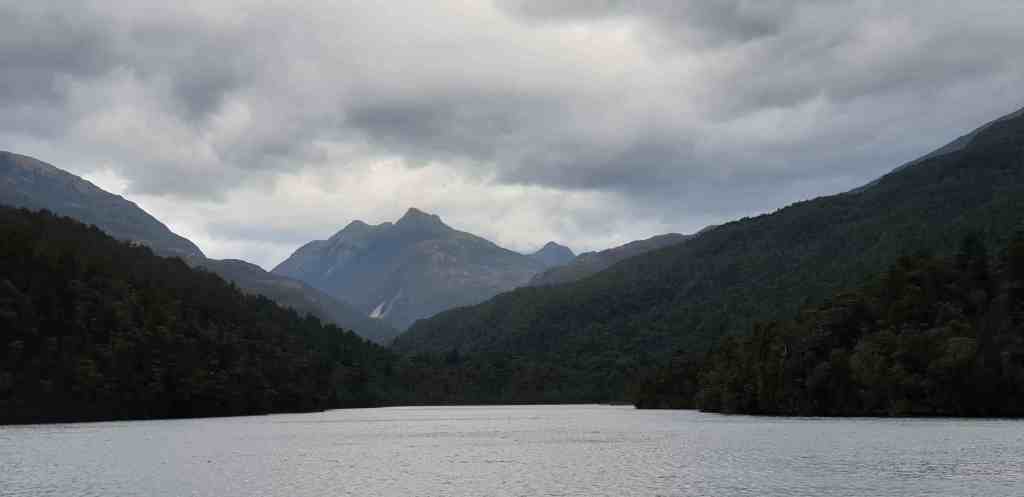
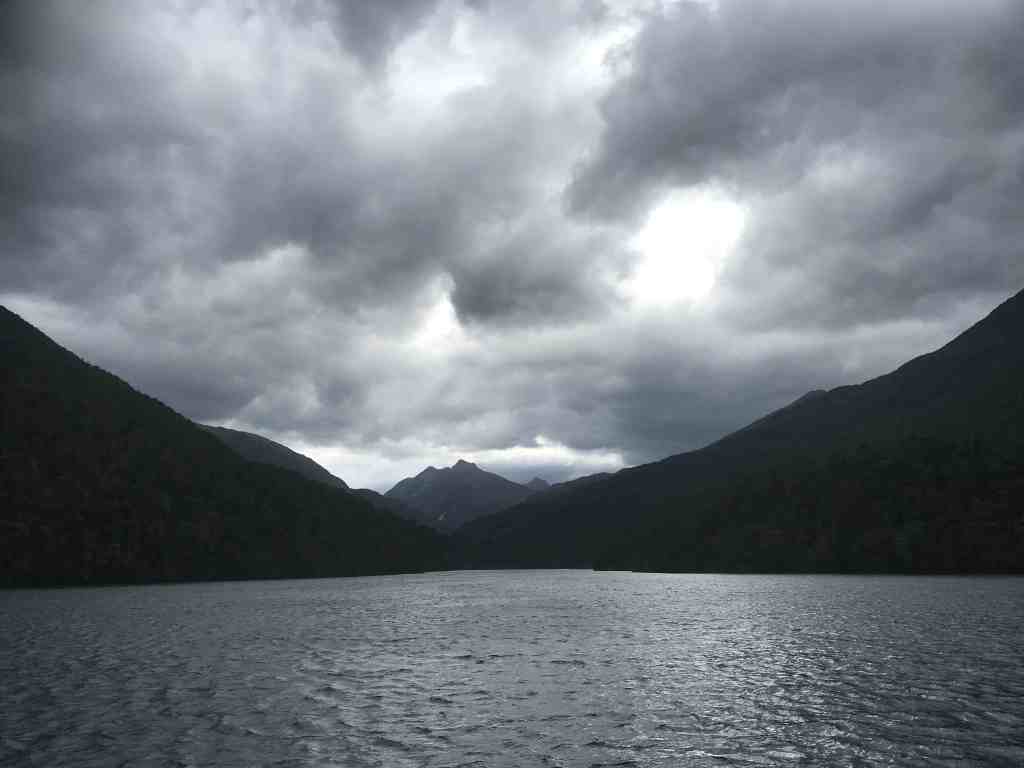
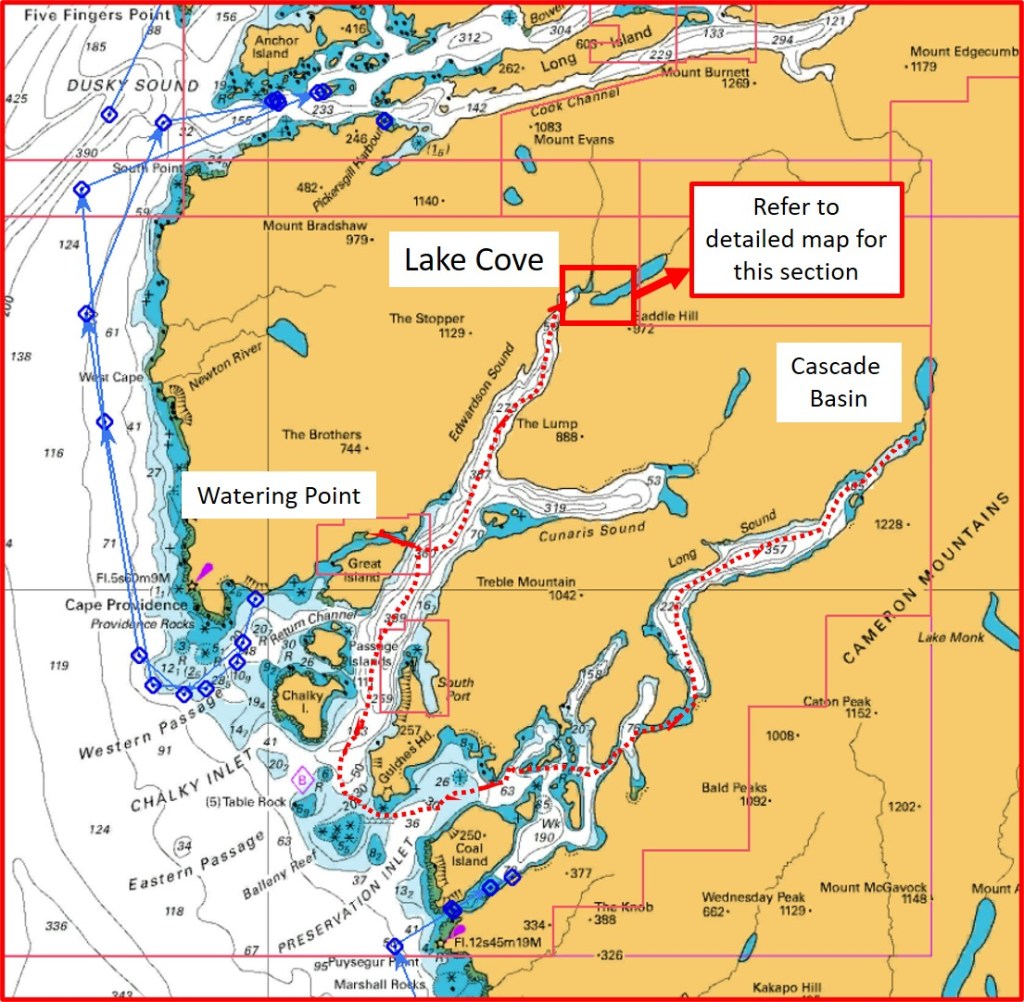
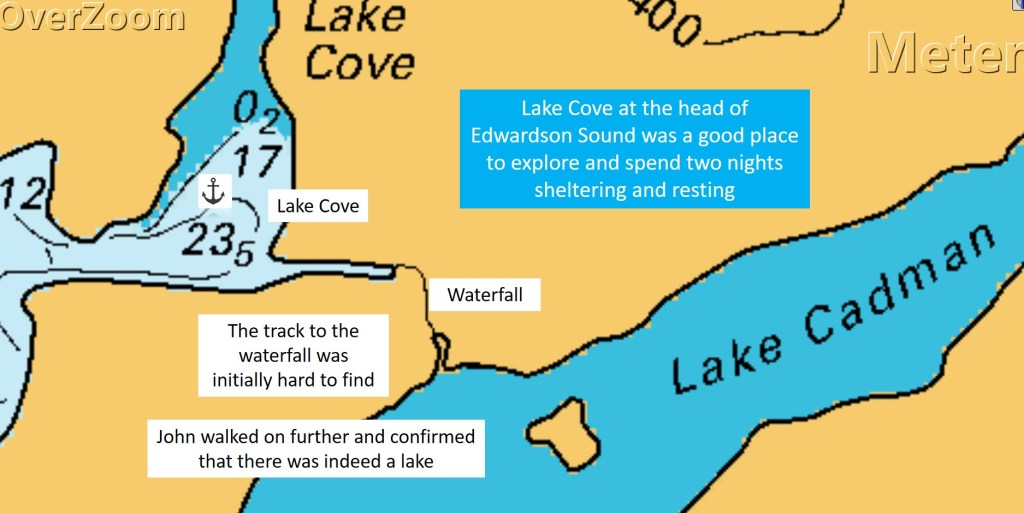
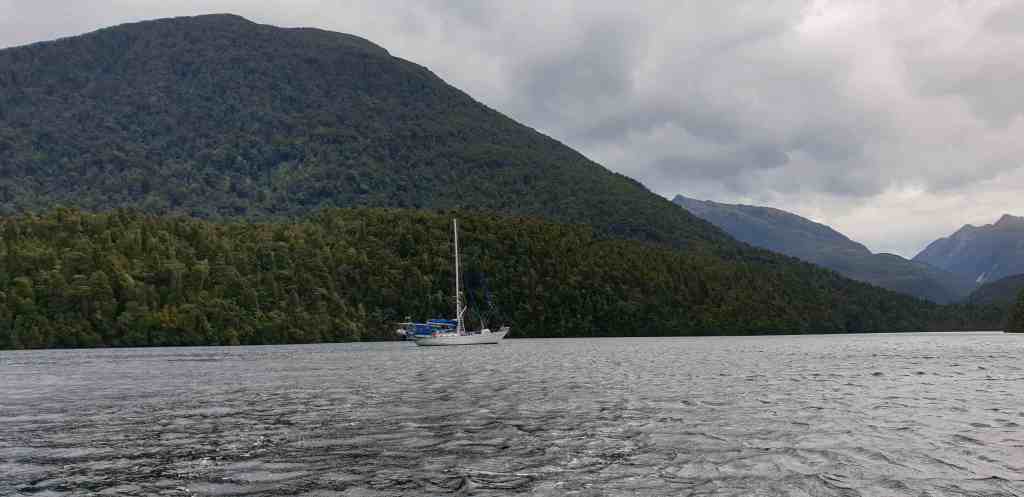
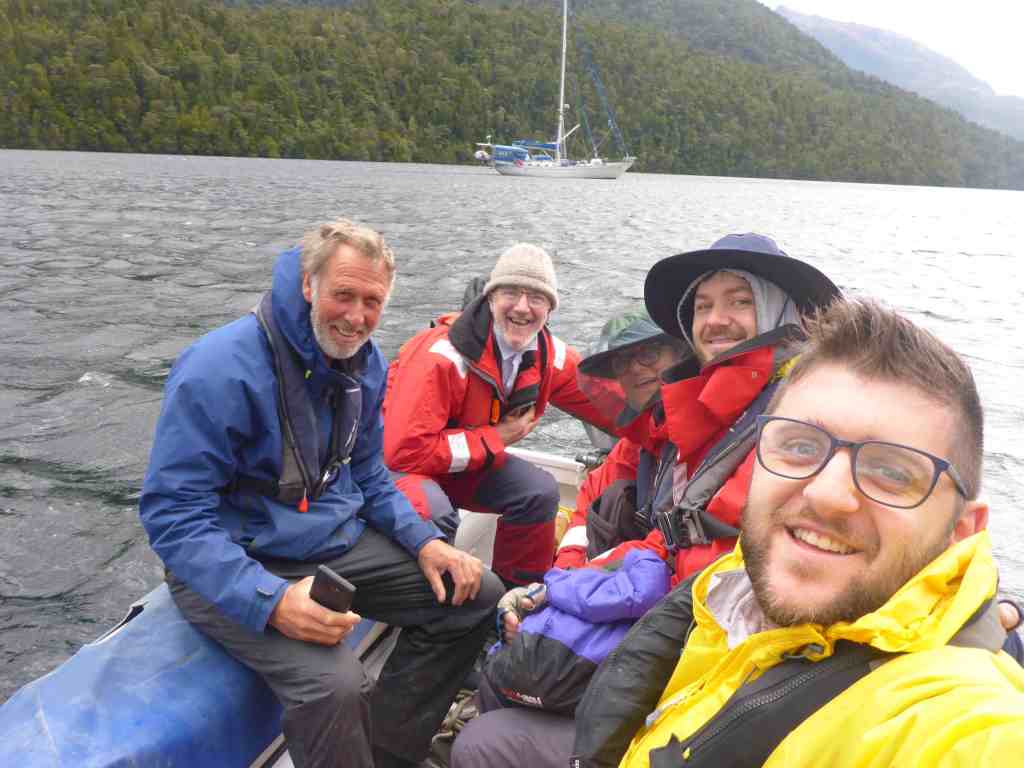
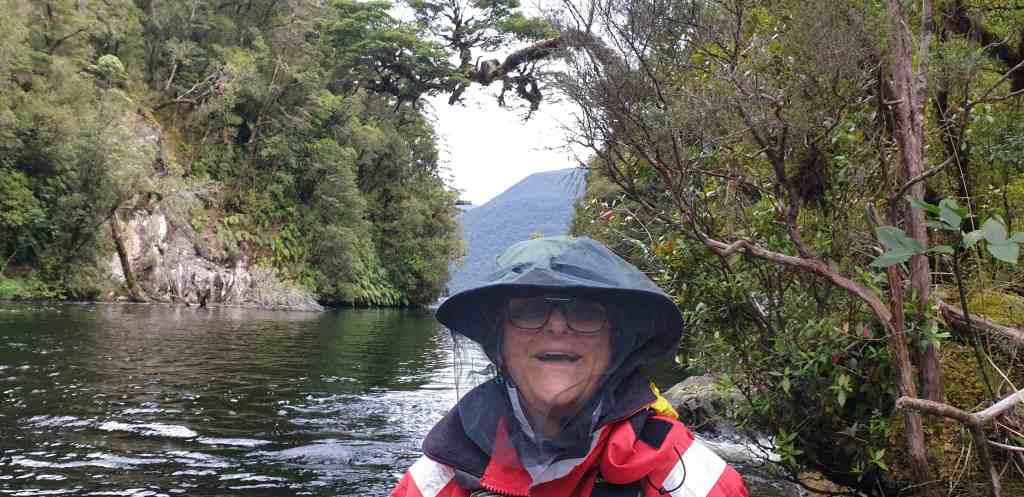
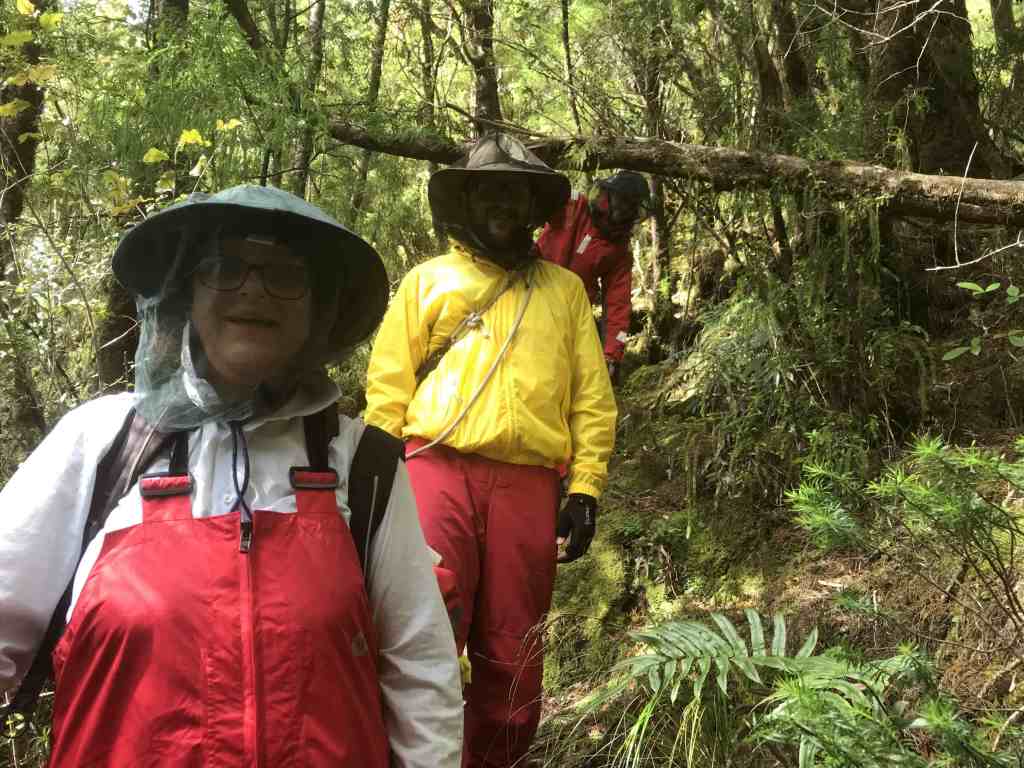
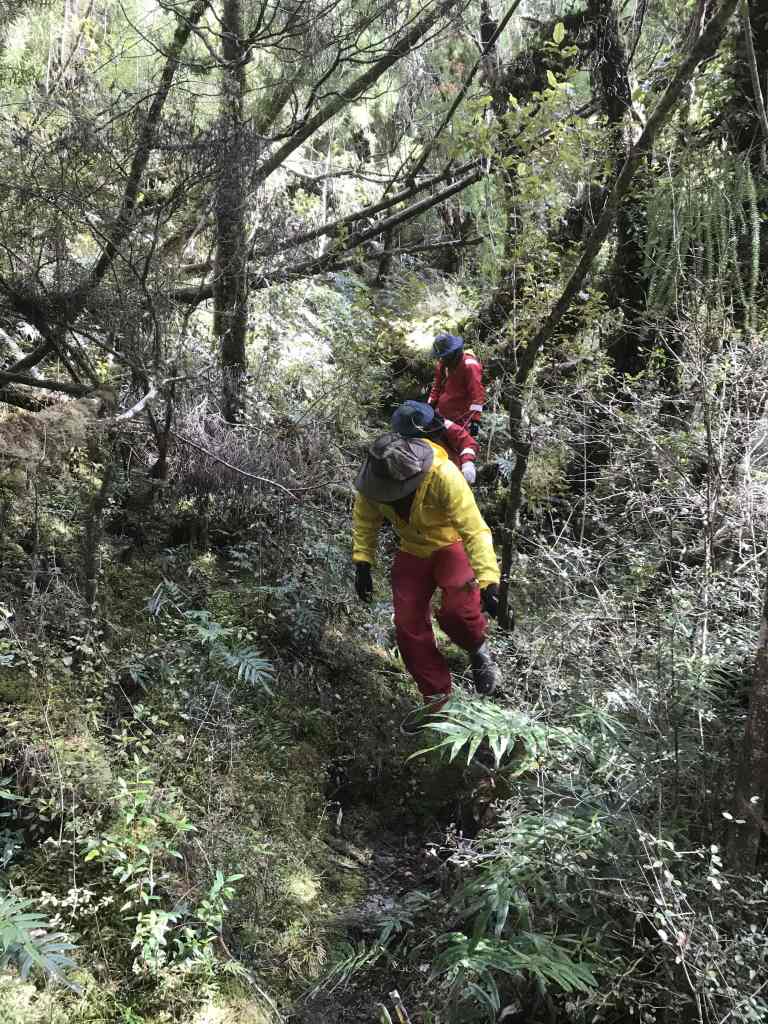
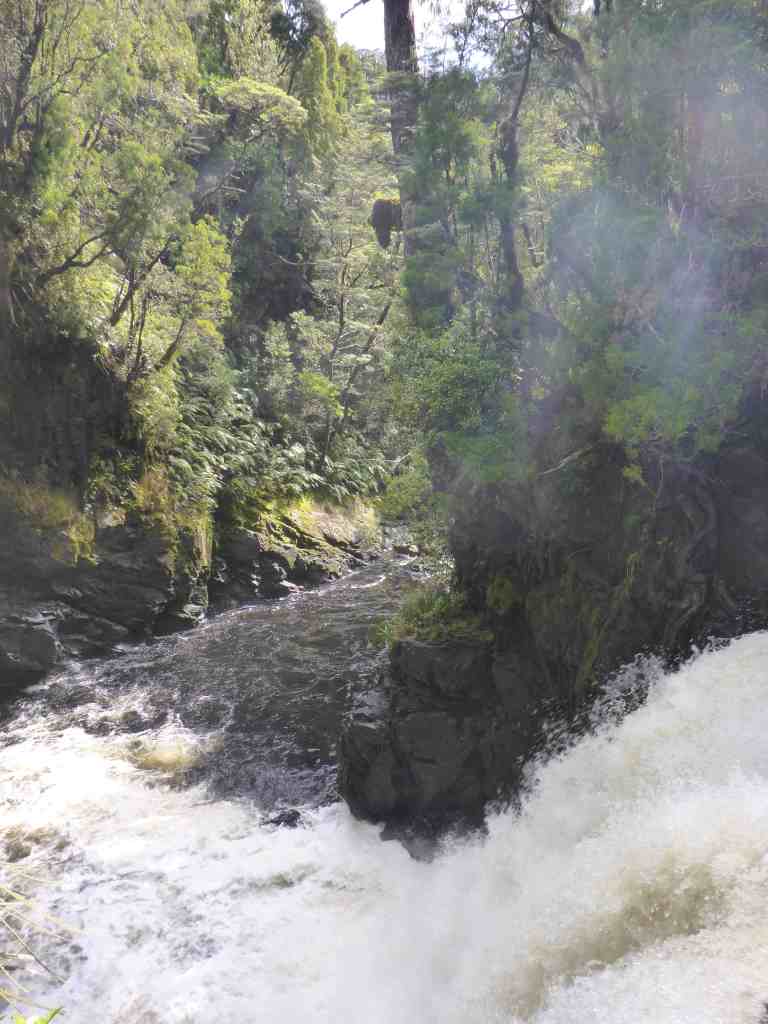
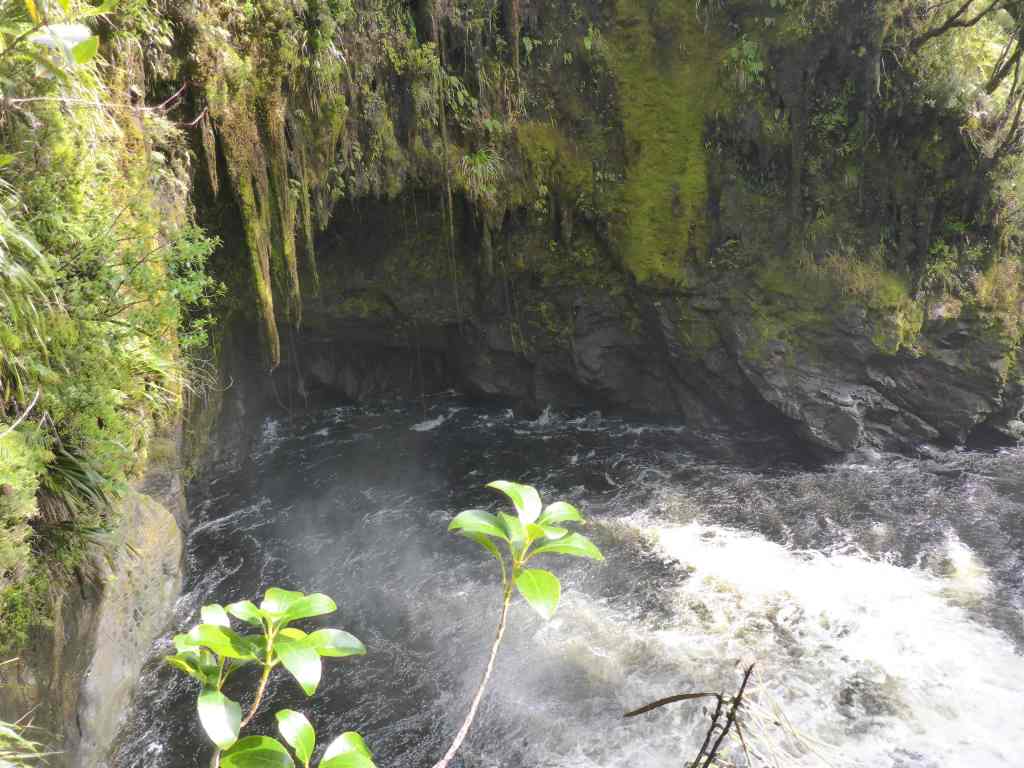
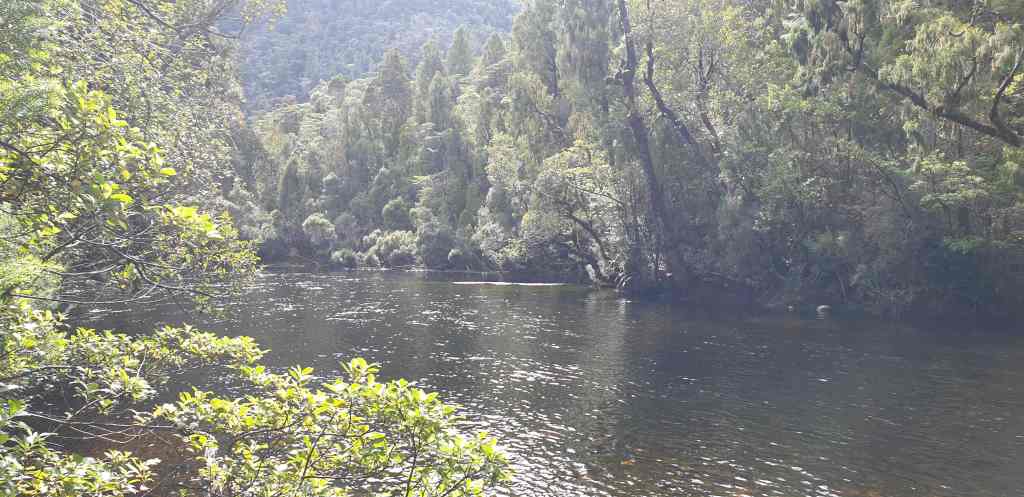
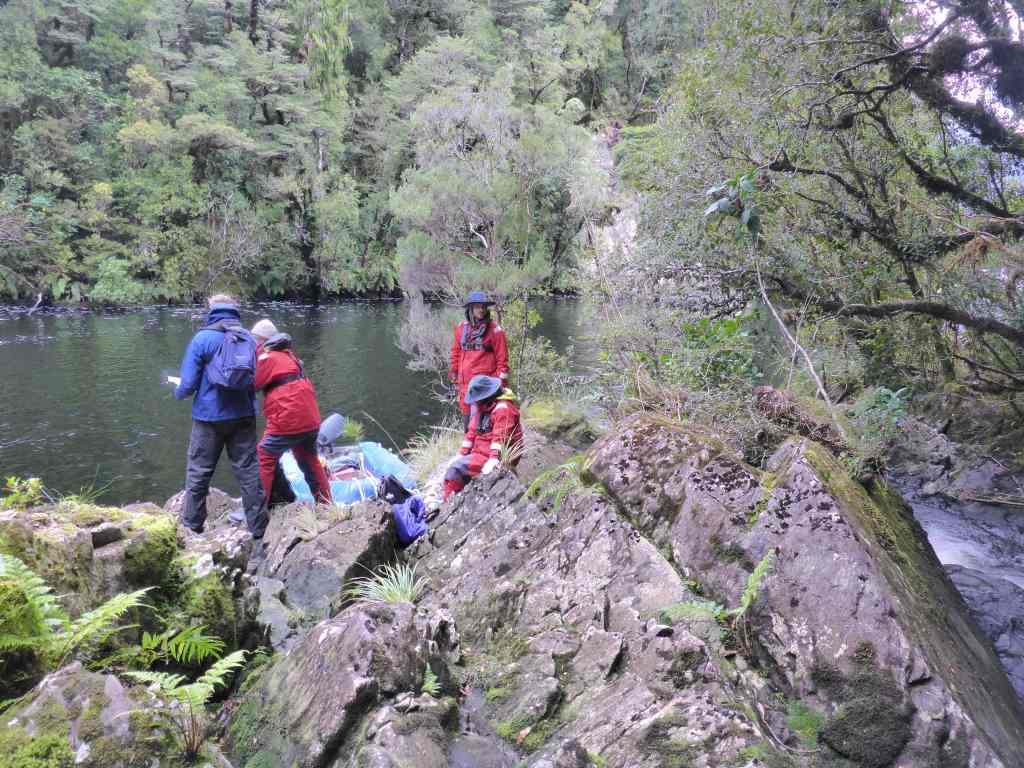
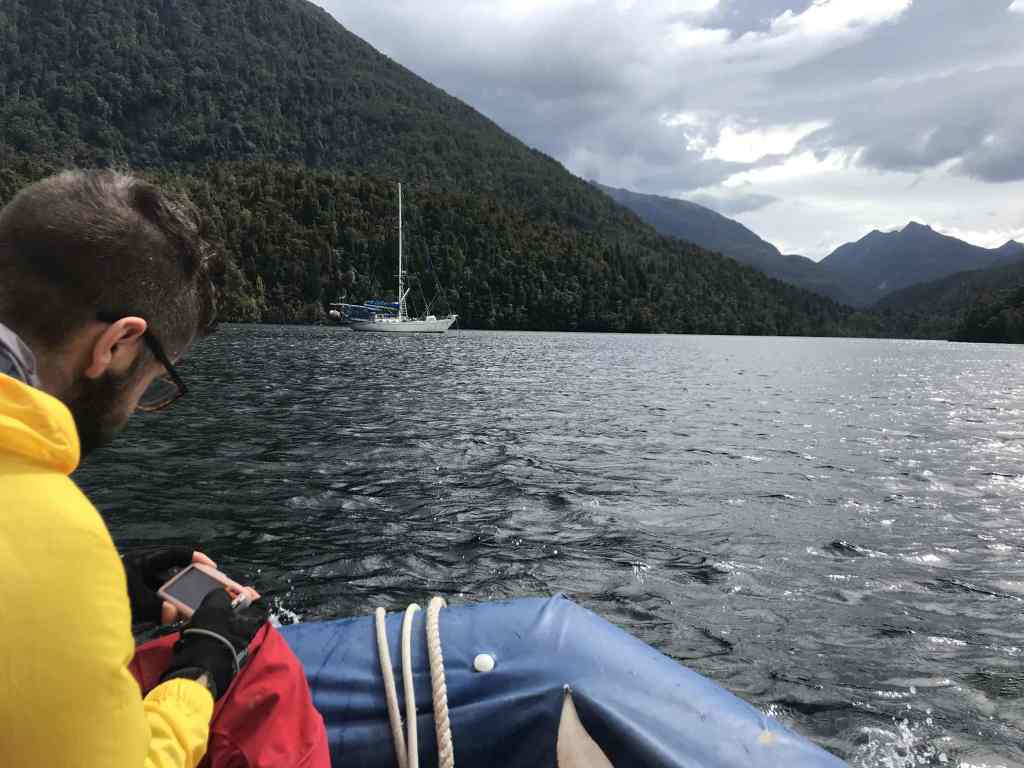
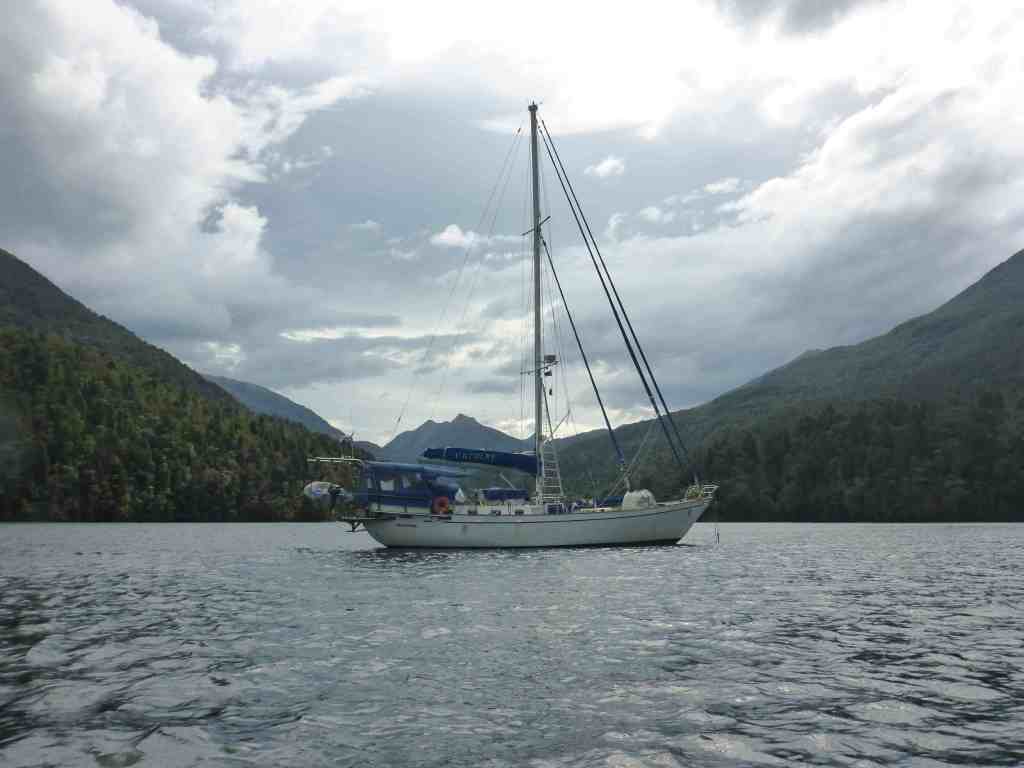
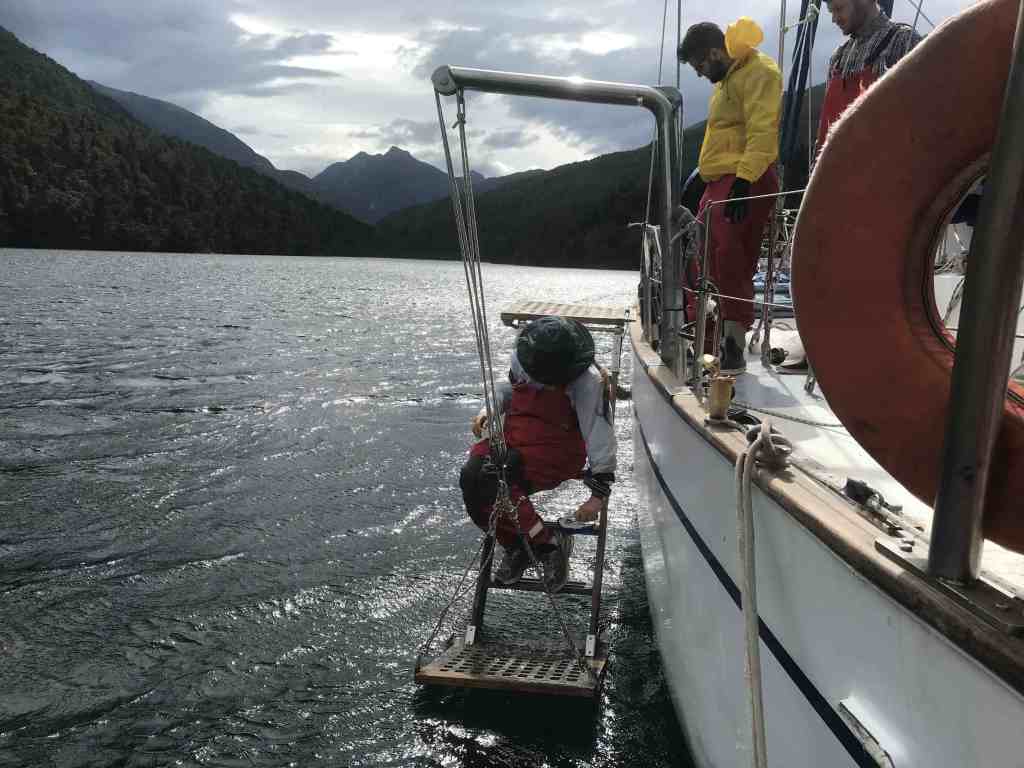
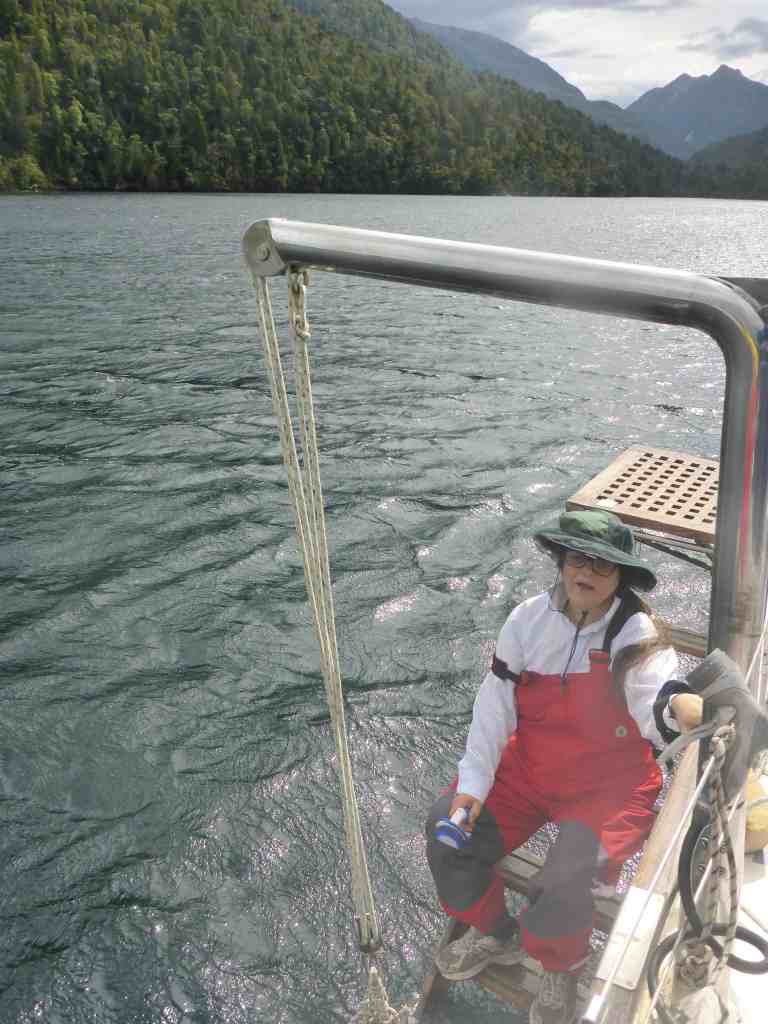
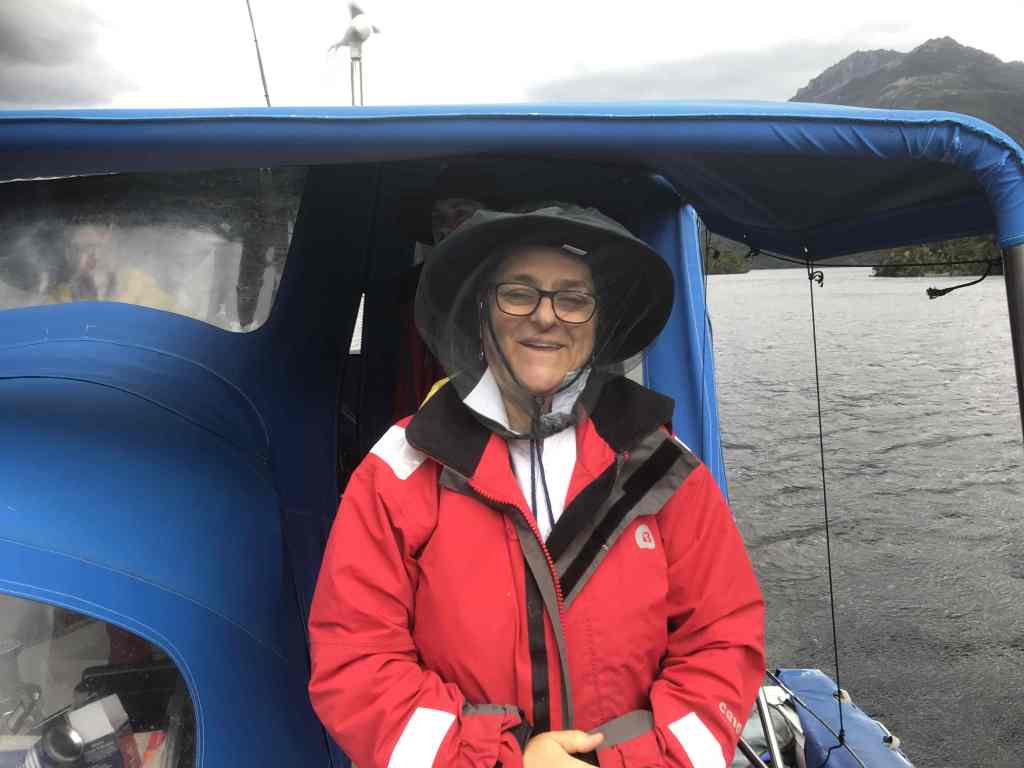
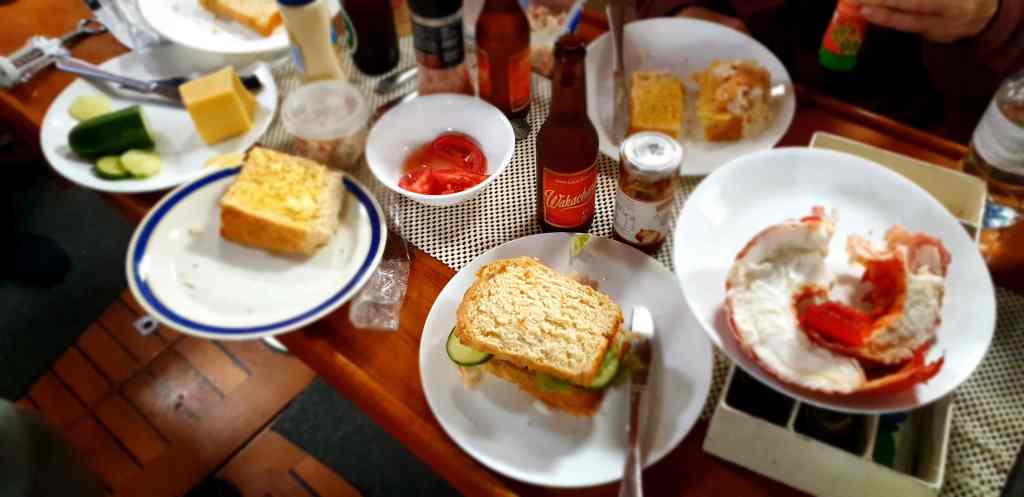
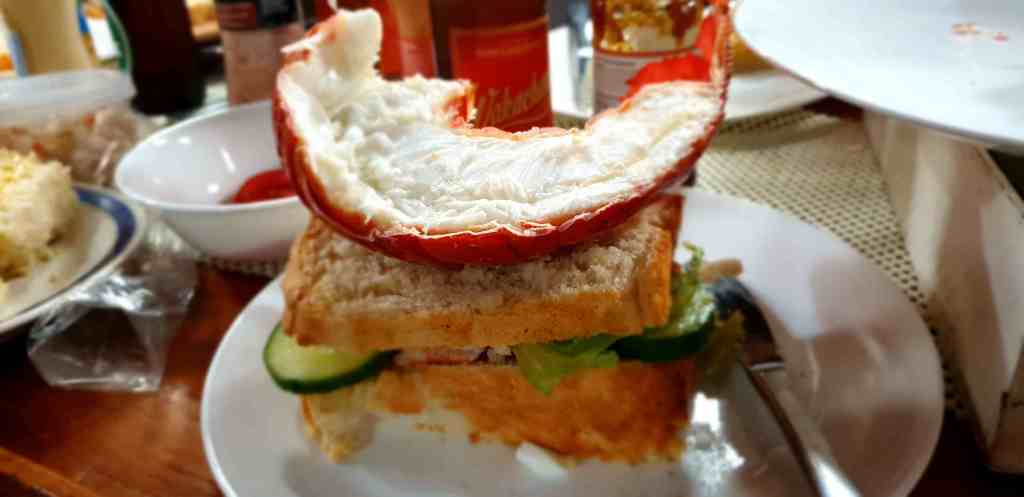
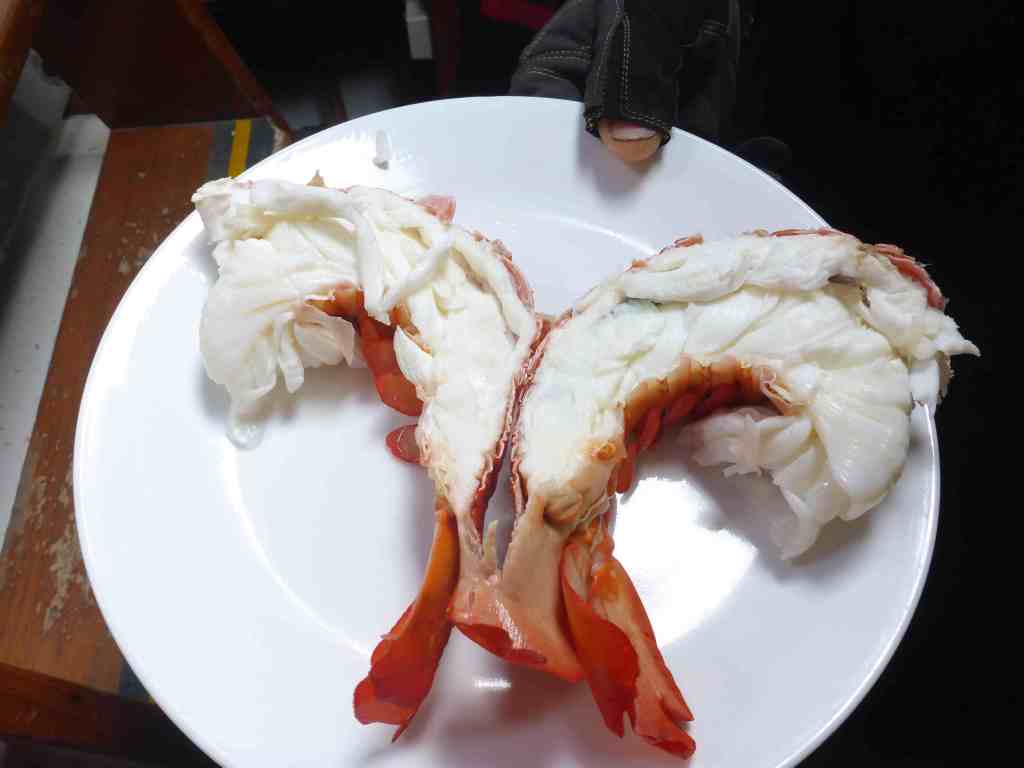
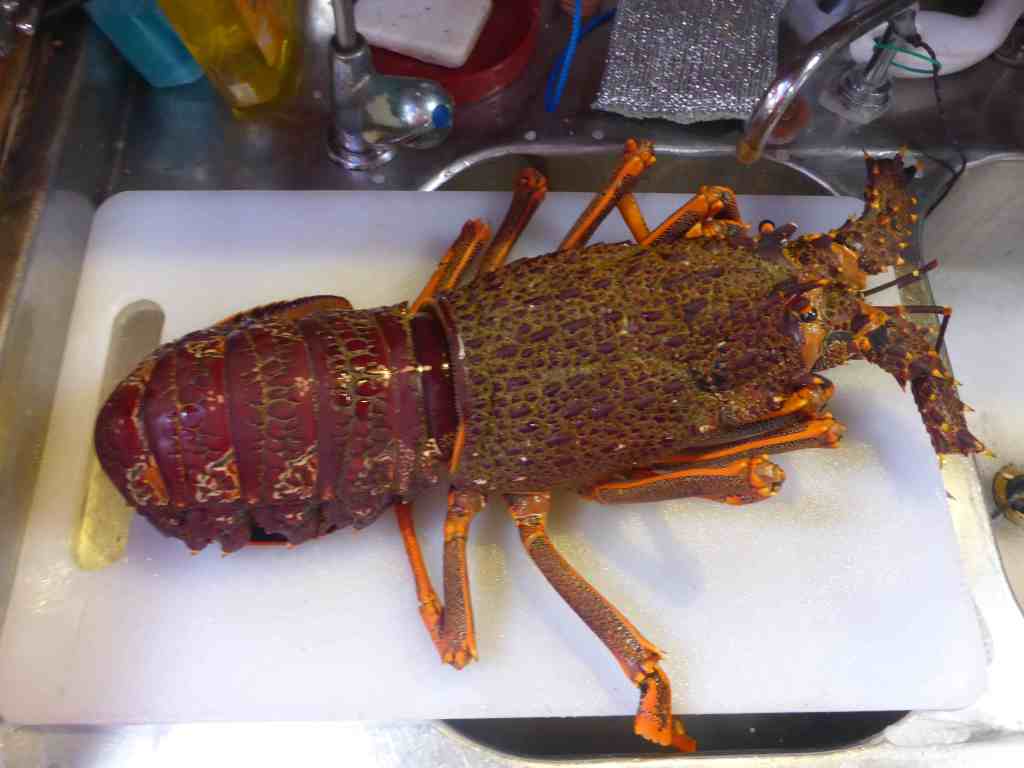
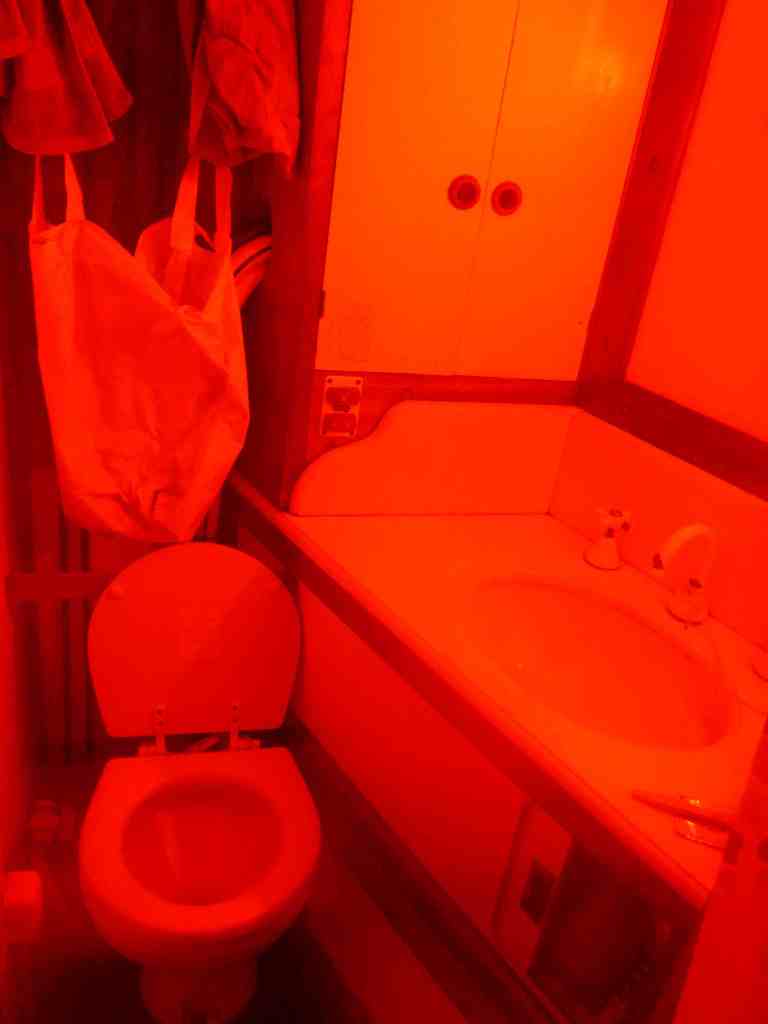
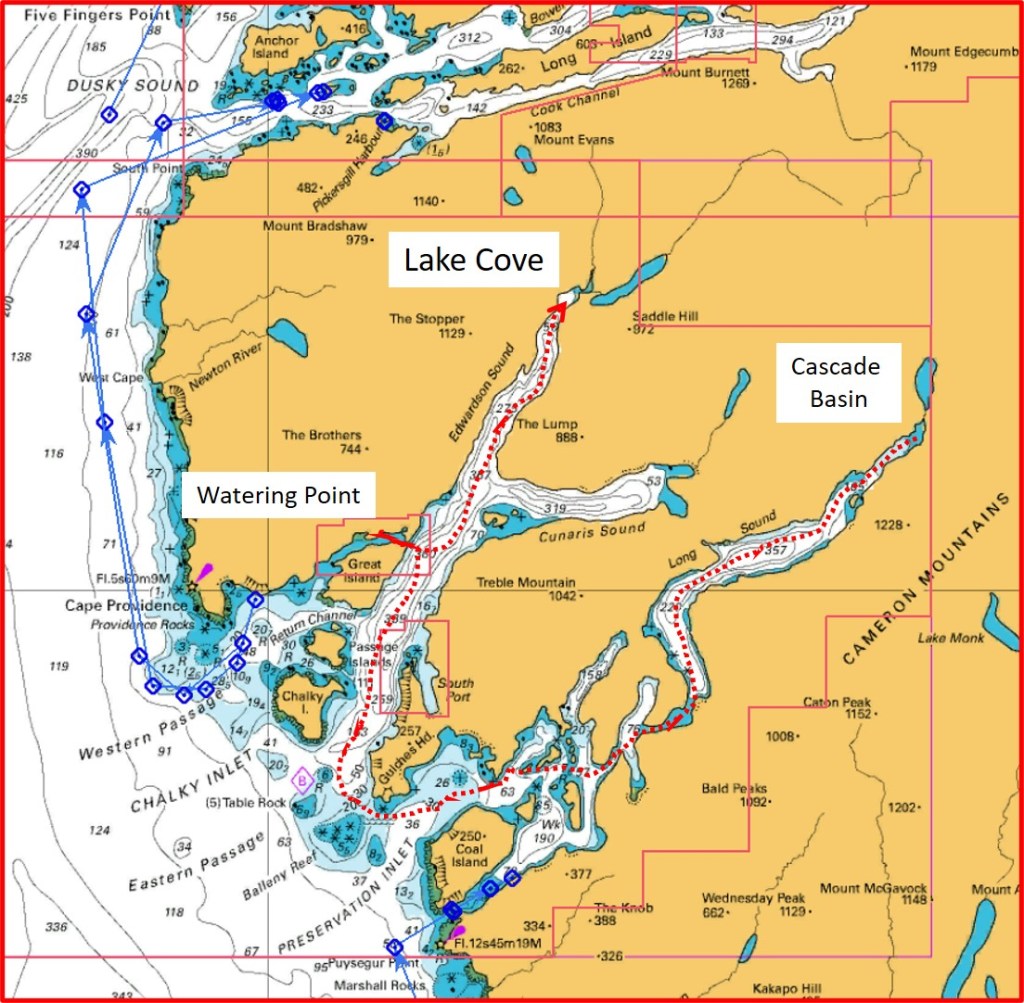
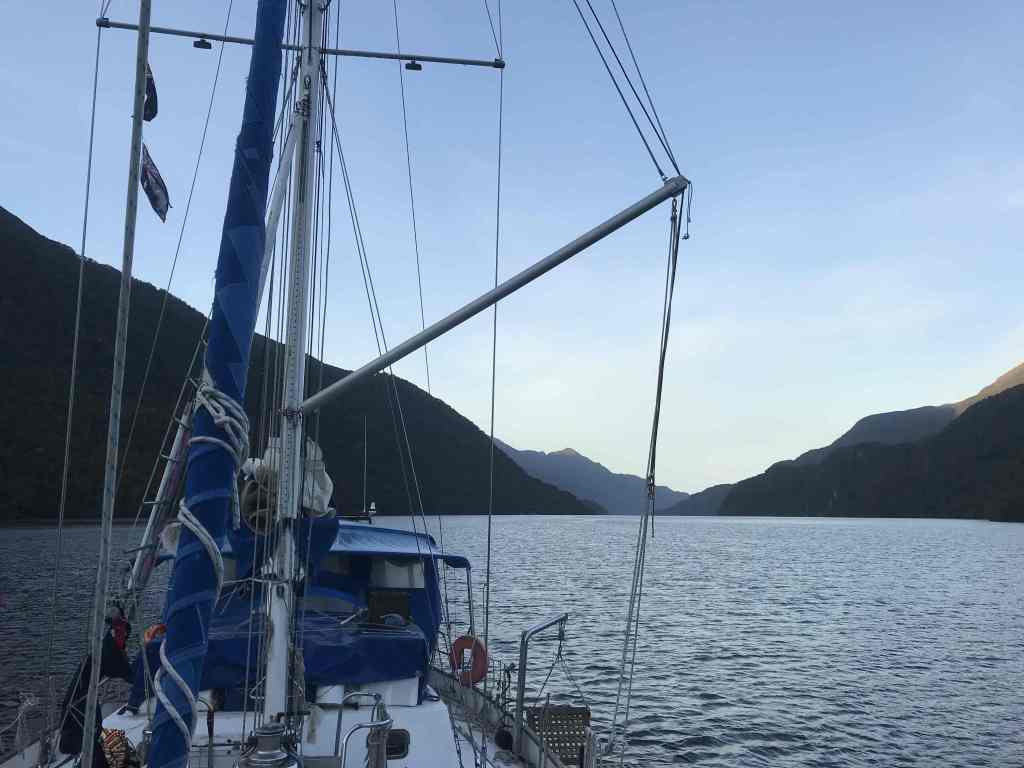
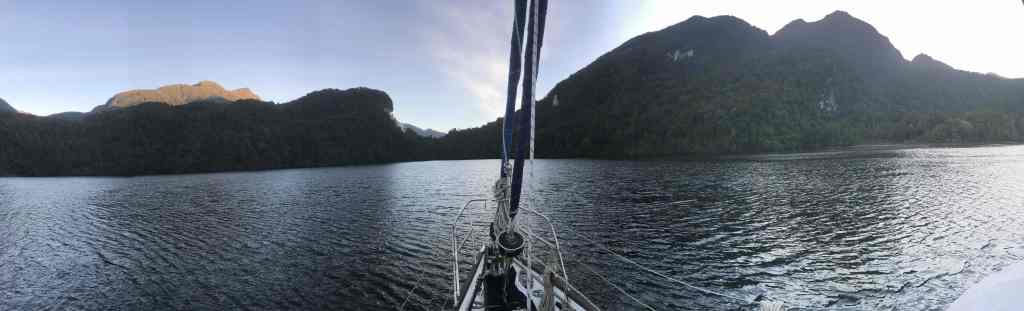
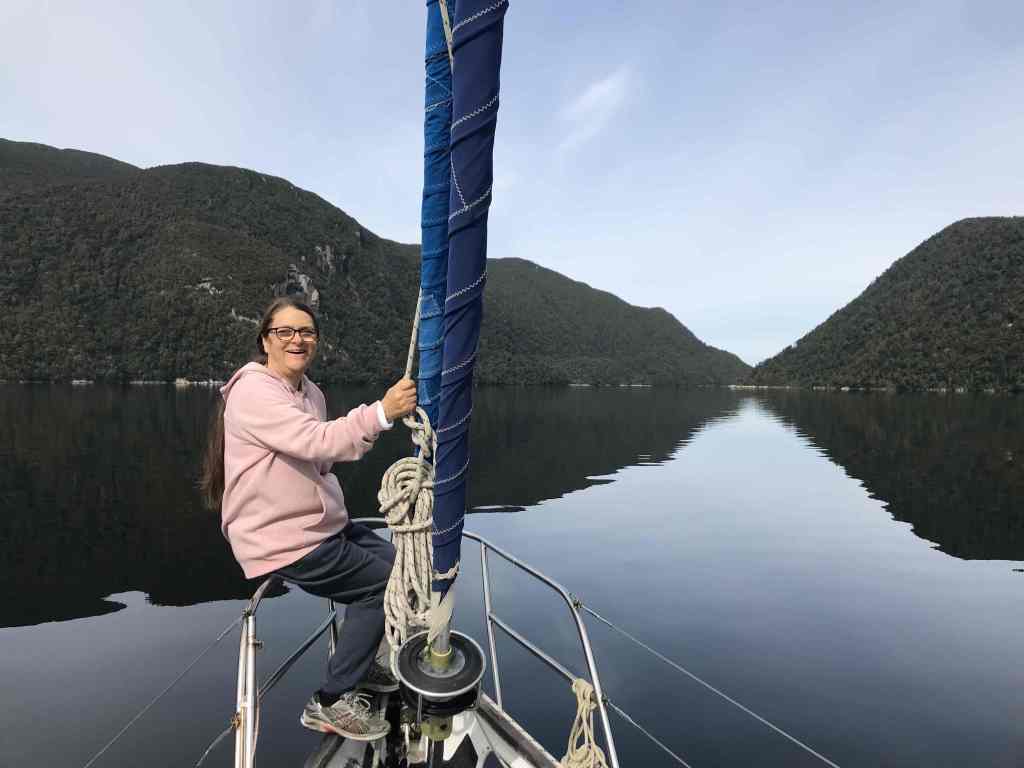
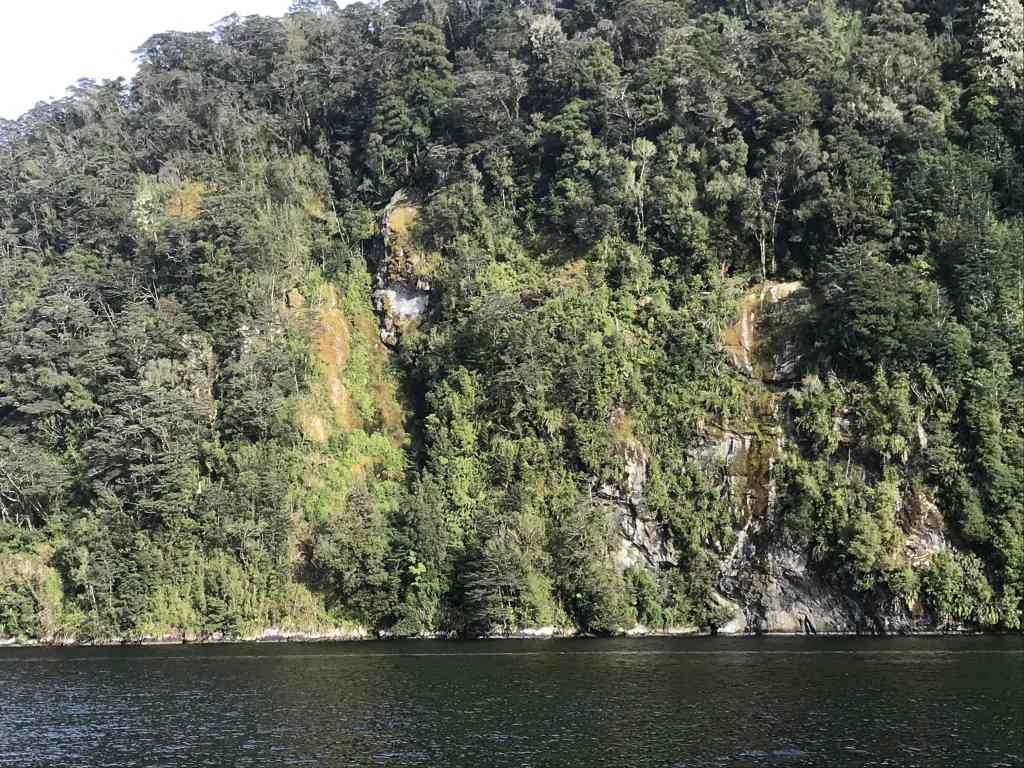
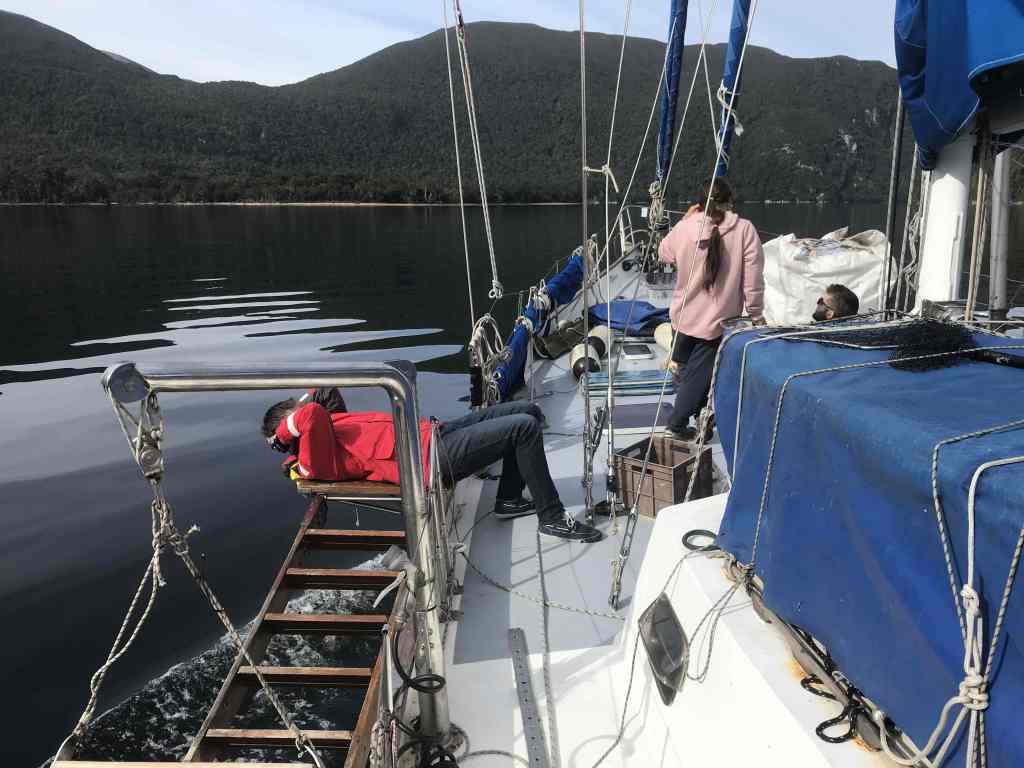
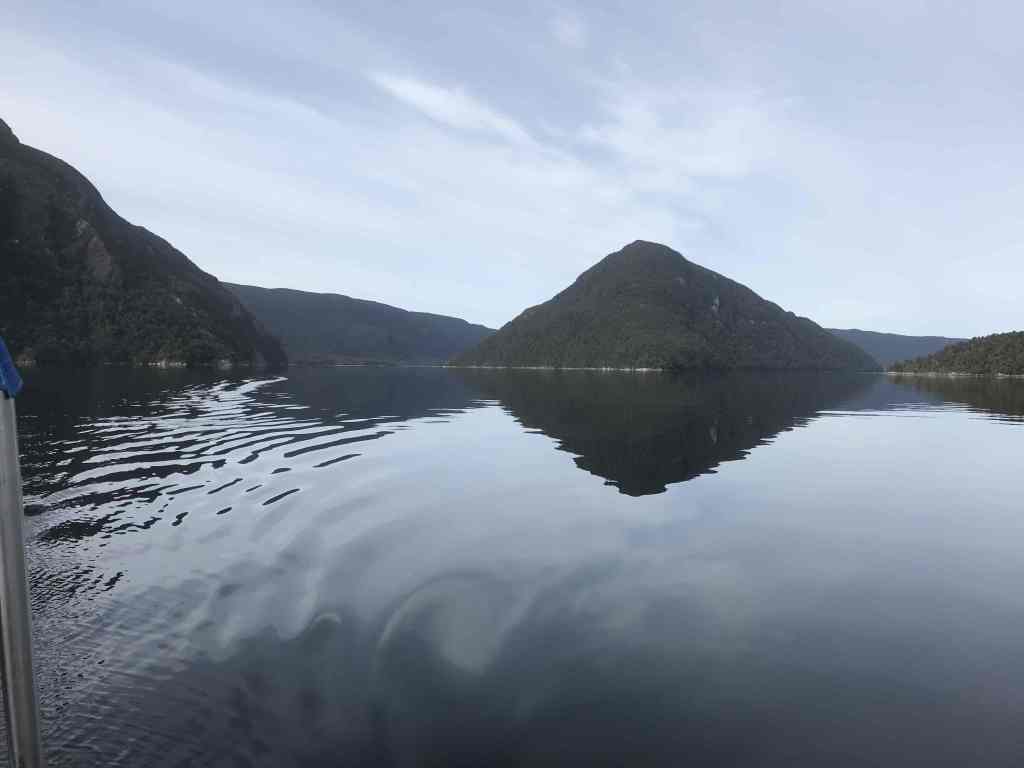
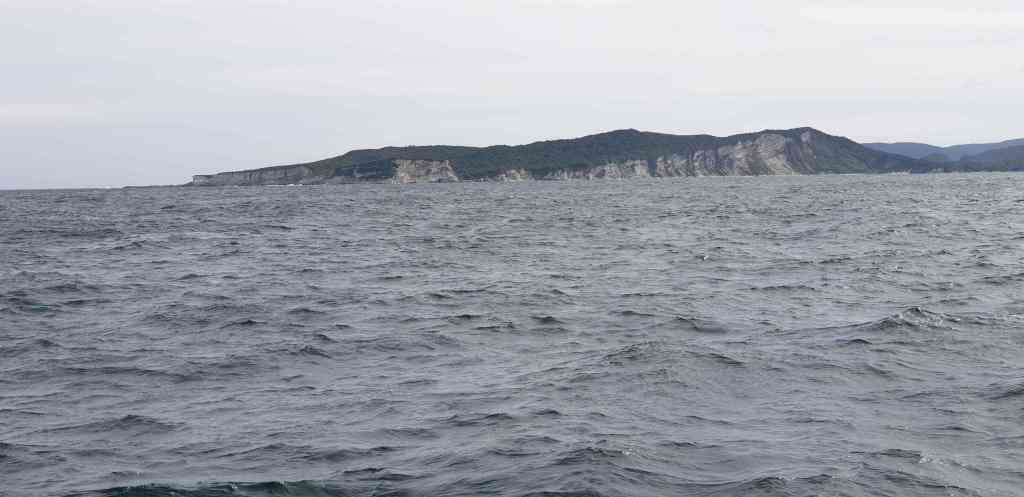
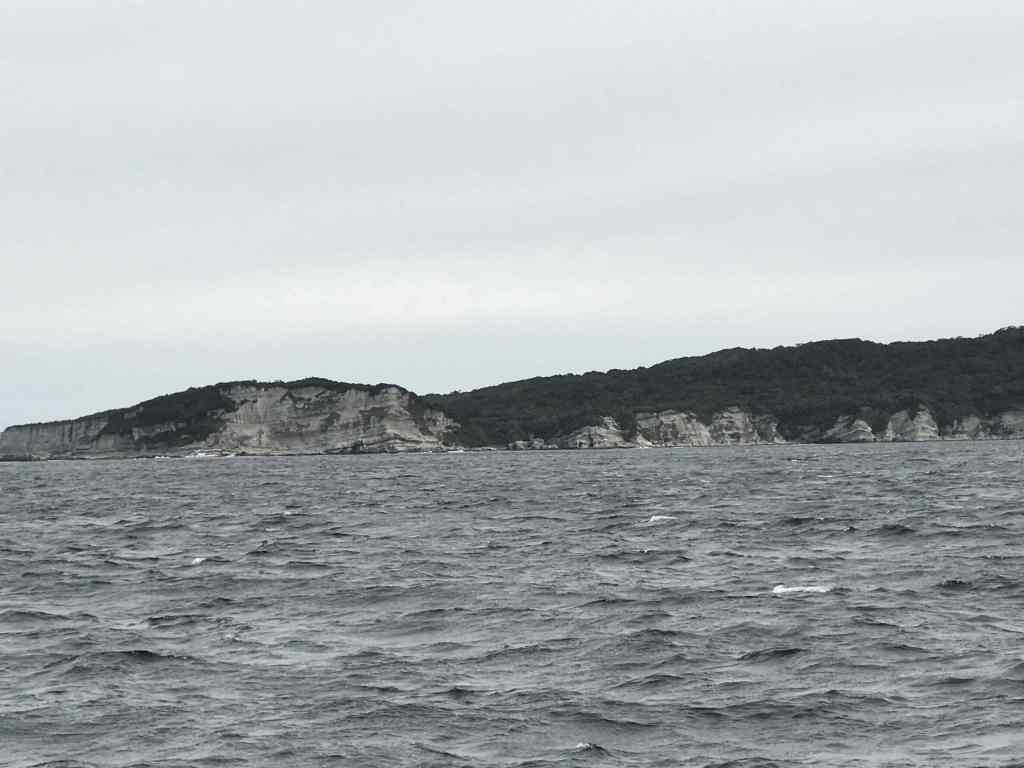
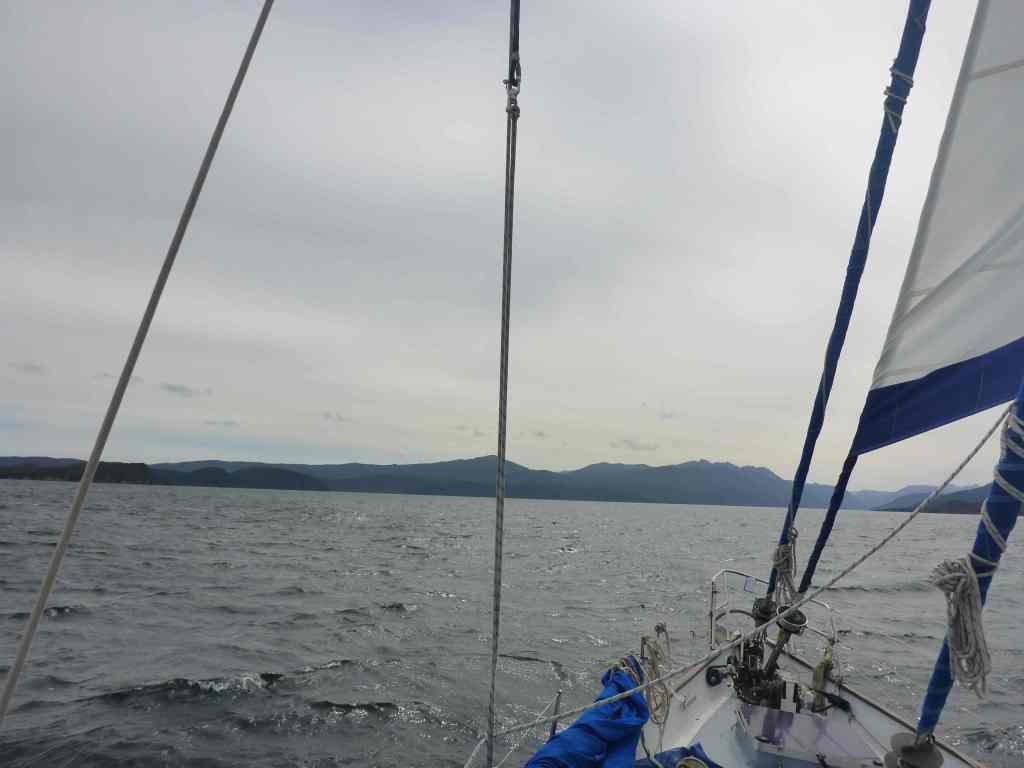
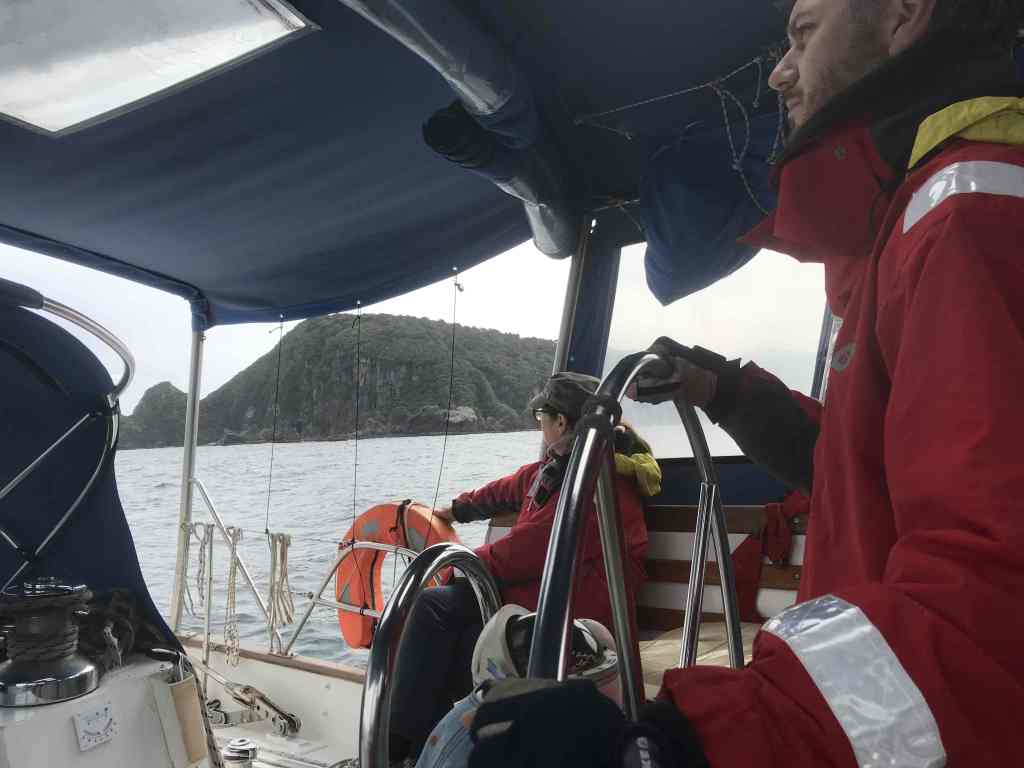
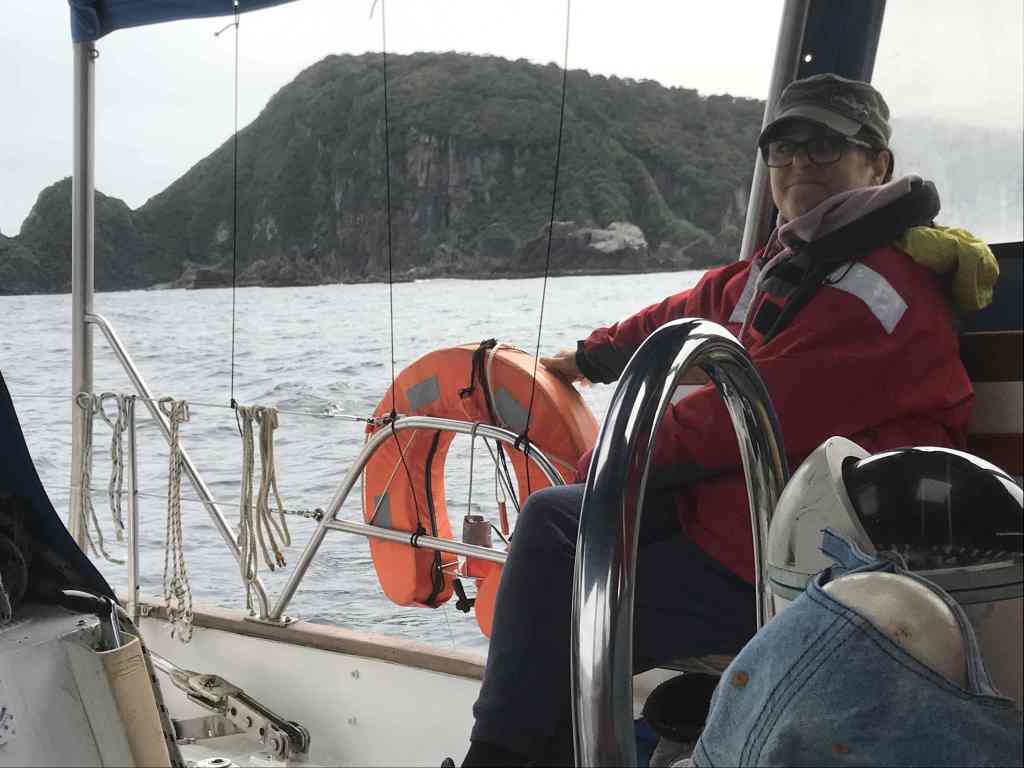
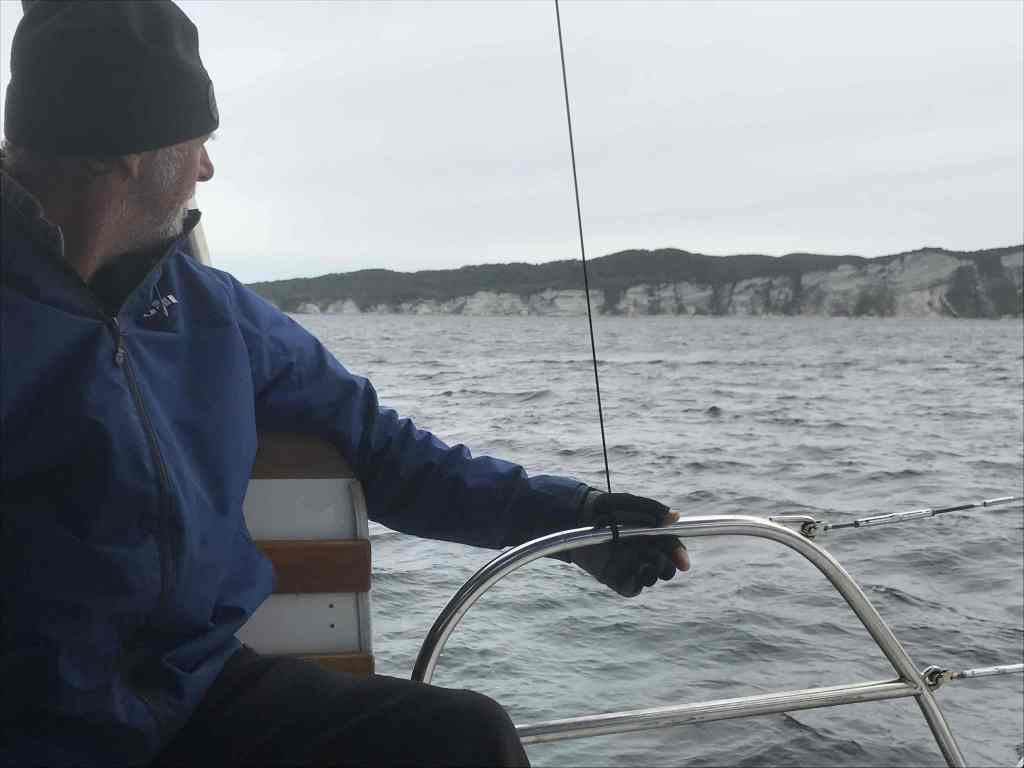
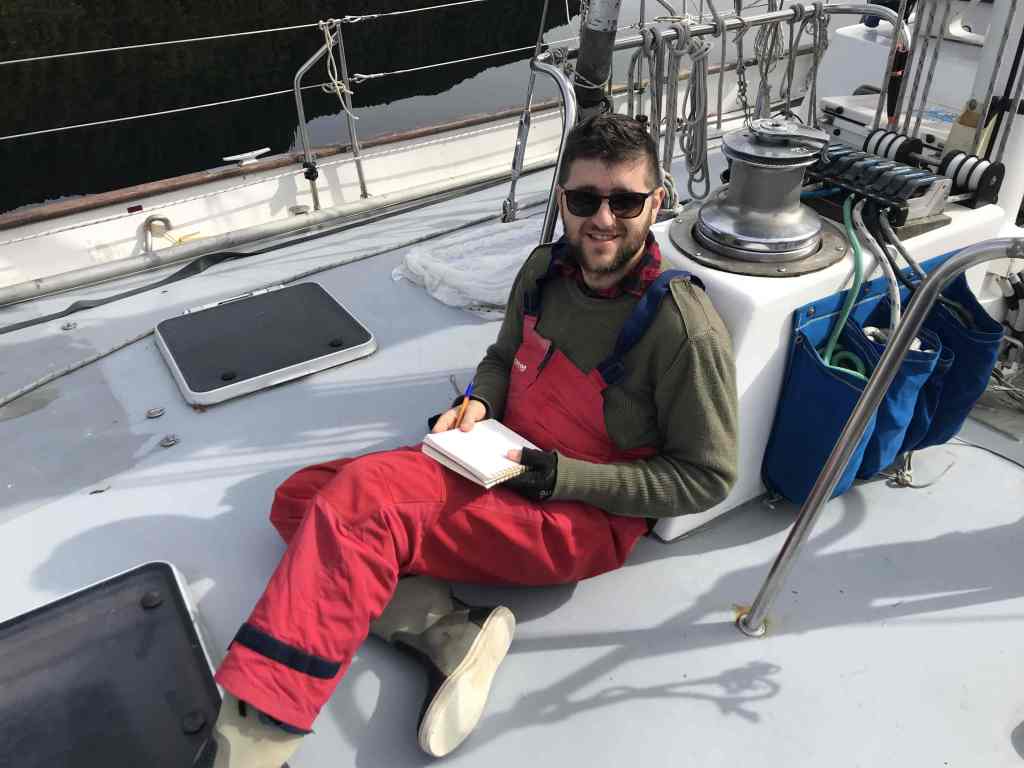
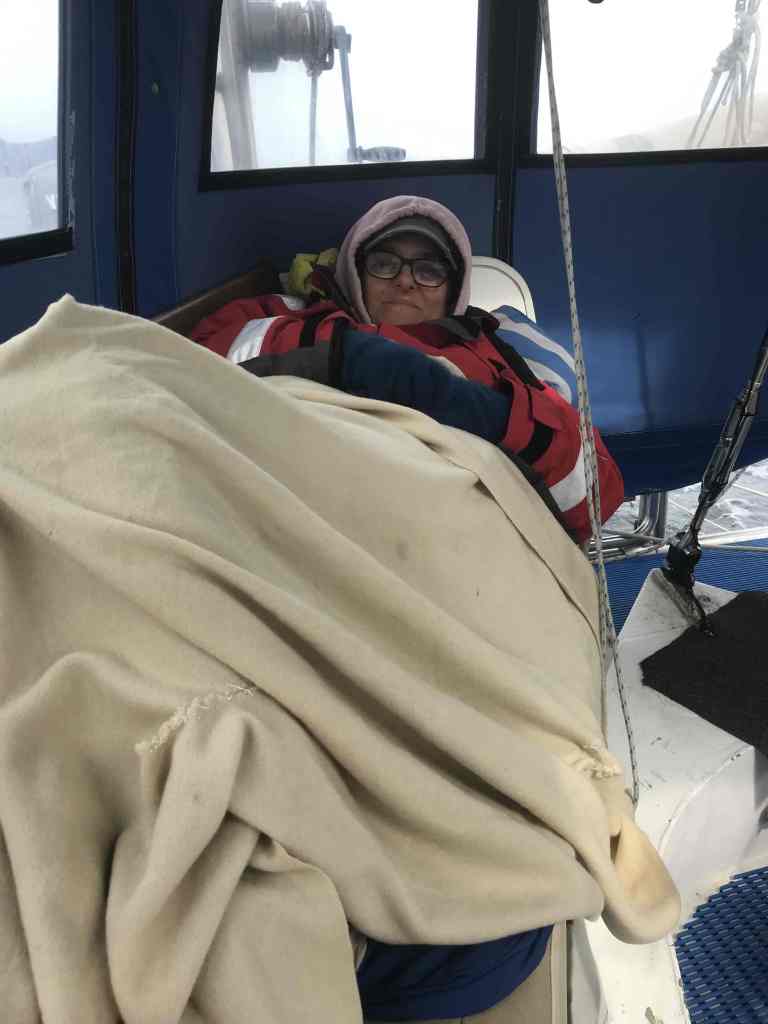
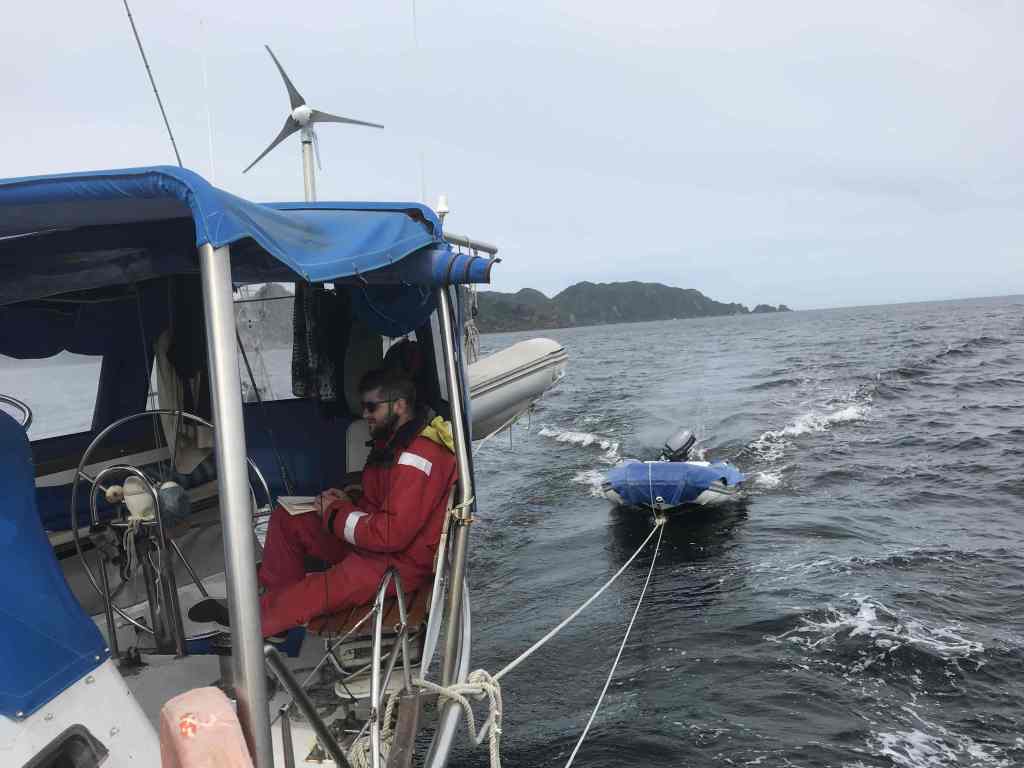
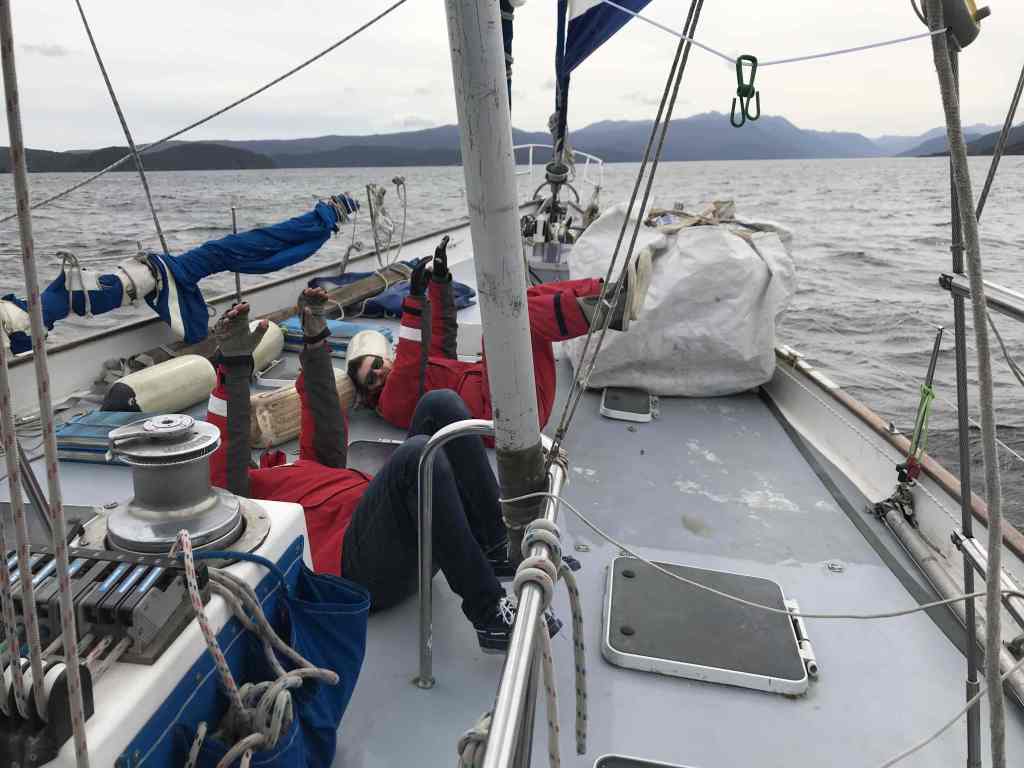
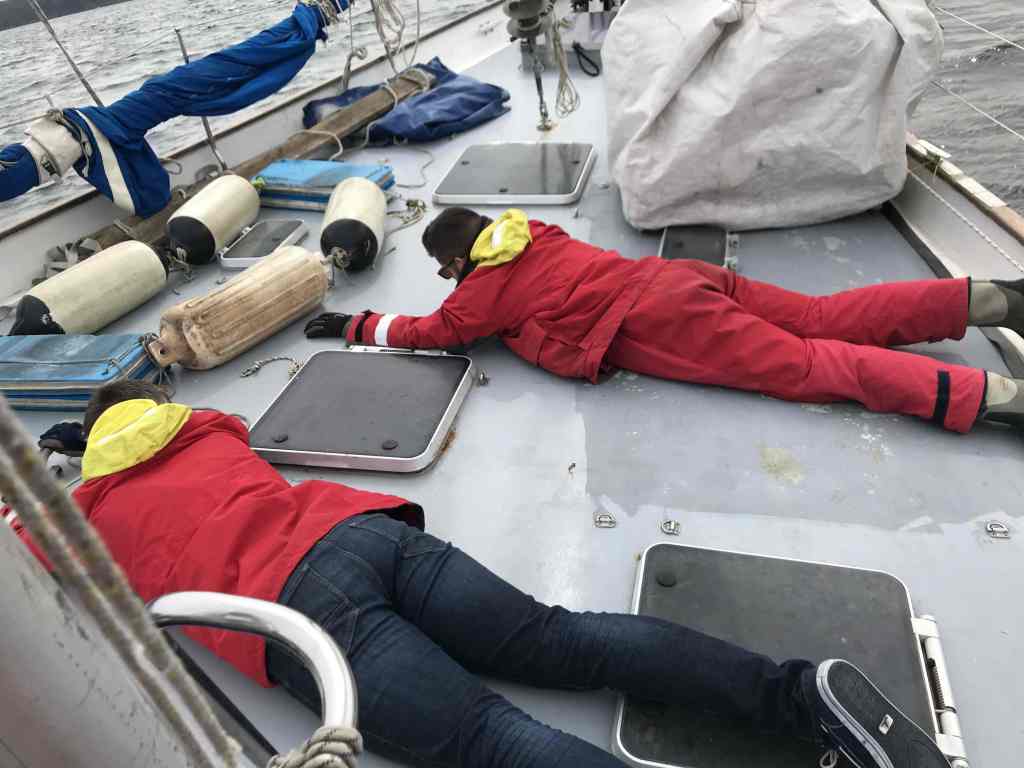
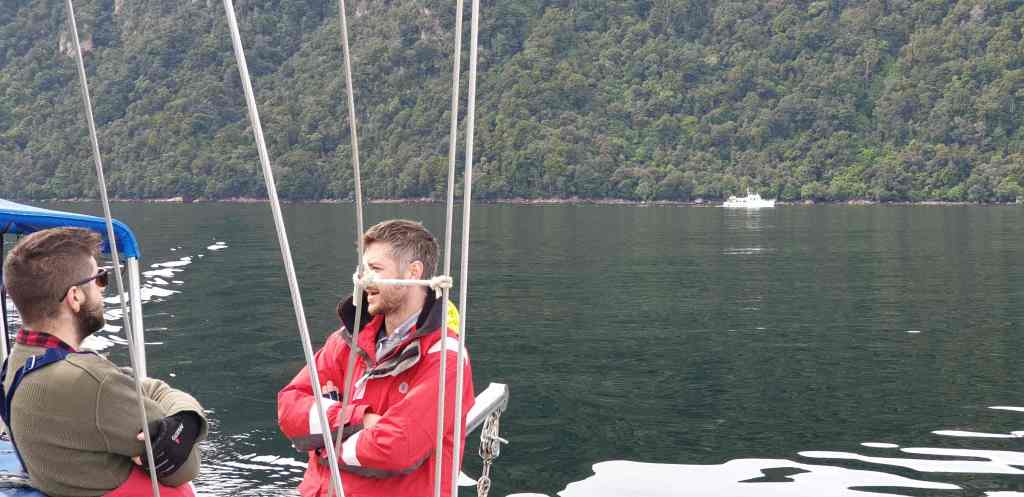
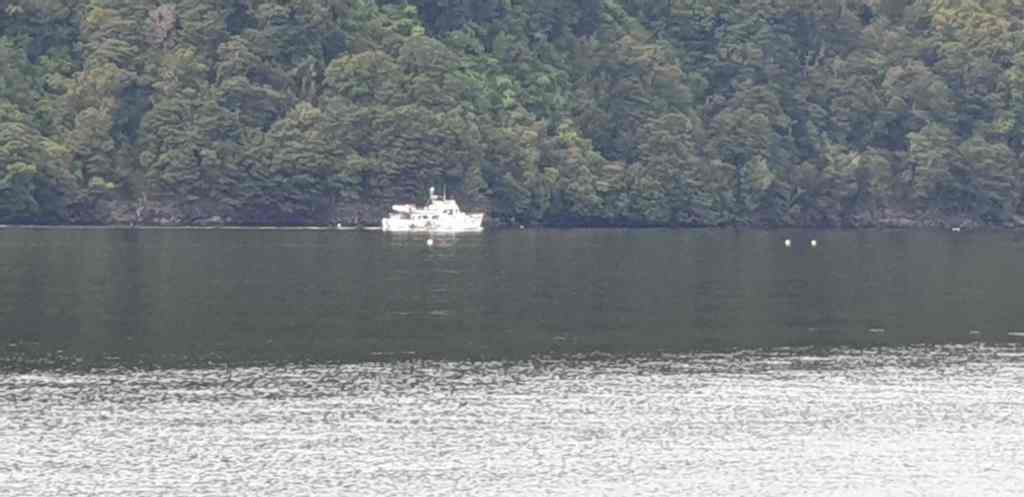
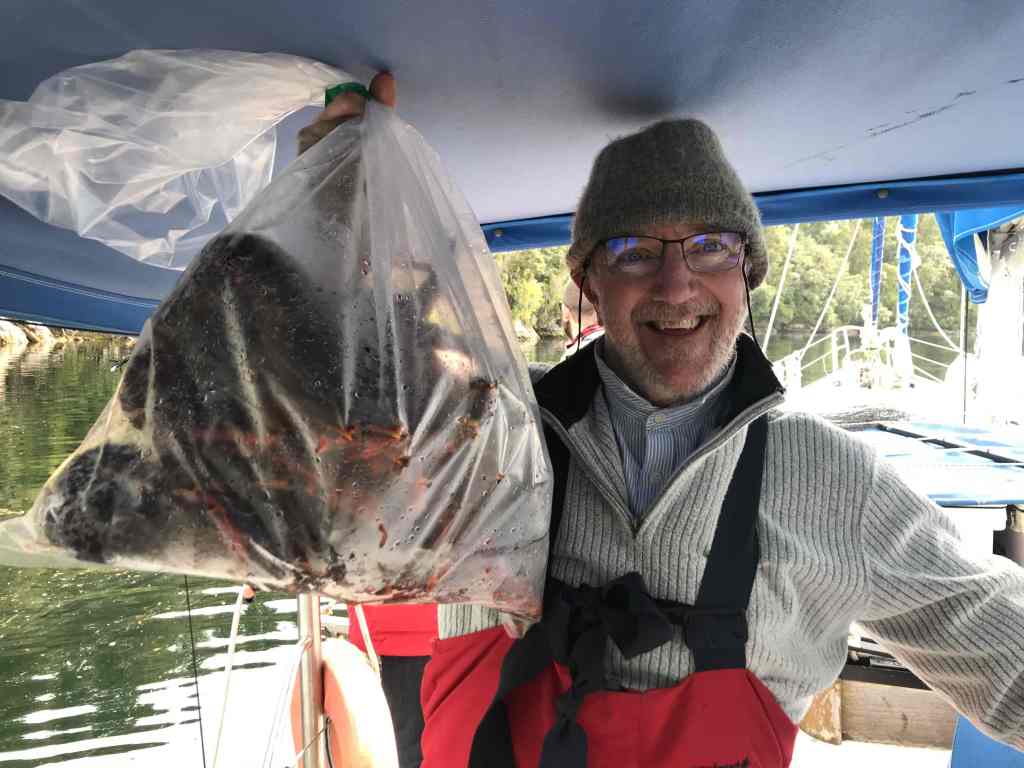
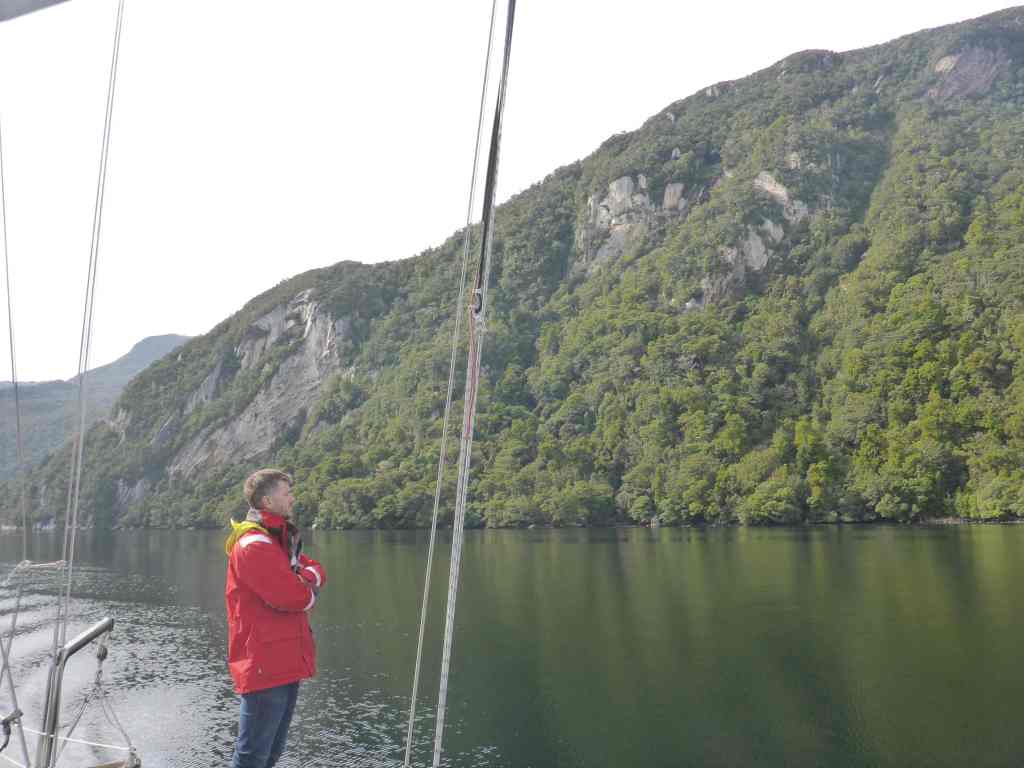
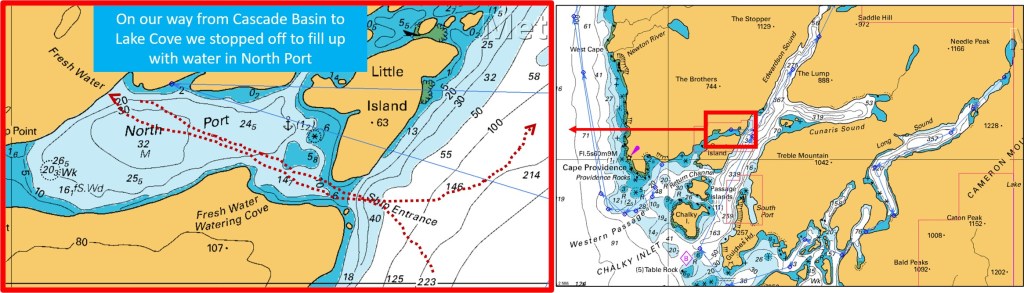
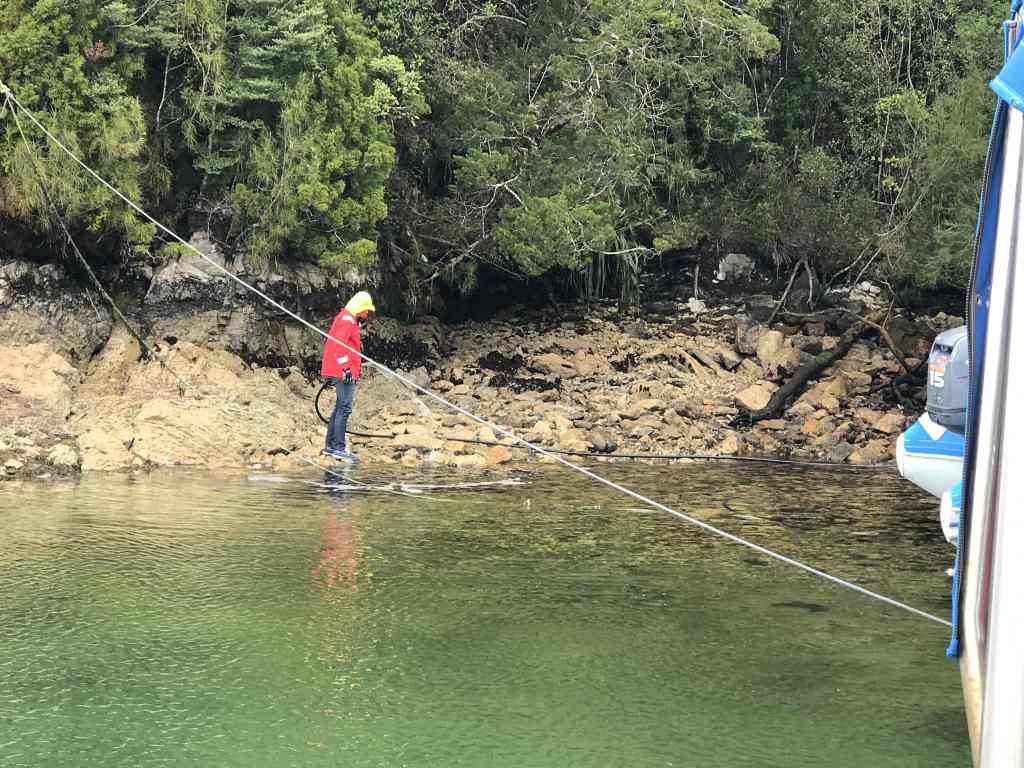
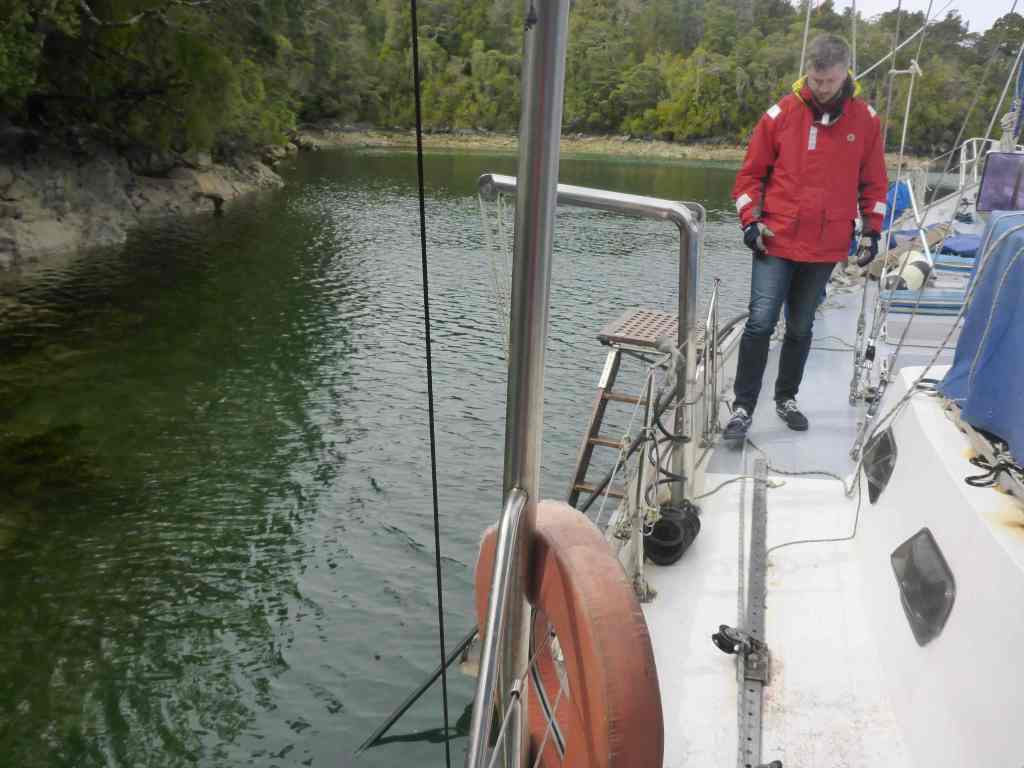
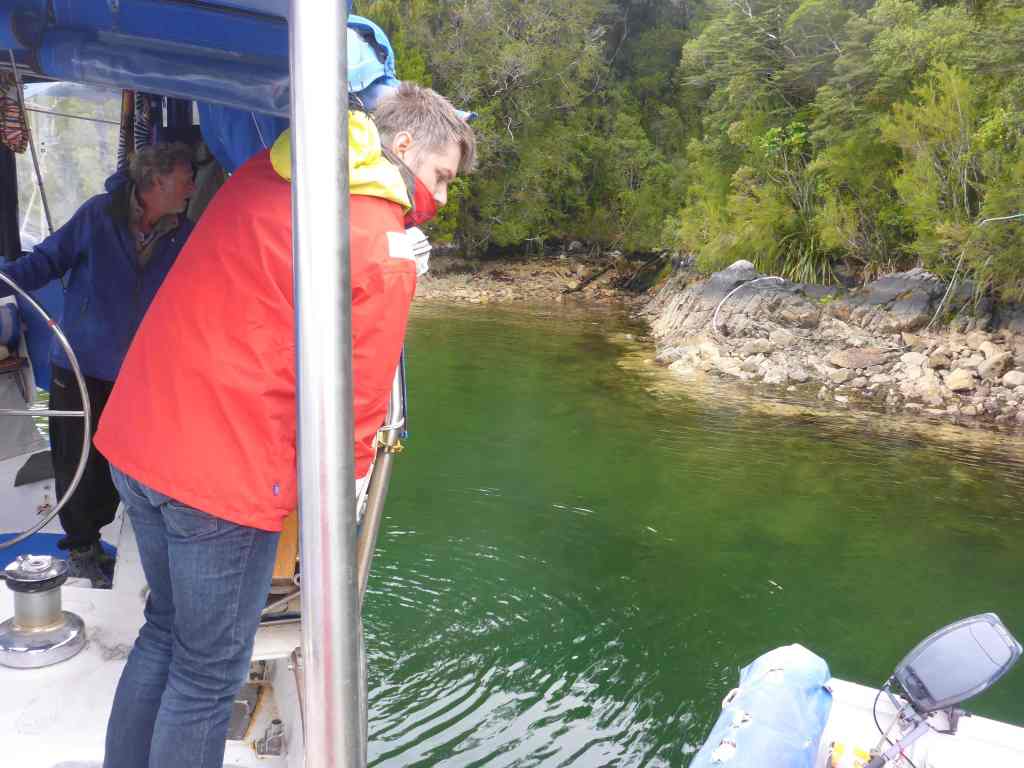
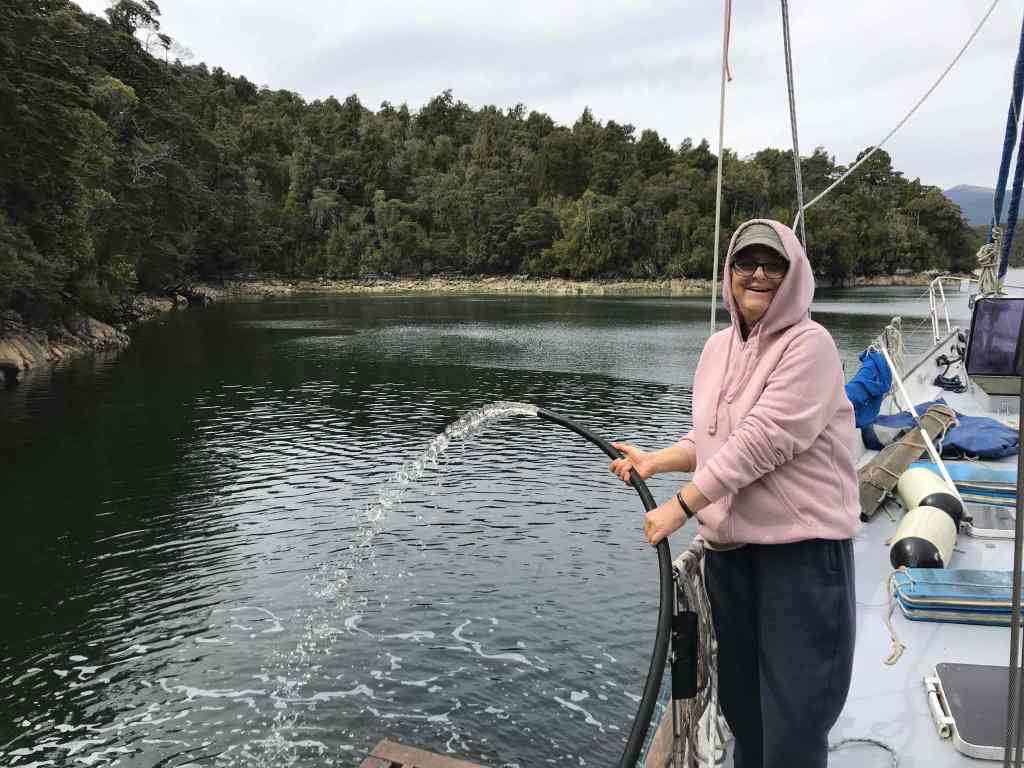
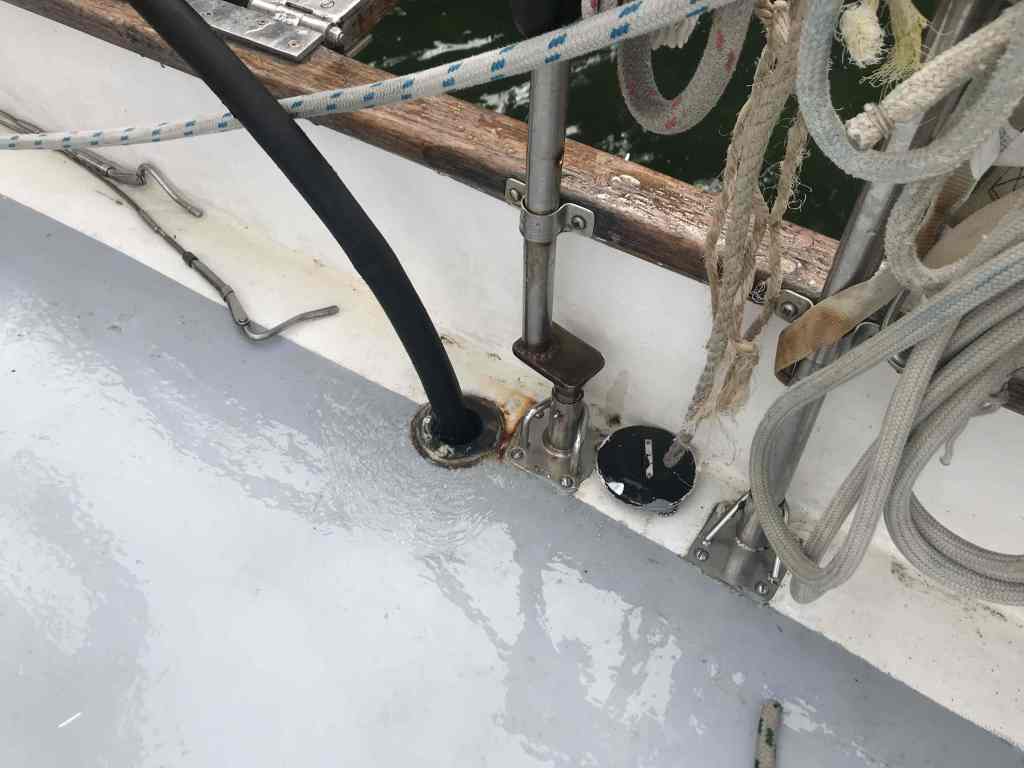
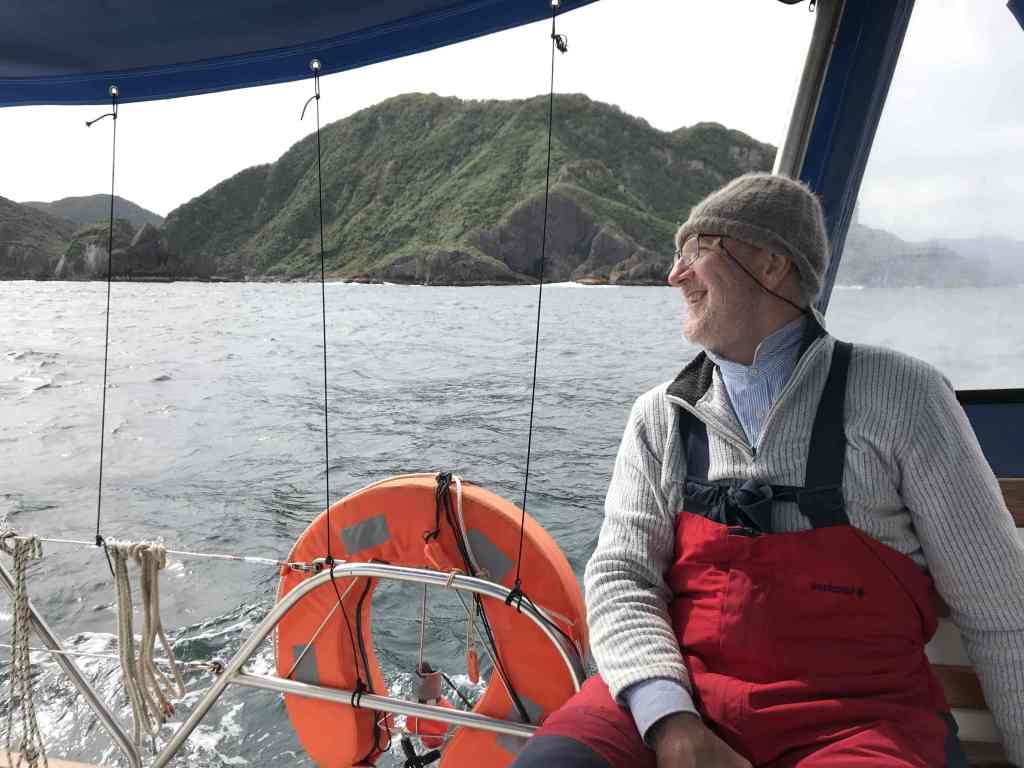
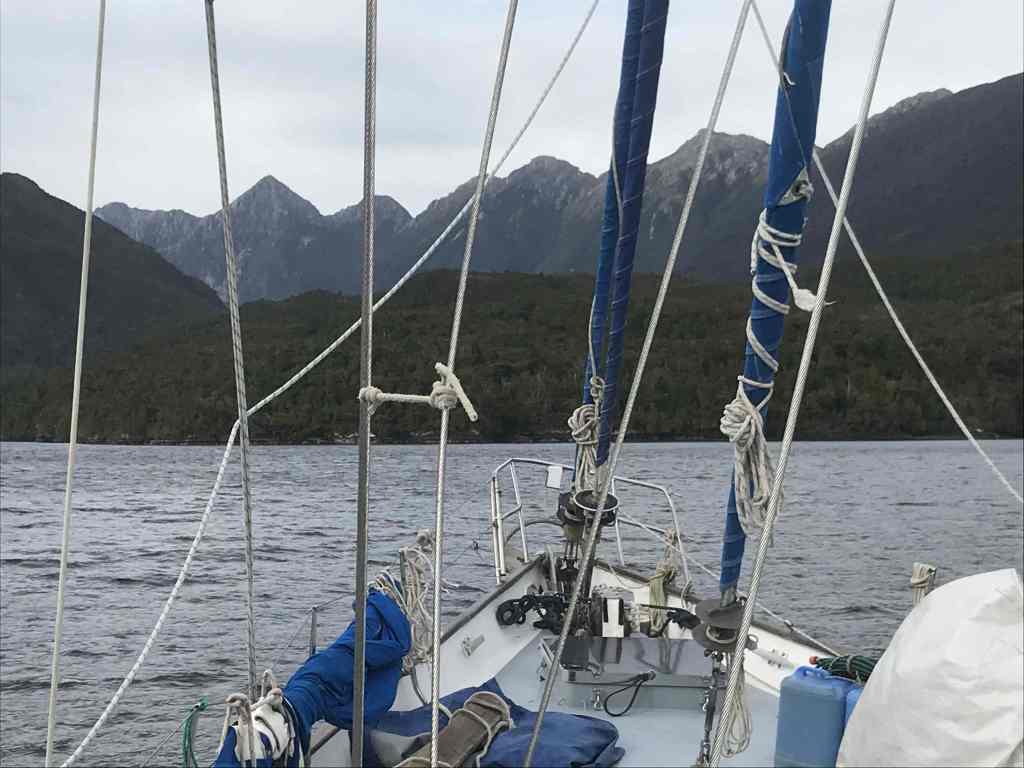
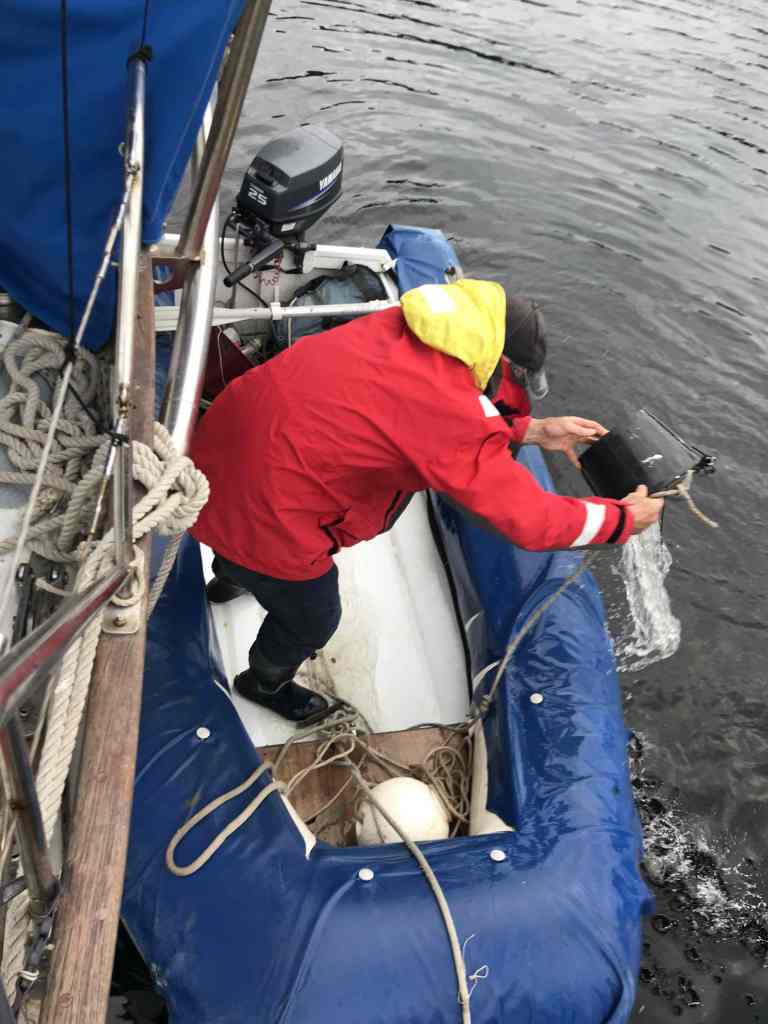
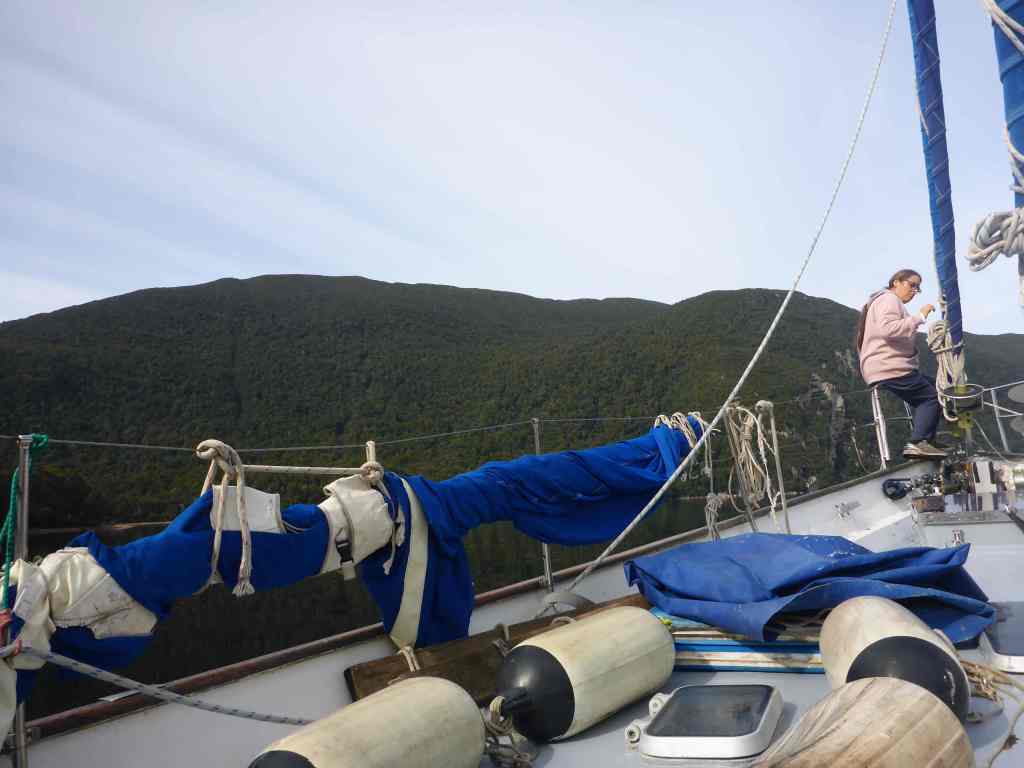
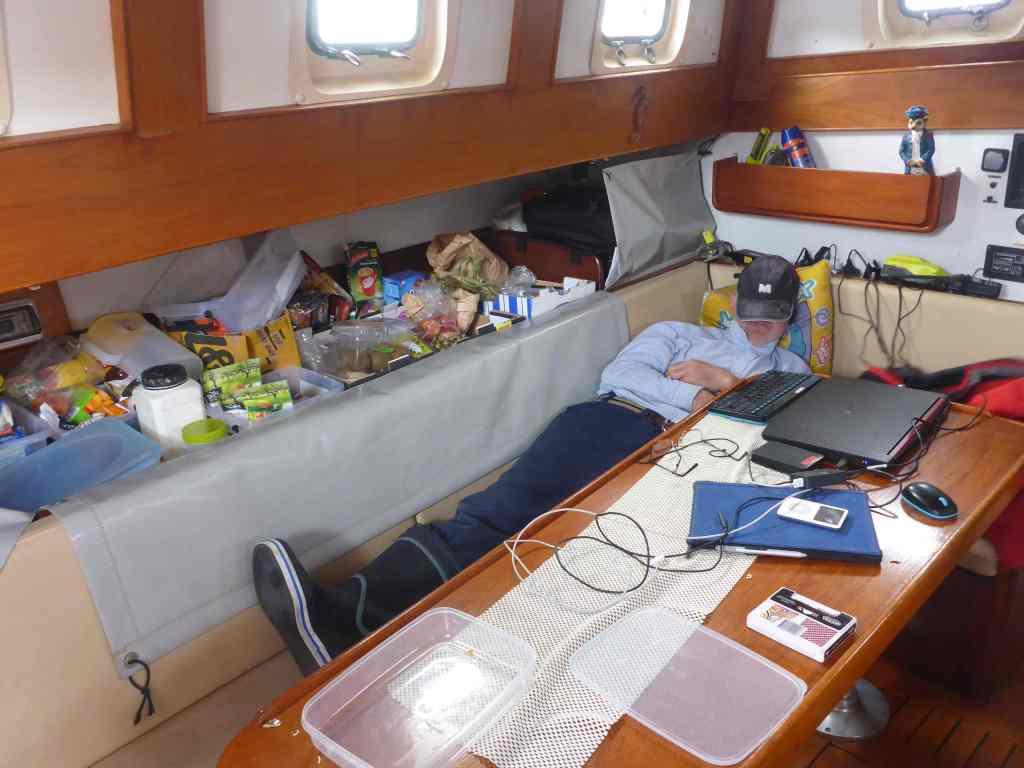
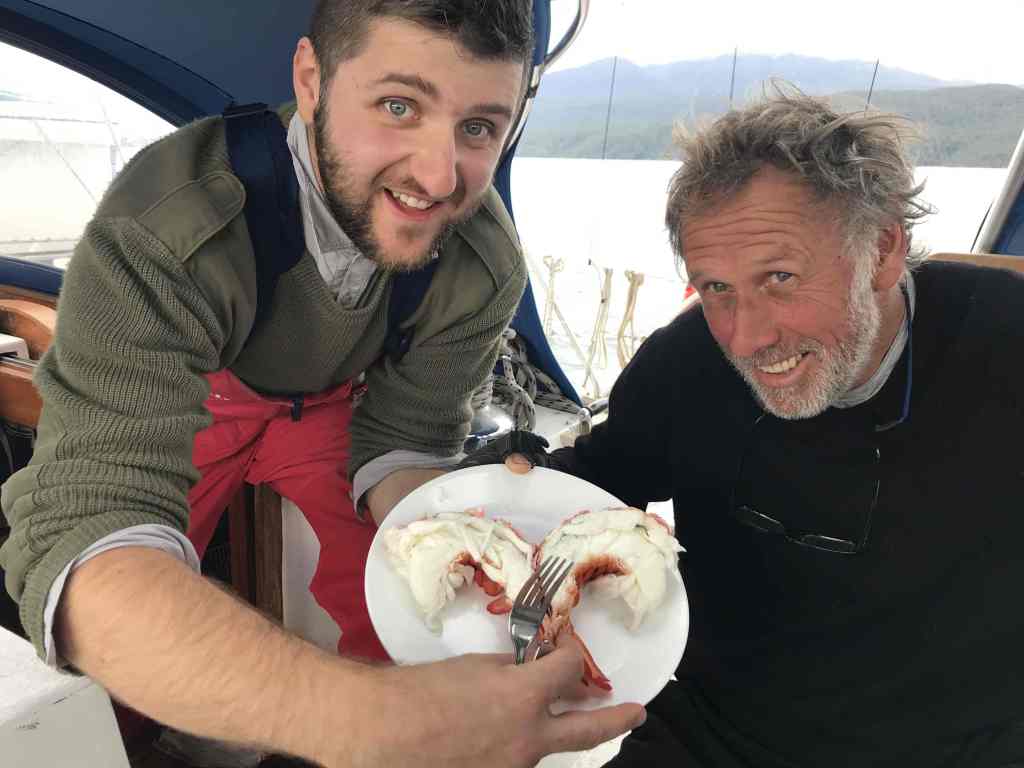
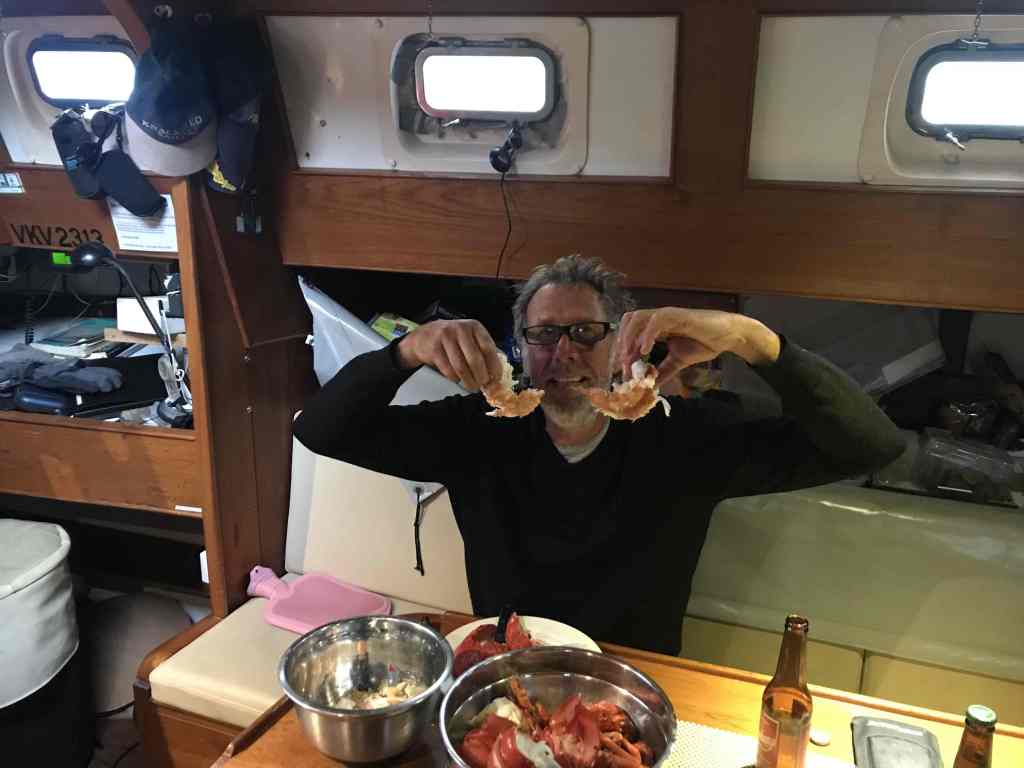
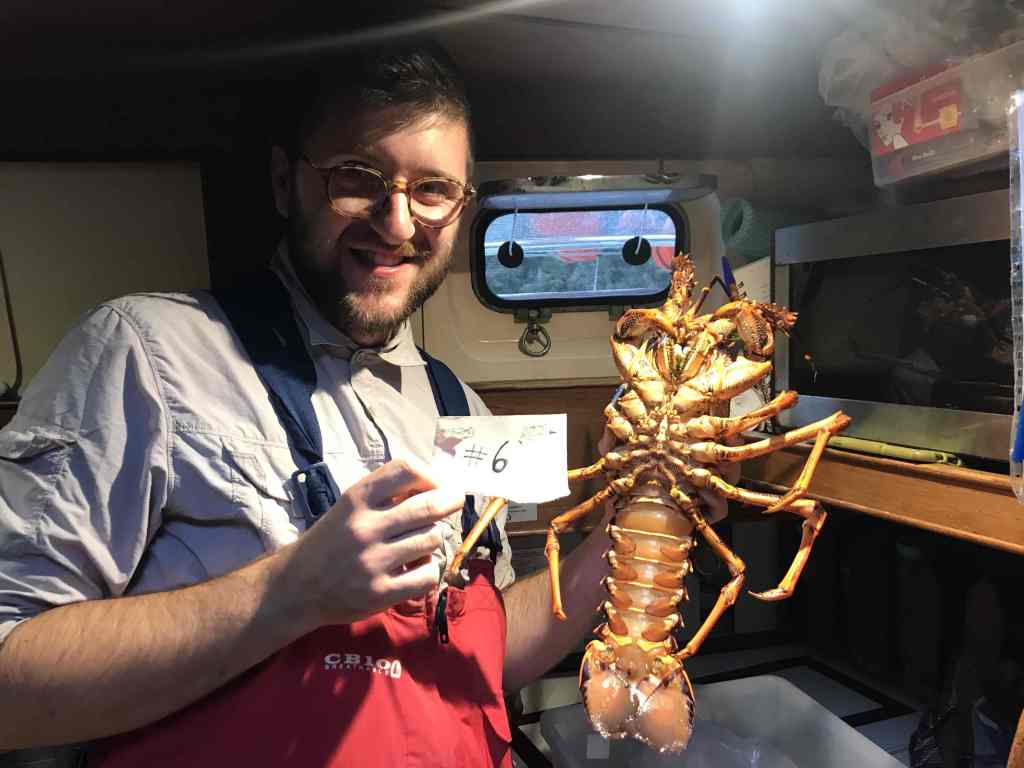
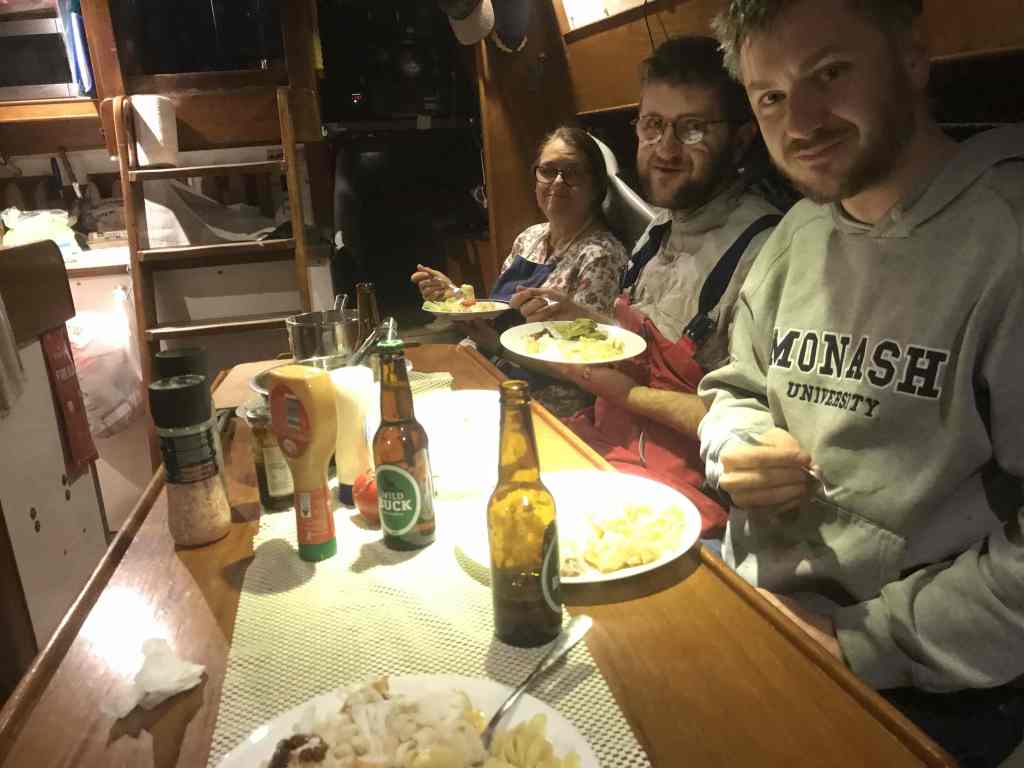
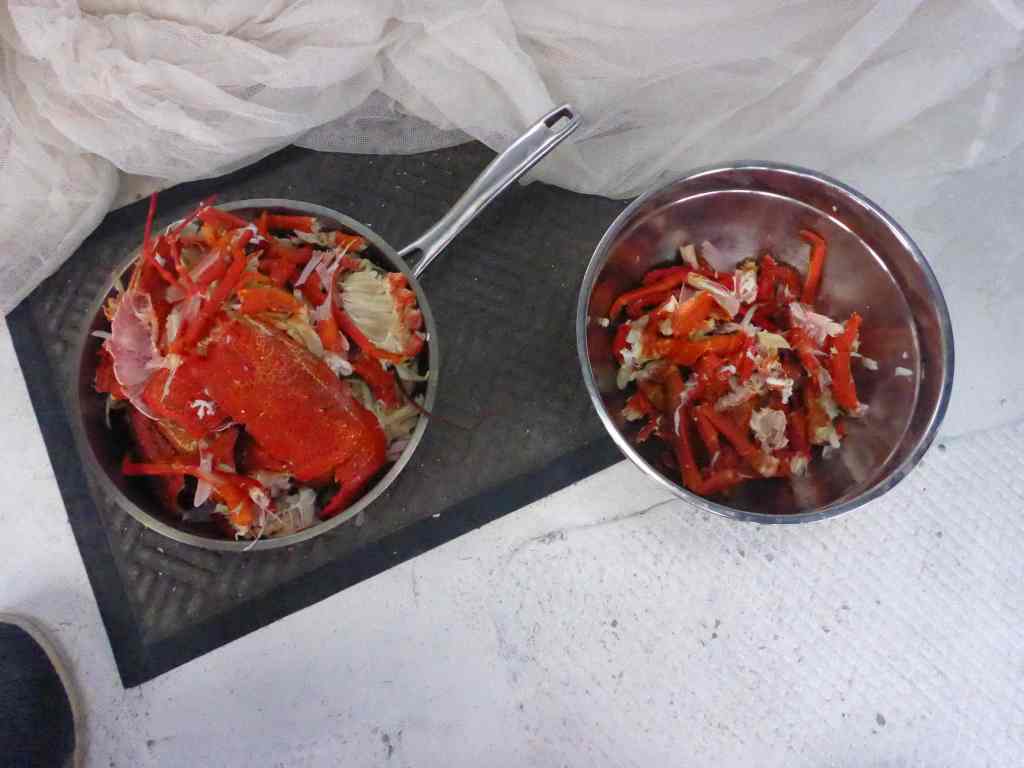
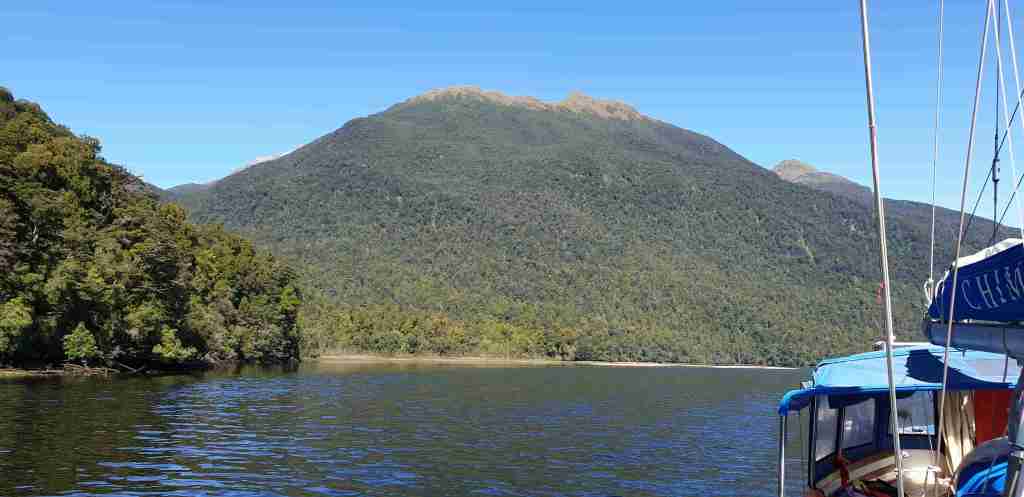
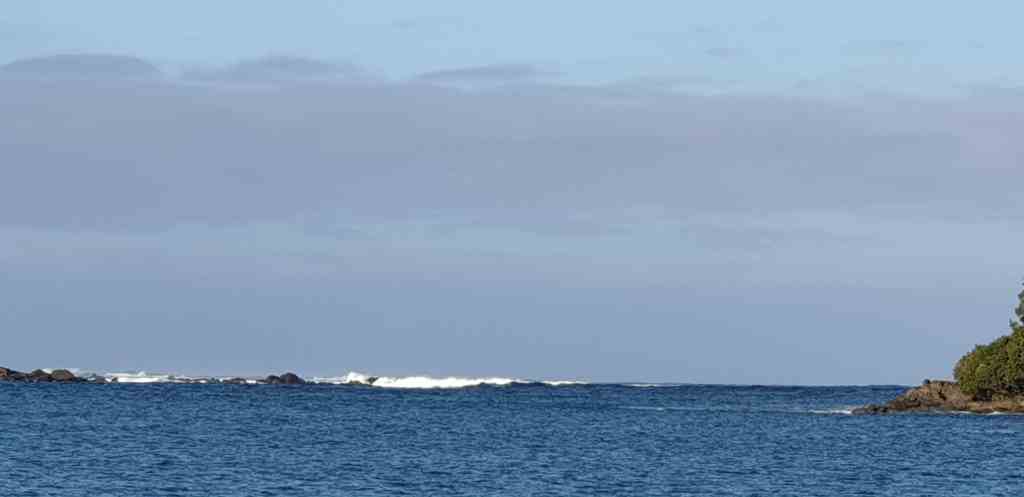
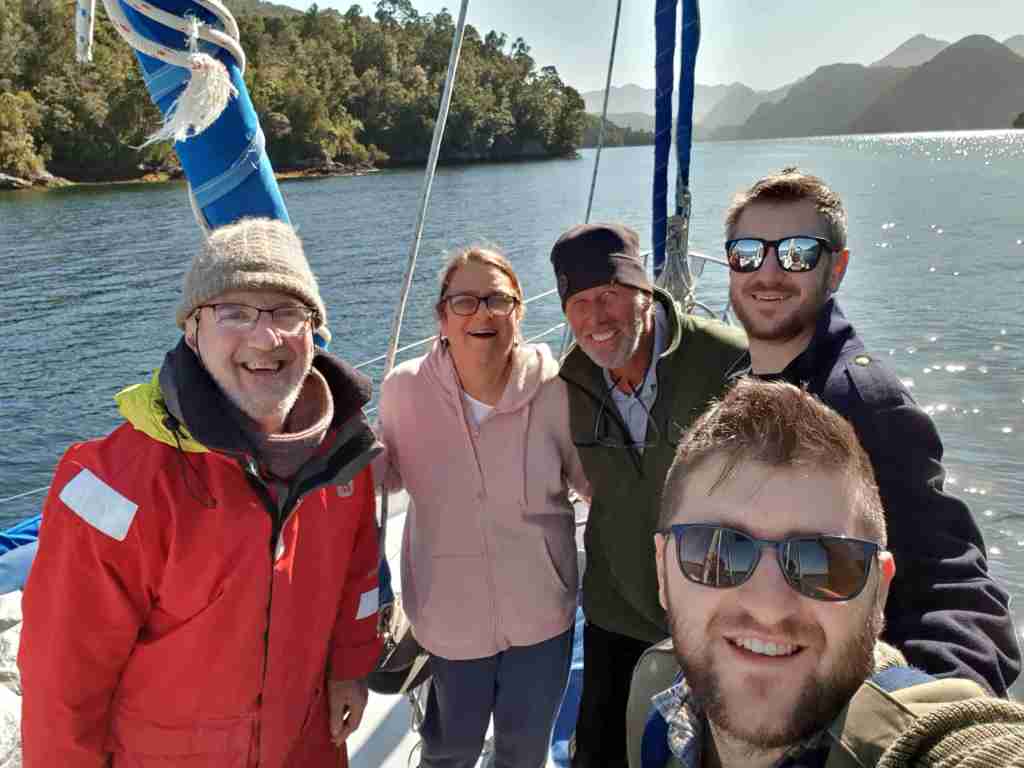
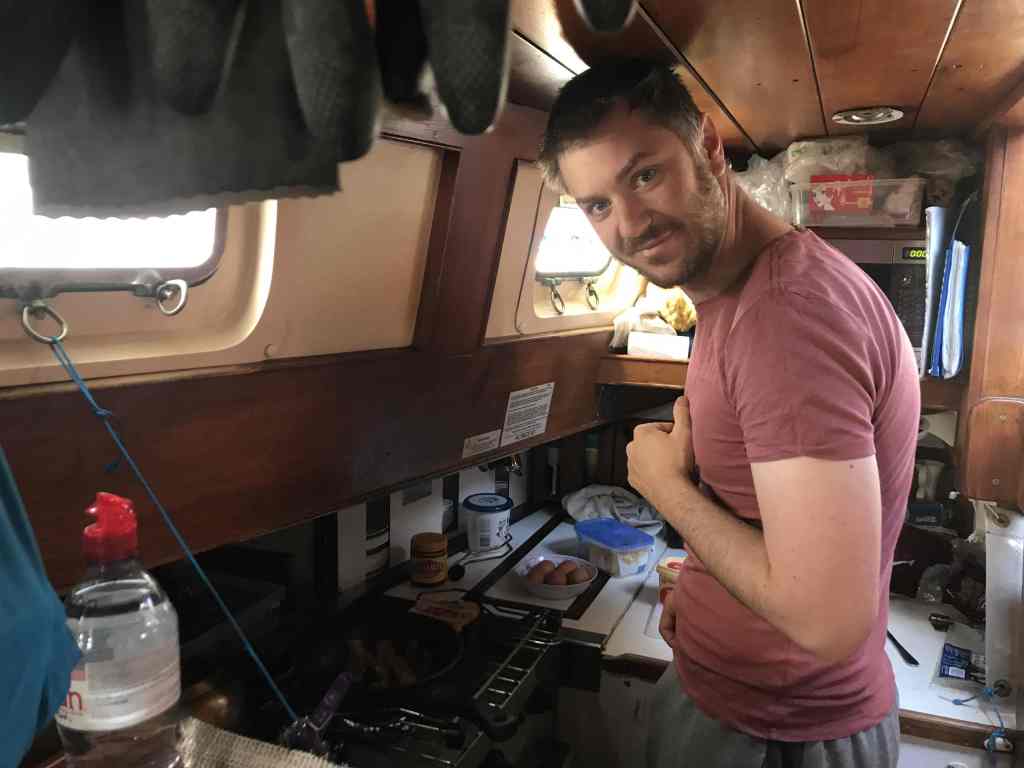
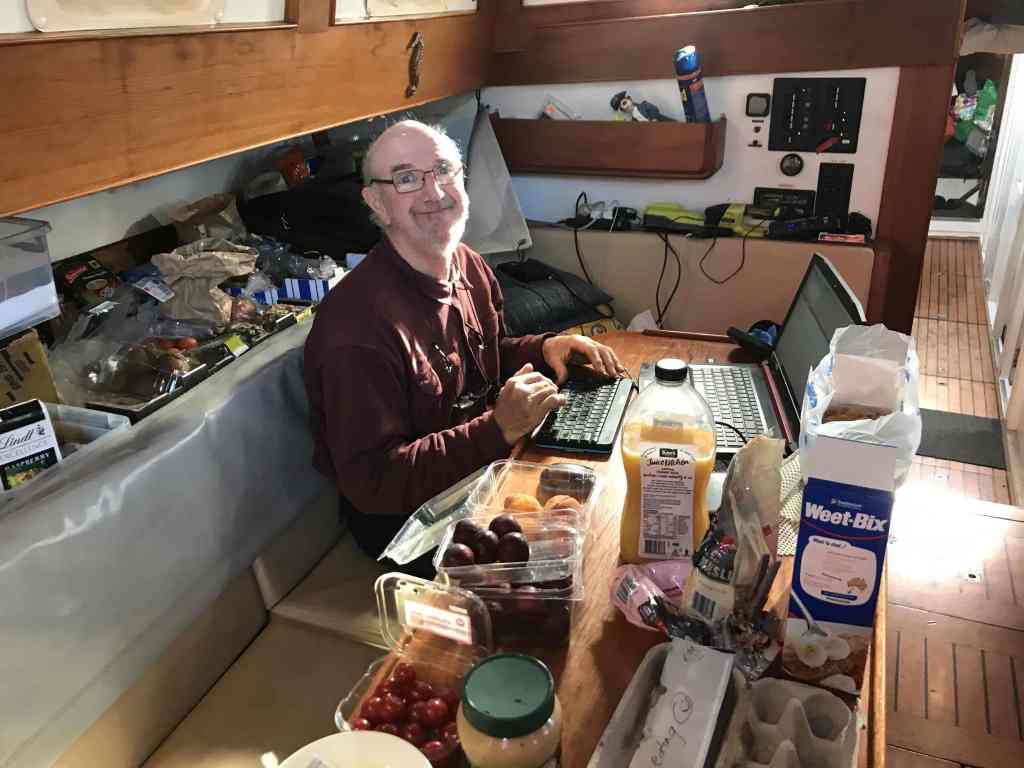
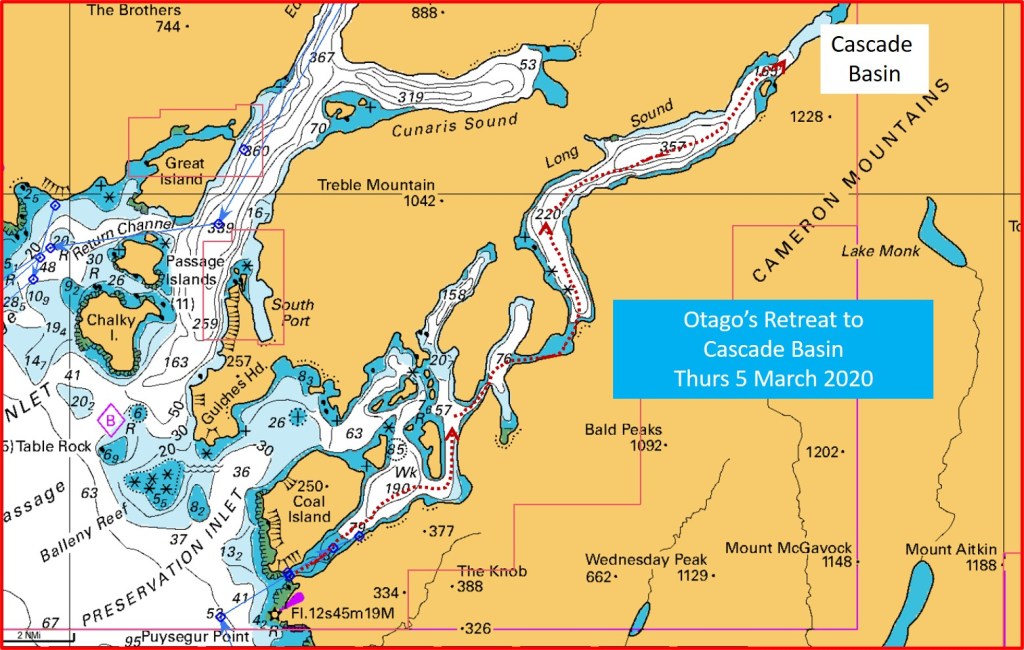
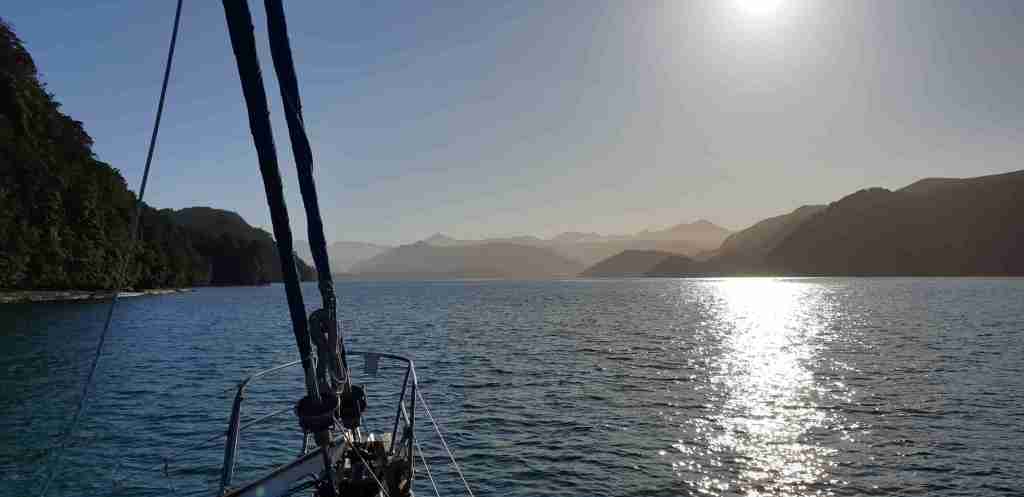
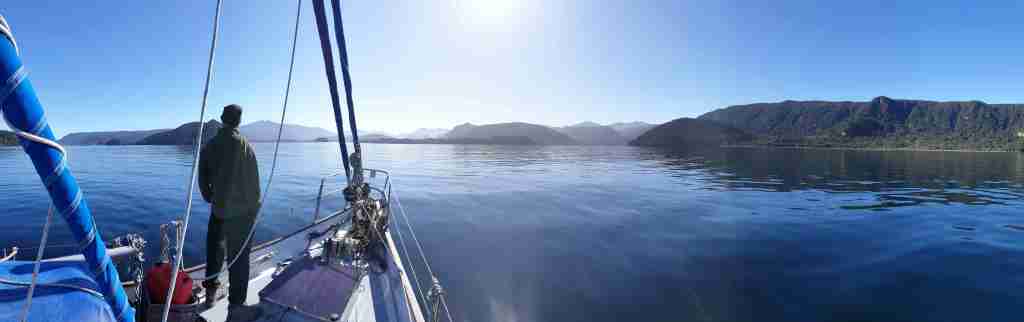
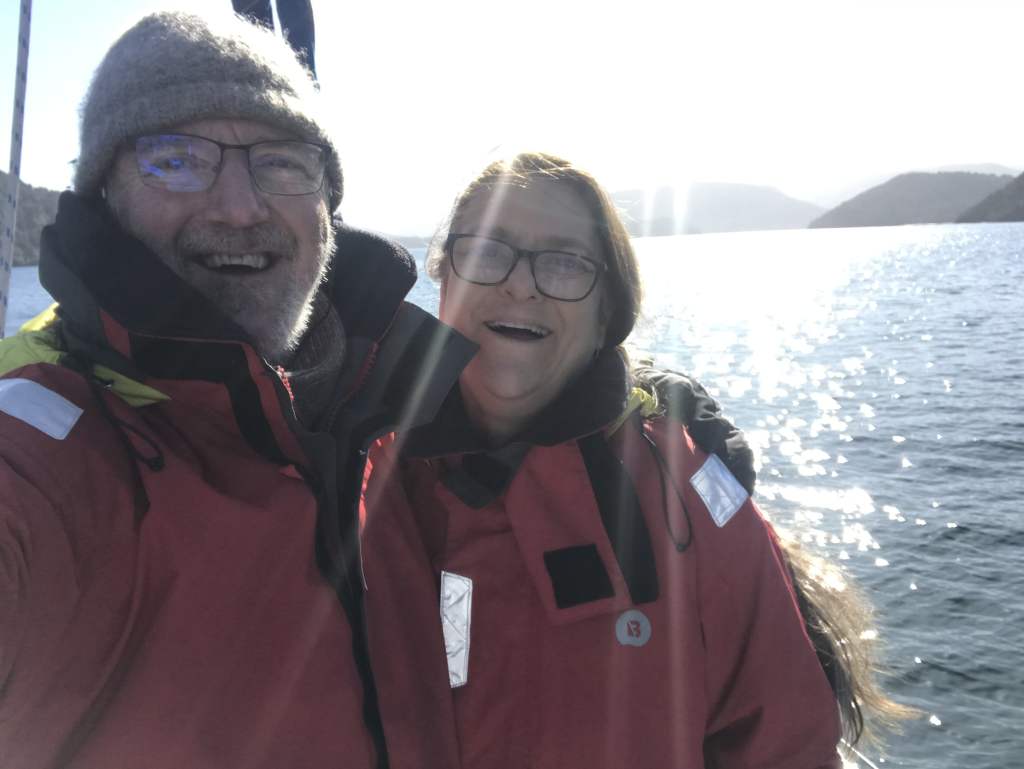
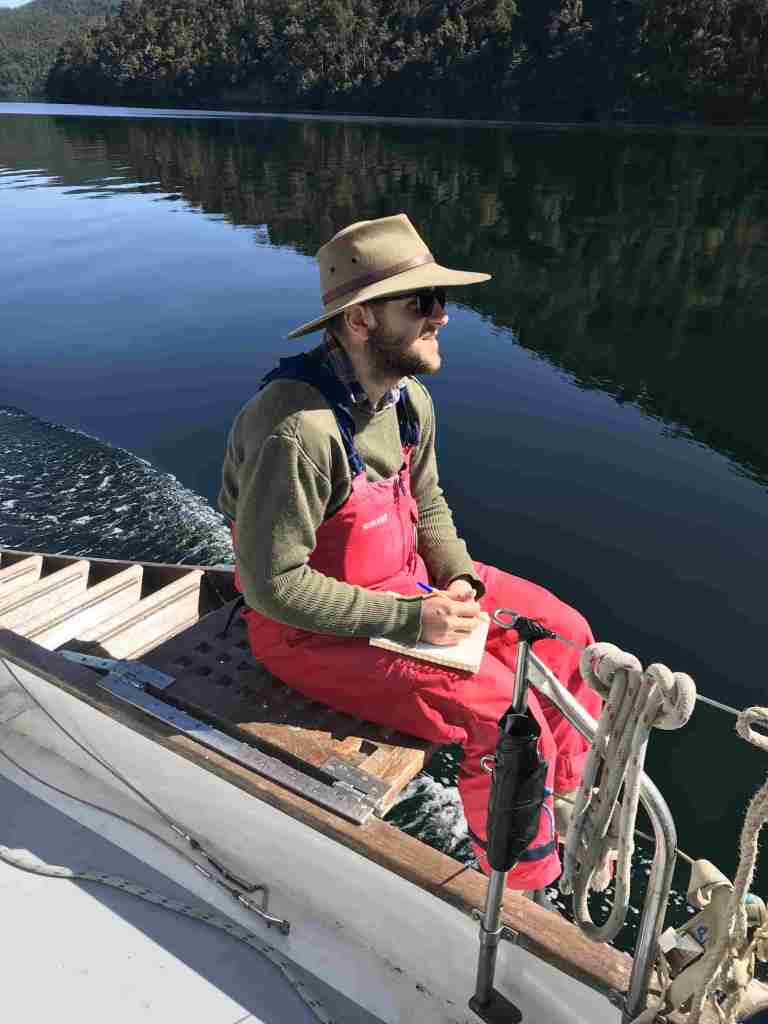
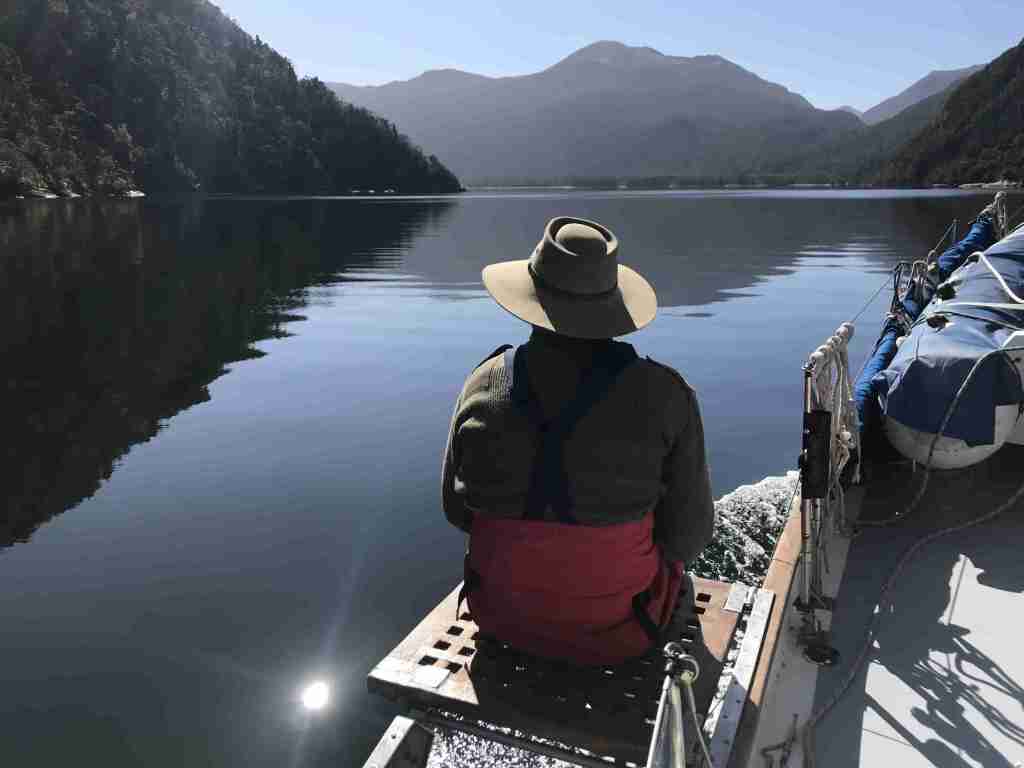
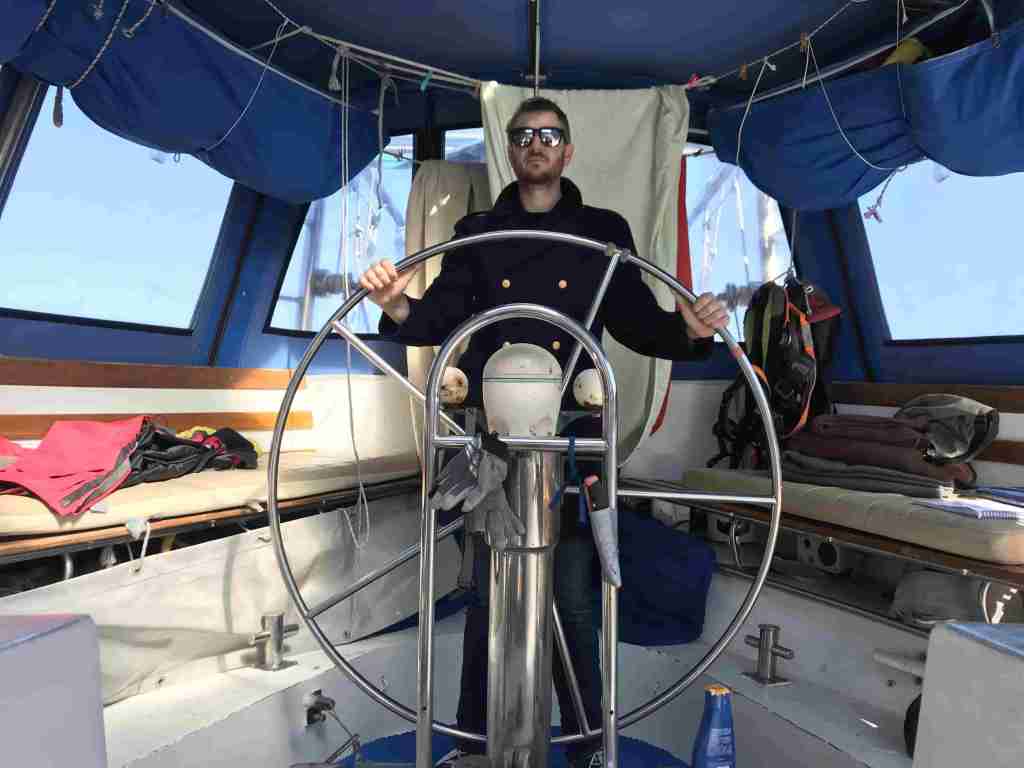
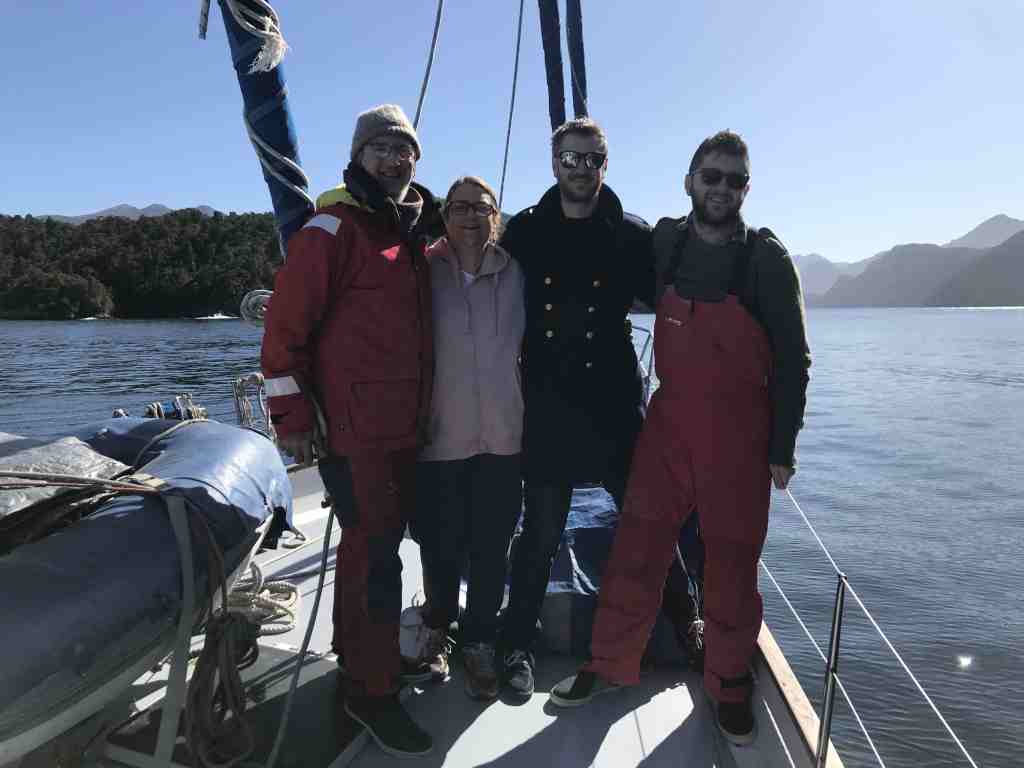
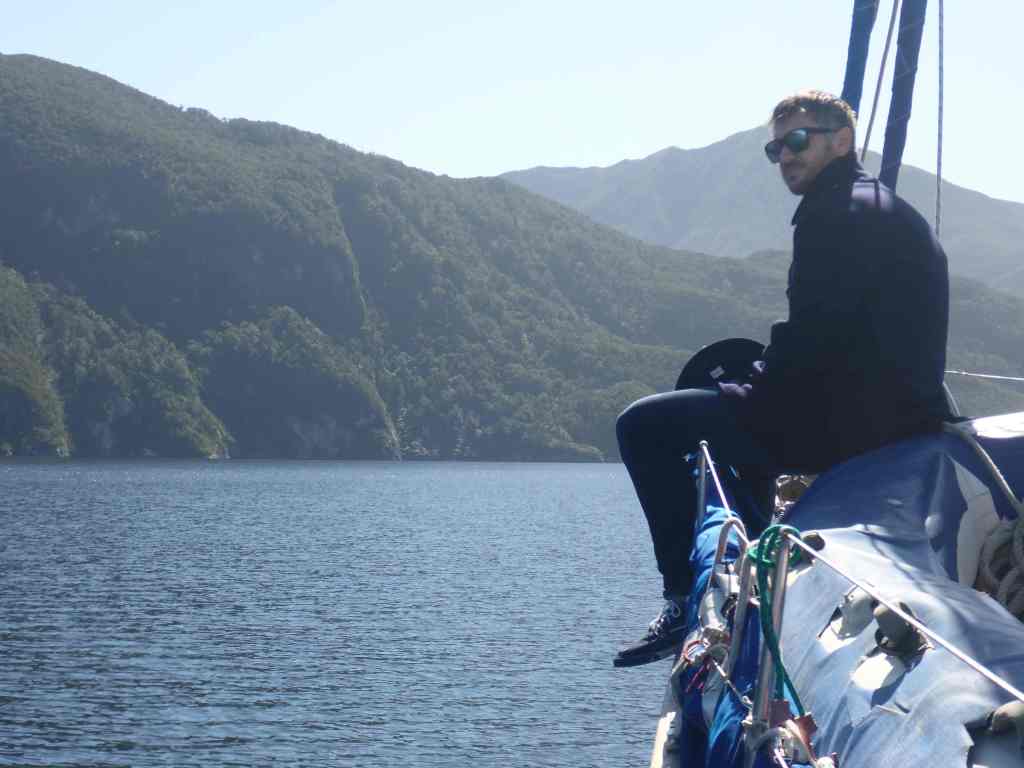
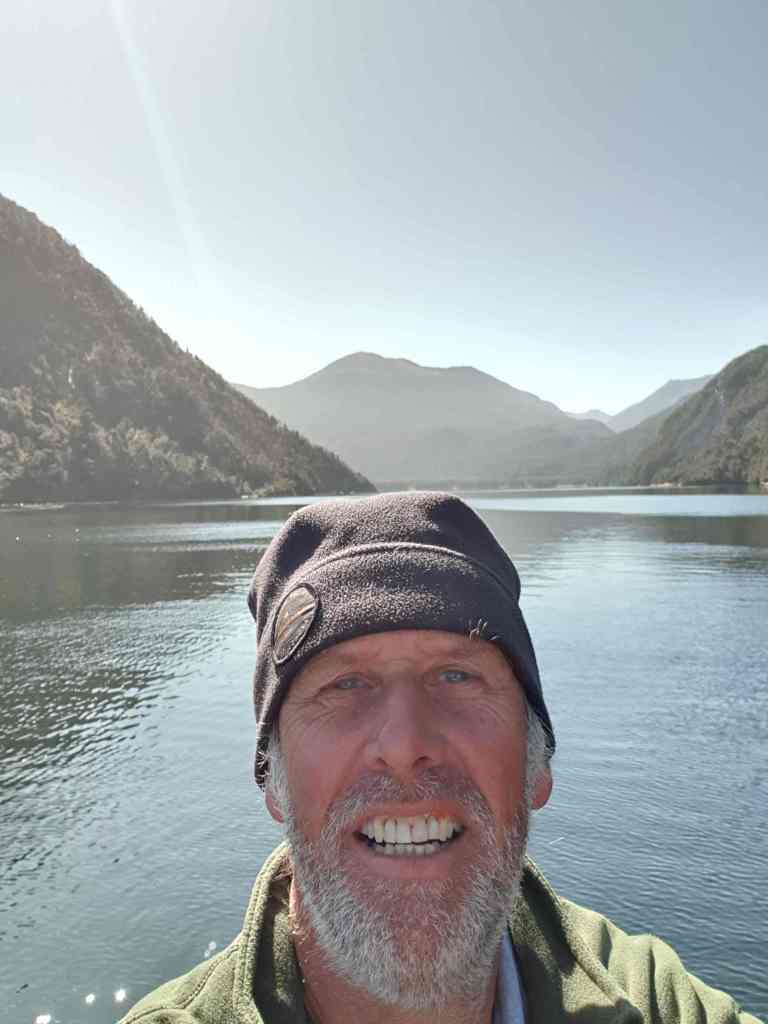
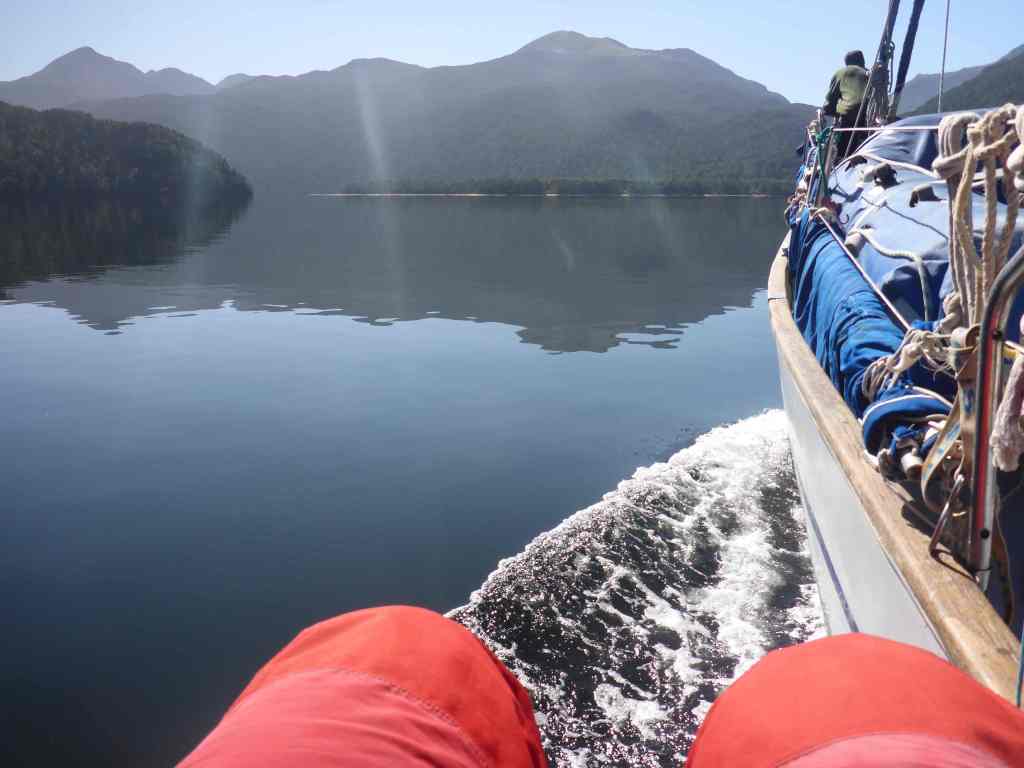
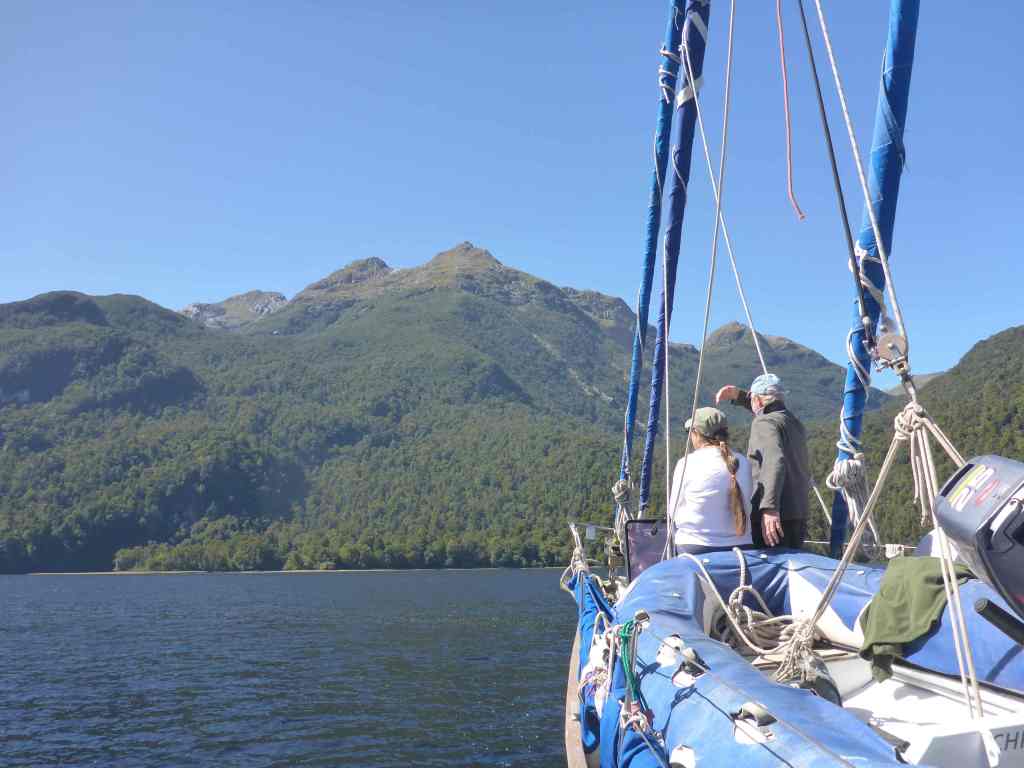
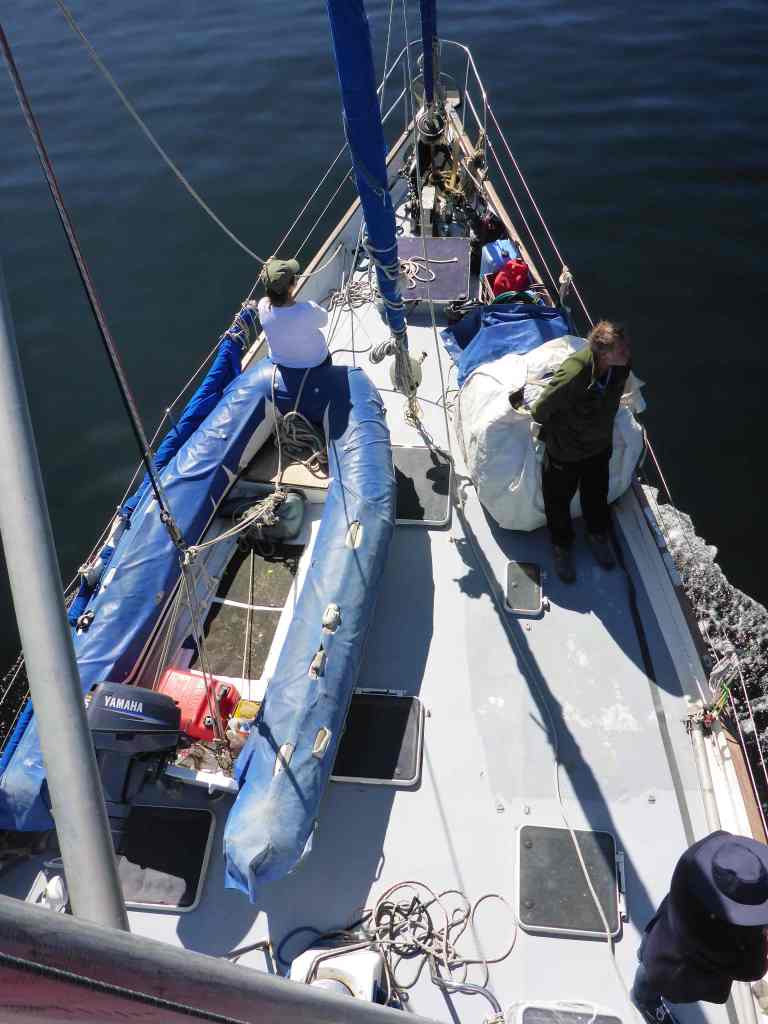
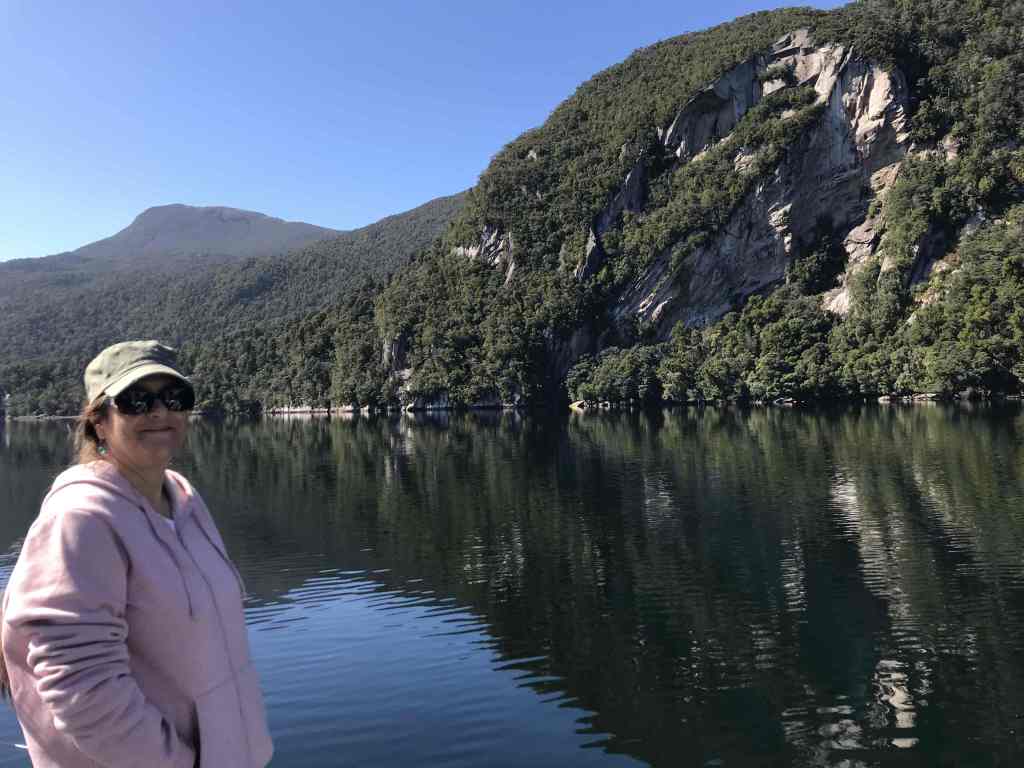
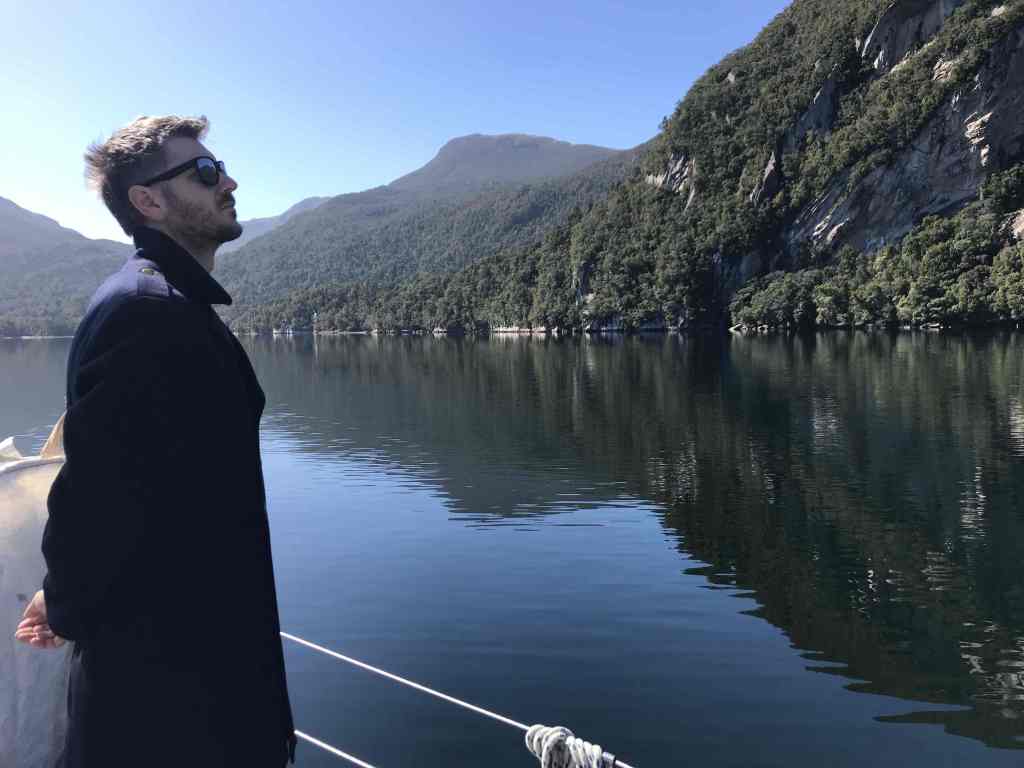
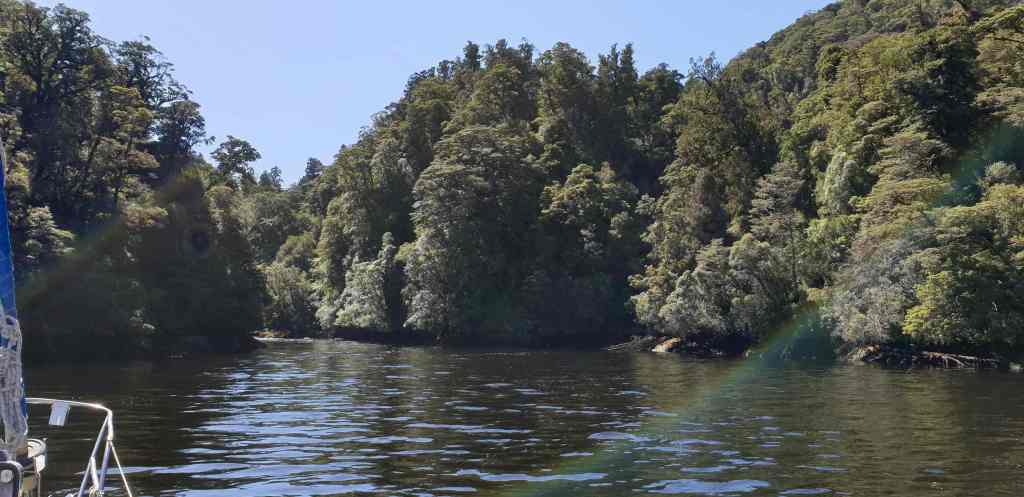
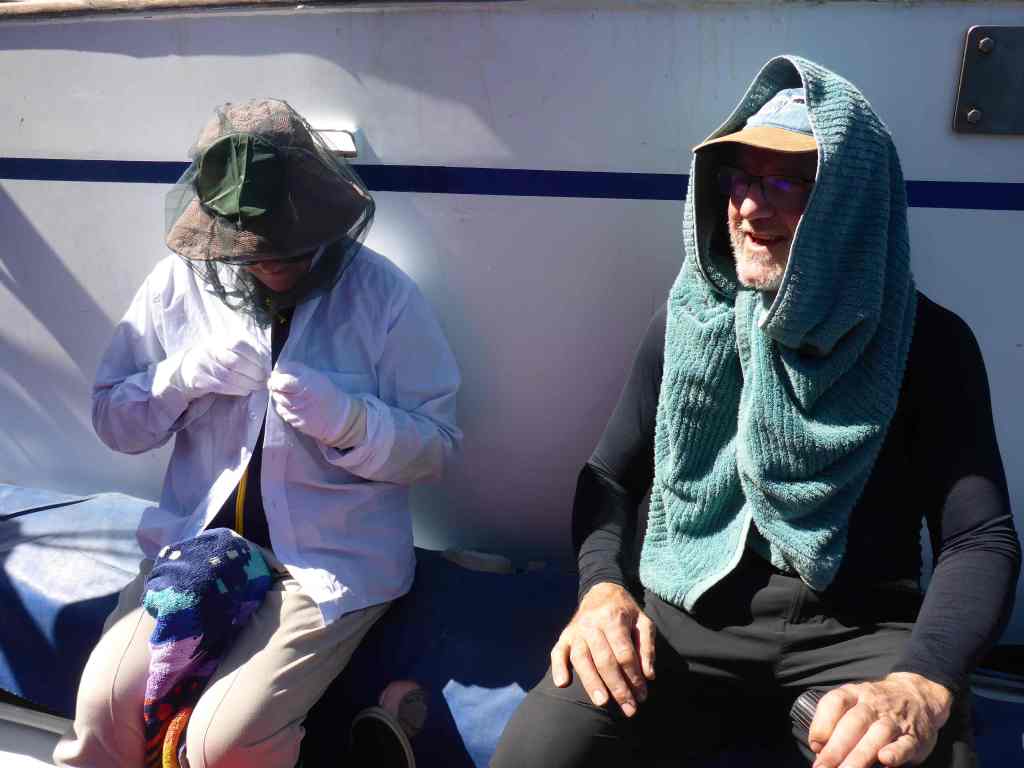
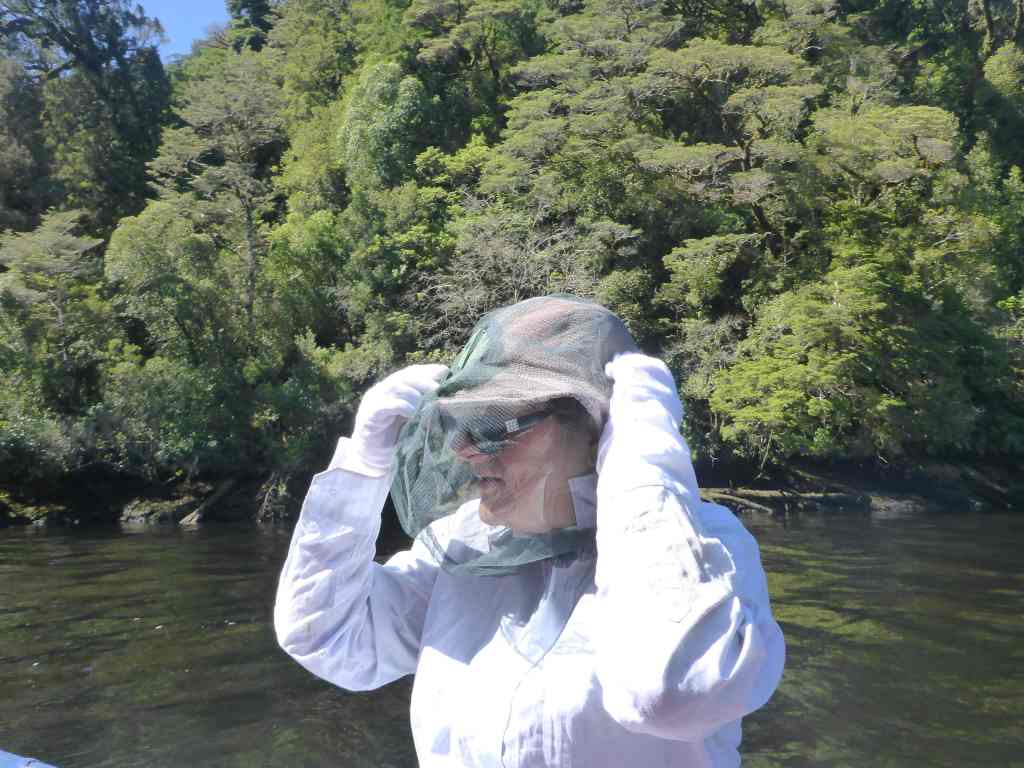
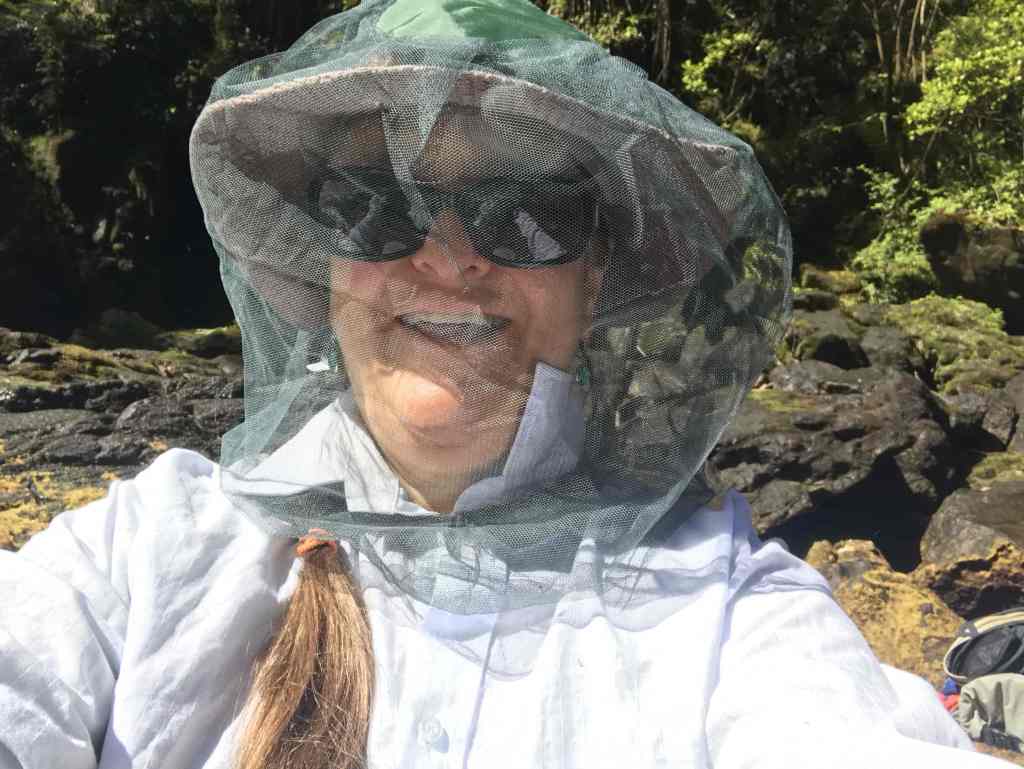
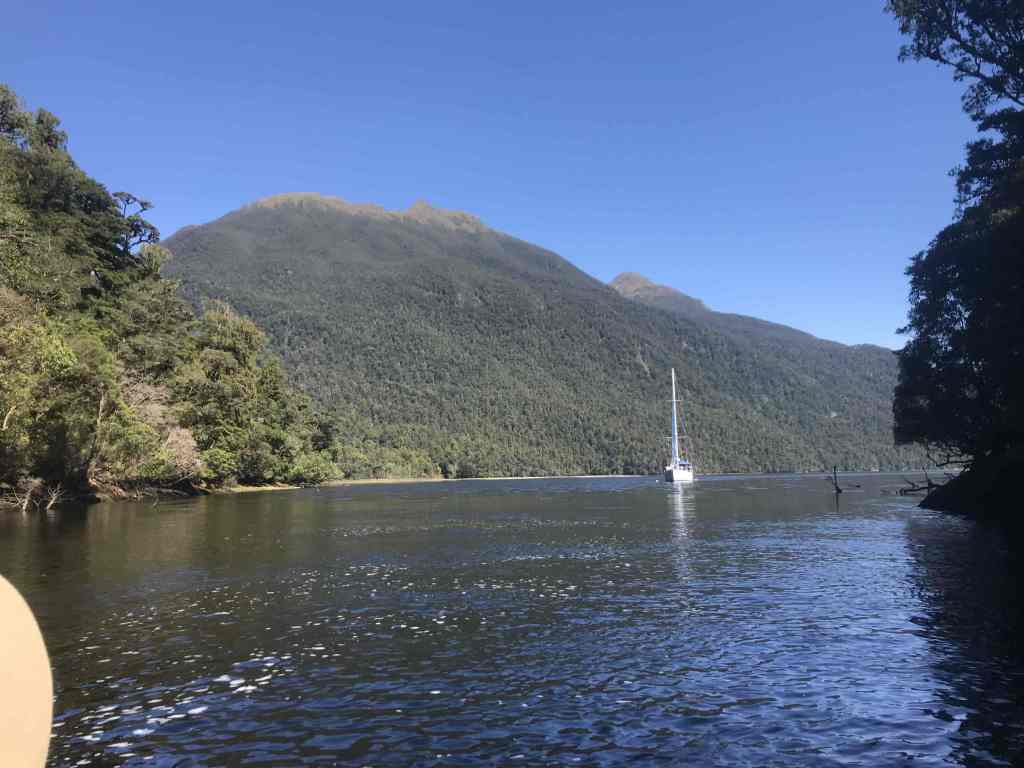
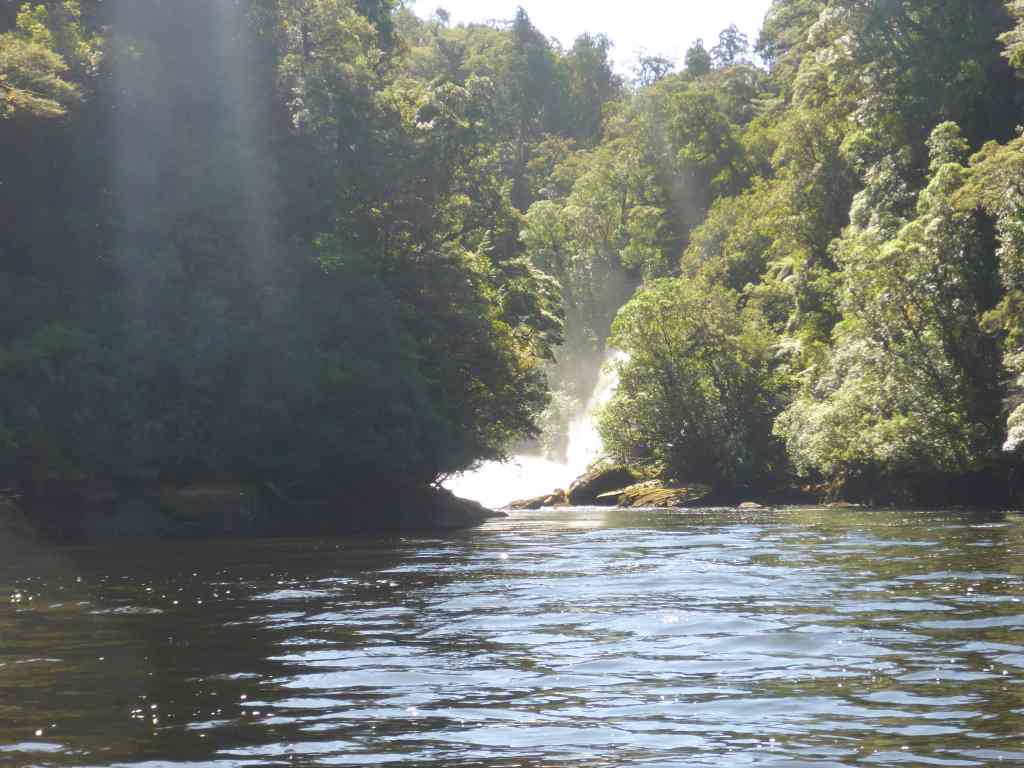
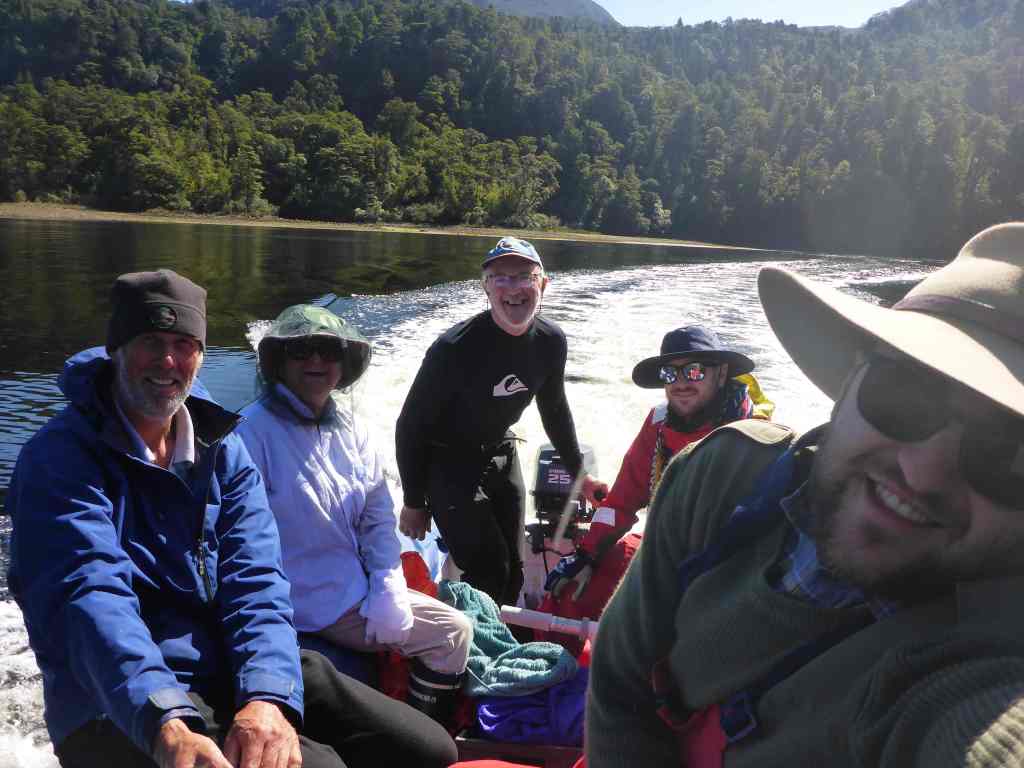
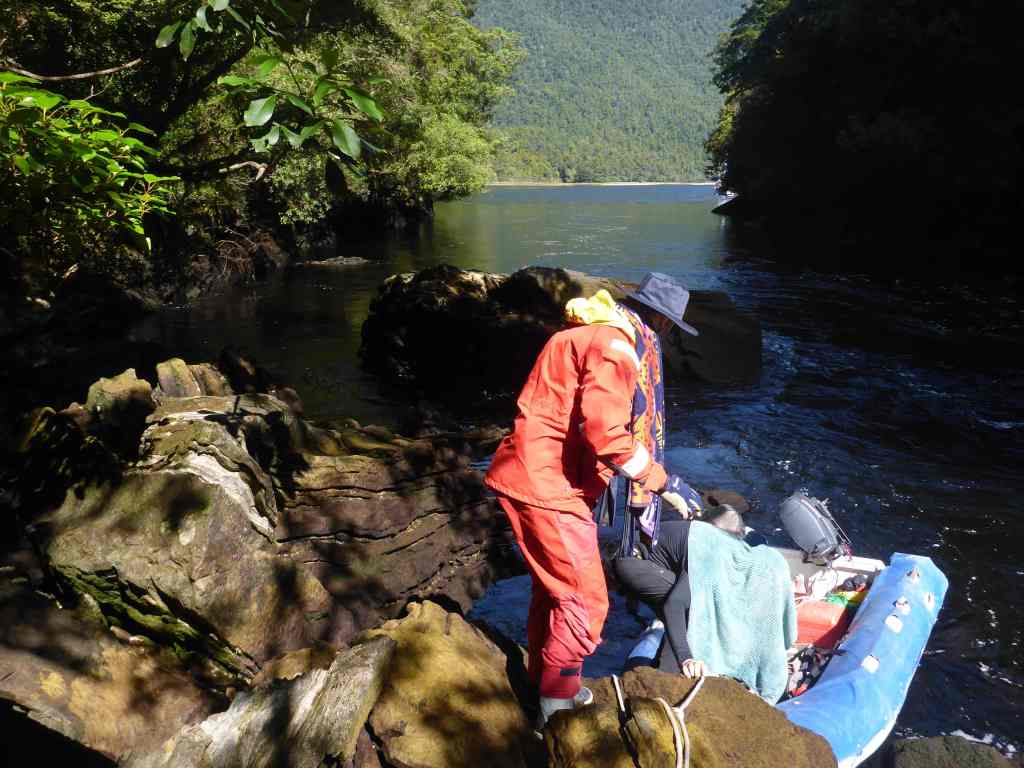
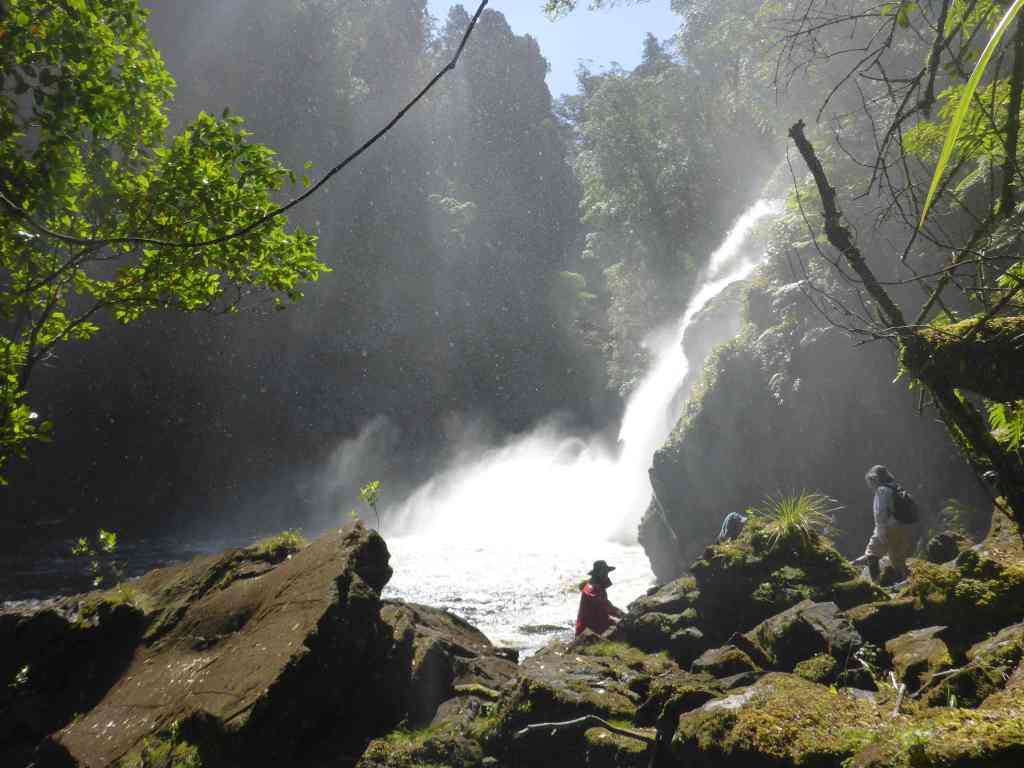
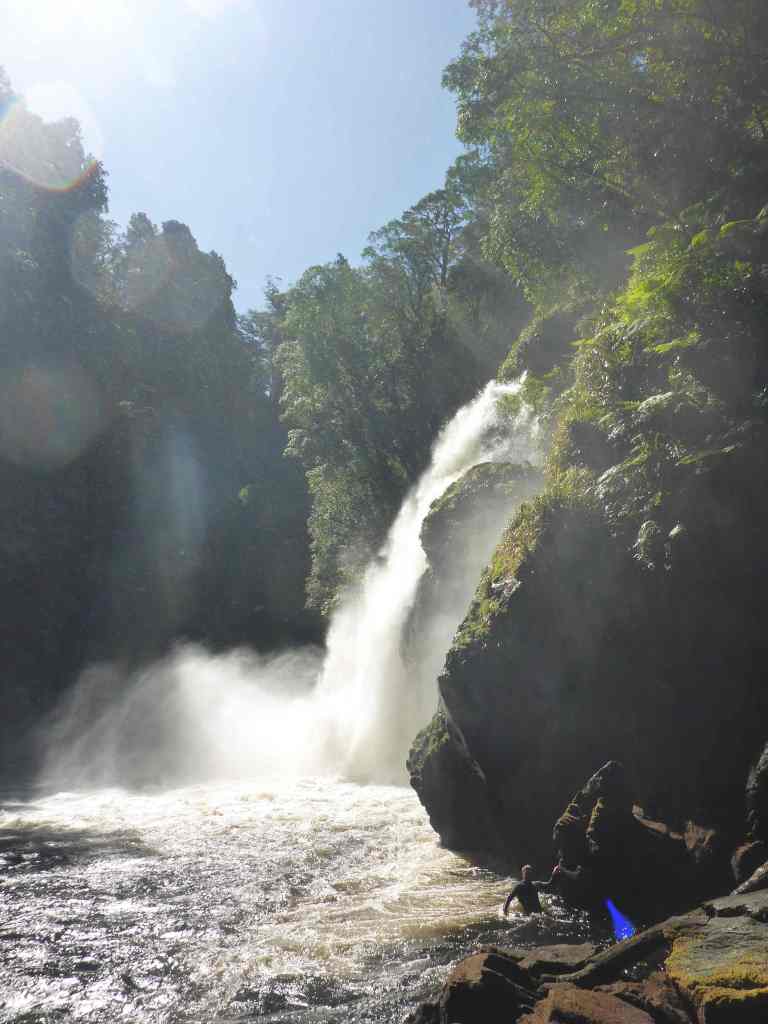
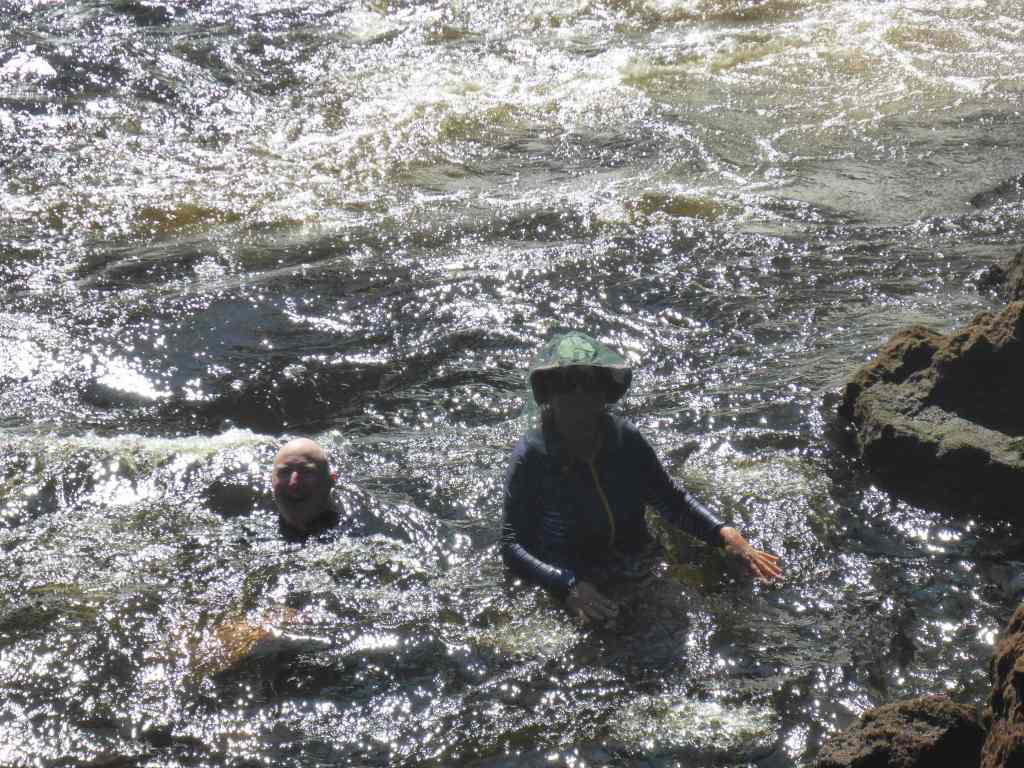
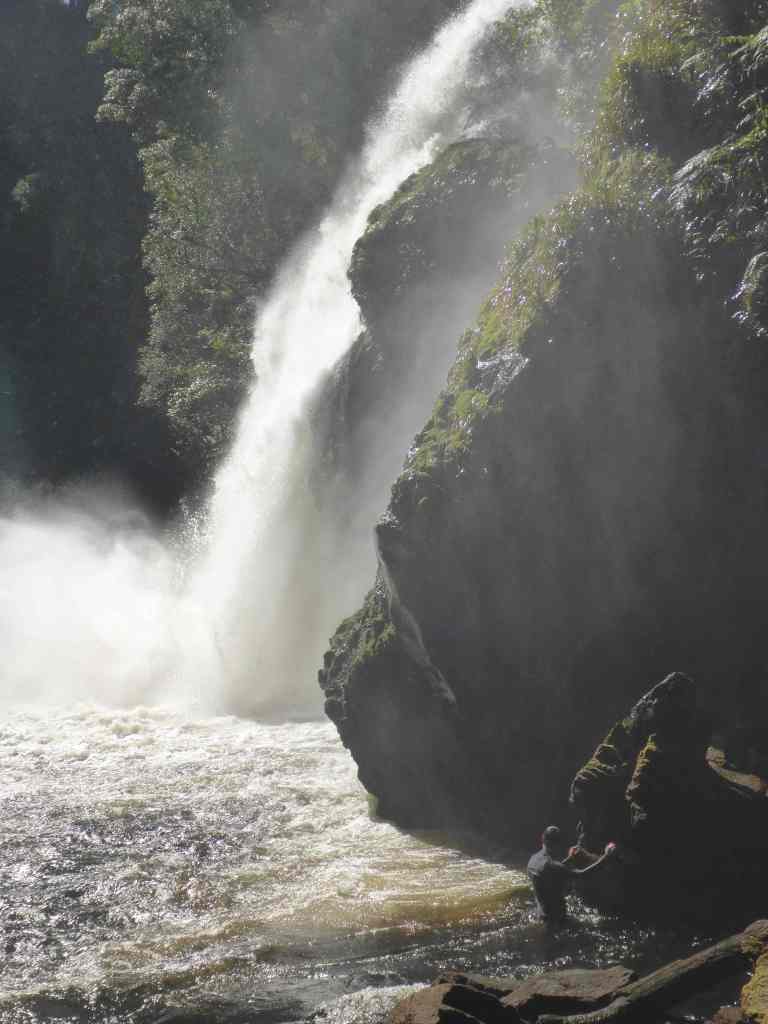
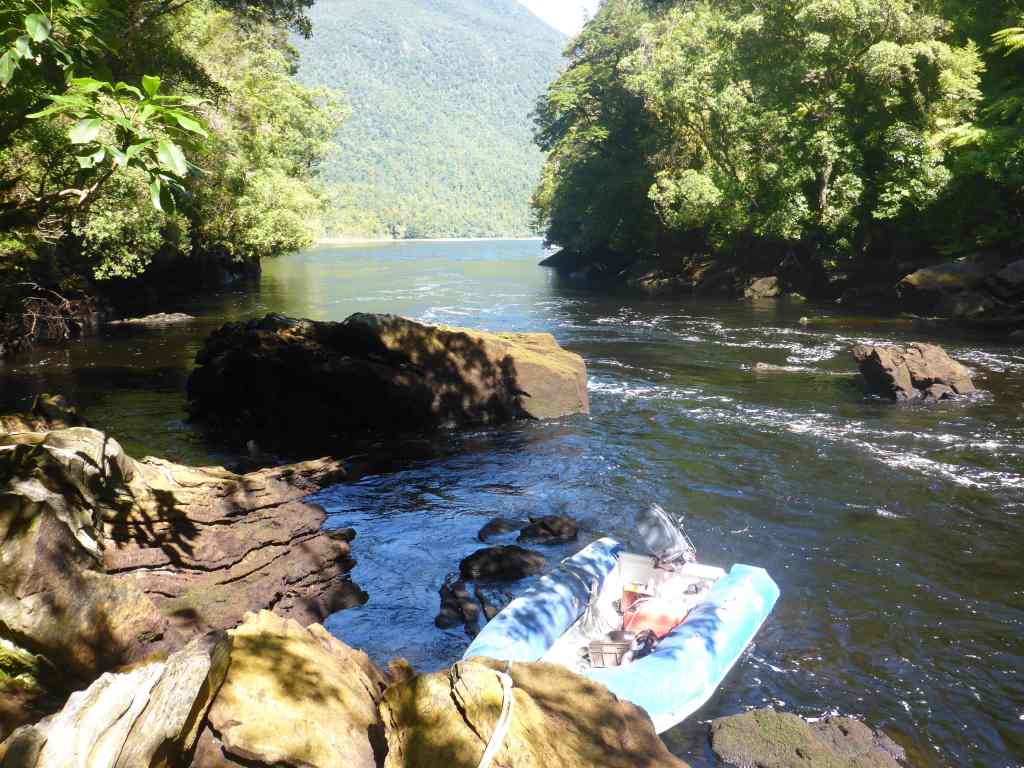
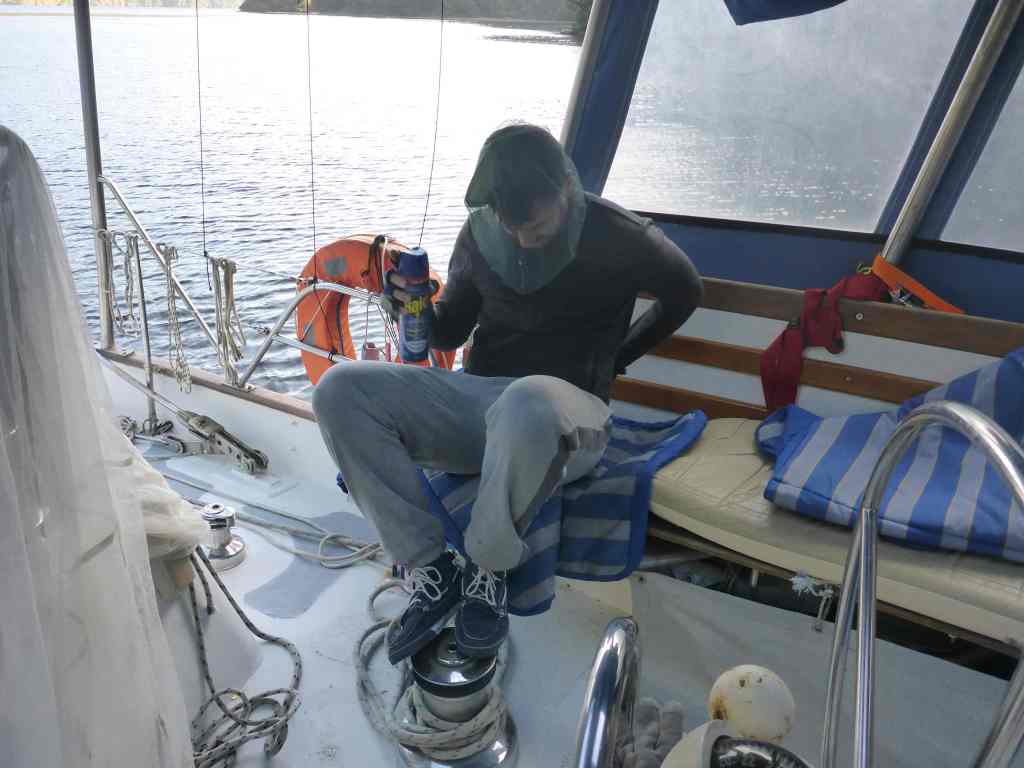
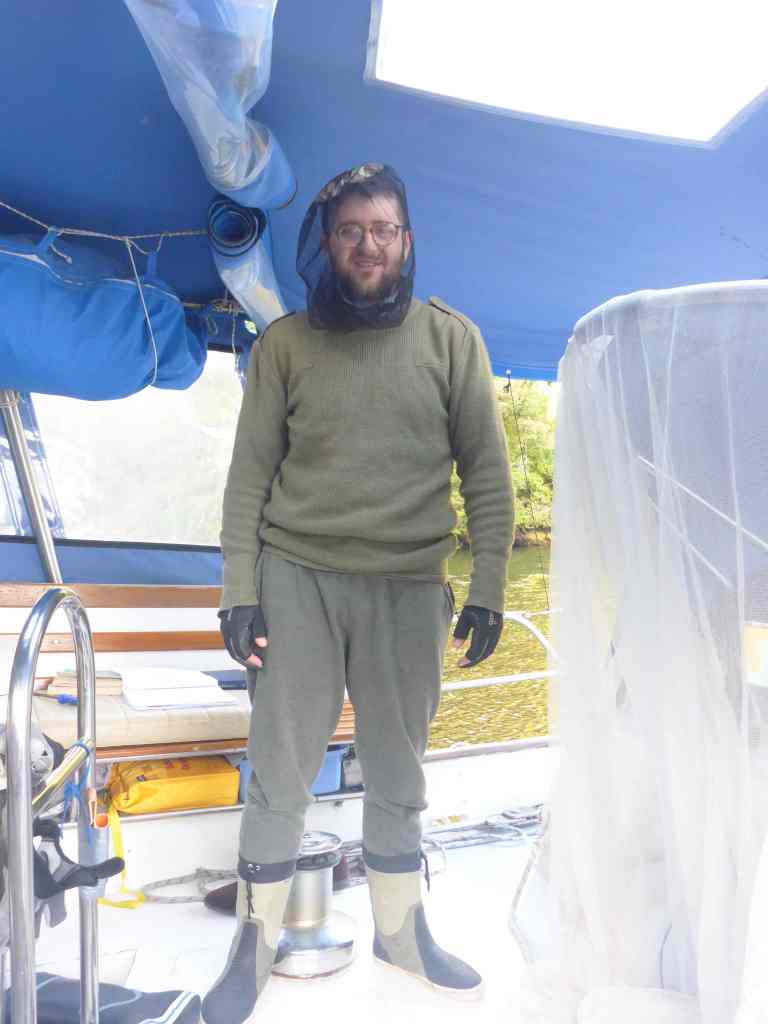
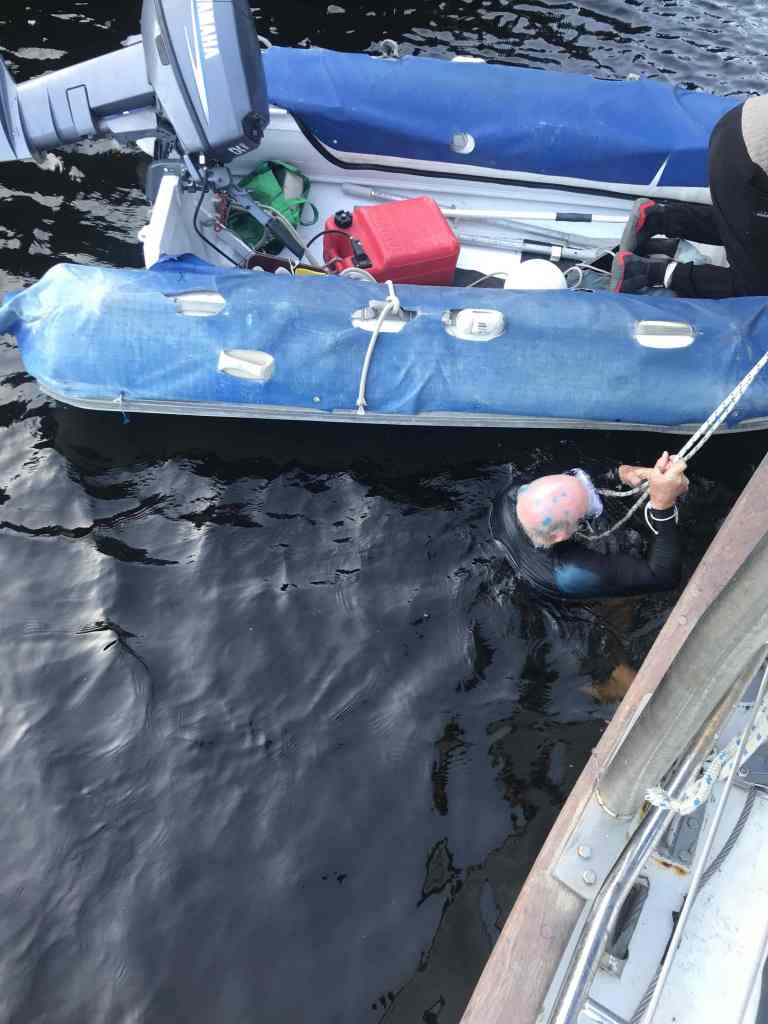
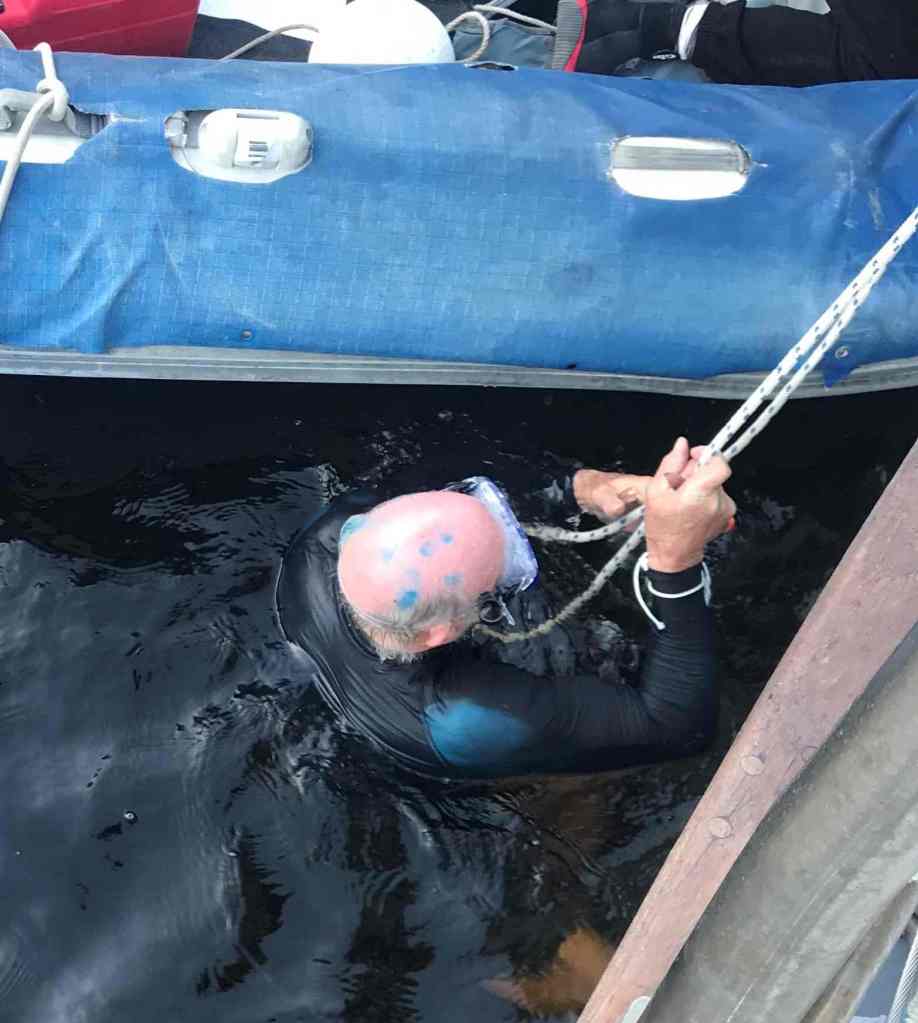
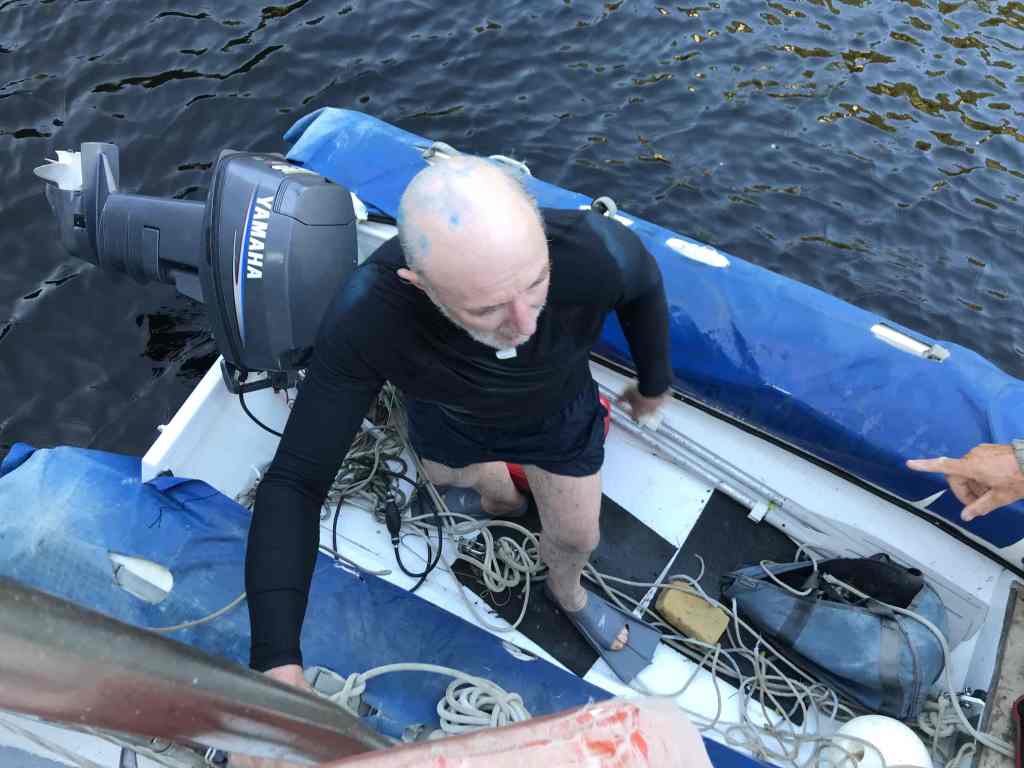
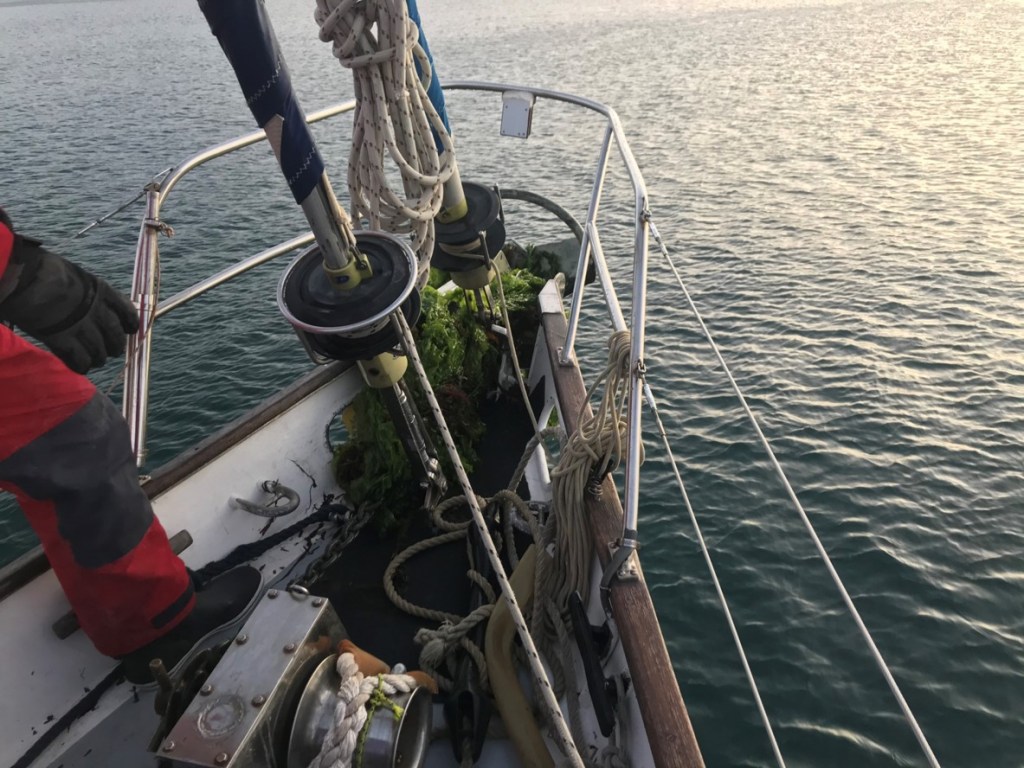
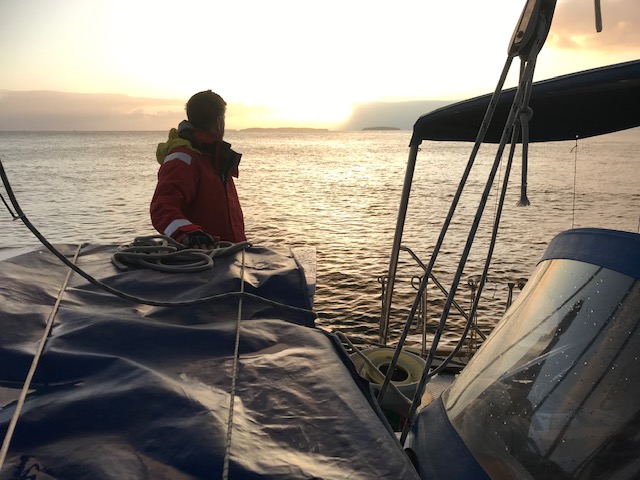
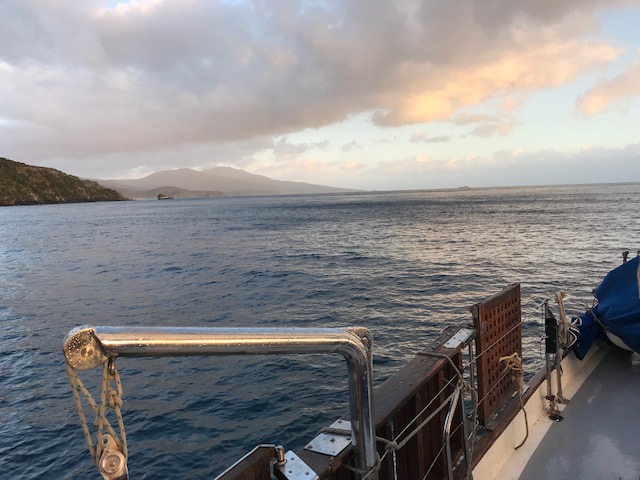
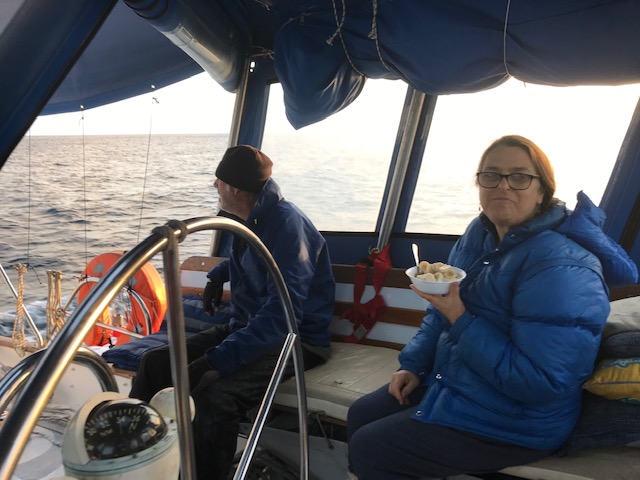
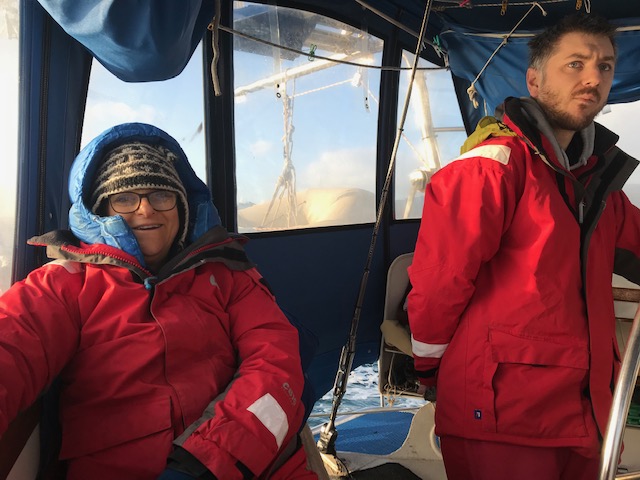
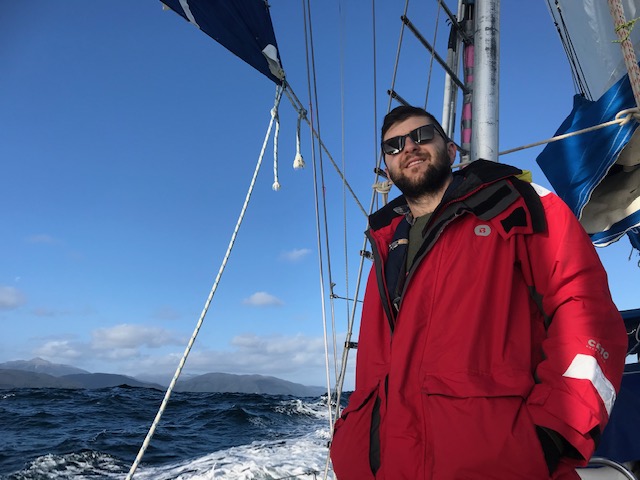
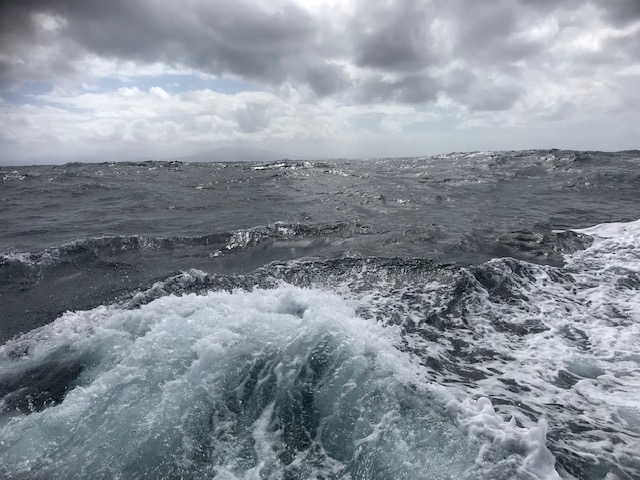

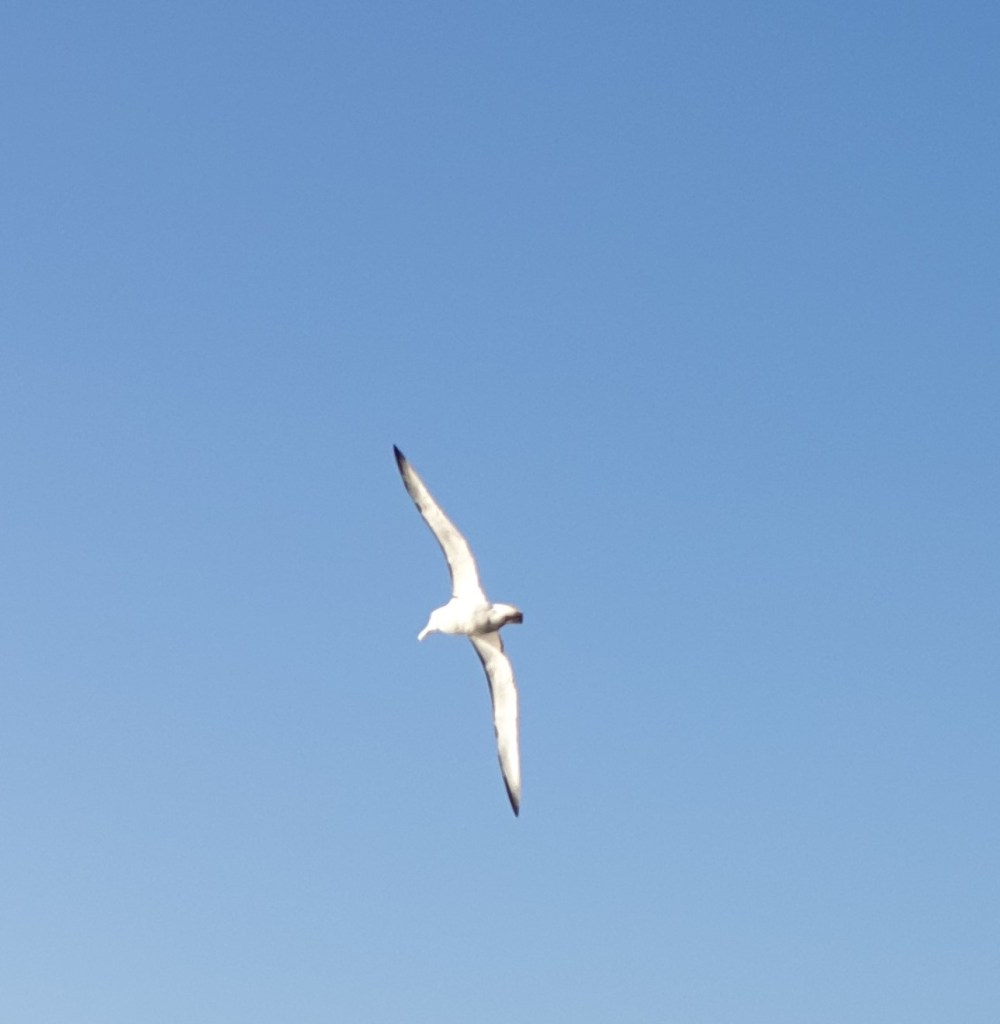
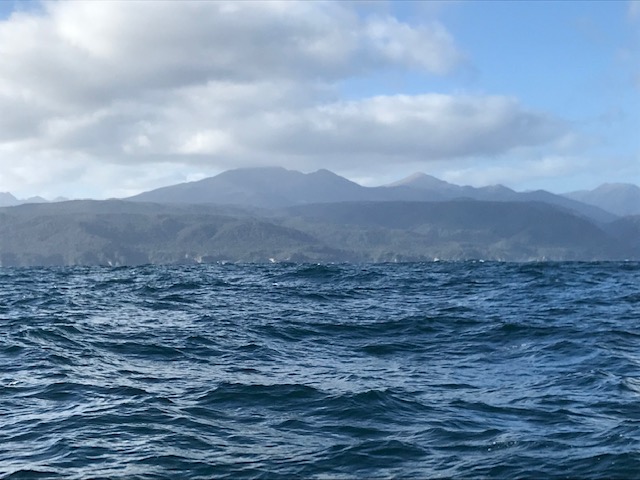
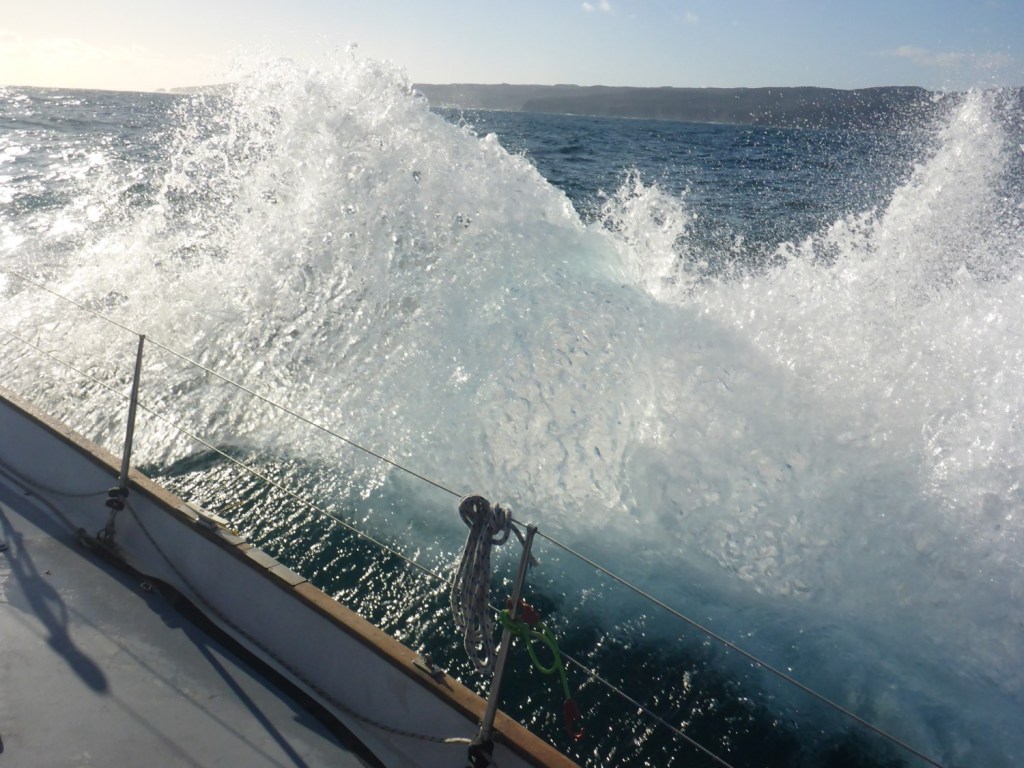
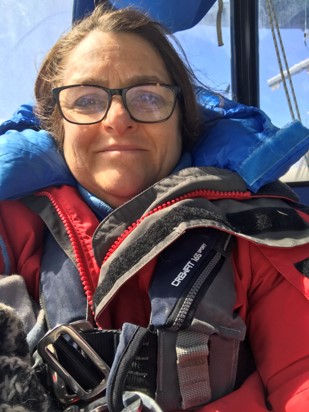
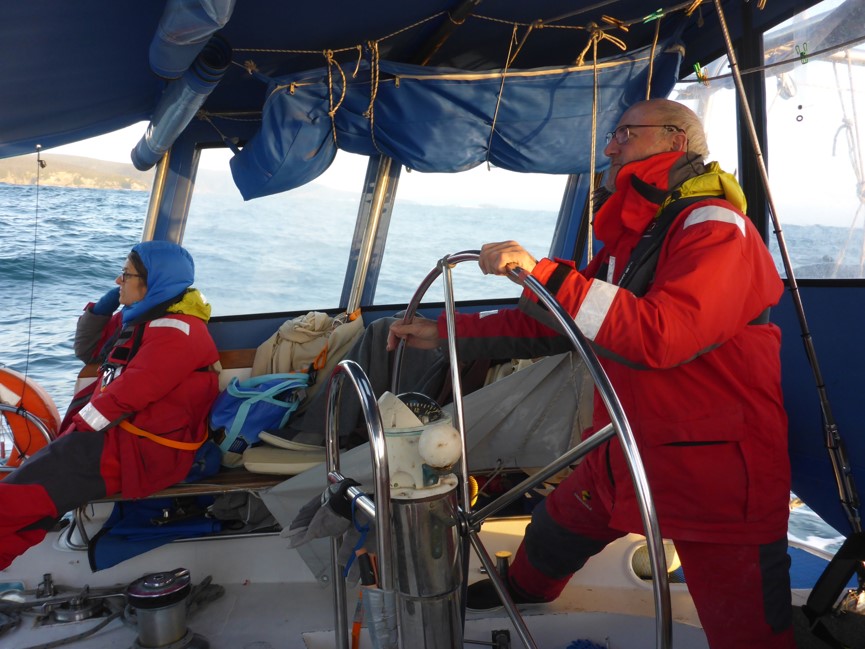
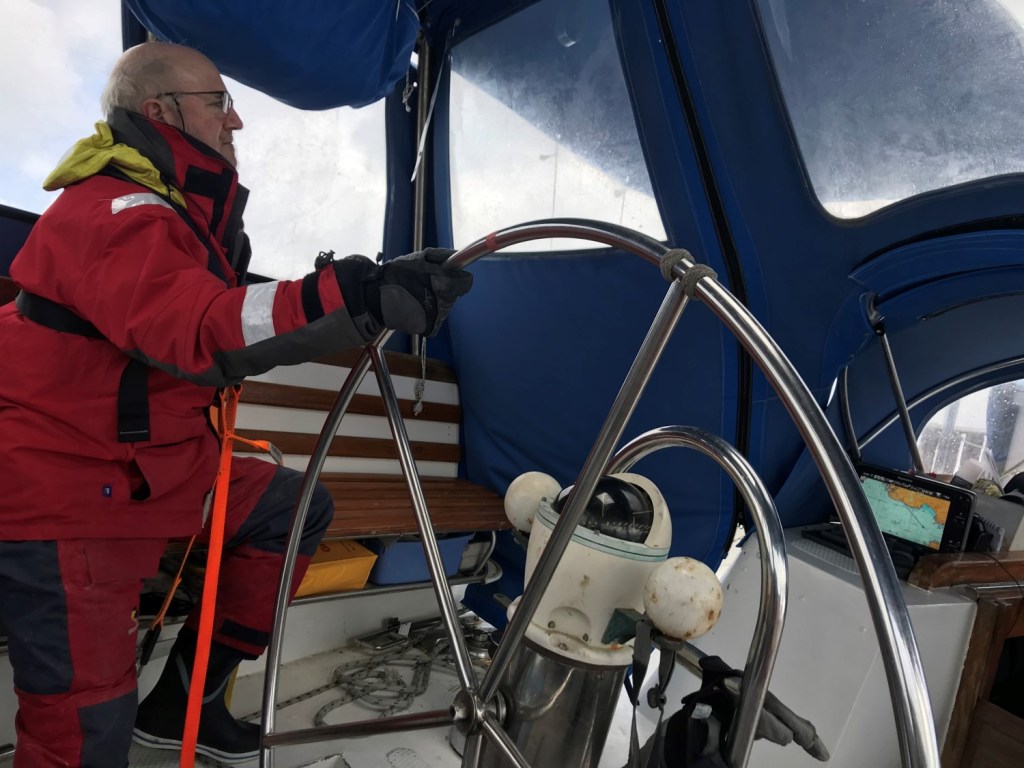
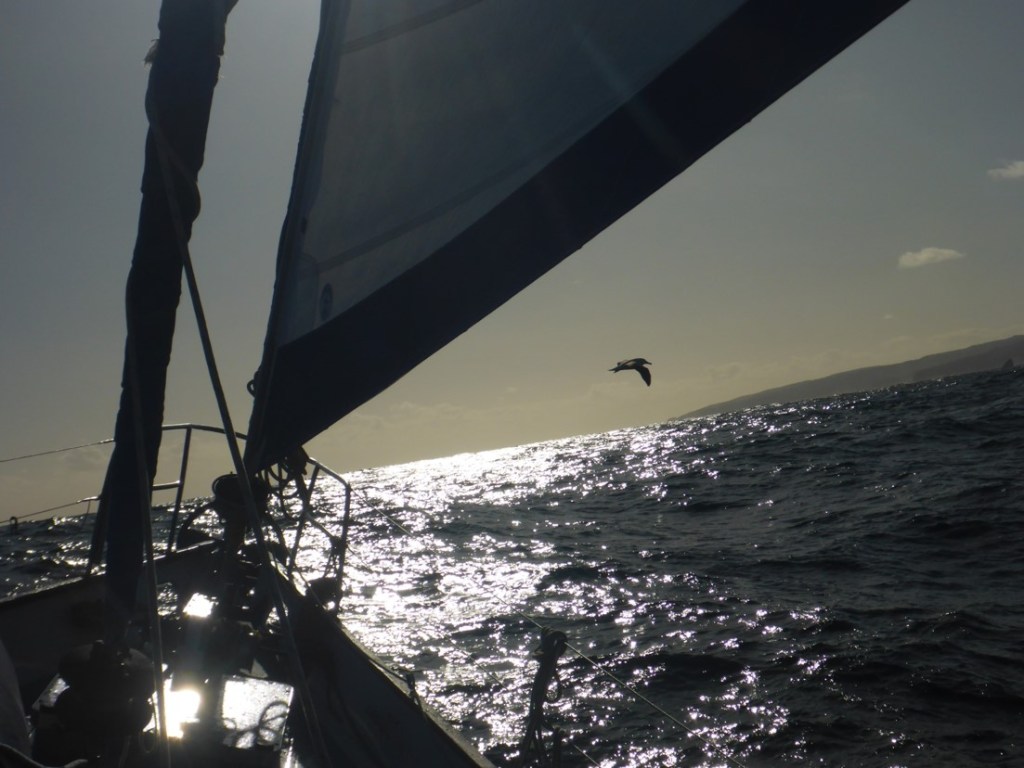
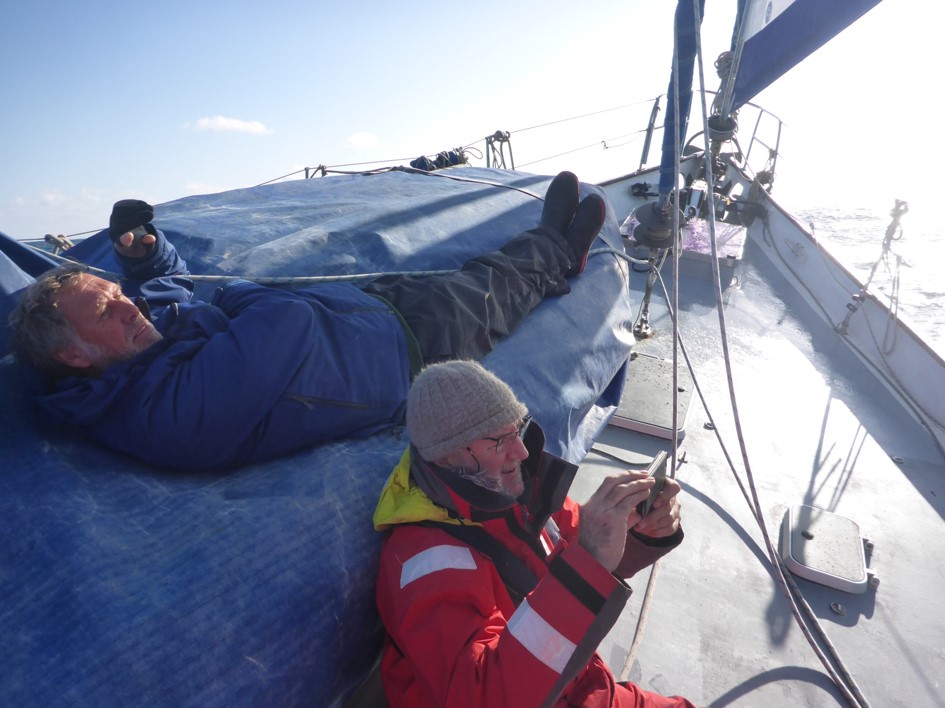
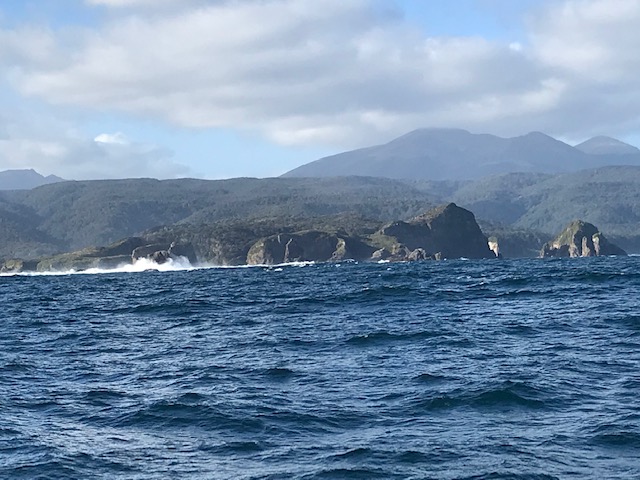
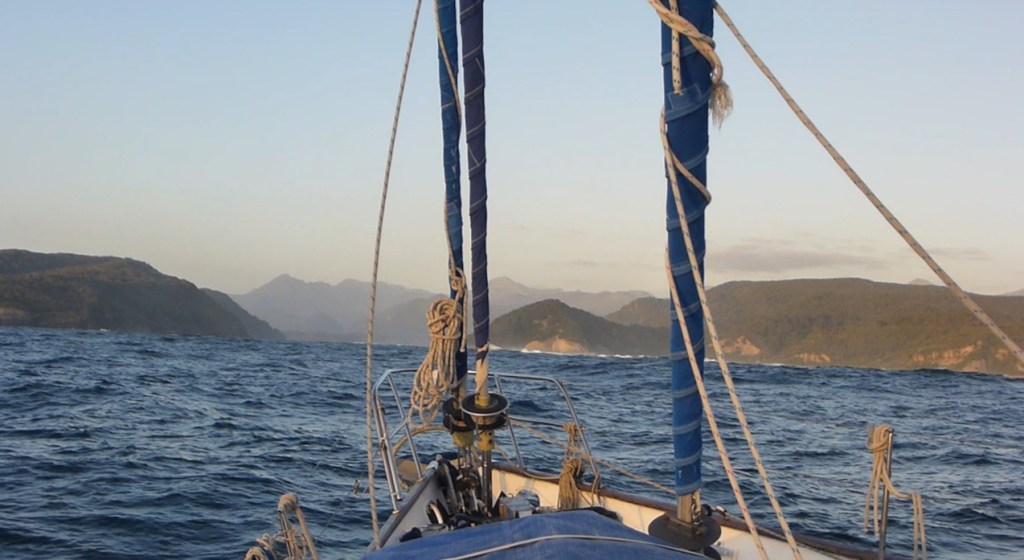
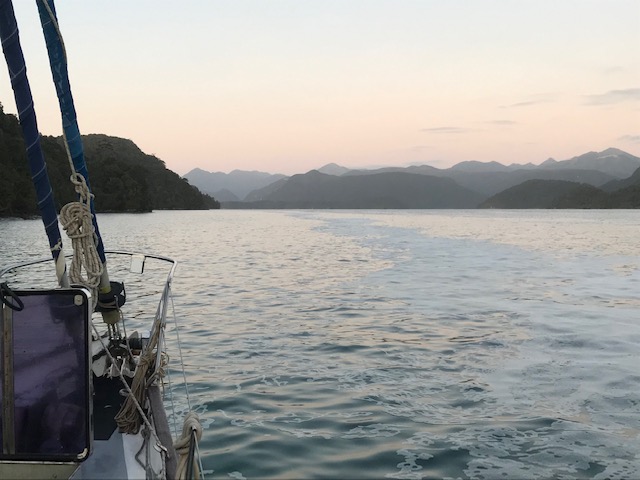
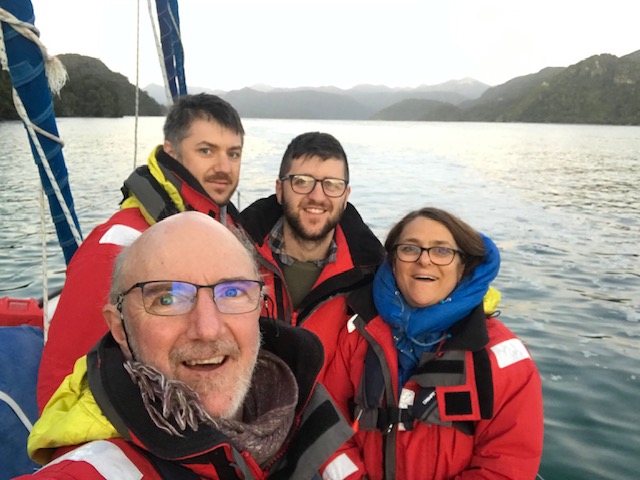
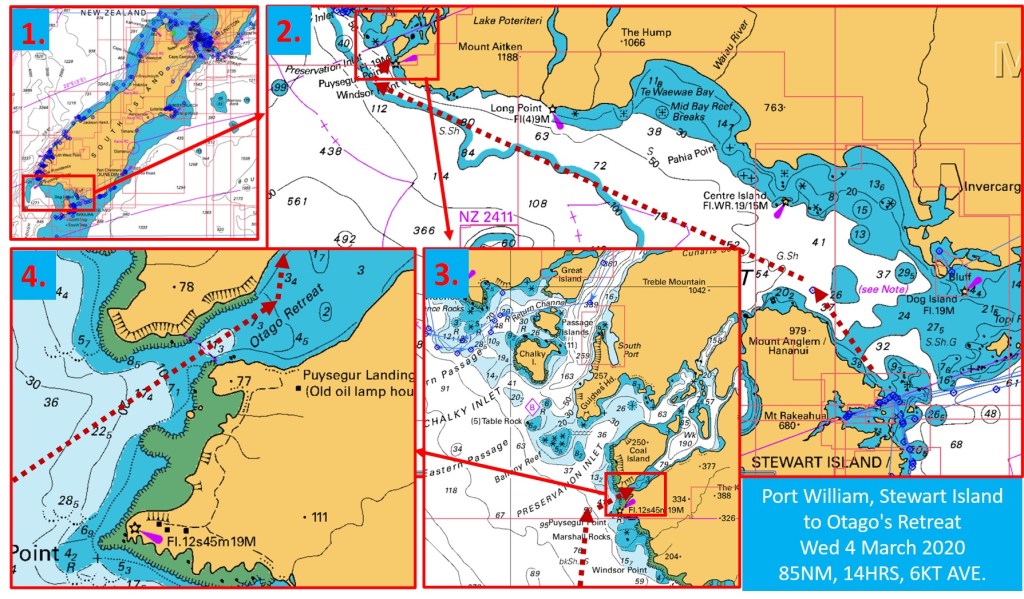
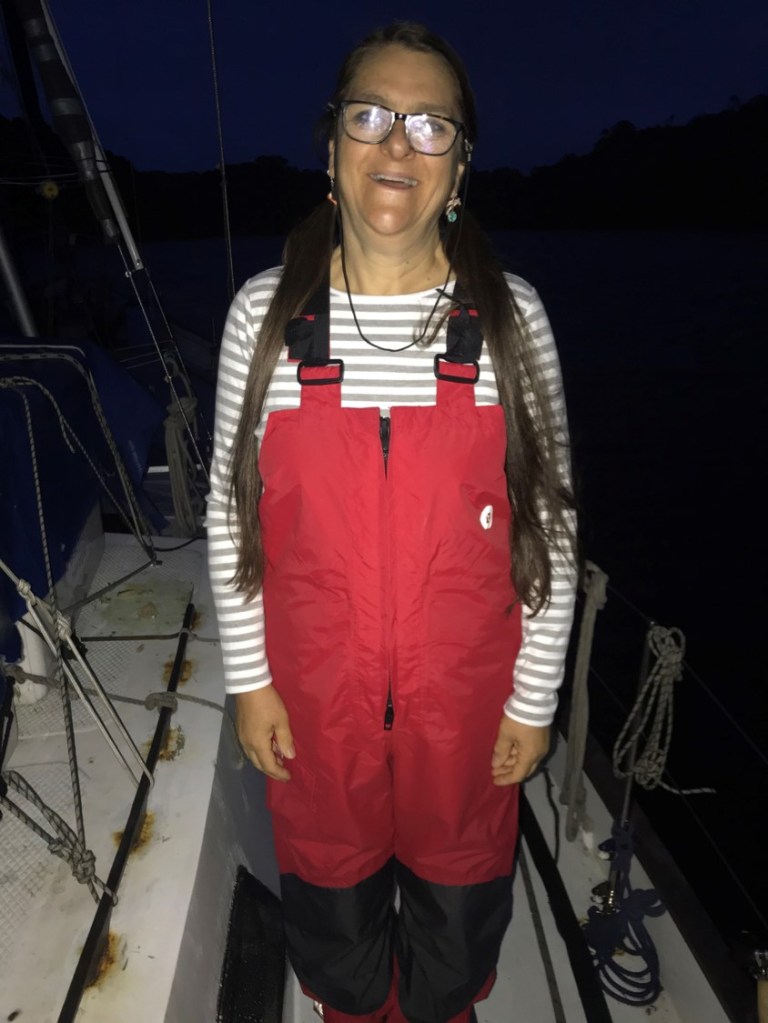
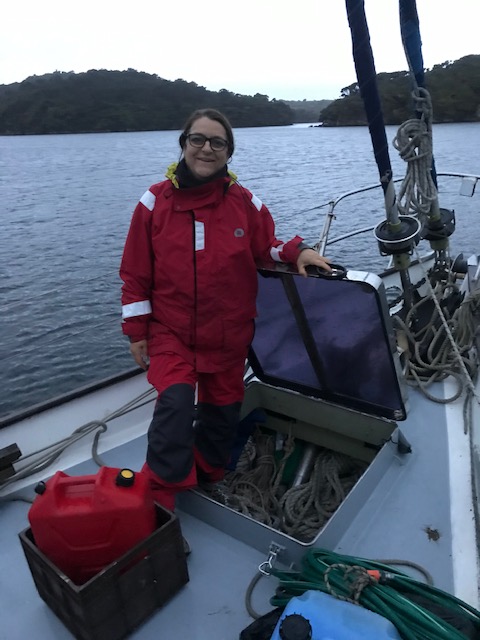
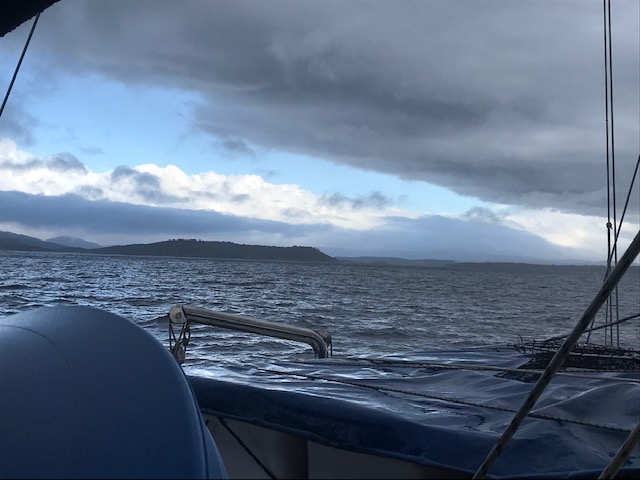
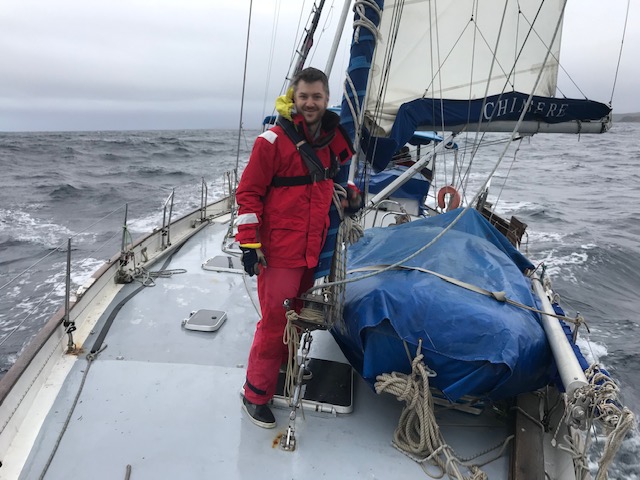
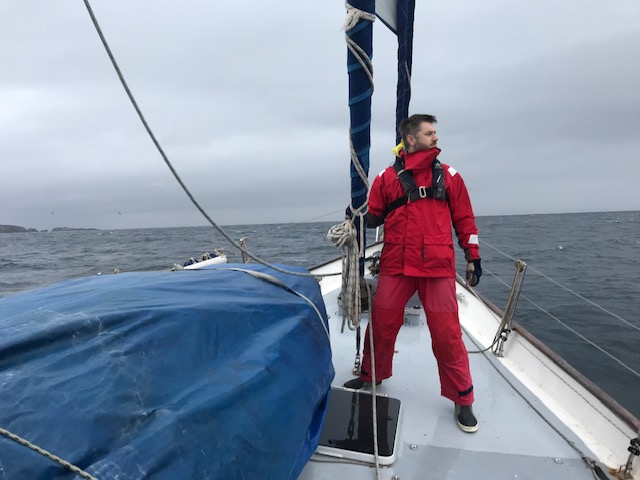
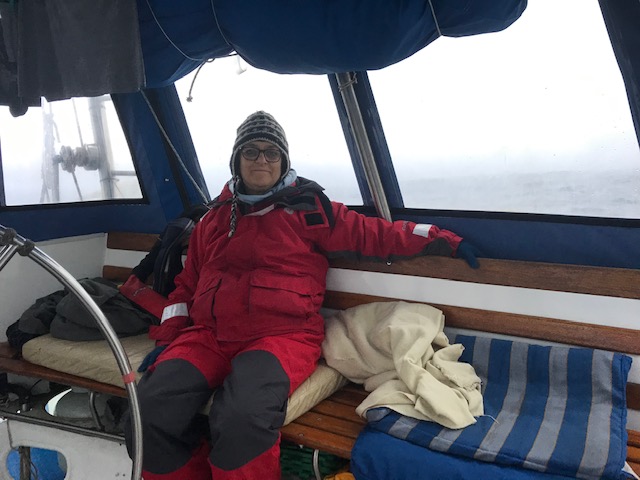
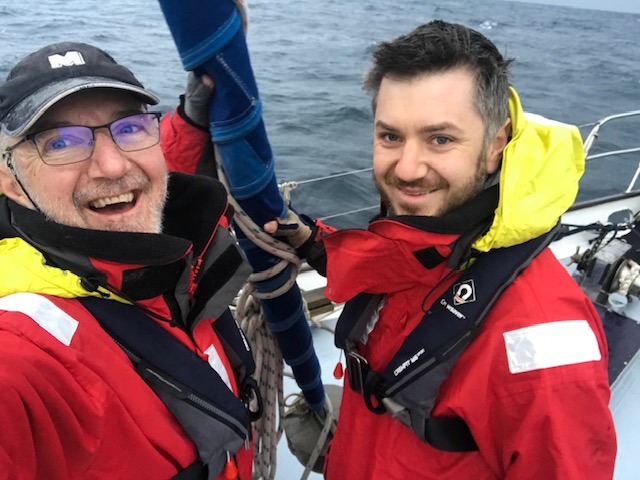
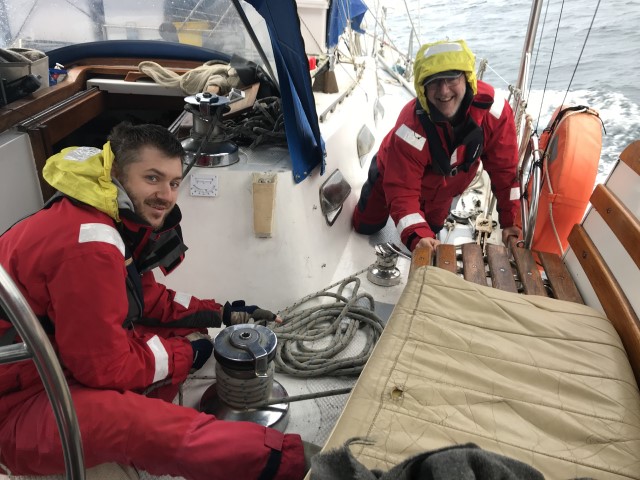
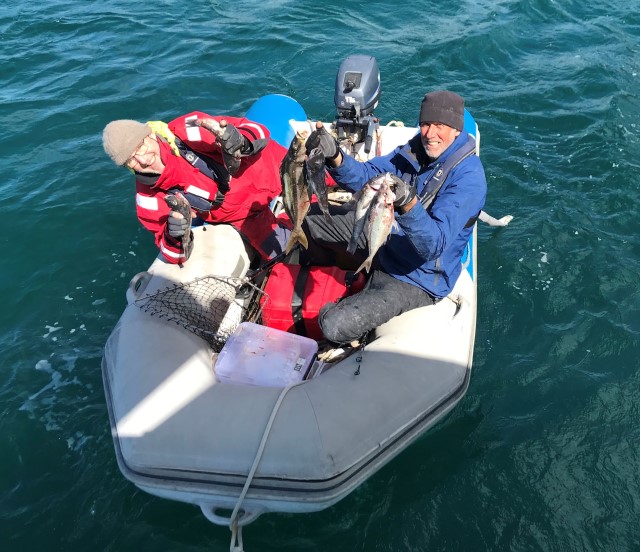
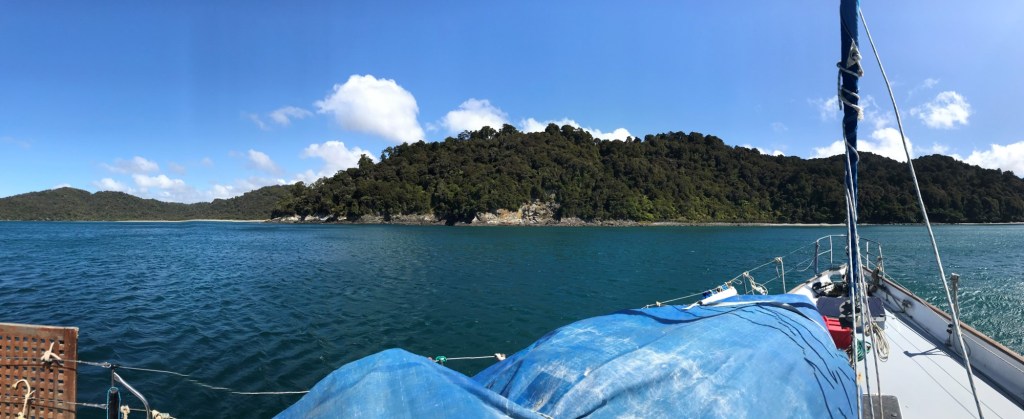
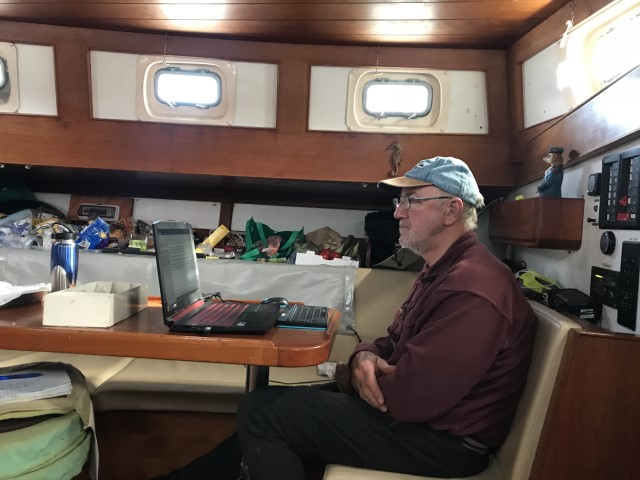
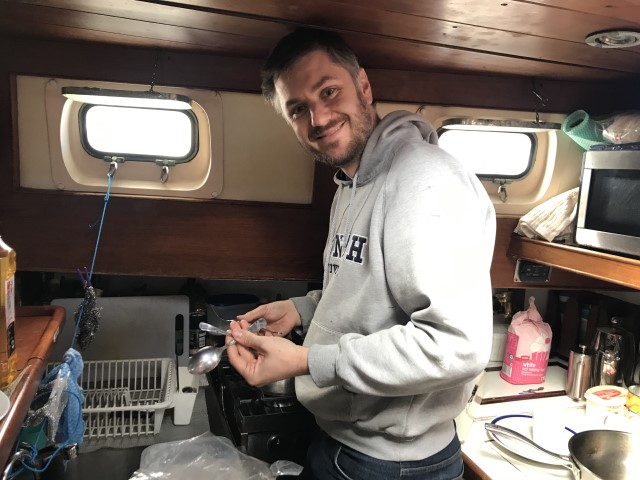
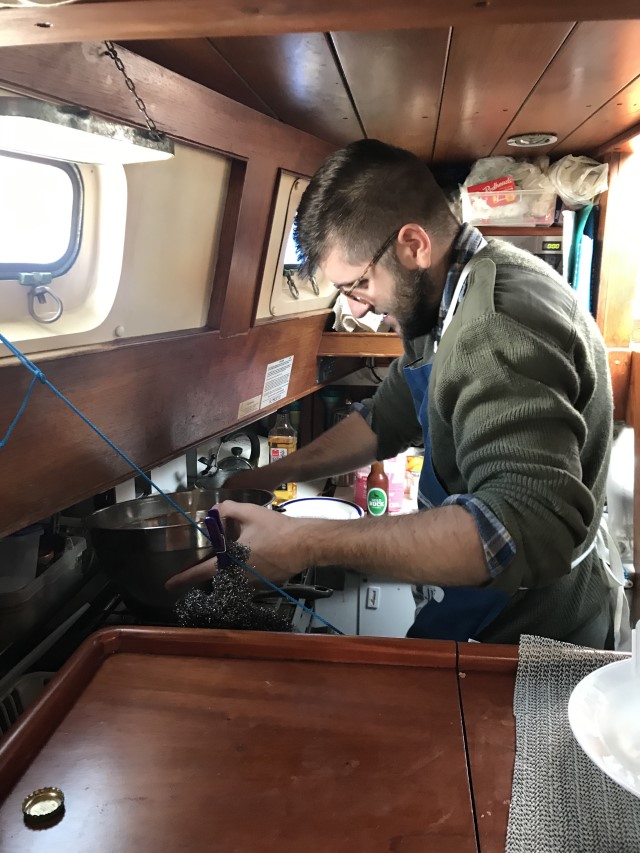
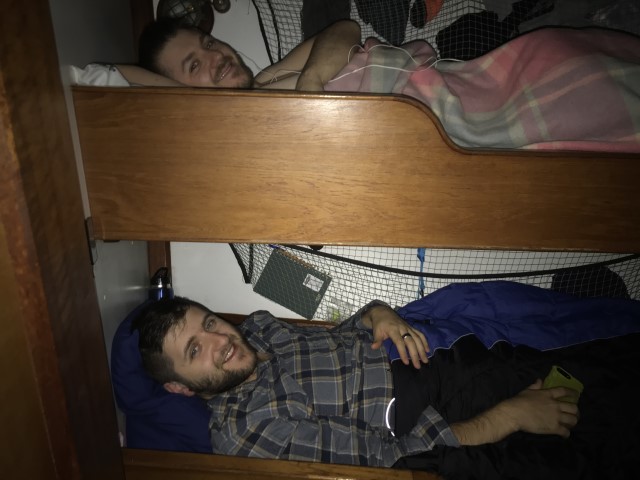
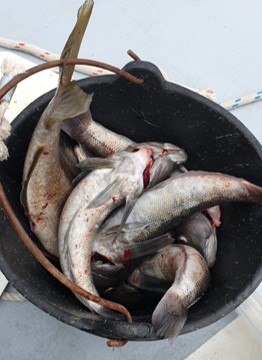
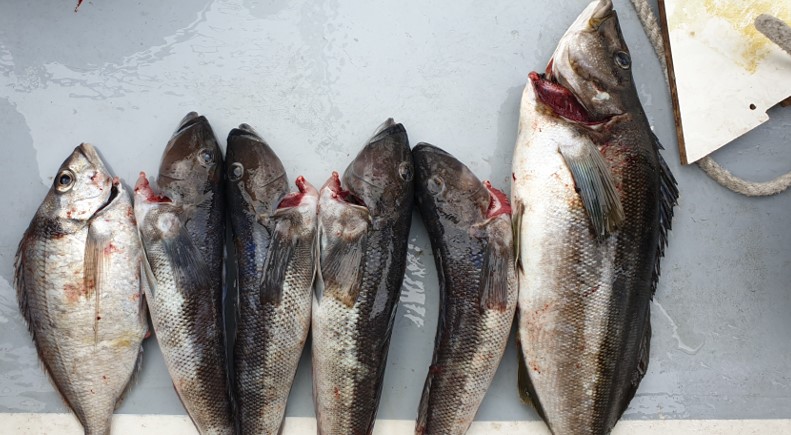
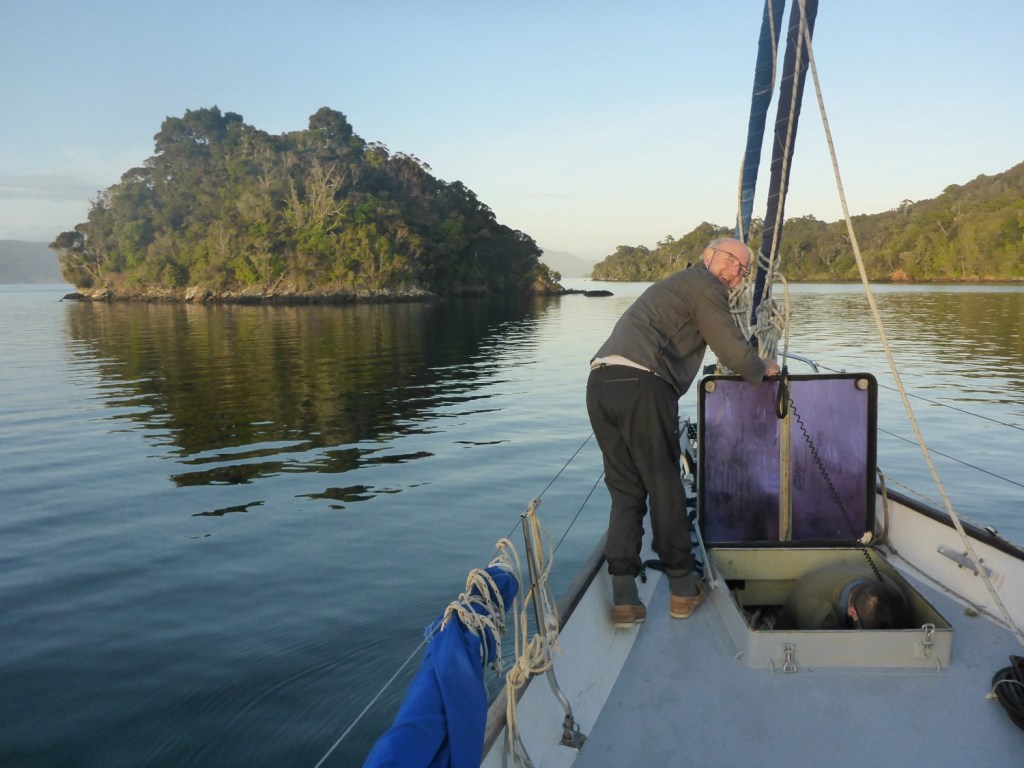
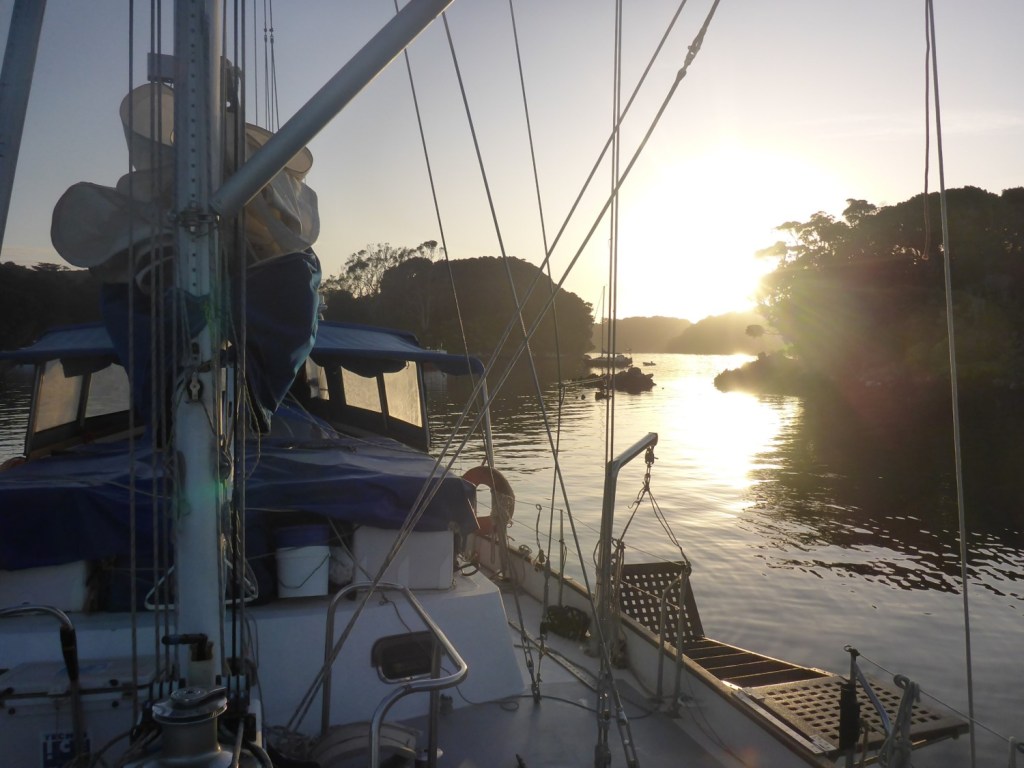
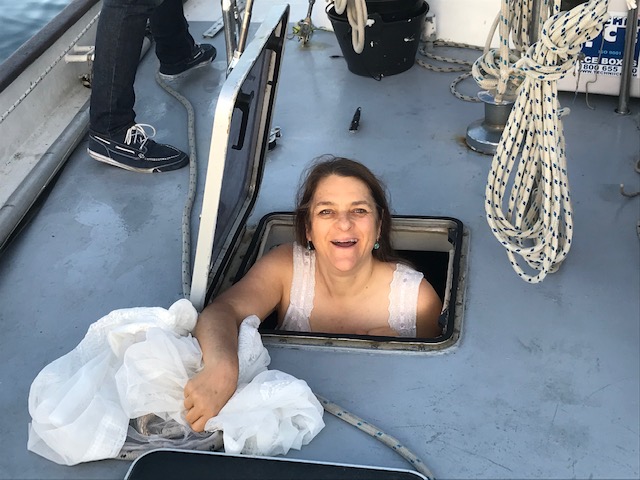
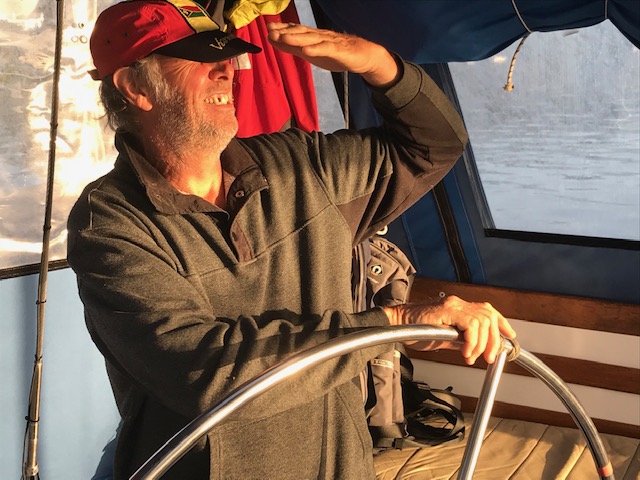
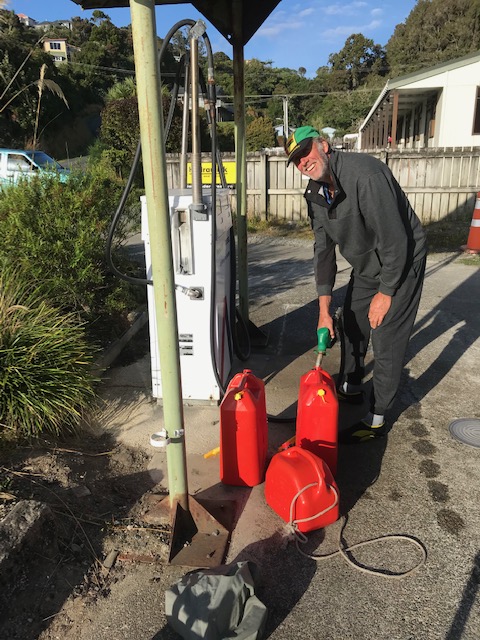
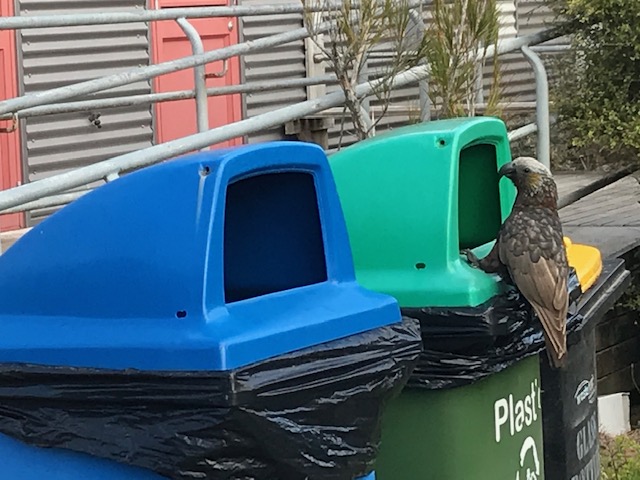
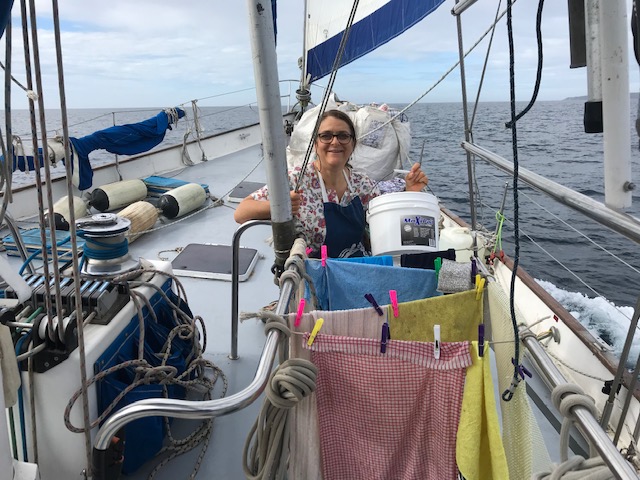
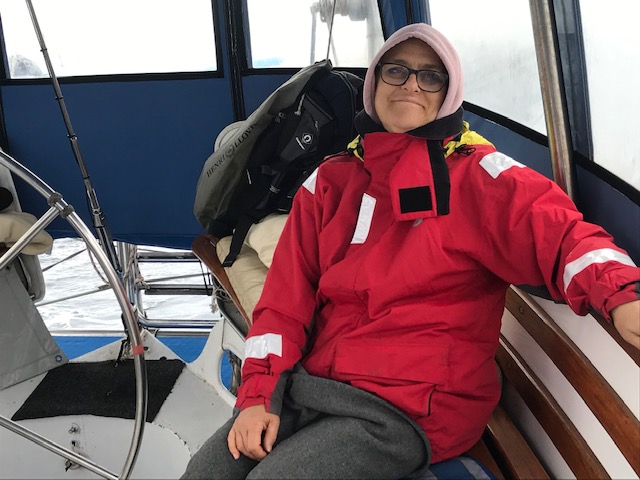
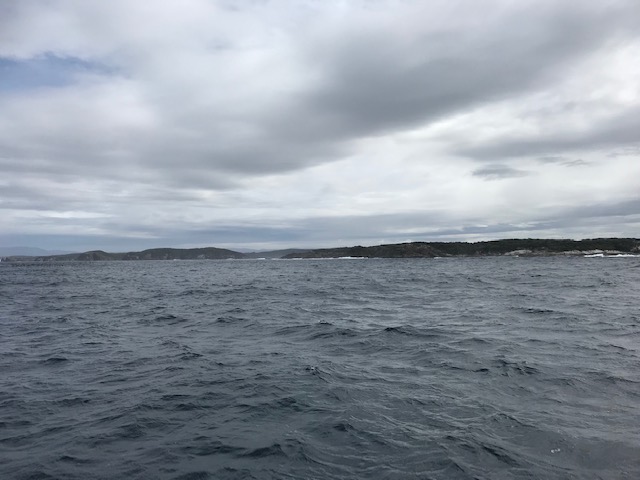
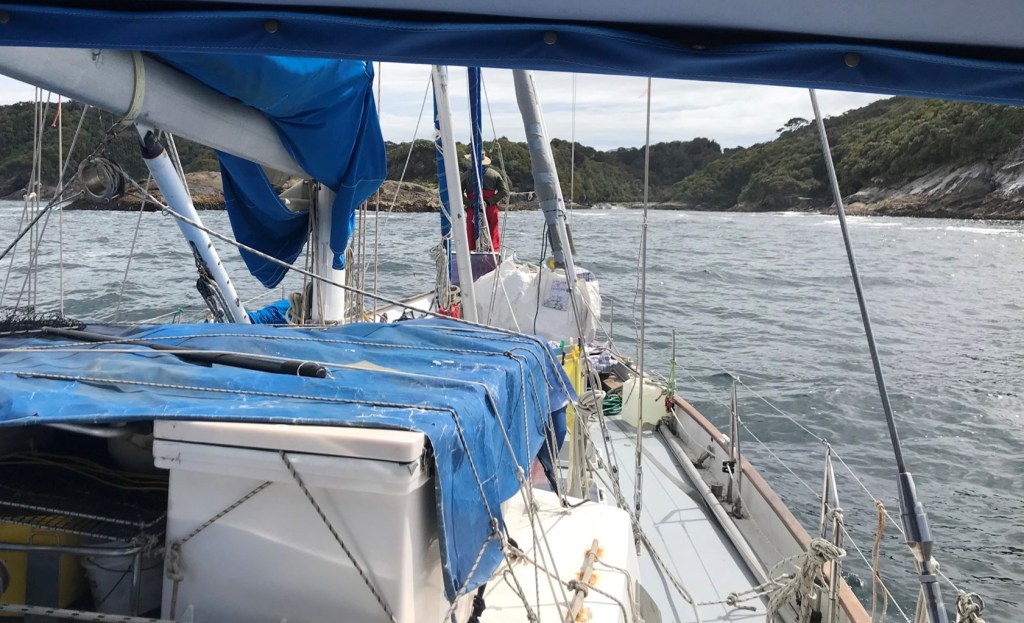
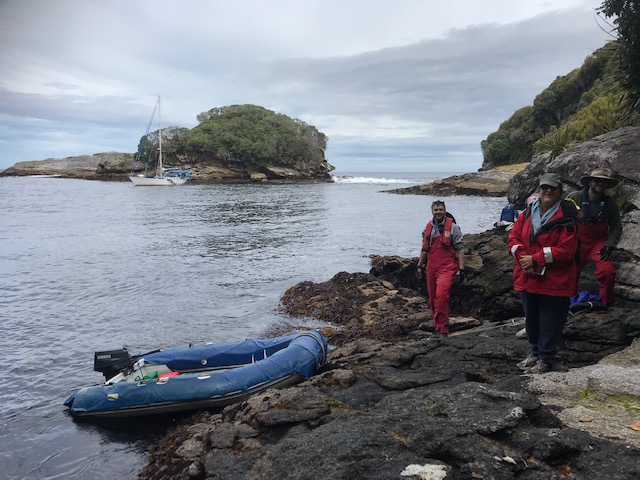
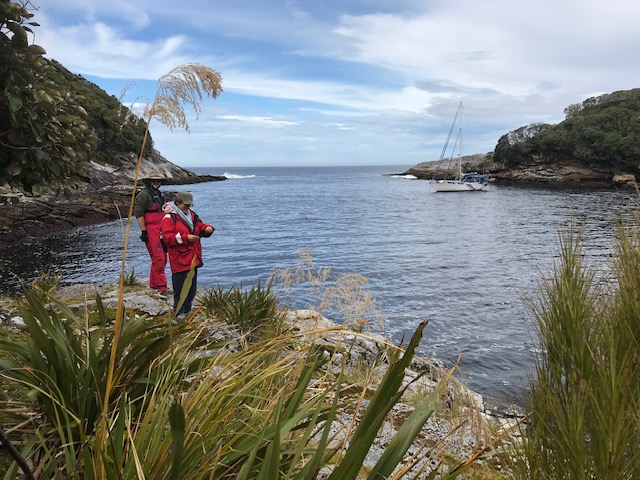
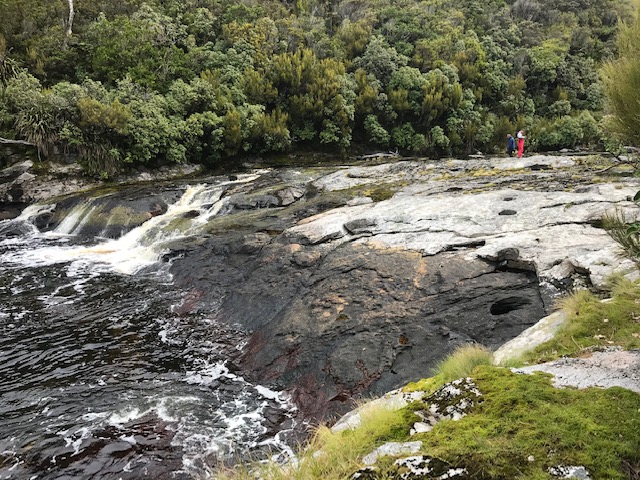
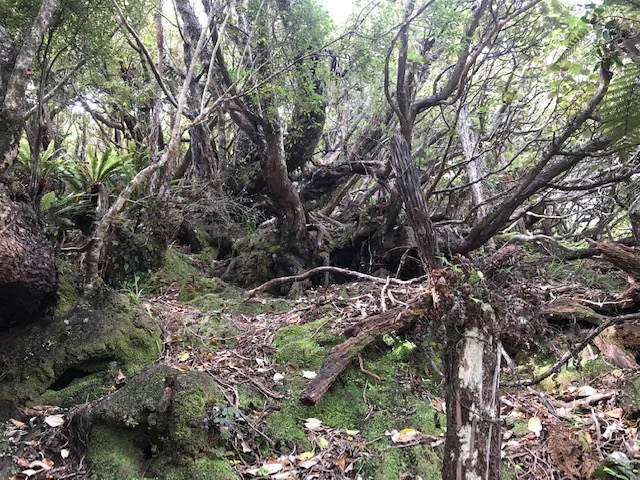
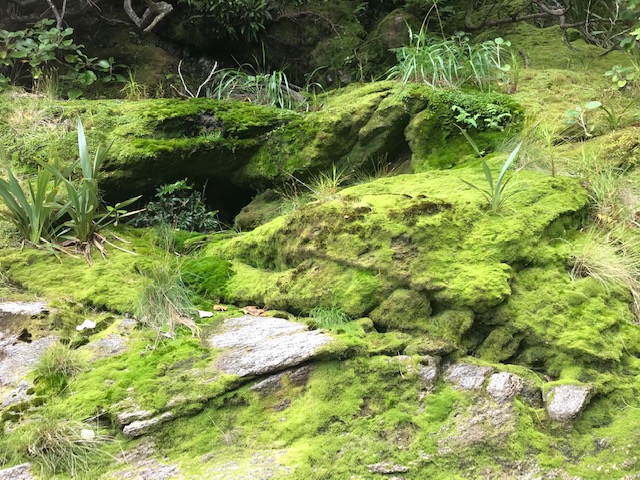
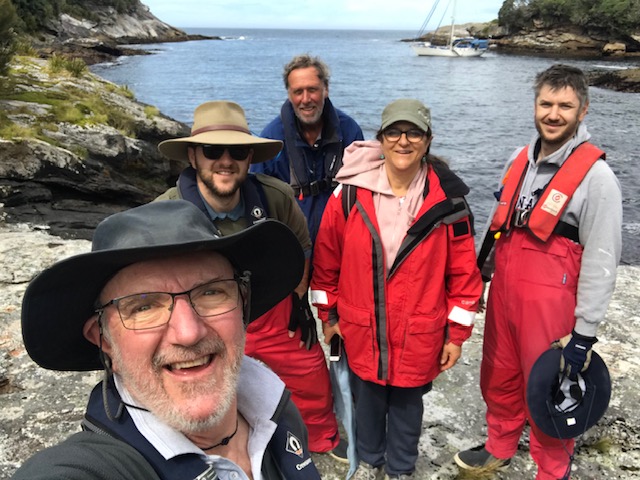
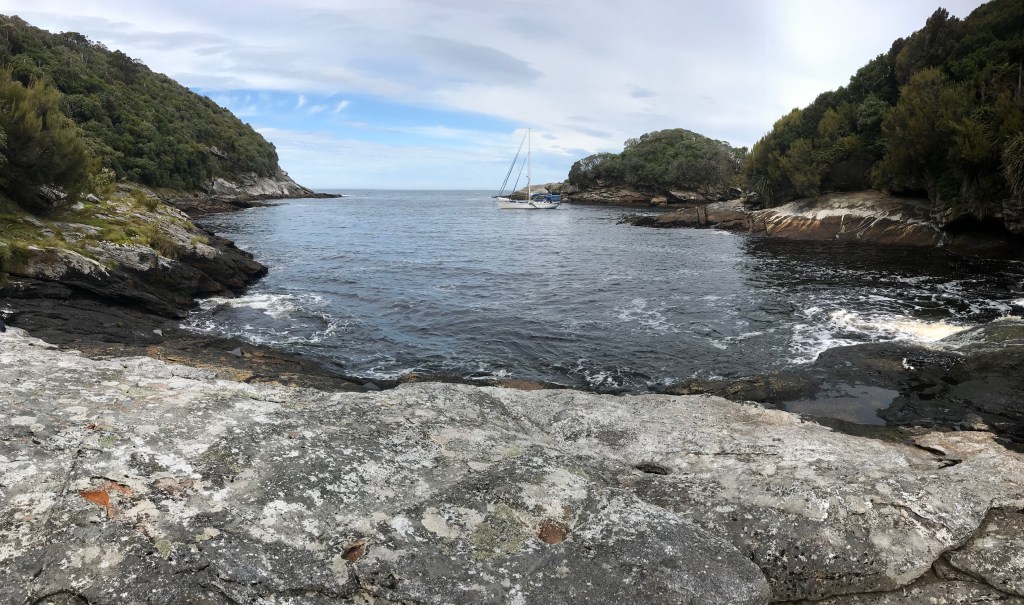
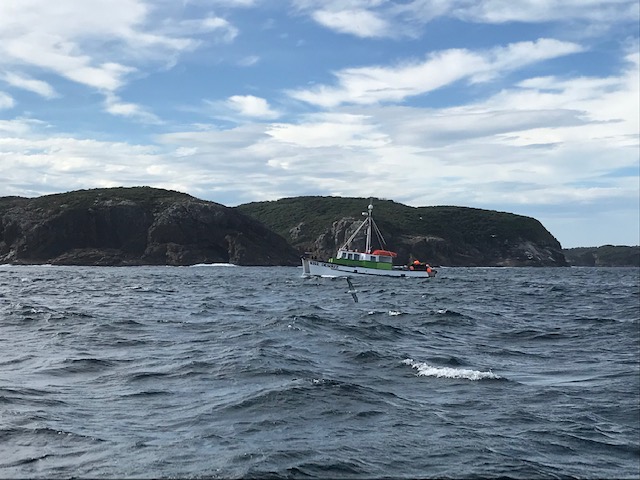
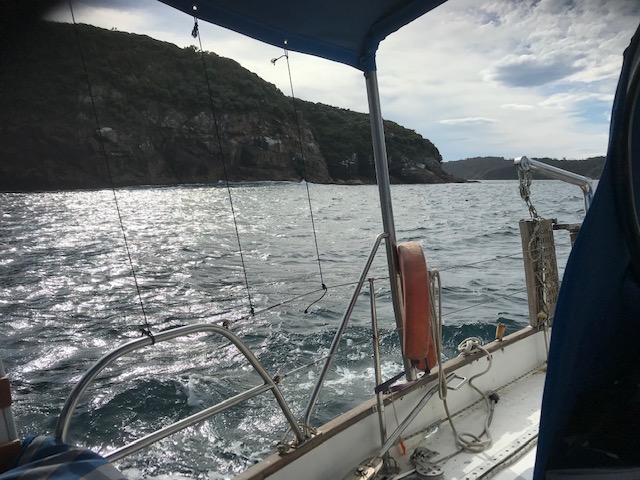
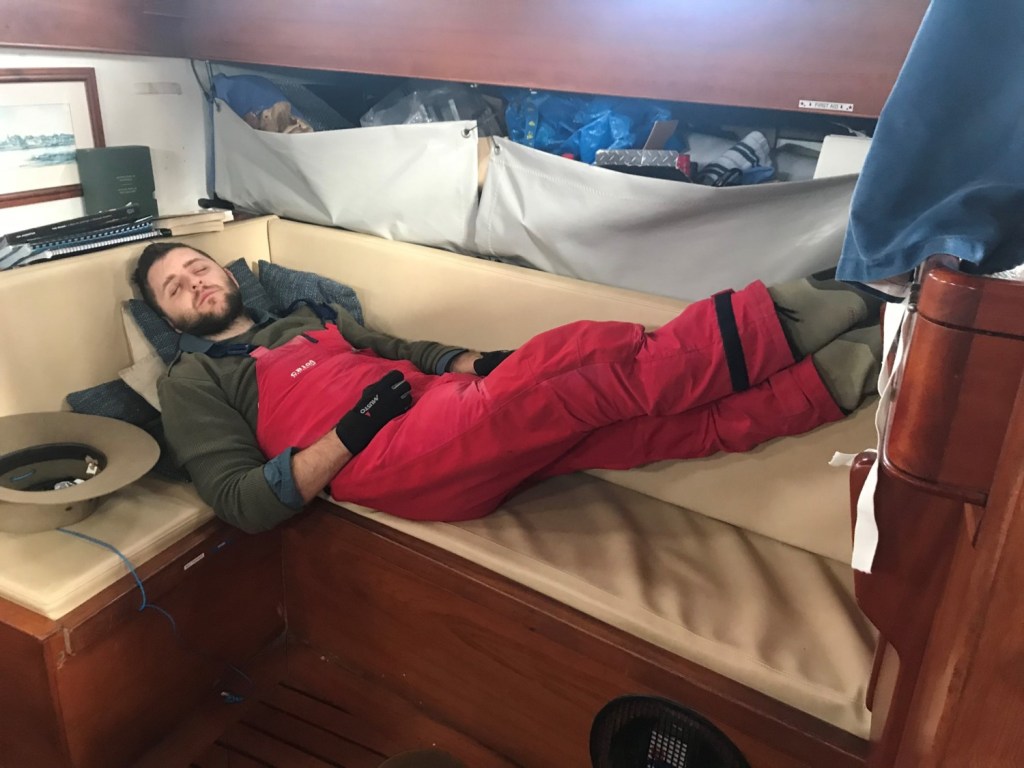
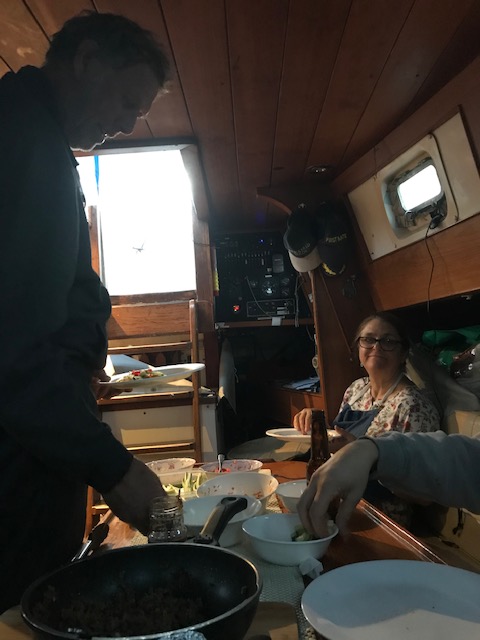
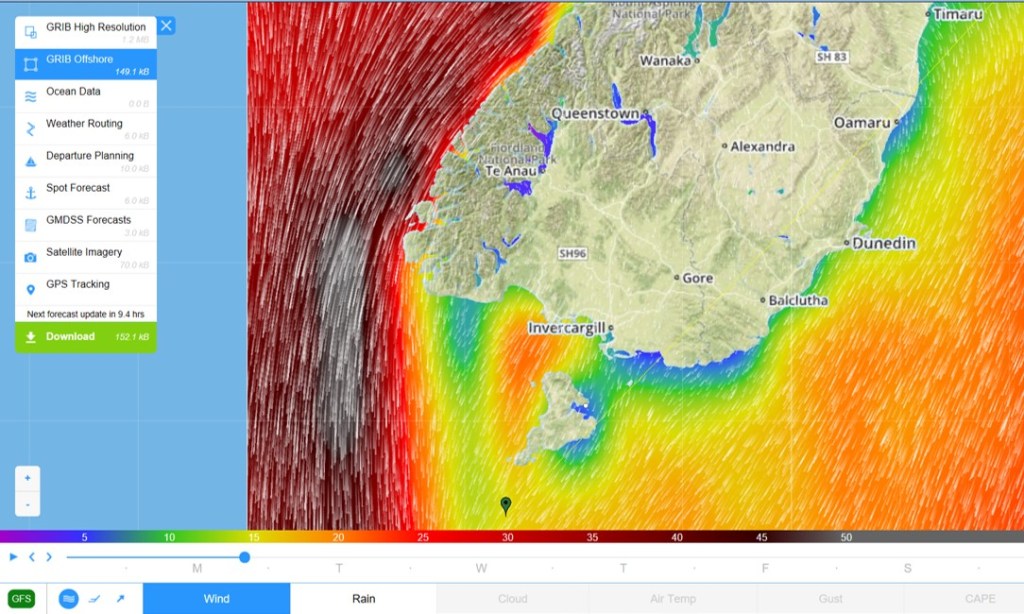
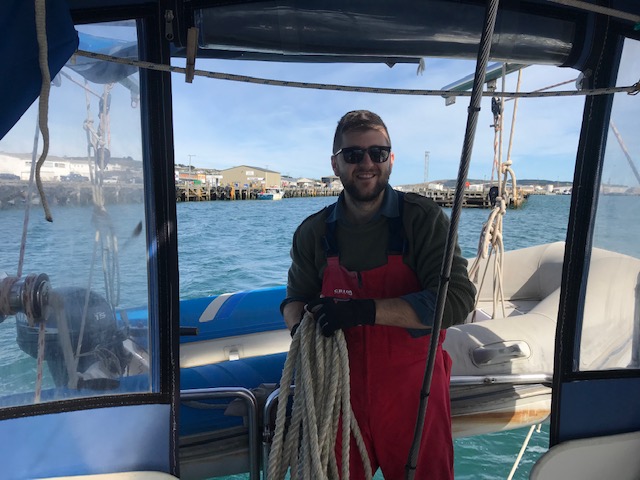
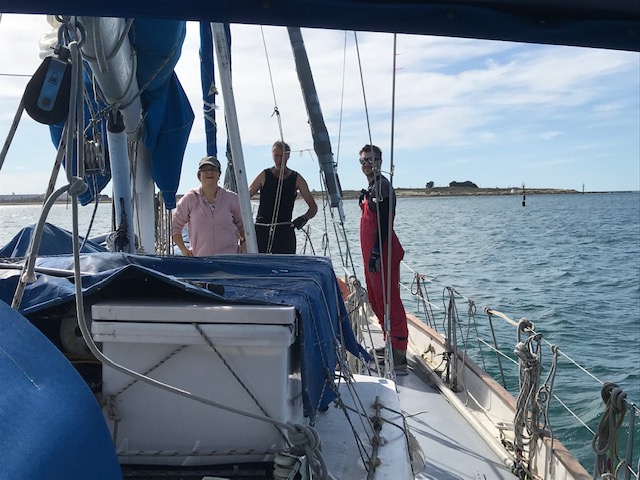
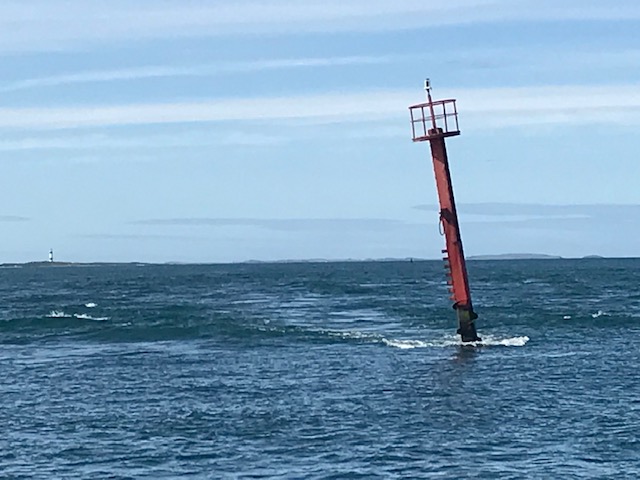
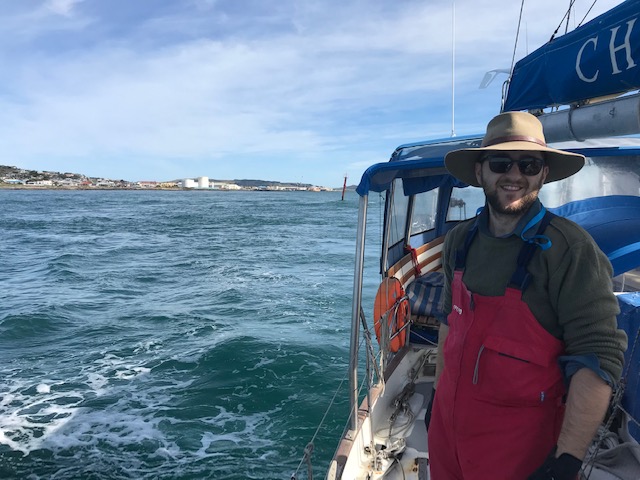
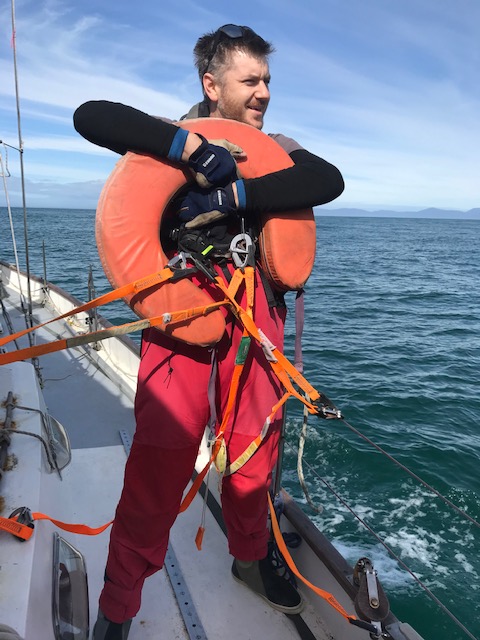
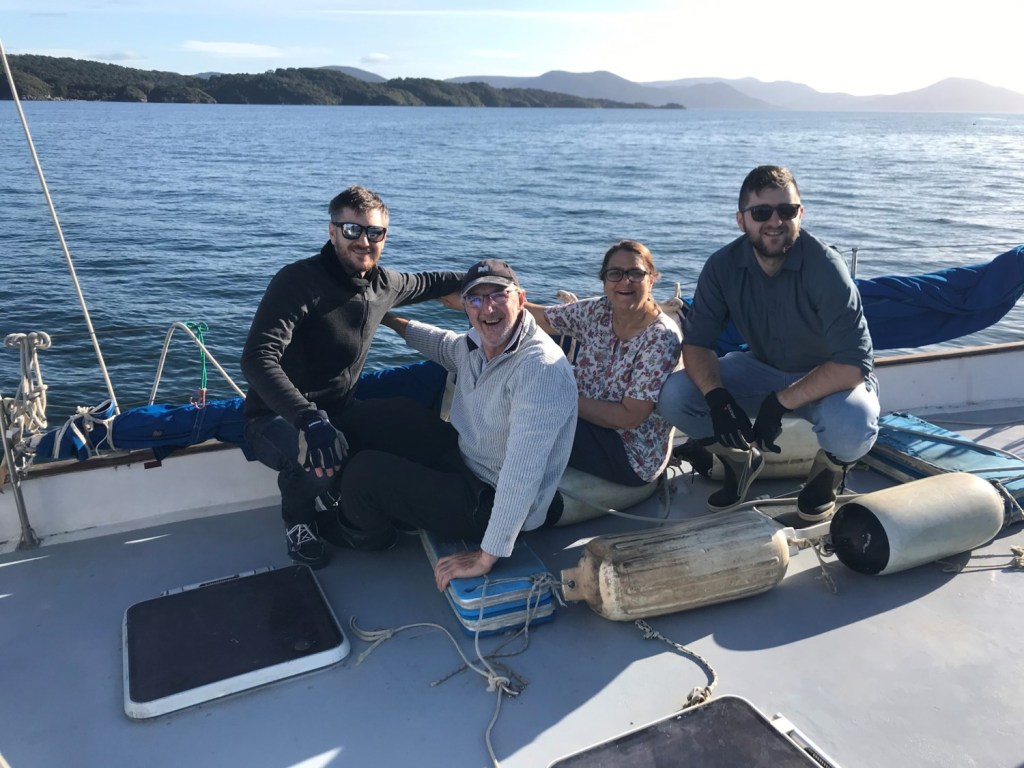
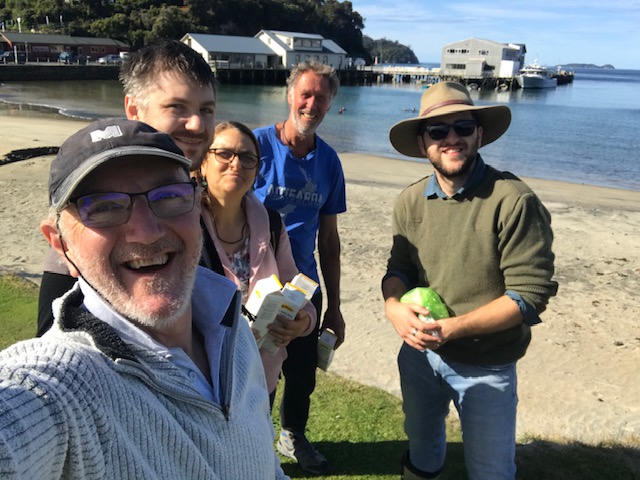
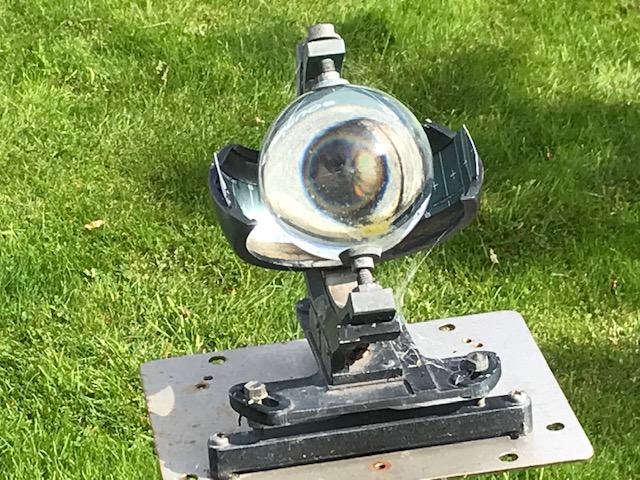

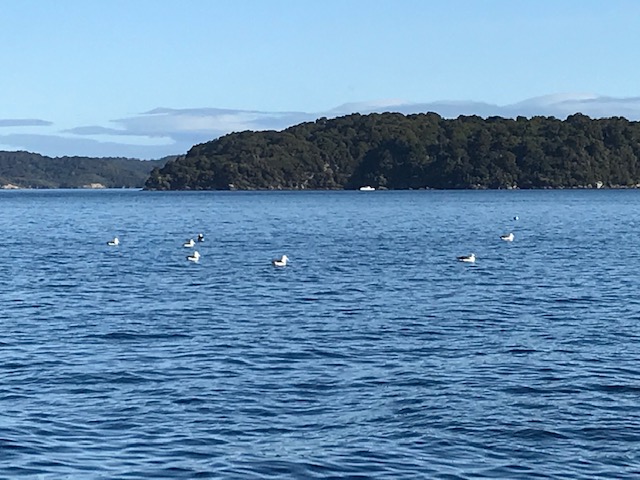
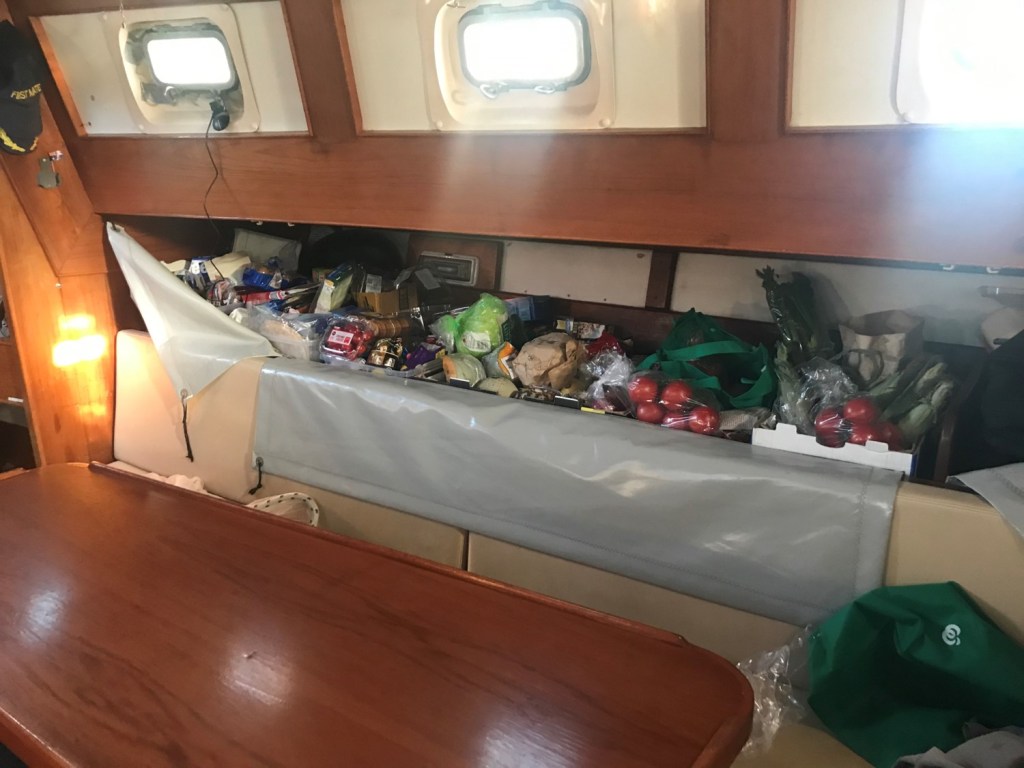
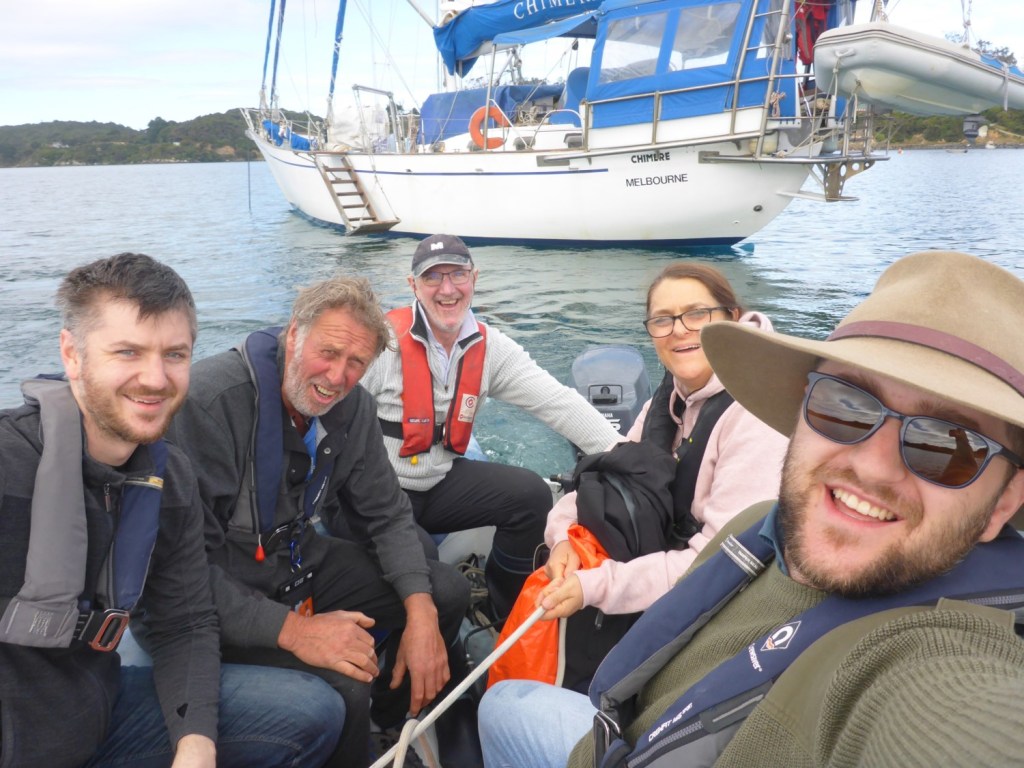
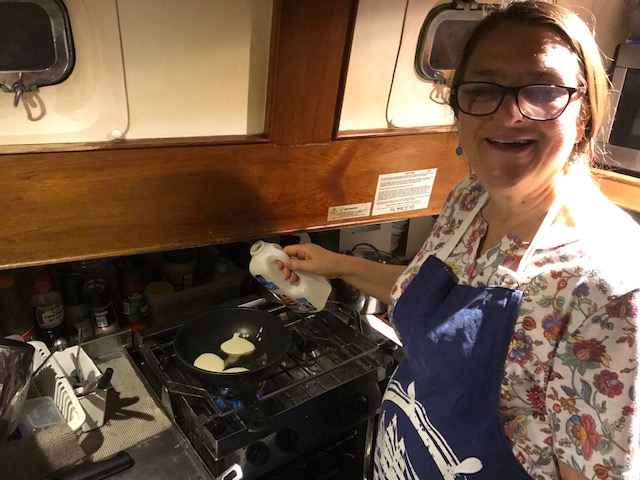
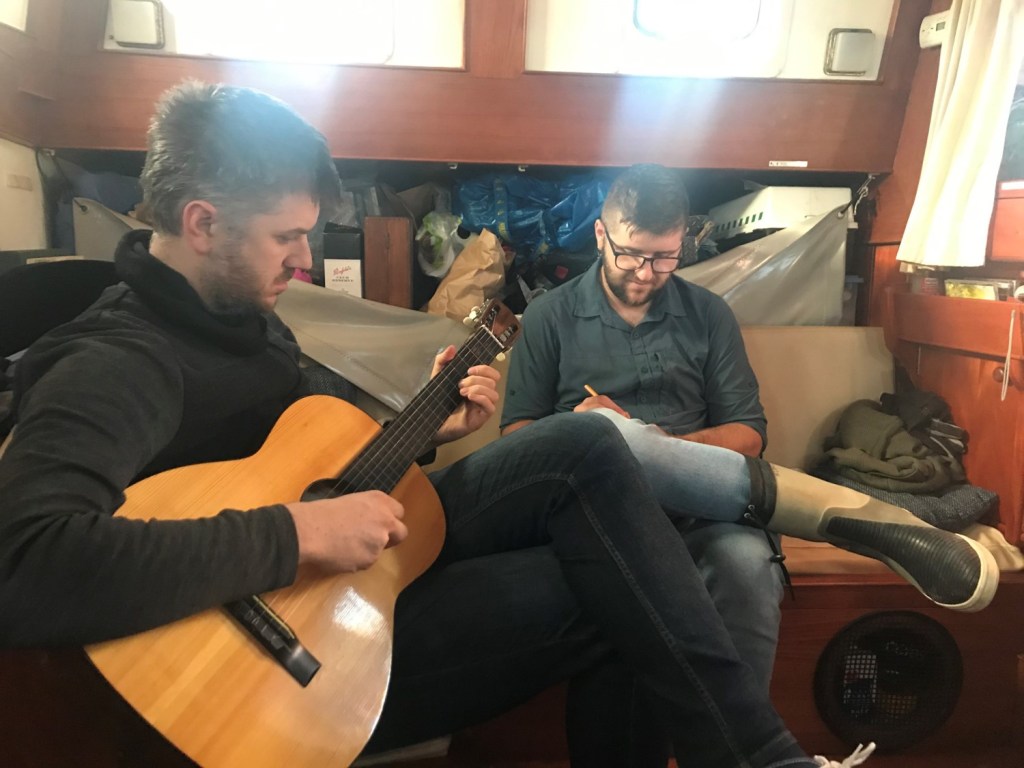
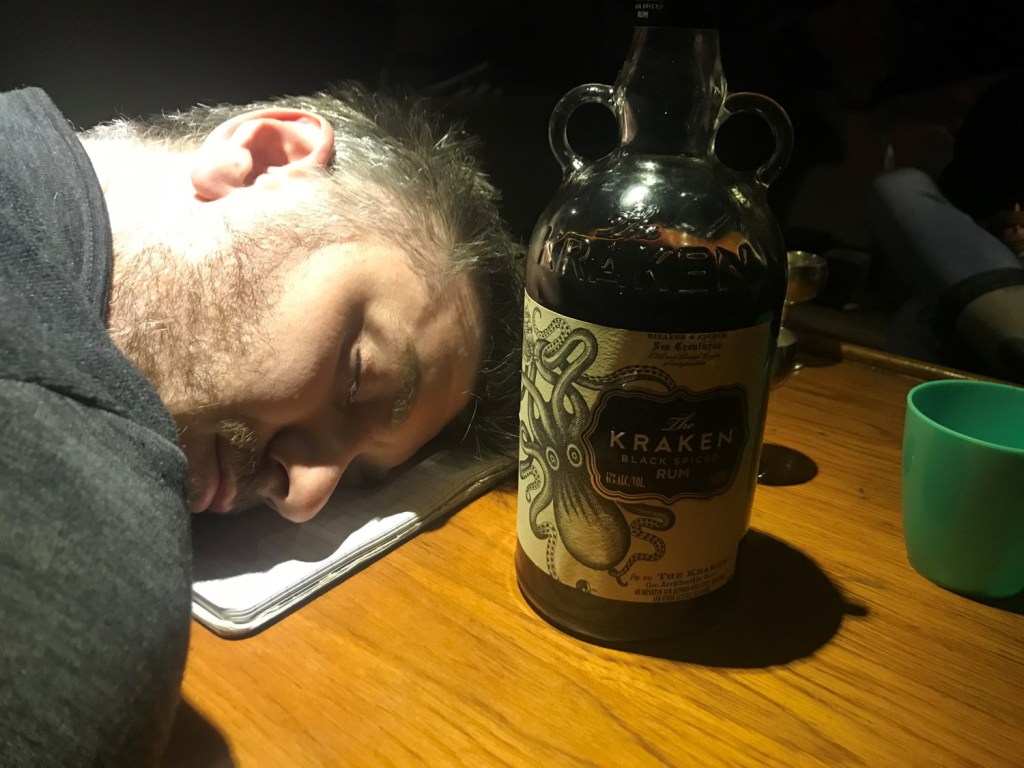
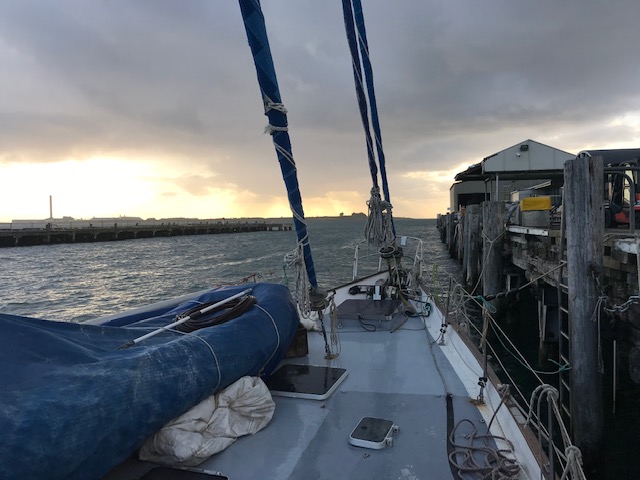
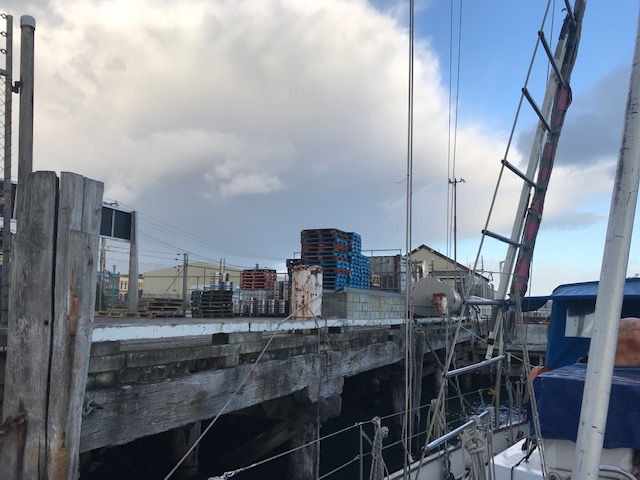
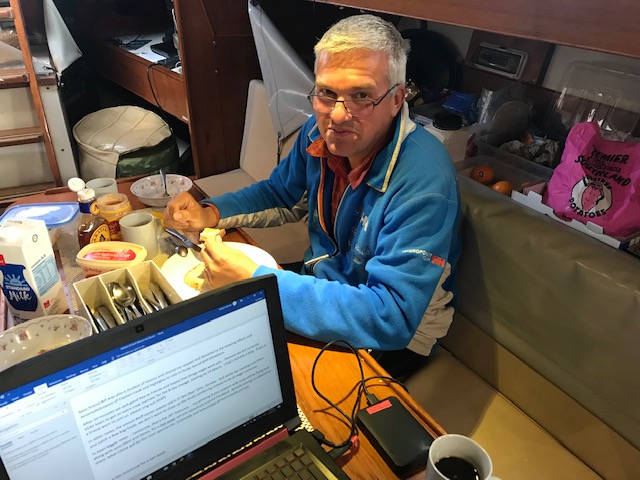
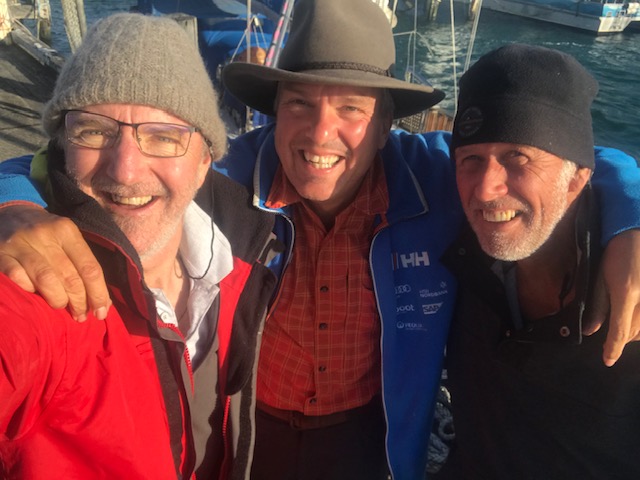
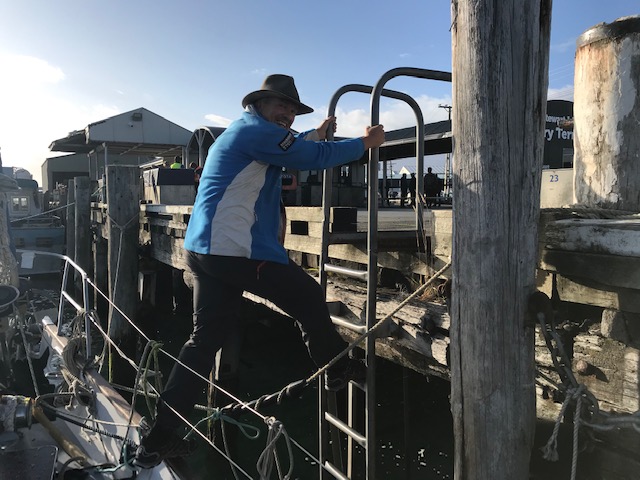
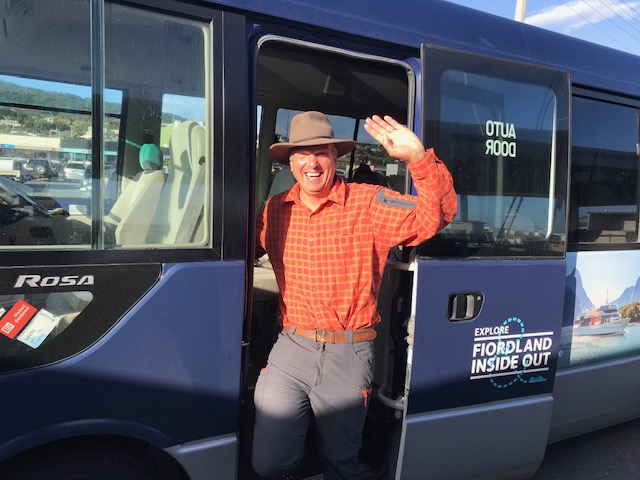
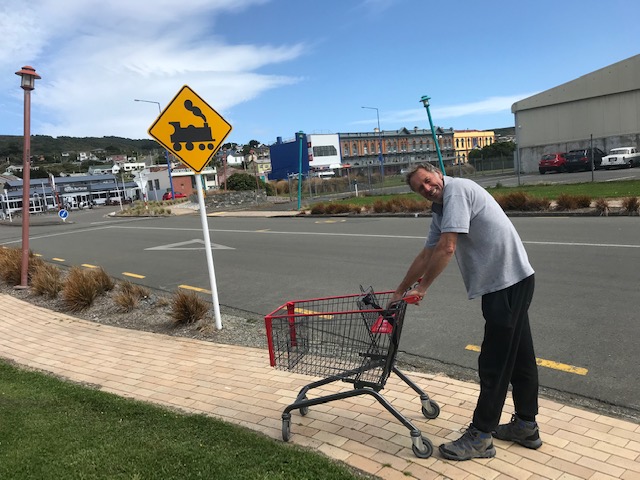
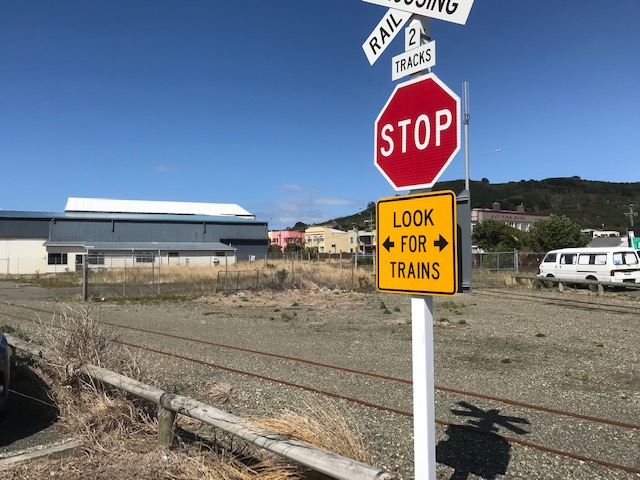
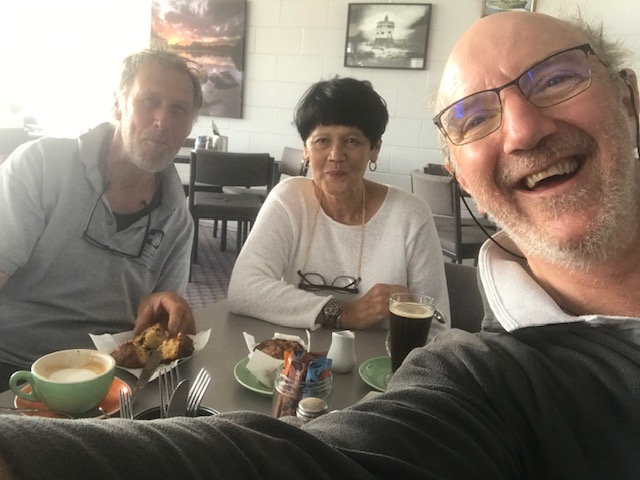
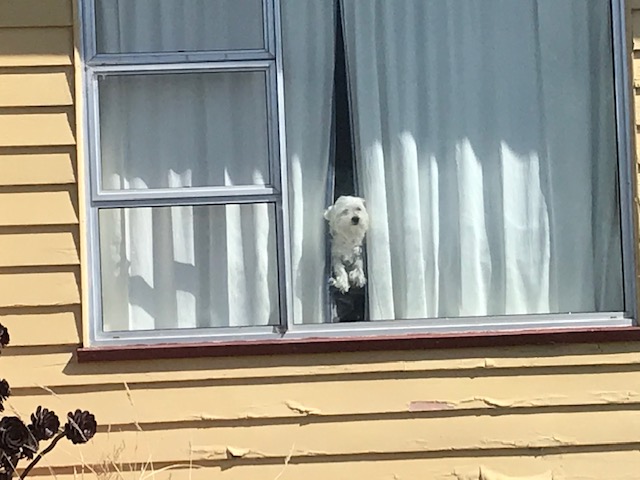
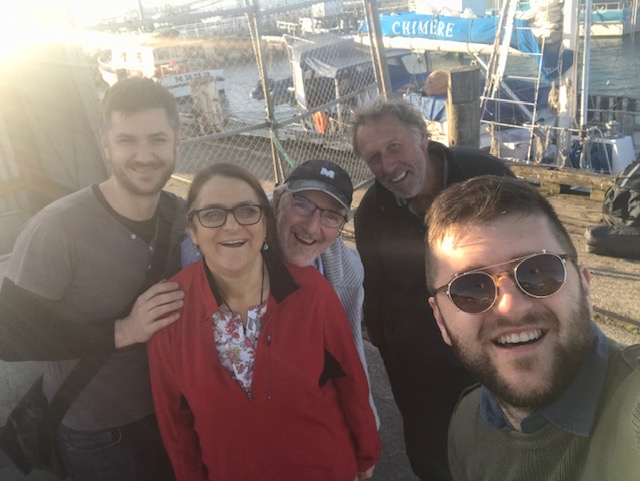
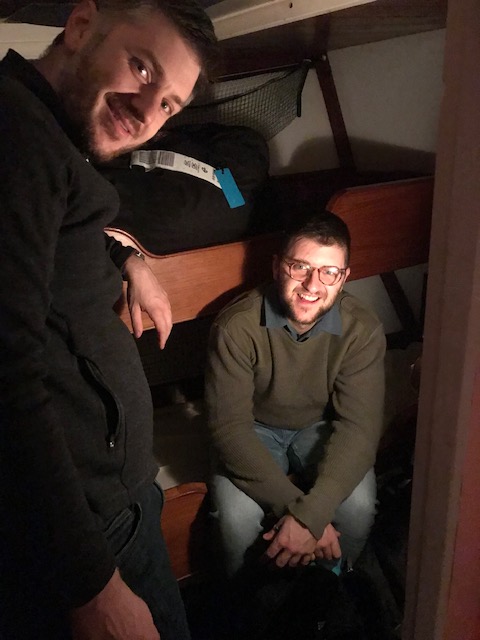
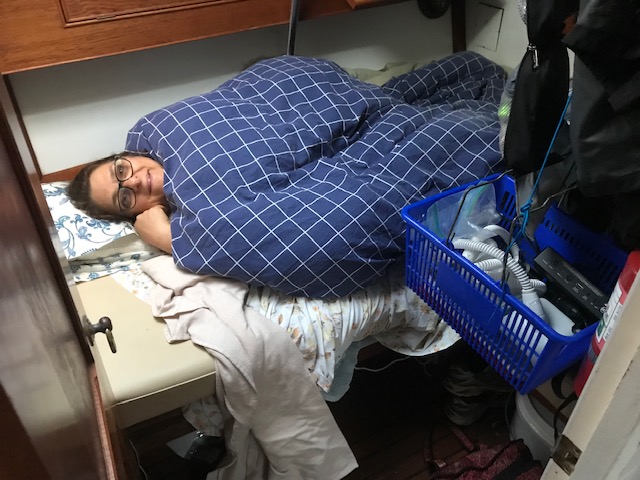
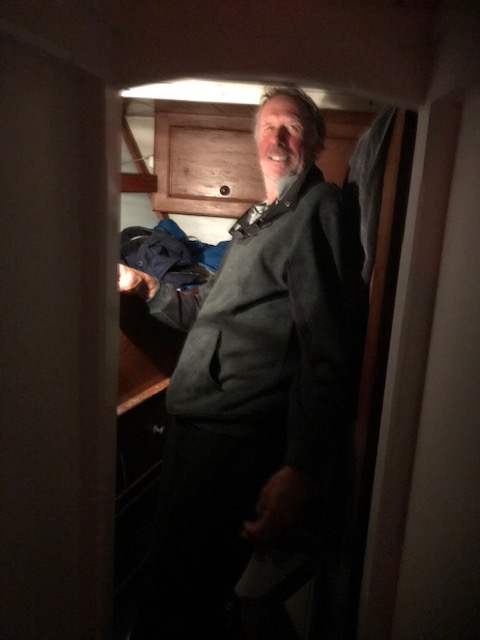
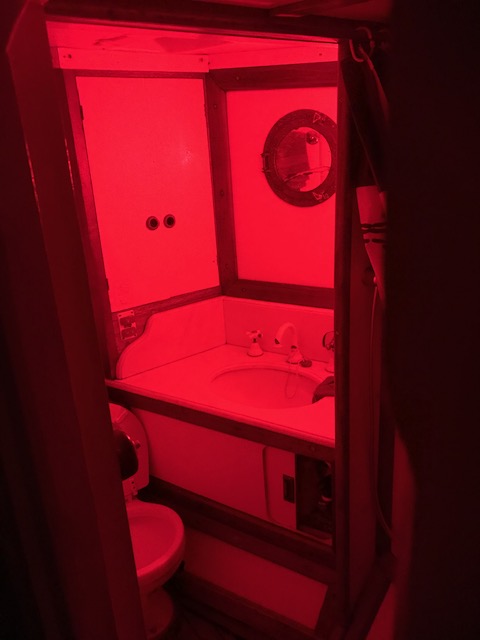
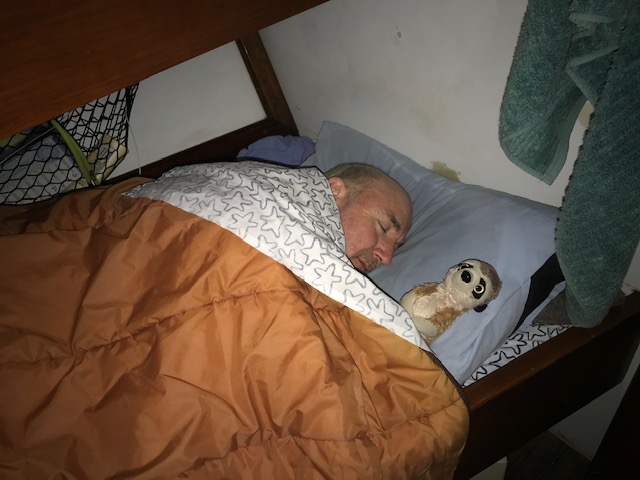
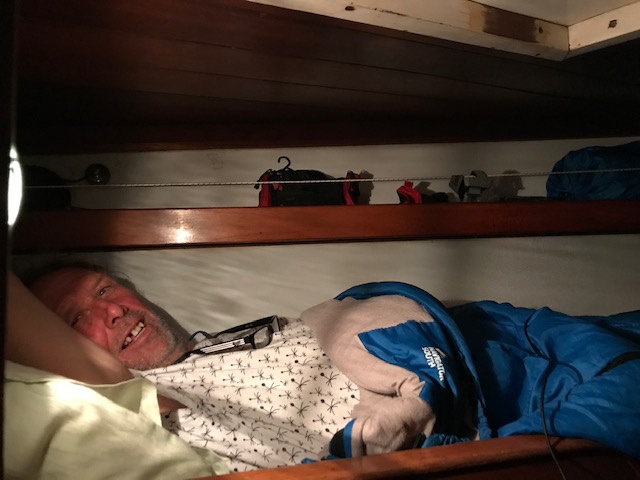
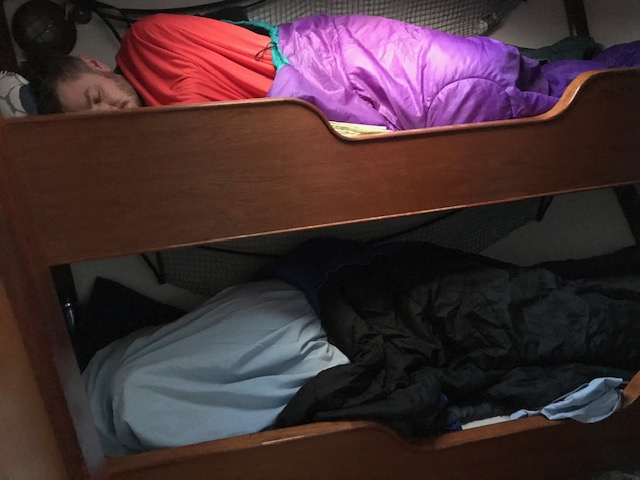
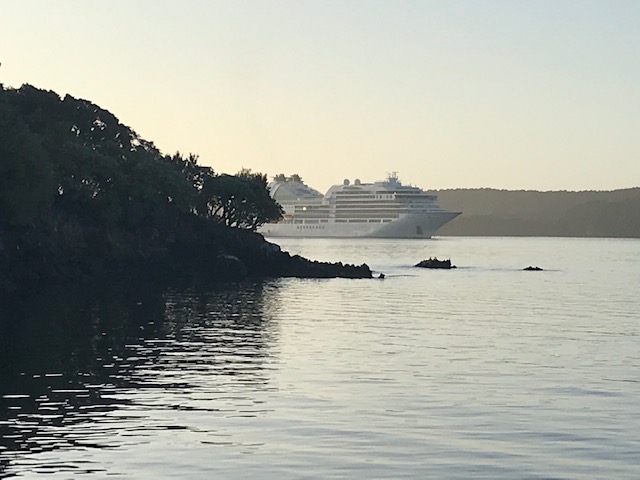
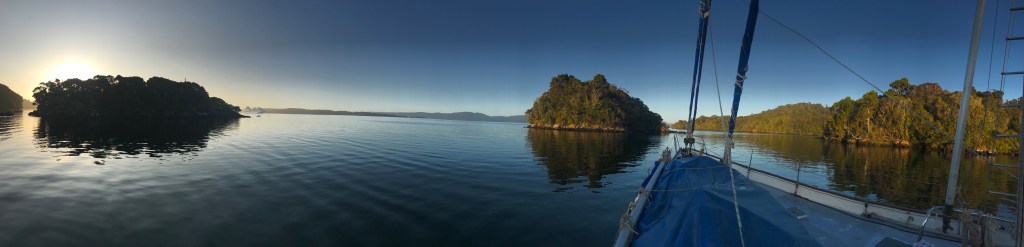
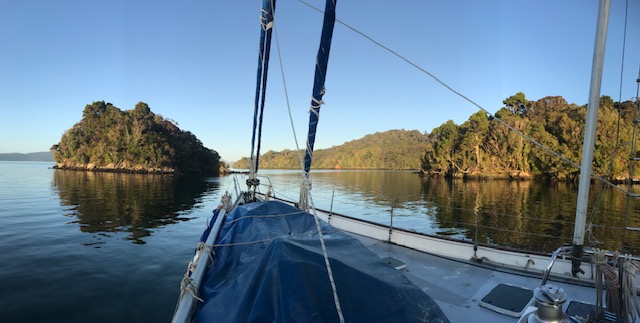
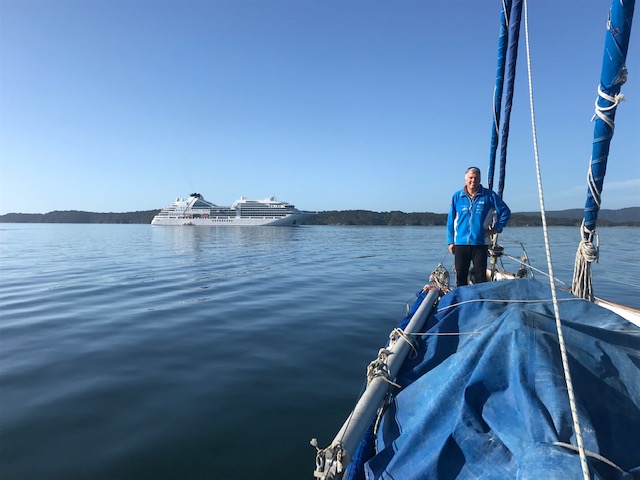
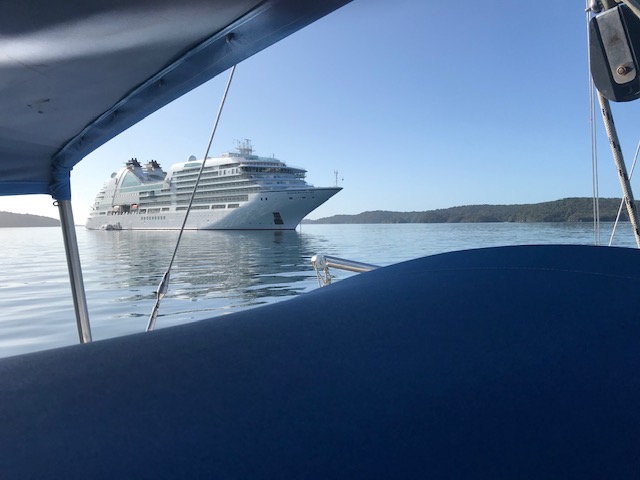
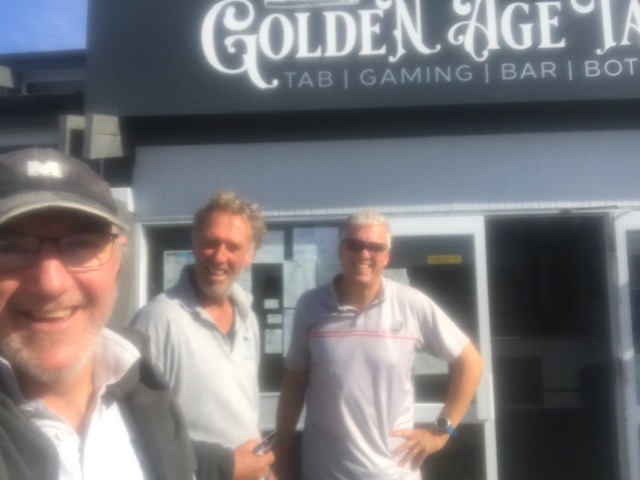
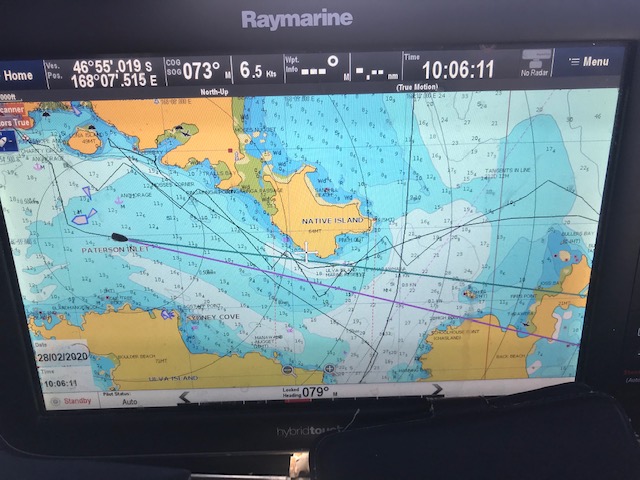
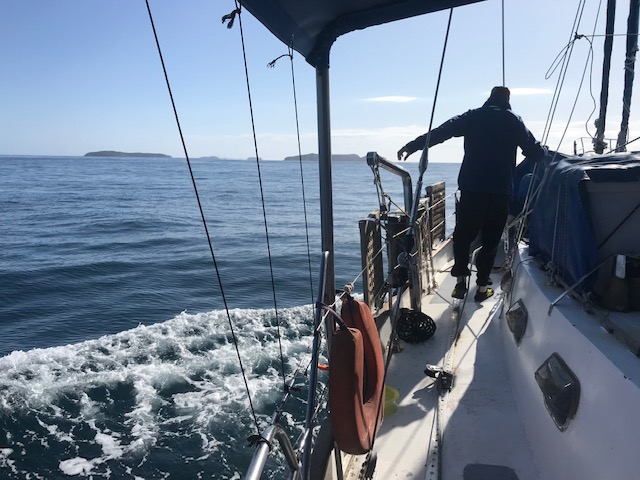
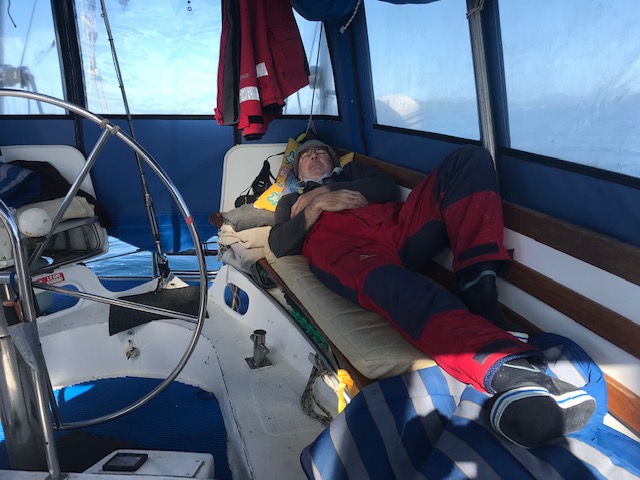
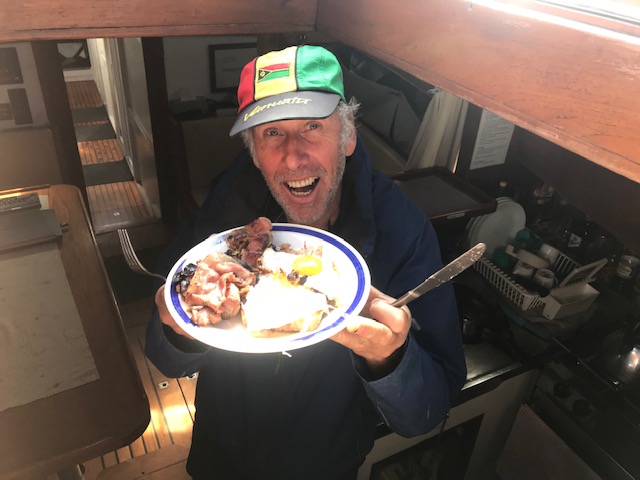
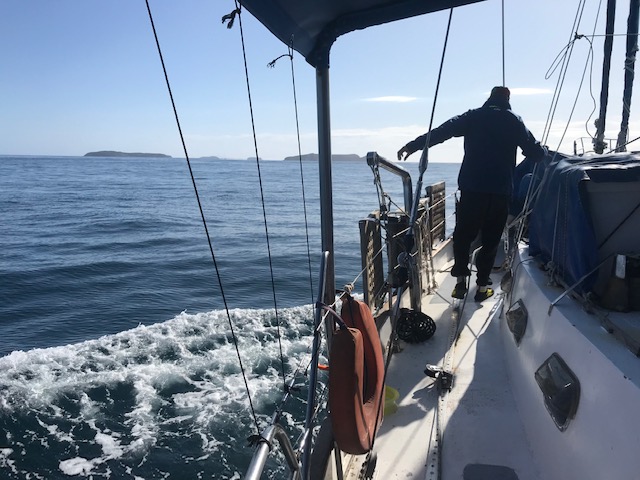
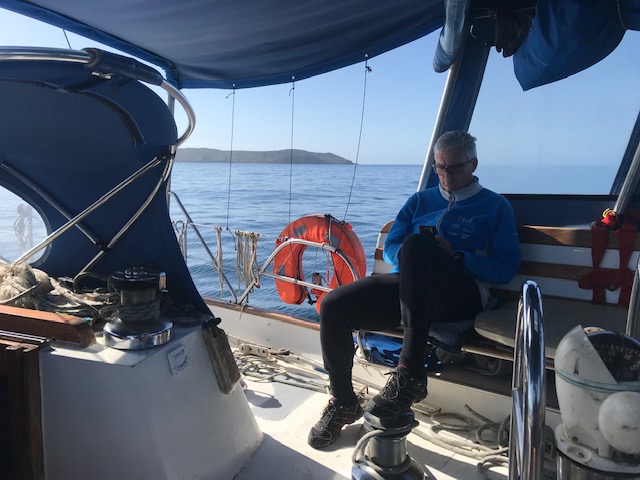
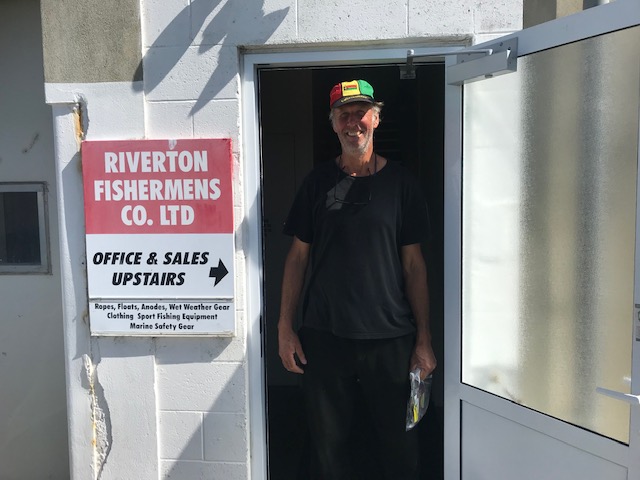
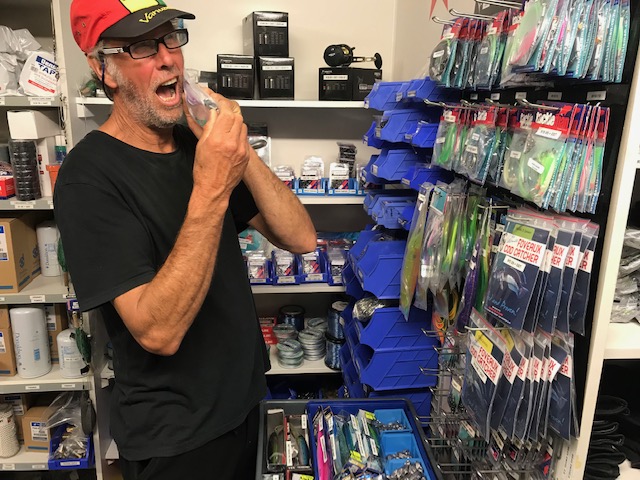
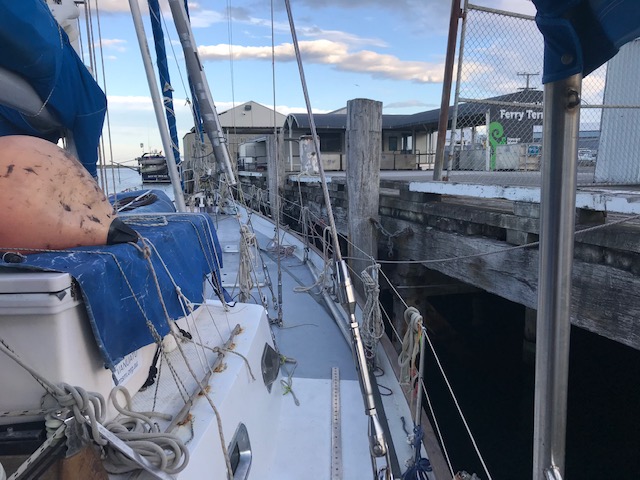
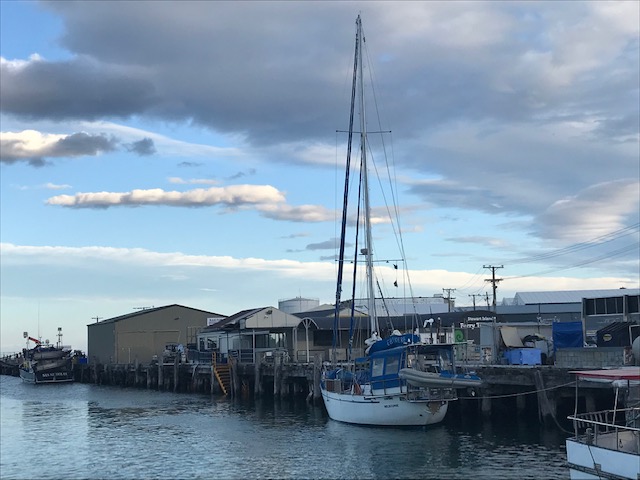
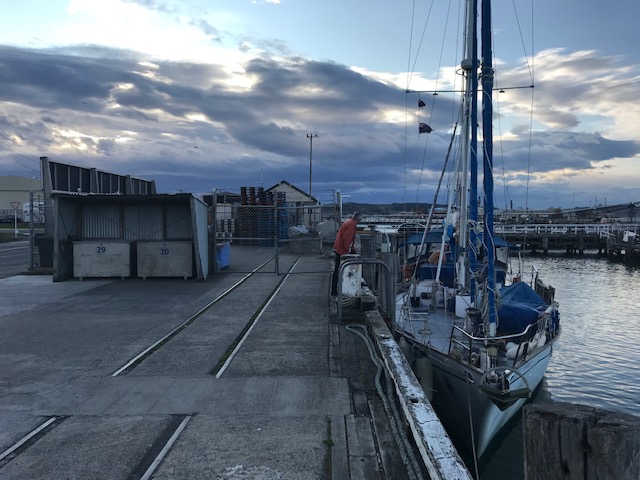
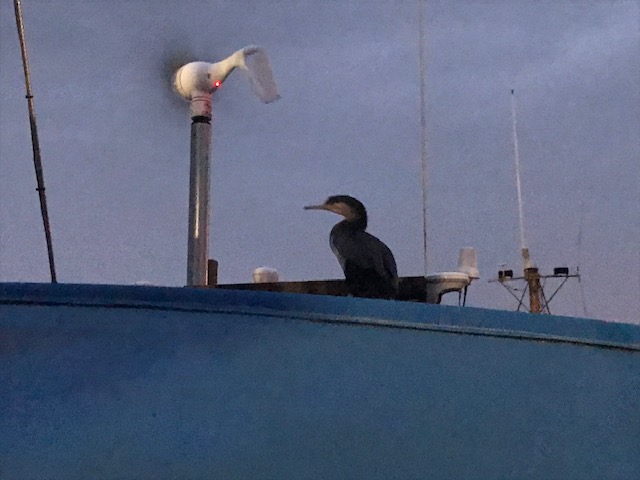
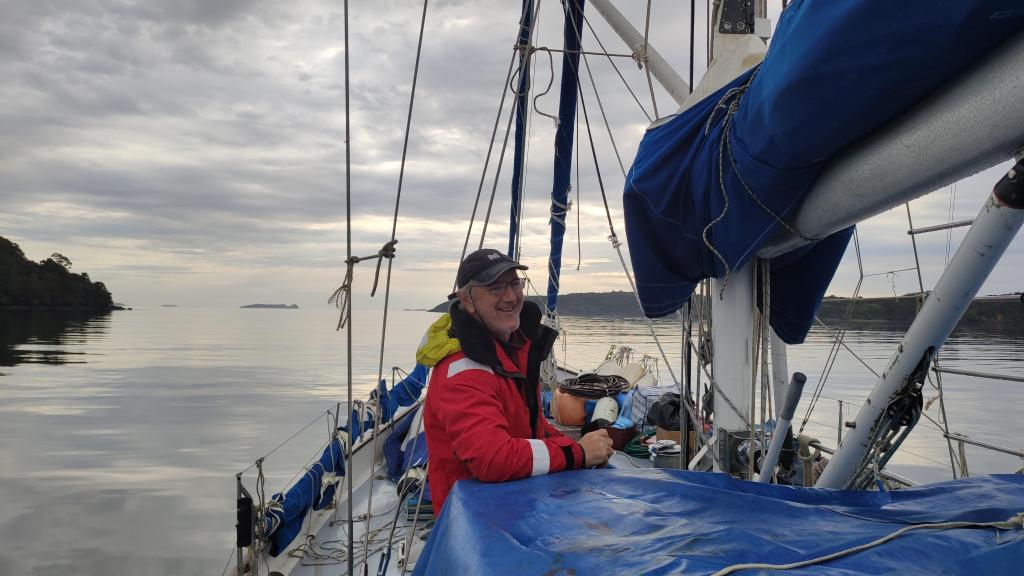
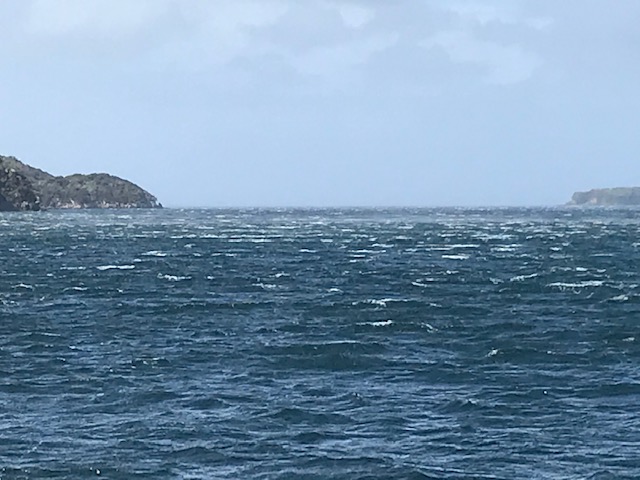
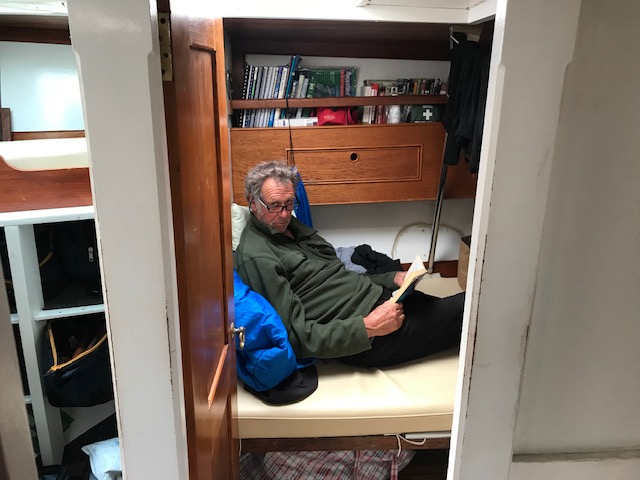
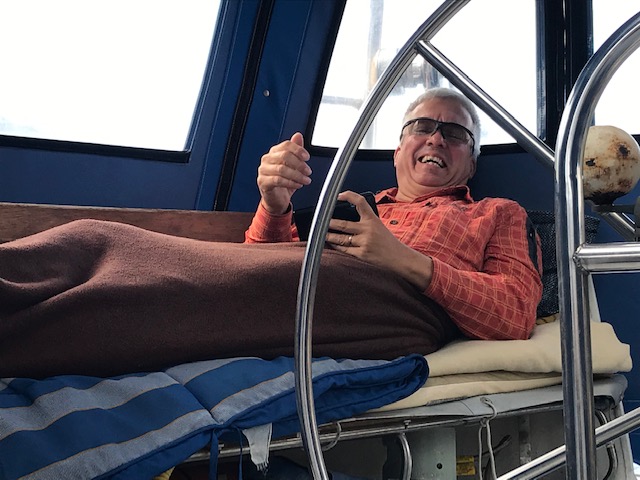
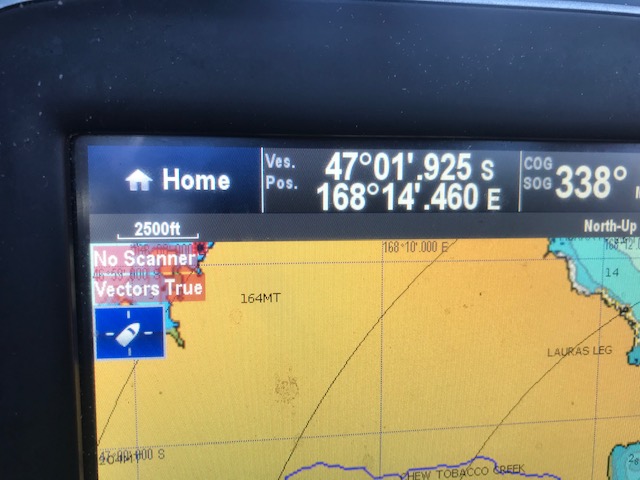
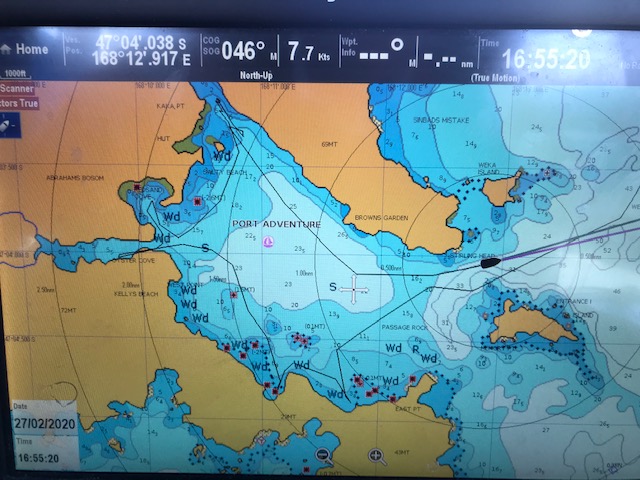
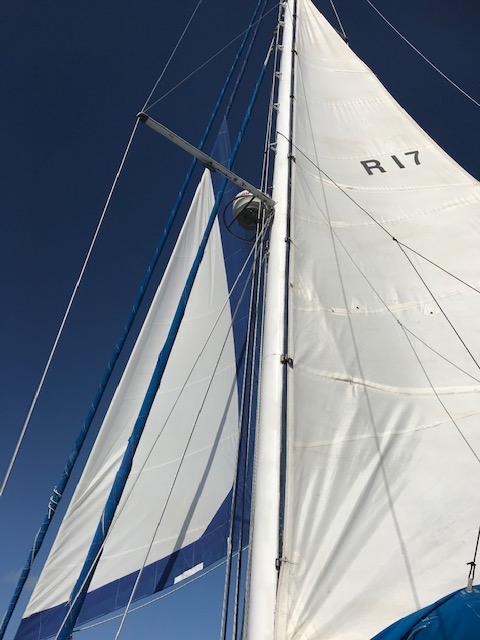
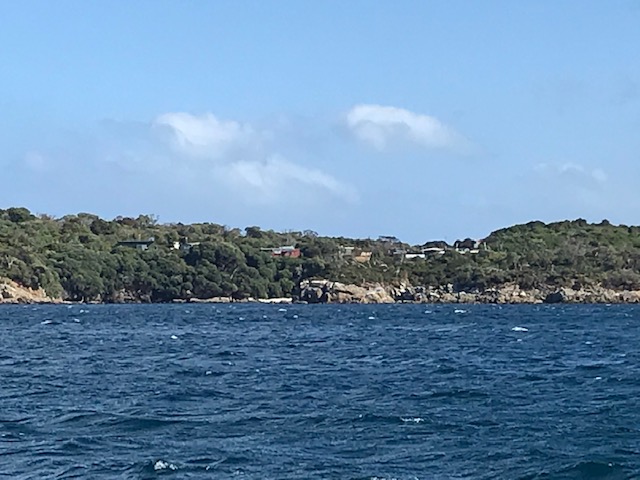
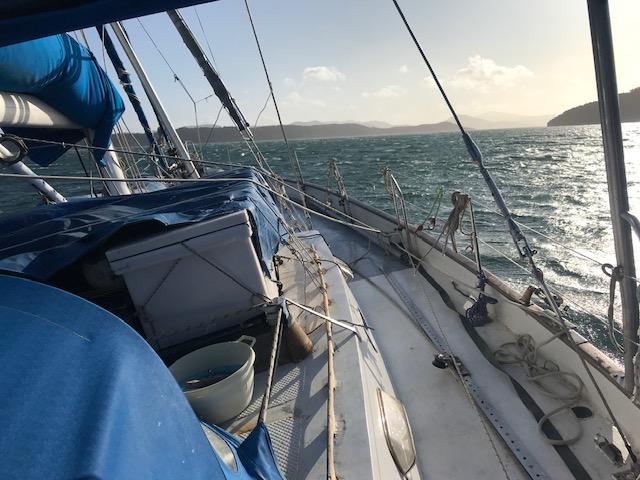
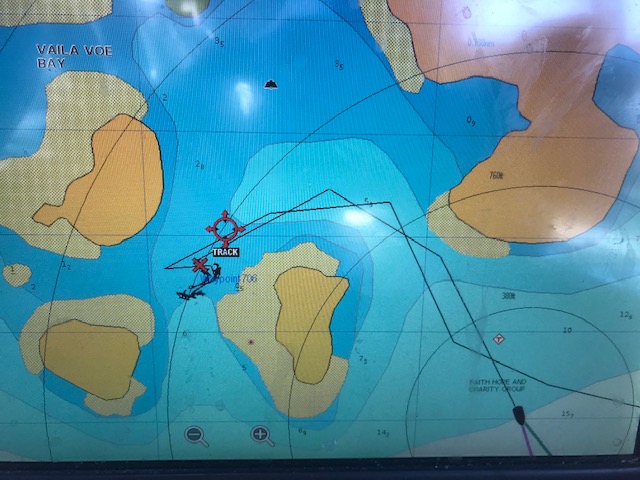
 NZ2020