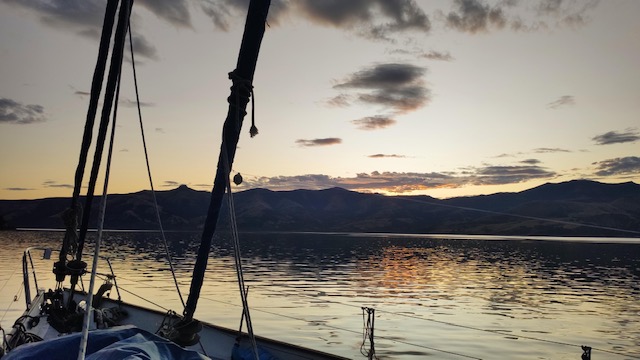
Crossing The 47th (South) Parallel

Port Adventure, (Kaka Point, Heron River) Stewart Island

Wednesday 26 February 2020

Despite getting up bright and early, it wasn’t until around 9:45am that we finally up-anchored and headed away from our delightful anchorage at Crayfish Island, Paterson Inlet.

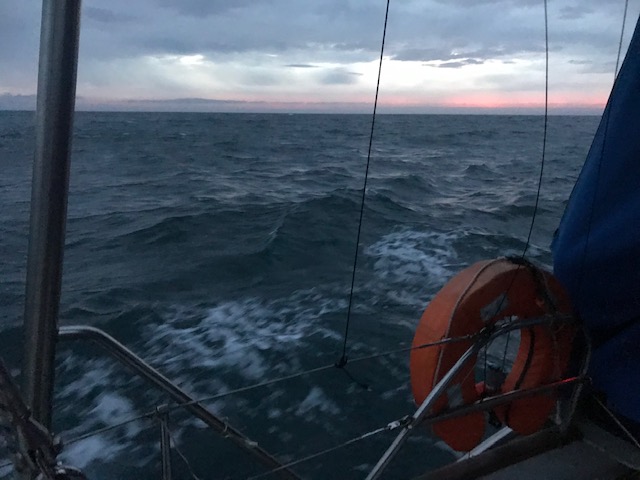
With no wind and oily-flat seas we made good time under motor, our destination being SOUTH … down the coast, in order to explore some of the many bays and inlets on offer.
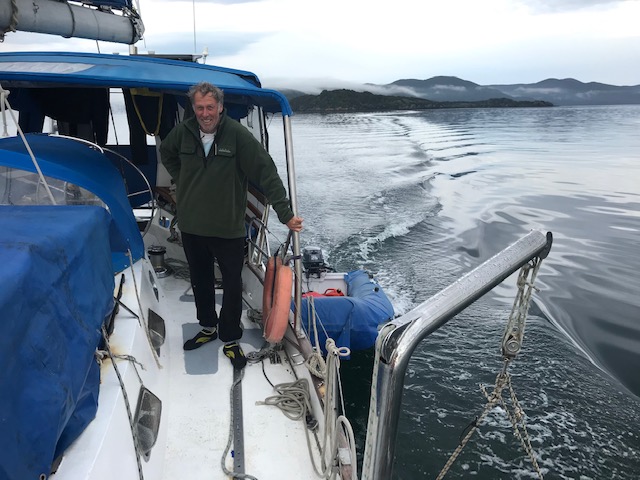
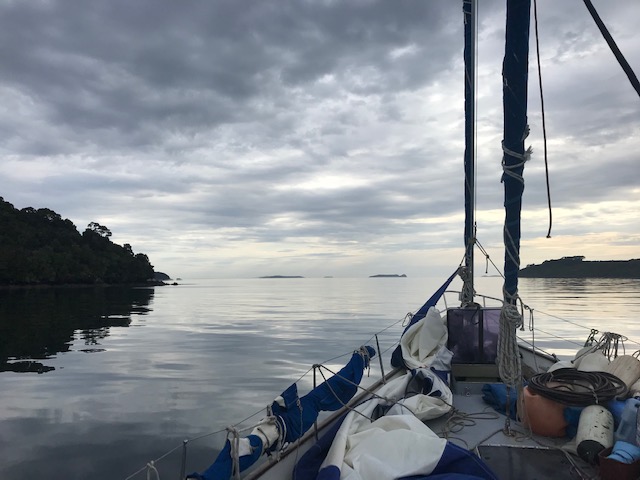
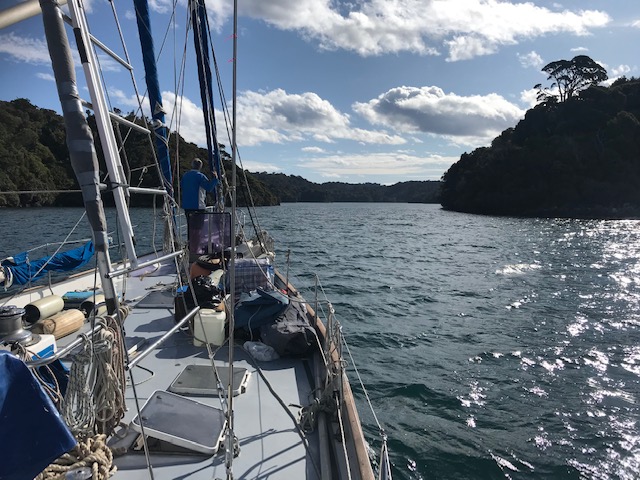
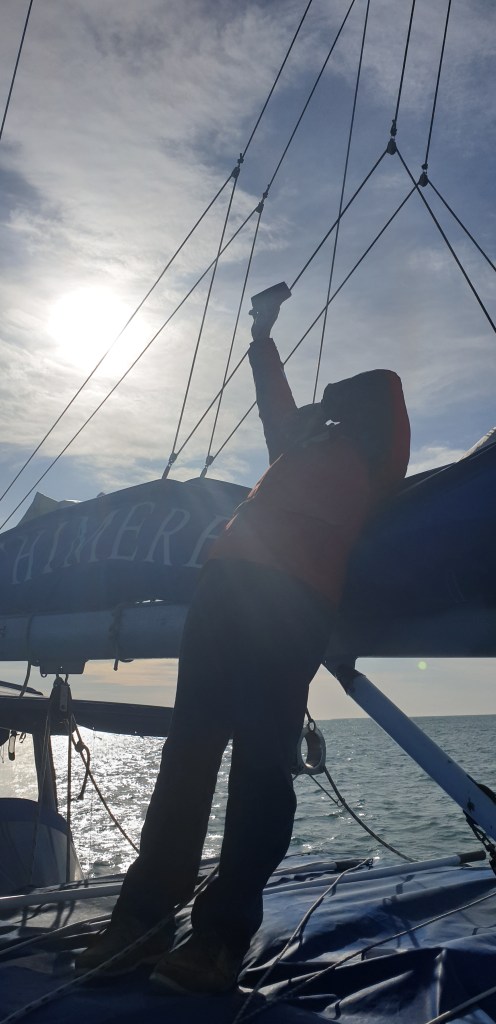
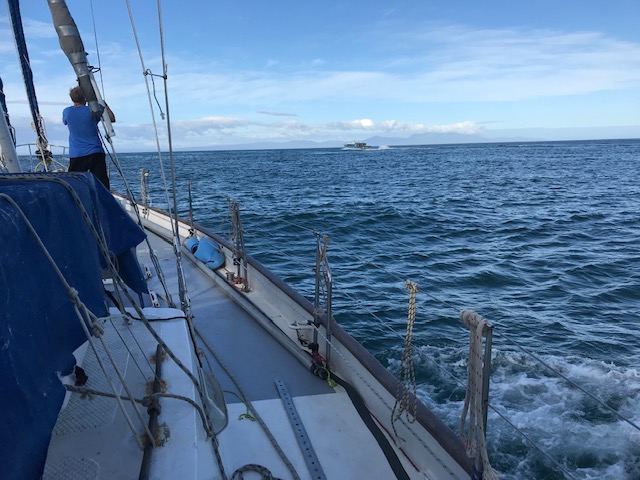
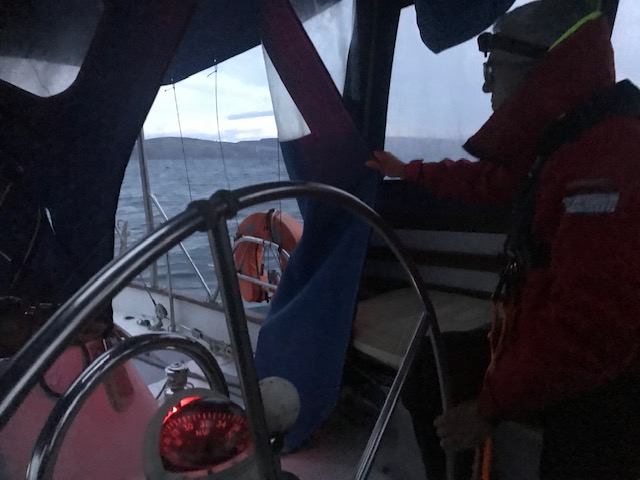
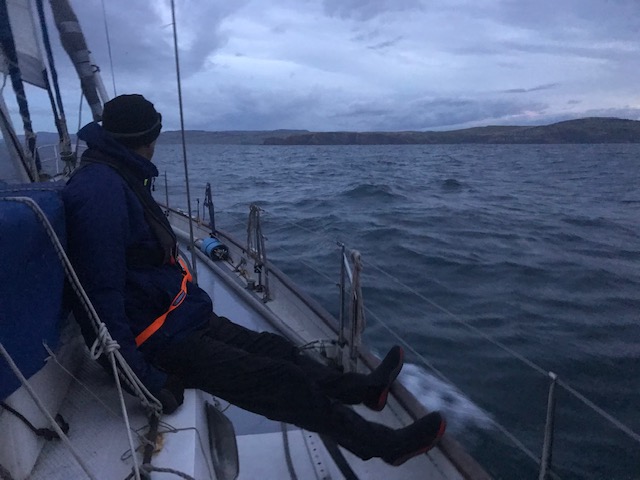
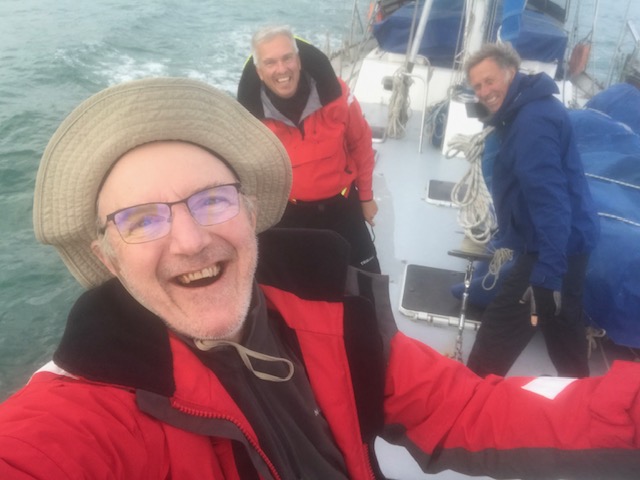
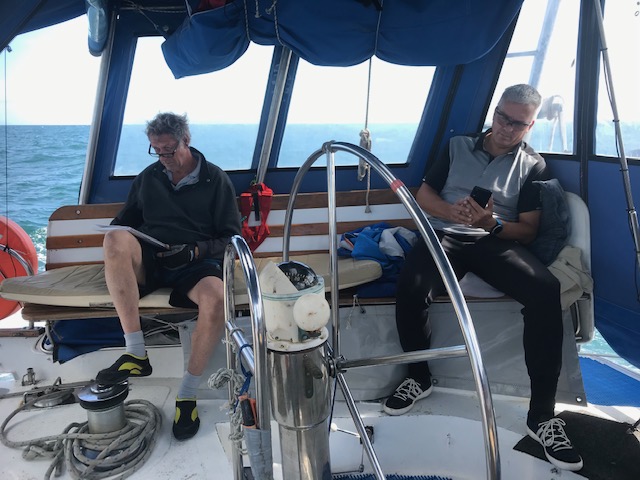
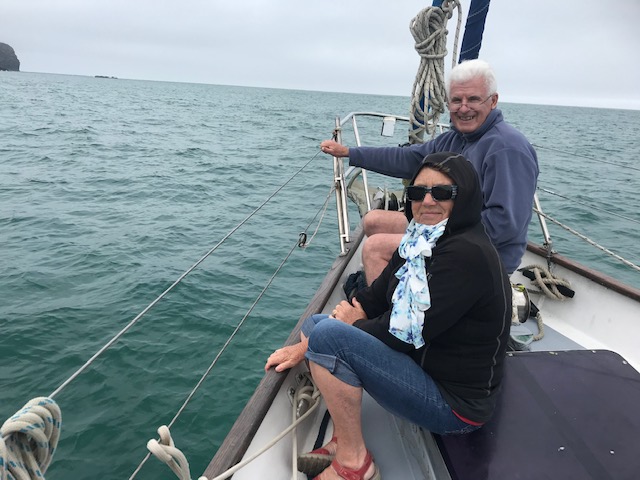
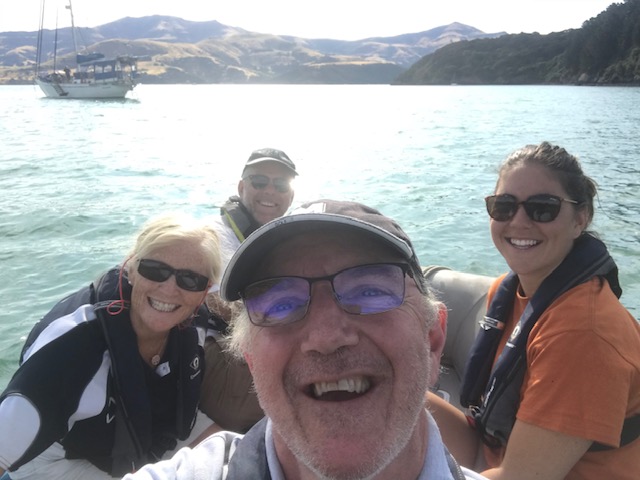
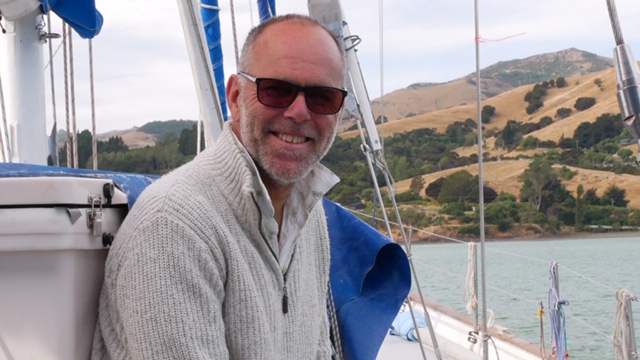
John at the start of a new day, heading south to cross the 47th Parallel, with dinghy in tow
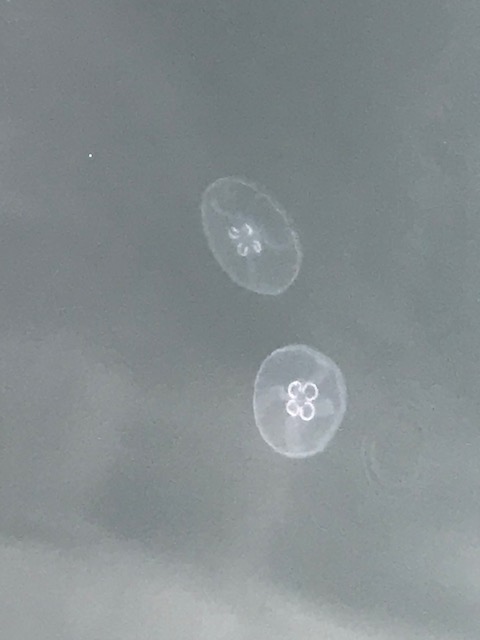
Full of surprises … we looked down to see these delicate jelly fish swim by
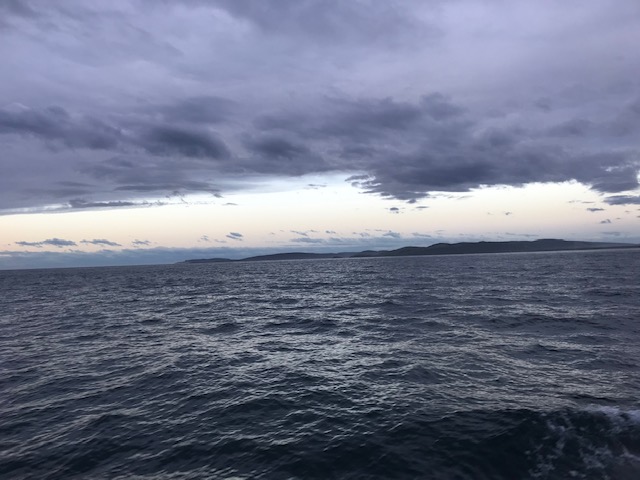
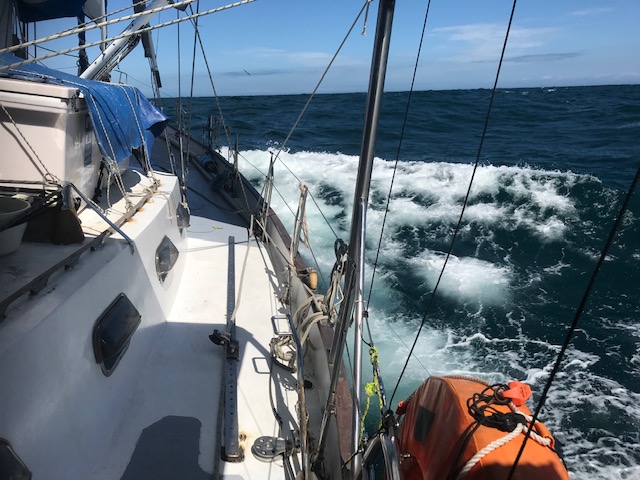
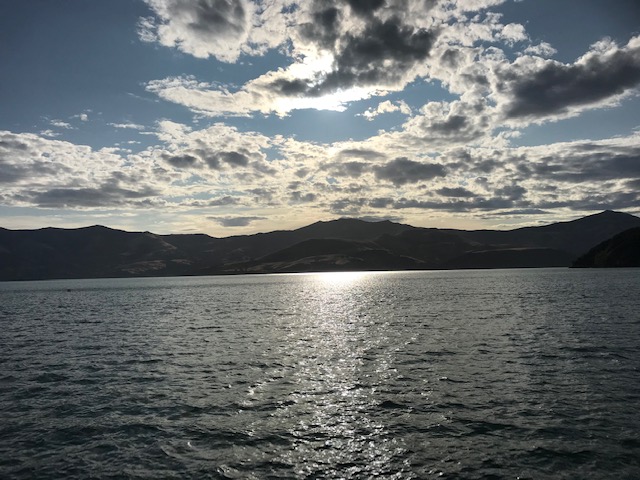
Calm as oil on our way from Crayfish Island to Port Adventure

Knowing that internet coverage was scarce at best and totally non-existent out of sight of the main tower on the hill above the town of Oban, we decided to sneak back close to town in order to finish off some computer work that required an online connection. 

A temporary anchor-drop – with 4-bars showing on the iPhone – was made, over the hill from Oban in Golden Bay. Still in Paterson Inlet and within sight of the “other” Sydney Cove” across on Ulva Island and the wee islands of Faith, Hope and Charity; not to mention Iona Island off our port beam.    As so often happens, 15 minutes checking emails, paying bills and organising spare parts turned into 30, then 60.  Lunch came and went and apparently, we ended up being there nearly 2 hours after blogs and photos were upload and several outstanding phone calls made … these young people and their smart phones?!
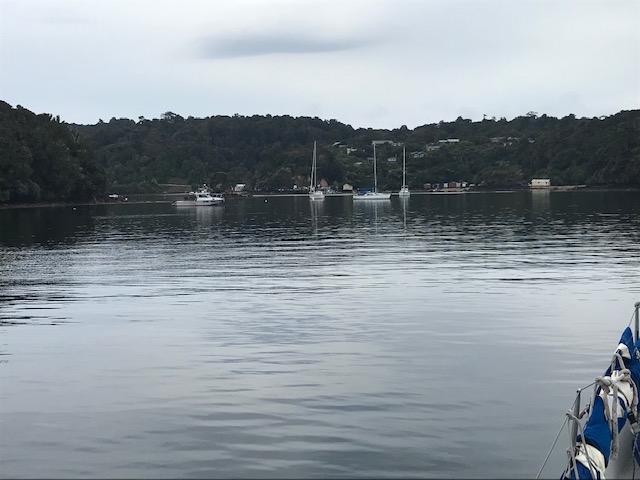
Good spot to anchor … in sight of the communications tower

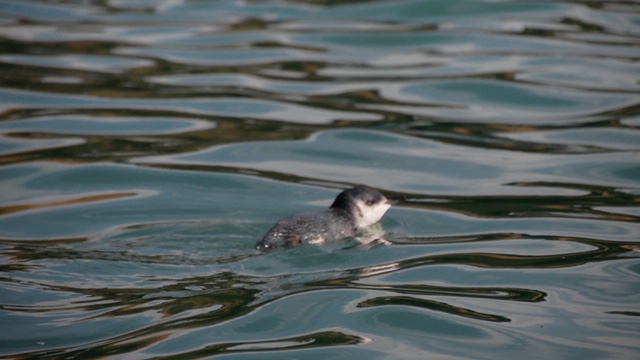
Finally, we were away.  South, under motor, with the warm sun, calm sea and almost tropical conditions, giving us a rather false sense of how things really can be down here.  Certainly, the cruising guide was upfront in pointing out the dangers of wind, tide and severe weather events.  But today, it was definitely shorts and t-shirts all-round, as we had fun pointing out the “rafts” of Little Blue Penguins, floating here and there, gathered together for security no doubt.  We figured these must have been baby penguins going through their moulting phase because they mostly sat high in the water; more buoyant than normal on account of their fluffy feathers. 

The cruising guide made mention of New Zealand penguins.  Informing us that New Zealand was home to 14 of the world’s 18 species of penguins, with the Yellow Eyed penguin being the rarest.     

Whilst you might think YOU have a busy year planned for 2020, spare a thought for the penguin.  The Stewart Island Cruising Guide tells us their calendar looks like this – every year …

September          Nest building

October               Egg Laying

November           Hatching

December           Rearing

January                End of guarding

February              Chick moults, develops juvenile plumage

March                  Fledgling, juvenile migration

April                    Pre-moult conditioning

May                      Moulting

June                      Post-moult conditioning

July                       Winter feeding, pair formation, territorial establishment

Strangely, the publication leaves out the month of August.  But since it lies between “Pair Formation” in July and “Nest Building” in September – and the book is for an all-age readership – we figured the local penguins devote the month of August to being amorous and more?! Since “Mating” was omitted from all the other activities listed.

The short chug down the coast to Port Adventure took a couple of hours and it was on this trek that we passed over the 47 degree (south) parallel; the furthest south any of us have travelled to date.  As a benchmark, Melbourne is at 37 degrees south and Hobart is at 42 degrees.  At around 69 miles, or 111 kilometres for each degree of latitude, this means that we are around 350 miles, or 555 kilometres further south than Hobart.

Once in Port Adventure, we set about driving into and out of, the many small coves and bolt-holes that dot the coast.  First of these was tiny Kaika Bay behind Thief Point, which was headed by a classic curve of white sand, book-ended on each side by rocky headlands, behind which bush grew uninterrupted to the ridge tops of the backing hills.  To this point we had seen no one.  Sure, there were the very occasional huts and small holiday-shacks clustered here and there along the coast, but apart from a small dinghy pulled up in the corner of the bay, we had the place totally to ourselves.
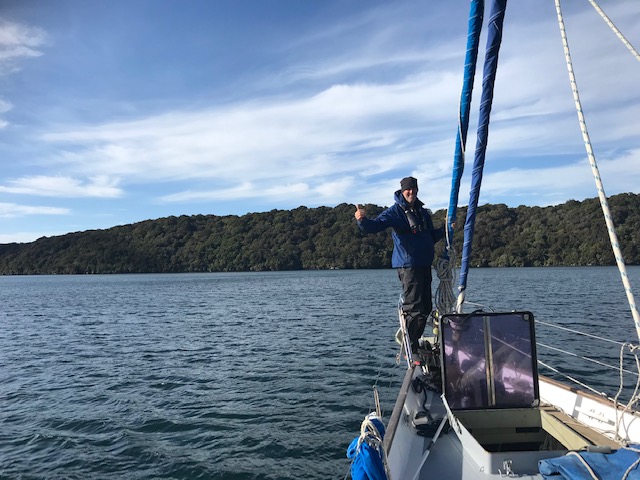
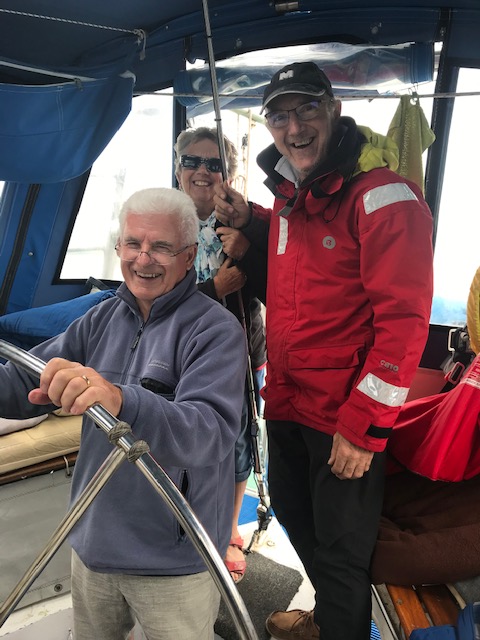
John on look out … or is that … “look out John!!”
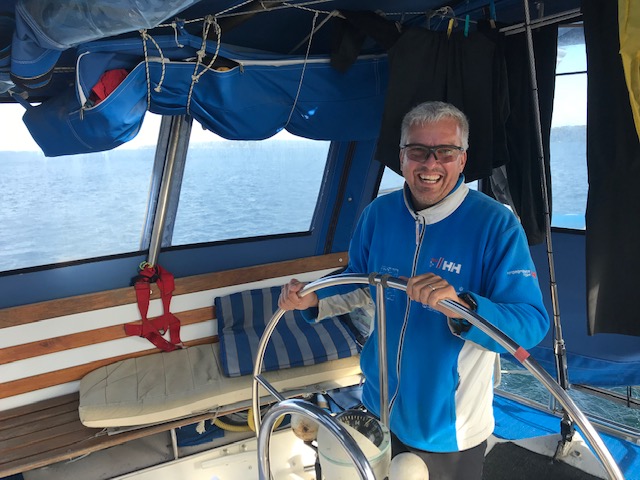
Captain Capable Carsten … a steady hand on the helm

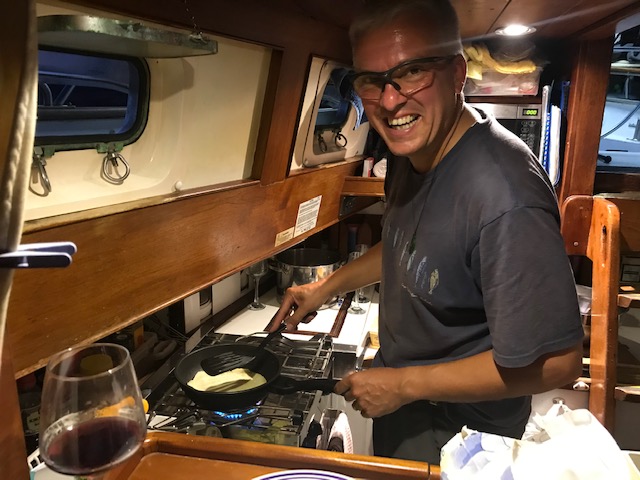
John and I were ready to go fishing and exploring in the dinghy, but first there was the important task of waiting for the bread and rolls – bacon, herb and cheese flavoured – to finish in the oven.   “There’s an engine throbbing somewhere in the distance … sounds like a boat”, someone thought out loud.

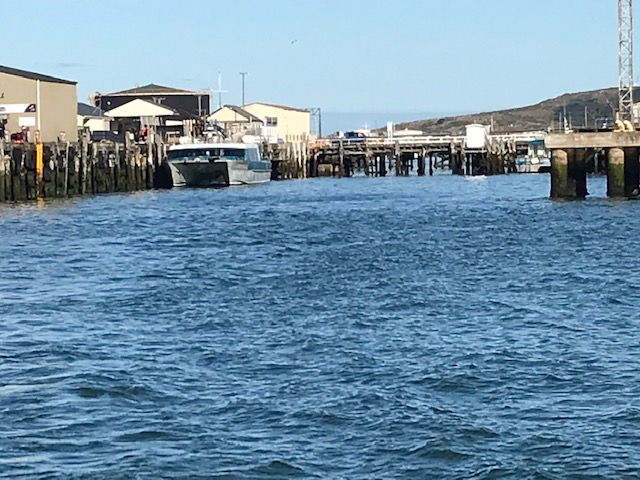
Soon enough, the source of the noise was revealed as this extremely large aluminium charter boat came around the headland, aiming straight for us.  “Is he coming in here?!” we all exclaimed.   Yep.  He was coming in here.  Where there was barely room for us alone, he snuck past our bow, dropping anchor between us and the beach.  Our initial speculation at 50 tourists lining the railing taking photos and video of us, like exhibits in the zoo, were allayed when all we could spy were maybe 5 or 6 people on deck, obviously excited by their arrival at this picture-book location.

“They’re taking a group ashore with all their gear” observed John.  No sooner had the boat dropped anchor, than they were heading off again, leaving their passengers, and us, to enjoy this pristine serenity.

John and I raced off in the dinghy to try our hand at fishing, leaving Carsten with the big responsibility of emptying the oven of its treasures “in 10 minutes”. 

First, we checked the rocky headlands for mussels … maybe oysters … what about abalone (paua) … nothing.  Or at least nothing we could see.
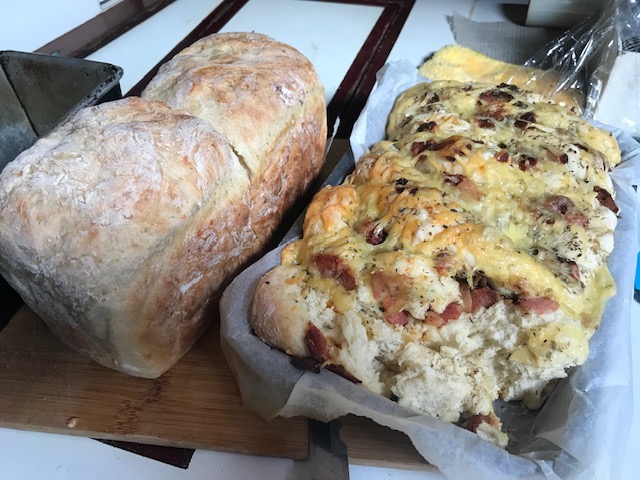
Chimere Hot Bread Kitchen
One of the many inlets and coves we explored … this one was called Oyster Cove, we couldn’t tell why.

Then out in the bay we saw a large flock of circling terns, supported by masses of mutton birds, all diving and crashing into the sea, obviously finding something of worth.  “We want the big fish that are chasing the little fish those birds are after,” called John, over the sound of the outboard, while quickly swapping the rig on his line to a trolling set-up. 

Trouble was, the birds were not stationary.  Clearly, whatever was happening below the surface of the sea was on the move because it took us some effort to catch up to them, and then keep pace with them.  The birds all the while, gliding just above our heads and around us as we sped along in the dinghy at around 15-20 knots. 

Eventually we slowed enough to be able to troll at a respectably slow speed, right through the middle of the feathery-fishy chaos that was going on around us. 

And in conclusion, … I’d like to be able to say we landed 5 large tuna and 3 Spanish mackerel … but all we got was a lot of fun and the excitement of bouncing over the waves in close-company with the birds… and we presume, some fish.  Be good to have a photo, but sometimes it IS two hands for the ship and no hands for the camera.

One instructive thing that happened while entering and exiting one particular inlet, was that the chart plotter didn’t quite line up with reality.  We’ve had this in Vanuatu, where at times the chart plotter can have you travelling over land, even anchored in the middle of the nearby village, when in fact you are very much still at sea.  In this case, as the photo shows, our chart plotter-track took us through the “Yellow”, which is definitely land; a good 25-50 metres out of whack.  It was a good reminder, that no matter where you are, it doesn’t pay to rely too much on technology – and avoid travelling at night or solely “on instruments”
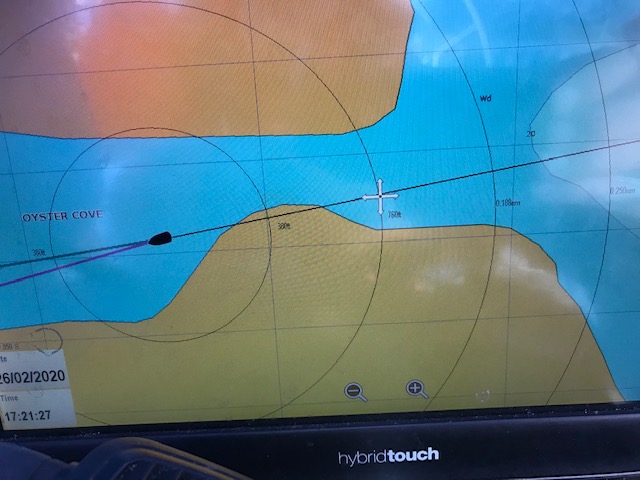
Trap for young players … or those who rely too much on instruments … Just a tip, the chartplotter IS NOT supposed to have you driving through the yellow. Ya gotta stick to the blue … preferably the deep blue

After entering some of these small coves, John and Carsten had a go at manoeuvring Chimere in a confined space, in particular the “spin on the spot” strategy, which uses high revs and the throw of the prop in both reverse and forward gears, to first push the stern to port, quickly followed by turning the bow to starboard.  The net result being that you spin the boat, almost on it’s own length.  It seemed a good place to get some practise in.  

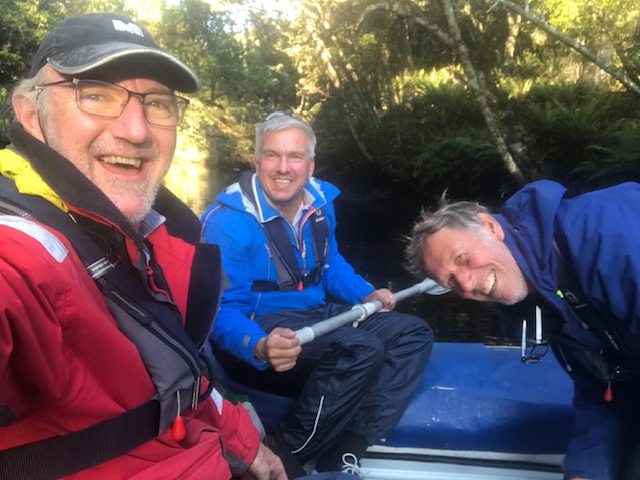
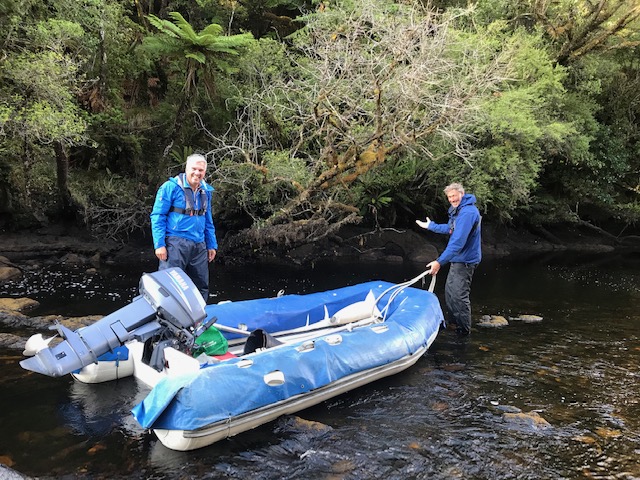
After dropping anchor in the calmer than calm entrance to the Heron River we took the opportunity to do some “river exploring” … taking the large dinghy up as far as we could; maybe 1 mile or so.  As the watercourse narrowed and the trees and foliage closed in, visions of the Amazon and scenes from the film The Mission came to mind – minus the inquisitive natives, monkeys and the steaming humidity. 
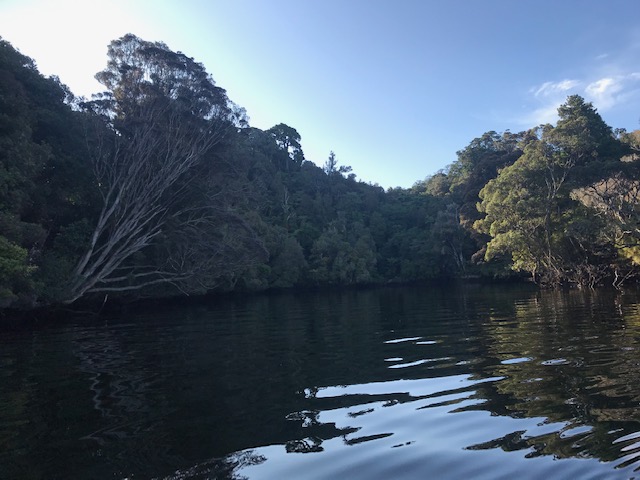
A spot of river exploring …
What could possibly go wrong …?
Ah, you’re beached. Beached as bro. … tell me something I don’t know…

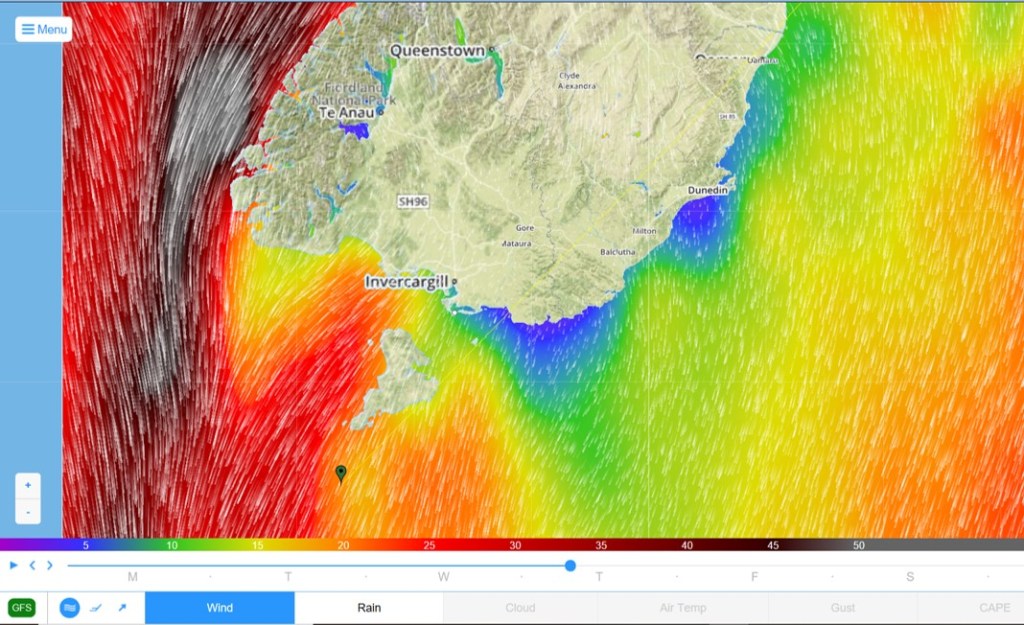
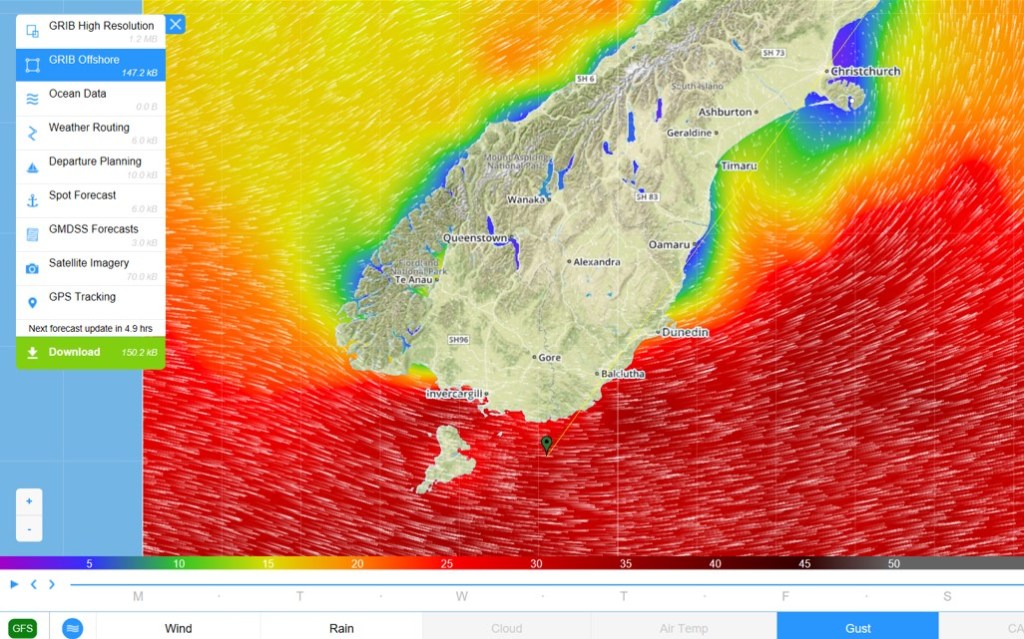
Conditions remained settled, even balmy, as the sun went down, disguising the fact that the forecast for tomorrow would be a very different story; 20-30 knots from the West and North West where we are, but 55 knots plus, further out at the western entrance to the Foveaux Strait.

For now, it was time to enjoy the stillness and a good night’s sleep.

Smooth seas, fair breeze and Crossing The 47th Parallel (South)

Rob Latimer
Breaking the Fish Drought

Crayfish Island (Paterson Inlet), Stewart Island

Tuesday 25 February 2020

There was clearly still a sleep-deficit onboard with the calm anchorage at Oban leading to a late start for all.

The weather was expected to remain still for the next couple of days and so this was a time to plan some serious Stewart Island adventuring; or at least a bit of a drive around the corner into Peterson Inlet to check out the remote and pristine serenity, of which there was surely an abundance

Early in the morning there was chatter on the VHF radio about some people intending to kayak across the Foveaux Strait, then onto a paddle right around Stewart Island.  It was certainly a good day for the first, and possibly most treacherous leg, but whilst everyone, especially Mary, were polite, efficient and helpful in their transmissions, you couldn’t help but get the impression that some of the local fishermen thought these kayak-guys had a few screws loose.  “Good thing they didn’t go yesterday afternoon”, I heard one wag remark

A rather sad sight … my kingdom for a blue cod …
Still as bro …
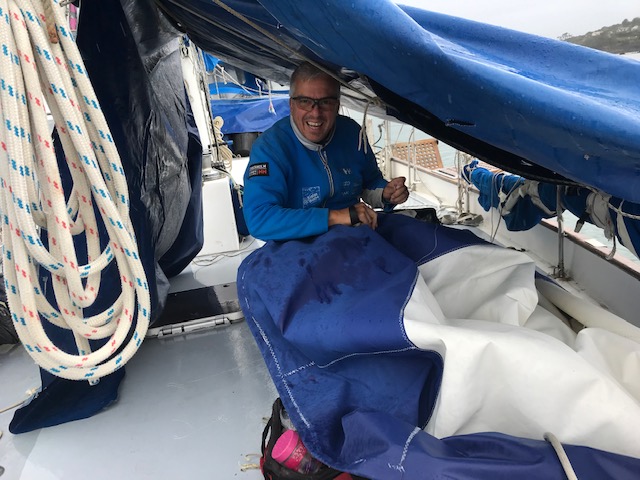
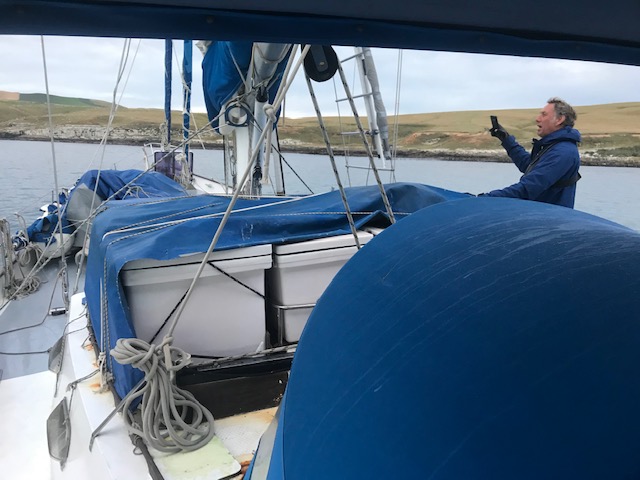
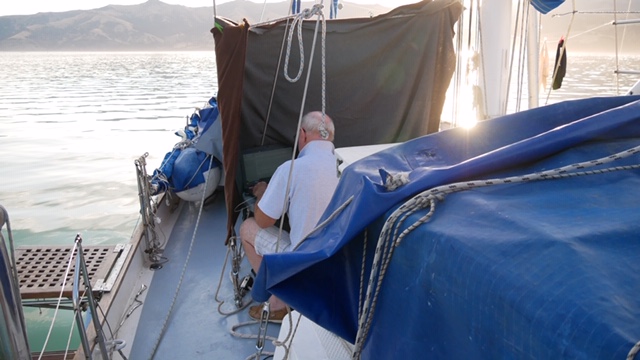
Carsten starting on the jib … fixing frayed edges and loose stitching . We built a small tent on the foredeck to shelter from the rain

Of course, nothing said on VHF radio is private and pretty soon we overheard the ongoing reports from the kayakers themselves … “Good as gold, roger roger, thanks for the update, enjoy your day … it’s a lovely day for it”, came Mary’s encouraging reply.

Whilst we had a lazy start, it didn’t stop us starting on some much-needed repairs and maintenance aboard. 

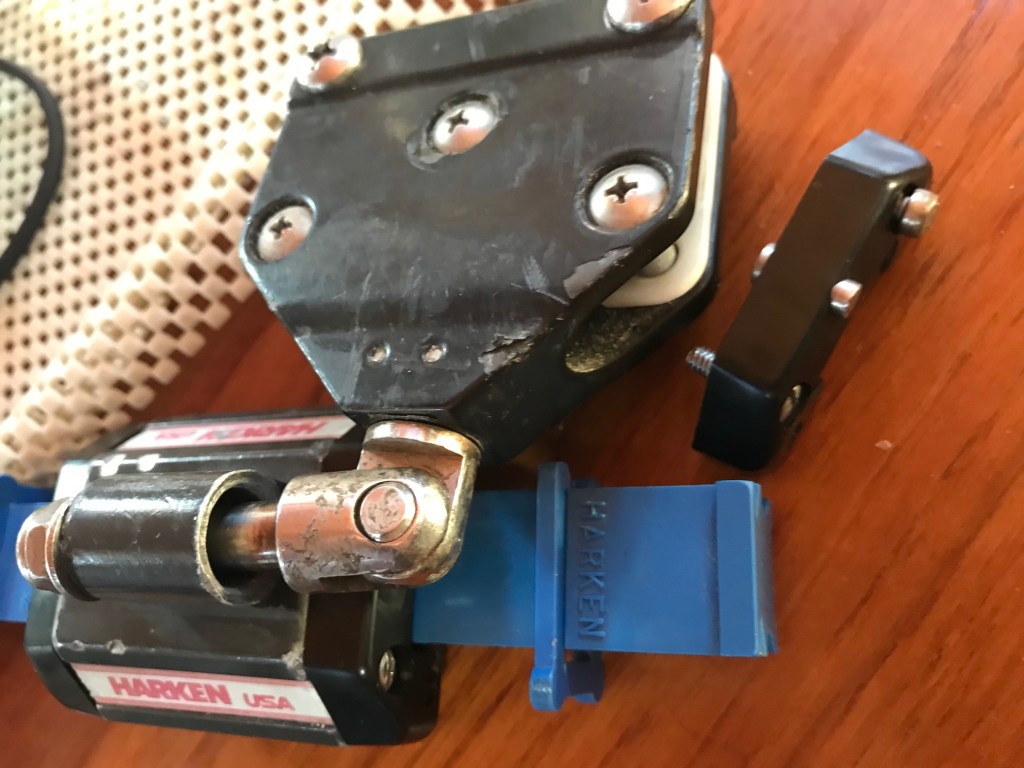
Chief amongst them being the main sail “cars” that run up the mast, connecting it to the sail via a metal track.  For speed and smoothness of operation, each car contains ball bearings made of a hard substance called torlon.  These ball bearings being held to the cars via screw-on plastic end-caps.  When the end-caps come to the end of their life, they break.  Not only spilling all the 6mm balls everywhere – mostly never to be seen again – but also causing the sail to come away from the mast.  When one car breaks it puts undue pressure on the cars next to it. When two break, the problem gets even worse, and so on.     In our case, we’d broken three cars so there was a need to carefully remove several cars off the mast track – without spilling the balls in each car – so as to get to, and repair, the broken ones; since they are placed on the mast-track in order, the ones at the top of the mast being first and so on .   

To fully repair the cars, you need new “End-Cap Sets”, plus 42 new balls for each car.  These we ordered yesterday via our rigger Craig, at Superior Spars and Rigging in Hastings (VIC) for Linda to bring over when she comes on Saturday. 

“How long do you think they’ll take to get to Melbourne from Sydney?”, I asked … “Maybe a day or two, but sometimes longer” came the reply, all the while knowing that if Linda didn’t get them by Friday, it was going to be something of a fruitless exercise.

Broken sail bits … an increased risk in strong winds

In the meantime, I cannibalised parts from some old cars and managed to rearrange things to have the mainsail operational again. 

As an update on the new parts, while we were still in internet range over at Oban, Linda sent me a photo of the package of parts, which had arrived from Sydney to our home in Ringwood North, less than 24 hours after being ordered by the rigger in Hastings.   Truly amazing

In addition to the mainsail, there was also the jib, which had some loose stitching that needed to be re-sown, plus the port side jib sheet winch, which was not operating as smoothly as it should and needed to be pulled apart … and put back together again

Then, while we sat lazily at anchor, John announced around 12:00 noon, that his research put the best time to be fishing at 1:30-2:00pm and that if we wanted to catch fish, then around the corner in nearby Paterson Inlet would be the place to be.

It didn’t take long to be underway, towing the dinghy and leaving the mess of our various work-projects where they lay.  We made good time under motor, coming to anchor near the encouragingly named Crayfish and Groper Islands, in about 8 metres of water.

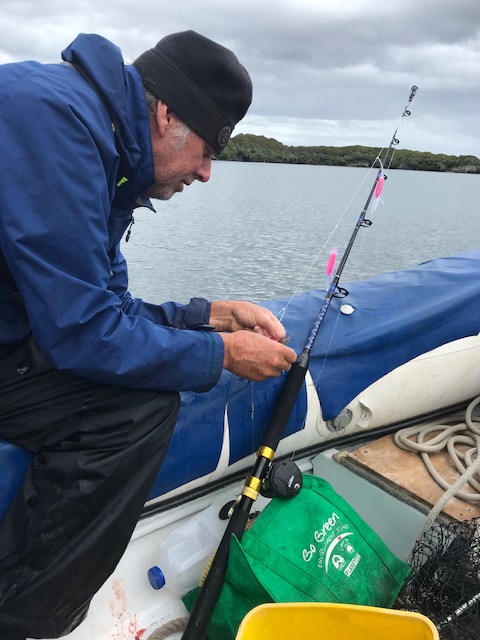
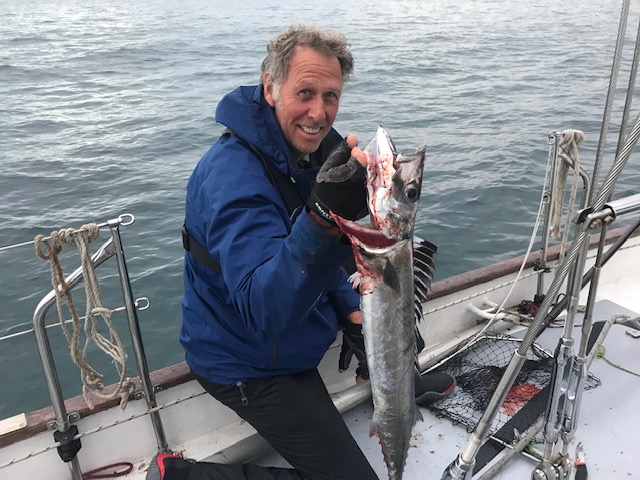
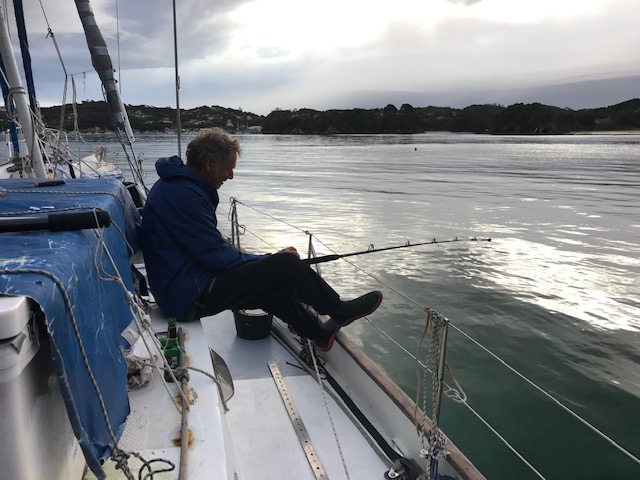
Pretty soon, John and I were heading off in the dinghy, leaving Carsten to mind the ship.  Our fishing options now seemed endless … should we drop our lines in deep water, shallow water, sheltered, exposed, off a rocky headland perhaps … In the end we did all of the above, starting out with some trolling, which encouraged us by quickly by yielding a reasonably sized barracouta.

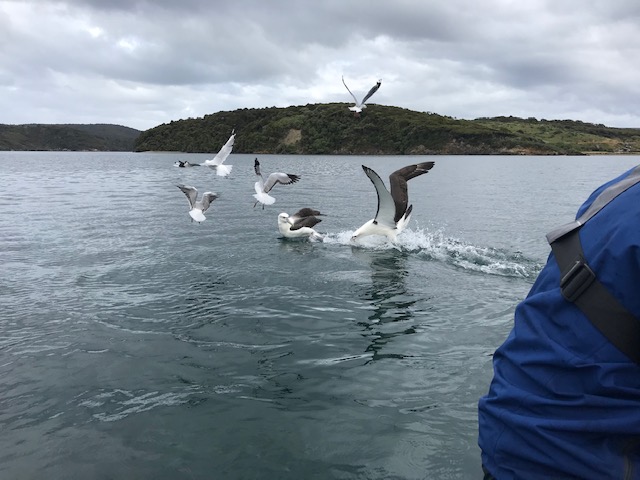
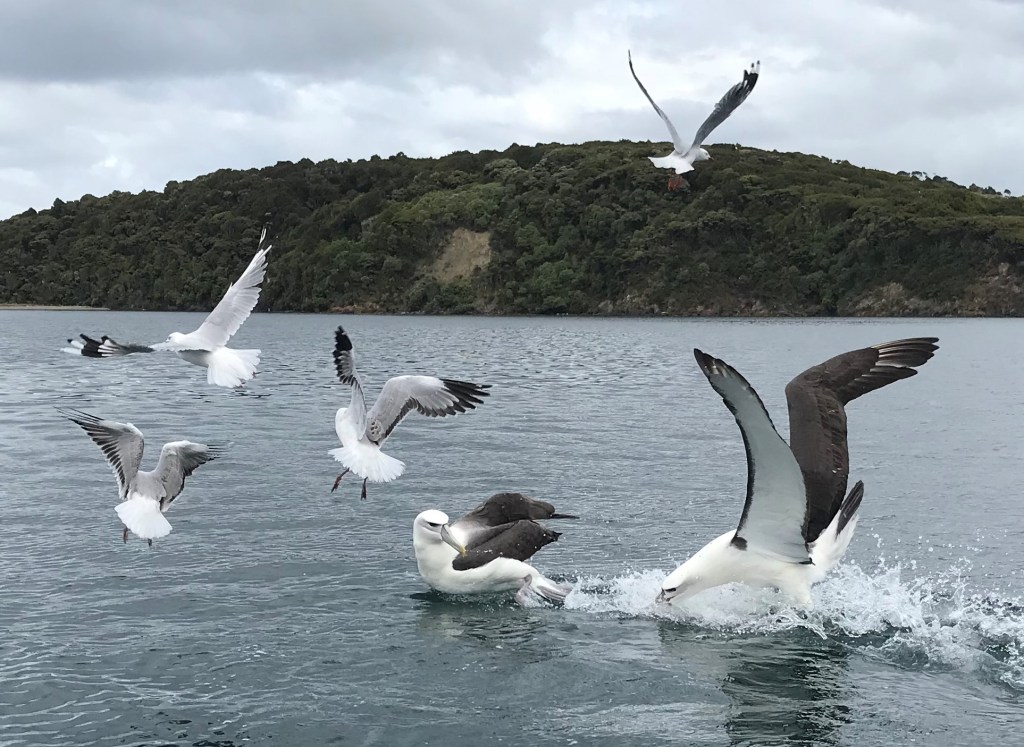
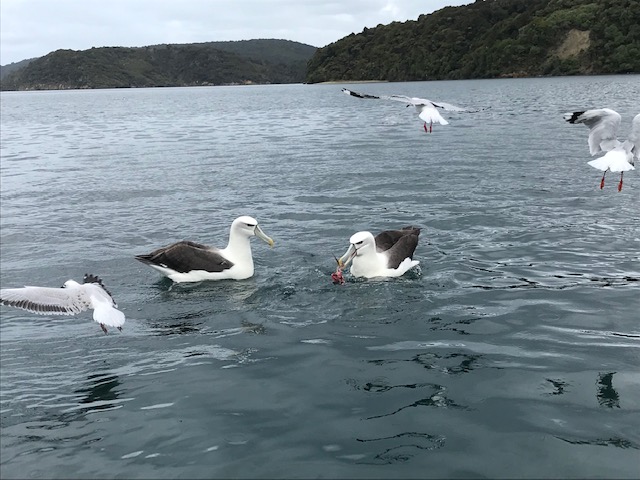
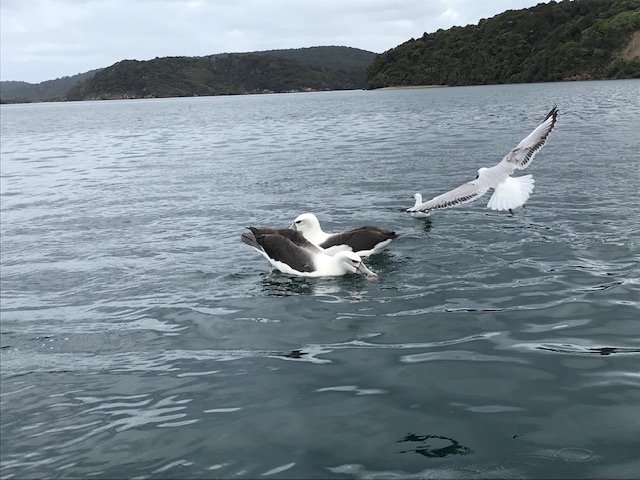
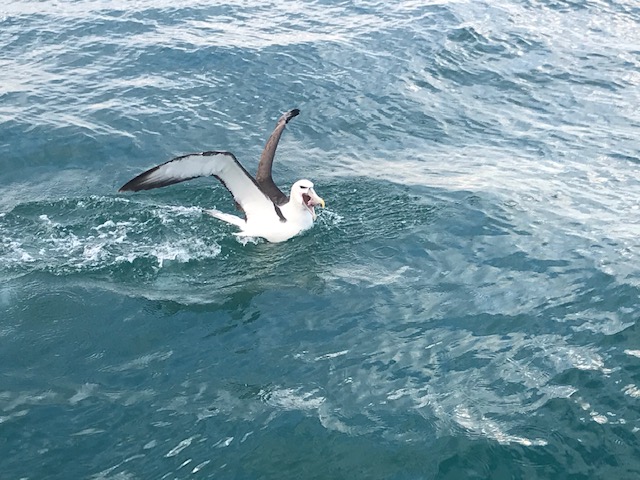
Interesting see the inter-play between the albatross … they pair for life I believe, but clearly they aren’t immune from arguments
In the bird “pecking order” it pays to have a big peck, and these few bigger in these parts than the albatross.
That’s mine!!
The seagulls are smart enough to keep clear of “that” beak
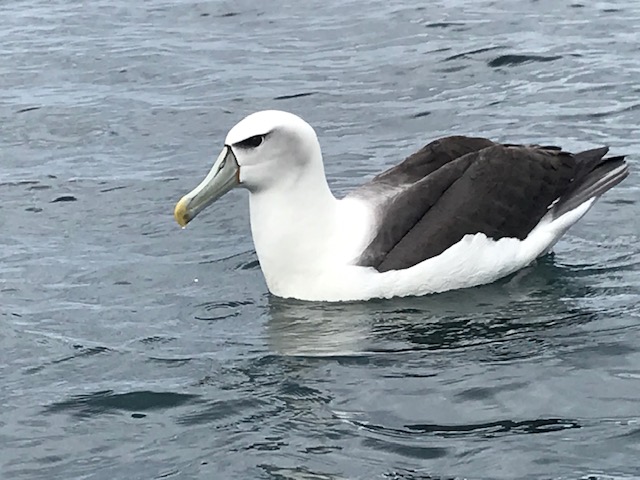
Just beautiful ! Even more impressive than the Norwegian Blue
A clean beak is a happy beak … they have rather violent, but clean eating habits

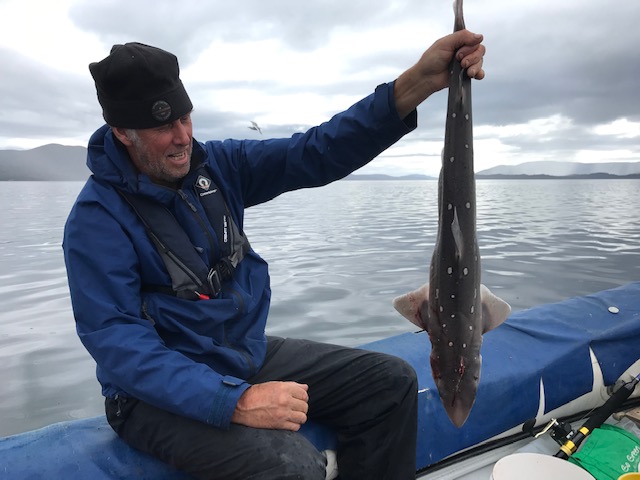
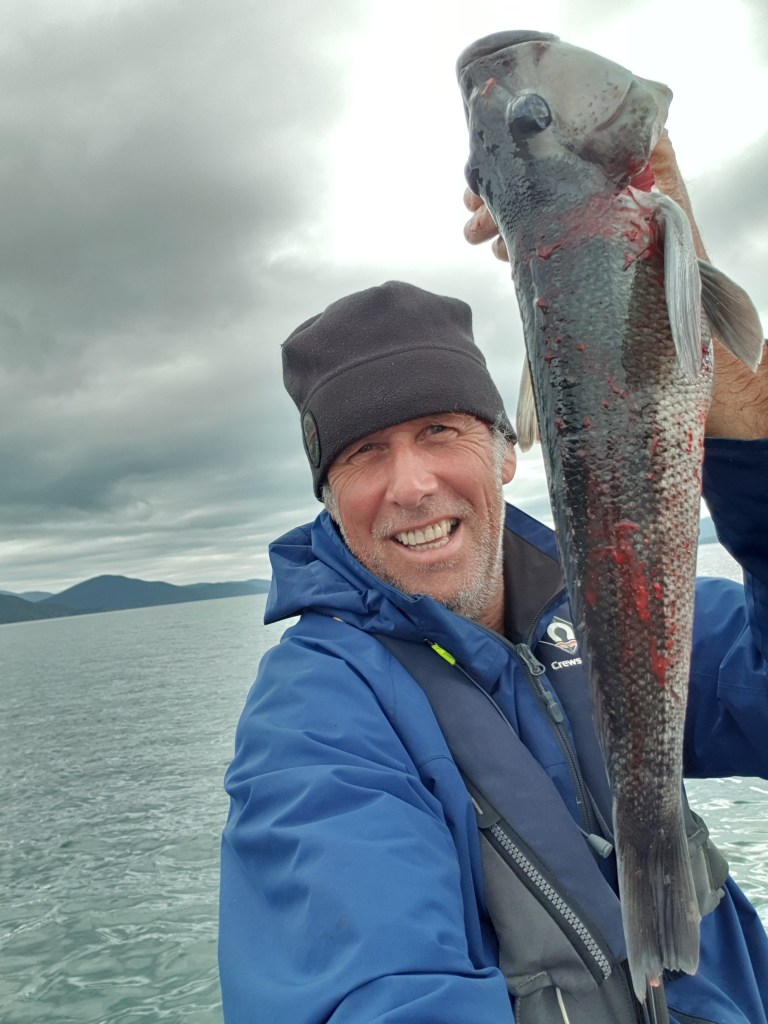
Naturally John was eager to land the local specialty, a blue cod, and after hauling in a second, much larger barracouta, plus a substantial one metre long spotted lemon shark, John finally landed a sizeable blue cod – which fed us all at dinner tonight.

It was a handy haul of fish, and certainly enough to keep us fed for two more days

We’d initially “parked” here as a temporary anchorage, but as the day drew and completing the maintenance tasks became our prime focus, there seemed little reason to move.  Consequently, I fed out another 10 metres of chain, attached the “snubber” (or spring-line) to the anchor chain and made things comfortable.  The stillness aboard was amazing, so much so that you could have played snooker in the saloon – there was just no discernible movement.

Not quite a blue cod, but two days feed to be sure … you want fries with that? … you bet
It’s the little things that make all the difference

As the sun went down, the sound of penguins and other birds could be heard coming from the nearby islands, with the continuing calm weather leading us to consider sailing a bit further south tomorrow to explore more of the Stewart Island coastline.  There are just so many bays, coves and inlets that I’m sure the early European explorers struggled to find names for them all.  As a result, there are places with names like … Chew Tobacco Bay, Abrahams Bosom, Sawdust Bay and Harry West Bay.  The two I’m keen to explore are, Sailors Rest – referred to in the guide as a “funk hole”, and Glory Cove.

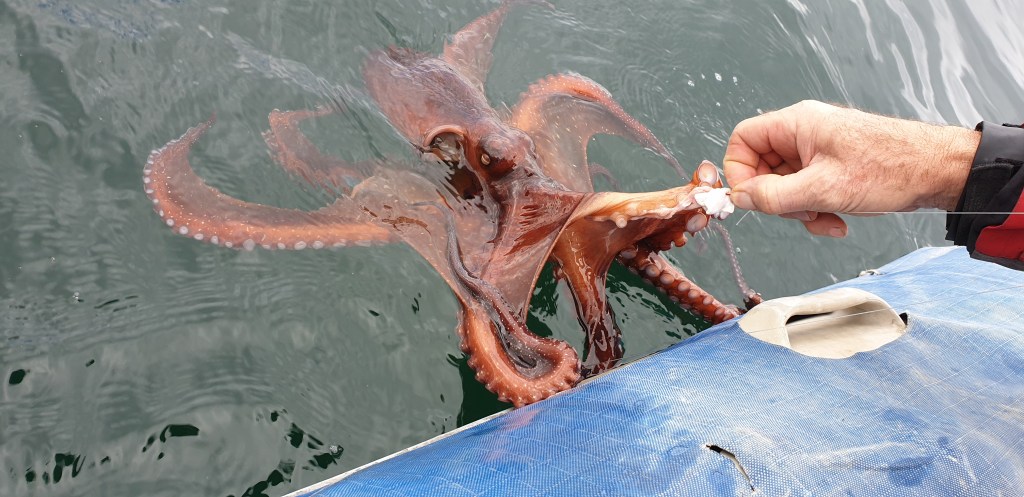
We even caught a rather large octopus … but after gazing into those cute brown eyes, we had no choice but to let him go
Kingdom saved … John finally caught the subject of his dreams, a healthy sized blue cod
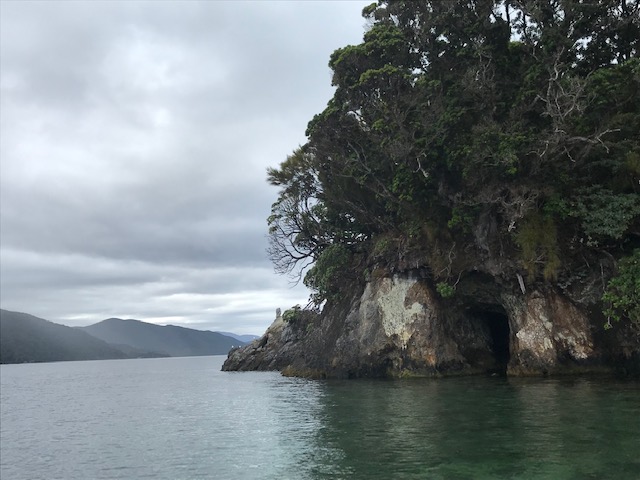
Some of the ancient looking landscape looked like it was straight out of Lord of The Rings
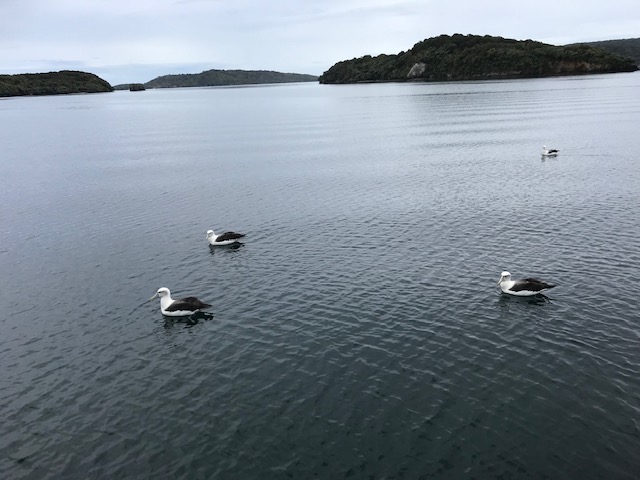
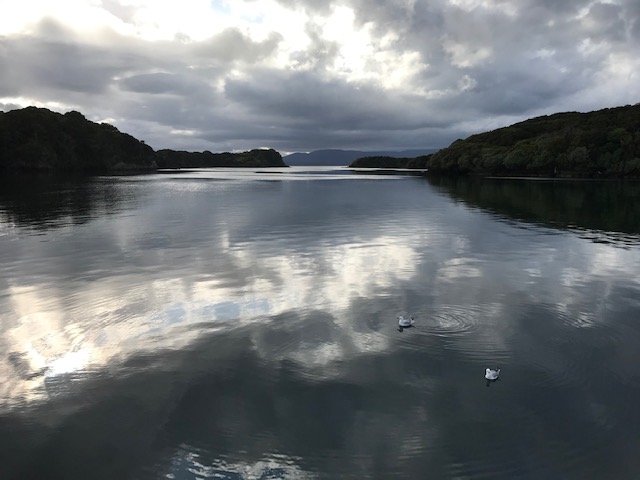
Birds sitting on water …
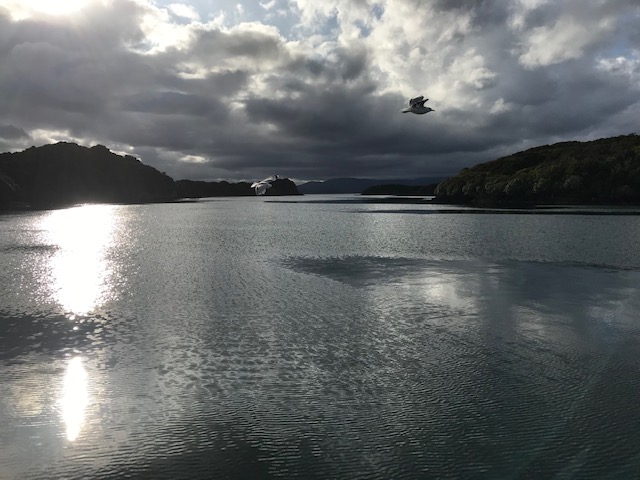
Bird flying …

After our dinner of fish … again, beautifully prepared by John,  it was time to charge the batteries by running the generator for a few hours … then sleep.  Whilst the weather forecast looks a bit average for arears to the west of us, with wind speeds of up to 55 knots, al seems pretty calm in our postcode.

Smooth seas, fair breeze and breaking the fish drought

Rob Latimer
South to Stewart

Oban, (Bragg Bay) Stewart Island

Monday 24 February 2020

After a day and a half at Bluff, we were ready to get moving again.  Not that we didn’t enjoy the simple charm and hospitality of this wee town, tied up as we were, just a short stroll across the road from all the local amenities.  It’s just that we wanted to start exploring Stewart Island and it seemed that the weather forecast was creating a brief window of opportunity for us to squeeze through.

Plus, there was the issue that if the wind direction changed too much, instead of being blown off the wharf, we’d be blown onto the wharf, making for more vigilance in protecting the boat from the large wooden piles as the tide came in and out.  There was also the issue of eventually extricating ourselves from this cul-de-sac, always made more difficult when being blown “onto” instead of “away from”, a solid structure.

First things first … being Monday, John wandered up to the local fisherman’s Co-op shop and came back with an array of serious fishing equipment, including rod, reel, jigs, lures and advice.  Originally having a scientific background, John was starting to do his research.  Contrary to the Chimere “theory of fish”, apparently fish don’t catch themselves.  It requires knowledge and a combination of many things, including – time of day, types of rig, state of the tide, phase of the moon, depth of water, elevation of the sun … you get the idea.

In search of the elusive internet connection … while looking like a worshiper of both the sun god Ra and the communications god Ba.
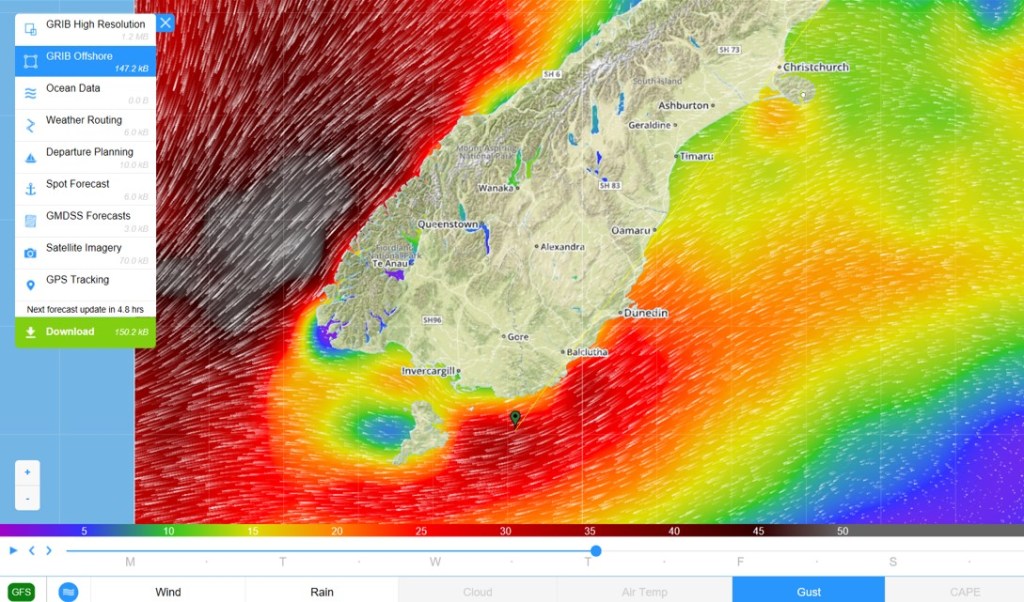
Weather patterns in these parts are fast changing and localized … shaped to a large part by the topography. As you may have guessed, “Blue” is calm and “Black going on White” is at the other end of the wind spectrum

John had been dreaming about catching a ship load of blue cod, or at least one, and was determined to tip the balance of probability in our favour, even though the local cruising guide for this area described them as “… attacking your hooks with suicidal intent…”

Back to leaving Bluff … the wind had started dying off and so over breakfast, our tentative plan was to be away around 1:30 in the afternoon.  I was keen to pick a time when the inter-island ferry was NOT going to be parked right behind us, but as we weighed up all the pros and cons of different departure times, Carsten suggested … “what if this morning we leave, 9:00am, it would be better for the tide, and we would have more time on arrival”

Leave in one hour’s time?  Yep, it sounded like a good plan.  Let’s make it so!

In the end, there wasn’t a lot to do in getting ready to head off.  Then around 8:45am the ferry turned up, did its usual circle and parked about 25 metres behind us.  Rats!!  Now that’ll make things a bit awkward!!.

Up till then, my exit strategy was to slowly back out from the wharf on a slight angle, sufficient distance to then circle forward where there was greater sea-room and to lessen the chance of hitting the wharf piles with the dinghy, which hung on davits from the stern.  Now, with far less room on the stern, a new strategy was needed. 

For a brief time, we attempted the “back-out-on-an-angle” manoeuvre, naturally a sharper angle on account of our new obstacle astern of us.  But it was soon apparent that with the change of wind, the closeness of the ferry and the “throw of Chimere’s prop” – which does NOT naturally throw the stern of the boat to starboard as required, but the other way – we would have to go out forwards, or stay stuck bro; at least for the time being. 

The problem with the exit-forward strategy was that we were in a dead-end berth, with maybe 30-40 metres ahead of us and not much more to our starboard side to complete a 180-degree turn.  Then there was the dinghy protruding 2 metres from the stern, which we naturally didn’t want to damage. 

Our safe and damage-free exit from our cul-de-sac berth on the far side of the ferry was 50% teamwork , 50% experience and the rest was just good luck …

After a brief exchange of instructions, from helm to bow and back again, the new strategy was quickly hatched, with John and Carsten pushing the bow away from the wharf as far as they could by means of boat hooks, acting as a kind of manual bow-thruster.  Inching forward into the space between our wharf and the wharf to our right, all the while  ensuring the stern was sufficiently far enough away from the piles to clear the dinghy, we executed a perfect “spin on the spot manoeuvre”, (much to the disappointment, I’m sure, of those gathered up on the wharf, and the ferry crew too no doubt, all wondering how this piece of drama was going to play out) making me wonder why I hadn’t thought of this approach at the start.   I suppose I just didn’t think there was enough sea-room ahead of us to do anything. 

The impressive thing about a spin-on-the-spot turn, is that it uses the natural turn of the prop to “throw” the stern – in our case – to port. Once you’ve done this, you follow it up with a forward thrush, which then spins the bow to starboard, accentuating further the stern’s initial push to port.   Of course, one of the most disconcerting things with all of this, is that you’ve got to use pretty high engine revs – in both reverse and forward gears – not something you usually feel inclined to do in such a confined space. 

“All clear on the stern”, called John … “All clear on the bow”, called Carsten …

HARD REVERSE … steering wheel to starboard … HARD FORWARD  … and after completing this two or three times more we were good to go … heading out of the berth – no damage – and on our way to Stewart Island.

It was a fast ride to Oban, with an average speed of around 8 knots
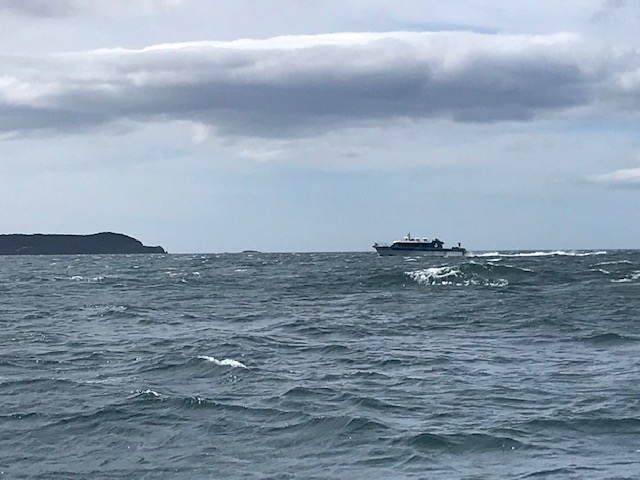
The local ferries go back and forth several times a day – doing over 20 knots

The 24-mile dash south across Foveaux Strait was a fast affair, taking just 3½ hours, with speeds of 8, 9 and even 10 knots at times.  The wind was growing in strength as we progressed, so that by the time we reached Oban – the only settlement on the island –  it was blowing over 25 knots and gusting above 30 knots, with the bay just a sea of white caps.

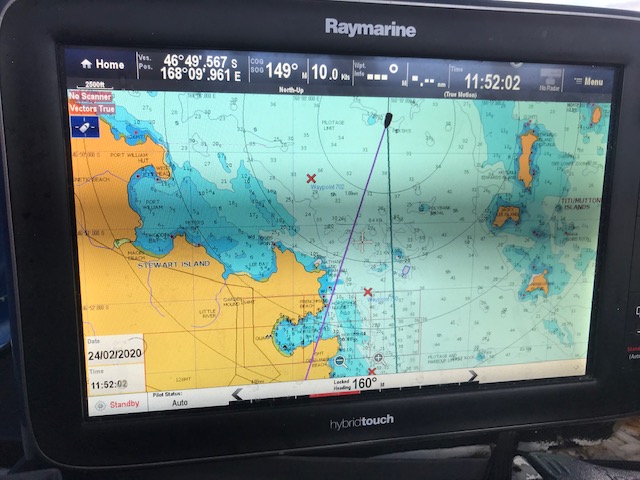
The “10” on the top line is our speed … not a number we see very often … particularly given we were travelling on flat seas, with just a small amount of sail hoisted

We chose an anchorage on the edge of Halfmoon Bay, called Braggs Bay, to sit out the gale, which lasted several hours; naturally reporting our movements to Mary on Bluff Fisherman’s Radio, VHF Channel 61.

By the time I took this photo the gale had ended and it was as calm as bro …

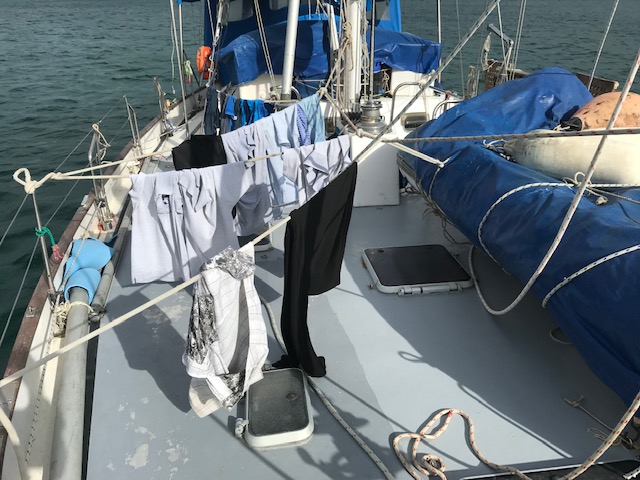
With time to kill, and only one pair of clean jocks left in the cupboard, I’d run out of excuses to do some clothes washing.  This I did, being especially careful to ensure nothing blew over board.  The weather was “good for drying”, just that no pegs could hold the clothes on the line, making it necessary to thread a line through the arm and leg holes of each item before stretching it back and forwards across the foredeck   

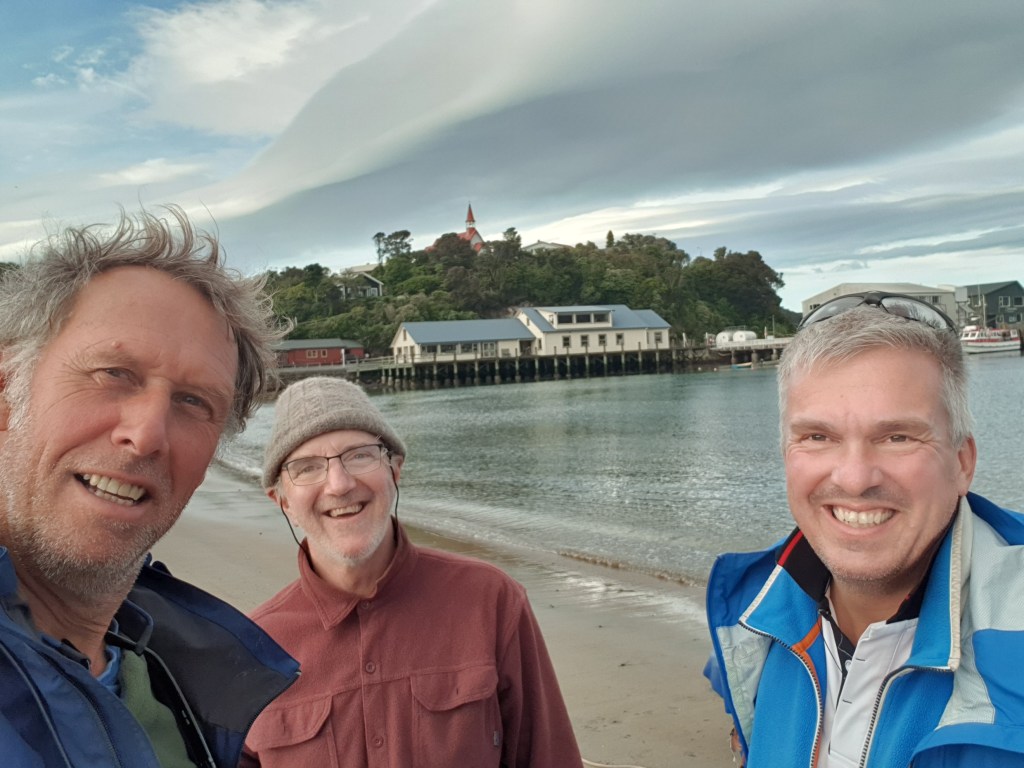
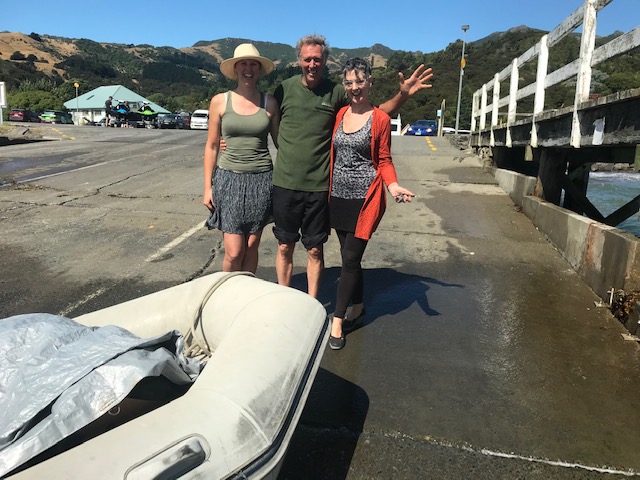
Stepping ashore at Oban, Stewart Island … a good feeling, John, Rob and Carsten
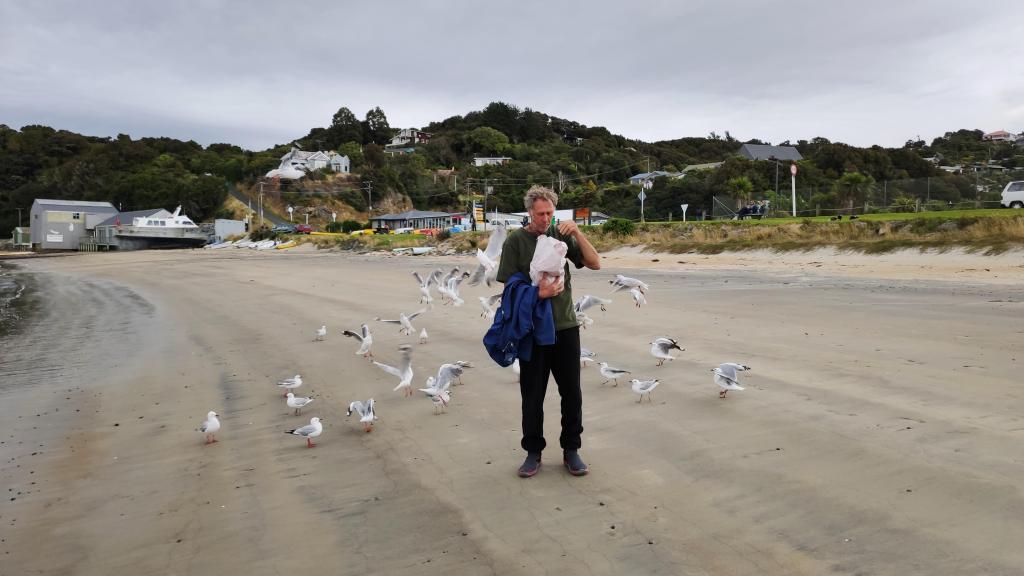
The ever-present sand flies had us returning to Chimere – a safe distance offshore – to finish our fish and chips … for some reason John’s new best friends were sad to see him go …
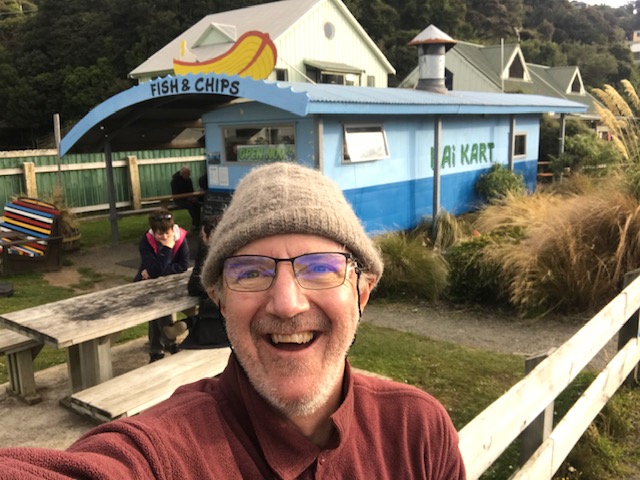
Authentic Stewart Island fish and chips

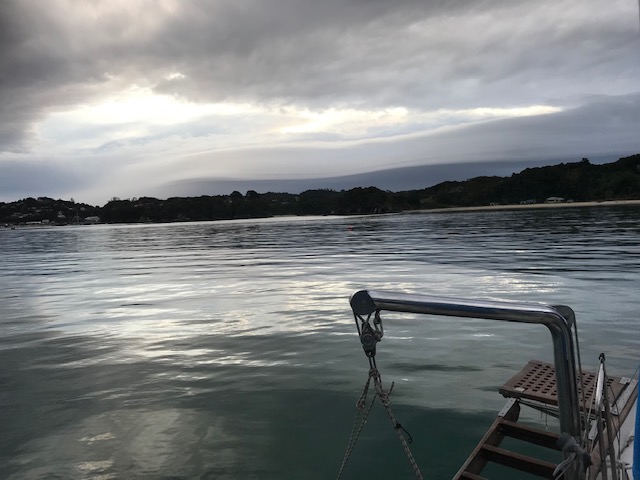
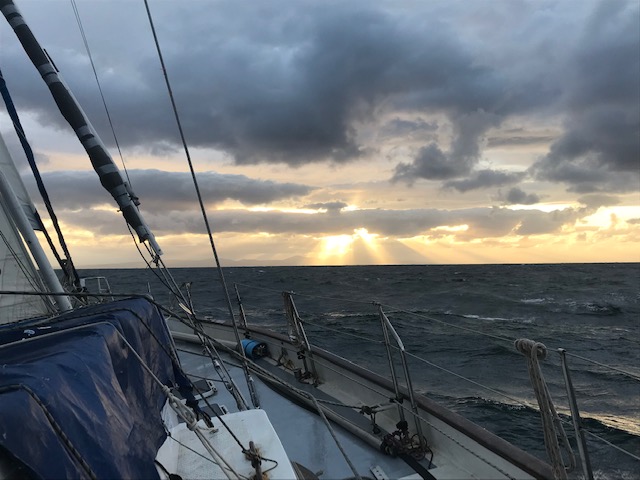
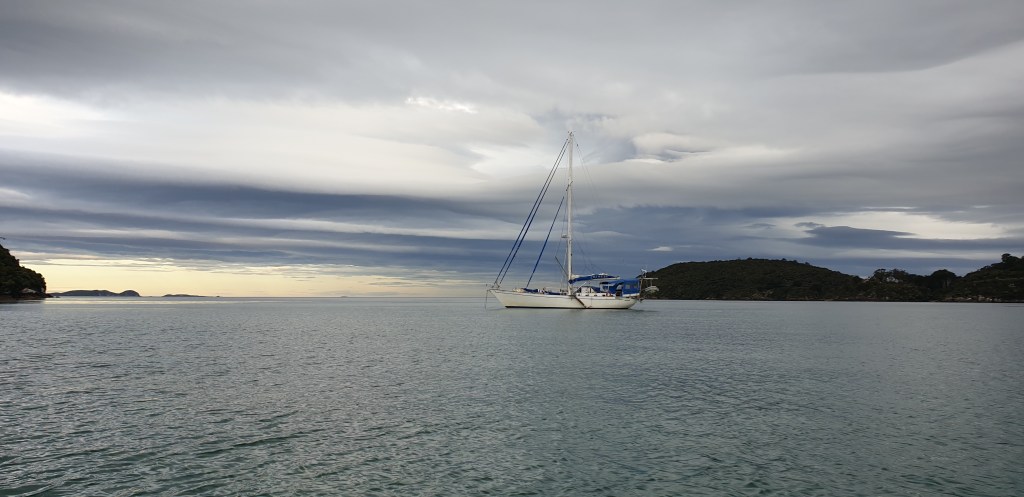
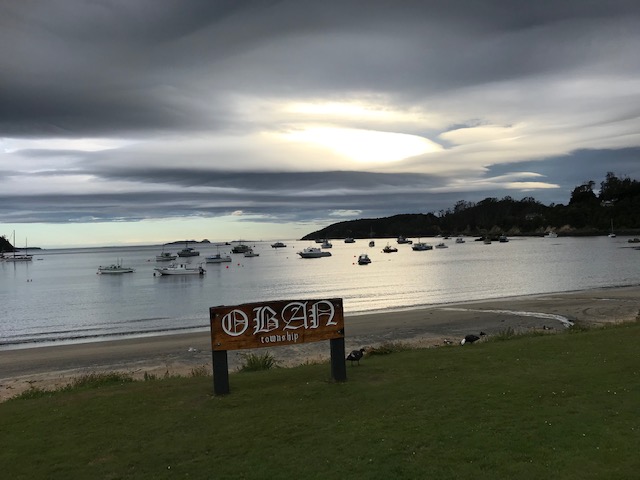
Then, in late afternoon all went still.  Like someone had turned off the “wind tap”, leaving behind a surreal stillness and a cloud-sculptured sky in a hundred shades of grey. 

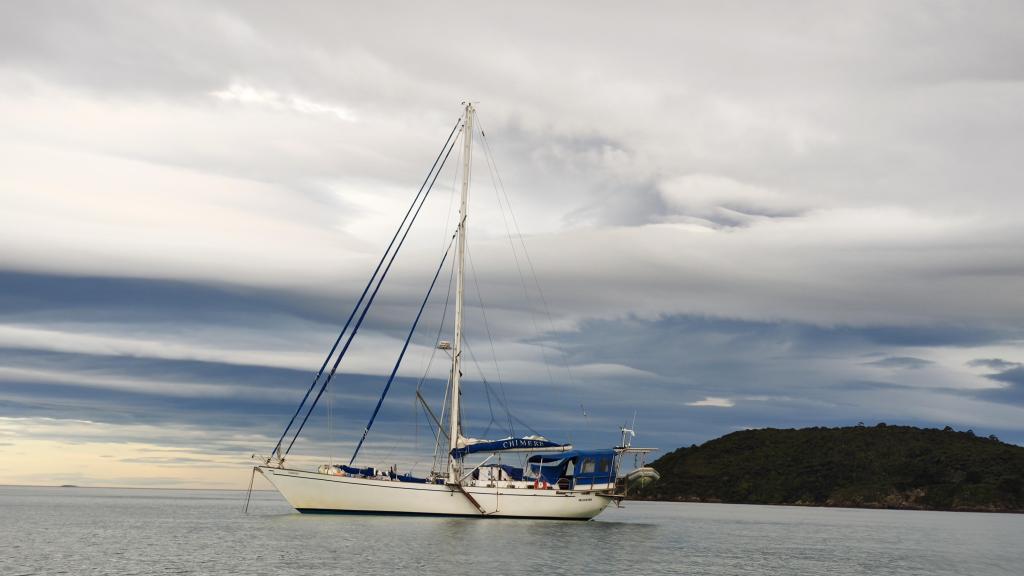
After the gale, the sculptured sky was an impressive sight … so was our beloved Chimere at anchor
The settlement of Oban, Stewart Island
Good from any angle

This gave us an opportunity to launch the big dinghy over the side and nick ashore for a look-around and photo-op.   Pretty soon we were checking out the local pub, full of tourists and locals, before getting stuck into some distinctly local fish and chips – blue cod of course, building John’s resolve even further to catch his own.

We tried to eat the fish and chips ashore, but quickly realised we’d forgotten to prepare for the impact of sand flies – retreating quickly to the boat at anchor across the harbour

The stillness remained throughout the night, leading to a very sound sleep for all

Smooth seas, fair breeze and South to Stewart

Rob Latimer
There’s Something (very special) about Mary

Bluff Ferry Wharf

Sunday 23 February 2020

It was an understandably late start to the morning, with the saloon and cockpit still strewn with items from the day before’s bumpy ride.  Rugs, cushions, books, hand tools, plates, and the occasional stray piece of wet weather gear, all were still where they were thrown, or fell, awaiting return to their designated spot.  Adhering to the old adage … “a place for everything and everything in its place” … is clearly not always achievable.

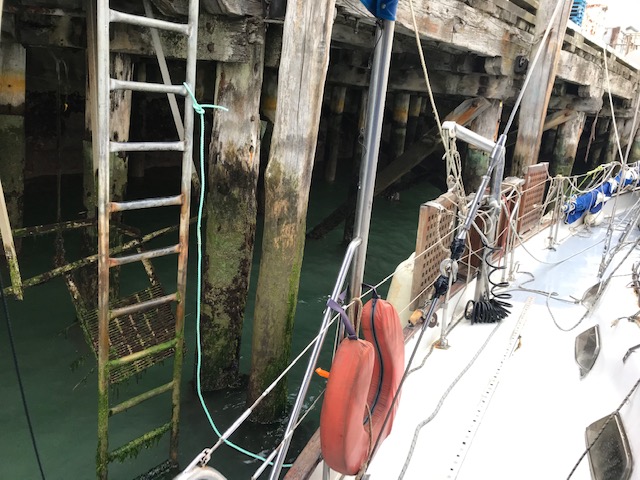
The view out our side door … keeping the delicate ladder structure from being destroyed was uppermost in our mind.
Note the light cord attached to the steps to assist in crossing the wet gap between the boat and the wharf
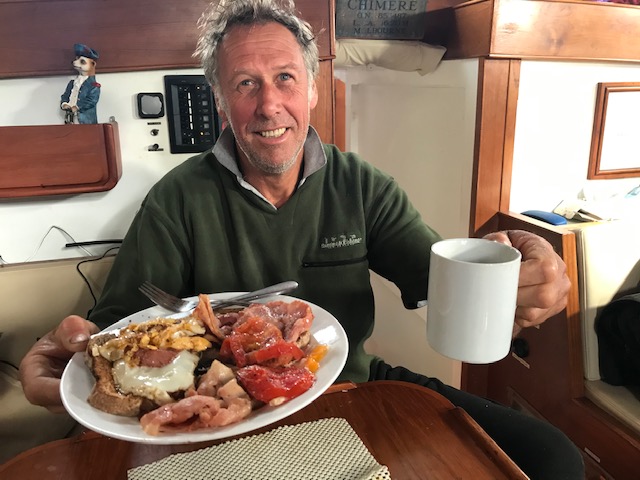
John catching up on his nutrition after the day before’s marathon sailing stint down the coast

The weather was still blowy, with the occasional passing shower and despite our sheltered location, snug inside two wharf figures, we were still rocked up down and from side to side throughout the night.  Mercifully, however, the wind was coming from the bow, enabling us to remain blown off the piers of the wharf, with our lines arrange to ensure minimal disturbance and damage as the 2-3 metre tide came in and out.

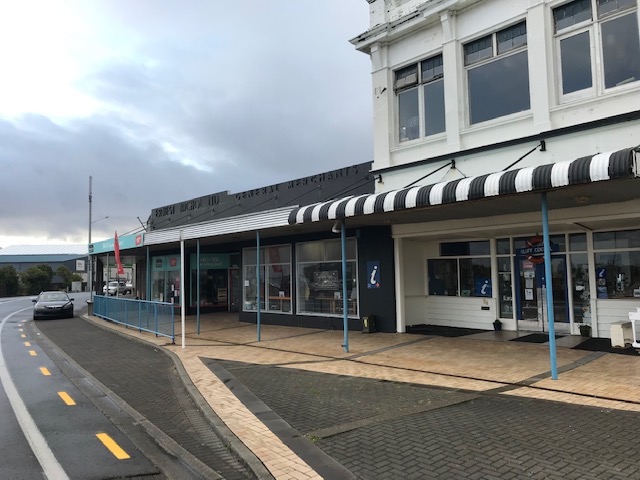
Bluff main street
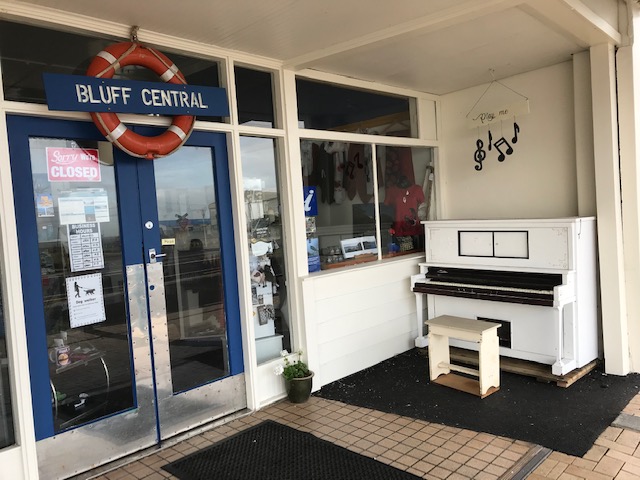
Here’s a nice touch … “Please Play Me” … who knows where the next Elton John might be found

Given the choice, we prefer to tie up to anything solid on our starboard side.  In this case, given the layout of the wharf, it was clearly not possible, requiring us to tie up port side (left), where we have a large wooden and steel – and rather delicate – ladder structure that protrudes out from our side.  Even a quick and gentle “brush” with a solid object, could bend or break this contraption; given our 27-ton weight, traveling at only half a knot carries an awful lot of force.

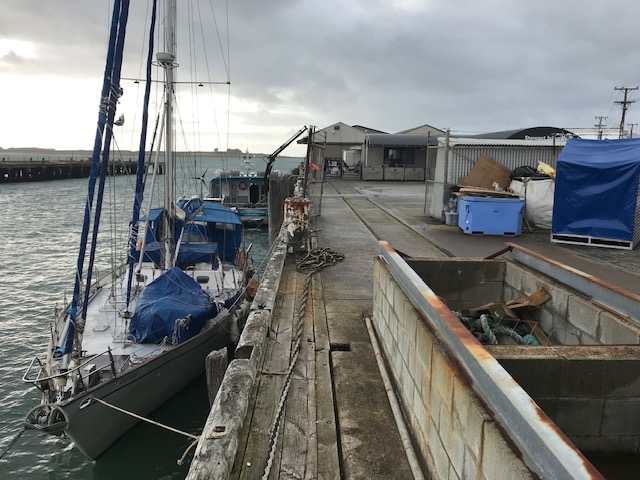
You can see the mast of Chimere dominating the local landscape

In any case I was only up a couple of times through the night and so by around 8:00am I was ready for a walk up town to take in the sites. 

Being a small town, this didn’t take long, with the architecture, layout and “vibe” speaking of a more profitable and vibrant past.  Not to say that present day eco-tourism and other new forms of business weren’t having a beneficial impact on the local economy, but if it wasn’t for the employment stability and activity of the nearby aluminium smelter, which apparently consumes around 15% of New Zealand’s total electricity output, things around here would be even sleepier.   

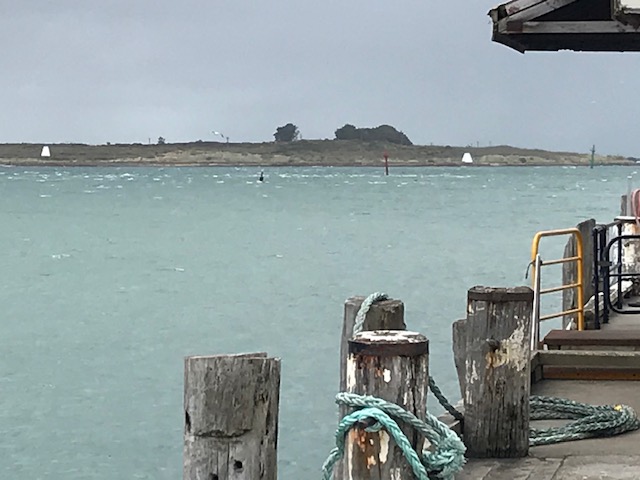
the tide and wind can whip up some tricky conditions out in the channel
A good day to stay indoors

True to her word, Mary dropped by to check on us, sitting on the pier above to chat, her mobile VHF radio poking out of her handbag.  Like a mother hen taking care of all her sea-going chickens, Mary passed on lots of local essential information, such as … where to buy groceries and the best drinking establishment and … “don’t hesitate to call if you needed anything”.

Having been here only half a day and hearing Mary talk on the airwaves to dozens of craft, at all hours, then deliver the regular weather forecasts, it was clear that Mary knew a lot about a lot of things.  In particular people.  Their travels, news and secrets.

The face behind the voice … Mary was keen to help one of her seafaring “chickens” in what ever way she could
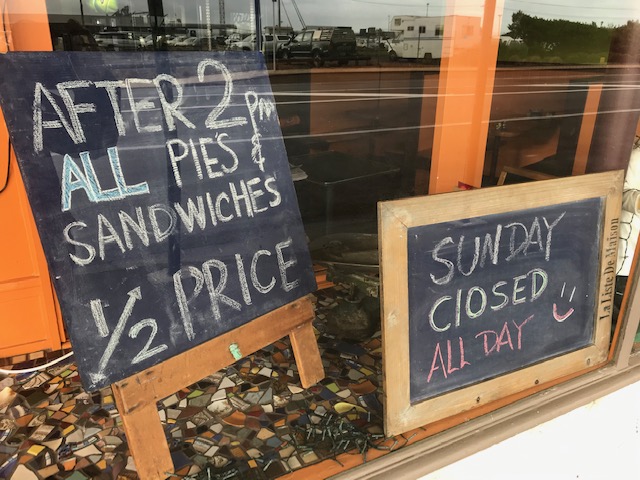
Not sure that telling everyone it’s half price after 2pm – everyday – is such a good business strategy…

“I’d love to read your book when it comes out Mary.  It would be full of interesting and adventurous stories”, I suggested half-jokingly.

Mary was quick to reply in her jolly, direct way, “I’m NOT going to write a book.  My secrets will die with me.  People tell me a lot of things.  They trust me and often there’s no one else they can talk to when they’re out there”.

Wanting to find out a little more about Stewart Island I suggested to Mary that the local ferry office should sell topographical maps, like the one they have on the wall near reception.  “Don’t they sell them.  They should” returned Mary.  “I’ll see what I find”.  With this, she wandered off and returned a short time later with a colour booklet from the ferry terminal which she handed down with a simple … “there you go”

“You didn’t get me into trouble with the lady on reception, did you?” I asked.  “Yes, of course I did” came her reply.

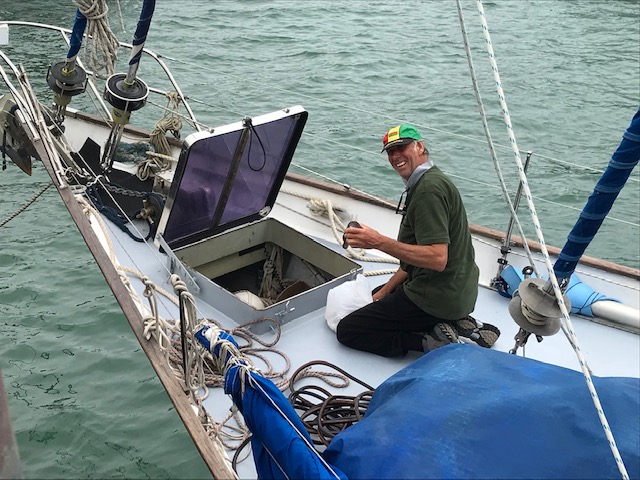
John finding something else to fix

After some more friendly banter, in which I suggested she’d be on double time, this being a Sunday, Mary was off again, reaching for her radio to answer a call from a boatie requesting a radio check of their call-strength.  “Copy you loud and clear…”

The rest of the day was pretty lazy, as we completed the clean-up aboard, walked a little further around town. Then had a beer and a packet of Cheezels at the crowded “Tavern”, packed full of local “identities”.  It was here we met and chatted with, a well-retired bearded chap who was full of stories about the region and the “wisdom of life”, as only to be found in such an establishment.

“So how many kids have you got?”, I inquired over the noise, not sure of exactly what he’d been saying.  

“I’ve got nine children”, he replied, to which John, the father of seven, cheered heartily. 

“And I’ve got 27 grandchildren and about the same great grandchildren”, he continued

We’d been here a few hours short of a day, and it was starting to feel like home!

We got in here OK, now we’ve just got to get out!
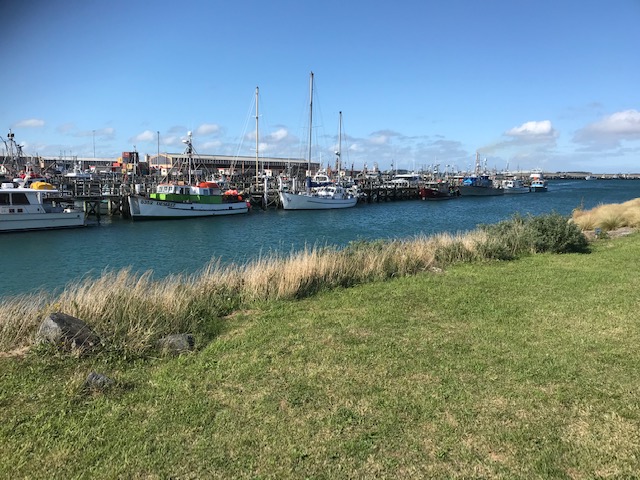
More wharves, more boats
“Are you sure we’re related …”
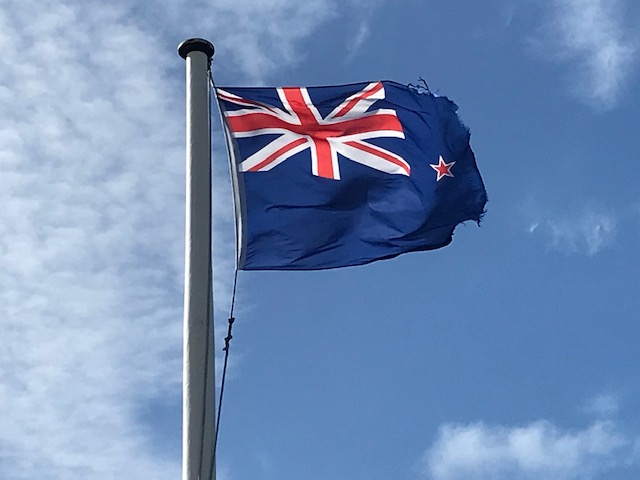
Bluff, a tough place to be a flag!

The crowd was thinning a little as we made our way to the door … “see ya fellas!”, yelled the well-built man from behind the bar … “cheers, bro”

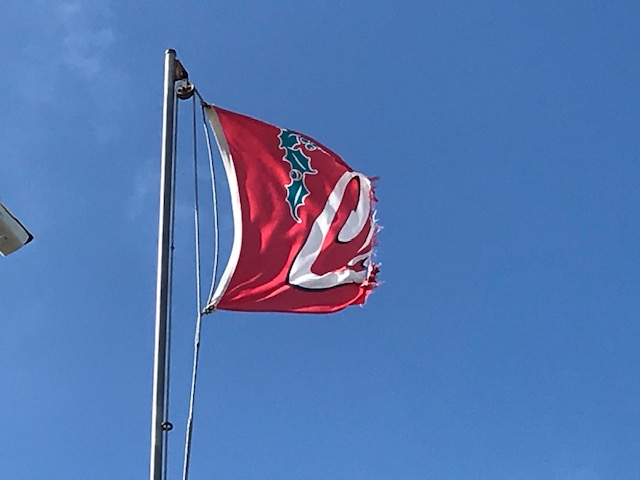
I think I know what Santa should bring this business next year …!?
Even after a couple of beers, it wasn’t hard to find Chimere – just across the road

It was a short walk across the road back to the boat, where John prepared an amazing fish-dish – from his earlier catch, washed down with a rather cheeky “Summer Breeze, Nelson 2017 Pinot Gris” … P&O eat your heart out!

After this, we were ready for bed, with a possibility of departure tomorrow – south to Stewart Island

Smooth seas, fair breeze and There’s Something (very special) about Mary

Rob Latimer
Zig Zag – Every Tack Tells a Story

Stewart Island Ferry Wharf – Bluff

Saturday 22 February 2020

The day began at 2:00am.  The time we had planned to rise, up-anchor and head away down the coast to our final destination of Stewart Island around 60 miles to our south.

Well, we all got out of bed as agreed, but after analysing the latest weather forecast – still blowing hard from the south west – our chosen course –  to the soundtrack of howling wind in the rigging, we all agreed that this was NOT the time to head away.  Warm beds were luring us back   

“Maybe we get up at 6:00am, and reassess things then” … I suggested, to which John and Carsten hastily agreed.

“Robert.  Robert.  Robert ! …”  I’m not sure how many times John had to say my name through the half opened cabin door, but finally something broke through my deep, dreamy sleep … and it was John’s ever-louder voice.

Dressed for action, the wind playing a softer, gentler tune in the rigging, we did all the last minute “putting away tasks” before we retrieved the 60 metres of chain we’d laid the day before and made our way out of the bay.

We would have hoisted a double-reefed mainsail, but we noticed that a “car” that attaches the mainsail to the mast and which allows the sail  to be raised and lowered smoothly, had broken.  Not just one, but three in fact,  This was a big set back, because our day’s sail would be into the wind and it was the mainsail that, when hauled in tight, would be giving us the main form of propulsion; allowing us to sail closer to the wind than either of the headsails; the jib and the staysail.

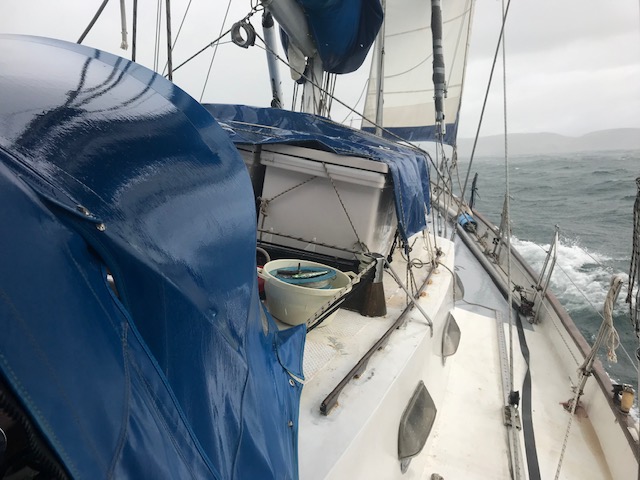
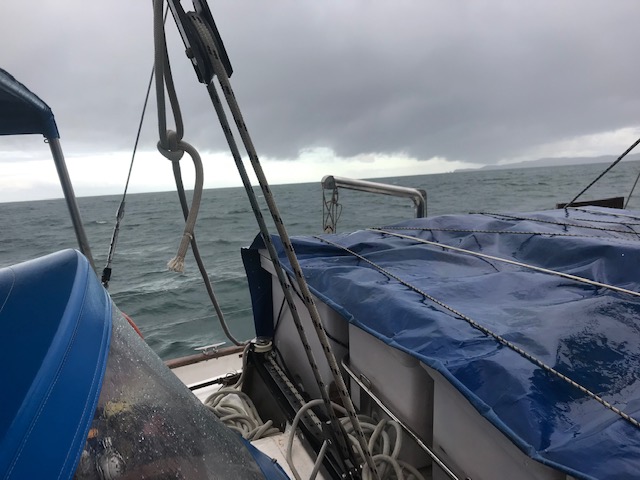
The day started reasonably calm … the rain helping to flatten the waves
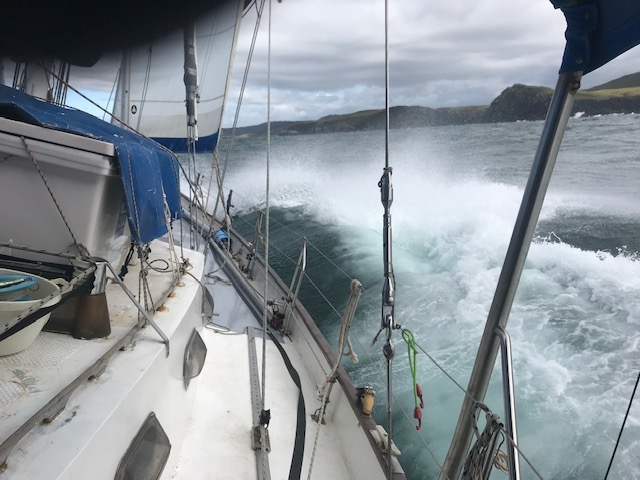
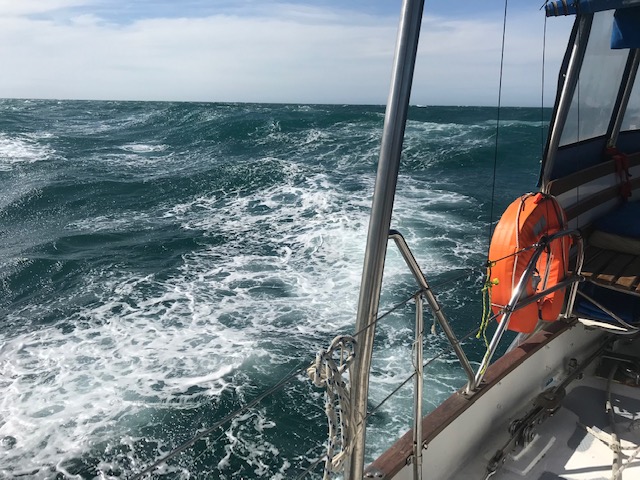
The further down the coast we traveled, the more blowy and bumpy it became
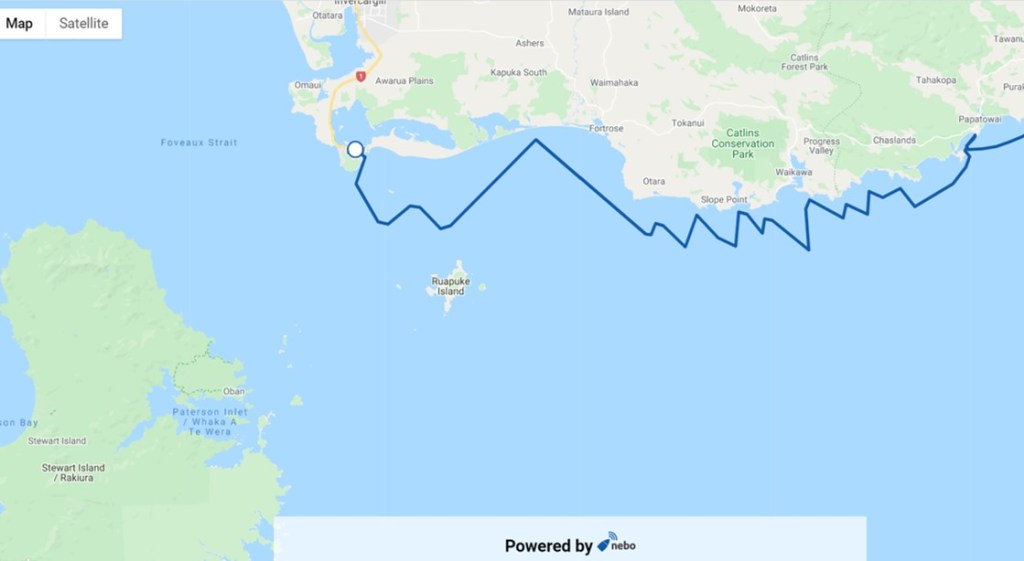
One tack after another, into the coast then out to sea again, slowly making our way down the coast

Normally, I have spare parts for nearly everything onboard.  In the case of the mainsail batten-cars, I had just one spare.  But it would take some time, in relatively still conditions, to remove the mainsail and make the necessary repairs.   For now, we had to get underway, as quick as possible, if we were to have any chance of making Stewart Island in daylight.

In the end, we set new lines to the third reefing points of the mainsail (a sail-setting I don’t think I’ve ever done in the 14 years I’ve had Chimere) and hoisted away.  In addition, we set the staysail, winched in very tight, and a small jib; maybe 25% of it’s usual size.  The three sails worked well together, but after more than 20 tacks and 15 hours of sailing, we were extremely pleased to tied up our lines at the Bluff Ferry Terminal – our allotted temporary berth – and relax.    

It’s said that the shortest distance between two points is a straight line.  And in the case of sailing, we like to draw a straight line between the start and the finish, and after allowing for common obstacle like headlands, islands and other hard objects, we set sail. 

All bets are off, however, when the wind is coming from where you want to go.  Often referred to as “on the nose”. Unless of course you’ve got a massive engine, leave the sails furled and just plough through.  That’s not an option for us … so inevitably, our only option was to plug away, tacking first this way, then that, either side of the wind, towards our ultimate goal.

With wind expected from the SW for the next few days, one option was to simply remain at anchor in Tautuku Bay for the duration.  However, the forecast appeared “milder” for the next 24 hours and our theory was that if we hugged the coast, the going might be manageable?  In the end, this partly worked – the first part of around 2 hours being relatively OK, the other 13 hours being just a constant slog.

The record of our sailing track tells the story, with each individual zig and zag revealing a unique combination of factors.  Such as … maximising the shelter of the land and any available wind shifts – while staying in sufficiently deep water, plus (if you look close enough) also highlighting particularly crooked sections where we’d stuffed up a tack, wandered off the wrong way for a time, or battled to keep a straight line in the face of mounting seas – we mostly blame these on equipment failure.

After 15 hours of sailing and over 20 tacks, it was a welcome relief to finally tie up at the Bluff wharf

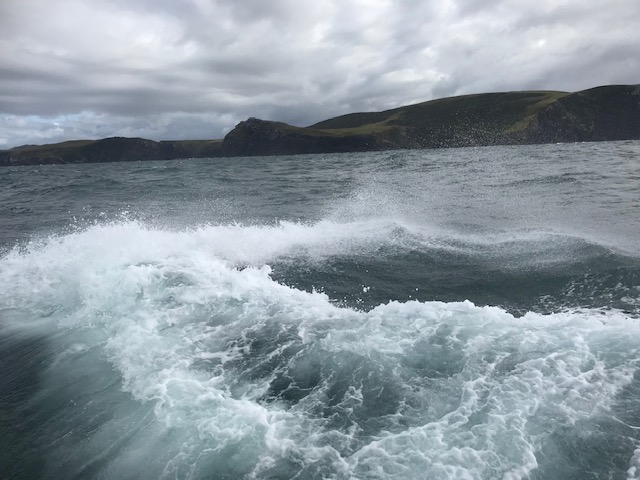
As the day wore on, rain squalls were replaced with sunshine, which in turn were replaced again with rain showers, it had very much a Bass Strait “vibe” about it, made even more so with the appearance of mutton birds soaring and diving on the wind.  It occurred to us that we were NOT going to make it to Stewart Island – at least not today.  Our focus now turned to going straight for Bluff, as we were anxious to arrive, somewhere, before dark.

The rougher it got, the less inclined we were to pull out the camera
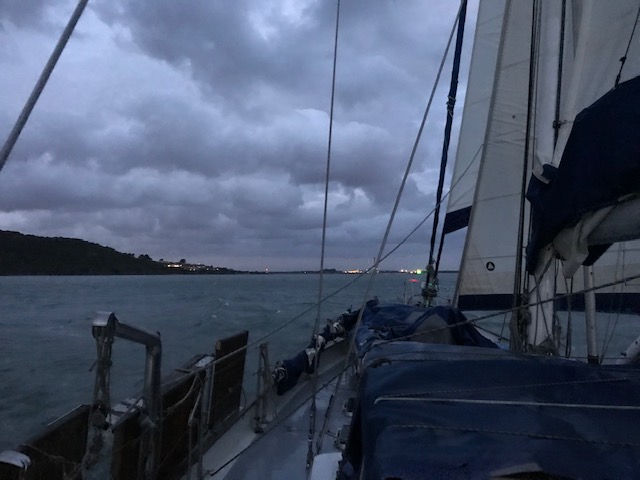
It was a race to against time to reach Bluff before darkness descended

Once the decision was made to head for the (closer) harbour-town of Bluff, I called ahead to Bluff Harbour Radio on VHF Channel 16 to inquire about the availability of a berth.  They received my call and suggested I contact Bluff Fishermen’s Radio on VHF Channel 61.  This I did and who should come on the air waves but a woman by the name of Mary. 

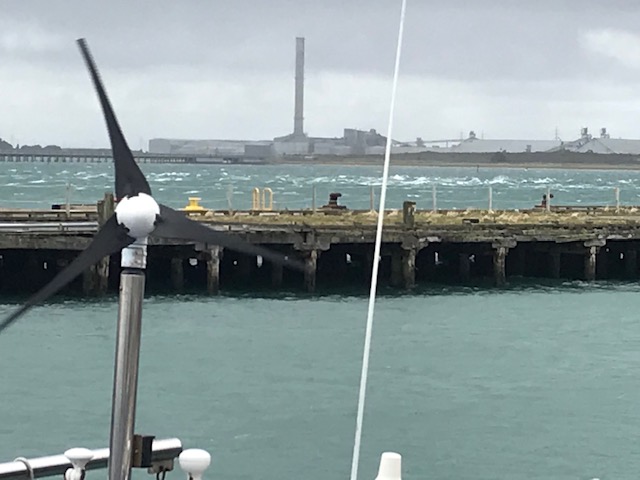
Final approach to the port town of Bluff, where 15% of New Zealand’s electricity is consumed by the local aluminium smelter

Now I’d heard about Mary from a fellow-sailor I’d met before leaving Westernport.  The well-known, life-time sailor and well-known international author Lyn Pardy; who just happened to be at Westernport with a man called David aboard his yacht called Sahulu.

“Mary … she knows everyone down in the Bluff area”, said Lyn in her distinctive Californian accent, “She was so helpful when we sailed down that way a year ago.  We were on the radio to her regularly, and she is an institution”

So, this was THE Mary I was now talking with …

“Is there any chance of a berth?  We are a 53-foot yacht, 3 people onboard, (POBs) we expect to be arriving in Bluff, around 8:00pm – before dark – over”, I inquired. 

“Leave it with me.  There are a couple of options.  I’ll get back to you.  Do you have a pen handy … this is my phone number.  If you can call me after the radio schedule and weather report I’m going to do shortly, I’ll have more details for you, over”

“Roger that Mary. Many thanks. Will do.  Chimere out” … I responded, just amazed at how cheerful, efficient and helpful this person was to me, a total stranger announcing my arrival in a few hours time.

We then listened to Mary give the 5:30pm national weather-situation report, with particular focus on this region.  Followed by scheduled cheerios and call-ups, to a dozen or more yachts and other vessels, spread across Stewart Island and Fiordland.  Each reporting their current position, revised POBs (after all, it might have changed from last night’s scheduled call-up) intentions and other necessary information.

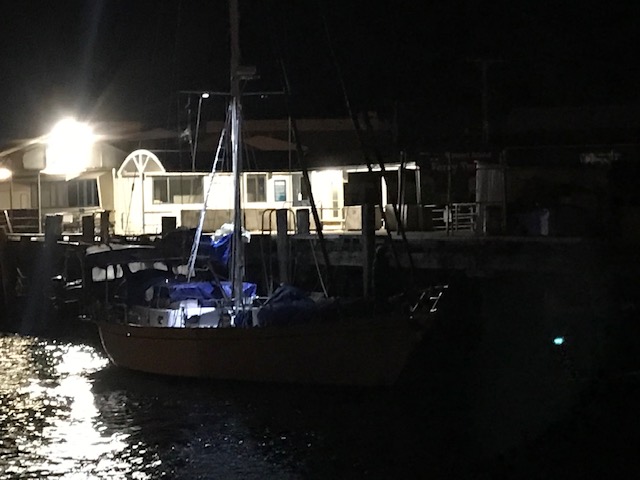
Night approach into an unfamiliar berth, in a strange port was something we had tried to avoid
By 11:00pm we were definitely ready for bed
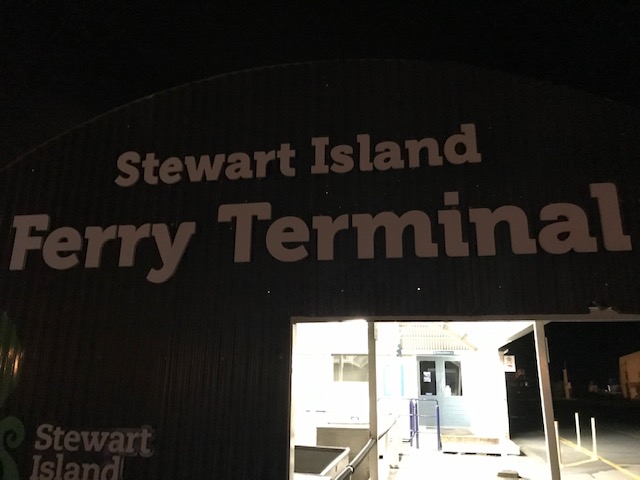
We were allocated a berth at the Stewart Island Ferry Terminal, safely out of the way in the corner of the wharf.

My conversation with Mary a short later, led to a new contact “Chris” … “… here’s his phone number, but don’t give it out to anyone.  Call Chris because he should be able to give you a berth behind where the Stewart Island ferry comes in.  Call me back when you’ve spoken with him, because if that doesn’t work out, I’ve got another option”

Chris confirmed that we could pull up behind the ferry docking point, just behind a fishing boat called Mana, and stay there a few days.  Chris provided further details about the exact location of the berth, how to enter, what side of the boat to have the fenders etc etc, all of which I wrote down as quickly as possible.

A bit after 8:00pm, we were still miles from the port, tacking our way across Toetoes Bay into ever-stronger winds and mounting seas, making sure to keep well clear of the shallow waters close in to Dog Island (as advised  week ago in Lyttleton by a Bluff-local)

“Hello Mary, we are taking longer than expected.  We will probably be in a bit after 9:00pm now” I said.  Hoping to keep her up to date on our movements.

“No problems. Give me a call as you make your approach and I’ll come down and help you with the lines”, responded Mary, in her now familiar cheerful, no-nonsense way.

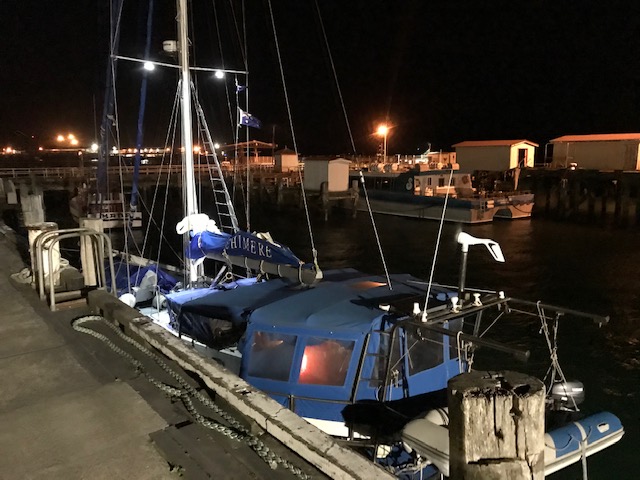
So it was that around 10:00pm we finally tied up, with Mary waving a torch to show us where to go, and then looping our lines over the bollards on the dark, cold wharf.  “Make sure you put a loop in it before you throw it at me”, she said, standing high up on the dock, the tide well out.

“So, you’re all set for the night.  I saw you coming up the channel.  I can see you from my home.  Make yourself comfortable and I’ll pop back down in the morning (that’s Sunday) to check on you and see if you have any problems or questions.  See you then”.

Our amazing arrival and welcome to Bluff complete, the lines securely fastened, the wind above whistling a higher pitch tune in the rigging, John, Carsten and I retreated to the warm saloon and after a brief convening of the “Catering Committee” agreed that a beer was definitely in order..

Hunger and sleep, mixed with significant amounts of exhaustion had us knocking up some toasted cheese and ham sandwiches before retreating to our respective cabins.

We had arrived.  We’d tied up safely, in the dark and the adventures of tomorrow, in a new town beckoned.

Right now though, sleep was the next and only thing to do.  

Smooth seas, fair breeze and zig zag – every tack tells a story

Rob Latimer
Whoa back, slow down girl!

Tautuku Peninsular – North Side

Friday 21 February 2020

As our second night at sea approached, engine-assistance to maintain our speed had definitely come to an end, with the strengthening nor-east wind from behind causing us to shorten sail … once, twice, three times over the course of the afternoon … and still our speed seemed to increase every time.

Despite the strength of the wind at around 25 knots, it was a comfortable ride, the swell from behind was well behaved and predictable, with only the occasional “rouge” wave doing extraordinary things to drop a few splashes our way.   

The evening therefore started with a double reefed main out the port side, with around half the jib set, also poled out the port side.

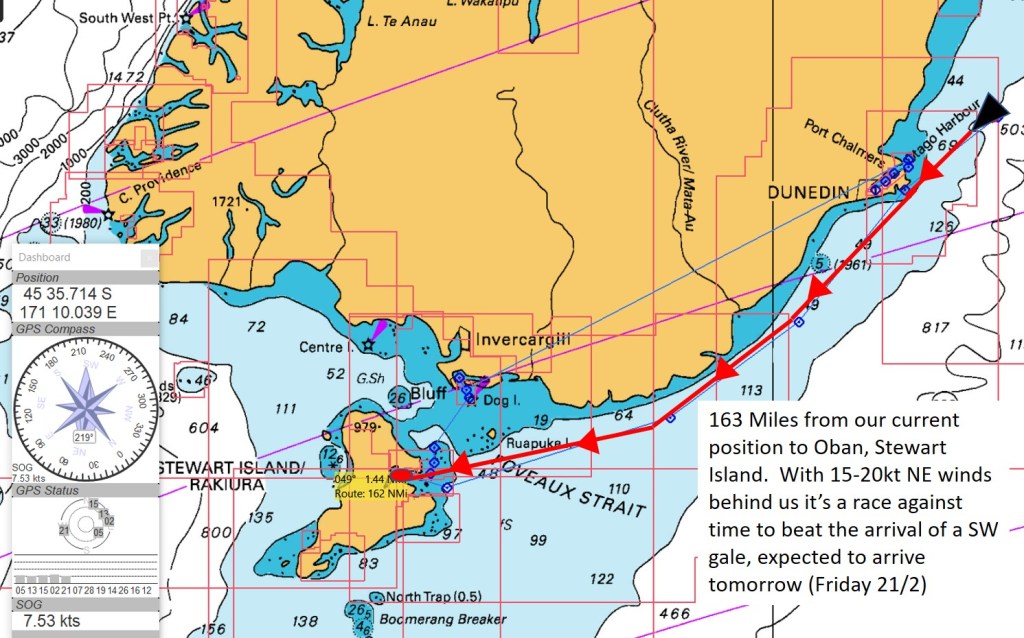
After racing down the coast on a speedy track to Stewart Island we came to realised we were not going to beat the expected SW squall. As a result we did all we could, short of putting the engine on in reverse, to seek shelter at Tautuku Bay, where shelter from both the NE and SW winds could be found
Welcome of dawn and arrival at our sheltered anchorage
Sunrise showed signs of the foul weather to come
clouds building in the SW

We were doing around 8 knots as Dunedin slipped by on our starboard side and our race to Stewart Island before the arrival of tomorrow’s big blow looked assured. 

Prudence dictated the downloading of another weather forecast, on the SatPhone, in the early evening and after some calculations of distance, expected speed and weather-front-arrival-times, I came to the conclusion that:

1. We were NOT likely to reach Stewart Island before the arrival of the weather front

And

2. If we travelled further than Tautuku Peninsular, 75 miles south of Dunedin’s Cape Saunders, then we would have no suitable anchorage in which to shelter when the big blow hit; leaving us in exposed waters meeting the gale head on

It’s not that Chimere and her crew weren’t up to beating to windward and bashing into rising seas, when called upon to do so.  But given the choice, of comfort, verses discomfort, we were starting to err on the side of retreating early in order to fight another day.

The cold front approaches
We found shelter before the arrival of the SW squall and for a time thought … “what was all the fuss about, we should have continued on” … then the Squall hit us around lunchtime at gusts of up to 45 knots and we were pleased we’d sought shelter in advance.

So, the decision was made … we would aim for Tautuku Peninsular, where the cruising guide suggested we could find shelter, first from the current nor-easter, then from the south west gale when it arrived mid-morning. 

The dilemma we faced, however, was that at our current speed we would likely place us 30 miles south of Tautuku by morning.  Reaching the sheltered anchorages of Tautuku would require us to drastically reduce speed, more than halving it to 3-4 knots.

We started by pulling down the double-reefed mainsail – a task in itself, at night in a following sea.  We were still doing 6-7 knots.  This was followed by a progressive reduction in the size of the jib till it was little more than the size of a table cloth for a card table.  Still we were doing 5-6 knots, increasing to 7 knots down the face of the advancing waves.  The reality was, our coach-house and the boat itself was acting like a sail, pushing us along at a handy speed regardless of the sails.

It was a strange sensation, trying to reduce the speed of the boat, when every instinct to that point being about going faster at almost every opportunity.

In the end we decided to head further out to sea, thereby increasing the distance covered, with the plan being to curve back to the coast at Tautuku Peninsular, where our arrival would coincide with sun rise; unfamiliar, rocky headlands, bays and inlets not being places to muck about in in the dark.       

One amusing thing at the change of shift around 3:30am, saw me climb the companion way to take over from Carsten who’d been on watch around 12 midnight, only for him to say …

“Wollen wir die Fock jetzt auf die andere Seite nehmen?”

We were both a bit blurry-brained, and wanting to hear the question properly, I inquired politely … “what’s that?”

“…oh, I am speaking German, sorry …  will we take the jib to the other side?”

I wish I could do that.

Our plan worked a treat and after reaching Long Point a bit further north at 6:30am, we pottered down the coast, finally dropping the anchor behind Rainbow Isles which, whilst not mentioned in the cruising guide for the area, gave a good level of protection from the north east wind and swell.

Seagulls on steroids!!
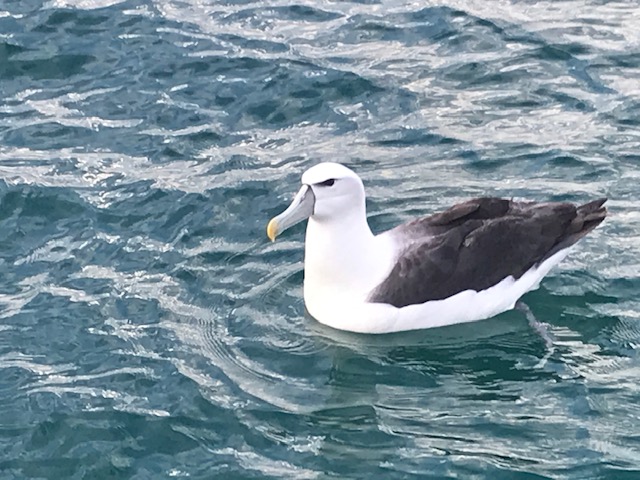
Up close just as majestic as when you see them gliding effortlessly over the waves
“Beautiful plumage major … look at that … the Norwegian Blue …”

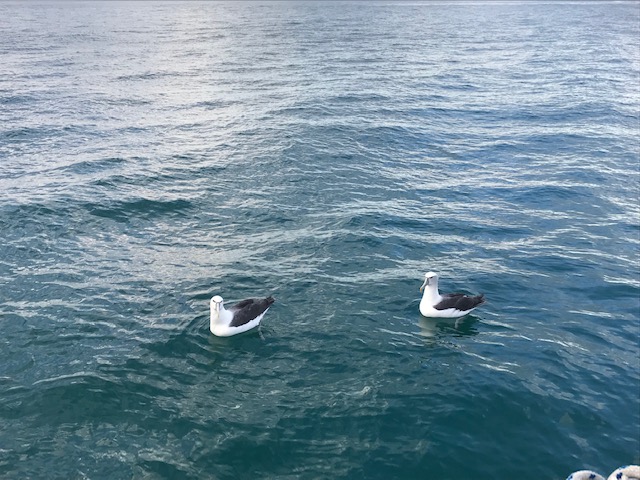
Soon after dropping anchor we were greeted by two large albatross which paddled around our stern in the hope of a feed.  This came as a bit of a surprise, because you expect seagulls and ducks to come scavenging … but these things were enormous, just beautiful creatures, their wings all folded up inside and clearly marked plumage.

As it turned out, the efforts of the albatrosses were rewarded, with John catching the very first fish of the voyage, as we passed across a local bay in the early dawn.

John was always going to be the one to break the sea-food drought aboard … he put in the effort
On arrival we checked out a few sheltered anchorages, including this one at Long Point

On the topic of food, special mention needs to be made of the pears and plums put aboard two weeks ago up in Blenheim from the backyard trees of friends Simon and Jenny. We are still eating them and we even stewed some of the riper plums, which were absolutely delicious!

After breakfast at around 9:00am we all went to sleep, me waking around 1:00PM  to Carsten diving over the side for a “bracing” swim.  It was sunny, the wind had died away, and we began to wonder whether we had made the right call … slowing down and actually stopping, when conditions remained so apparently favourable.

Then it hit us.

The squall hit us with an advancing wall of spray, and winds gusting to 46 knots
One minute it was calm, then the air went cold, and a few minutes later the SW change hit us, stirring us in to prompt re-anchoring action – to the other end of the bay.

Carsten was still below getting dressed and I was hanging stuff on the line, taking advantage of the warm breeze and sunshine, when all of a sudden, the air went cold.  What’s more, at the far end of the bay, a wall of raised spray and spume could be seen heading our way.   All of a sudden very little blue water could be seen, it was simply a mass of white caps as far as the eye could see and all around a howling gale, which our newly fitted wind machine recorded peaking at 46 knots. 

Whereas the small Rainbow Isle were previously off our bow, now it was off our stern, the anchor and chain working overtime to resist the new forces at play.

“Time to go, get the engine started!,” I called to John.  And pretty soon we were steaming our way the 2 miles across the bay to what was now the sheltered place to be.

Back at anchor once more, the sun returned after a couple of hours, the new wind flattening the worst of the nor east swell, making for a reasonably comfortable spot; despite being alarmingly close to a nearby cliff.

The other end of the bay provided shelter from the SW squalls, but still the NE swell made for a little more roll than we’d like – we’re getting fussy. Phone and internet connection was good though … we counted 5 baas

John resumed fishing again and backed up his earlier effort, with a small lemon shark.

After a long-overdue shower, I went back to bed again for another rest, waking to find John watching a cooking video on “how to prepare and cook lemon shark” … what have we come to?!

In the early evening the wind died off considerably and after an amazing meal of fush, and you guessed it … chups … talk turned to … “how long are we going to be here?”

After analysing more weather forecasts, it was decided … we’ll be up at 2:00am and away by 2:30am tomorrow morning, with the hope of arriving at Oban, Stewart Island around mid-day; there being a brief opening in the weather if we hold close to the coast and stay in the lee of Stewart Island as best we can.

Smooth seas, fair breeze and Whoa back, slow down girl!

Rob Latimer
Rush to Beat the Gale

10 miles off Dunedin

Thursday 20 February 2020

A short time after John came aboard yesterday afternoon, we were away to sea again.  But not before waving to wife Maryke and daughter Felicity, who made an “immigrant farewell” scene, waving handkerchiefs and iPhones from the end of the Akaroa pier, as we did a drive-by at close range.

Earlier in the day I’d emailed John an extensive shopping list, containing everything from vegemite, bananas and beer, to milk, washing powder and onions.  Ably assisted by Maryke and Felicity, john had done a sterling job assembling it all in about 6 large boxes, which took two loads in the dinghy to bring aboard from the nearby boat ramp.

After an extremely calm morning, where we’d seen off fellow-voyagers Dean, Sandy and Samantha, the wind had now fairly got up, with a blanket of white-caps on short waves blanketing the bay almost to the far bank.  It was still warm, and even the water in the shallows felt warm as we attempted to reduce the spray over the dinghy’s bow.   

Treasured memories from yesterday’s farewell Sundowners with Dean, Sandy and Samantha

As the figures of Marye and Felicity standing at the end of the pier faded in the distance, we set about hoisting the mainsail – best done into the wind, which is all we seem to have had in Akaroa Harbour, not matter what the forecast might say.

John says good bye to Marke and daughter Felicity

Clear of the headlands, internet and phone coverage promptly ceased, making my last few photos for yesterday’s blog non-starters; at least for now.  Further “online” activity, at least from directly onboard ship, would have to wait until Dunedin 150 miles to the south west. 

Not that we were planning on stopping at Dundein, unless the weather turned nasty of course, but it was in our path and a close passing of nearby Cape Saunders would most likely open up a telecommunications window through which we might be able to re-connect.

On leaving Akaroa Harbour the wind was pretty much as forecast ESE moving NE and strengthening through the night and into the next day … today, Thursday. 

The wind was light at around 10 knots, so we kept the motor ticking over in the background enabling us to maintain a sped of at lead 6 knots through the night, over what could only be described as calm seas.  So calm in fact, that at times you were unsure whether you were on a boat or not.

Farewell to Akaroa Harbour
Time to hoist the sails – Rob, Carsten and John

We each took it in turns to stand watch through the night, with several ships seen – on the chartplotter and radar – travelling from Dunedin to Lyttleton.

Magic “bat wing” sailing
The day started peaceful, then the wind and seas picked up in the afternoon – still from behind mercifully
The wind and seas picked up progressively throughout the day
Carsten cooks up a chilli con carne … supposedly for two days of meals, but being just too tasty I don’t think it will survive that long
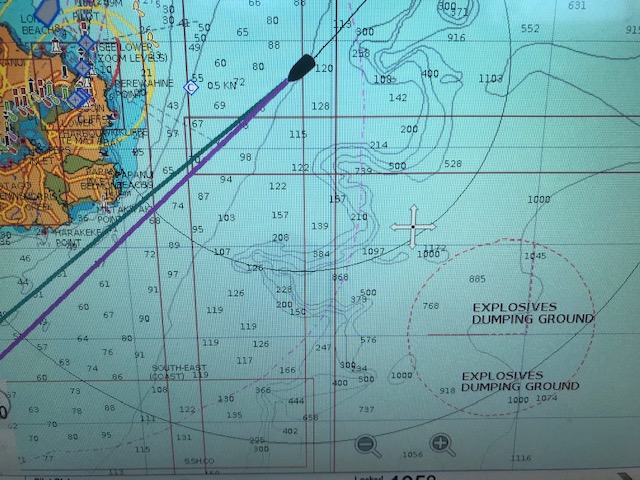
Don’t see that written on the chart plotter very often … “EXPLOSIVES DUMPING GROUND”

As always, the morning glow in the sky, then the face of the sun revealed over the east horizon, are welcomed sights.  Putting an end to the dark of the night.  Not that anything onboard changes, it’s just nice to see the sun again I suppose.

We’d done pretty well with weather forecasts up to date, but the next few days looked set to change all that with a bit of a blow expected from the south in a day or so.  This, we all agreed, is something we’d like to avoid if at all possible and so Plan A is to go as fast as we can to reach our preferred destination, Oban on Stewart Island, as quick as possible.  Plan B will be to retreat into a sheltered bay along the coast between Dunedin and Bluff and sit it out.  We haven’t quite figured out Plan C … but I’m sure something will come to mind if that becomes necessary.

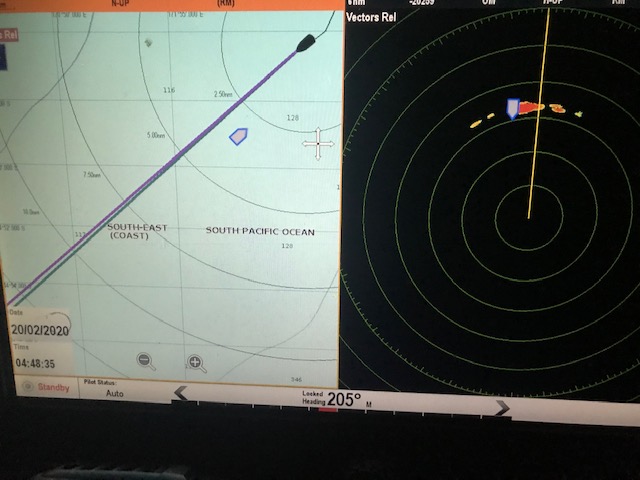
Night view on the radar and chart plotter … big 600 foot long ship coming our way … no point claiming “yacht-right-of-way-status” … just get out of the way
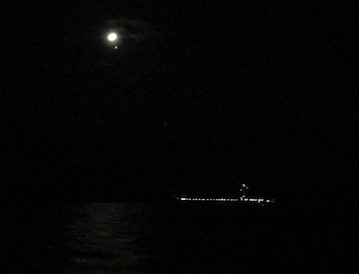
Moon, venus and a ship passing at 1 mile
wind and waves picked up late in the day

For now, we are doing around 6-7 knots with the wind up our tails, mainsail out one side, the jib poled out the other.  We’ve just reefed both sails, with the wind from behind strengthening, as forecast, and still with the motor humming in support, we expect to cover the remaining 145 miles by mid-afternoon tomorrow.  We’ll download an updated weather forecast tonight, hoping all the while that we can stick with Plan A.

catching the wind down the east coast while it lasts
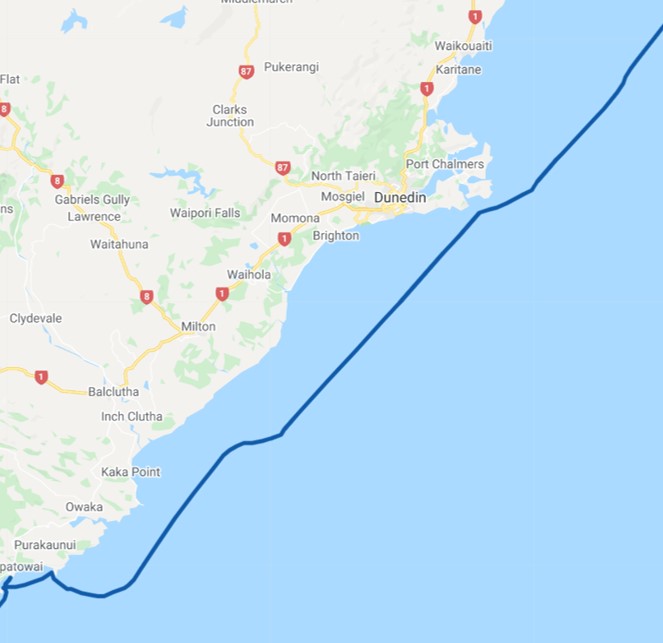
Our course past Dunedin and onto Stewart Island, as quick as possible…
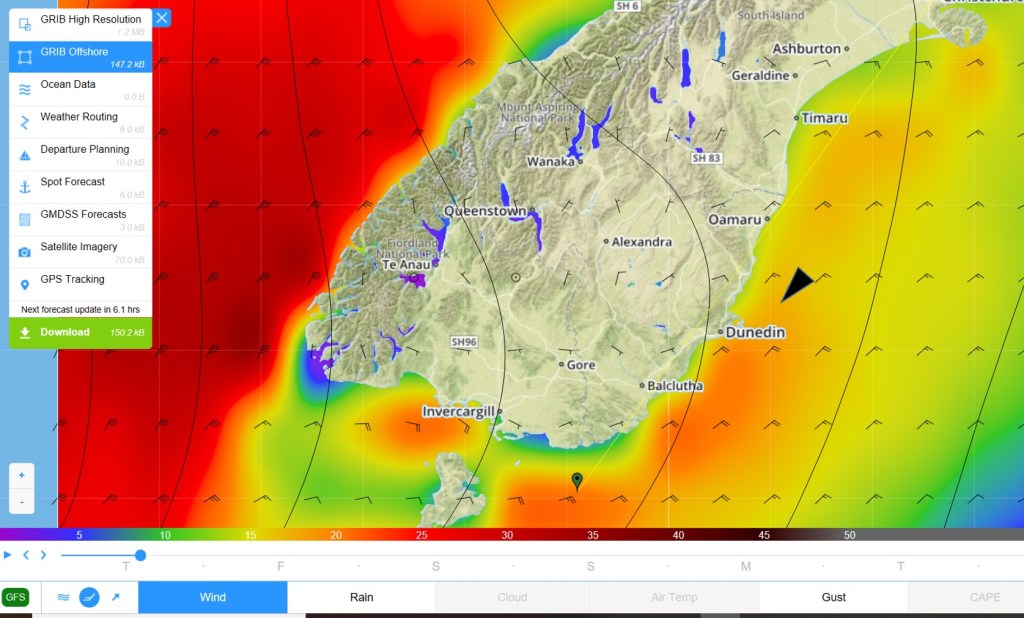
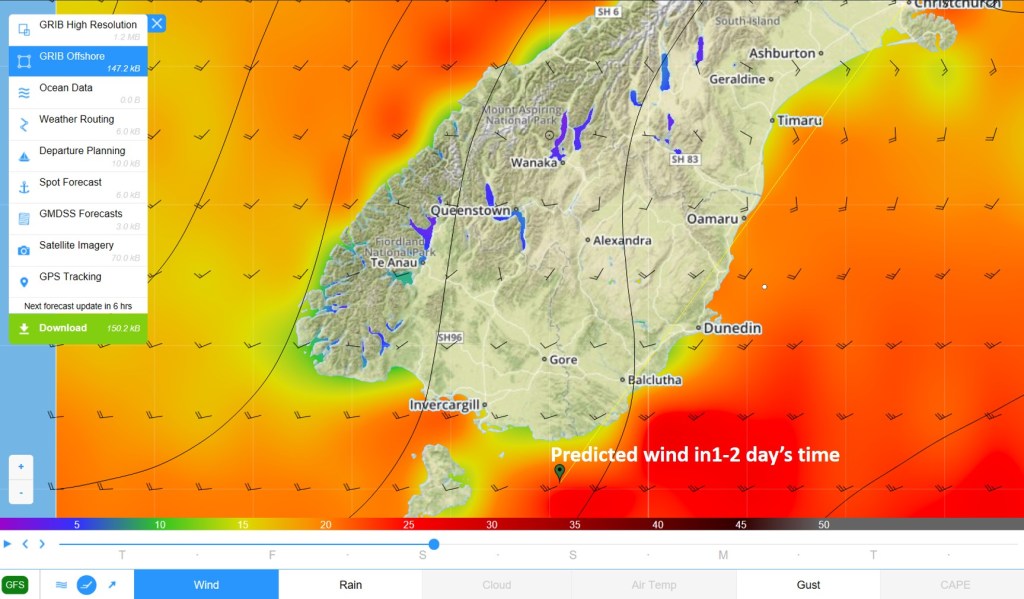
This is what we are trying to avoid … tomorrow

I had a good look in the mirror this morning.  Not something you tend to do a lot of at sea, but in reviewing a few of the photos, I started thinking … “that guy’s getting a bit prickly and hairy”  … kind of a cross between Grover and Crusty the Clown.  Rest assured, uber-home-wife … who will be joining Chimere at the end of the month along with sons Matt and James … the captain will be looking smooth, tidy and smelling of Old Spice when you step aboard in Bluff.    

On the food front … thanks to John and his home support team, we now have a full pantry again.  But at the end of a night watch … or even half way through … there’s nothing quite so lovely as a few pieces of toast lathered in butter and anything else, accompanied by a cup of black coffee. Mmmm   

Mid-morning Carsten suggested in an almost … “would you mind if I …” manner that he might make a large pot of  Chilli con Carne, using some of the new mince, plus a range of other ingredients he’d found.  John and I shared glances and proposed, in true New Zealand and English custom,  the formation of a Food Preparation Committee, whereupon we duly elected Carsten as its Chairman and Secretary, swiftly passing the resolution of the making of any dish, including the afore mentioned Chilli con Carne. 

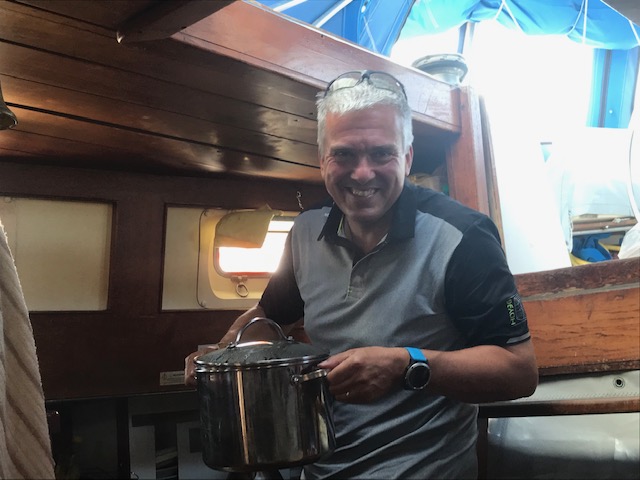
The meeting concluded with verbal minutes and a round of applause and congratulations to all office bearers.  Thirty minutes later, this amazingly delicious tub of food – even though it contained “those canned beans” … was boiling on the stove. 

John and I got stuck into it after Carsten had gone to his bunk for a sleep and for a time I was concerned there may not be aby left for when he returned, let along tomorrow

I’ve just been informed that we now have 3-Bars on the Smart Phones, being just 15 miles off Dunedin …  time to upload      

Smooth seas, fair breeze and rush to beat the gale!

Rob Latimer
Moving on – south

At sea between Banks Peninsular and Dunedin

Wednesday 19 February 2020

After saying a sad farewell to Dean, Sandy and Samantha this morning – kindly driven to the airport by Matt on his way to work – it was a relaxing time aboard as we awaited John’s arrival in the afternoon.

“I’ll say good bye now, because I may be asleep in the morning” … but still, Carsten was up early to say good-bye with hugs all round
Ashore and waiting for uber-friend and ride, Matt Brosnahan
Matt and the gang … off to the airport, Melbourne and “normal” life once more.
Chimere is out of view, behind the building in the background
Time for good-byes …

John was kindly being ferried to Akaroa from his home in Christchurch by his uber-wife and ground crew Maryke.  But not before spending some time at his local supermarket buying a list of goodies and provisions for the next leg south.

After considering the 3-5 day weather forecast, from three different sources, along with the possible stop-off options along the way, we have concluded that we should set a course straight for Dunedin; which roughly south west from here.  This leg of 150 miles should take us around 25 hours, at an average speed of 6kts.  Meaning that if we leave here around 3pm this afternoon, we’ll be off Cape Saunders (Dunedin) at 4pm tomorrow; taking it in turns on watch along the way. 

The winds for this leg seem either light or favourable, with the seas calm.   Once near Cape Saunders we will check the forecast again and either slip into Port Chalmers (Dunedin) for shelter, or press on the 135 miles further to the village of Oban on Stewart Island.

What we are trying to avoid of course are the strong head winds and rising seas that make for an unpleasant time.   

Being a fair way offshore, there is every chance that it will be difficult to upload posts to this website as we head south … but we’ll see.

 Visit www.stewartisland.co.nz to discover more about Stewart Island

Smooth seas, fair breeze and time to move on!

Rob Latimer
Special Friends

Akaroa Harbour

Tuesday 18 February 2020

Another lazy start to the day, with the warm morning sun showing promise of the day ahead.

Having said good-bye to a cruise ship yesterday it was now the turn of the Holland America Line’s “Noordam” to drop anchor this morning, with the efficient, tender-boat shuffle, to and from shore starting almost immediately.   

Around 12:00 noon we greeted our guests-for-the-day, long-time friends and Christchurch residents, Andrew and Daphne Hornblow.  I got to know Andrew and Daphne, plus their three children, (Linda, Michael and Doug) way back in 1978 when my first year at nearby Lincoln University coincided with their return to the country for work.  I’d only known them for a short time in Melbourne, but since 1978 we have maintained a strong friendship which we value very much. 

Uber dinghy driver Rob greets long time friends , and Chistchurch residents, Andrew and Daphne
Andrew at the helm, supervised by Daphne and Rob
Looking at the dolphins

So it was a particular thrill to be able to take them aboard and share the fun of sailing – in their own home waters.

After a brief tour of the ship we up-anchored, headed out and down the harbour, again picking up a following of Hectors Dolphins as an escort from about half way.

Whilst the wind was on the nose, the seas were calm and so we were able to gain a small lift by at least hoisting the mainsail. 

Dean’s magnificent loaf of bread emerged from the oven soon after we’d got under way and was quickly demolished HOT with lashings of butter, cheese, jam, peanut butter and vegemite … not all together you understand …

We called this “first lunch”, because Daphne had come well equipped to feed the 5,000, with rolls, ham, muffins and much more … this would have to wait till second lunch, once we’d made it around the corner, back into Flea Bay; our newest most favorite spot on the coast.

Sea mist hung around the cliffs and hills for most of the day
Carsten sets about cooking up dessert

Heading back into Akaroa Harbour in the late afternoon we anticipated that the wind that was on the nose earlier would now be at our tail … but not so.  For some strange reason it was again on our nose, this time blowing out of the harbour.  There hadn’t been a wind change but the elements must have conspired to funnel the nor’easter that way … a trap for young players to be sure.

The dolphins reappeared on our return, and as we passed a tour boat, crowded with fee-paying folk off the cruise liner, I felt a bit naughty pinching all the dolphins, which seemed to make a bee-line for us.  We’d seen so many dolphins, or the same ones many times over, in the past few days, that we were close to giving them each names …  

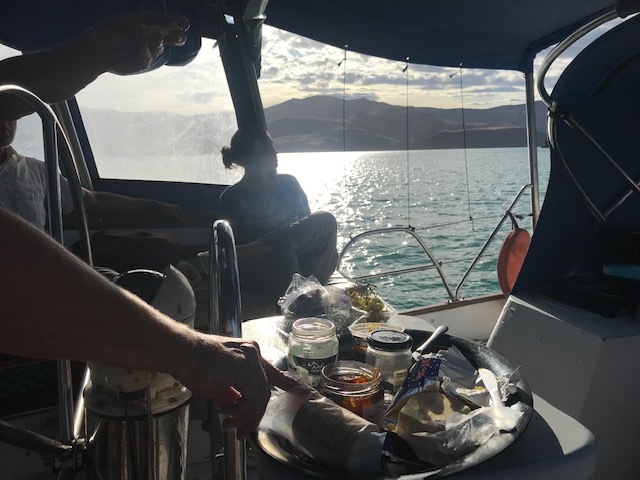
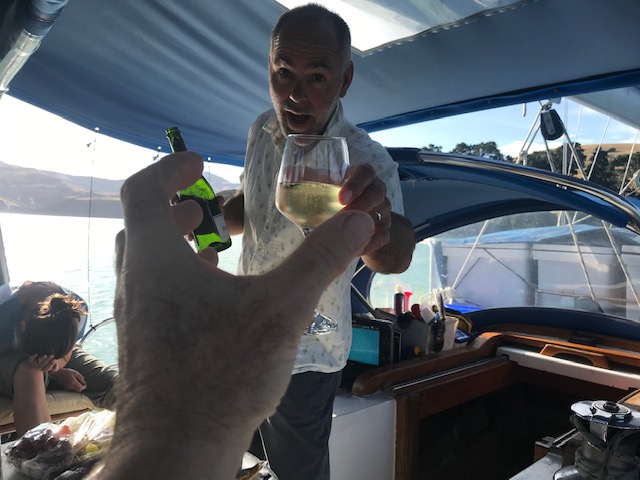
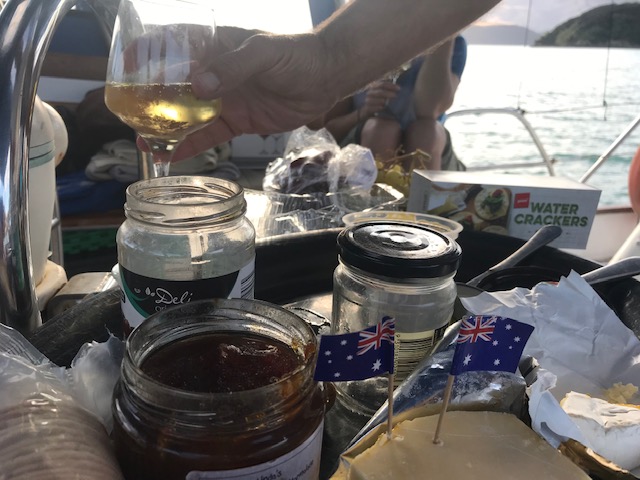
Back at anchor we uber-dinghied our dear friends ashore for their 1½ hour drive home.  It was then about Sundowner time and on this particular evening, a time to reflect (fondly) on the past 8 days and the sad but inevitable departure, tomorrow morning, of Dean, Sandy and Samantha.  Two bottles of champagne appeared from the fridge, along with an array of nibbles and snacks, which were all consumed in the cockpit as the sun once more did its thing, disappearing over the nearby hills.   

Still as bro …
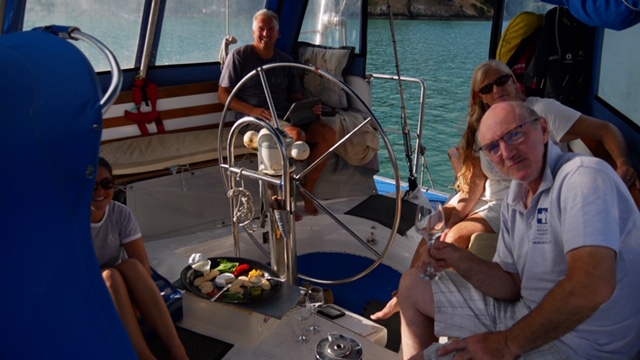
Sundowners at 6:00 … till … at least the sun goes downer
And (another) one for the captain …
Straya flags on little sticks … adds a bit of class don’t you think?

We had contemplated going ashore for dinner, to celebrate the end of this sailing leg, but by 7:30pm our focus was more on making our own dinner aboard. 

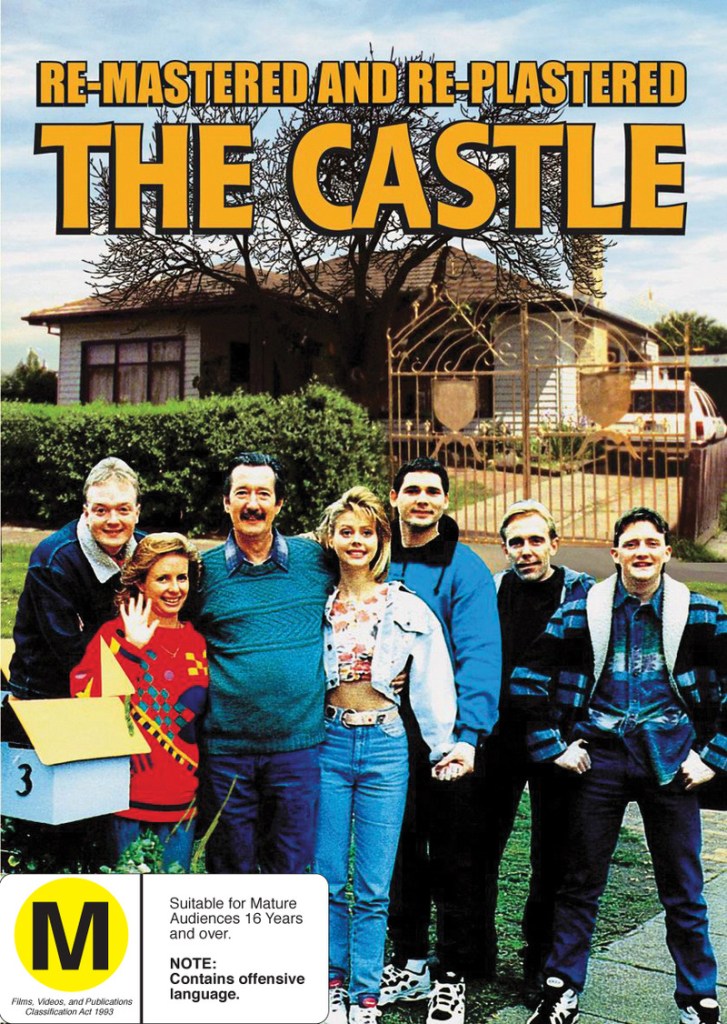
Discussion with Carsten soon turned to particular Australian and New Zealand turns of phrase, which naturally led to asking whether he had seen the film “The Castle”.  The answer being no, we promptly fired up the wall-mounted, saloon DVD flat screen and set it playing.  We felt it was our civic duty to share the origins of such terms as … “tell ‘im he’s dream’n” … “that’s goin straight to the pool room” and “what do ya call that darl?” … among many others.

Our initial concerns that the film might not translate to the German context, were allayed, when Carsten quickly fell about in fits of laughter at almost every scene.  Obviously, characters like Darryl Kerrigan and Denis Denuto have universal appeal, along with the battle of the underdog against forceful power and authority.

Universal story of the triumphing underdog translates into many cultures

It would be sad to say good-bye to our travelling buddies of the past 8 days, but with Matt Brosnahan kindly swinging by at 7:00am (an hour out of his way)   on his way to work to pick them up, it was now important to make sure everything was packed and ready for an efficient exit, tomorrow morning, after just a few hours sleep.

After waving good-bye to Dean, Sandy and Samantha in the morning we would bthen e welcoming John back on board for the start of the voyage further south.  It just occurred to me … whilst we’ve all got to know Carsten over the past few days – seems like longer – John, who has been ashore catching up with family duties for the past few days, is yet to meet him.

Smooth seas, fair breeze and special friends!

Rob Latimer
A Day of Rest

Akaroa Harbour

Monday 17 February 2020

The day began warm, almost hot, in fact the hottest day we’d experienced so far in New Zealand at around 33 degrees

The day was hot from the very start as Uber-dinghy transported Dean, Sandy and Samantha ashore for their walk
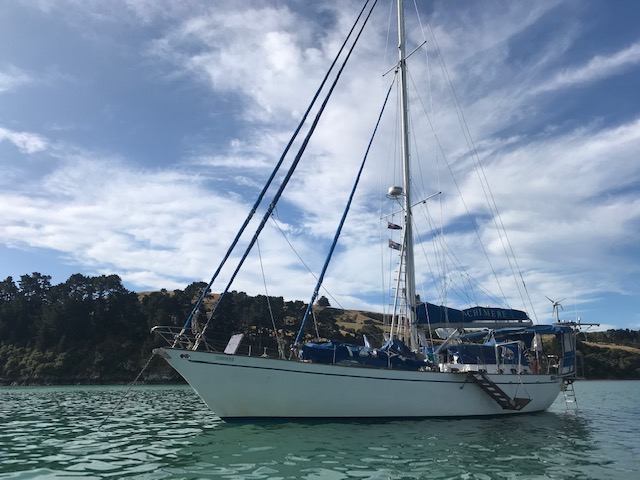
Chimere at anchor … good from any angle
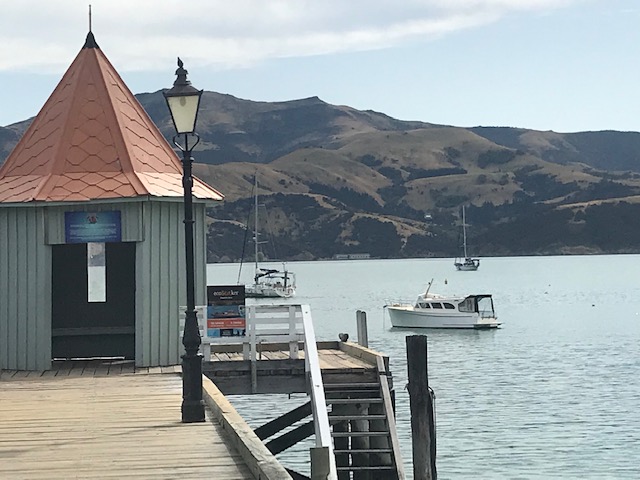
The local wharf off the town’s commercial centre … with Chimere at anchor in the background
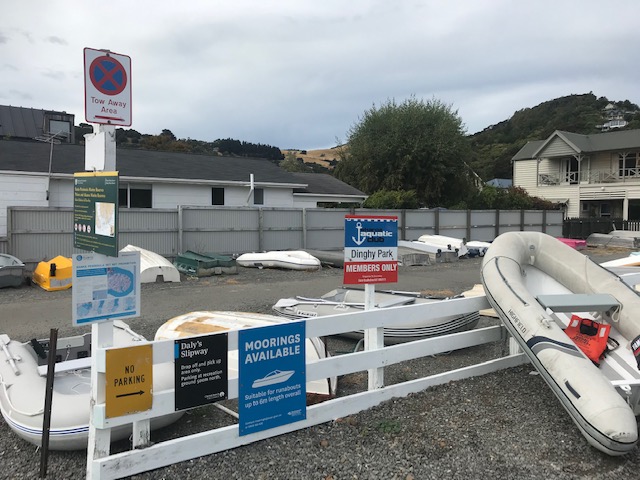
Welcome to the dinghy park …

Carsten set the tone early by jumping over the side for a swim, with Dean, Sandy and Samantha doing likewise later in the day, after their 3-hour walk up the nearby hill to the Heritage Garden. It was a hot day for a walk and so on return to the beach (a secluded beach to be sure) they stripped down to their “under garments” and splashed about; not even waiting to return to the boat.

Dean, Sandy and Samantha climbed a nearby hill as part of their 3-hour trek
Samantha negotiating a walker’s access point that relies on the inability of sheep and cows to solve rather simple puzzles
It’s this way … down
Dean back aboard Chimere
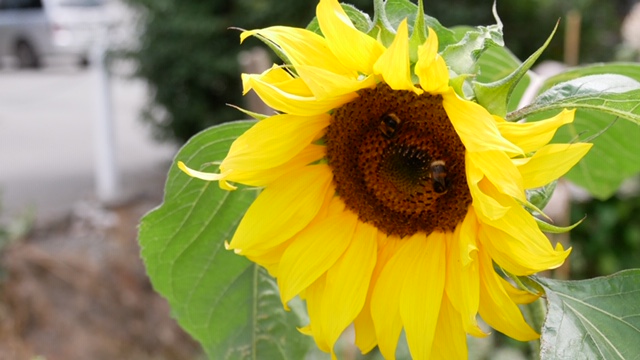
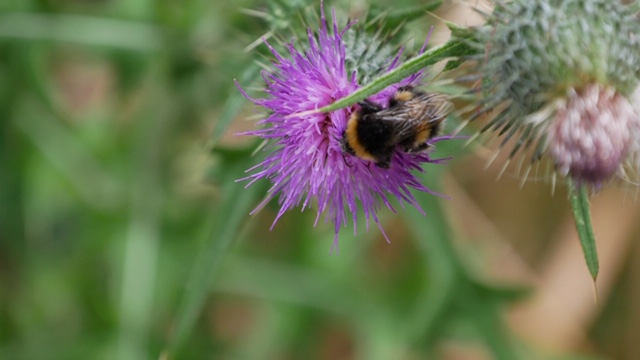
Two bumble bees on this flower
Bumble bees are big critters
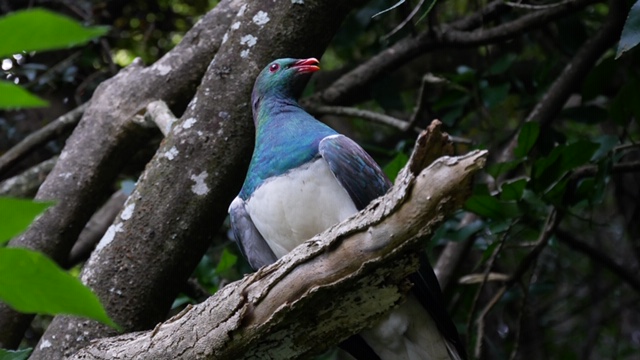
Wood pigeons look as big as a flying chook

Meanwhile, back on board, Carsten and I relaxed, with me catching up on blog-writing, paperwork charging the batteries and maintenance and Carsten exploring the boat between bouts of reading, coffee making and relaxing

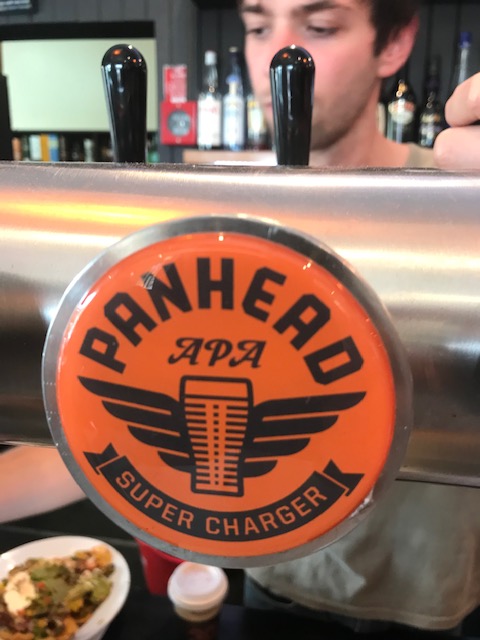
At the pre-arranged time of 4:00pm I went ashore to meet Dean, Sandy and Samantha for a well-earned beer at a local pub – plus another aimless stroll down the main street.  Rather than tempt fate, or the embarrassment of translation Dean resisted the urge to ask for a Pan Head IPA (refer Saturday’s blog) preferring instead to order a  Lyttleton Pale Ale, first enjoyed at the Eruption Brewery on our arrival there way back on Friday.

“I’ll have a Pin Hid IPA please …”
This little fellow was swimming close to the boat and seemed reluctant to dive, which enabled us to harass it from the dinghy
That’s me behind a sun-blocking screen trying to write the blog from the past 2 days
Sundowners at 6:00 … a hard habit to kick

Dinner back on board Chimere consisted of sweet and sour chicken, ably prepared by Dean, eaten while watching another magnificent sunset.

Sunset
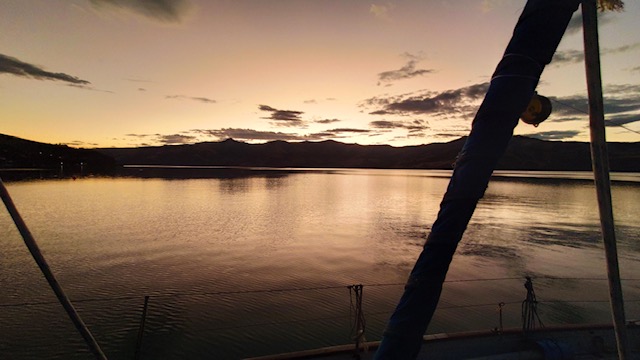
Sunset over Akaroa Harbour

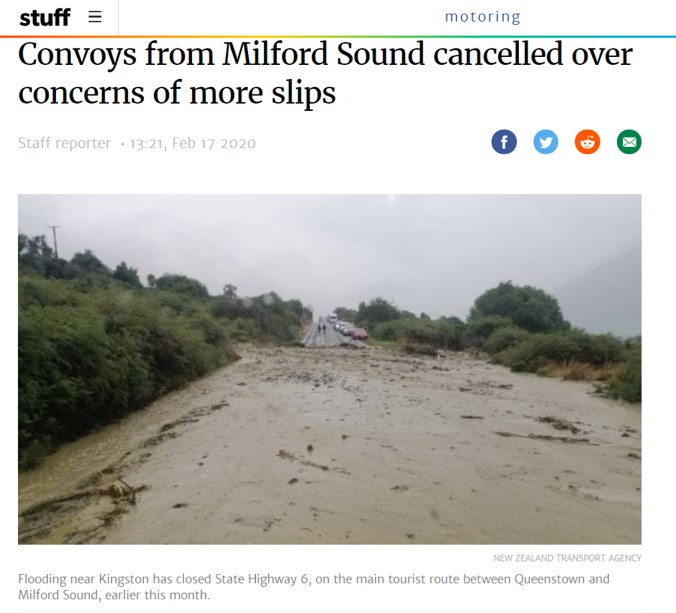
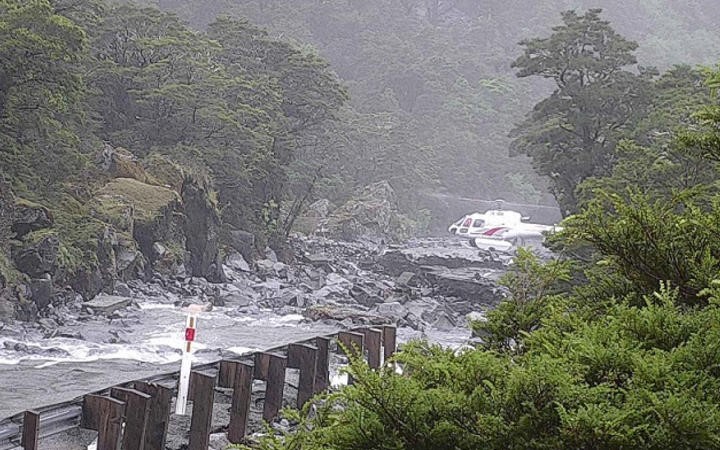
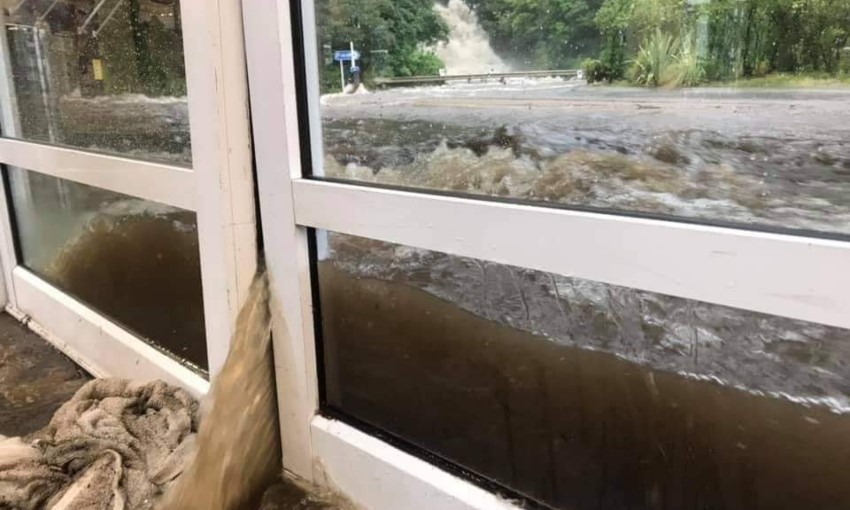
With our focus turning more and more to the journey south and then onto Fiordland, I thought it was time I looked up the latest news on Milford Sound and the surrounding region; the weather, road conditions and likelihood of crew being able to come and go from the region given the extensive damage.

It’s going to take some time to fix this road to Milford Sound
Milford Sound tourist centre front door … fast becoming an aquarium.
A recent SatPhone weather download … looks good for heading south on the east coast … but the west coast is a bit on the blowy side
The current forecast predicts winds on the nose in about 4 days – what we look to avoid at all costs

The above photos speak for themselves, but from what we can determine, it’s most unlikely that the roads will be restored to normal in just 3-4 weeks.  This is bound to precipitate a change our plans, but there’s nothing we can do at this time but wait and speculate.   

Smooth seas, fair breeze and a day of rest!

Rob Latimer
Design a site like this with WordPress.com
Get started