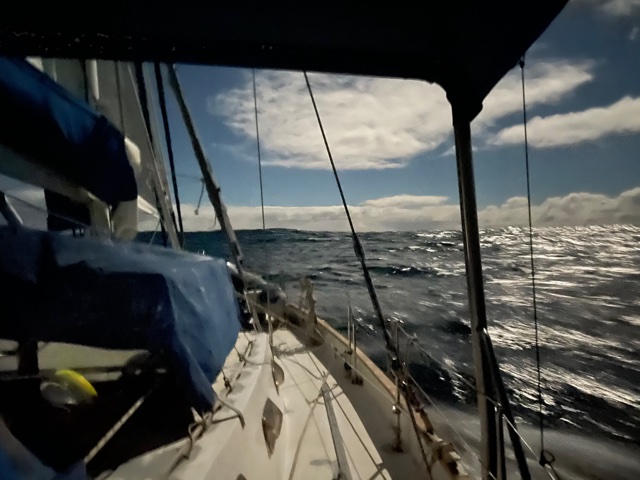
Paradise Found

Bridge Marina, Tauranga, North Island

Thursday 3 June 2021

If the idyllic, mythical Hobbiton, (from Lord of the Rings fame) is located just a short drive south of here – near the town of Matamata – then Maketu, just a short drive east of here, must surely be the idyllic REAL-LIFE equivalent; only with a sea view.
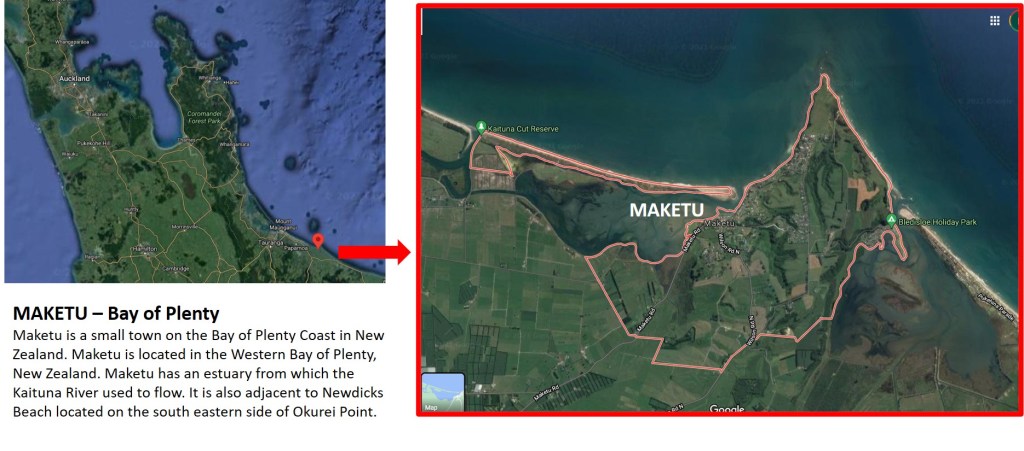
Maketu is a secret gem in the Bay of Plenty … so make sure you don’t tell anyone

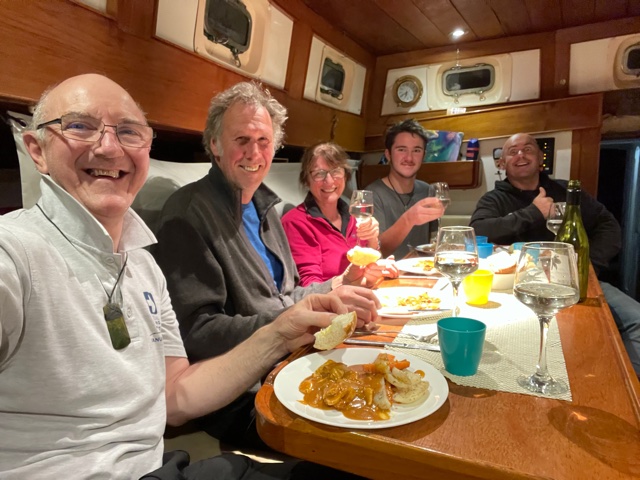
Having just returned from a lovely dinner in the hamlet of Maketu, (with hosts and lender of a certain car), David and Susan Campbell, I’m here to report that this seemingly forgotten little corner of New Zealand really does appear to be a slice of paradise.  I feel bad even telling you this, for fear it might unleash an unhealthy flood of developers, speculators and gawkers, but it really is worth a visit.  So long as you drive away again, and don’t spoil it for the locals.
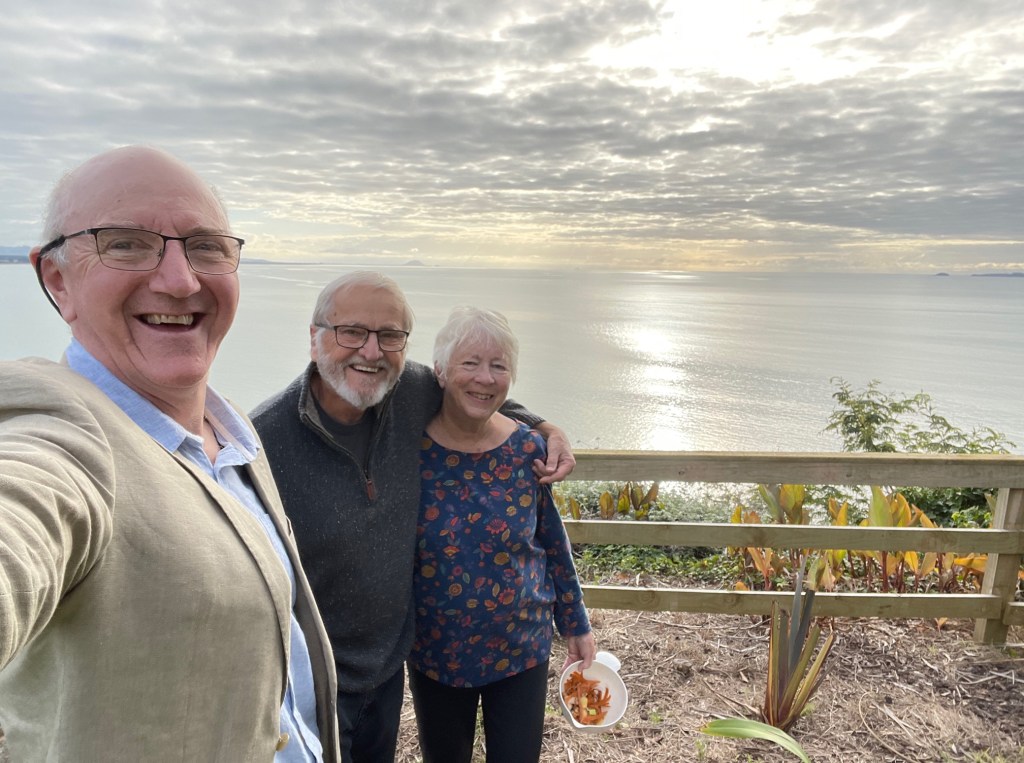
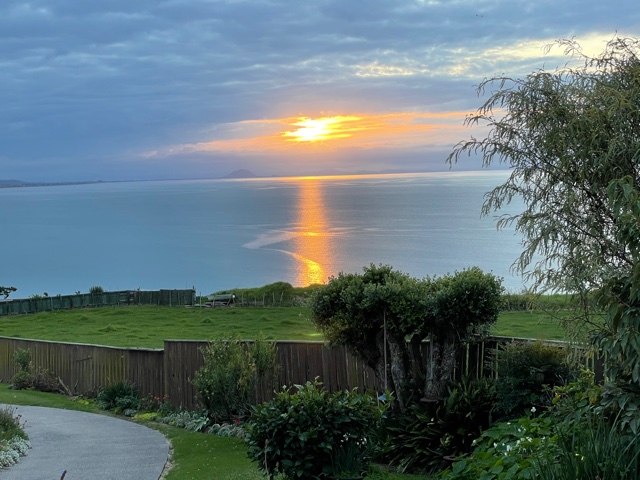
Rob, David and Susan – the view from the cliff at the edge of the garden … all the way across the Bay of Plenty to Mt Maunganui and Tauranga
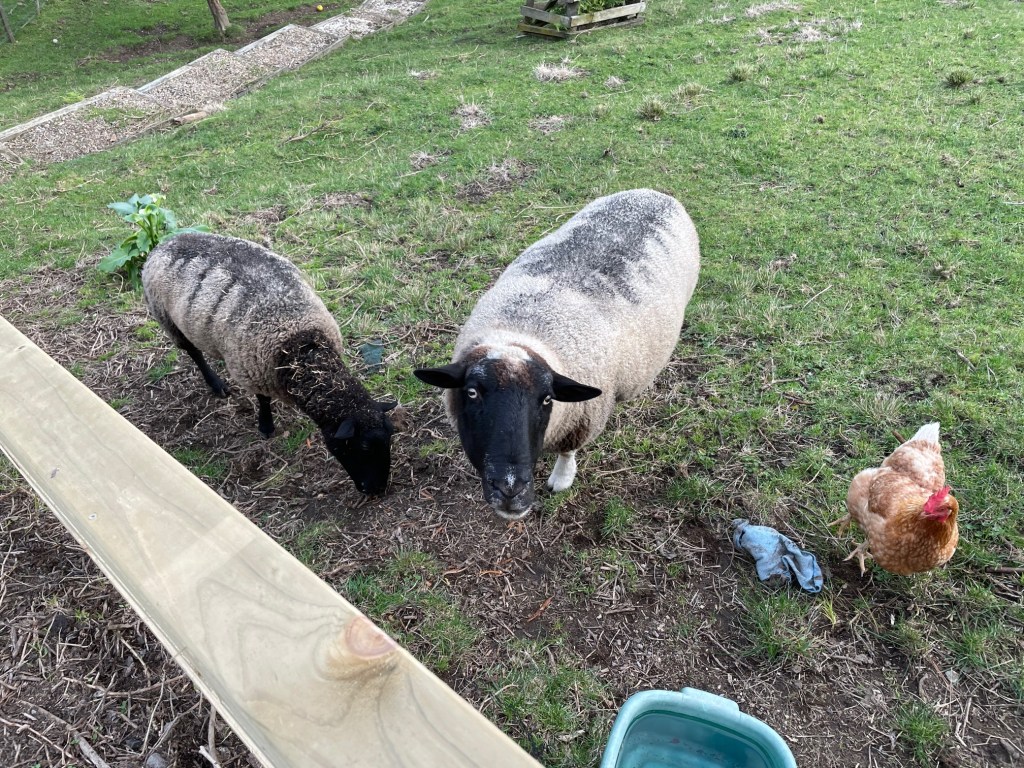
Twin-powered kiwi lawn mower – the chook belongs to the neighbour
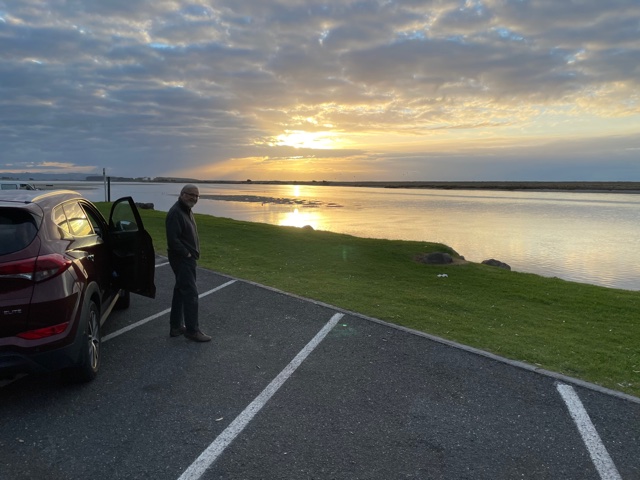
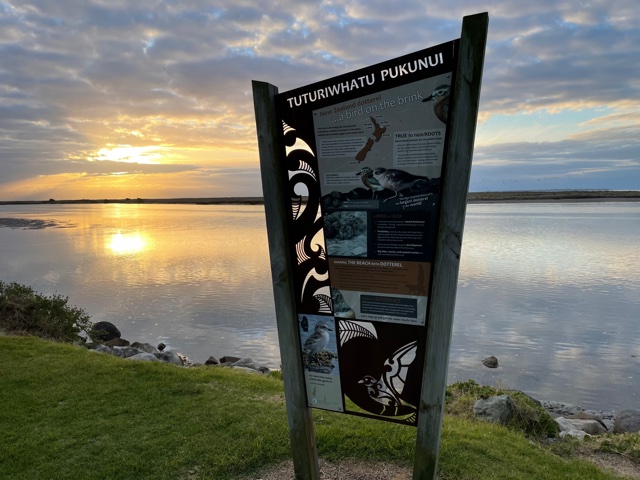
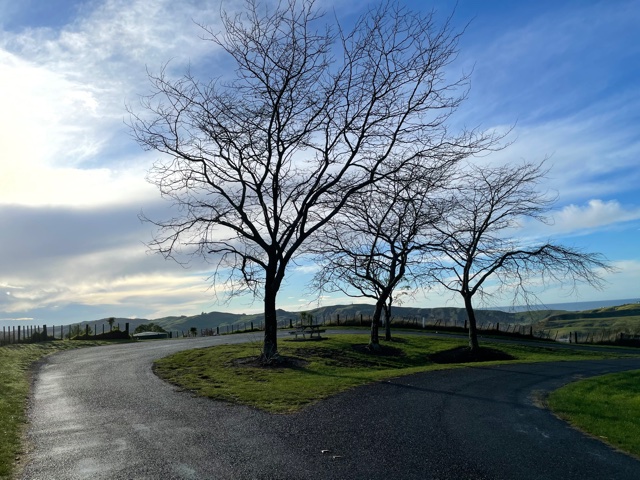
At the bottom of the hill is an estuary and bird sanctuary wetland
Like a beachside holiday resort

Maybe it was the sublime sunset and blissful stillness, the rolling green hills, simple holiday seaside vibe, or the sweeping clifftop views back towards Tauranga … in reality it was probably “D”, all of the above    

So, special thanks to David and Susan for a great night.  And also, to the local Maketu Rotary Club – where David and Susan are active members – for their efforts in building the local community (Click HERE for more information)

More about Maketu can be found HERE

“Headland and town 15 km north-east of Te Puke. Maketū is one of the most historic coastal landmarks in the Bay of Plenty. The Te Arawa canoe made landfall at Maketū, and a small cairn built in 1940 commemorates the event. The Ngāi Te Rangi and Te Arawa tribes contested authority over the area in the early 19th century. Te Arawa supported trader Phillip Tapsell, who lived there in the 1830s. From fortified positions Te Arawa and British forces repelled war parties from the East Coast seeking to join Waikato supporters of the Māori King movement in 1864. Because it was isolated between swamps along the Kaituna and Pongakawa rivers, there was little European settlement at Maketū until much of the swampland was drained early in the 20th century.”

Having arrived at David and Susan’s home around 3:00pm, perched as it is on a cliff with 180-degree uninterrupted views of the sea – from where they saw us sail past a few days ago – there was plenty of time to receive the local tour.; from David.   Which included a detailed commentary on all manner of things including some of the key Maori and European historical events that have helped form what region and community is today. 
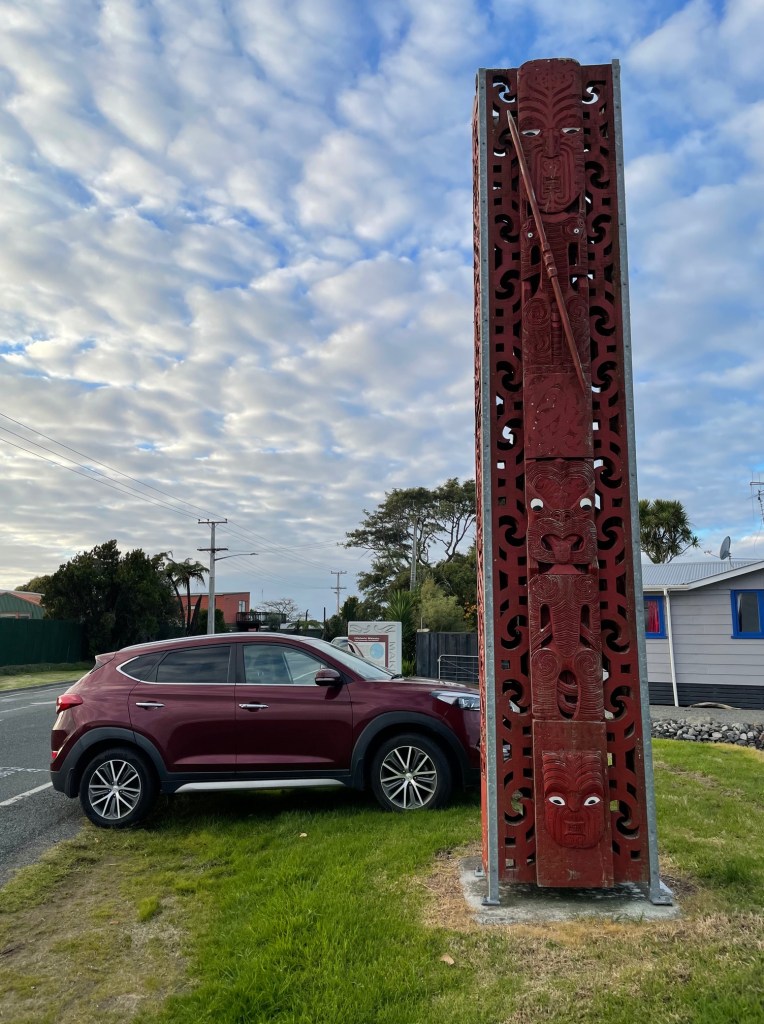
The entrance to Makatu has Maori carvings each side of the road
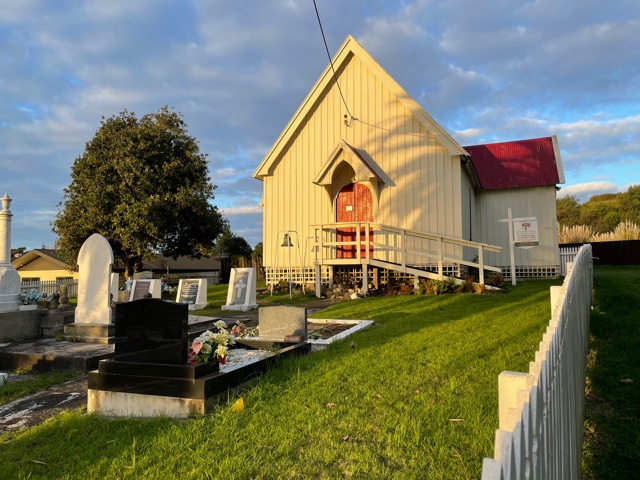
Local Anglican church on top of the hill
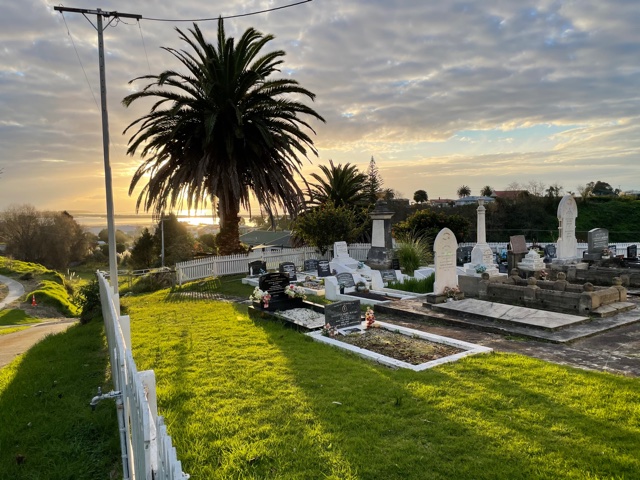
Great view for a cemetery – out the front of the historic Anglican church
Looking west towards Mt Maunganui and the setting sun
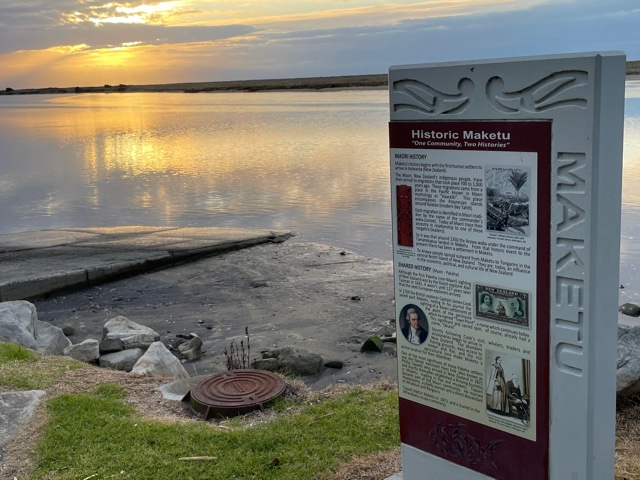
One of the many signs erected by the Maketu Rotary Club
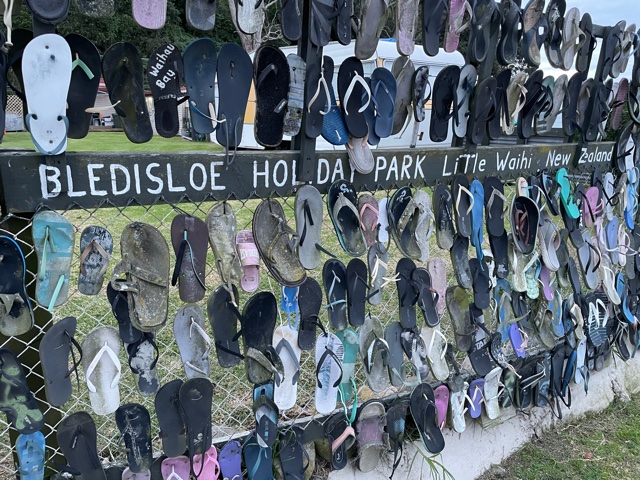
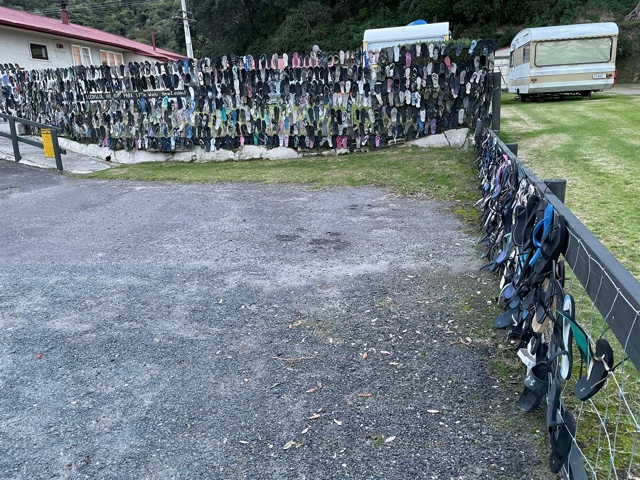
They’re a wacky lot those kiwis … you’ve seen bridges of padlocks … “locks of love” … well, this looks like New Zealand’s response, or a tribute to the humble jandal (sorry Aussies … thongs)

After dinner, the topic of gardens and fruit trees came up in the conversation, in particular how avocados grow so well here.  And I commented that possums were a bit of a nuisance in our garden at home – ringtails and brushies.    Well, it seems possums are beyond a problem here and with no “NATIVE animal protection status”, they were declared a PEST as far back as the 1940s. 

And when I say pest … all manner of strategies have, and are, adopted for their destruction, including trapping, poisoning and shooting.   David commented that … “a while back I set a possum trap on 20 consecutive days and caught 19 possums…”

I should clarify for Australian readers, who might think that these traps are a bit like calling “Peter the Possum Man” to evict a nuisance possum from your roof. 

And for New Zealand readers, if you want a seriously good belly-laugh, then wildlife legislation in the state of Victoria says:

It is illegal to trap possums and release them away from your property. Possums are highly territorial so relocating them elsewhere will only result in the released animal being attacked by possums already in the area. This method is considered inhumane.   Possums are protected under the Wildlife Act 1975. … The trapping of common brushtail possums living in buildings is permitted for the purpose of releasing them on … Breaching any of these regulations carries a penalty of up to $7,773

No, New Zealand possum traps are a bit like … mouse traps … only much, much, much bigger

Continuing on the theme of possums, a few more “Fun Facts” from Kiwiland …  

“Possum numbers reached their highest point in the 1980s when there were 50—70 million possums in New Zealand. Once possum populations got very high, trappers began to make a good living from hunting them. Throughout the 1970s prices for possum skins were good. In 1981, the best year for trappers, 3.2 million skins were exported.

Trapping, poisoning and shooting has now reduced the possum population. But there are still about 30 million possums in New Zealand today.
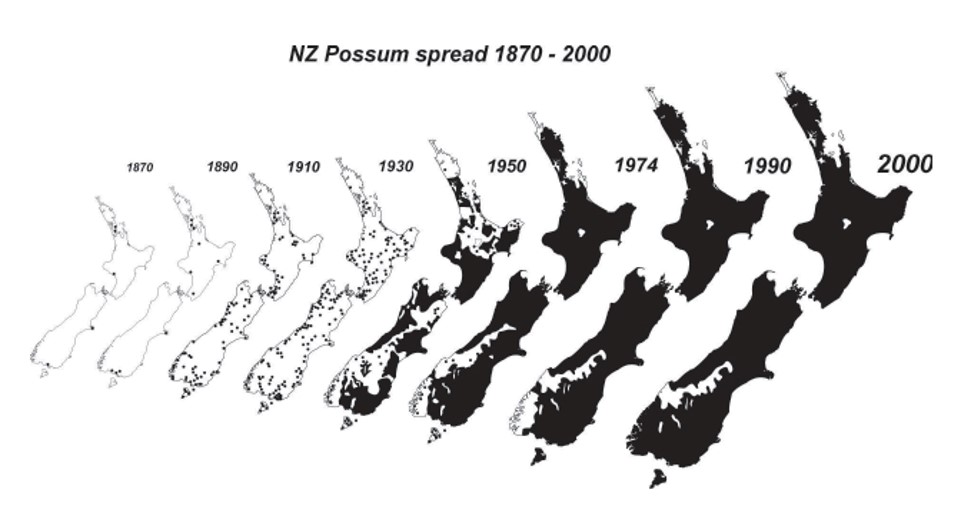
Only takes two …

The damage done by possums costs NZ farmers about $35 million every year. The New Zealand Government spends over $110 million* per year on possum control.”   More Possum facts HERE

And just when you thought there was no more to say on the topic,  for more than 20 years the local Te Ranga Primary School has held an annual Pig and Possum Hunt.  You read that correctly … a Pig and Possum Hunt … as a fund raiser.

While your school might hold a chocolate drive as a fund raiser … have you considered holding a possum hunt instead …

Last year it was cancelled due to COVID19, so all being well, this year is looking like a bumper year.  And as David mentioned tonight, it’s not unusual for the local newspaper to report on the annual event with the headline … “Te Ranga School Possum Hunt was a success this year with over 2,800 possums being caught”  (by “caught”, I mean killed)
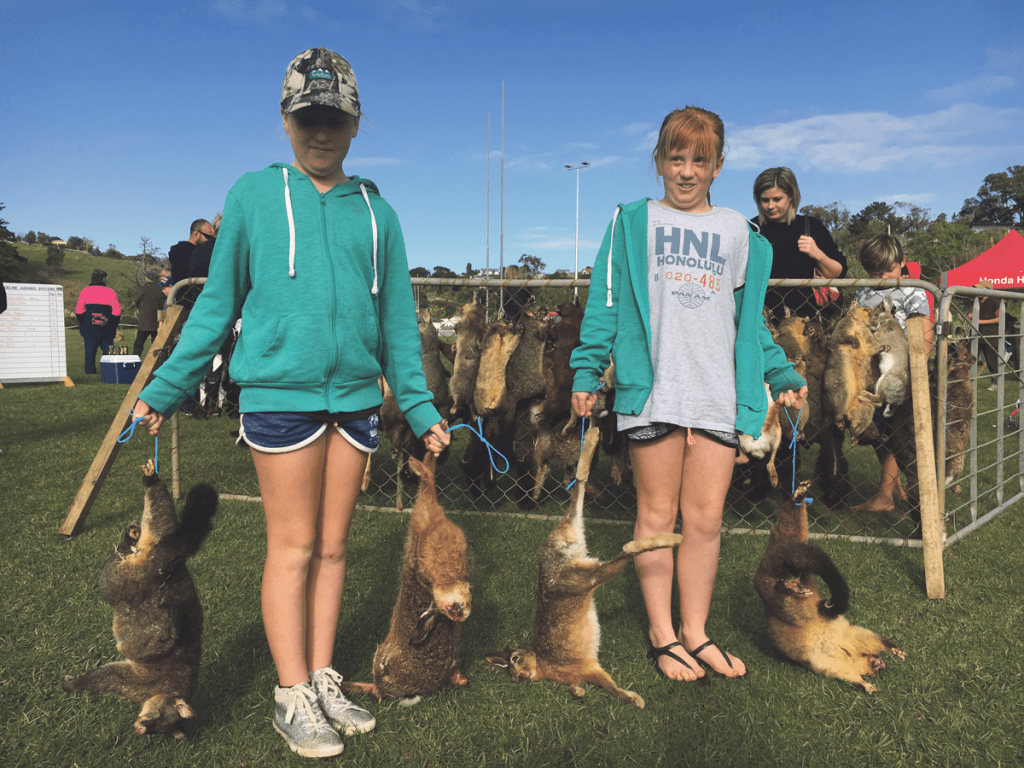
Source: Raglan Chronicle

You’ve got to check it out HERE … classic stuff, but to give you a taste, here are just a few of the 24 published rules of the competition…

– The duration of the hunt shall be from Midday Thursday 20th June 2019 till 9:30am Sunday 23rd June 2019 . Please hunt during this period only .

– Possum counting will begin at 9:00 am at the Te Ranga Hall on Sunday 23rd June 2019.

– All possums must be dead. This includes ‘joeys’ .

– Possums may be shot, trapped or poisoned. If poisoning – please notify the organizers prior to Thursday 20th June 2019.

– The Team Leader must hold a current Firearms Licence if team is shooting or a Poisons Licence if team is poisoning.

– All firearms regulations must be obeyed by those shooting possums.  IDENTIFY YOUR TARGET.

– Neither road kills nor frozen possums will be accepted .

– Mangled or badly disfigured possums will not be accepted as they may be upsetting to the public.

– Only possums bodies in good condition will be accepted.

– All possums entered in the competition become the property of Friends of Te Ranga School as they may be skinned or plucked for fundraising.

–  The judge’s decision is final.

– Neither Te Ranga School nor the organizers can be held responsible for the actions of anyone involved, especially with regard to personal safety. Every care should be taken by the contestants. Participants enter at their own risk .

– Pre-select the Heaviest Possum and the Best Fur Possum prior to arriving at weigh-in. Tags will be provided for these at the gate on the day.

If you’re like me, and tears of laughter and incredulity are running down your cheeks right now on reading the above, then I’ve got to say that there’s no truth to the rumour that if New Zealand won the right to hold the Olympics that Possum Hunting would be introduced as an official sport. Like Rugby Union, it wouldn’t be fair to the other nations.    

In other news, I dropped John at the bus station this afternoon.  Our relatively short trip up from Wellington has allowed him plenty of time to attend his 50-year school reunion in Whangarei; which is a three day event starting tomorrow afternoon.  Rest assured, John will be back next Tuesday, as we prepare for the next leg up to the Bay of Islands.  

On the topic of getting my small IridiumGO! Satellite communications unit repaired, I dropped it off at an electronics repair business in Tauranga this morning.  The manager seemed confident he can put it back together again, however, there’s every chance the small “mini” socket might have to be replaced.  And naturally it’s not a standard, off the shelf part – possibly requiring a new bit to be sent from overseas; normally resulting in long delays.  So, it’s still a work in progress.

With the latest COVID 19 lockdown in Melbourne, it’s amazing just how up-to-date Kiwis are with Aussie news!  So much so, that from now on I might do more of the New Zealand accent – blend in a bit more – or at the very least say I’m from Sydney, Brisbane, Perth or Alice Springs … anywhere but Melbourne.  Don’t want to scare the horses?!

Smooth seas, fair breeze and paradise found

Rob Latimer
Settling into Tauranga Life

Bridge Marina, Tauranga, North Island

Wednesday 2 June 2021

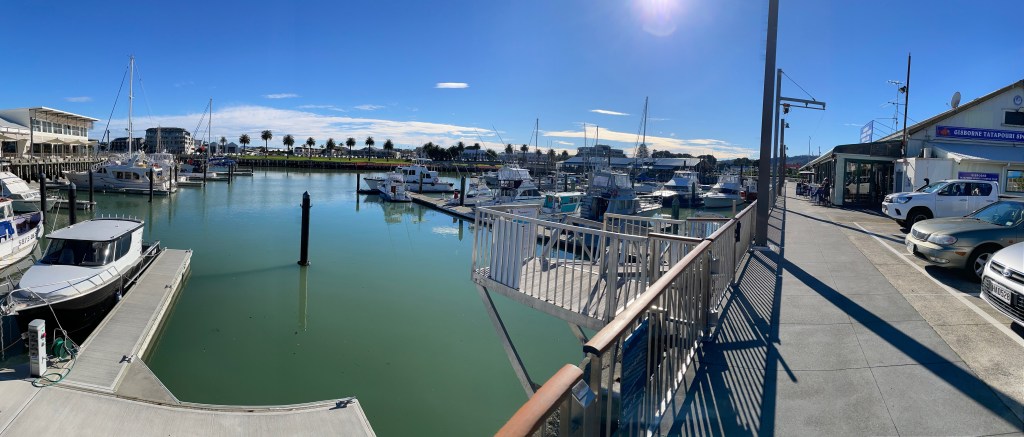
It was a blissfully still night, tied securely to the end of D Row, and even the noisy seagulls on the pontoon a short distance across the water eventually fell silent.  

The early night meant we were up and awake that much earlier too, with the borrowed car enabling me to drop Alvin into town to catch his bus home to Northland.

Back on board we cooked up the remainder of the bacon and generally had a long slow breakfast. 

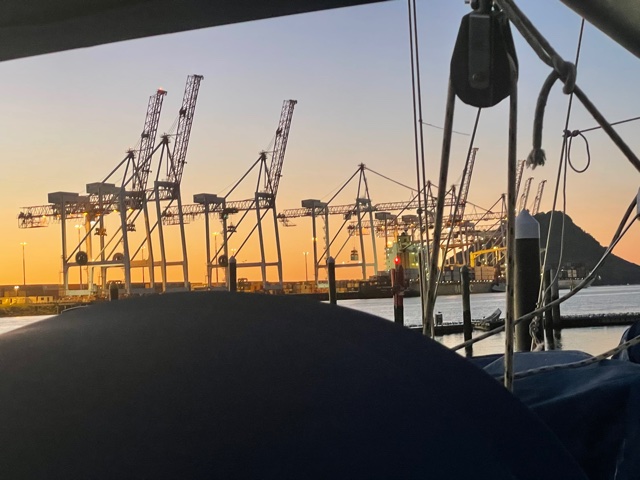
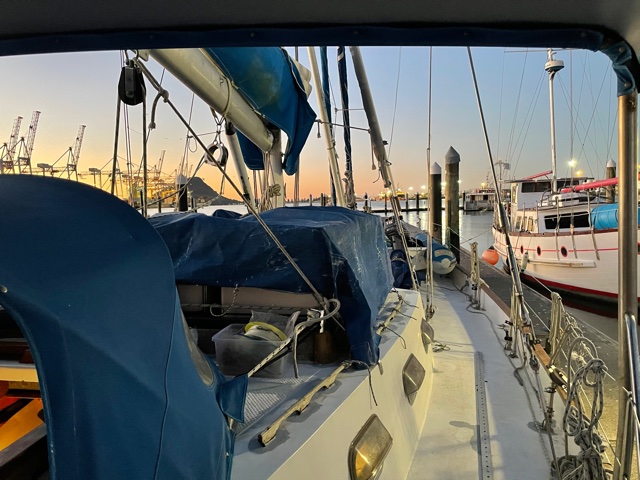
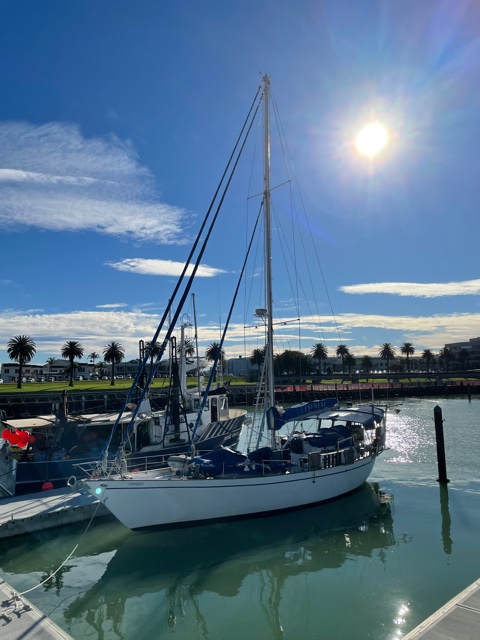
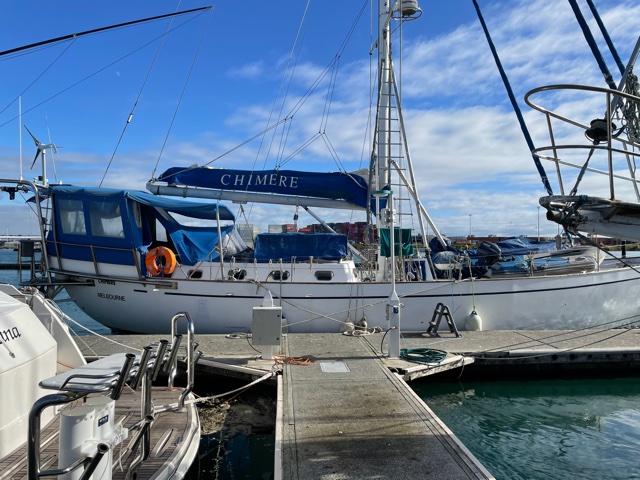
Chimere’s temporary berth on the end of D Row
They were long piers … you just might be able to see our boat right on the end
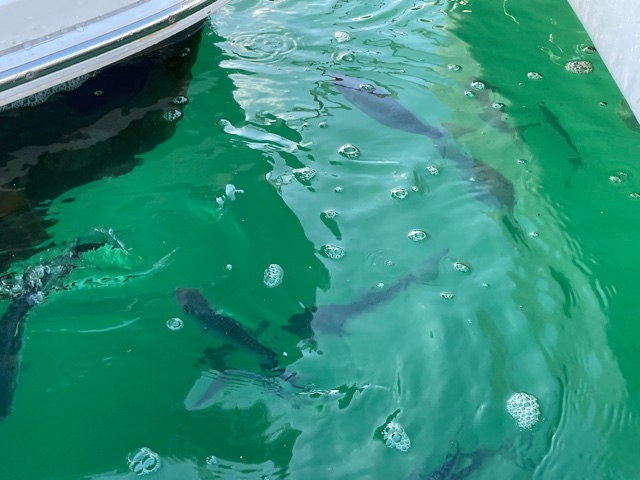
These fish were apparently after whitebait fish that were silly enough to make their presence known

Pretty soon it was time to run Kate down to the car hire place near the airport, but not before moving Chimere  into her allocated berth on the end of C Row; right next to a fishing boat. 

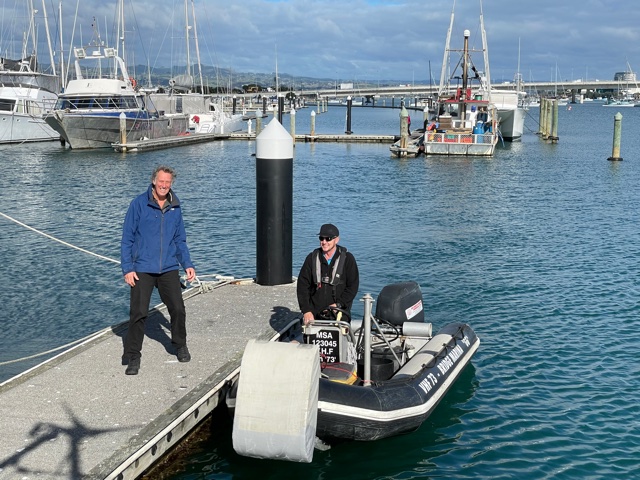
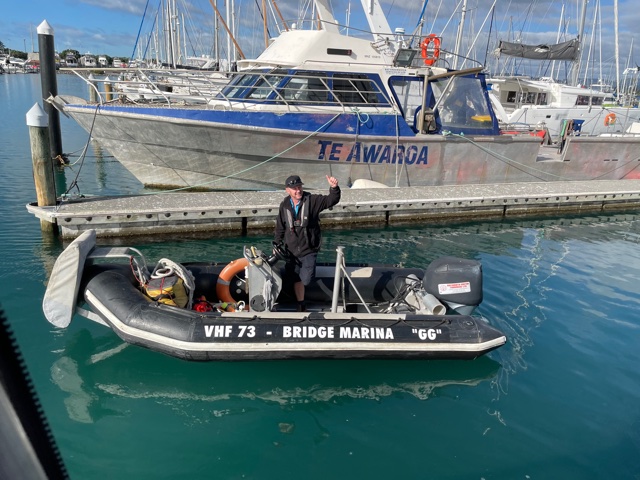
It might have been a coincidence, but just as we were sorting the lines in preparation of the short move, along chugged a marina-man in his “tug dinghy”.  We called him Mr Bow Thruster, because we obviously weren’t the first boat to encounter the strong tidal flow through the pens, and even though it was slack water, they figured it was probably better to be safe than sorry to be on hand.

In the end, I think he only had to give a small push here and there … just to be sure … because although there was no tidal flow, the wind had got up and was blowing off the marina walkway, potentially causing us to stray before we’d fully secured the lines.  

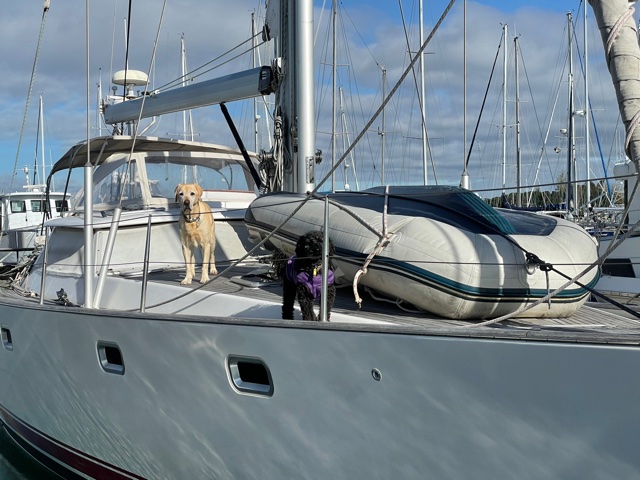
A couple of sea dogs on a nearby boat
Mr Bow Thruster ready to lend a hand
Well equipped to help overcome the effects of the tidal flow on your boat
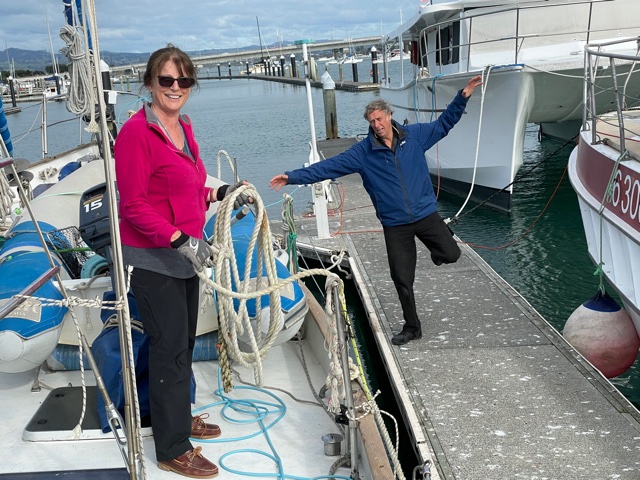
Kate sorts the lines in our new berth and John … not sure what John’s doing, but he only needs one leg to do it.
Kate and Patrick Bear say their farewells after 8 days aboard

After dropping off Kate, John and I then made our way to a couple of phone and communications repair businesses down the road in Mt Maunganui to see if they could fix our IridiumGO satellite unit; all to no avail … “sorry bro”

My fallback position is to post the unit to a guy in Auckland, but I want to be sure there’s no one in the Tauranga region first who might be able to offer a solution.

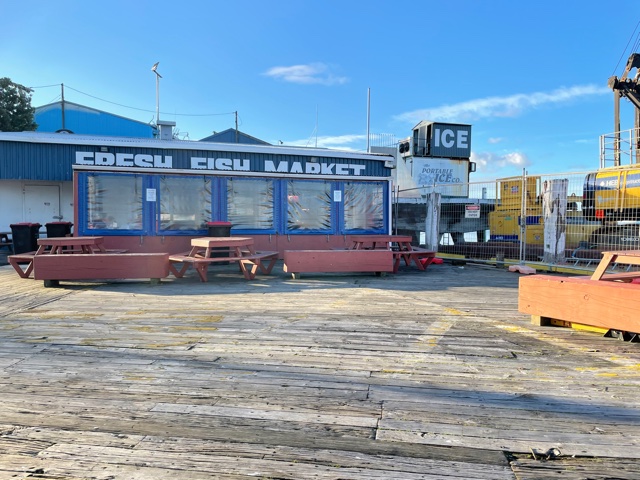
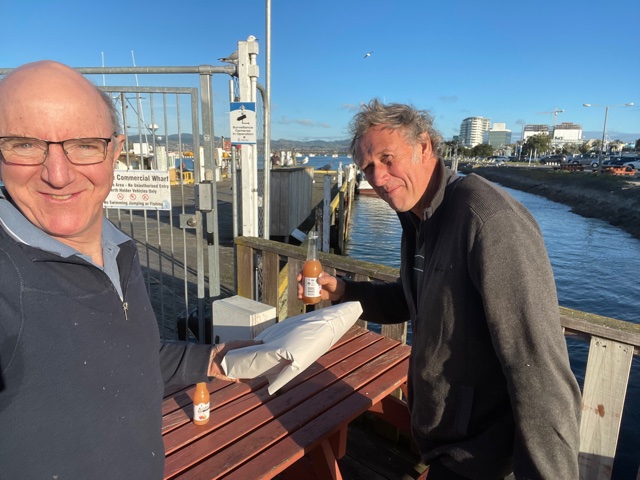
By around 3:00pm we were feeling hungry, so it was back to Tauranga to indulge in fish and chips.  Not just any fish and chips.  But fish and chips at a local wharf-side, fish market establishment, which Julie in the Marina Office described as … “the best fush and chups shop in …”  either Tauranga, or the world, I forget now.  But either way, it was well worth a visit, and may see us again before our stay is out

Doesn’t look to flash from the outside, but if you want fish and chips in Tauranga this is the only place to go, apparently
Looking straight into the low winter sun, John and I settle down for some unhealthy fish and chips
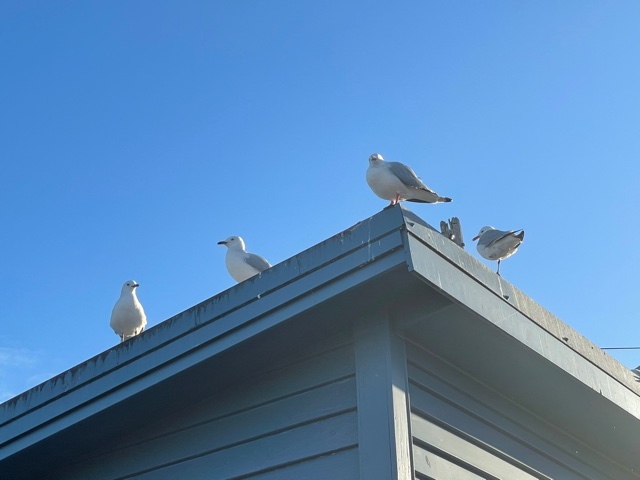
I must have read it several time “PLEASE DON’T FEE THE BIRDS” , but it didn’t stop them perching nearby in hope
I was extremely fortunate to have the lend of a car. It certainly made things so much easier!

On the home front … the Melbourne home front that is … it’s been more than a bit disappointing to hear about the new COVID lockdown – initially for one week, now extended for a further 7 days.  I know it’s still three weeks away, but if this keeps up it’ll potentially put in doubt the family’s time aboard in the Bay of Islands at the end of month. Let’s hope the trans-Tasman travel bubble is repaired asap.

Back on board John and I chatted with the fisherman, given we were his new next-door neighbour.  Apparently he was heading out for three days and was heard to say … “if you’ve got a couple of beers for me Friday night there might be some fish on offer…”  or words to that effect.  That’s my kind of fishing!!  

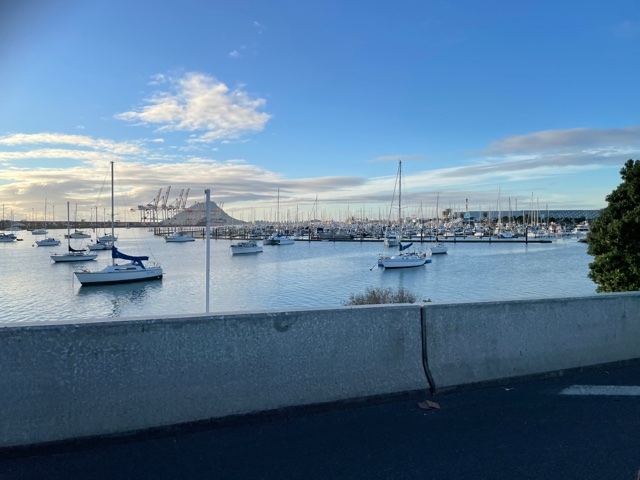
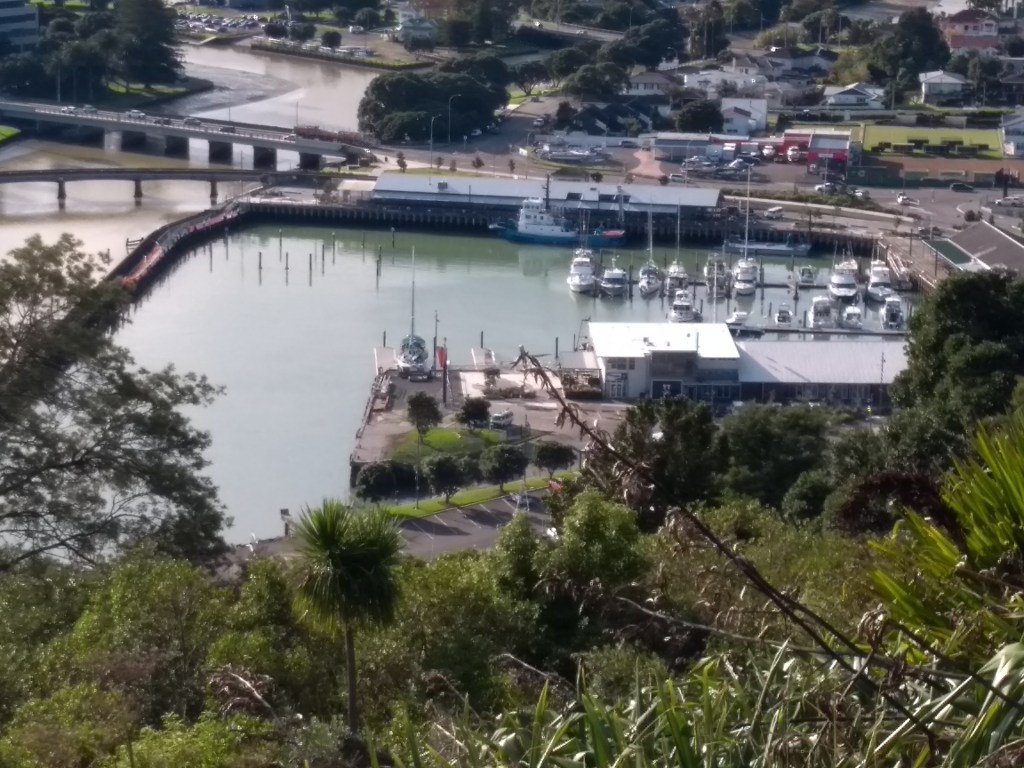
Returning to the marina over the Tauranga “bridge” … hence the name Bridge Marina
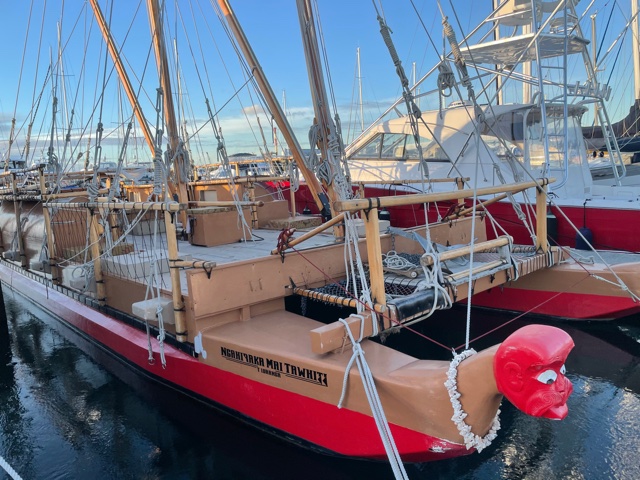
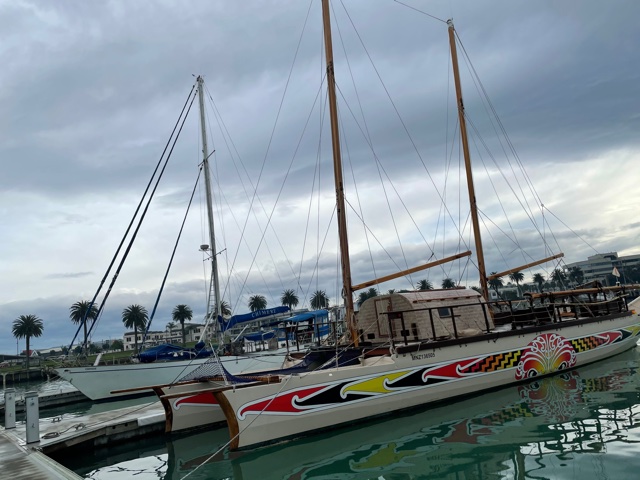
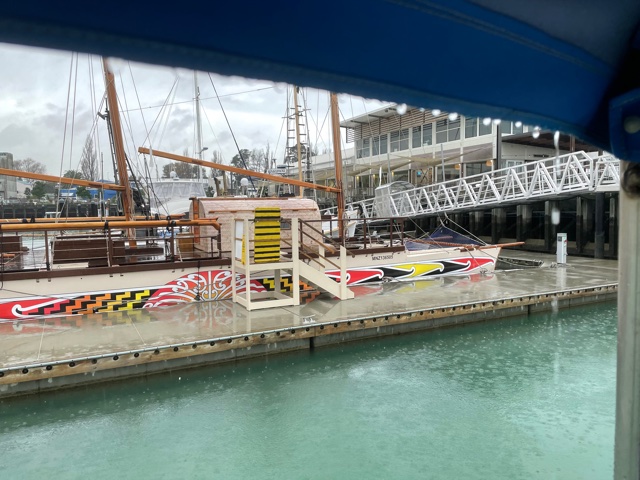
We were parked next to a Waka at Gisborne, and now we are a few berths up from another one here at Tauranga

There was also enough time, before the usual 5:00pm business closing time, to ring a few local electronics firms about my communications problem, and I ended up talking with someone at the local Jaycar store.  Given Jaycar sell electronics components, my thinking was that maybe one of their customers would be up to doing micro surgery on a sat-phone motherboard with a soldering iron and would be prepared to give our job a go. 

As it turned out, I might have hit the jackpot, because a good customer of theirs, “Office Connect” – located just over the road from Jaycar, made positive noises about being able to do the repairs.  I’ll find out for sure when I drop down there tomorrow.

Maybe it was just habit, or that the fish and chips didn’t quite fill us up, but I knocked up a tasty noodle stir fry ensemble for dinner, after which John and I figured it was time to turn in.  Certainly, it’s quiet with the others gone and after John leaves tomorrow it’ll be down to just moi … reminiscent of last year’s lockdown … but not quite   

Smooth seas, fair breeze and settling into Tauranga life

Rob Latimer

Finally, some real sailing

Bridge Marina,  Tauranga,  North Island

Tuesday 1 June 2021

Sailing from Gisborne to Tauranga continued through the night as our 4-hours ON and 4-hours OFF came and went.  On that topic, it’s strange how the four hours ON seemed to extend a lot longer than the four hours OFF, as the welcoming arms of a warm bunk enticed you back and did all it could to prevent you leaving.

Finally some REAL wind in the sails to push us along at around 8 knots

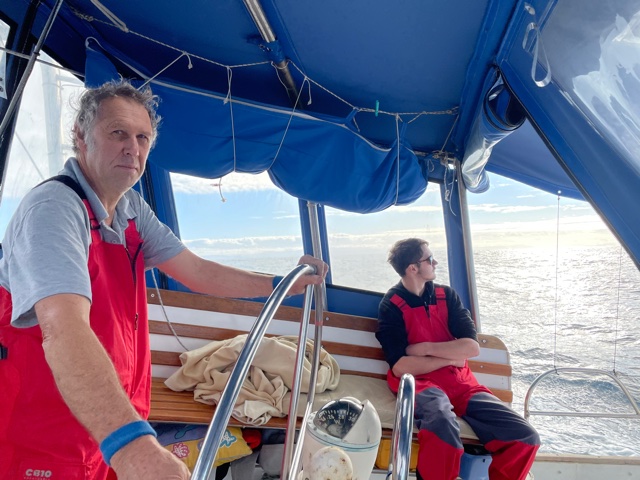
Once the moon rose, the outline of the passing coastline could be seen off the port side, with the wind coming and going; trying to establish the predicted southerly flow.  The sky was mostly clear and despite its reputation for opposing seas, rising swells and tidal overruns, rounding East Cape turned out something of an anticlimax.  A welcomed anticlimax I might say – we’re not looking for unnecessary action.

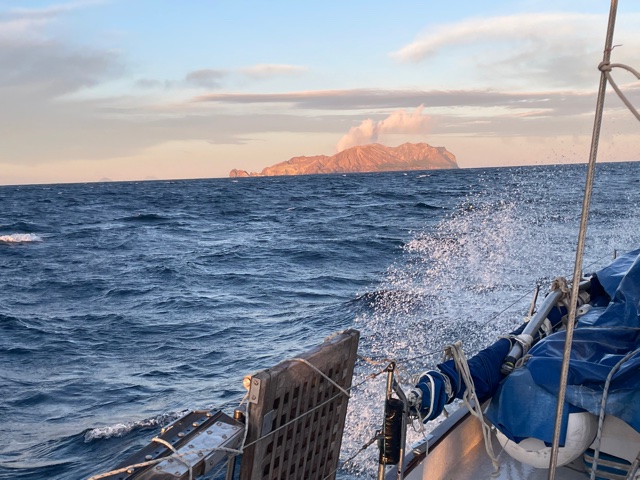
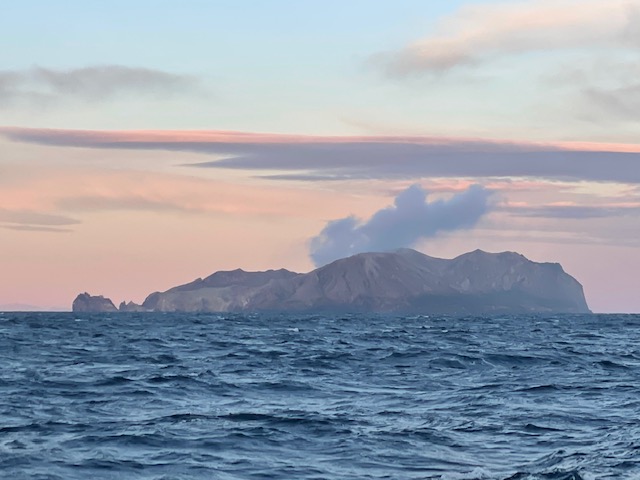
Sunrise – now off our stern – saw us closing in on the infamous White Island – with the clear morning rays bringing the outcrop’s steep cliff faces to life.  A small band of dark green foliage extended a short distance up from the sea on the eastern side, beyond that, just barren, exposed, ravine-scared earth.  Plus, of course, there was the plume of sulphurous smoke and steam drifting skyward, letting all know beyond doubt that this was no ordinary island.

Finally we got some wind and were able to clock some reasonable speeds under sail without the aid of the motor
Passing White Island in the morning light

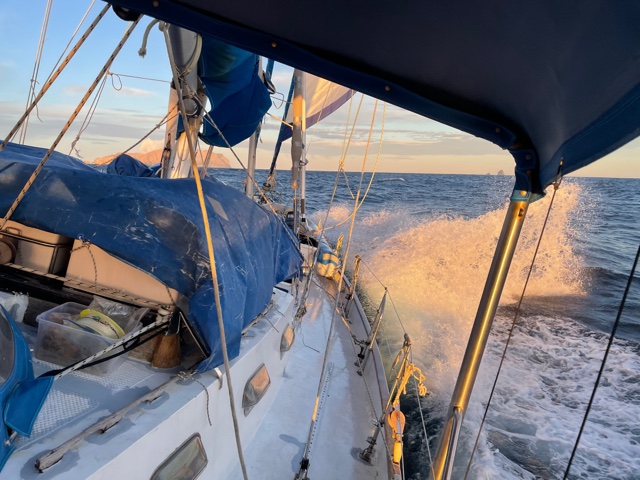
After a time of motor-sailing in the light airs, we finally welcomed a steady breeze from the south of around 20 knots, which propelled us along under full sail – without the motor.  Our trusty Perkins deserved a rest after days of loyal service, with the fresh breeze seeing us hit speeds of 8 knots or more. 

Lying in our bunks, the quiet, steady flow of the water beyond the hull-wall was a welcome sound, along with the gentle rise and fall, plus the angled heal, rocking us to sleep.

Close hauled as we made our approach to Tauranga Harbour
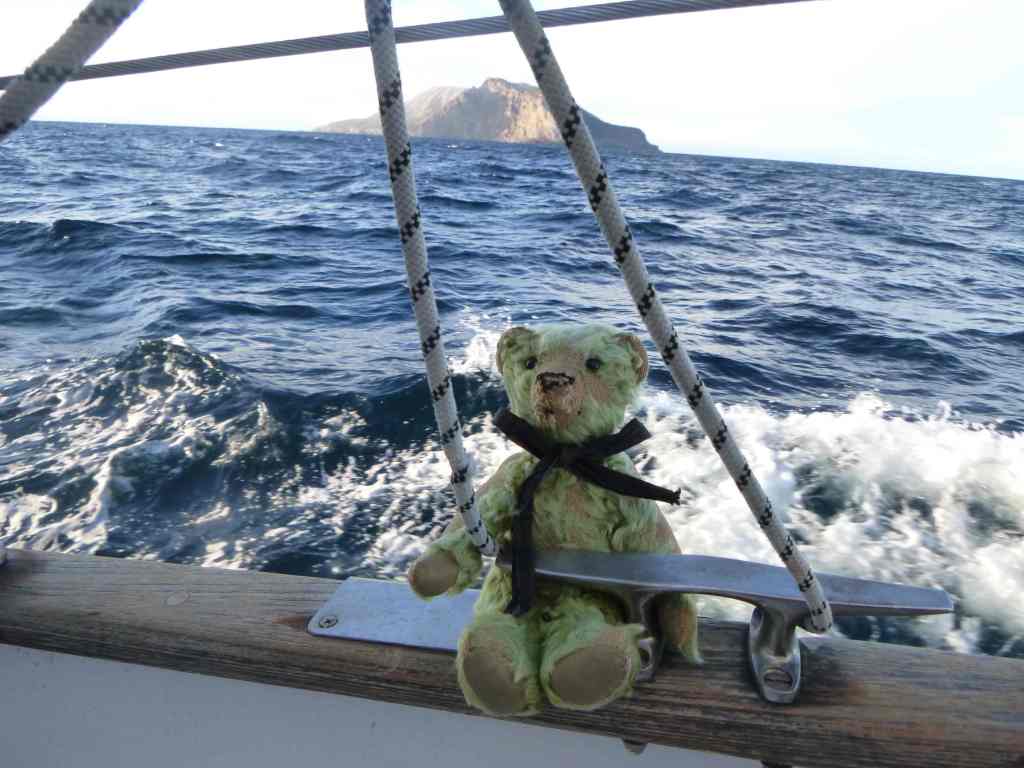
Kate’s well-travelled Patrick Bear living dangerously on the toe rail with White Island behind
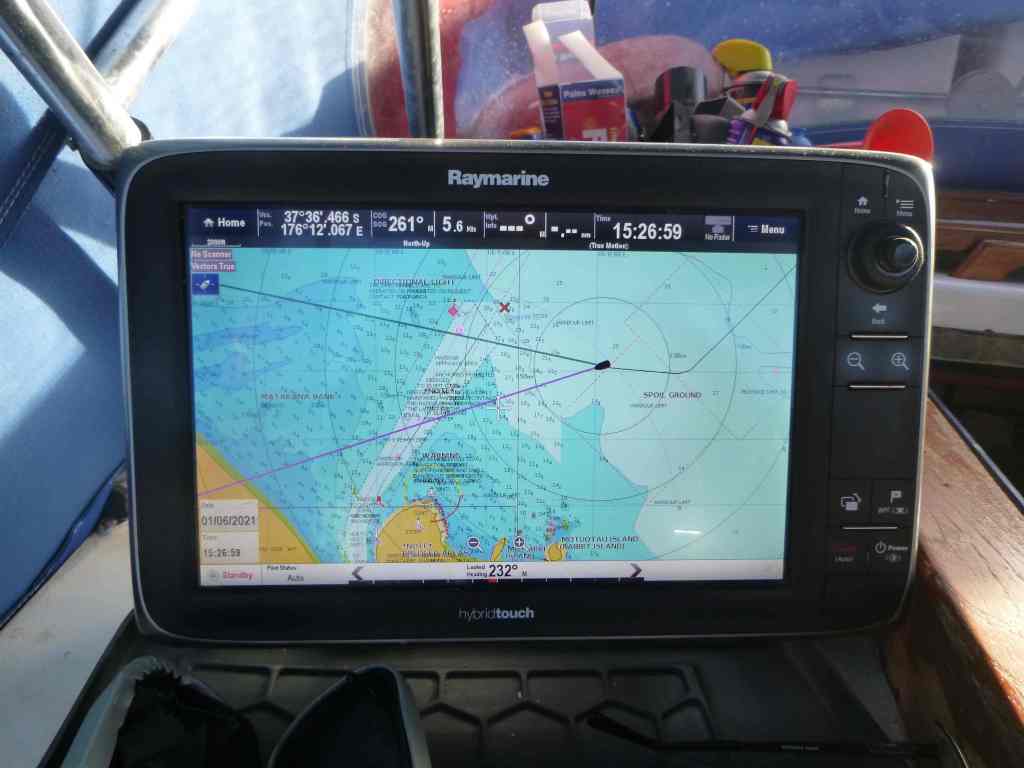
Alvin checks the Chart Plotter

As we approached the harbour entrance, Mt Maunganui grew larger and larger, the channel weaving close to its rocky shore on its western side.  Finally it was time to lower the sails. First the jib on account of it preventing us from aiming more directly to our target – which was also where the wind was coming from – then the main sail as the final approach was made.

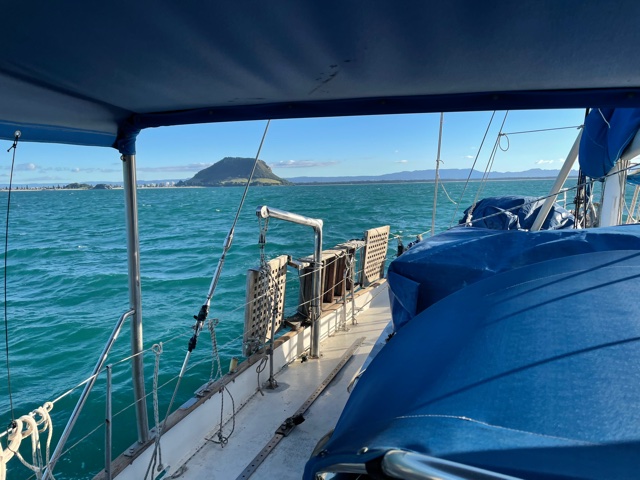
Mt Maunganui in our sights and the entrance to Tauranga Harbour
Getting ready to hang a left turn into the harbour channel
Not far to the channel now
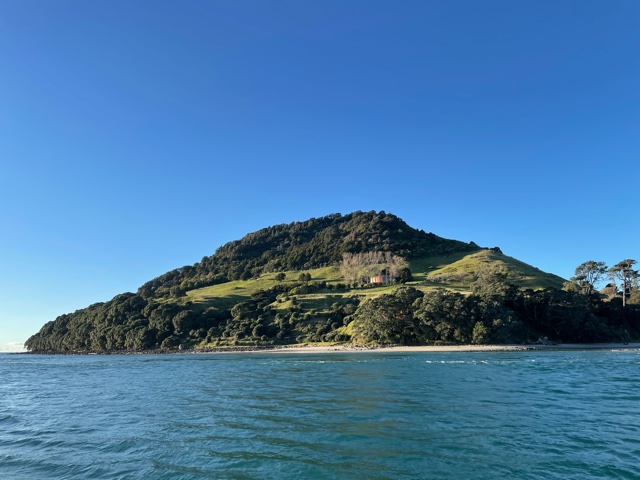
Passing Mt Maunganui to port
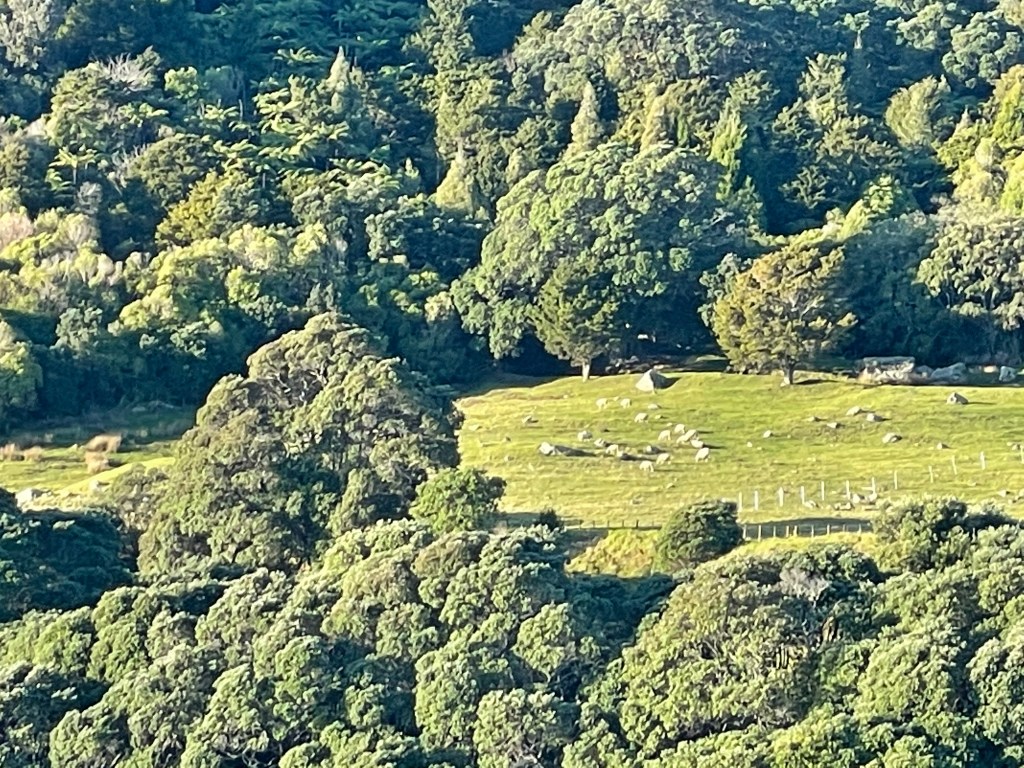
With my phone out of credit and no Bars showing on the display, I spotted all these kiwi baaas on the grassy knoll

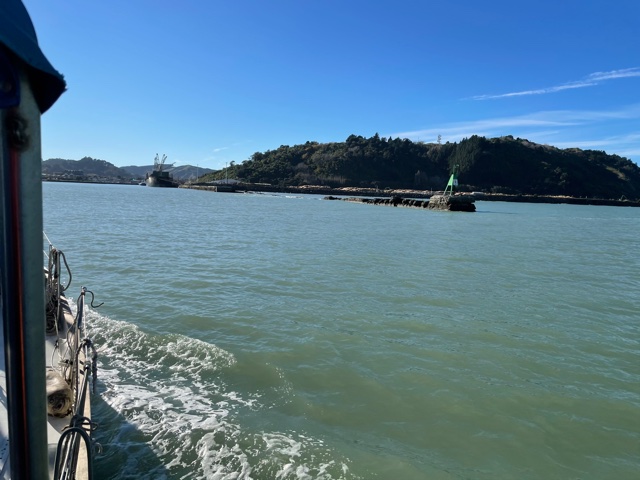
Despite the outgoing tide, we made a healthy 5-6 knots under motor up the harbour, under a blue sky but with the sun inching closer to the horizon.  It was around 4:30 that we finally tied up, an hour or so later than we’d originally anticipated, meaning that we had indeed averaged very close to 6.5 knots from Gisborne.

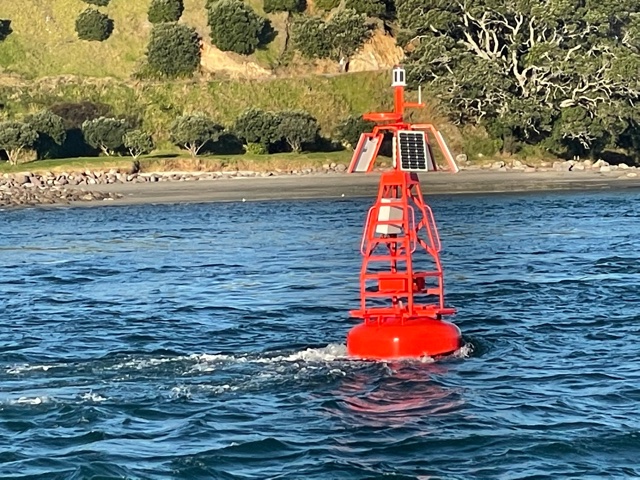
You can see the tide running out past this port marker like a river
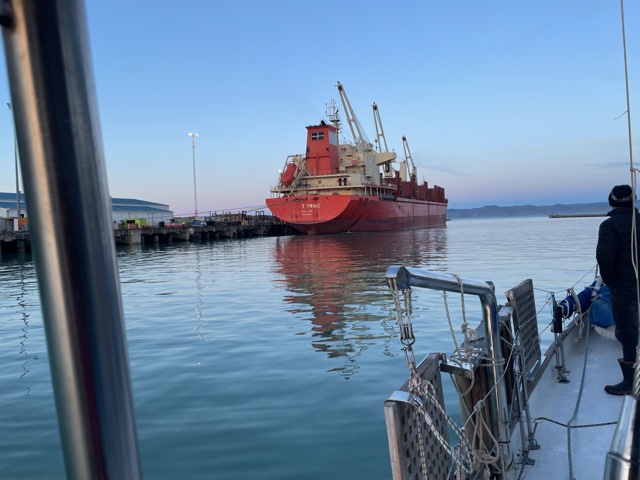
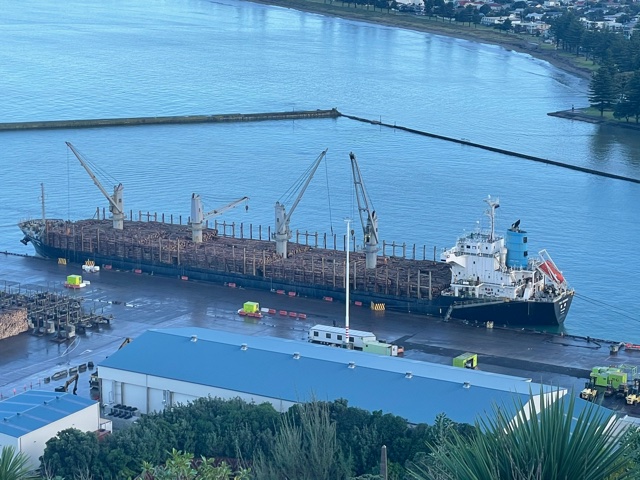
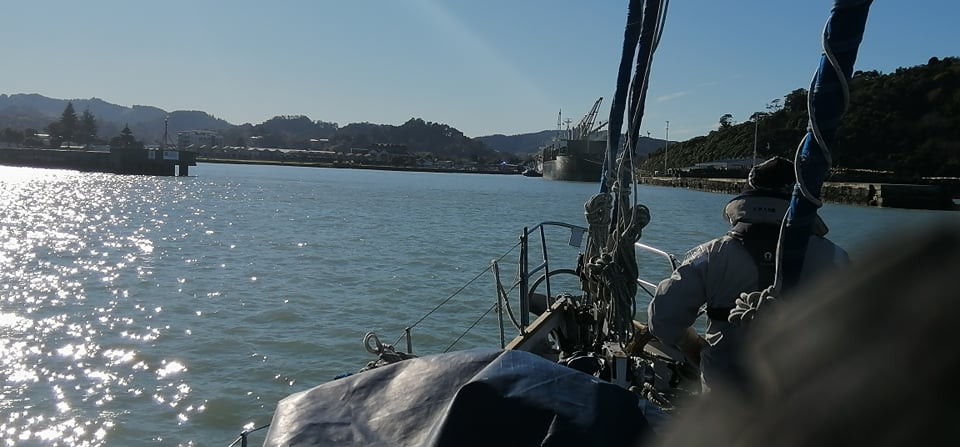
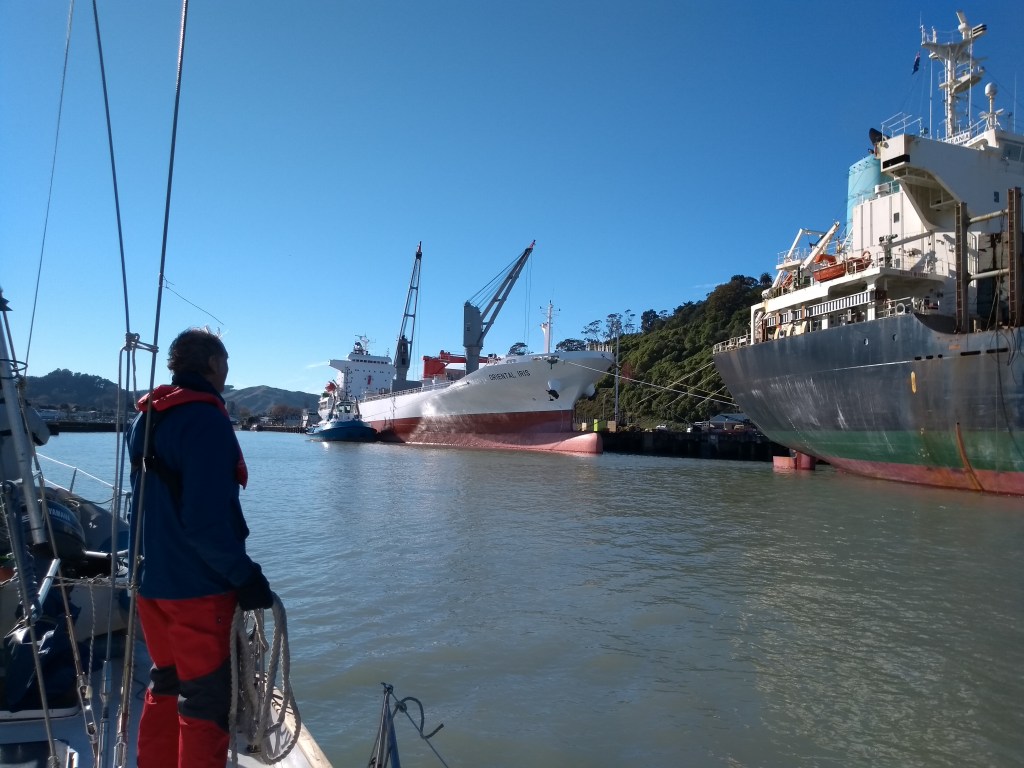
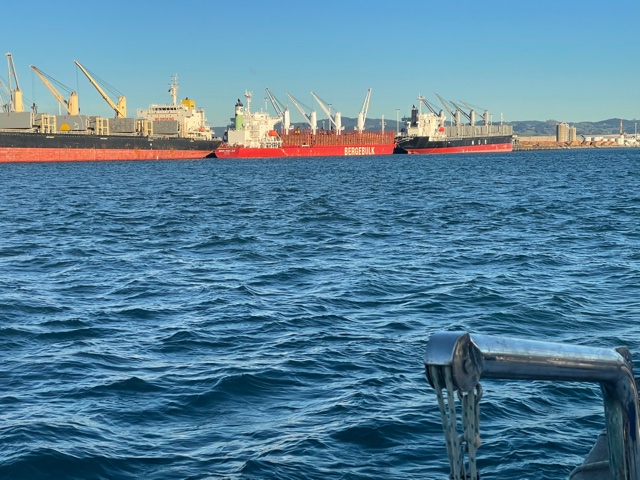
More ships … mostly loading logs from what we could see

As a courtesy, I made a quick VHF call on Channel 73 to the Bridge Marina office to announce our arrival, and I’m glad I did.  “Welcome Chimere” came the reply from Julie … “we’ll put you on the end of B Row, rather than your berth on C Row.  You can move to the berth tomorrow at slack water”           

Julie then gave us updated instructions for tying up, and I’m glad she did, because on doing a U-turn around the end of the floating breakwater, it soon became apparent that I was still doing 2-3 knots, and the engine was in neutral.  The tidal flow was now going our way and after maneuvering around one pile, (keeping it to port) it was then a case of pulling up to a long wharf on the starboard side.   The trick to travelling “with” the current, however, is that you’ve got to go faster than the current in order to maintain water-flow over the keel and rudder, so that you can still steer.  If not, you quickly become just a piece of drift wood. 

The long and the short of it, is that lining up a wharf, doing 4 knots, in a confined space, with around 30 tons of momentum, kind of goes against all your natural instincts.  But fortunately, we have a healthy reverse gear, and the trusty crew of John, Alvin and Kate who were quick in securing the lines; before we were carried away.       

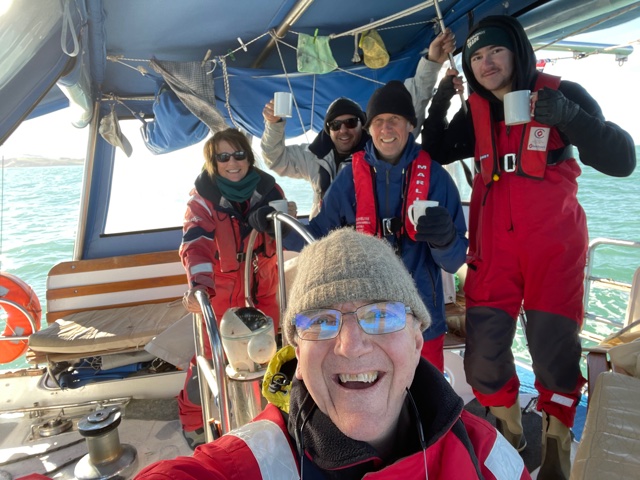
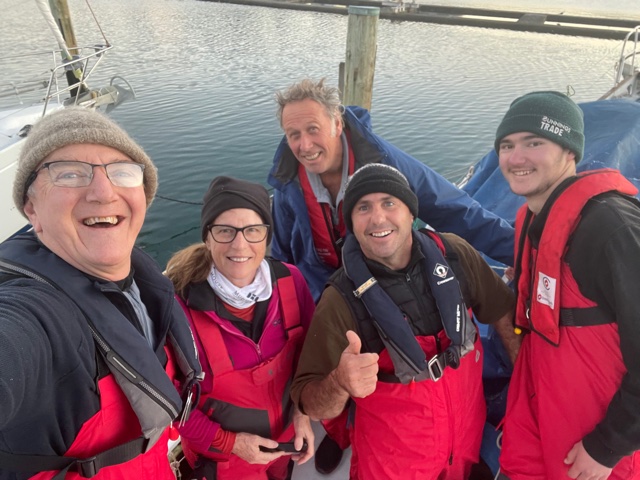
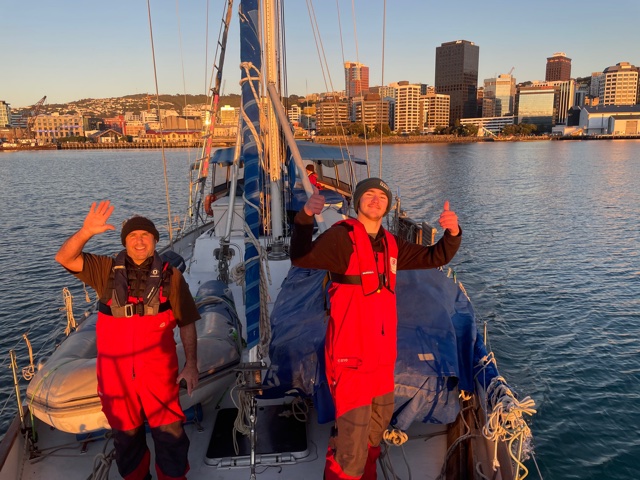
It was great to arrive, with the obligatory selfie “After shot” taken on the foredeck, minus of course Harper who had to leave us a couple of days ago in Gisborne.

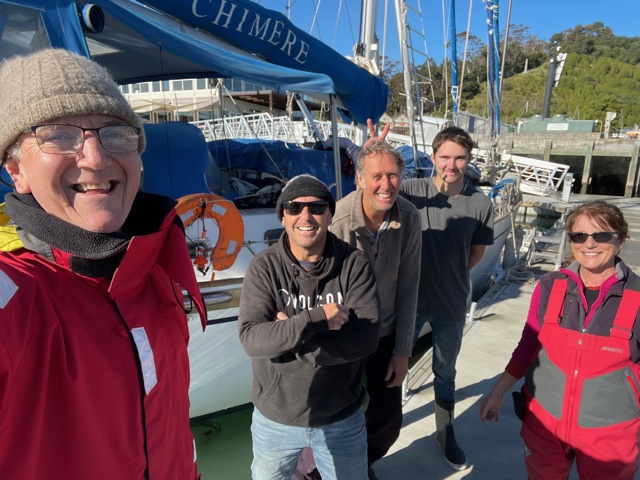
The selfie “after” shot … minus Harper, who had to leave us in Gisborne

While the crew tidied things up on deck and below, I went up to the office to sort out the remainder of the paperwork with Julie, who was just as helpful in person as she’d been on the radio. 

“We haven’t had many overseas yachts come through” … she explained, with the COVID19 travel restrictions effectively halting most global cruiser’s travel plans in their tracks.   Having a “TIE”, or a Temporary Import Exemption means I’m not charged the usual 15% gst on berthing fees … which all adds up.

While at the office I also picked up the keys to a car, which a very generous friend and supporter – from our Medical Sailing Ministries work in Vanuatu – had left in the nearby carpark for me to use while here. As they say in Vanuatu Tank Yu Tumas!!

We arrived in our berth just in time, before the sun went to bed
We were put on the end of B Row, for ease of access in a running tide, and will move to our berth on C Row at slack water tomorrow.

Back on board, Kate and Alvin began planning their “exit strategies”, searching online for the best way to get home. Whether to hire a car, catch a bus, or maybe a plane …  In the end, Alvin booked a seat on a bus heading north to Whangarei leaving around 8:00am in the morning and Kate found a rental car, which she’s hired for three days, making for a leisurely drive down to Wellington, taking in the Hobbit tourist experience at Matamata  … check it out HERE

Kate dishes up her pre-prepared Thai Green Chicken Curry … yummy!!

Kate’s homemade Thai Green Chicken Curry, which was retrieved from the freezer earlier in the day, hit the spot for dinner and soon after we each made our way to our cabins for an early, and most restful night – except for the very large number of Silver Gulls massed nearby on the concrete wharf, who kept arguing with each other for a few hours more.  

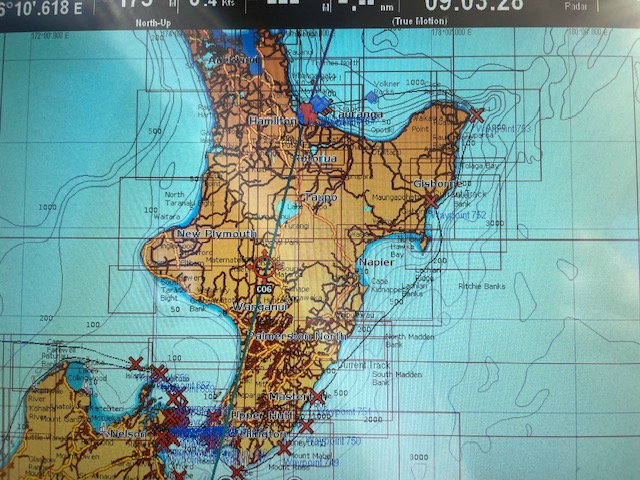
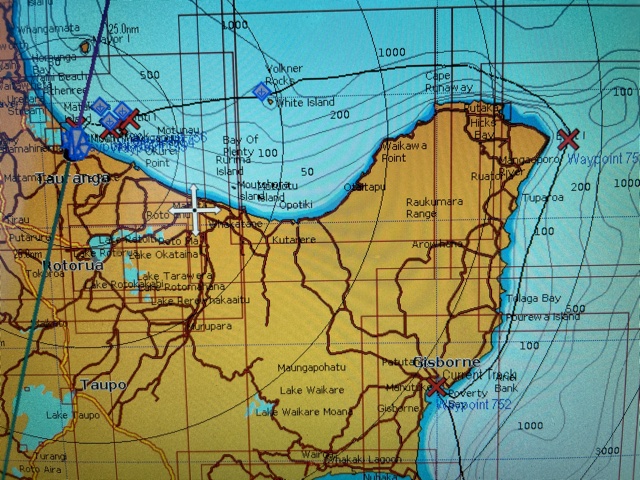
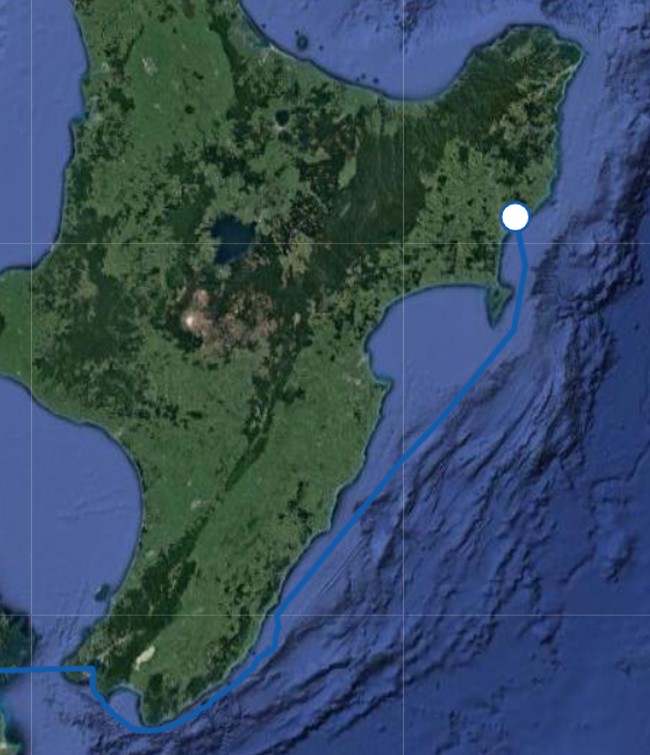
Our track up from Wellington … 286 miles to Gisborne, then a further 205 to Tauranga … a total of 491 miles
No tacking!! Just a straight line up and around East Cape

Smooth seas, fair breeze and finally, some real sailing.

Rob Latimer

Back to Sea Again

At sea off East Cape, North Island

Monday 31 May 2021

We really enjoyed our three days in Gisborne.  It was a good chance to relax, avoid some poor weather (out at sea) , and explore something of life ashore.

The all-important weather forecasts showed a switch to a southerly airflow, more suited to our sail plan and so it was away this morning around 7:30. 

As we made our way down the short harbour (river actually) it was clear that yesterday’s black ship full of logs, had been switch – sometime in the night – with today’s orange empty ship; high in the water with the cranes and machines already starting the loading process.     

Saying good-bye to Gisborne
Yesterday’s full ship was switched overnight to an empty ship this morning
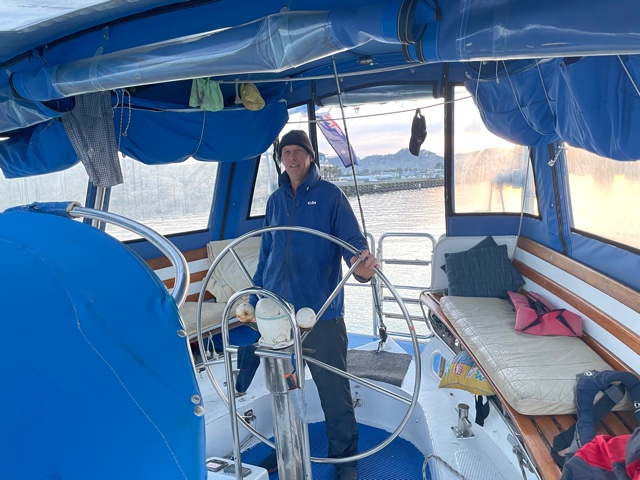
John guided us out through the red and the green
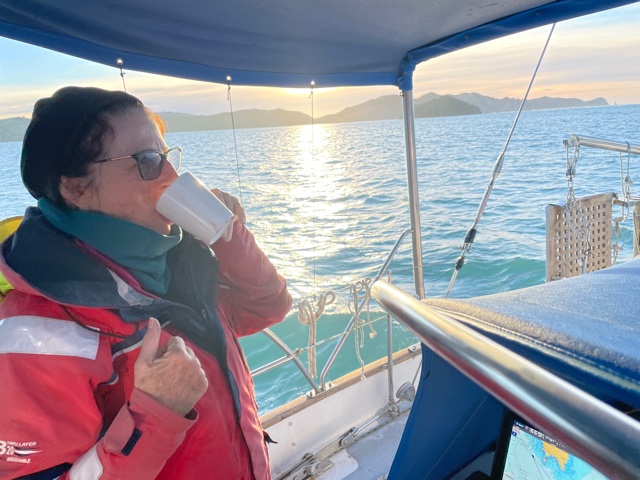
Kate’s morning kick-start as the sun rises in the distance
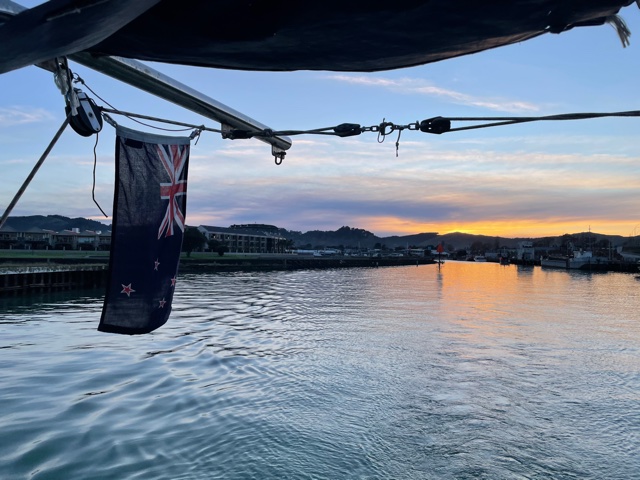
The final good-bye through the back door

It’s around 210 miles to Tauranga, and with generally favourable conditions our hope is to make the trip in about 32 hours at an average speed of 6.5 knots; approx 12km/h.  This should have us tying up at the Bridge Marina – berth C62 – around 4:00pm tomorrow. 

Having made good time up from Wellington, I contacted the Tauranga marina to let them know we were going to be arriving a few days earlier than expected – which was no problem.  I just had to send them all the usual evidence of compliance – insurance, electrical, clean hull etc.

Once clear of Tuaheni Head, just outside Gisborne, it was a calm ride up the coast, keeping around 3 miles out to sea at all times.  The green rolling hills and rocky headlands drifted by off our port side and with the seas so settled, there was nothing for it but to breakout the bread making equipment.  We’d bought fresh yeast back in Wellington, but I still needed to locate the mixing and measuring bowls, baking tins, flour and oil.  

It was a glorious morning
the offshore breeze lifted the breaking waves on the shore
The coast quietly slipped by off on the portside
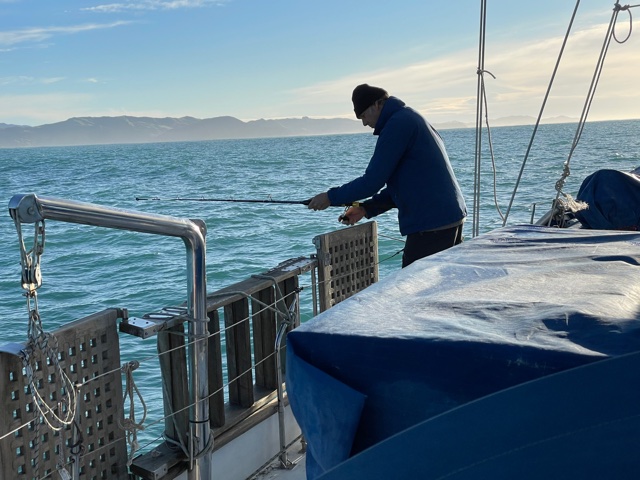
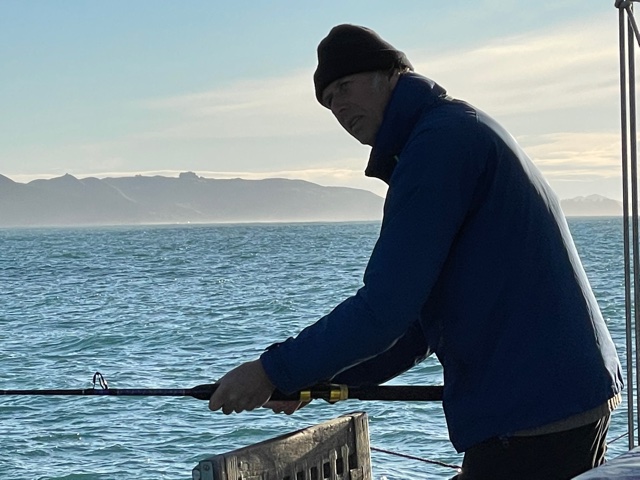
John, full of optimism – as all fisher-folk must surely be – lays out a line
This time for sure …

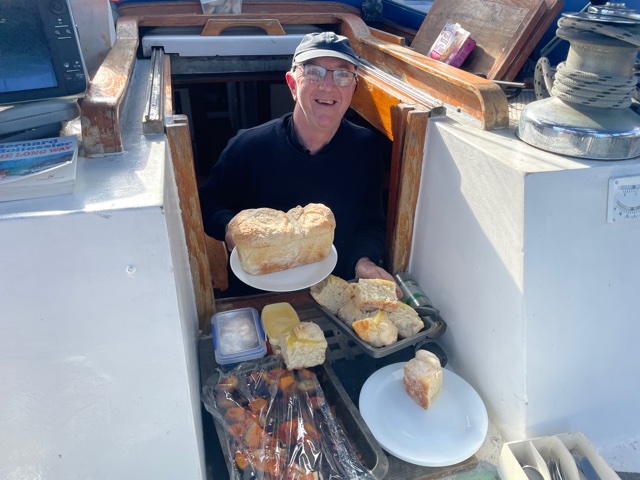
After several years, my darling wife’s laminated bread making instructions remain firmly secured to the galley wall and so it wasn’t long before the golden-baked results of my efforts were revealed for all to oooohh and aarrrr over. 

Nothing quite like baked bread at sea!

Rather than bake two simple loaves, I mixed it up a bit by baking one loaf plus four large cheese covered rolls, which in turn, were later cut in half.  It made for a very tasty and extremely filling lunch; complete with all the leftover roast vegetables from last night

With Harper gone, Kate sorted the watches out to be 4hrs on and 4hrs off, which started at 12:00 noon.  At the moment Kate is having a sleep and I’m typing on the computer, with John and Alvin, who will be on till 8:00pm, sharing stories, to much laughter, in the cockpit.

There was much excitement an hour ago, when the call … “FISH” … rang out as John leapt to his rod on the portside and began reeling away.  I dug out the net and gaff, Kate and Alvin cut the engine and from there it was just a matter of time before John’s denison from the deep revealed itself.   This happened soon enough, with collective groans all round, when a large length of floating seaweed swung on deck.  “Good practise everyone … nothing to see here” was the general mood after that … but we live in hope!

Phone and internet reception is intermittent up this part of the coast but hopefully I can connect and upload today’s message and some photos.

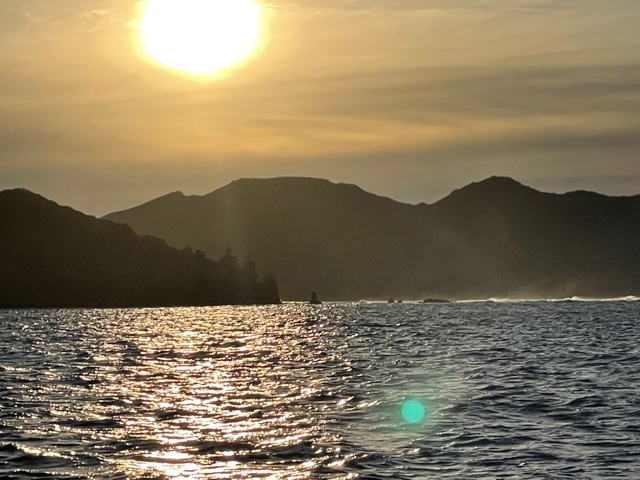
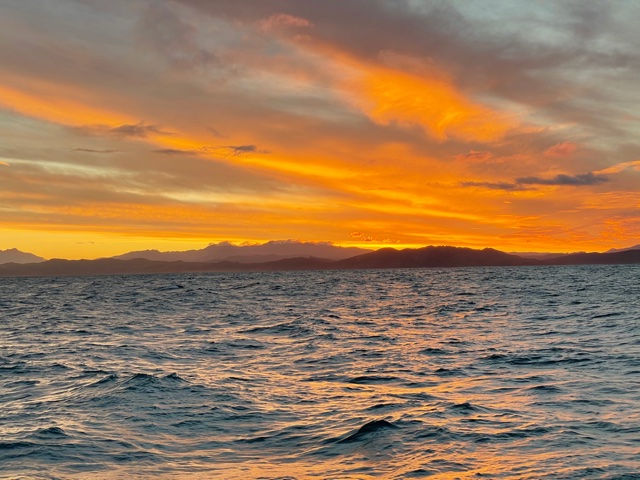
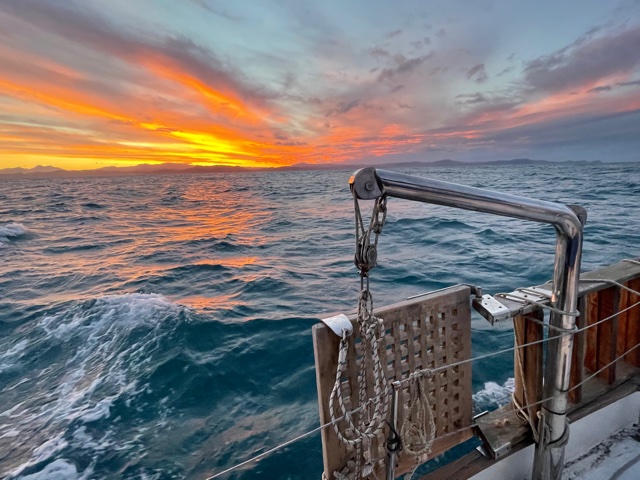
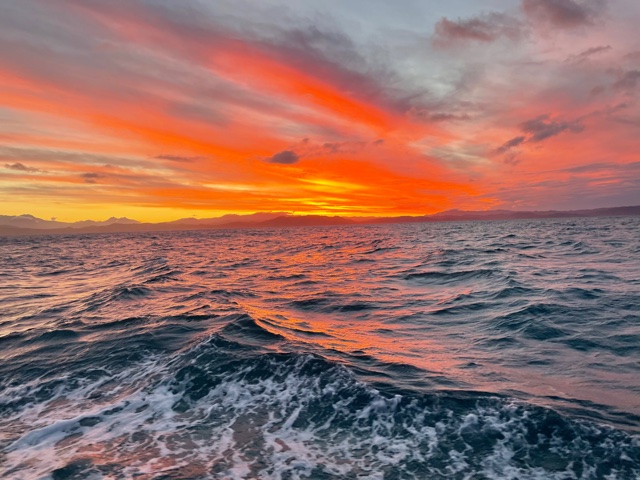
And just as soon as it’d come up, the sun was going to bed
It just got more and more spectacular
It really was red …

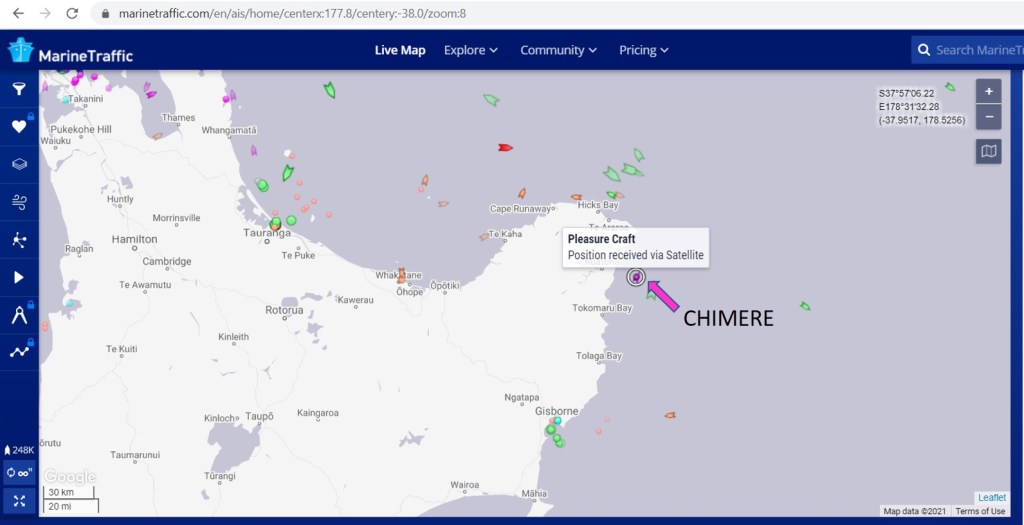
As for our Vessel Tracker, it won’t be working for a couple of weeks, until I get the IridiumGo transmitter fixed.  The other link I gave last night to the “Marine Traffic”, public searching website, is perhaps not as straightforward as you’d like.  The problem is that when we are close by to land relay stations our details are shown in full, at other times it’s just a pink “Pleasure Craft” dot with a message like “Position received by Satellite”.  I’ll include an image below as an example. 

Because there are very few (none) other pleasure craft out here, rest assured, if you have a look at the eastern region of the North Island, then it’s probably going to be Chimere. 

Hopefully we’ll have our own tracker back and working soon

Maybe try this link HERE

Real keen “boat spotters” pay money to subscribe to this website, and by doing so, all the bells and whistles – such as vessel details located via satellite – are unlocked.  (Please don’t subscribe on our account?!)

Oh, I see there is currently internet coverage so I’ll close now and start uploading  

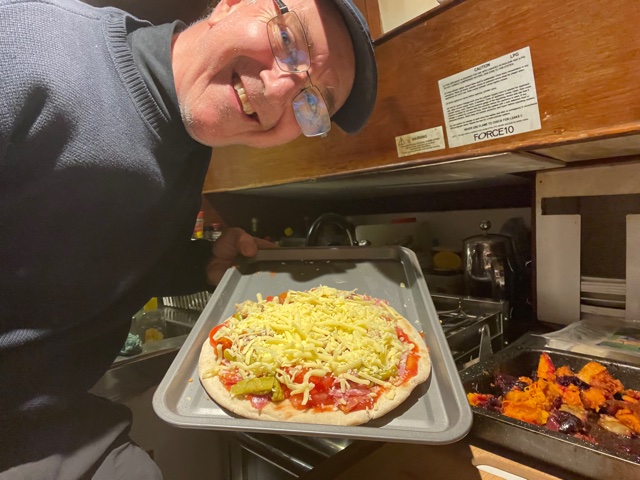
Tonight we’ll be eating Bob’s Pizza Barn … again

Smooth seas, fair breeze and a lazy day in Gisborne

Rob Latimer

PS Having had to hand steer for the 24 hrs before arriving at Gisborne, on account of an internal electronic “issue”, we suspect on account of the confused sea state … we were very pleased that the Auto Helm … affectionately known as “Otto” (as in Otto Helm) … has decided to work perfectly. But sshhhhh, we aren’t supposed to be talking about it … oops too late, Doh!

Lazy Day in Gisborne

Gisborne Inner Harbour Marina

Sunday 30 May 2021

After a night of passing showers, which didn’t bode well for the day ahead, the morning dawned with patches of blue sky and the promise of more to come.

With the other three sound asleep in their bunks, I made my way ashore a bit after 8:00am and decided to go for a walk … up over the local hill and around the town.

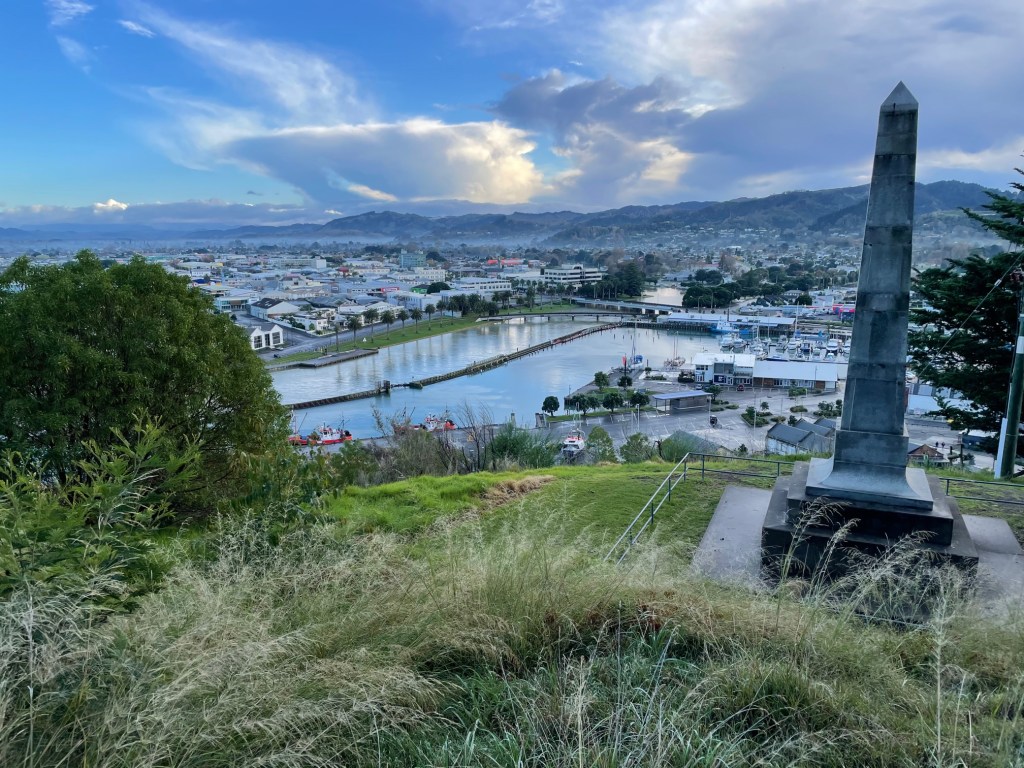
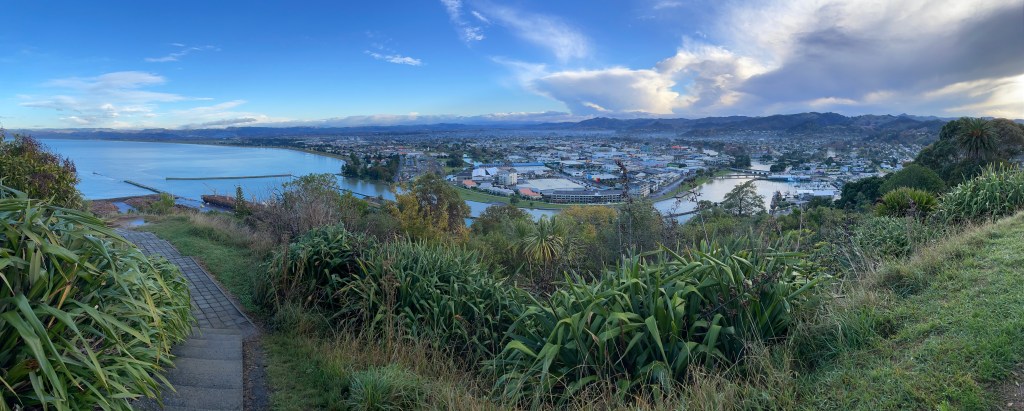
It was a glorious morning for a stroll – you can see Chimere out on its own in the centre of the shot
Making good use of the Panoramic function on my phone
Memorial to the fallen of WW1
Speaks for itself
The main war memorial, over the river from town
Cool morning over Gisborne

It really was a gloriously still and sunny morning, as you can see from the pictures and I came to the conclusion that Gisborne would not be a difficult town in which to live.

Getting artistic with my camera
Almost fully laden with logs and ready to sail.
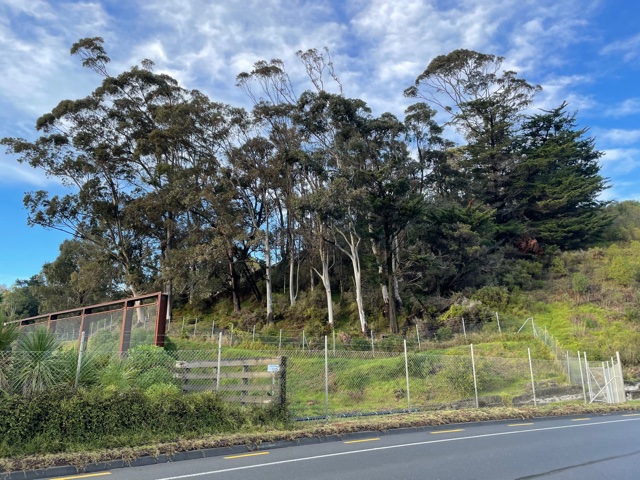
A familiar site for an Aussie … a stand of gum trees

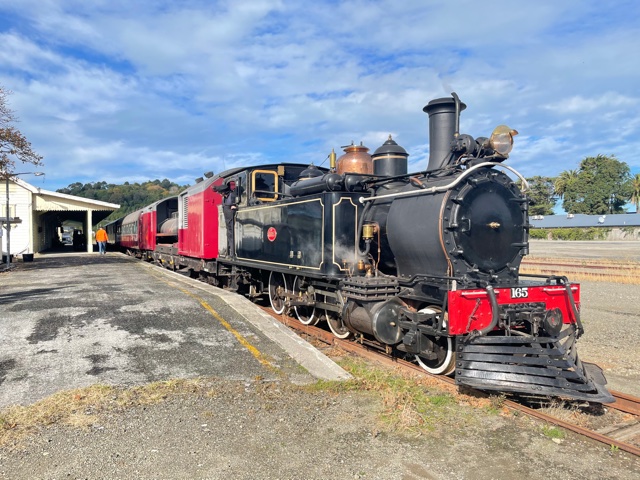
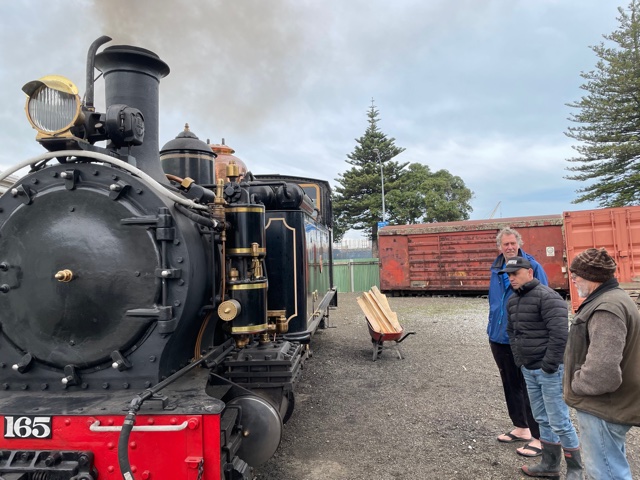
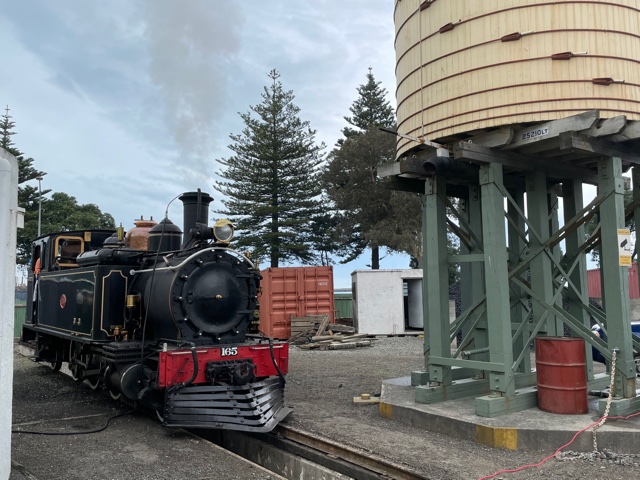
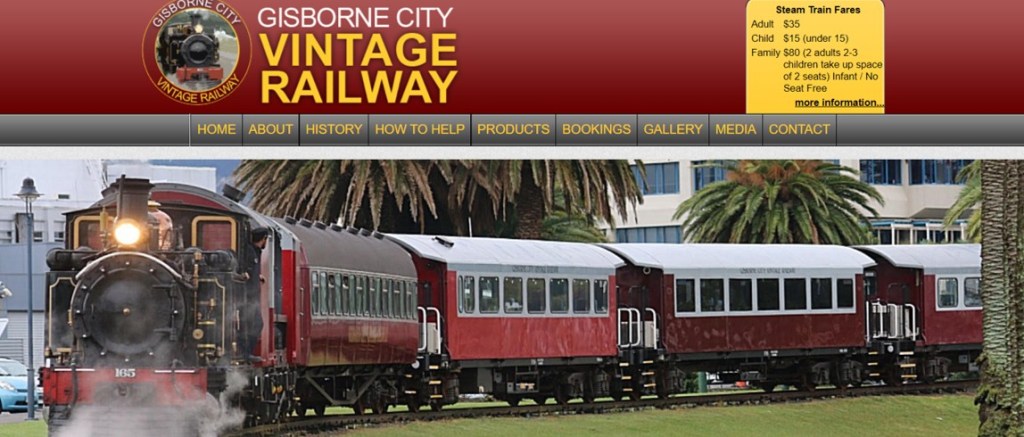
My return took me past the steam train and I could see they had her fully steamed up and ready for the big “Chardonnay” excursion ahead.

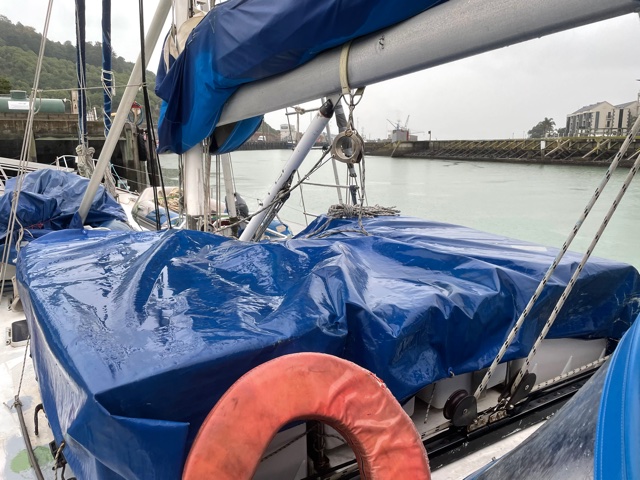
Back on the boat around 10:00am, John, Kate and Alvin had completed breakfast and were starting to work on some onboard maintenance … Kate on the wooden toe rail, Alvin re-sewing the zip on the stern canvas panel and John sealing up a small screw hole near the chartplotter which let in a persistent drip of water the other day during a serious downpour.

There was also the overdue task of loosening the companionway hatch, and fixing a mainsail “car” – one of those small, ball bearing-filled brackets that slides up and down a track connecting the sail to the mast – which had mysteriously come loose.    

Around 12:15 I wandered over to the steam train to see it depart, fully laden with wine-drinking revelers.  I’d hoped to be able to see our four new best friends from yesterday, and sure enough there they were, strategically positioned on each carriage in their fluoro vests, ready to make sure people didn’t do anything silly or dangerous.    

Wa165 steamed up and ready to take a trainload of Chardonnay drinking revelers

For the rest of the day, each of us wandered off to do our own thing.  There was discussion about the weather of course, with our departure tomorrow morning coinciding with the arrival of a southerly change later in the day, which should push us up and around East Cape.  From there it’ll be a change of course to the west, as we enter the Bay of Plenty the next day and onto the Tauranga Harbour; hopefully by Tuesday evening.   

Unfortunately, the IridiumGO satellite device has now run out of battery power and until I can get the charging input socket re-connected to the internal motherboard on the side of the unit, it will have to remain in its box.  The good news is that I think I’ve found an electronics technician in Auckland who might be able to fix it.  In the meantime, if you’d like to see where we are, go to www.marinetraffic.com and search for the vessel Chimere (there’s a few Chimeres, so pick the Australian one) or try this link HERE  

Smooth seas, fair breeze and a lazy day in Gisborne

Rob Latimer

Harper hits the highway

Gisborne Inner Harbour Marina

Saturday 29 May 2021

It was a lazy start to the day, with an extensive breakfast that made good use of the eggs, bacon and bread in the ship’s stores. 

In contrast to the day before, the sky started out grey and overcast, a portent of what was to come. But in looking out on the portside what did we see by a Waka. 

A what?

You might be thinking of that small bird the weka … but no, this is a Waka, or Polynesian twin-hulled canoe, of which there are several spread around the country. This one is called the Tairawhiti and is based here in Gisborne.  It had apparently sailed in overnight, having come down from Tauranga   

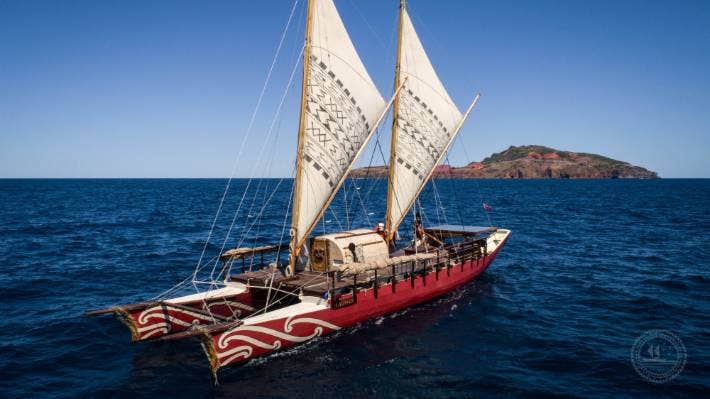
This particular Waka is described below and HERE

“Our Waka Hourua ‘Tairāwhiti’ is named after the Tairāwhiti Gisborne/East Coast area – the coast where the sun shines. ‘Tairāwhiti’ follows great voyaging traditions, providing an opportunity for cultural and sailing experiences where storytellers share our authentic Polynesian waka with the public. It’s also used as an alternative educational platform as a floating classroom for the benefit of school pupils in the region. So haere mai, welcome aboard the Waka Hourua for a journey that spans millennia, from canoes carved by the ancestors using stone age tools and the great trees provided by Tane Mahuta (God of the Forest) – sailed by man to discover and settle the Islands of the Pacific Ocean, to the fibreglass hulled vessel we berth today”

To find out more about Wakas more generally, check out the link HERE

The local Waka turned up in the early morning, having sailed down from Tauranga
From the Waka website … out on the Big Blue

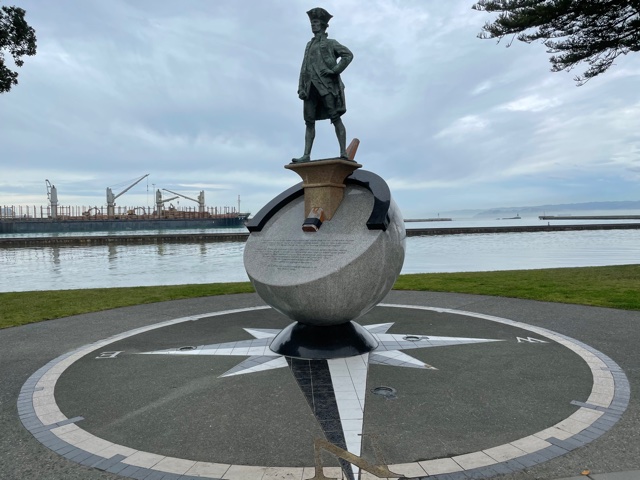
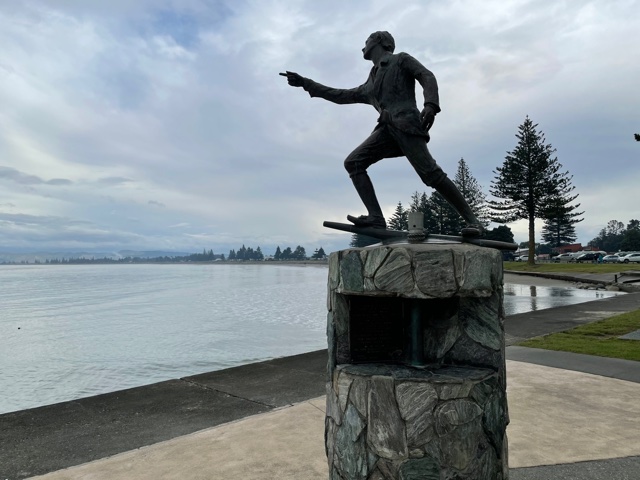
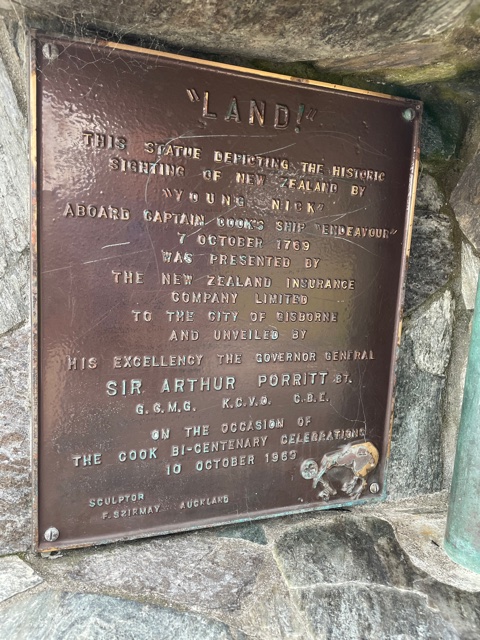
After breakfast it was time to farewell Harper, with John, Alvin and I wandering with him to the edge of town – and the open road – which also gave us a chance to check out the beach and local monuments, commemorating the arrival of Captain Cook in 1769 and the initial sighting of land by crew member Nicholas Young

Harper says good-bye
On the main road and heading back south to the Wellington region
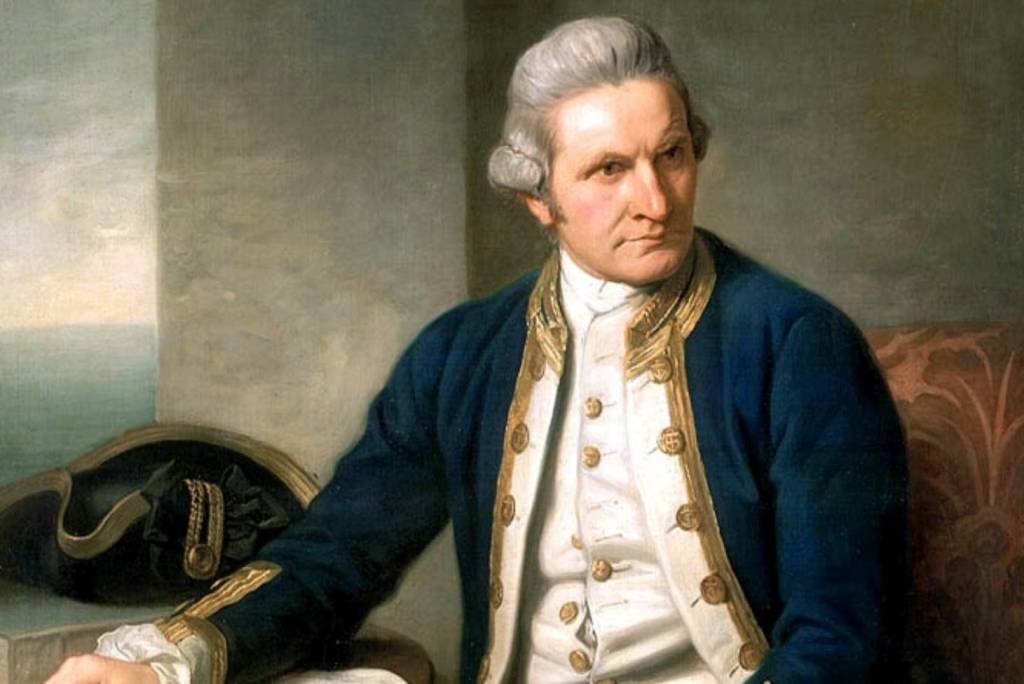
The famous man himself, Captain James Cook who first made landfall here in Poverty Bay, 1769. The inscription reads …

On the front of the base:
A fine seaman, an outstanding captain and an honest man Captain Cook was one of the last of the great
 explorer navigators and the first scientific expedition leaders.  After his three global voyages
 of 1768-71, 1772-75 and 1776-79 the map of the world was substantially complete.

Here on the 9th and 10th of October, 1769, Cook walked with men from HM Bark Endeavour seeking
 fresh food and water. Nearby on the river rock Toka-a-Taiau, Maori chief and English greeted
 one another. When traditional challenges were misunderstood Maori were killed,
 the ship sailed without provisions and thus Poverty Bay received its name.
From here, the Endeavour circumnavigated New Zealand
 and Cook plotted the first map of this country.

This meeting of the two peoples, marked the beginning of the
 New Zealand nation.
Near to the Captain Cook statue is one to the boy Nicholas Young who first sighted land from the mast of Cook’s Endeavour
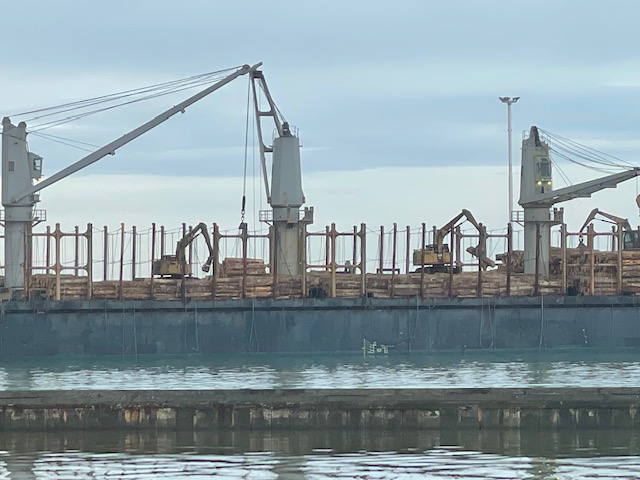
Across from the statues, the loading of logs for export continued throughout the day

Meanwhile, Kate wandered up town, stumbling across the local museum and a farmers’ market.

After waving Harper off, John, Alvin and I watched logs being loaded aboard the ship across the river, with the aid of large excavators and the ship’s cranes, and then noticed smoke and the smell of fire from behind a nearby fence. 

Built in Dunedin in 1897, the Wa165 was restored after being turned into a local park attraction back in the 1960s
One of eleven such trains built in Dunedin between 1897 and 1903 , the Wa165 is the only remaining example
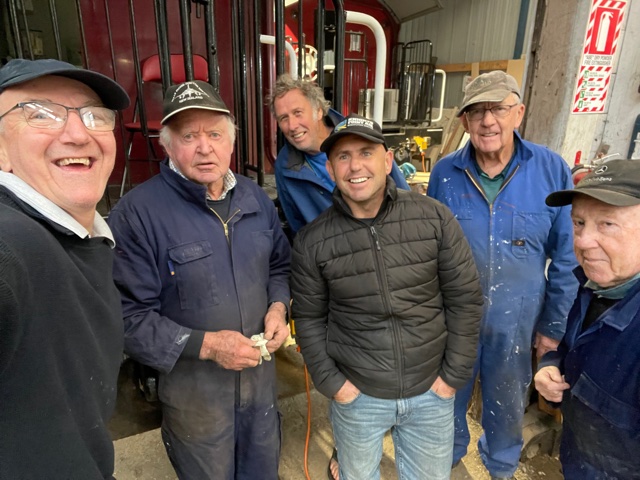
We received a personal tour of the club assets and facilities by the local men in the shed
A lot of skill and experience is represented in the club membership, all devoted to keeping the association alive

We’d already seen railway tracks through the edge of town and even on a special bridge across the river, but all seemed to be a testament to a bygone age; slowly fading with the years.

Not so!  Little did we know that there was a very real steam rail association, alive and well, right here in town.  And as we were soon to discover, they were warming up the fire box of their famous Dunedin built (in 1897) Wa165 class engine in preparation for tomorrows “Chardonnay Express”.  Apparently, all the tickets have been sold, but if you’d like to know more check it out HERE   

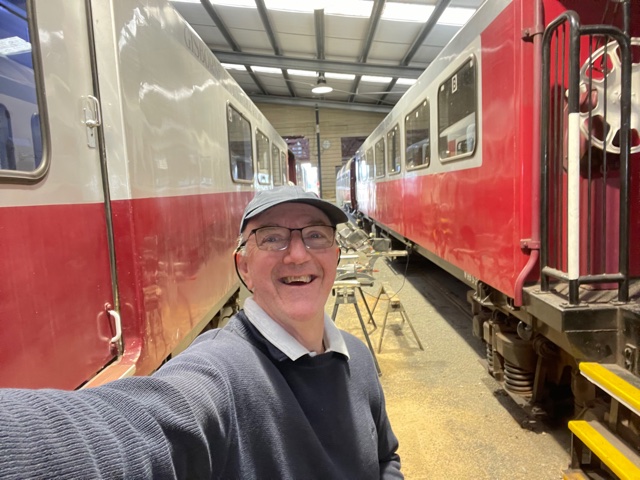
Having shown lots of interest and enthusiasm, the local club members were very keen to show us every aspect of the set-up, including rolling stock, machine shop and the large diesel electric engine they had bought as a back-up, in case the steam engine ever proves unfaithful.  We learnt that the train tracks actually run across the runway at the Gisborne airport, making it probably the only place in the world where a plane gives way to a train.

To learn more about the association click HERE

A handsome sight through the centre of Gisborne

The afternoon brought the predicted rain, which seemed to set in, with occasional breaks here and there for good measure.  The pitter patter sound on Chimere’s roof was a constant companion as we each either sat in a corner reading a book, or caught up on sleep in our bunks.

It was wet and grey for most of the day
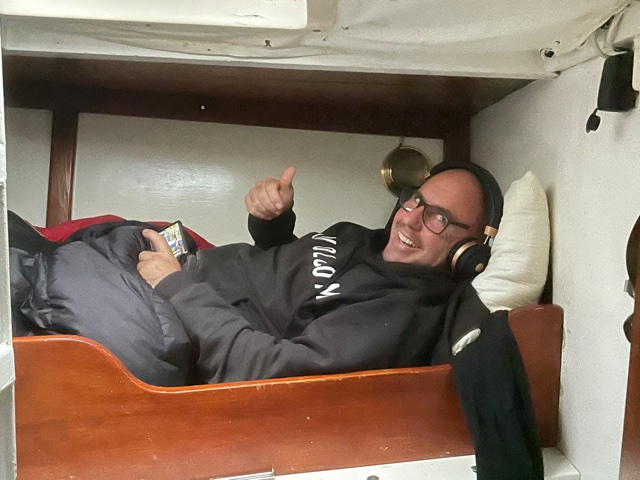
Alvin enjoy some downtime in his bunk
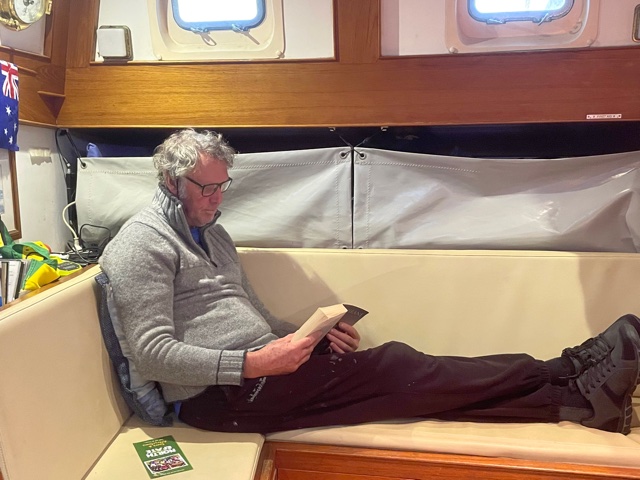
John starts a new book, naturally with a nautical theme
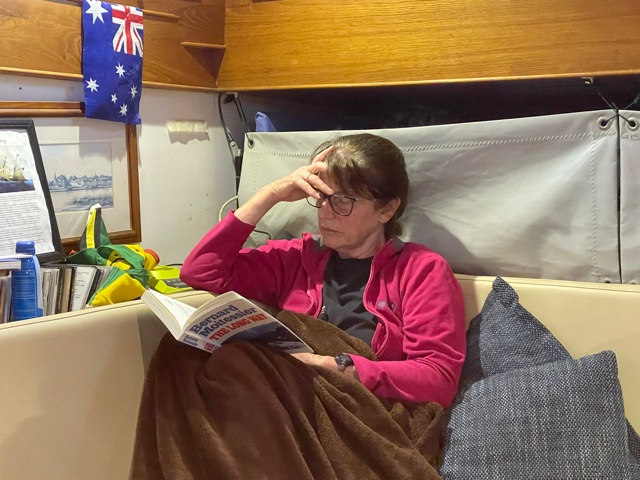
Kate takes advantage of the wet weather to get lost in a book from the onboard library
The local Waka back in its berth off our portside after it’s run down from Tauranga

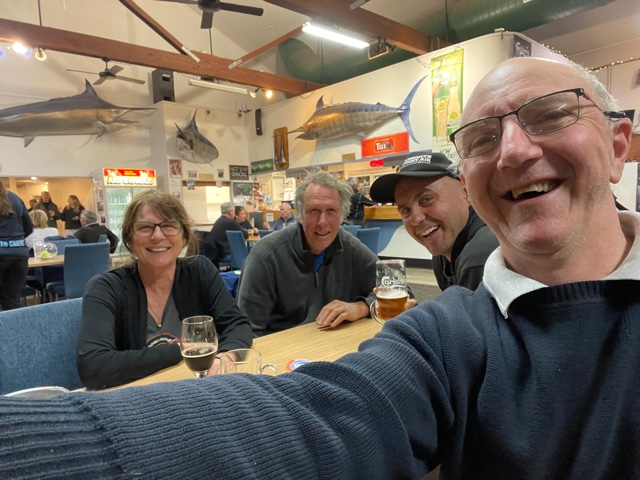
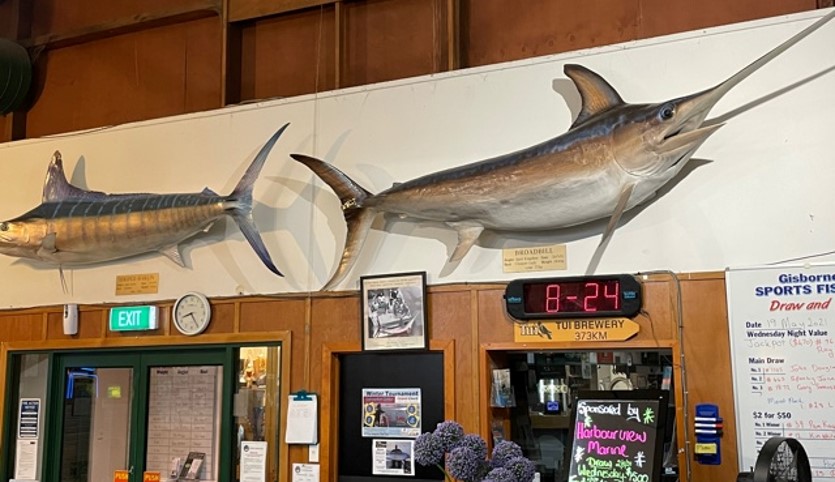
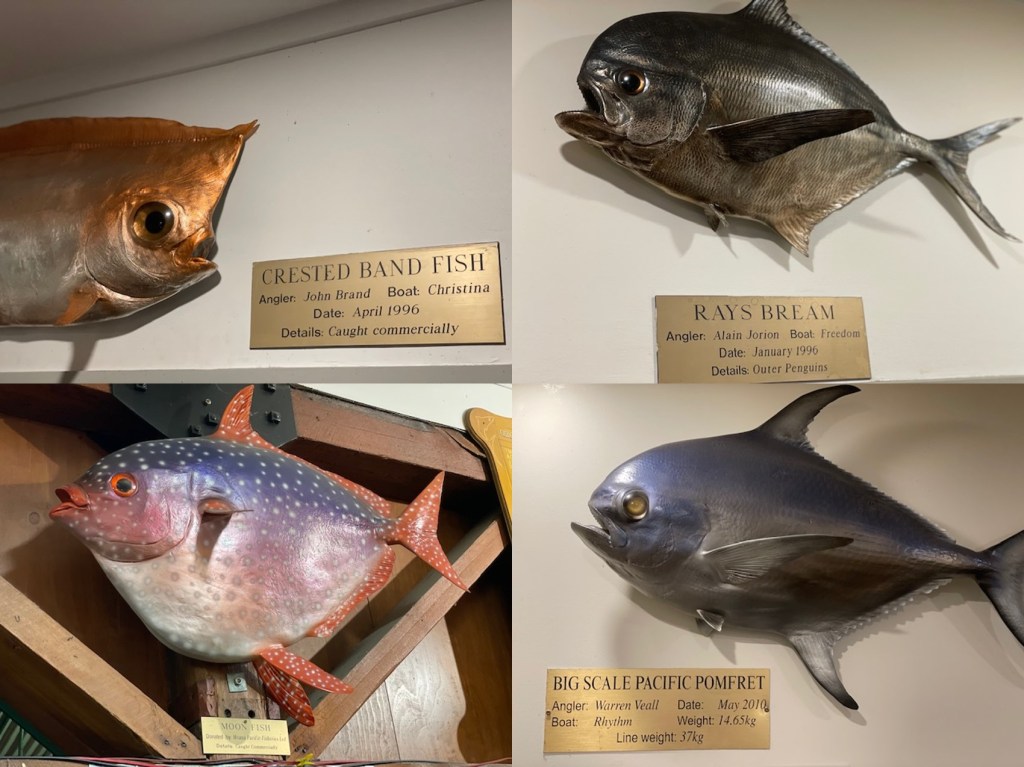
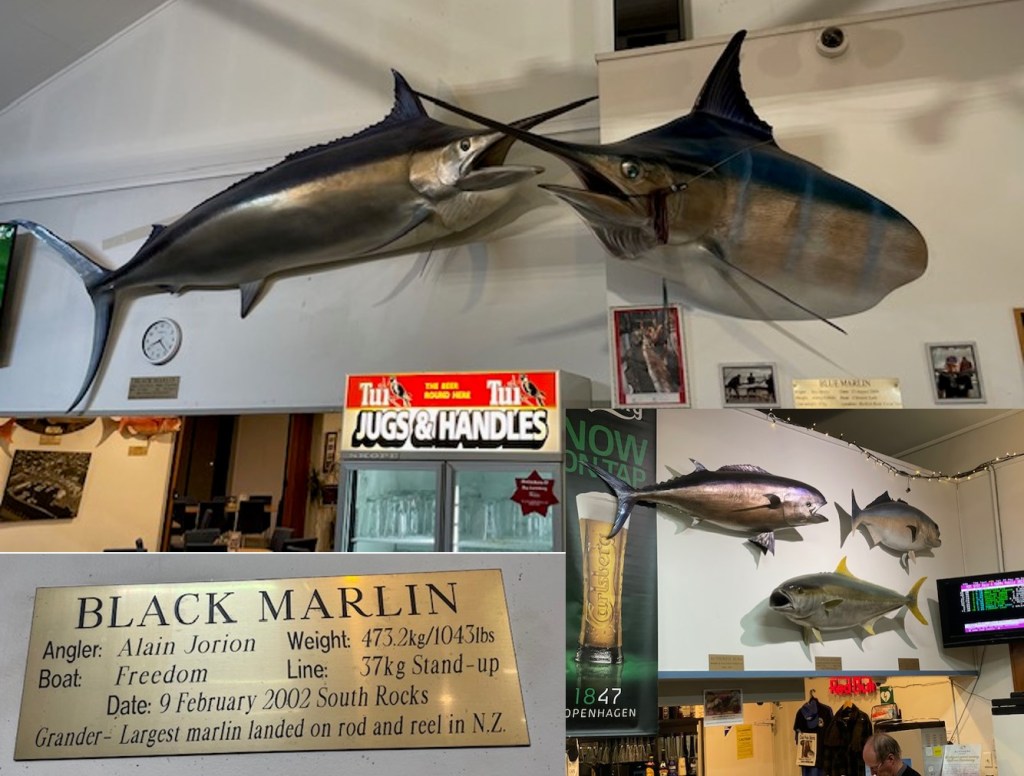
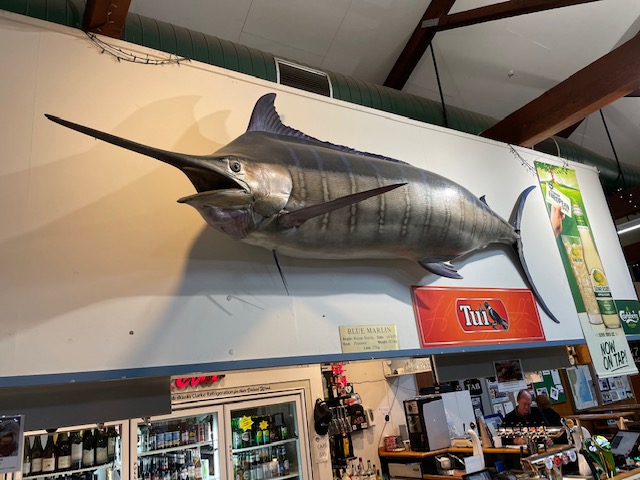
To support local industry and employment, while giving us a break from time in the galley, we all dined at the local (about 100 metre walk) Game Fishing Club, where we’d been made temporary members, at a cost of just $15 (for the vessel), for the duration of our stay.   As you can see from the photos, there was no mistaking that this was indeed a game fishing club.  Given the many choices on the menu, there was naturally nothing else I could order, given our surroundings, but fush and chups.

A night out at the local Game Fishing Club
These are very big fish! Which you realise when you compare them to the size of the door frame below.
Never heard of these fish before …
Landing a 473kg marlin on a 37kg line, using a rod and reel is a new Zealand record.
It was something like this that I saw lunge out of the water off the stern of Chimere as I wound in the line the other evening, making me very glad it had missed.

Smooth seas, fair breeze and Harper hits the highway

Rob Latimer

Shore leave in Gisborne

Marina Gisborne

Friday 28 May 2021

The sun came up off our starboard bow, marking our second day out of Wellington.  Our speed was slow, but steady with a daily run of around 126 miles.

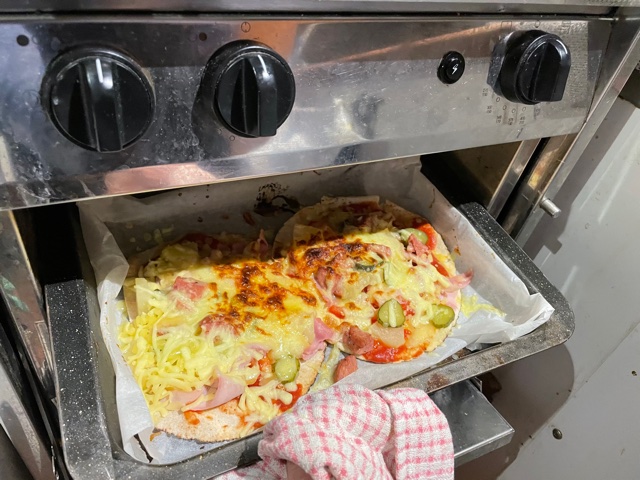
Life in the galley resumed somewhat, with my attempt at a Pizza creation on a Pita Bread base, going down very well … and universally staying down … which was a great thing. 

As the sea calmed somewhat, activity in the galley increased … along with appetites. Welcome to Bob’s Pizzas

The near-full moon’s return bathed us once more in lunar light as the now calming seas, slipped by.

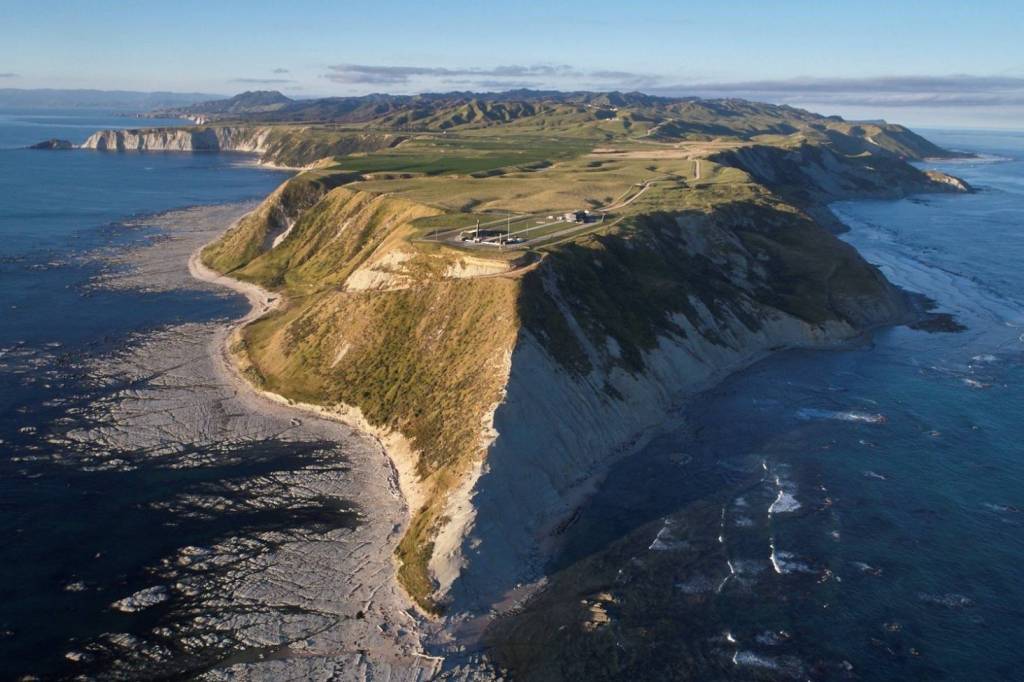
Off to our portside the outline of Mahia Peninsular could be made out as we inched our way up the coast. Mahia Peninsula being the site of New Zealand’s Rocket Lab Launch Complex 1. 

Yep, you heard me correctly … New Zealand’s Rocket Lab Launch Complex 1.  Not sure if there’s a Launch Complex 2,3 or 4 … or if the use of number 8 wire features in the rocket design in any way … but you’ve got to plan ahead I always say … aye.   If you’d like to learn more about New Zealand’s very impressive space program, click  HERE

But to cut-and-paste a wee bit … “Rocket Lab Launch Complex 1 (also known as Mahia Launch Complex or Spaceport) is a commercial spaceport located close to Ahuriri Point at the southern tip of Mahia Peninsula, on the east coast of New Zealand’s North Island. It is owned and operated by private spaceflight company Rocket Lab and supports launches of the company’s Electron rocket for CubeSat nanosatellites. The facility officially opened on 26 September 2016 (UTC). With the launch of Electron on 25 May 2017, it became the first private spaceport to host an orbital launch attempt, and the first site in New Zealand to host an orbital launch attempt.[4] With the Electron launch of 21 January 2018, it became the first private spaceport to host a successful orbital launch.”

Mahia Peninsular and the rocket launch site (STUFF.CO.NZ)

And if you want to watch live coverage of a Rocket Lab launch (well, live on March 22, 2021) click HERE

Live coverage of the countdown and launch of a Rocket Lab Electron rocket from Launch Complex 1 on Mahia Peninsula in New Zealand carrying six small satellites for customers in Australia and the United States, along with a test platform for a NASA small satellite mission to the moon launching later this year.

So, there was much speculation aboard Chimere as to whether we would witness a rocket launch as we sailed by in the night, but it was not to be … disappointed lads!

Facing a very down-to-earth problem, but still going with an outer space theme, on board Chimere, our small IridiumGO satellite communication unit broke its charger input connection fitting.  The result of years of salt air and use no doubt.  The unit still works, but it just can’t be re-charged, until I can find someone to solder the tiny metal socket back in place.  In the end there was just enough power left in the unit to transmit our location off Mahia Peninsular, and then again on arrival here at Gisborne.

The land became progressively more distinct as we set a course for the entrance to Gisborne Harbour – all the while watching out for cray pots in the shallower waters, as the morning light allowed

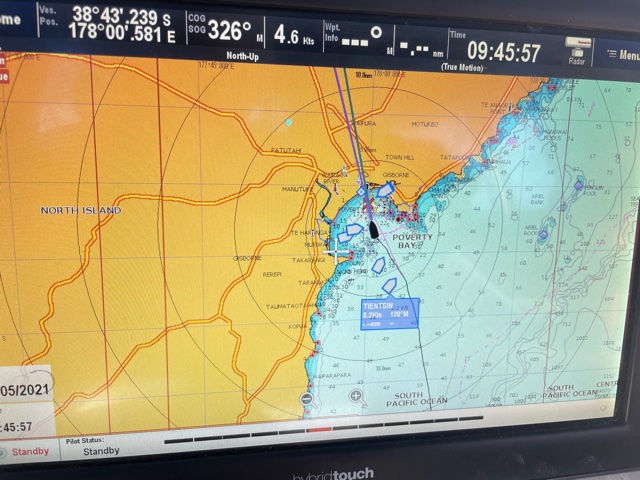
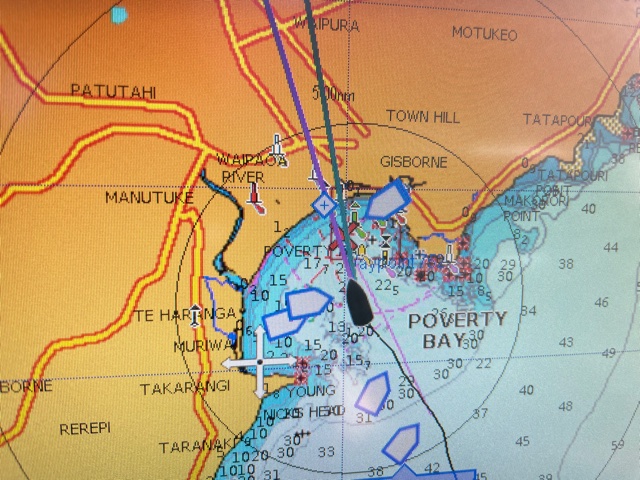
Entering Poverty Bay
Making approach to the Gisborne Harbour
The shallower it got the more milky coloured the water

Keeping Young Nicks Head off to Port and entering Poverty Bay had me once again reaching for Captain Cooks journal entries, with the following being of note:

“Saturday 7th October 1769, Gentle breezes and settled weather. At 2pm saw land from the masthead bearing W by N, which we stood directly for, and could but just see it of the Deck at sunset” – named Young Nick’s Head after Nicholas Young, surgeon’s boy who first sighted it

“Wednesday 11th October 1769, At 6am we weighed and stood out of the Bay, which I have named Poverty Bay, because it afforded us no one thing we wanted”   

Apparently the Gisborne Harbour is overdue for a big upgrade that, according to the Press Release will “Future Proof” the region. Mmmmmm.
It was a tight spot for big ships
Loading logs as fast as the trucks can deliver them

In contrast to Cook’s time, we found “Poverty Bay” and the town of Gisborne, to be the source of many good things with friendly natives to boot.  

By 10:30am we had tied up in Berth C38 – a total of 286 miles out of Wellington – with helpful manager Daniel there on the wharf to welcome us in person

On the way into harbour we had passed several bulk carriers at anchor, rolling mercilessly, exposed as they were to the beam-on swells of 3-4 metres.  The ships are hear to pick up logs which rest in mountainous piles back from the river wharf, with a procession of trucks delivering more all the time.

Fun facts for the year ended June 2018

HERE

  • Total exports of forestry products from New Zealand for the year were $6.4 billion.
  • Of total forestry exports, 48% went to China.
  • The value of sawn timber exports reached $891 million.

Once tied up, for us, there was nothing for it but to simply soak in the serenity of this sun-bathed local scene.  In walking around on land, at times there was a lingering sense of motion, this way and that, as we scoped the town.  Kate and I walking the full length of the town, at least as far as the clock tower, before returning on the other side.  John, Alvin and Harper either fell asleep, or took the opportunity to check out the local facilities.

Only two days at sea, but very satisfyingly to reach our first port
On the dock at Gisborne – Rob, Alvin, John, Harper and Kate

The sunny stillness continued for the rest of the day, with two hours of welcomed sleep, (for me) plus a couple of cups of coffee, enabling me to catch up on some Ship’s Log writing and posting.  Thank you to my son Matt for putting up the “Stay Tuned” message the other day.  Whilst communications were generally pretty good up the coast, the fact was, sitting in a washing machine of a saloon, eyes fixed on a computer screen, in the end became a bridge too far.   

I thought I had issues with a few weeds in the gutters at home … here we have a tree growing in this shed’s gutter
Chimere sitting proud in her berth
The Gisborne Marina and Chimere in her berth, taken by Kate who climbed to the top of a nearby hill
The small harbour of Gisborne … that’s Chimere over on the left side in the distance

Sad news amongst the crew, is that Harper has to leave us tomorrow.  The lure and responsibility of work drawing him back to Wellington.  No doubt we’ll have a good-bye shot tomorrow of Harper starting to hitch a ride south, tonight at dinner, we drank a toast in true Gunroom tradition, to … “Harper’s health, his valued contribution to the efficient operation of the ship and his continued success in life”   Many thanks Harper, it was good to have you on board.   

Dinner in the saloon, the last night aboard for Harper who will be leaving us to return to work in Wellington
Our Wellington to Gisborne track, around 286 nautical miles towards our final destination of Tauranga

Smooth seas, fair breeze and shore leave at Gisborne

Rob Latimer

Rolly & Lumpy – as expected

At sea, 15 miles east of Cape Kidnappers

Thursday 27 May 2021

The weather forecast turned out to be remarkably accurate – very little wind, but a confused sea, the result of a lingering storm north-east of here.

On “paper”, the sea state looked worse than it actually turned out to be, showing as it did, a swell of up to 3 metres from one direction, 3 metres from another and a localised choppy “sea” of up to 2 metres.  In reality, with minimal wind, we were able to make good headway – 139 nautical miles for the first 24 hours. It’s just that the sea constantly had us rolling this way and that, making things very uncomfortable. 

This lack of “comfort” extending beyond the simple act of getting around on deck, or lying still in your bunk, to the more important necessity of gaining mastery over an “upset stomach”.  In the end the ship’s first aid box came to the rescue, with what friend Dr Graeme Duke describes as “magic medicine” … a small box of tiny pills I’d stowed aboard 18 months ago, just in case.   Long story short … the “magic” worked, and pretty soon it was smiles all round, plus an interest in eating some food – again.

The lumpy seas removed everyone’s sense of humour
“Magic medicine” from the first aid kit took effect in a relatively short space of time

Passing Cape Kidnappers had me reaching for Captain Cook’s journals – the original author of the nautical charts in these parts – and on Sunday 15 October 1769 he describes how one of his Ship’s company was over the side, and the local natives (Maoris) …

“… seiz’d hold of him, pull’d him into the Boat and endeavoured to carry him off; this obliged us to fire upon them, which gave the Boy an opportunity to jump overboard.  We brought the Ship too, lower’d a Boat into the Water, and took him up unhurt.   This affair occasioned my giving this point of land the name of Cape Kidnappers

We were sailing in the wake of the great man himself.

The sun came up, putting an end to the long cold night, with the coastline slowly slipping by on the port side.  Numerous sail changes through the night kept sleep to a minimum, as we tried to supplement the ever-faithful Perkins engine with whatever speed we could muster from the fluky breeze.

Then sometime in the afternoon the autohelm started beeping and then displayed a message about exceeding the maximum “deviation”.  We’d had this sort of thing before, and eventually it would correct itself, so I wasn’t too concerned.  The chart plotter even lost our position for a time, with Alvin’s calm response being … “that’s OK, I’ve been using the App on my Smartphone anyway, see…”   

And that’s true.  I’ve got the same App on my phone as a backup, plus a further program on my laptop called OpenCPN with an external GPS beacon that acts just like a chart plotter. 

But still, it would be nice if the autohelm would do its thing again, and hold us to a straight course.  Sadly, this was not to be.  We even turned it off, then on again, several times, still to no avail.  In the end we blamed it on the rolly sea state, and figured it would get better after a prolonged rest – I hope we’re right, I’d hate to have to get the manual out.

Dolphins made an appearance today, which was nice.  Plus, the occasional seal.  And I should mention that as I pulled our trolling fishing line in last night, an enormous sea creature, which I took to be a shark, or some other animal with lots of fins, lunged at the shiny lure from the side, just missing its target.   Something I was very pleased about, given its size.

We continue to study the weather forecasts, with usual phone and internet communications being maintained most of the time, despite being 5-10 miles off shore.  Our next big decision was whether to continue up and around East Cape, and from there onto the Bay of Plenty and our current destination Tauranga.  Or … pull into Gisborne for a day or two, for some rest and recreation, and to also sit out the next expected blow from the north.

There was no need to put this decision to a vote … popular consensus aboard favoured a wee pitstop … so I called ahead to the Gisborne Marina Manager to sort out formalities. 

“yes, we’ve got a spot for you” replied helpful Daniel … which was all I wanted to hear.  And “yes”, we could send him through evidence of a “CLEAN HULL” (in the past 30 days) plus our “INSURANCE SCHEDULE” – (showing we were good for up to $10 million of liability damage) – prior to arrival. 

Then, upon arrival we’d need to provide our vessel “ELECTRICAL WARRANT OF FITNESS” and  “POWER CORD TAG” in the event that we wanted to plug into shore power … which we did.  

The lesson here is clearly that if you want to get away from bureaucracy by going to sea … it’s no use … it will follow you.  So, the other lesson is … make sure you’ve got the right piece of paper so you can help others tick the boxes on their forms, and all will be well.

Smooth seas, fair breeze and rolly and lumpy as expected

Rob Latimer
Out on the BIG BLUE again

At sea, 40 miles NE of Cape Palliser

Wednesday 26 May 2021

Our last night at the marina was still and calm.  The rain and wind had gone somewhere else, for a time, and we were left with a starry sky and reflections in the still water around us.

After completing most of the important tasks for the day, around 10:00pm I gave Linda, back home in Melbourne, a call to discuss in more detail our plans for the next few days, that we will all be safe – while also saying “I wuv yooo”

In the end, I must have got a reasonable amount of sleep, but there were several times through the night that I woke with last minute …“things not to forget” … rattling around in my head … leave the marina key behind, unplug the 240v power lead, retrieve all our lines, update our EPIRB Trip Log (emergency beacon) on the AMSA website, last minute weather forecast …

Everyone was up in the morning around six, to a dark, still and chilly morning.  Some keen rowers were out in the half-dawn, but our focus was on retrieving all our mooring lines – there had been quite a few holding Chimere safe over the past 12 months – and replacing them with three small ropes that could both hold us in place, for the next little while, and be easily retrieved as we made our exit.

Still pretty dark at 6:00am
By around 7:30am we were turning our backs on Wellington
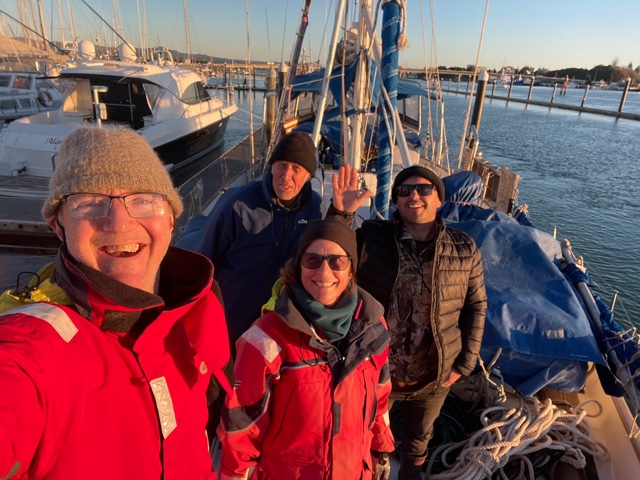
All together for the “before” shot, just prior to leaving our berth at Chaffers Marina

It was just after 7:30am that we slipped the lines and manoeuvred out, took a sharp left turn, before the final exit out of the marina and into the flat waters of the harbour. 

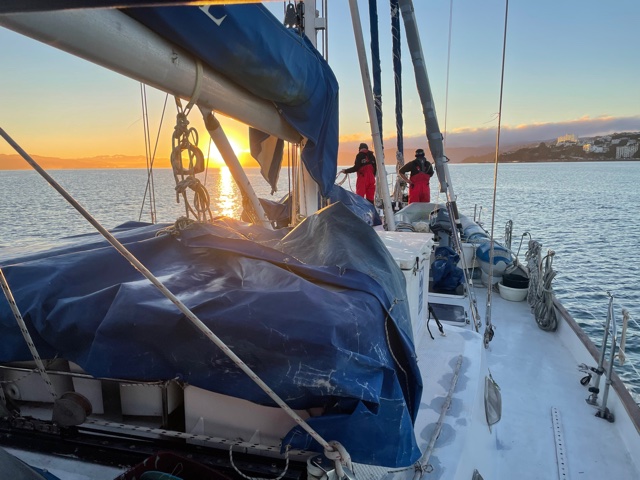
Golden sun broke through the morning cloud and mist, giving us a good opportunity to hover about, soaking up the vibe, taking photos – and for me, reflecting on the past 13 months or so of “unexpected developments”, but now, the thrill of kick-starting the adventure once more.

It was chilly as the morning sun peaked out of the Hutt Valley, up the harbour
Almost time to put down the sun visor
Alvin and Harper, bathed in morning light
After a brief period lolling around the Lambton Quay area, we were soon making our way to the harbour entrance
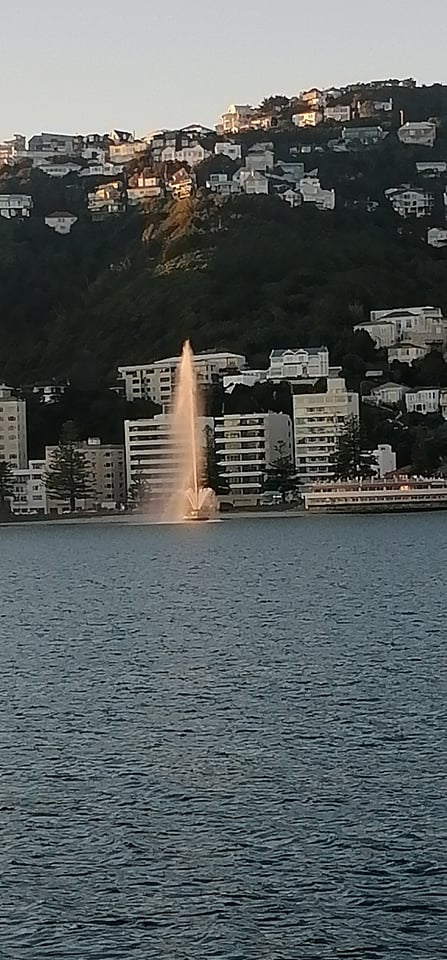
Oriental Bay fountain in the morning light

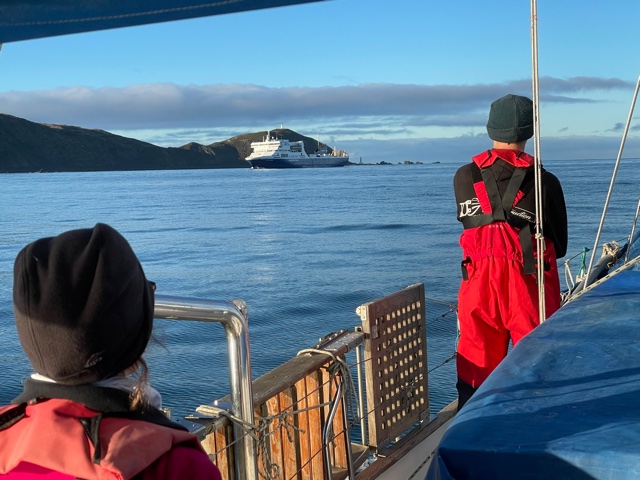
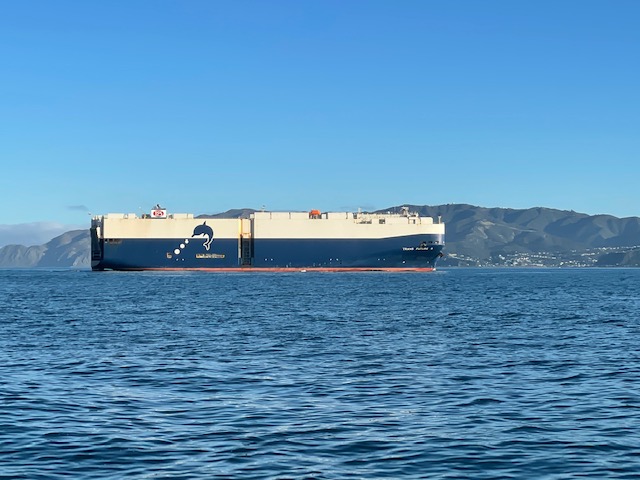
Next it was out through the Heads, keeping Steeple Rock and Barrett Reef to our starboard and staying clear of an inter-island ferry and a large, ugly car-carrying-ship

Passing an inter-island ferry
A car transport ship, so ugly only its mother could love it

The main and jib were hoisted for the first time in over a year, making good use of the light breeze that gathered as we took a left turn out of the harbour and up the coast.  To ensure that enterprising seagulls and other birds didn’t make a home in the sails I had actually sewn up the sail bag along the boom back in April last year. 

Plenty of things to hit for the unwary both sides of the Wellington Harbour entrance
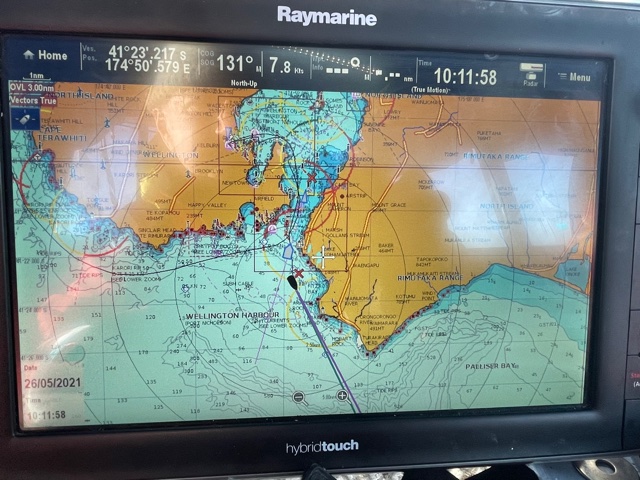
Our chartplotter image shows us doing 7.8 knots as we exit the harbour, with the AIS image of the car transport ship astern of us.

Soon after laying our course east towards Cape Palliser, Alvin called out … “whales, off the starboard side”, and sure enough, there passing close by was a pod of Orcas – mum, dad and the kids, calmly making their way in the direction of the shore; no interest in us from the world above.

As predicted, the wind was light and the seas still up, but looking on the bright side, they weren’t breaking, which enabled us to ride them up and down, as they passed beneath.  One of the difficulties, was that there were two sets of swells, one from the northeast and one from the south, plus a local “sea”, making for confused conditions that would only get worse.

By noon we had worked out our shifts – 3 hours ON and 3 hours OFF, with John and his grandson Harper taking one shift and Kate and Alvin taking the other. 

Astute readers will notice that I escaped being conscripted onto a formal “watch”.  The theory being that I would “drift” between each shift, on account of knowing the most about the boat and her “ways”, helping with sail changes and adjustments, plus any other issues that might arise along the way.  Which included making toast, dinners, cups of tea and handing around snacks; particularly at changes of watch – a bit like a maritime version of Carson from Downton Abbey

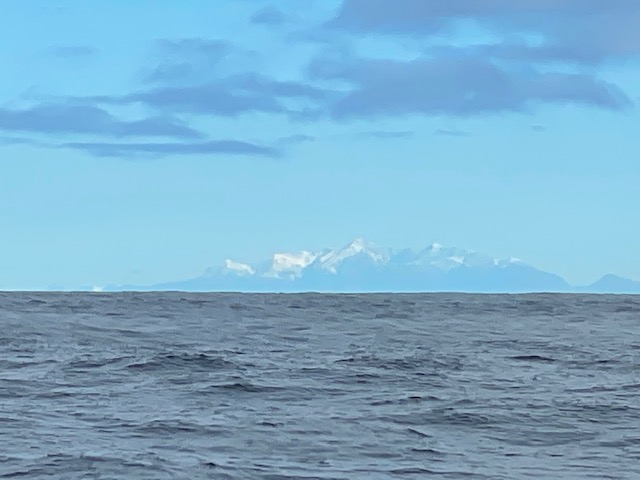
Looking south as we exit the harbour gave us a good view of the snow covered Kaikoura range on the east coast of the South Island
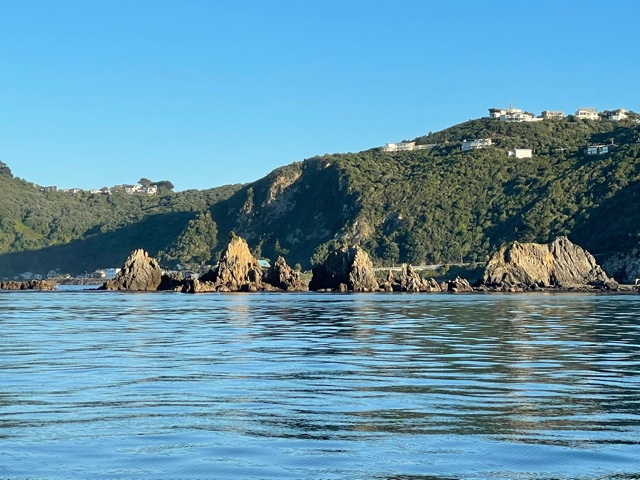
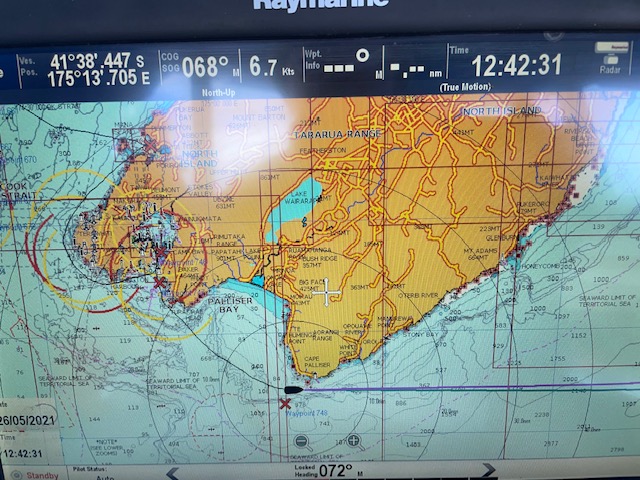
The view of Cape Palliser
Rounding Cape Palliser in the early afternoon and about to set a more northerly course on our way to Tauranga

Later in the afternoon the wind died off completely, causing us to drop the sails, but still we made around 6-7kts under engine alone, riding the swells up and down; and at that speed probably picking up a knot or two of current.

At the change of watch, late in the evening, John explained to me as I emerged from my bunk that …“the wind was down to about 10 knots, and on the nose, with our speed at around 5-6, so I pulled the sails down”. 

It was a good call.  Rather than set the sails to catch the breeze, he had decided to keep plugging on in  the right direction. The alternative being to tack back and forth, either side of the breeze, going faster no doubt, but covering more ground.   As they say, “a straight line between two points is often the quickest”

It didn’t take long for the routines of life at sea to develop.  The key considerations being to … preserve and maintain personal energy (by sleeping and eating) watching where the ship is going … looking out for “issues” (on the boat and out at sea) and making sure we are going as fast as practicable given the changing conditions.

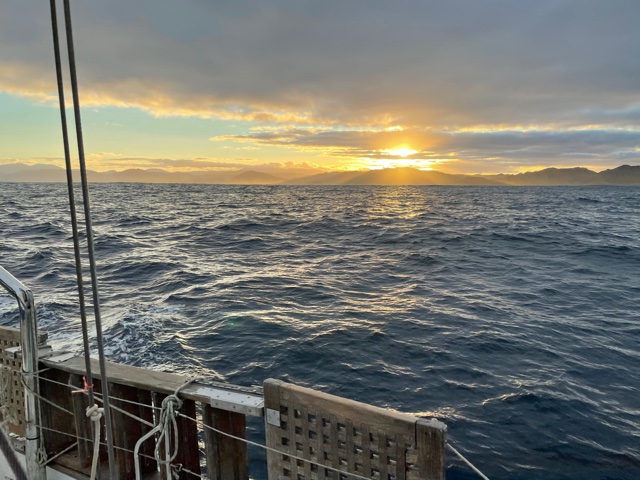
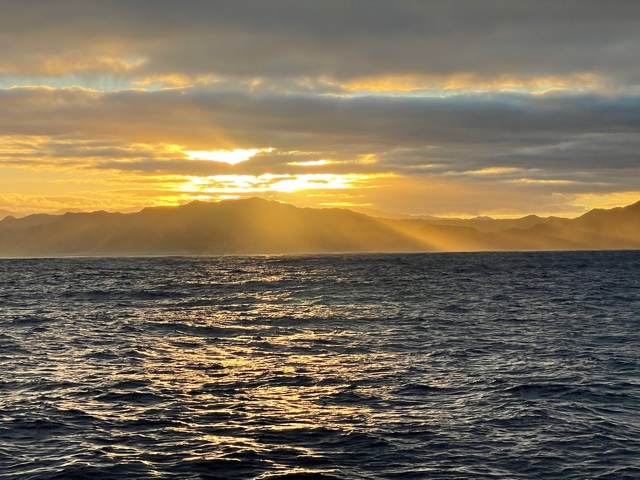
Setting sun – the end of the first day
It was a peaceful, yet chilly scene, as the sun said good-bye for another day
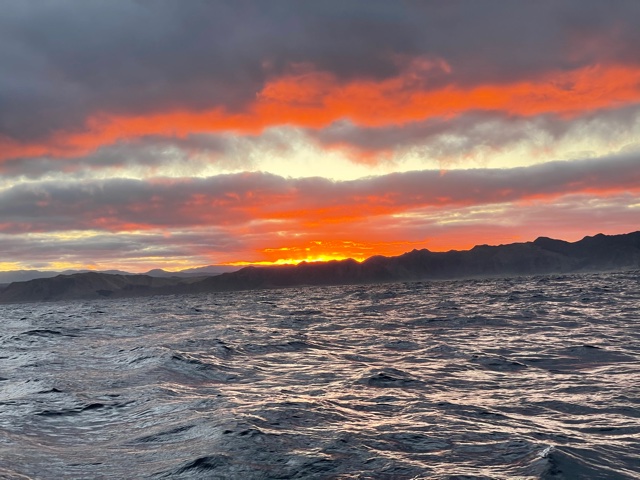
Red sky at night …

The evening meal was a wonderful beef stew concoction, pre-made and frozen by Kate, which went down well … and mostly stayed down … but some things are best left unsaid …, but rest assured Kate, it was no reflection on your culinary abilities, more a statement on the sea conditions and the usual “first day at sea” syndrome.    

Around 10:30pm, or there abouts, we were making good time over a silver sea, the full moon blazing down from high in the sky.  The sea-state was still as lumpy as ever, so rather than risk being thrown off the cockpit seat, I laid a mattress on the deck nearby and made myself comfortable under a few blankets.  Looking up I noticed someone had taken a “bite” out of the white disc, and as time ticked by, more and more of the moon disappeared. 

Earlier in the day, I recalled there was going to be a lunar eclipse, a “red moon”, tonight … so this was it, right before my eyes.  Finally, the moon was all but gone, just a dirty red shadow remained – if you looked hard.  No more the silver sea, the reflections off the deck and the look of daylight … it was “black as – bro” … the stars were thick and bright in the sky above, and there was even phosphorescence in the passing waves and our trailing wake.    

Hard to believe this photo was taken late at night, under moonlight
Lying on my back, looking up at the moon, I awaited the total eclipse
Still can’t believe how my new iPhone can take such a bright shot at night – here I am rugged up against the cold.

Another hour and we were back the same, as if nothing had happened – a full moon, on a confused sea, the sound of our wonderful Perkins engine pushing us onwards, up and over the waves.

Smooth seas, fair breeze and out on the BIG BLUE again

Rob Latimer
Design a site like this with WordPress.com
Get started