Crayfish Island (Paterson Inlet), Stewart Island
Tuesday 25 February 2020
There was clearly still a sleep-deficit onboard with the calm anchorage at Oban leading to a late start for all.
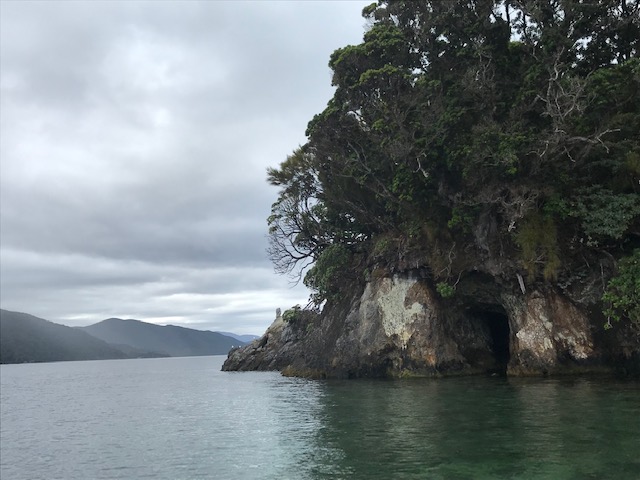
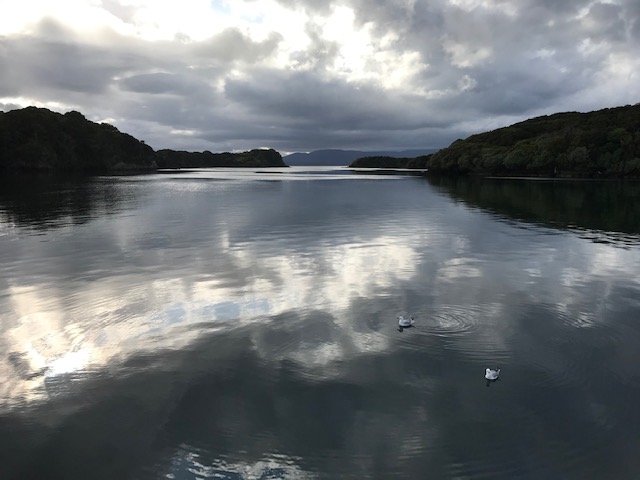
The weather was expected to remain still for the next couple of days and so this was a time to plan some serious Stewart Island adventuring; or at least a bit of a drive around the corner into Peterson Inlet to check out the remote and pristine serenity, of which there was surely an abundance
Early in the morning there was chatter on the VHF radio about some people intending to kayak across the Foveaux Strait, then onto a paddle right around Stewart Island. It was certainly a good day for the first, and possibly most treacherous leg, but whilst everyone, especially Mary, were polite, efficient and helpful in their transmissions, you couldn’t help but get the impression that some of the local fishermen thought these kayak-guys had a few screws loose. “Good thing they didn’t go yesterday afternoon”, I heard one wag remark
Of course, nothing said on VHF radio is private and pretty soon we overheard the ongoing reports from the kayakers themselves … “Good as gold, roger roger, thanks for the update, enjoy your day … it’s a lovely day for it”, came Mary’s encouraging reply.
Whilst we had a lazy start, it didn’t stop us starting on some much-needed repairs and maintenance aboard.
Chief amongst them being the main sail “cars” that run up the mast, connecting it to the sail via a metal track. For speed and smoothness of operation, each car contains ball bearings made of a hard substance called torlon. These ball bearings being held to the cars via screw-on plastic end-caps. When the end-caps come to the end of their life, they break. Not only spilling all the 6mm balls everywhere – mostly never to be seen again – but also causing the sail to come away from the mast. When one car breaks it puts undue pressure on the cars next to it. When two break, the problem gets even worse, and so on. In our case, we’d broken three cars so there was a need to carefully remove several cars off the mast track – without spilling the balls in each car – so as to get to, and repair, the broken ones; since they are placed on the mast-track in order, the ones at the top of the mast being first and so on .
To fully repair the cars, you need new “End-Cap Sets”, plus 42 new balls for each car. These we ordered yesterday via our rigger Craig, at Superior Spars and Rigging in Hastings (VIC) for Linda to bring over when she comes on Saturday.
“How long do you think they’ll take to get to Melbourne from Sydney?”, I asked … “Maybe a day or two, but sometimes longer” came the reply, all the while knowing that if Linda didn’t get them by Friday, it was going to be something of a fruitless exercise.
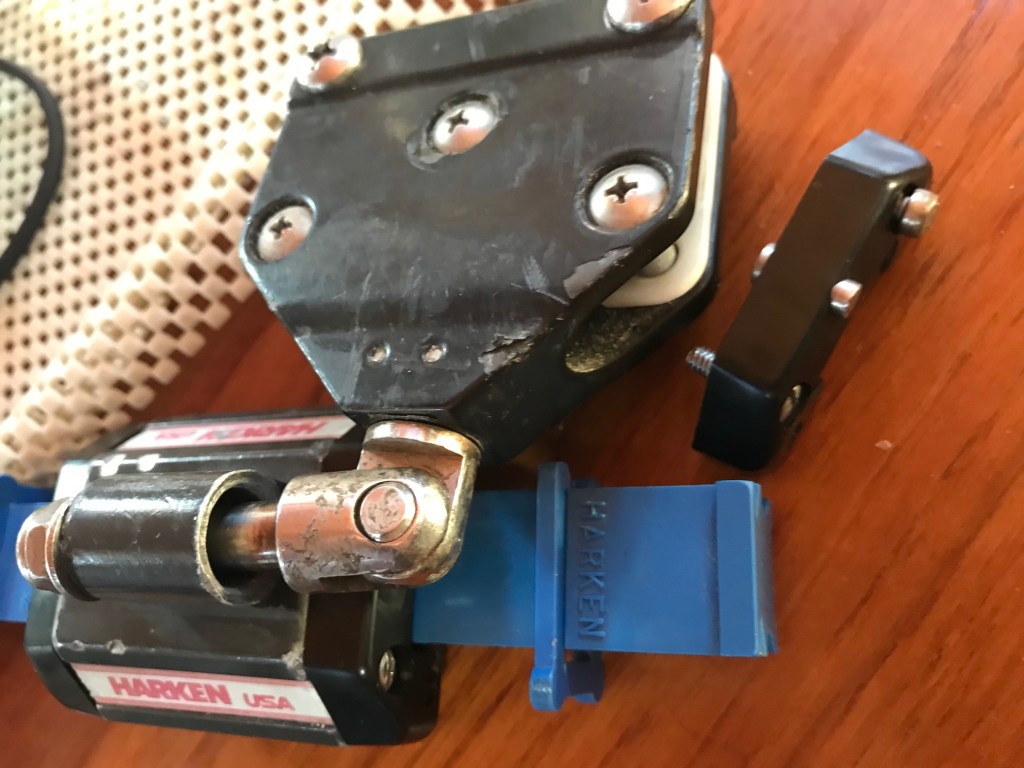
In the meantime, I cannibalised parts from some old cars and managed to rearrange things to have the mainsail operational again.
As an update on the new parts, while we were still in internet range over at Oban, Linda sent me a photo of the package of parts, which had arrived from Sydney to our home in Ringwood North, less than 24 hours after being ordered by the rigger in Hastings. Truly amazing
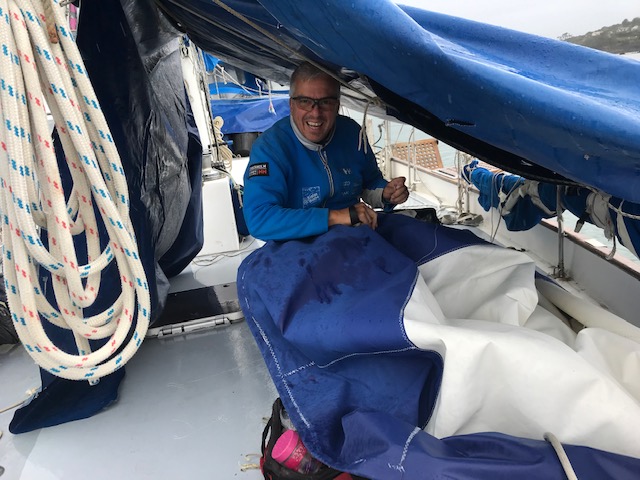
In addition to the mainsail, there was also the jib, which had some loose stitching that needed to be re-sown, plus the port side jib sheet winch, which was not operating as smoothly as it should and needed to be pulled apart … and put back together again
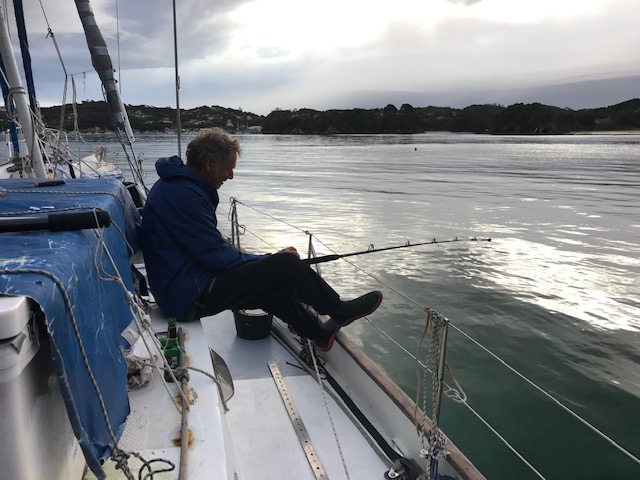
Then, while we sat lazily at anchor, John announced around 12:00 noon, that his research put the best time to be fishing at 1:30-2:00pm and that if we wanted to catch fish, then around the corner in nearby Paterson Inlet would be the place to be.
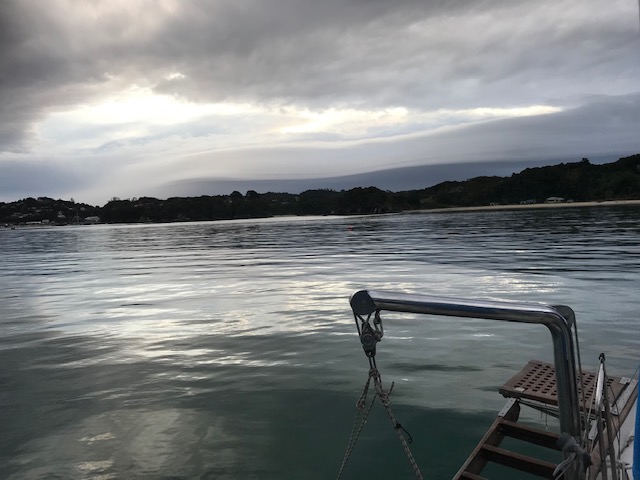
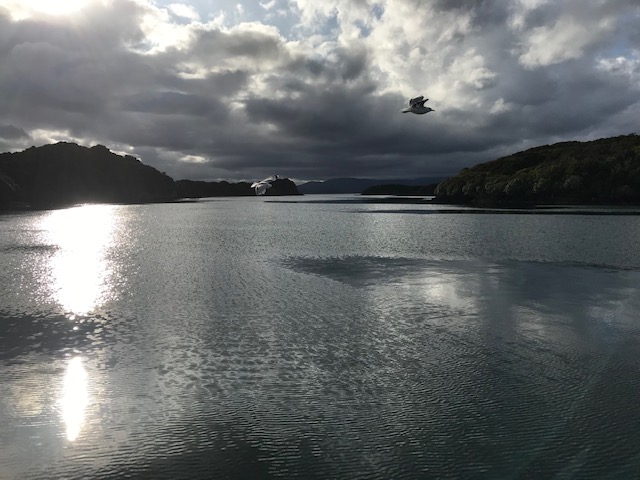
It didn’t take long to be underway, towing the dinghy and leaving the mess of our various work-projects where they lay. We made good time under motor, coming to anchor near the encouragingly named Crayfish and Groper Islands, in about 8 metres of water.
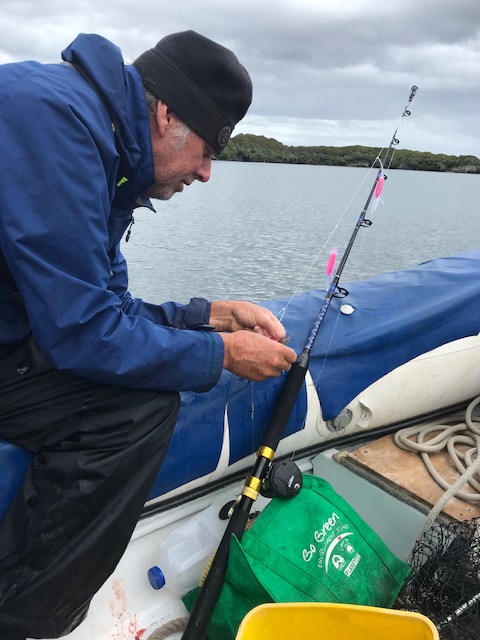
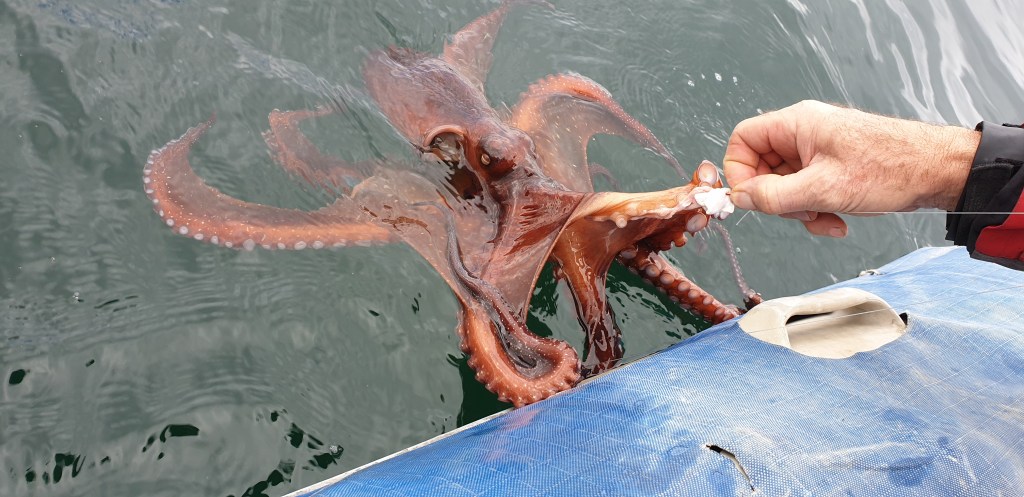
Pretty soon, John and I were heading off in the dinghy, leaving Carsten to mind the ship. Our fishing options now seemed endless … should we drop our lines in deep water, shallow water, sheltered, exposed, off a rocky headland perhaps … In the end we did all of the above, starting out with some trolling, which encouraged us by quickly by yielding a reasonably sized barracouta.
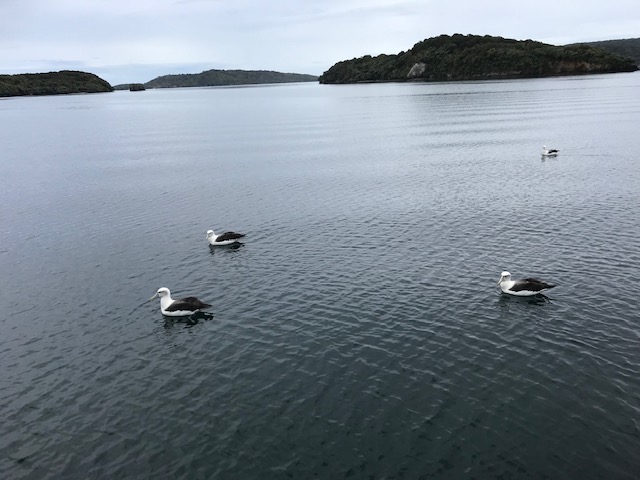
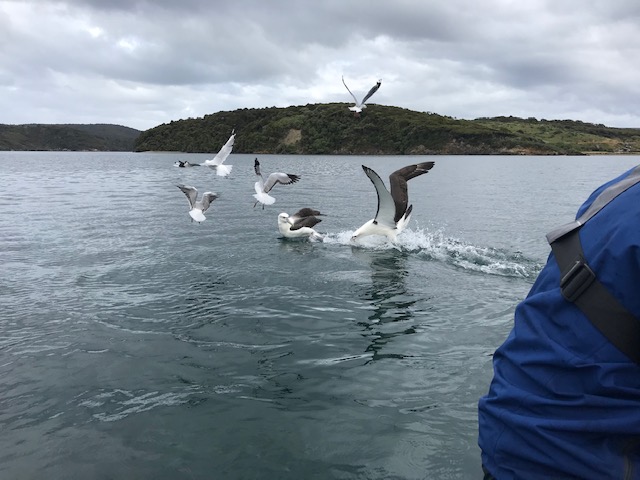
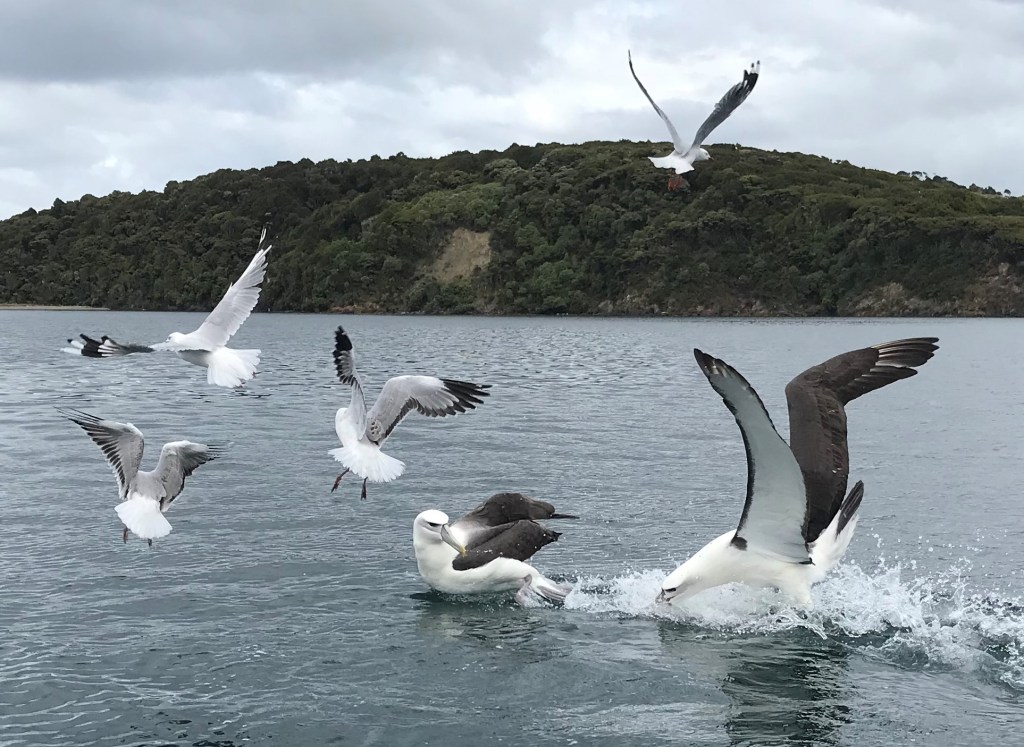
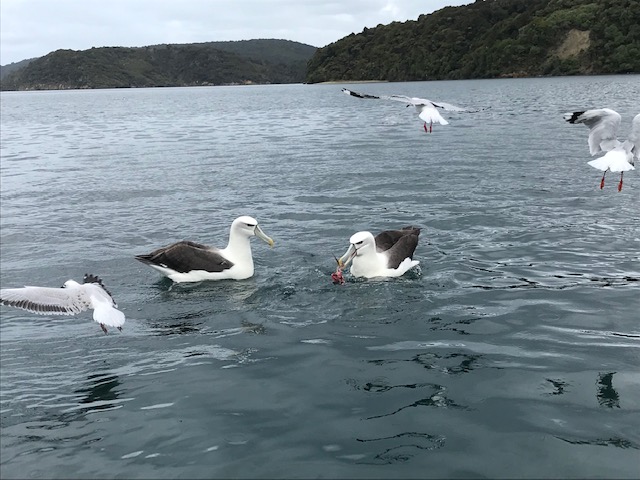
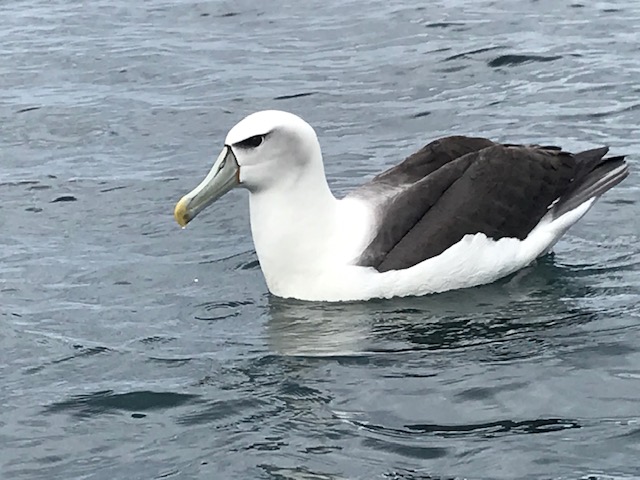
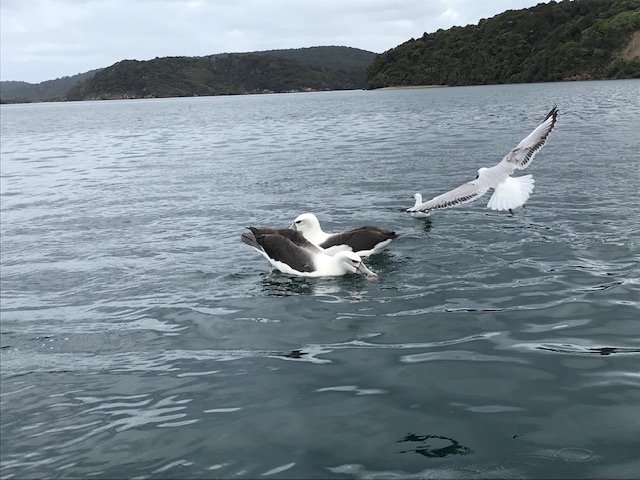
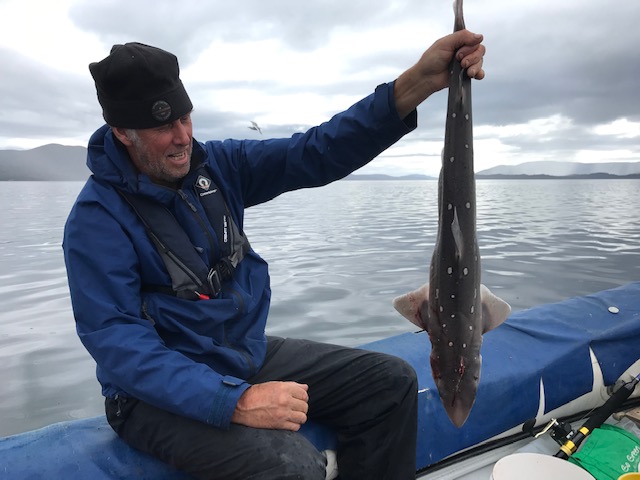
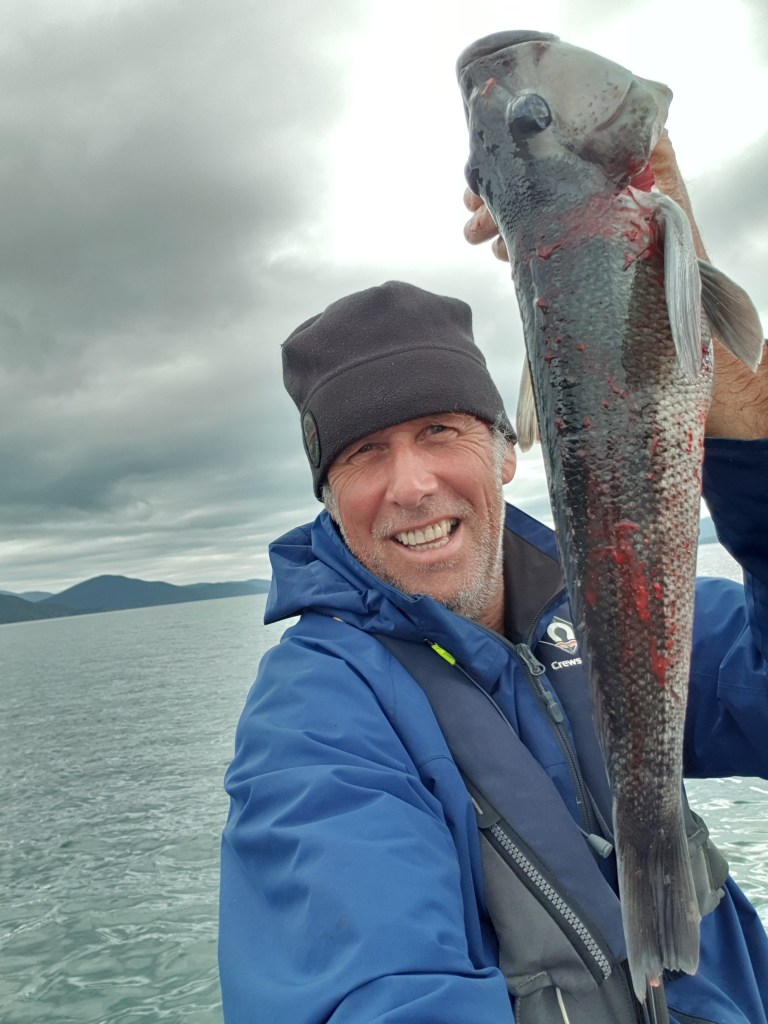
Naturally John was eager to land the local specialty, a blue cod, and after hauling in a second, much larger barracouta, plus a substantial one metre long spotted lemon shark, John finally landed a sizeable blue cod – which fed us all at dinner tonight.
It was a handy haul of fish, and certainly enough to keep us fed for two more days
We’d initially “parked” here as a temporary anchorage, but as the day drew and completing the maintenance tasks became our prime focus, there seemed little reason to move. Consequently, I fed out another 10 metres of chain, attached the “snubber” (or spring-line) to the anchor chain and made things comfortable. The stillness aboard was amazing, so much so that you could have played snooker in the saloon – there was just no discernible movement.
As the sun went down, the sound of penguins and other birds could be heard coming from the nearby islands, with the continuing calm weather leading us to consider sailing a bit further south tomorrow to explore more of the Stewart Island coastline. There are just so many bays, coves and inlets that I’m sure the early European explorers struggled to find names for them all. As a result, there are places with names like … Chew Tobacco Bay, Abrahams Bosom, Sawdust Bay and Harry West Bay. The two I’m keen to explore are, Sailors Rest – referred to in the guide as a “funk hole”, and Glory Cove.
After our dinner of fish … again, beautifully prepared by John, it was time to charge the batteries by running the generator for a few hours … then sleep. Whilst the weather forecast looks a bit average for arears to the west of us, with wind speeds of up to 55 knots, al seems pretty calm in our postcode.
Smooth seas, fair breeze and breaking the fish drought
Rob Latimer
 NZ2020
Congratulations John – well done. Fish caught by yourself always tastes so much better.
LikeLike
John is just warming up!! He bought a “Tuna Slayer” lure today, so we might need a bigger boat
LikeLike